


Brent H. Zettl Provides Update on Holdings of ZYUS Life Sciences Corporation
Brent H. Zettl Shares Latest News on ZYUS Life Sciences Corporation Holdings
Was a tourist banned from the US for sharing a JD Vance meme?

A Norwegian tourist says he was denied entry into the US after immigration agents took issue with a meme of Vice President JD Vance on his phone.
US Homeland Security officials say he was turned away for admitting drug use.
BBC Verify’s Jake Horton spoke to Mads Mikkelsen about his experience and looks at the laws which are in place for denying tourists coming into the US.
Produced by Blanca Estrada and Meiying Wu. Graphics by Leo Scutt-Richter.
Filipino politicians engage in spreading deepfake videos as they fight over impeachment: ‘Even if it’s AI…I still support the message’

Deepfakes are shaking up politics, with both politicians and their supporters turning to AI-generated videos to make arguments, attack their opponents and, worse, share misinformation. Powerful and accessible video generation tools are now changing the norms about whether, and how, to use this fake content.
Allies of Philippines Vice President Sara Duterte shared a viral video of AI-generated characters last week in a bid to defend the embattled politician from a looming impeachment trial. The video featured two AI-generated schoolboys criticizing the impeachment trial as “politically motivated” and an example of “selective” justice.
The video was soon exposed as a “deepfake,” and presidential palace press officer Claire Castro slammed the politicians for sharing disinformation and fake news.
The vice-president took a different tack, telling reporters that she thought sharing an AI-generated video was fine, so long as no profit was being made. Senator Ronald dela Rosa, who shared the video, also defended his actions: “Even if it’s AI…I agree with the point,” he argued, according to AFP.
Another viral video starred an AI-generated elderly woman, who took a pro-impeachment stance.
This political back-and-forth is the latest development in Sara Duterte’s impeachment saga. The daughter of former Philippine President Rodrigo Duterte has been accused of corruption, misusing public funds, and threatening to assassinate former ally and current president Ferdinand Marcos Jr. If formally impeached, Duterte will be removed from office and banned from politics for life.
On June 10, the Philippine Senate referred the Duterte’s impeachment case back to the country’s House of Representatives within hours of convening a trial, asking for clarification on its constitutionality. The lower body voted to impeach Duterte in early February.
On Friday, prosecutors at the House demanded the Senate proceed with the trial.
It’s not the first time deepfakes have popped up in Filipino politics. Last year, an AI-generated video of President Marcos taking illegal drugs went viral. The national police Anti-Cybercrime Group is currently investigating another deepfake of Marcos promoting an online trading platform.
Political campaigns are embracing clearly AI-generated content. The Trump campaign shared images of the candidate riding a lion and being endorsed by Taylor Swift ahead of last year’s presidential elections; Trump administration officials continue to share AI-generated cartoons on social media to make political points.
AI-generated videos have been widely reported in elections across Asia, including in Pakistan, India, South Korea, and Singapore. Last year, the Indonesian political party Golkar created a deepfake of former president Suharto endorsing its candidate. (Suharto died in 2008).
Still, the AI-generated videos around the Duterte impeachment aren’t impersonating real people but are instead creating avatars to express political opinions.
The creators of last week’s viral videos have defended their use of AI on these grounds. Bernard Senocip, who created a video supporting the impeachment trial, told AFP that these avatars allowed people to express opinions while avoiding criticism. The person behind the schoolboy video, which defended Duterte, claimed to the news agency that the views shared were collected from real students.
Is Iran Closer to Building a Nuclear Bomb Following U.S. and Israeli Strikes?
Sustain nuclear expertise
Likely harmed
Before strikes
Over the decades, Iran built up scientific and engineering expertise in nuclear technology.
After
Israel says it killed at least 14 of Iran’s leading nuclear experts in the recent attacks. But there is another tier of scientists in Iran who share much of that knowledge. If past experience from previous assassinations of nuclear talent holds, over time, they will likely be able to carry on the work.
Sustain nuclear expertise
Likely harmed
Before strikes
Over the decades, Iran built up scientific and engineering expertise in nuclear technology.
After
Israel says it killed at least 14 of Iran’s leading nuclear experts in the recent attacks. But there is another tier of scientists in Iran who share much of that knowledge. If past experience from previous assassinations of nuclear talent holds, over time, they will likely be able to carry on the work.
Mine uranium ore
Appears unaffected
Before strikes
Iran has two active uranium mines, both in central Iran. Iran has not reported how much it has mined in recent years, but the material, it says, is contained in one of the mines, Narigan, would be enough for more than 50 weapons.
After
Iran’s uranium mines have not been targeted by strikes during the fighting.
Mine uranium ore
Appears unaffected
Before strikes
Iran has two active uranium mines, both in central Iran. Iran has not reported how much it has mined in recent years, but the material, it says, is contained in one of the mines, Narigan, would be enough for more than 50 weapons.
After
Iran’s uranium mines have not been targeted by strikes during the fighting.
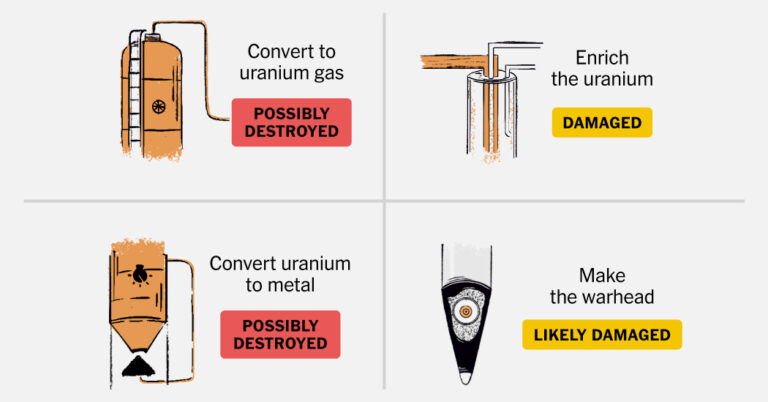
Convert uranium to gas
Possibly destroyed
Before strikes
The only known facility in Iran that could convert natural uranium into gas, in the form of uranium hexafluoride, was in Isfahan.
After
American missiles severely damaged Iran’s main uranium conversion site, most likely destroying Iran’s ability to convert natural uranium into the form required to start the enrichment process. Rebuilding could take years.
Convert uranium to gas
Possibly destroyed
Before strikes
The only known facility in Iran that could convert natural uranium into gas, in the form of uranium hexafluoride, was in Isfahan.
After
American missiles severely damaged Iran’s main uranium conversion site, most likely destroying Iran’s ability to convert natural uranium into the form required to start the enrichment process. Rebuilding could take years.
Enrich uranium
Damaged but extent unclear
Before strikes
This is the hardest part of making a nuclear bomb. Producing bomb-grade uranium requires vast arrays of high-speed centrifuges to spin the uranium gas and concentrate the enriched form. Iran’s Natanz and Fordo sites held more than 18,000 centrifuges, mostly underground.
After
Israel most likely destroyed all the centrifuges at Natanz. And the head of the International Atomic Energy Agency said the centrifuges at Fordo, Iran’s other major enrichment site built deep inside a mountain, appeared “no longer operational” after the U.S. attack. Trump said the facility was “obliterated,” though other assessments were more cautious. Israel also destroyed plants that manufactured centrifuges.
Iran has claimed it has other, secret enrichment facilities. But there is no evidence that other operational enrichment sites exist. Iran has also been assembling advanced, next-generation centrifuges at dispersed locations and, unless diplomacy or military action intervenes, may install them at two underground facilities it has been building.
Enrich uranium
Damaged but extent unclear
Before strikes
This is the hardest part of making a nuclear bomb. Producing bomb-grade uranium requires vast arrays of high-speed centrifuges to spin the uranium gas and concentrate the enriched form. Iran’s Natanz and Fordo sites held more than 18,000 centrifuges, mostly underground.
After
Israel most likely destroyed all the centrifuges at Natanz. And the head of the International Atomic Energy Agency said the centrifuges at Fordo, Iran’s other major enrichment site built deep inside a mountain, appeared “no longer operational” after the U.S. attack. Trump said the facility was “obliterated,” though other assessments were more cautious. Israel also destroyed plants that manufactured centrifuges.
Iran has claimed it has other, secret enrichment facilities. But there is no evidence that other operational enrichment sites exist. Iran has also been assembling advanced, next-generation centrifuges at dispersed locations and, unless diplomacy or military action intervenes, may install them at two underground facilities it has been building.
Store the enriched uranium
Probably still exists
Before strikes
International inspectors estimated this year that Iran had just shy of 900 pounds of nearly bomb-grade uranium. Inspectors last saw some of the stockpile about a week before Israel began its strikes. At that time, it was stored deep inside a nuclear complex near Isfahan in special casks small enough to fit in the trunks of about 10 cars.
Once further enriched, this stockpile would be enough to make nine or 10 atomic weapons, but U.S. intelligence agencies assessed that Iran had not decided whether to make a bomb.
After
A classified U.S. report said that much of Iran’s stockpile of enriched uranium was moved before the strikes. The White House has insisted that it was destroyed but cited no evidence. The I.A.E.A. and European intelligence agencies believe Iran likely dispersed its stockpiles of enriched uranium around the country.
The uranium of greatest concern has already been enriched to a purity of 60 percent, greatly shortening the time required to bring it to 90 percent, which is usually considered weapons-grade fuel. But to do so would require some hidden, working centrifuges.
Store the enriched uranium
Probably still exists
Before strikes
International inspectors estimated this year that Iran had just shy of 900 pounds of nearly bomb-grade uranium. Inspectors last saw some of the stockpile about a week before Israel began its strikes. At that time, it was stored deep inside a nuclear complex near Isfahan in special casks small enough to fit in the trunks of about 10 cars.
Once further enriched, this stockpile would be enough to make nine or 10 atomic weapons, but U.S. intelligence agencies assessed that Iran had not decided whether to make a bomb.
After
A classified U.S. report said that much of Iran’s stockpile of enriched uranium was moved before the strikes. The White House has insisted that it was destroyed but cited no evidence. The I.A.E.A. and European intelligence agencies believe Iran likely dispersed its stockpiles of enriched uranium around the country.
The uranium of greatest concern has already been enriched to a purity of 60 percent, greatly shortening the time required to bring it to 90 percent, which is usually considered weapons-grade fuel. But to do so would require some hidden, working centrifuges.
Convert enriched uranium to metal
Possibly destroyed
Before strikes
Iran had one known facility to convert enriched uranium back into its solid metal state — a critical step before it can be used in a weapon.
After
Israel destroyed Iran’s uranium metal production facility at Isfahan. Without this important capability, Iran cannot make an atomic bomb. However, one expert cautioned that Iran has produced uranium metal at other locations before, and it may have a secret site to conduct the work elsewhere.
Convert enriched uranium to metal
Possibly destroyed
Before strikes
Iran had one known facility to convert enriched uranium back into its solid metal state — a critical step before it can be used in a weapon.
After
Israel destroyed Iran’s uranium metal production facility at Isfahan. Without this important capability, Iran cannot make an atomic bomb. However, one expert cautioned that Iran has produced uranium metal at other locations before, and it may have a secret site to conduct the work elsewhere.
Make a bomb
Likely damaged
Before strikes
To build a modern atomic weapon with the metal, Iran would need to miniaturize crucial components, such as the detonator system, to fit into a missile-capable warhead. It is unclear whether Iran has this capability, but experts believe it has made some progress, and it is thought to have experimented with triggering devices. American intelligence agencies concluded last year that Iran was working on a “faster, cruder” approach to a weapon.
After
Israel destroyed several buildings at the Sanjarian manufacturing facility that were associated with the development of detonation systems and explosives, but Iran may have other similar facilities.
Make a bomb
Likely damaged
Before strikes
To build a modern atomic weapon with the metal, Iran would need to miniaturize crucial components, such as the detonator system, to fit into a missile-capable warhead. It is unclear whether Iran has this capability, but experts believe it has made some progress, and it is thought to have experimented with triggering devices. American intelligence agencies concluded last year that Iran was working on a “faster, cruder” approach to a weapon.
After
Israel destroyed several buildings at the Sanjarian manufacturing facility that were associated with the development of detonation systems and explosives, but Iran may have other similar facilities.
Deliver a weapon
Still possible
Before strikes
With a weapon, Iran could conduct a nuclear test, as North Korea first did in 2006. There are many ways to deliver a weapon, but if it wants to strike a target from afar, it needs planes or missiles to deliver it. Until recently it had thousands of missiles, many of which could carry an atomic weapon.
After
Israel claims to have destroyed hundreds of Iran’s missile launchers, but is unlikely to have completely wiped out Iran’s ability to fire a nuclear-capable missile.
Deliver a weapon
Still possible
Before strikes
With a weapon, Iran could conduct a nuclear test, as North Korea first did in 2006. There are many ways to deliver a weapon, but if it wants to strike a target from afar, it needs planes or missiles to deliver it. Until recently it had thousands of missiles, many of which could carry an atomic weapon.
After
Israel claims to have destroyed hundreds of Iran’s missile launchers, but is unlikely to have completely wiped out Iran’s ability to fire a nuclear-capable missile.
Exhibition: Out West, hosted by Milk & Honey in collaboration with LaPolt Law, Music Business Worldwide, and other partners

MBW was delighted to be a supporting partner of Out West this past week.
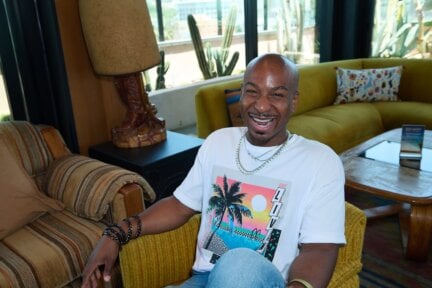
Hosted by Milk & Honey CEO, Lucas Keller, LaPolt Law’s Dina LaPolt, and others, Out West was a ‘Social Sunday’ gathering for LGBTQ+ creatives and executives in the music industry.
The event was held at L.A.’s Desert 5 Spot rooftop at Volume Hotel on Sunday (June 22), forming part of L.A.’s annual Pride Month.
As you can see from the below, Out West brought together an array of great folks from the biz (around 100 people swung by for cocktails and merriment).
Attendees included Keller, plus the likes of Jeannette Perez (Kobalt), Ashley Calhoun (Pulse), Dina LaPolt (Lapolt Law), Aaron Rosenberg (Myman Greenspan), and many other stellar people.
Companies including Spotify, Republic Records, Warner Chappell, and others were well represented.
Naturally, many ludicrously talented songwriters showed up too – including J Hart, Leland, Jesse Saint John, and Sarah Hudson.
In addition to Milk & Honey and MBW, supporters of the event included Spotify Glow, Pulse, LaPolt Law, Sound Royalties, and The Recording Academy’s Los Angeles Chapter.
Thanks to Lucas for the invite to be part of it. Same time next year!










































All photos: Unique Nicole/Getty Images for The Recording AcademyMusic Business Worldwide
The reasons for the EU’s inaction towards Israel in Gaza | Updates on the Israel-Palestine conflict
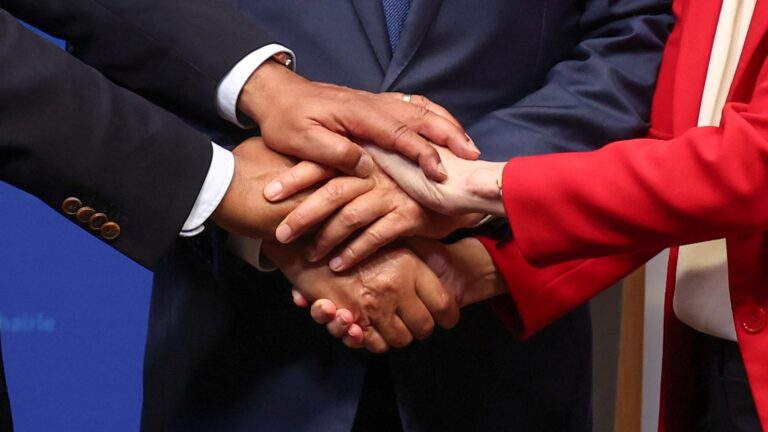
European Union summit fails to act on trade agreement despite findings of human rights abuses.
A European Union (EU) summit in Brussels called for a ceasefire in Gaza, but not for sanctions against Israel.
Germany has led member states in blocking action throughout the war, as others express anger.
So what’s behind the EU’s position on Israel and Gaza?
Presenter: Adrian Finighan
Guests:
Claudio Francavilla – Associate EU director at Human Rights Watch in Brussels
Lynn Boylan – Sinn Fein member of the European Parliament and chair of the European Parliament’s Delegation for relations with Palestine
Giorgia Gusciglio – Europe coordinator of campaigns for the Boycott, Divestment, and Sanctions movement promoting economic pressure against Israel
US stocks reach record high despite Trump ending trade discussions with Canada
Stay informed with free updates
Simply sign up to the US equities myFT Digest — delivered directly to your inbox.
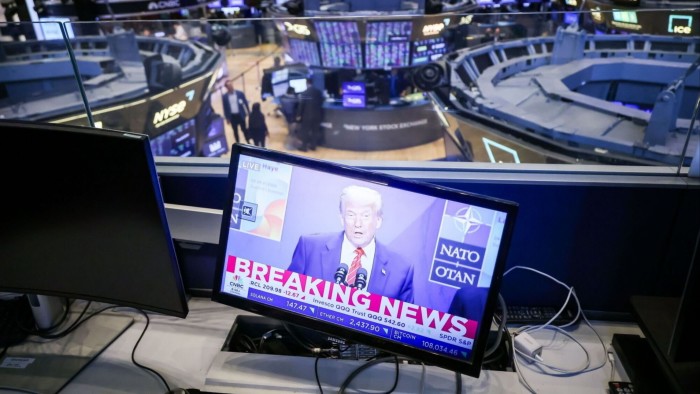
US stocks rose to a fresh closing high on Friday, capping a stunning rebound from a sell-off sparked by Donald Trump’s initial tariff announcements in April.
Wall Street’s S&P 500 ended the session up 0.5 per cent despite the US president halting trade talks with Canada. The index had been up as much as 0.8 per cent earlier, reaching a new record intraday peak for the first time since February.
A US-brokered ceasefire in the conflict between Israel and Iran has boosted equities during the course of the week, easing investors’ concerns about a potential disruption to the flow of oil exports from the Middle East. Trump also said on Thursday the US and China had “signed” a trade truce.
The S&P 500 has risen 27 per cent since hitting a 15-month intraday low on April 7 after the US president announced his “reciprocal tariff” plans several days earlier. The levies unleashed waves of volatility across financial markets, with economists lowering their forecasts for global economic growth.
But Trump’s subsequent delay to some of his tariff plans, along with a series of climbdowns from his more aggressive threats and relatively robust economic data, have spurred a rapid comeback for stocks.
Investors said stocks had also been given a boost this week by the potential scrapping of a provision in Trump’s budget bill that would allow the administration to raise taxes on foreign investments.
“Peak trade uncertainty is in the past, [the US economy] remains resilient and the narrative has re-centred on AI and growth,” said Venu Krishna, head of US equity strategy at Barclays. Citi’s top US equity strategist Scott Chronert expects the S&P 500 to rally a further 2.5 per cent by the end of 2025.
Stocks’ rebound contrasts with continuing pressure on US Treasuries and the dollar — which fell to a three-year low this week — caused by rising concerns about the sustainability of the country’s growing debt.

Measures of US consumer and business sentiment have also been hit by Trump’s erratic tariff announcements on products including metals, semiconductors, cars and basic goods.
But equities have been supported by solid earnings for some of Wall Street’s biggest companies, and signs that Trump’s attempts to radically reorientate US trade policy have yet to reignite inflation or upend the jobs market.
A rush of buybacks and retail investors’ robust demand have provided further fuel to the recent rally. Trump’s landmark tax bill is also forecast by some analysts to boost economic growth and prop up corporate profits.
“Regardless of what actually happens with tariffs, the market seems to view them as old and manageable news,” said Lisa Shalett, chief investment officer at Morgan Stanley Wealth Management.

“The market doesn’t discount the same event twice. There are ‘growth scares’ and we move on.”
Tech stocks slumped early this year but have been the best performers since Trump’s tariff U-turn on April 9. Since that time, shares of analytical software group Palantir are up 69 per cent, online broker Robinhood has risen 144 per cent and server maker Super Micro Computer has gained 50 per cent. “Big Tech led the [earlier] sell-off and is now leading the rebound,” said Krishna.
Industrials stocks have also been big winners in 2025. Howmet Aerospace has gained 69 per cent while Uber and GE Vernova have each rallied more than 50 per cent, putting the three among the best-performing stocks in the sector this year. Defence group RTX and tractor maker Deere have risen by 25 per cent and 23 per cent, respectively.
Yet bearish analysts maintain that the stock market’s gains rest on shaky foundations, warning that slowing growth in bank lending and rising credit card delinquencies point to weakening economic growth.
“While ‘peak pessimism’ may be past, we believe we are far from back to where we were in January,” said Shalett, who said in an email to clients that “in aggregate, the US stock market is even more expensive based on forward earnings” than it was at the start of the year.
Florida Welcomes European Juniors Medalist Nil Cadevall Micolau for the Fall Season

Fitter and Faster Swim Camps is the proud sponsor of SwimSwam’s College Recruiting Channel and all commitment news. For many, swimming in college is a lifelong dream that is pursued with dedication and determination. Fitter and Faster is proud to honor these athletes and those who supported them on their journey.
Nils Cadevall Micolau, a three-time silver medalist at last summer’s European Junior Championships, has committed to Florida to join its recruiting class of 2025. A breaststroke and IM specialist, Micolau will bring some serious firepower to Gainesville as Florida looks to replace 100 breaststroke NCAA Champion Julian Smith, who graduated this year.
Best LCM Times (SCY Conversion)
- 50 Breaststroke: 27.50 (23.87)
- 100 Breaststroke: 1:00.31 (52.53)
- 200 Breaststroke: 2:10.92 (1:54.34)
- 200 IM: 1:59.87 (1:45.10)
- 100 Free: 51.18 (44.66)
- 200 Free: 1:53.02 (1:38.93)
At those European Junior Championships, Micolau placed second in the individual 100 breaststroke (1:01.10) and 200 IM (2:00.34), as well as delivering a split of 1:00.73 on Spain’s silver-medal-winning men’s medley relay. That was the fastest breaststroke leg in the field and the only one under 1:01, as he outsplit Max Morgan, a Team GB Worlds team member for Singapore this summer.
He recently competed at the Barcelona stop of the Mare Nostrum tour, where he made the ‘A’ final in the 50 breast (27.64) and 200 breast (2:14.09), and the ‘B’ final in the 100 breast (1:02.19) and 200 IM (2:05.09). A few weeks later he made a splash at the Spanish Senior Championships in Mallorca, breaking Carles Coll Marti’s national record in the 100 breast with a time of 1:00.31, before taking gold in the final in 1:01.01.
He added wins in the 50 (27.50) and 200 (2:10.92) to complete a breaststroke sweep, before breaking 2:00 in the 200 IM for the first time to take silver (1:59.87), less than a tenth behind former NCAA champion Hugo Gonzalez.
Those are some serious LCM times, with Micolau just over half a second off the World Aquatics ‘A’ cut for Singapore this summer. That was also a more than three second drop from just this May, and he has now dropped over five seconds in the event so far this season. Although Spain have not yet announced their World Championships squad for this summer, he may well be on the team for the medley relay at a minimum.
Converted to yards, his best times would have placed just outside scoring position in the 200 IM and in the ‘B’ final for both the 100 breaststroke and 200 breaststroke. However, considering the success Florida has had with Lithuanian National Team member Aleksas Savickas, who holds breaststroke bests of 50.02/1:49.89, those conversion probably undervalue his impact.
He could well be an NCAA qualifier in his freshman season, and will likely bring home some serious points at SECs and, along with Savickas, will give the Gators a strong 1-2 punch in the breaststroke events again this year despite Julian Smith‘s graduation.
Micolau will be part of a small but strong recruiting class for Florida, joining British Olympian Alex Cohoon, BOTR Jordan Willis and HM Marvin Johnson.
If you have a commitment to report, please send an email with a photo (landscape, or horizontal, looks best) and a quote to [email protected].
About the Fitter and Faster Swim Tour
Fitter & Faster Swim Camps feature the most innovative teaching platforms for competitive swimmers of all levels. Camps are produced year-round throughout the USA and Canada. All camps are led by elite swimmers and coaches. Visit fitterandfaster.com to find or request a swim camp near you.

FFT SOCIAL
Instagram – @fitterandfasterswimtour
Facebook – @fitterandfastertour
Twitter – @fitterandfaster
FFT is a SwimSwam partner.
DR Congo and Rwanda finally sign peace agreement in Washington
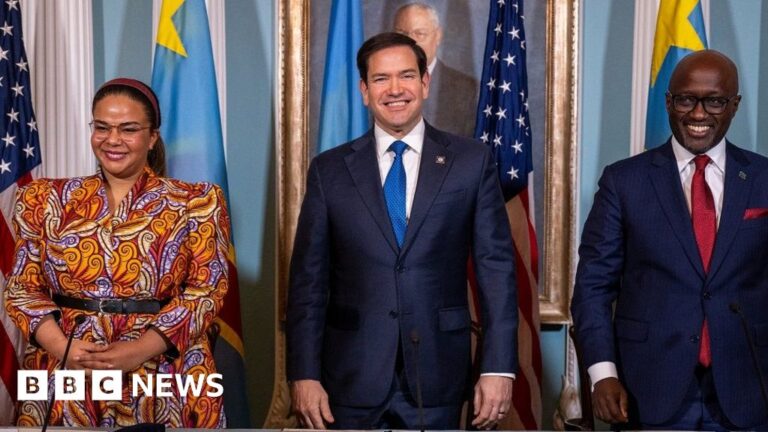
Rwanda and the Democratic Republic of Congo have signed a peace deal in Washington aimed at ending decades of devastating conflict between the two neighbours, and potentially granting the US lucrative mineral access.
The deal demands the “disengagement, disarmament and conditional integration” of armed groups fighting in eastern DR Congo.
Further details are scant and previous peace deals in the region have failed – yet that has not deterred the US and Congolese presidents from framing this as a generational victory.
“This is a great day for Africa and… a great day for the world!,” wrote President Donald Trump on his Truth Social platform last week when an initial agreement was reached.
“Another diplomatic success for President Félix Tshisekedi – certainly the most important in over 30 years,” said the Congolese president’s office ahead of Friday’s signing.
The deal was signed by the Congolese and Rwandan foreign ministers at the US State Department.
There has been talk of Tshisekedi and Rwanda’s President Paul Kagame going to Washington to meet Trump together, though no date has been fixed.
Decades of conflict escalated earlier this year when M23 rebels seized control of large parts of eastern DR Congo including the regional capital, Goma, the city of Bukavu and two airports.
Thousands of people have been killed and hundreds of thousands of civilians forced from their homes following the recent rebel offensive.
After the loss of territory, the government in Kinshasa turned to the US for help, reportedly offering access to critical minerals in exchange for security guarantees. Eastern DR Congo is rich in coltan and other resources vital to the global electronics industries.
Rwanda denies supporting the M23 despite overwhelming evidence, and insists its military presence in the region is a defensive measure against threats posed by armed groups like the FDLR – a rebel militia composed largely of ethnic Hutus linked to the 1994 Rwandan genocide.
Rwanda in turn accuses the Congolese government of backing the FDLR, which is denied by DR Congo. Their presence is of utmost concern to Kigali.
When some information about the deal was released last week, a statement spoke of “provisions on respect for territorial integrity and a prohibition of hostilities”, but there were no specifics.
It also talked about the “facilitation of the return of refugees and internally displaced persons”.
According to a Reuters news agency report, Congolese negotiators had pushed for an immediate withdrawal of Rwandan soldiers, but Rwanda – which has at least 7,000 troops on Congolese soil – refused.
In an angry statement a day before the deal was signed, Rwanda’s Foreign Minister Olivier Nduhungirehe condemned “the leak of a draft peace agreement” saying Rwanda had “demanded the other parties to respect the confidentiality of the discussions”.
The calls for the total withdrawal of Rwandan troops from DR Congo is major point of contention.
But Nduhungirehe said “the words ‘Rwanda Defense Force’, ‘Rwandan troops’ or ‘withdrawal’ are nowhere to be seen in the document”.
Just hours before the signing ceremony, Tshisekedi’s office said the agreement “does indeed provide for the withdrawal of Rwandan troops… [but] preferred the term disengagement to withdrawal simply because ‘disengagement’ is more comprehensive”.
Unless and until full details of the signed deal are made public, several crucial questions remain unanswered:
- Will the M23 rebel group withdraw from areas they have occupied?
- Does “respect for territorial integrity” mean Rwanda admits having troops in eastern DR Congo and will withdraw them?
- Would the agreed “return of refugees” allow thousands of Congolese back from Rwanda?
- Does “disarmament” mean that the M23 will now lay down their weapons?
- Who will disarm the FDLR, after the failure of several previous attempts?
- Would the agreed humanitarian access allow the reopening of the rebel-held airports for aid supply?
Prior to Friday’s signing, Rwandan government spokeswoman Yolande Makolo told Reuters news agency that the “lifting of defensive measures in our border area” would be contingent upon the FDLR’s “neutralisation”.
One of the main actors in today’s conflict – the M23 rebels – were spawned by a previous peace deal 16 years ago that failed to ensure demobilisation.
Last year, Rwandan and Congolese experts reached an agreement twice under Angolan mediation on the withdrawal of Rwandan troops and joint operations against the FDLR – but ministers from both countries failed to endorse the deal. Angola eventually stepped down as a mediator in March.
xMEMS Develops Innovative Cooling Technology for Compact Devices

As our personal devices get smaller and are expected to do more stuff – whether that’s your phone, a smartwatch, or a wearable AI assistant – they also tend to get hotter on the inside. That means it can be hard for them to deliver consistently fast performance, fit more components inside, or avoid getting too warm to handle.
Cooling compact gadgets that don’t have room to spare for a fan can be a challenge. And that’s where xMEMS’ latest technology comes in. The company’s fan-on-a-chip tech can deliver airflow in extremely tight spaces like the guts of your phone with just 1 mm of headroom.
xMEMS’ tiny cooling devices feature a thinfilm piezo layer in the chip that moves a silicon membrane up and down at ultrasonic frequencies (in the hundreds of kilohertz range) when a voltage is applied. That generates air pressure inside a chamber in the cooling chip, which also has a teeny tiny release valve that can open and close rapidly. When that pressure reaches a certain level, the valve opens to release that pressure, creating airflow. You can see a visualization of this in the first 20 seconds of the video below.
xMEMS XMC-2400: The World’s First 1mm-Thin Active Micro Cooling Fan on a Chip
These compact devices are mounted to the top of silicon chipsets to dissipate heat and essentially replace a passive cooling system. For example, the processor in your phone which can heat up when you’re running demanding apps, and a cooling chip could help it avoid throttling performance and getting too warm.
The cooling chips xMEMS is working on are absolutely miniscule: 9.3 x 7.6 x 1.13 mm. For reference, a microSD card that goes in your phone or action camera measures 15 x 11 x 1 mm.
xMEMS
Beyond their ability to spread and expel heat, a major benefit of these compact cooling chips is that they can be installed to perform exactly where they’re needed within tight confines of hardware products – rather than cooling a larger area on the inside.

xMEMS
Interestingly, Santa Clara, California-based xMEMS leverages its piezoelectric technology for airflow generating chips, as well as for next-generation ultrasonic speakers. The company says this approach offers greater clarity and reduced breakup than traditional compact speaker technology, while also being dust and water resistant.
xMEMS Sycamore: World’s First 1mm-Thin Near-Field Full-Range MEMS Loudspeaker
xMEMS is set to begin mass manufacturing its cooling chips early next year, at which point it hopes they will be slotted into smart glasses and other wearable tech. The company notes that as smart glasses become more advanced, the amount of power they draw (total device power or TDP) is expected to go from 0.5-1-W levels to beyond 2 W, which means they could feel warm against your skin. xMEMS says its chips can slash the operating temperature in these glasses by 40%.
It’s worth noting that xMEMS isn’t the only company working on new-age cooling technologies. There’s also San Jose-based Frore Systems, which makes larger and arguably more heavy-duty solid-state cooling chips for drones, cameras, and other hardware. The applications for the chips in both firms’ portfolios have some overlap, and it will be interesting to watch them compete in the microcooling space with future innovations.
Source: xMEMS