

14.4 C
New York
Saturday, April 4, 2026
Home Blog Page 613

Revolutionary Development: New Sustainable Material Transforms Houses into Batteries

0

Two sections on this site focus on construction and renewable energy. However, it’s rare for the two to converge in a single technological breakthrough. The innovative sustainable concrete proposed at MIT is heading in that direction. This new material can store energy, allowing us to imagine buildings as giant batteries that store renewable energy from solar panels on roofs and facades or even windows with photovoltaic glass. In other words, the potential for energy self-sufficient homes. In this article, we discuss this technology and its applications.

Towards sustainable concrete

Since Roman times, concrete has been the bedrock of our civilization. It’s said to be the second most consumed material on the planet after water. However, it requires cement as a basic element. Cement, in turn, is mainly composed of clinker, produced through a thermal process of calcining limestone and clay, which emits carbon dioxide.

For this reason, alternatives are being explored to limit clinker use and thus reduce carbon emissions during concrete production. But this isn’t the only way to achieve sustainable concrete.

Another alternative is functional concretes—materials with properties that indirectly enhance their sustainability and reduce their environmental impact. For instance, self-repairing concrete with greater durability would be more sustainable. So would concrete capable of absorbing atmospheric CO2. The case in point is another functional concrete, theoretically turning buildings and infrastructure into renewable energy storage facilities, contributing to the decarbonization of the economy.

This approach has been explored in recent years with projects like NewSOL, an ACCIONA initiative that used concrete blocks as batteries for solar thermal plants.

MIT’s concrete-battery

So, what does this new sustainable concrete consist of? It’s a material capable of storing energy for short periods. The MIT engineering team used common materials such as cement, water, and carbon black to achieve this.

Carbon black, traditionally used in ink manufacturing, is integrated into the cement to form fractal-like branched structures that exponentially increase the internal conductive surface area, enabling rapid charging and discharging of energy.

The result is a concrete “supercapacitor” that can transform structural elements of houses, like walls or foundations, into battery-like components capable of storing renewable energy. This technology can store up to ten kilowatt-hours for every forty-five cubic meters of material, enough for the daily consumption of an average home or to contribute to the stability of the electricity grid.

Cement supercapacitors can charge and discharge much faster than conventional batteries, providing immediate energy availability when needed. Thus, while not a replacement for existing batteries, it represents a significant step forward in the transition to renewable energy sources like solar and wind, which produce energy intermittently.

If industrialized, we could see houses and buildings in remote areas becoming completely autonomous thanks to solar panels connected to these concrete supercapacitors. We might also envision roads capable of wirelessly recharging electric vehicles while on the move.

However, like any supercapacitor, MIT’s technology doesn’t guarantee a stable electricity supply but offers the potential to cover specific periods when a household runs out of power.

Other examples of sustainable concrete

As noted earlier, some functional concretes are paving the way for more sustainable alternatives with less environmental impact. An example is the self-repairing material recently presented by MIT. Researchers at the U.S. technological institute have created a material that, like plants, uses carbon dioxide from the air to grow and self-repair.

This synthetic polymer, composed of plant-derived chloroplasts and aminopropyl methacrylamide, reacts with light and CO2, allowing the material to strengthen and repair cracks without human intervention. By combining biological and synthetic components, a gel is created that solidifies and repairs cracks when exposed to light and air.

The new sustainable concrete not only promises to extend the life cycle of buildings and reduce natural resource consumption but also significantly reduces carbon dioxide in the atmosphere by utilizing CO2 in its growth process. The researchers’ goal is to use synthetic chloroplasts to extend the material’s life and enable large-scale production.

If you want to learn about other materials like MIT’s sustainable concrete, subscribe to our newsletter at the bottom of this page. You’ll receive content on construction, renewable energies, 3D printing, artificial intelligence, and robotics, among other topics.


Source:
Trump visits migrant detention facility known as ‘Alligator Alcatraz’ in the Florida Everglades

0

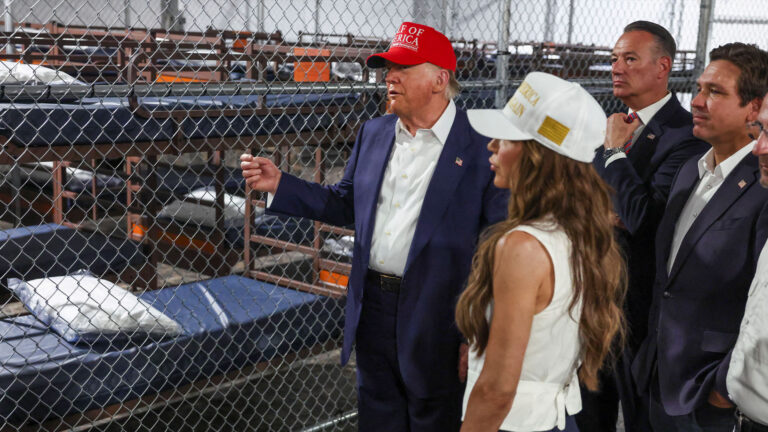
Donald Trump toured ‘Alligator Alcatraz’, a new temporary detention facility set in the middle of Florida wetlands.

The Rebel Alliance’s Victory: How They Took on Starmer over Welfare and Emerged Triumphant

0

Sir Keir Starmer told his cabinet on Tuesday to look back with a “sense of pride and achievement” on Labour’s first year in office — but across the road in the House of Commons his party was convulsed in disarray and recrimination.

Plans to cut £5bn from Britain’s spiralling benefits bill lie in tatters after a week-long Labour rebellion, culminating in a last-minute climbdown by Starmer which ripped the heart out of what was supposed to be his flagship welfare bill.

“People have to understand it was an honest mistake, it wasn’t malicious,” said one cabinet minister minutes before the vote. A bill intended to save £5bn may now actually end up costing money.

Although the watered down welfare bill passed its crucial second reading on Tuesday, the damage caused to the reputations of the prime minister and his key lieutenants, party unity and the public finances is considerable.

After a disorderly retreat over the last week failed to avert the risk of a potential House of Commons defeat, Starmer was forced to bow to his own MPs. “Literally, what’s the point of it now?” asked one Labour MP, looking at the remnants of the bill. “The whole thing has been gutted.”

Kemi Badenoch, Conservative leader, called it a “capitulation” and it was hard to find a Labour MP who disagreed. The blame game on Tuesday night was already in full swing, with chancellor Rachel Reeves attracting a lot of it.

It was Reeves who insisted on £5bn of welfare savings to patch up the public finances, and was blamed by Labour MPs for trying to drive through reforms that were always going to be a hard sell politically.

While there is cross-party consensus on the need to rein in the rising welfare bill, the idea of pushing through cuts equating to taking £5,000 from 1mn sick or disabled people was always likely to create widespread anger at a grass roots level.

Some pointed fingers at the government whips — the parliamentary enforcers who make sure their MPs toe the line — for failing to spot a rebellion that grew to 126 MPs last week.

But Starmer, attending another overseas summit last week in the Netherlands, was accused by several of his MPs of running a Number 10 operation dangerously detached from its parliamentary party and domestic concerns.

“It wasn’t the whips’ fault,” said one Labour MP. “Downing Street was warned, but they didn’t listen.”

Morgan McSweeney, Starmer’s chief of staff, worked closely with Reeves to initially try to force through the original reforms. “They were heavy handed,” said one Labour MP.

One Labour individual close to the discussions said Labour’s high command believed the welfare cuts would be popular with working people, even if they were unpalatable to many MPs.

“It’s not like the winter fuel payment issue,” they said, referring to Reeves’ earlier U-turn in which she agreed to ease public anger by restoring the benefit to millions of pensioners. “The public really cared about that.”

A YouGov poll in March found that 68 per cent of Britons thought the benefit system needed reform, against 18 per cent who said it did not. Some 53 per cent thought the criteria to receive benefits were not strict enough, against 25 per cent who disagreed.

But the public were more supportive of benefits for the disabled and crucially Labour MPs were spooked. The prospect of Starmer facing a rebellion by over 100 MPs set alarm bells ringing last week, and the concessions began.

Starmer’s biggest previous rebellion was 16 MPs voting on planning reforms, according to Phil Cowley, politics professor at Queen Mary University of London.

A deal was cooked up last Thursday to soften the package of cuts to personal independence payments and the health element of universal credit — reducing the potential savings by £2.5bn — including ensuring that existing claimants would not be affected by new eligibility rules.

McSweeney, Labour chief whip Sir Alan Campbell, and deputy prime minister Angela Rayner oversaw the changes from the government side, which satisfied some Labour MPs, but left many still wanting more.

Labour MPs Dame Meg Hillier, Helen Hayes and Debbie Abrahams were in the talks on the “rebel” side, although one normally loyal Labour MP disliked that phrase. “The fact that I’m supposed to be part of a ‘rebel alliance’ shows how wrong the government has got this.”

Liz Kendall, work and pensions secretary, cut an increasingly forlorn figure as she tried to sell the reforms. “She looks as if she’s being tortured,” Badenoch said in the Commons on Tuesday.

But Labour MPs recognised that it was Reeves driving the policy. “The message was confused,” said one minister. “It looked like it was being done for fiscal reasons, rather than to fix a broken system that traps people on benefits.” 

One Labour official added that Reeves was getting “most of the stick” from colleagues, claiming that ministers in Kendall’s department were privately saying the cuts were forced on them by the Treasury.

Badenoch claimed the welfare bill had been “rushed for Rachel” and senior government insiders admitted the chancellor had insisted on a hastily prepared welfare package to shore up her fiscal position in the March Spring Statement.

Until Tuesday night, calls for the chancellor’s sacking had been muted. But after the scale of the debacle there were signs that could change. “Rachel must be toast after this,” said one Labour MP.

Starmer, according to the prime minister’s allies, remains fully supportive of Reeves. “Rachel is the one having to do the lifting on the difficult stuff,” said one colleague.

One well-connected Labour MP said Reeves had opposed the decision last week to make a £2.5bn concession to rebels, fearing it would simply lead to them coming back for more ahead of Tuesday’s vote. “That was Starmer’s decision,” the MP said.

McSweeney, an abrasive political operator with knuckles bruised from his battles with Labour’s hard left, is also facing criticism, although the prime minister on Tuesday told his cabinet that the briefing against him had to stop.

Ultimately it is Starmer, who marks his first anniversary in Downing Street on Friday, who carries the can.

His authority has been dented, the Ming vase of party discipline lies shattered, and the prospect of further welfare reforms by this government has been severely undermined.

Meanwhile Reeves is left with a potential £5bn fiscal hole that economists say may force her to do the politically untenable in the autumn: raise Britain’s taxes again.

Three people die in Ukrainian drone strike on central Russia

0

Three people have been killed and 45 injured following an attack by Ukraine on a factory in the city of Izhevsk – more than 1,000km (620 miles) from the border – Russian authorities say.

Of those injured six had suffered serious injuries, the governor of Udmurtia Aleksandr Brechalov said, adding he had briefed President Vladimir Putin on the attack. A state of emergency was later declared in the region.

Drones reportedly targeted the Kupol Electromechanical Plant – a military factory which is said to produce Tor surface-to-air missile systems and radar stations.

The plant also specialises in the production of Osa air defence systems and has developed drones, according to Ukrainian media.

An Ukrainian official confirmed to BBC Ukraine that two long-range drones operated by the Security Service of Ukraine (SBU) struck the Kupol plant from a distance of around 1,300 km (807 miles).

“Each such special operation reduces the enemy’s offensive potential, disrupts military production chains and demonstrates that even deep in Russia’s rear, there are no safe zones for its military infrastructure,” the source said in comments reported by Ukrainian media.

A video posted on social media and verified by the BBC showed an explosion on the roof of a building, followed by a large plume of black smoke rising over a factory-type chimney.

Russia’s civil aviation regulator Rosaviatsia imposed restrictions on operations at Izhevsk airport, before lifting them a few hours later.

This is second Ukrainian drone attack on the Kupol factory since November – although that strike had not resulted in any casualties.

For its part, Moscow continues to carry out attacks in Ukraine. At the weekend Russia launched a record 537 drones and missiles on various locations across the country, including Kyiv and the western city of Lviv.

On Monday, Ukrainian President Volodymyr Zelensky granted the Hero of Ukraine award posthumously to an F-16 pilot, Lieutenant Colonel Maksym Ustymenko, who was killed while trying to repel the aerial attack.

In a separate development on Tuesday, President Putin and his French counterpart Emmanuel Macron held their first phone talks in more than two years.

Macron “emphasised France’s unwavering support for Ukraine’s sovereignty and territorial integrity”, said a statement from his office.

The French leader also called for a ceasefire and negotiations between Ukraine and Russia “for a solid and lasting settlement of the conflict”, the French statement said.

Meanwhile, a Kremlin statement said that Putin “reminded that the Ukrainian conflict is a direct consequence of the policy of Western states, who for many years ignored Russia’s security interests”.

Any peace settlement must be “comprehensive and long-term” and should eliminate “the root causes of the Ukrainian crisis and be based on new territorial realities”, the Russian statement said.

Putin launched a full-scale invasion of Ukraine in February 2022, and Moscow currently controls about 20% of Ukrainian territory, including the southern Crimea peninsula annexed in 2014.

On the battlefield, while Russia’s advance on the Sumy region seems to have stalled, Moscow appears to be targeting the eastern Dnipropetrovsk region. Unconfirmed reports in Russian media suggested Moscow’s forces took control of the first village in the region.

Two rounds of talks aimed at agreeing a ceasefire between Kyiv and Moscow have taken place at the behest of Donald Trump since May, but have failed to produce tangible results.

Last week, Putin said Russia was ready to hold a new round of peace negotiations although he said that the Russian and Ukrainian peace proposals were “absolutely contradictory”.

On Monday, Zelensky again expressed scepticism of Putin’s intentions. “Putin has already stolen practically half a year from diplomacy… on top of the entire duration of this war,” the Ukrainian leader said.

“Russia is not changing its plans and is not looking for a way out of this war. On the contrary, they are preparing for new operations, including on the territory of European countries.”

US senior envoy for Ukraine and Russia Keith Kellogg echoed this on Monday, when he wrote on X that Russia could not “continue to stall for time while it bombs civilian targets in Ukraine”.

Moscow swiftly pushed back, saying it was not “interested in stalling anything” and thanking the US for its support.

Possible closure of factories by Stellantis as a result of EU penalties for carbon emissions

0

Stellantis may close factories due to EU fines for carbon emissions

Denmark Expands Military Conscription to Include Women

0

new video loaded: Denmark Extends Military Conscription to Women

transcript

transcript

Denmark Extends Military Conscription to Women

Women volunteers currently in the Danish armed forces said that some may “be surprised and like it a lot more than they probably think they would.”

“In the world situation we’re in right now, it’s necessary to have more conscripts. And I think that women should contribute to that equally as men do. And so actually, I think it’s a positive change.” “The political agreement is based on the current security situation, and that’s the reason why that we are escalating the numbers of conscripts. That’s the reason why we need to get more combat power.” “Some will probably be very disappointed at being chosen to go into the military, and some would probably be surprised and probably like it a lot more than they probably think that they would.”

Recent episodes in International

International video coverage from The New York Times.

International video coverage from The New York Times.

The unintentional impact of the Anti-DEI movement on corporate diversity: a strengthened commitment.

0

Andrew Behar is CEO of As You Sow, a nonprofit promoting environmental and social corporate responsibility.

DEI is everywhere these days. Perhaps you attended Diversity, Equity, and Inclusion training at work or heard the loaded term “DEI hire” on cable news. Advocates argue diversity initiatives dismantle systemic biases that keep the best workers from being hired and promoted. Critics say these programs are discriminatory and leave white workers behind. Executives and board directors have had to walk a fine line, but ultimately, they report to shareholders. As this year’s proxy voting season approached, the business community wondered: Would investors vote to dismantle or defend DEI? 

The answer was unequivocal. Over 20 shareholder resolutions were filed this year asking iconic companies to end DEI programs, including at Visa, Deere, Boeing, Goldman Sachs, Levi’s, American Express, Coca-Cola, Berkshire Hathaway, McDonalds, Amazon, Netflix, Walmart, Alphabet, American Airlines, Caterpillar, Best Buy, and Mastercard. Across these annual meetings, over $9.8 trillion in share value voted with management to continue DEI policies and programs. 

Proposals from one serial anti-DEI filer asked companies to “terminate all DEI policies and programs that grant or deny employment or advancement opportunities based on race, sex, or other protected characteristics.” On the surface, few would argue that opportunity should not be based on race or sex, but the underlying intent of anti-DEI resolutions was to exploit racist and misogynistic tropes with little regard for the business. 

Defending DEI

Apple CEO Tim Cook, known for measured statements, reminded shareholders that innovation thrives on diverse perspectives: “Our strength has always come from hiring the very best people and then providing a culture of collaboration, one where people with diverse backgrounds and perspectives come together to innovate and create something magical.” The anti-DEI proposal presented at Apple was overwhelmingly defeated by 98% of shareholders. 

At Disney, executives stood firm against anti-DEI proposals that sought to withdraw the company from diversity benchmarks. The message from Disney leadership was clear: Diverse voices and stories are not a political statement—they are core to the magic that captivates global audiences. Disney’s shareholders agreed, rejecting the proposal with nearly 99% opposition. 

Across Pfizer, Goldman Sachs, Costco, and other major corporations, the trend could not have been more obvious: Anti-DEI proposals “landed with a notable thud” as shareholders stood firm with management with an average 98% votes against ending diversity programs. The votes were extraordinary considering a group of conservative attorneys general threatened shareholders that voting against anti-DEI resolutions could be illegal

Driving growth

The near-unanimous votes reflected deep shareholder trust in the boards and executives who defended DEI publicly and forcefully. When investors have near-unanimous alignment with management—including the assertion that diversity programs drive growth, innovation, and long-term value—executives and the board have the strongest possible mandate to cement DEI as a corporate imperative. 

Far from being swayed by political theater, shareholders sided decisively with the evidence. For example, the Diversity Dividend report from my organization, As You Sow, analyzed 1,641 U.S. companies over five years (2016–2022.) Results showed a statistically significant correlation between diverse management teams and superior financial outcomes, including enterprise value growth rate, free cash flow per share, return on invested capital, and 10-year total revenue compound annual growth rate. Results were so conclusive that investors would have been in breach of their fiduciary duty if they supported proposals to end DEI. 

For these financial reasons, high-profile business leaders have publicly supported diversity programs despite potential political backlash. Costco, for instance, effectively defended its DEI programs, resulting in stable growth and improved employee morale. Conversely, Target, which relented to DEI criticism from social media activists, experienced drops in employee satisfaction and weaker sales. As a general rule, companies that followed legal advice not to capitulate to DEI attacks saw higher reputation scores in 2025. 

Diversity on the rise

In my recent Fortune op-ed, I argued that beneath the heated rhetoric, both proponents and critics actually agree on a fundamental point: Meritocracy should rule. No serious advocate for diversity programs argues against hiring the best candidate for the job. Rather, the debate hinges on whether the playing field is truly level. DEI initiatives aim to remove unseen barriers and unconscious bias, ensuring meritocracy functions as intended.  

Thanks to well-funded anti-DEI crusaders, a once-obscure acronym for corporate diversity programs is now part of the cultural lexicon. In targeting companies with lawsuits, executive orders, legislation, and shareholder resolutions, the politically motivated campaign hell-bent on stopping the erosion of white dominance forced C-suites and boardrooms across America to articulate—sometimes for the first time—why diversity is essential to financial performance. 

The 2025 proxy season affirmed diversity as an essential business principle grounded in business data, immune to fleeting political pressures. The dramatic confrontations that played out at over 20 companies solidified DEI’s place in the corporate world. For investors, executives, and employees alike, the message was loud and unmistakable: Corporate diversity programs aren’t going away—they are stronger than ever.

The opinions expressed in Fortune.com commentary pieces are solely the views of their authors and do not necessarily reflect the opinions and beliefs of Fortune. 

Donald Trump considers potential Elon Musk deportation

0

NewsFeed

‘DOGE is the monster that might have to go back and eat Elon.’ Donald Trump said he would ‘take a look’ at the possibility of Elon Musk being deported. Musk has criticised Trump’s ‘Big, Beautiful Bill’ for what he called ‘insane spending’ and renewed his call for a new political party.

BTS Announces Spring 2026 Comeback with New Album and Extensive World Tour

0

K-Pop superstars BTS are officially coming back next year, marking the end of a hiatus that started in 2022.

The HYBE-signed group revealed during a live stream on superfan platform Weverse today (July 1) that they will release a new album and embark on a world tour in the spring of 2026.

The announcement confirms reports published last month about a March 2026 return for the group.

All seven members of BTS appeared live together during the Weverse livestream, their first joint livestream since completing their mandatory military service.

During the livestream, the group revealed that starting this month, all members will head to the United States to begin working on new music.

“We’re approaching the album with the same mindset we had when we first started.”

BTS

The members said: “We’ll be releasing a new BTS album in the spring of next year. Starting in July, all seven of us will begin working closely together on new music.

“Since it will be a group album, it will reflect each member’s thoughts and ideas. We’re approaching the album with the same mindset we had when we first started.”

Alongside the release of their new album in 2026, BTS are also set to embark on what their label calls a “massive” world tour.

They added: “We’re also planning a world tour alongside the new album. We’ll be visiting fans all around the world, so we hope you’re as excited as we are.”

This will be BTS’s first world tour in approximately four years since the conclusion of ‘BTS PERMISSION TO DANCE ON STAGE’ in 2022.

The tour drew over 4 million attendees/viewers across in-person concerts, online live streaming, live viewing, and live play.

Additionally, BTS shared updates on their upcoming activities for the second half of 2025.

The members reflected on the Korean leg of Jin’s solo tour, ‘#RUNSEOKJIN_EP.TOUR,’ which took place in Goyang, Korea on June 28–29.

Following the ‘j-hope Tour ‘HOPE ON THE STAGE,’’ j-hope is slated to headline Lollapalooza Berlin on July 13.


Today’s livestream marked BTS’s first live broadcast since September 2022. It lasted approximately 30 minutes and garnered over 7.3 million real-time total views.

BTS are RM, Jin, SUGA, j-hope, Jimin, V, and Jung Kook. They debuted in 2013. The group has scored six No.1 Billboard Hot 100 singles since 2020, and performed multiple sold-out stadium shows across the world.

They were also named TIME’s Entertainer of the Year 2020. BTS are 5-time Grammy nominees (63rd to 65th GRAMMY Awards) and have been recognized with numerous awards like the Billboard Music Awards, American Music Awards (Artist of the Year 2021) and MTV Video Music Awards.


BTS were historically HYBE’s biggest earners. News of their break as a group in 2022 rattled investors, with the company’s shares falling by around 25% that day, wiping around $1.5 billion from HYBE’s market cap value in the process.

With the group’s absence, HYBE’s operating profit dropped 37.5% YoY to KRW 184.82 billion ($135.55 million) in FY 2024, which the company attributed to, among other factors, “BTS‘ temporary break.”

Music Business Worldwide

The Essential Links for the 2025 European Junior Championships

0

2025 European Junior Championships

  • Tuesday, July 1 – Sunday, July 6
  • X-bionic® sphere Pool, Šamorín, Slovakia
  • LCM (50m)
  • Start Times – Local: Prelims – 9:30 am / Finals – 6:00 pm
  • Start Times – EST: Prelims – 3:30 am / Finals – 12:00 pm

While we are still about three weeks out from the swimming portion of the 2025 World Championships in Singapore, there is no shortage of championship-level meets this month. With the European U23 Championships wrapping up this past Saturday in Samorin, Slovakia, we now have the European Junior Championships set to take place in the same venue from Tuesday, July 1 through Sunday, July 6.

This year’s meet represents the second-ever continental championship hosted by Slovakia after last week’s U23 meet, with 666 swimmers (308 girls and 358 boys) from 51 countries set to compete.

This 51st edition of the European Junior Championships features girls aged 14-17 and boys aged 15-18. Heats begin at 9:30 AM local time (3:30 AM ET), and finals begin at 6:00 PM local time (12:00 PM ET) on each of the six days of racing.

Here’s a list of all the links that you’ll need to follow the action this week, along with the event schedule.