17.3 C
New York
Saturday, April 4, 2026
Home Blog Page 611

Europe’s Heat Wave Continues Moving Towards the East

0

new video loaded: Europe’s Heat Wave Persists, Moving Eastwards

transcript

transcript

Europe’s Heat Wave Persists, Moving Eastwards

The heat wave moved toward Germany after affecting southwestern Europe, including Spain and France, earlier this week.

“Yes, this year is the hardest year I’ve seen since 15 years I’m living here in Germany. I’m from Kurdistan. We’re normally children of the sun. But for me, it’s too hot. We drink some water. Good water at work 5 liters, 6 liters.” “We have just received an email and the tickets are canceled. And we bought all of them three years ago. But, just for the heat, it’s not possible to go upstairs. So, I don’t know.”

Recent episodes in Latest Video

Whether it’s reporting on conflicts abroad and political divisions at home, or covering the latest style trends and scientific developments, Times Video journalists provide a revealing and unforgettable view of the world.

Whether it’s reporting on conflicts abroad and political divisions at home, or covering the latest style trends and scientific developments, Times Video journalists provide a revealing and unforgettable view of the world.

US Senate rejects 10-year ban on state regulation of AI, supporting creativity sector

0

The US Senate dealt a blow to the technology sector early on Tuesday (July 1), voting 99-1 to strip a provision from President Donald Trump’s economic package that would have prevented states from regulating artificial intelligence for a decade.

The rejection signals a victory to creative industry groups that have campaigned against what they see as an attempt to shield AI companies from accountability when using creators’ art and music to create AI models.

The proposal emerged from concerns that a “patchwork” of state and local AI laws would hinder American AI companies competing against China. Senator Ted Cruz of Texas, who chairs the Commerce Committee, proposed the measure after securing backing from tech leaders.

Initially designed as a 10-year ban on state AI oversight, Cruz and other lawmakers worked to secure that the provision is included in Trump’s GOP megabill. Supporters of the proposal include OpenAI’s Sam Altman, Anduril’s Palmer Luckey, and a16z’s Marc Andreessen, according to TechCrunch.

“People will be at risk until basic rules ensuring safety and fairness can go into effect.”

Sarah Huckabee Sanders, Governor of Arkansas

However, the proposal drew opposition as further details emerged. Arkansas Governor Sarah Huckabee Sanders, Trump’s former press secretary, rallied Republican governors against the measure, writing to Senate Majority Leader John Thune and Speaker of the House of Representatives Mike Johnson last week to remove the AI regulatory moratorium.

Sanders wrote: “People will be at risk until basic rules ensuring safety and fairness can go into effect.”

Senator Marsha Blackburn of Tennessee, who initially supported the moratorium, ultimately partnered with Washington Democrat Maria Cantwell to kill the provision entirely.

Despite Cruz and Blackburn teaming up to pitch changes to the AI moratiorium including shortening the timeframe to five years, Blackburn pullled her support, citing “problems with the language” of the amendment.

“While I appreciate Chairman Cruz’s efforts to find acceptable language that allows states to protect their citizens from the abuses of AI, the current language is not acceptable to those who need these protections the most.”

Marsha Blackburn, US Senator

Blackburn on Tuesday said: “While I appreciate Chairman Cruz’s efforts to find acceptable language that allows states to protect their citizens from the abuses of AI, the current language is not acceptable to those who need these protections the most.”

“When I spoke to President Trump last night, he said it was a terrific agreement… But outside interests opposed that deal.”

Ted Cruz, US Senator

Cruz suggested the bill could have “passed easily” if Blackburn hadn’t withdrawn her support.

“When I spoke to President Trump last night, he said it was a terrific agreement,” Cruz was quoted by the Associated Press as saying. “The agreement protected kids and protected the rights of creative artists. But outside interests opposed that deal.”

The Human Artistry Campaign  which represents recording artists, songwriters, composers, publishers, independent record labels, journalists, photographers, actors, athletes and more — welcomed the decision, arguing that the ban would have prevented states from requiring transparency about whose artistic works train AI models and from blocking unauthorized deepfakes.

“This dangerous and unwise proposal would have banned states from passing new legislation or enforcing existing laws, including to provide greater transparency about whose art was copied to create AI models and banning nonconsensual deepfakes and voice clones.”

Human Artistry Campaign

Following the vote, the campaign said in a statement to MBW: “The Human Artistry Campaign is grateful to Senators Blackburn and Cantwell for their steadfast support and applauds the Senate’s resounding rejection of AI without guardrails. This dangerous and unwise proposal would have banned states from passing new legislation or enforcing existing laws, including to provide greater transparency about whose art was copied to create AI models and banning nonconsensual deepfakes and voice clones. There is a better way forward with policies that recognize AI could be a valuable tool aiding human creativity, but should never be used to destroy artistry and culture.”

Mitch Glazier, Chairman and CEO of the Recording Industry Association of America, also welcomed the news, telling MBW: “We applaud Senators Blackburn and Cantwell for their persistent leadership to protect artists and rightsholders – driving a nearly unanimous Senate rejection of a proposed 10-year ban on state-based AI guardrails.”

“This final vote is a resounding dismissal of the shortsighted, zero-sum game thinking from some tech companies and signifies a widespread recognition that respect for human creativity does not impede winning the AI race, but instead is essential to its success.”

Mitch Glazier, RIAA

Added Glazier: “Federal and state governments both have a critical role to play in protecting creators while promoting AI innovation. This final vote is a resounding dismissal of the shortsighted, zero-sum game thinking from some tech companies and signifies a widespread recognition that respect for human creativity does not impede winning the AI race, but instead is essential to its success.”

The RIAA represents the US recording industry, whose members include major record labels and distributors.

Music Business Worldwide

The UK seeks to ban Palestine Action, calling into question its moral compass in the Israel-Palestine conflict.

0

In the coming days, the United Kingdom government is moving full steam ahead to proscribe Palestine Action – a movement of young people with a conscience – as a terrorist group. Some of its members are already behind bars; others face trials or await sentencing. Yet, despite the “terrorist” label and the threat of imprisonment, tens of thousands across the country have taken to the streets chanting, “We are all Palestine Action”.

If the government’s goal was to intimidate people into silence – to ensure British complicity in genocide continues unchecked – it has badly miscalculated. A recent poll found that 55 percent of Britons are against Israel’s war on Gaza. A significant number of those opponents – 82 percent – said Israel’s actions amount to genocide. Something fundamental is shifting. There is a gaping disconnect between the media’s narrative and the views of common people, who reject ministerial spin and the framing of resistance to tyranny and fascism as terrorism.

Like the defiant youth of Palestine Action, I too was once branded a terrorist. In 1981, I was a member of the United Black Youth League. We knew building petrol bombs was legally “wrong”, but we believed in our right to defend our community – even by armed means – against fascist threats in Bradford. Arrested alongside 11 others, I faced terrorism charges carrying life sentences in what became known as the Bradford 12 case.

While our struggle was against local fascists, Palestine Action’s fight is nobler: exposing and halting a genocide in Palestine, carried out by Israel’s neo-fascist regime with British support. And unlike us, they have not taken up arms. Where we built crude weapons in self-defence against immediate violence, Palestine Action has used only nonviolent direct action – spray-painting warplanes, occupying factories, and disrupting business as usual – to confront British complicity in genocide. I recognise their rage – I have gone hoarse screaming about genocide myself. How many burning children must we see to know it is wrong? How many starving families must be slaughtered to sustain an apartheid state?

The pain is sharper knowing the weapons murdering Palestinians are made in Britain. It is worse watching hypocritical politicians twist words – from Keir Starmer justifying genocide early on, to now hiding behind hollow phrases like “Israel’s right to defend itself”. But as United Nations Special Rapporteur on the Occupied Palestinian Territories Francesca Albanese and many others have repeatedly clarified: “Israel has no right to defend itself against those it occupies.”

If the UK government succeeds, anyone associated with Palestine Action will be branded a “terrorist”. During the Bradford 12 trial, we were painted the same way. Like Palestine Action activists, we had, in our own time, fought for a more just and fairer world.

Palestine Action emerged from the failure of endless protests demanding an end to never-ending wars and justice for Palestine. As they state: “Palestine Action is a direct action movement committed to ending global participation in Israel’s genocidal and apartheid regime. Using disruptive tactics, we target enablers of the Israeli military-industrial complex, making it impossible for them to profit from Palestinian oppression.”

We, the Bradford 12, were born from the police’s failure to protect us from fascist violence. We took armed self-defence into our own hands in an organised community defence. To do nothing would have been the greater crime. Similarly, UK complicity in genocide demands action. Disrupting the war machine is not criminal; it is a moral necessity.

At our 1982 trial in Leeds Crown Court, tens of thousands mobilised to demand our acquittal. They saw through the state’s lies – they knew convicting us would unleash repression against youth movements, trade unions, and anyone fighting for justice. The jury faced a pivotal question: What kind of world do you want to live in if you acquit these men? I testified that, faced with the same threats, we would do it all again. That question echoes today; if Palestine Action is criminalised, we risk slipping into a lawless world where genocide becomes the norm, not the exception.

We were acquitted, establishing a legal precedent for armed community self-defence. Palestine Action needs no precedent to justify its cause, because its actions are already grounded in legality, morality, and nonviolence. It is not a threat – it is a moral compass. The UK must follow it, not ban it.

The views expressed in this article are the author’s own and do not necessarily reflect Al Jazeera’s editorial stance.

Doubts over Rachel Reeves’ future after emotional PMQs cause UK bonds to plummet

0

Unlock the Editor’s Digest for free

UK government bonds faced their biggest one-day sell-off since the 2022 “mini” Budget after Sir Keir Starmer declined to back a tearful Rachel Reeves during Prime Minister’s Questions.

Starmer refused to say that the chancellor would remain in her post in a combative exchange on Wednesday with Conservative leader Kemi Badenoch following Labour’s dramatic gutting of its welfare bill, which abandoned a planned £5bn in savings.

Gilts slumped as investors grew increasingly nervous about the UK public finances, pushing the 10-year yield up 0.2 percentage points to 4.66 per cent, on course for the biggest one-day rise in borrowing costs since the market fallout from Liz Truss’s unfunded tax cuts three years ago. The pound dropped 1 per cent against the dollar and 0.6 per cent against the euro.

“There is a risk that a sell-off in gilts becomes self-reinforcing, if market fiscal worries are left unchecked,” said Mark Dowding, chief investment officer for fixed income at RBC BlueBay Asset Management.

Reeves, who sat beside Starmer during PMQs on Wednesday, appeared to shed a tear after the prime minister stopped short of giving her his full backing when asked about her future by Conservative leader Badenoch. She had entered the chamber looking visibly upset.

Starmer, who has previously publicly backed Reeves, said he was “thankful” for the chancellor but the absence of full-throated support increased speculation that her position is under threat.

A Labour spokesperson, asked why Reeves appeared distraught, said she had no comment and referred questions to the Treasury.

She added: “The chancellor is going nowhere. She has the prime minister’s full backing.”

Reeves has become a target for rebel anger over Labour’s handling of the welfare reforms.

Badenoch said the chancellor was being used by Starmer as “a human shield for his incompetence” and said that she looked “miserable”.

As PMQs ended, Reeves was ushered out of the chamber by her sister and fellow MP, Ellie Reeves, who is chair of the Labour party. She appeared to squeeze the chancellor’s hand as she guided her from the chamber.

The spokeswoman said the prime minister had previously said Reeves would serve as chancellor for the whole parliament. “He doesn’t have to repeat [that] every time.”

Asked whether Reeves had offered her resignation, the spokesperson said: “No.” She said Reeves and Starmer were getting on with delivering reform.

A spokesperson for Reeves said: “It’s a personal matter, which — as you would expect — we are not going to get into. The chancellor will be working out of Downing Street this afternoon.”

A spokesperson for Badenoch said: “The ‘personal matter’ doesn’t cover it. I think we should find out what’s going on.”

Asked what markets might make of the chancellor appearing to cry in the House of Commons, the Labour spokesperson said: “We don’t comment on markets.”

Pointing to the bond sell-off, Mike Riddell, a fund manager at Fidelity International, said: “The conclusion from the gilt price action this afternoon is that the market actually likes Rachel Reeves.”

Labour’s U-turn late on Tuesday managed to stop its welfare reform bill from being defeated, but required the prime minister to gut it of any measures that may have led to a net saving in the long run.

Reeves’ position is of huge interest to investors as she has pledged to abide by strict fiscal rules. But she is operating with minimal fiscal headroom and the government’s U-turn on welfare has blown a £5bn hole in her plans.

There is growing speculation she will need to increase taxes at the autumn Budget or pare back Labour’s spending plans — something that has become more challenging with backbench MPs increasingly aware of the sway they can exercise over the government’s agenda.

Video: Transforming a house into a library to address the literacy challenge in the Philippines

0

A retired accountant has turned his home in Manila into a public library.

Hungary central banker says inflation outside tolerance band leaves no room for rate cuts

0

No scope for rate cuts with inflation outside tolerance band, Hungary central banker says

Militants from the Jihadist group carry out synchronized attacks on military bases

0

Jihadist fighters have launched a series of simultaneous attacks on military posts across numerous towns in Mali – the third major assault on the army over the last month.

Mali’s army said it repelled Tuesday morning’s attacks, allegedly “neutralising” more than 80 militants, without saying if there were any other casualties.

However, Jama’at Nusrat al-Islam wal Muslimin (JNIM), an al-Qaeda-linked group who said it was behind the attacks, said it had taken control of three army barracks.

For more than a decade Mali has been wracked by a deadly Islamist insurgency, as well as attacks from separatist movements.

In a statement broadcast on national TV, army spokesperson Souleymane Dembele said: “The enemy suffered significant losses in every location where they engaged with the security and defence forces.”

Col Dembele added that the army recovered weapons, vehicles and motorcycles from the assailants.

Earlier, the armed forces said that the attacks had occurred across seven towns and cities, including Binoli, Kayes and Sandere, near the border with Senegal. There were also attacks further north, near Mali’s frontier with Mauritania.

A resident of Kayes told the BBC that gunshots could be heard “everywhere” during the attack.

“The police station was damaged, as well as the governor’s house,” he said, adding that casualty figures were still unclear.

JNIM called its attack “co-ordinated and high quality” in a statement posted on social media. They did not detail any casualties.

The group has also said it carried out two other significant recent attacks.

On 2 June, militants targeted both an army camp and airport in the ancient, northern city of Timbuktu.

Just a day before, a raid killed at least 30 soldiers in the centre of the country.

The attacks, the latest sign of rising insecurity in Mali and the wider Sahel region, came after the United States Africa Command warned about growing efforts by various different Islamist militant groups which operate in the Sahel to gain access to West Africa’s coastline.

During a press conference in May, the commander of United States Africa Command (Africom), Gen Michael Langley, described recent attacks in Nigeria, the wider Sahel, and the Lake Chad Basin as deeply troubling.

He warned that the groups’ access to the coast would significantly boost their capacity for smuggling and arms trafficking.

Insider from North Korea exposes the secrets of the IT scam industry

0

For more than a decade, Kim Ji-min served as an IT worker inside a vast global scheme devised by North Korea’s authoritarian leadership to evade crushing financial sanctions. Kim has since defected to South Korea. Now, he is sharing his experience as a cog in the IT worker conspiracy employed by the Democratic People’s Republic of Korea to amass billions to fund its weapons of mass destruction program

The North Korean IT worker scheme has become one of the most urgent cybersecurity issues among global Fortune 500 businesses. Hundreds of companies have unknowingly hired thousands of North Korean IT workers in recent years, giving them access to personal information and intellectual property and paving the way for U.S. dollars to be used as a funding source for DPRK authoritarian ruler Kim Jong Un’s nuclear ambitions. U.S. authorities are publicizing the issue with joint warnings from the FBI and Department of Justice, alongside top cyber experts who have chosen to speak out about the threat. 

U.S. Attorney for the Northern District of Georgia Theodore S. Hertzberg told Fortune the office announced charges against four North Korean IT workers this week as part of an orchestrated publicity campaign to encourage business and tech leaders to better understand the threat they’re facing. 

“It is not uncommon for business owners to meet potential partners and employees online,” said Hertzberg in a statement. “But companies that work in this space would be wise to hire Americans and to thoroughly vet all potential employees and partners, preferably in person.”

Inside the IT worker operation

Kim was one among thousands of trained software developers deployed outside the DPRK to get lucrative jobs in tech using stolen identities. The delegations of workers are then forced to send the majority of their earnings to the government—part of a global money-making and laundering empire that generates up to $600 million a year, according to UN estimates, not including the billions stolen in crypto heists. 

Kim told Fortune his minimum earnings target was $5,000 per month up until the COVID-19 pandemic led to a boom in the remote IT sector. Once remote-work offerings exploded, his target amount doubled. Typically, the money was converted to U.S. dollars at local work sites overseas and then delivered either directly to North Korean headquarters or to a representative of the headquarters abroad. 

“My primary job was to earn foreign currency through IT services,” said Kim, according to an email translation of his interview responses. “However, during the COVID-19 pandemic, I often received additional instructions to intensify regime propaganda online as well.”

Kim’s interview was facilitated by People for Successful Corean Reunification (PSCORE), which provided translation and access. PSCORE was founded in 2006 by Kim Young-Il, a North Korean defector, and the group has worked with thousands of other former DPRK citizens who have since fled the country. PSCORE retains UN Economic and Social Council consultative status, which allows it to participate in UN meetings and research. 

Kim is living in South Korea under an alias to avoid endangering his friends and family, who could be targeted by the DPRK government in retaliation for his actions and interviews with U.S. media. That chilling calculus keeps most North Korean IT workers in line, PSCORE secretary general Bada Nam told Fortune

According to Nam, the regime’s reach and control extends far beyond individual IT and other workers stationed abroad. 

“Not only their immediate family members, but even distant relatives could get punished if a relative escapes from North Korea,” said Nam. “They are sending the message to the entire people of North Korea, ‘If any family member defects from North Korea or betrays their fatherland, then they will get punished.’”

Those who remain behind are often under constant and severe surveillance, Nam explained. DPRK government workers might be following a defector’s family members in addition to entire neighborhoods. The consequences of a defection can be devastating.

“In some cases, they send the entire family to political prison camp and they cannot get out of that camp for their entire life,” he said. 

Despite the risk, Kim has chosen to break his silence by answering questions from select news outlets. 

Deception Tactics

Kim’s method of disguising his true identity was elaborate and involved the use of popular tech networking and job websites. 

“I used platforms like Facebook, LinkedIn, Freelancer.com, and Upwork.com to pose as a client and post project listings,” Kim said. “I would then contact developers, negotiate with them—including handling payment—and gain access to their accounts.”

Using the identities of those who engaged with him on those platforms, whether they were European or American, Kim would then disguise himself using the identities of those who had sent bids to him. Thus, he was using real, verified identities in order to conceal his own, he said. Kim posted on other platforms as well, including Freelance.com, Guru.com, and Toptal, he said.

In his work, Kim received and carried out development orders from multiple American companies, with his main area of work focused on e-commerce shopping sites and occasionally mobile app development. In Europe, he worked on developing a healthcare app. Kim declined to name any specific companies because he said sharing specifics could lead to inferences about his personal information.   

While Americans in the U.S. have been indicted for knowingly taking part in the North Korean IT worker scheme by renting out their identities or hosting laptop farms in their homes, in Kim’s experience, the Americans who were involved in the scheme were unwitting. He pushed back against a question referring to Americans involved in the scheme as “accomplices.” 

“It would be more appropriate to say they were simply clients who placed orders for work,” he said. “They had no idea we were from North Korea.”

He described the conditions he worked under as “relatively decent.” The workspace and sleeping quarters were “sufficiently spacious” and the food conditions were “good.” But work could also turn brutal if the IT workers weren’t delivering on their financial targets.

“We were required to work a minimum of 10 hours a day, and if we failed to meet the assigned targets, we were sometimes forced to work more than 18 hours a day,” he said. 

He denied ever being asked to share information with DPRK workers who engaged in crypto heists and claims he had “no contact whatsoever with individuals involved in those activities.”

Direct contact with Kim’s family wasn’t possible, he said. During phone calls between his overseas team and the headquarters in North Korea, the IT workers would occasionally get brief updates about major family issues, although in principle, sharing personal family matters was forbidden. 

“We could receive information if it was truly serious and deemed necessary,” he said. “Conversely, in cases where something significant happened abroad—such as an accident or serious illness—the information could also be relayed back to our families through North Korean headquarters.”

Life after the Scheme

Kim’s decision to defect comes at an enormous personal cost, in addition to the harsh reality that his family and even distant relatives could be in danger because of him. Nam said that fear—coupled with extreme personal risk—creates a psychological trap that stops most DPRK citizens from even thinking about escaping. If families attempt to contact defectors, it can become another tool for DPRK control. 

“The regime could pressure the family to contact the defector in South Korea, asking them for small favors,” said Nam. “If the defector responds, sending any information can slowly turn into a situation where they are being used as an unwilling source of information.”

Nam said some defectors have been recaptured afterward because they contacted family members. 

For now, Kim remains in South Korea facing an uncertain future. He is skilled in IT so he plans to continue working in the field, but the psychological scars remain. 

“As for how I feel—it’s a mix of the joy of gaining freedom and the sorrow of losing my family,” said Kim. “From my perspective, it feels like I’ve lost more than I’ve gained.”

He estimates there are thousands of IT workers operating the way he was, some overseas and others inside North Korea. 

In response to a request, a Meta spokesperson declined to comment. LinkedIn directed Fortune to its update on fighting fake accounts. Upwork directed Fortune to its approach to state-sponsored threats. Freelance.com., Freelancer.com, Guru.com, and Toptal did not immediately respond to requests for comment.

Mouthwash with Herbs Maintains Beneficial Bacteria in the Mouth

0

A herbal mouthwash selectively killed off bad bacteria in the mouth while preserving the good strains, according to a new study. It suggests an alternative to conventional mouthwashes, which were found to kill indiscriminately and damage gum tissue.

Evidence is growing about the health-giving properties of good oral bacteria. Prior research has linked disturbances in the oral microbiome to depression, anxiety, autism spectrum disorder, Parkinson’s disease, dementia, and schizophrenia. So it makes sense that we would want to hold on to good mouth bacteria and rid ourselves of the not-so-good.

A new study led by the Rutgers School of Dental Medicine has examined the effect of using a commercially available herbal mouthwash on oral bacteria, compared with conventional mouthwashes such as PerioGard and Listerine, and found that one is clearly better for maintaining the microbiome.

“It’s a paradigm shift,” said Georgios Kotsakis, the school’s assistant dean for clinical research and the study’s corresponding author. “We’re moving from eradicating all bacteria to focusing on selectivity. We want to keep the good bacteria alive while targeting the bad.”

The herbal mouthwash the researchers tested was StellaLife VEGA Oral Rinse, which, according to the website, contains the active ingredients azadirachta, calendula, echinacea, and plantago “in homeopathic dilution.” Homeopathic dilution is a process in which a substance is diluted with alcohol or distilled water before being vigorously shaken. The belief is that highly diluted substances can stimulate the body to heal itself. Against this product, the researchers tested 0.12% chlorhexidine gluconate mouthwash (sold as Savacol, Peridex, or PerioGard) and Listerine Cool Mint mouthwash. Saline was used as a control.

Each of the mouthwashes was applied to specific oral bacterial cultures – Streptococcus oralis, Streptococcus gordonii, Veillonella parvula, Fusobacterium nucleatum, and Porphyromonas gingivalis – and bacterial growth was assessed. The effectiveness of the mouthwashes was also tested against biofilms, bacterial communities encased in a self-produced slimy substance that adheres to surfaces and can provide resistance to antibiotics and the immune system. And, finally, the mouthwashes were assessed for their damage to human gum cell cultures.

Conventional mouthwashes’ “carpet bombing” approach destroyed helpful and harmful bacteria, and damaged gum tissue

StellaLife’s oral rinse exhibited a selective antimicrobial action. It inhibited disease-causing bacteria F. nucleatum and P. gingivalis but spared beneficial bacteria S. oralis, S. gordonii, and V. parvula. In contrast, the chlorhexidine and Listerine mouthwashes killed both harmful and helpful microbes indiscriminately. In lab models of bacterial species, the homeopathic oral rinse reduced harmful bacteria while maintaining a biofilm of normal, healthy bacteria. In more complex biofilms from real clinical samples, the herbal wash effectively disrupted bad biofilms and reduced pathogenic bacteria compared to chlorhexidine and Listerine.

When the products were tested on human gum cells, chlorhexidine caused significant cell death, and Listerine caused moderate damage. StellaLife showed minimal toxicity, preserving cell structure and viability, suggesting it was more compatible with human tissues.

“These good bacteria have important functions,” Kotsakis said. “They synergize with your tissues. They actually kill some of the bad bacteria themselves.”

There are limitations to the study. Most results are from controlled laboratory models, not live human subjects, so real-world conditions may differ. And while biofilm volume and viability were measured, the detailed bacterial composition post-treatment wasn’t evaluated by, say, DNA sequencing. Also, the exact way that StellaLife’s oral rinse selectively kill pathogens and spares good bacteria remains unclear. Finally, the experiments mostly covered hours to days; long-term effects on the oral microbiome weren’t assessed.

Despite these limitations, the study’s findings are instructive. They suggest a move away from a scorched-earth, carpet-bombing approach to oral hygiene, such as that provided by conventional mouthwashes, to one that is more selective and protective of good oral bacteria.

“Randomized clinical trials are the next step,” said Kotsakis. He offered this piece of advice: “If you’re brushing and flossing like a dentist – regularly and perfectly – you may not need a mouthwash, but in reality, even the best of us can miss some surfaces during cleaning at home.”

The study was funded by StellaLife and was published in the journal Frontiers in Oral Health.

Source: Rutgers University

Trump’s “Big, Beautiful Bill” Successfully Passes Senate: Breakdown of Contents and Voting Results | Latest Updates on Donald Trump

0

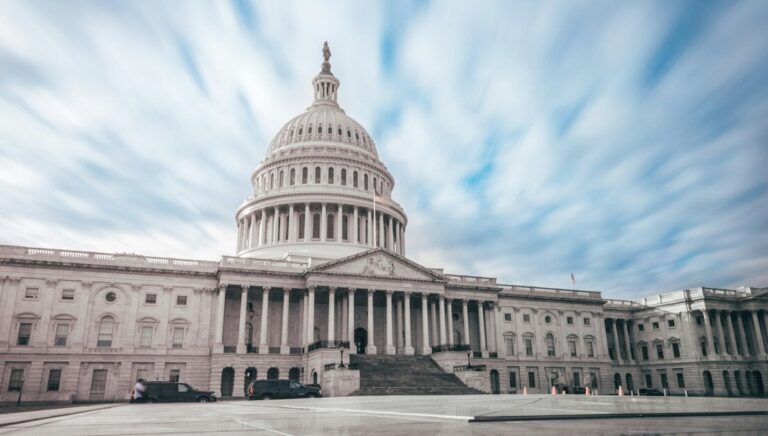
The United States Senate narrowly passed President Donald Trump’s massive tax and spending bill on Tuesday, following intense negotiations and a marathon voting session on amendments.

The bill, which still faces a challenging path to final approval in the House of Representatives, would impose deep cuts to popular health and nutrition programmes, among other measures, while offering $4.5 trillion in tax reductions.

The measure was approved after almost 48 hours of debate and amendment battles.

Here is what you need to know:

What is Trump’s ‘Big, Beautiful Bill’?

The bill is a piece of legislation that combines tax cuts, spending hikes on defence and border security, and cuts to social safety nets into one giant package.

The main goal of the bill is to extend Trump’s 2017 tax cuts, which are set to expire at the end of 2025. It would make most of these tax breaks permanent, while also boosting spending on border security, the military and energy projects.

The bill is partly funded by cutting healthcare and food programmes.

The nonpartisan Congressional Budget Office estimates Trump’s measure will increase the US debt by $3.3 trillion over the next 10 years. The US government currently owes its lenders $36.2 trillion.

The key aspects of the bill include:

Tax cuts

In 2017, Trump signed the Tax Cuts and Jobs Act, which lowered taxes and increased the standard deduction for all taxpayers, but it primarily benefitted higher-income earners.

Those tax breaks are set to expire this year, but the new bill would make them permanent. It also adds some more cuts he promised during his campaign.

There is a change to the US tax code called the SALT deduction (State and Local Taxes). This lets taxpayers deduct certain state and local taxes (like income or property taxes) on their federal tax return.

Currently, people can only deduct up to $10,000 of these taxes. The new bill would raise that cap from $10,000 to $40,000 for five years.

Taxpayers would also be allowed to deduct income earned from tips and overtime, as well as interest paid on loans for buying cars made in the US.

The legislation contains about $4.5 trillion in tax cuts.

Children

If the bill does not become law, the child tax credit – which is now $2,000 per child each year – will fall to $1,000, starting in 2026.

But if the Senate’s current version of the bill is approved, the credit would rise to $2,200.

Border wall and security

The bill sets aside about $350bn for Trump’s border and national security plans. This includes:

  • $46bn for the US-Mexico border wall
  • $45bn to fund 100,000 beds in migrant detention centres
  • Billions more to hire an extra 10,000 Immigration and Customs Enforcement (ICE) agents by 2029 as part of Trump’s plan to carry out the largest mass deportation effort in US history.

Cuts to Medicaid and other programmes

To help offset the cost of the tax cuts and new spending, Republicans plan to scale back Medicaid and food assistance programmes for low-income families.

They say their goal is to refocus these safety net programmes on the groups they were originally meant to help, primarily pregnant women, people with disabilities and children – while also reducing what they call waste and abuse.

Medicaid helps Americans who are poor and those with disabilities, while the Supplemental Nutrition Assistance Program (SNAP) helps people afford groceries.

Currently, more than 71 million people depend on Medicaid, and 40 million receive benefits through SNAP. According to the Congressional Budget Office, the bill would leave an additional 11.8 million Americans without health insurance by 2034 if it becomes law.

Clean energy tax cuts

Republicans are pushing to significantly scale back tax incentives that support clean energy projects powered by renewables like solar and wind. These tax breaks were a key part of former President Joe Biden’s landmark 2022 law, the Inflation Reduction Act, which aimed to tackle climate change and reduce healthcare costs.

A tax break for people who buy new or used electric vehicles would expire on September 30 this year if the bill passes in its current form, instead of at the end of 2032 under current law.

Debt limit

The legislation would raise the debt ceiling by $5 trillion, going beyond the $4 trillion outlined in the version passed by the House in May.

Who benefits most?

According to Yale University’s Budget Lab, wealthier taxpayers are likely to gain more from this bill than lower-income Americans.

They estimate that people in the lowest income bracket will see their incomes drop by 2.5 percent, mainly because of cuts to SNAP and Medicaid, while the highest earners will see their incomes rise by 2.2 percent.

Which senators voted against the bill?

Republican Senator Susan Collins of Maine opposed due to deep Medicaid cuts affecting low-income families and rural healthcare.

Republican Senator Thom Tillis of North Carolina cited concerns over Medicaid reductions to his constituents. Tillis has announced that he will not seek re-election, amid threats from Trump that he would back a Republican challenger to Tillis.

Republican Senator Rand Paul of Kentucky voted “no” on fiscal grounds, warning that the bill would significantly worsen the national deficit.

Every member of the Democratic caucus, a total of 47 senators, also voted against the bill.

Who supported the bill in the Senate?

The remaining Republicans voted in favour, allowing the bill to pass 51–50, with the deciding vote cast by Vice President JD Vance.

Trump has set a July 4 deadline to pass the bill through Congress, but conceded on Tuesday that it would be “very hard to do” by that date, since the House now needs to vote on it. The House had passed an earlier version of the bill in May, but needs to look at it again due to the amendments brought by the Senate.

Notable Senator supporters include:

Senator Lisa Murkowski (representative of Alaska): Her backing was secured after Republicans agreed to Alaska-specific provisions, including delayed nutrition cuts and a new rural health fund, making her vote pivotal.

“I have an obligation to the people of the state of Alaska, and I live up to that every single day,” she told a reporter for NBC News.

Senators Rick Scott of Florida, Mike Lee of Utah, Ron Johnson of Wisconsin and Cynthia Lummis of Wyoming: These fiscally conservative senators shifted from hesitation to support following amendments to the bill.

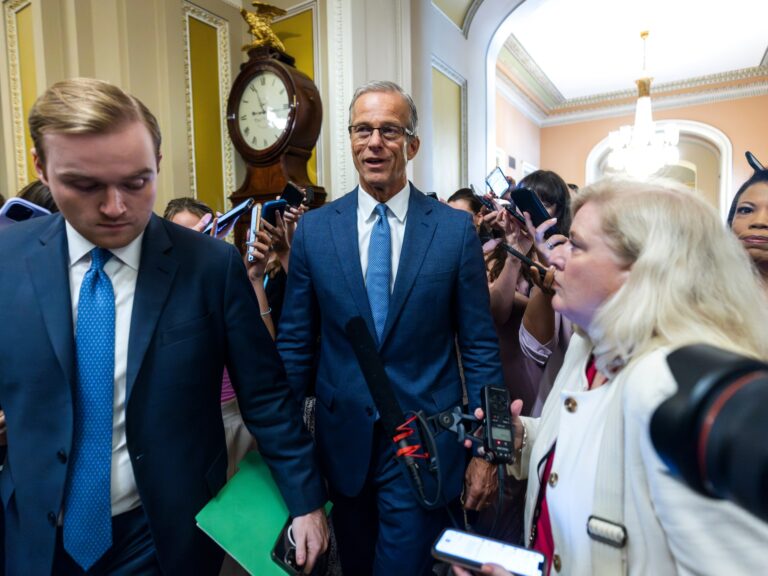
Senate Majority Leader John Thune led the push to pass the legislation.

How have lawmakers and the public reacted?

Most Republican lawmakers celebrated it as a historic achievement.

Trump also expressed delight.

“Wow, music to my ears,” Trump said after a reporter told him the news. “I was also wondering how we’re doing, because I know this is primetime, it shows that I care about you,” he added.

Thune said after the vote: “In the end, we got the job done, and we’re delighted to be able to be partners with President Trump and his agenda.”

Democrats opposed it, calling it a giveaway to the wealthy at the expense of healthcare, food aid and climate policy.

“Today’s vote will haunt our Republican colleagues for years to come,” Democrat Chuck Schumer said in a floor speech after the vote.

“Republicans covered this chamber in shame,” he added.

The US Chamber of Commerce led a coalition of more than 145 organisations supporting the bill, emphasising it would “foster capital investment, job creation, and higher wages”.

They praised the permanent tax cuts and border security funding.

However, healthcare and hospital associations have warned that millions could lose coverage, driving up emergency and unpaid care costs. Environmental groups have also voiced strong opposition.

Public opinion on the bill is in decline, too.

“Initially, [Trump] had more than 50 percent of the support. Now, it is under 50 percent, and politicians know that,” Al Jazeera’s Alan Fisher said, reporting from Washington, DC.

“They are aware that this could lead to a cut in Medicaid. They are aware, even though Donald Trump had promised to protect it, that this could cut nutritional programmes, particularly for poorer families in the United States.

“And although they will get tax cuts, they have managed a lot of the time to be convinced by the Democratic argument that, yes, there are tax cuts, but billionaires will do much better out of this than the ordinary American people, and that is what’s changed the opinion polls,” he added.

What happens next?

The process begins with the House Rules Committee, which will meet to mark up the bill and decide how debate and consideration will proceed on the House floor.

After the bill passes through the Rules Committee, it will move to the House floor for debate and a vote on the rule, potentially as soon as Wednesday morning.

If the House of Representatives does not accept the Senate’s version of the bill, it could make changes and send it back to the Senate for another vote.

Alternatively, both chambers could appoint members to a conference committee to work out a compromise.

Once both the House and Senate agree on the final text, and it is passed in both chambers of Congress, the bill would go to Trump to be signed into law.