

11.2 C
New York
Sunday, April 5, 2026
Home Blog Page 604

Comparing Glass Bottles with Plastic and Cans

0

From ocean depths to kitchen shelves, microplastics have infiltrated nearly every corner of the environment. They’ve been found in food, water, soil, air, household dust, and even human waste. This widespread presence raises serious concerns about its impact on both health and ecosystems.

To better understand the risks and inform public debate, the French food safety agency ANSES ran multiple studies to measure microplastic levels in everyday foods, especially seafood and beverages.

They checked drinks like water, soda, iced tea, wine, and beer to find out how many microplastic particles were in each. The study also looked at whether the type of bottle or cap, like glass vs. plastic, affected how much microplastic ends up in your drink.

Surprisingly, they found that drinks in glass bottles often contain more microplastic particles than those in plastic or metal containers. For example, drinks like cola, lemonade, iced tea, and beer stored in glass bottles contained around 100 microplastic particles per liter, an unexpectedly high number.

In comparison, the same beverages packaged in plastic bottles or cans had five to 50 times fewer microplastics, challenging the common belief that glass is the safer option.

Scientists at ANSES’s Boulogne-sur-Mer lab discovered a surprising source of microplastic contamination: the paint on metal bottle caps. They suspect flakes of paint may break off the lids and end up in drinks. Among the tested beverages, water and wine had fewer microplastic particles compared to others.

Water had few microplastic particles, no matter the packaging, about 4.5 per liter in glass bottles and 1.6 per liter in plastic bottles or cartons. Wine also had low levels when packaged in corked glass bottles.

Why microplastic levels vary between drinks remains unknown, except in one clear case: glass bottles with metal caps.

Researchers wanted to confirm how microplastics get into drinks stored in glass bottles and whether cleaning bottle caps could help. They studied three scenarios after first cleaning the bottles and filling them with filtered water: resealing the bottles with uncleaned caps, blowing air on the caps before sealing, or blowing air and rinsing the caps before sealing.

Researchers found that uncleaned caps released about 287 microplastic particles per liter into bottled water. Blowing air on the caps reduced this to 106 particles per liter. Blowing air and rinsing with water and alcohol, dropped it further to 87 particles per liter.

Key clues that the paint from bottle caps may be the source of contamination include a match between the color and composition of cap paint particles found in the drinks; tiny scratches on the caps, likely caused by friction during storage; and the release of flakes too small to see – indicating that the paint layer itself, rather than the bottle material, is a major source of microplastics.

“We were expecting the opposite result when we compared the level of microplastics in different drinks sold in France,” said Iseline Chaïb, a PhD student in the Aquatic Food Safety Unit conducting the study. “In the absence of toxicological reference data, it is not possible to say whether the levels of microplastics found pose a health risk.”

The researchers point out that their study has uncovered a source of microplastics that beverage producers are well placed to tackle.

Source: Anses

Gas Station in Rome Shaken by Fuel Tank Explosion

0

new video loaded: Fuel Tank Explosion Rocks Gas Station in Rome

A fuel tank exploded in an eastern neighborhood of Rome. Firefighters and police officers had already been called to the gas station after an earlier incident involving a truck.

Recent episodes in Europe

EU to hoard essential minerals as a precaution against potential conflict

0

Unlock the Editor’s Digest for free

Brussels has said it will build up emergency stockpiles of critical minerals and cable repair kits, as concerns grow over the EU’s vulnerability to attack.

“The EU faces an increasingly complex and deteriorating risk landscape marked by rising geopolitical tensions, including conflict, the mounting impacts of climate change, environmental degradation, and hybrid and cyber threats,’’ the European Commission said in a draft document setting out a stockpiling strategy, seen by the Financial Times.

Member states should co-ordinate backup supplies of food, medicines and even nuclear fuel, the EU executive said. It would also accelerate work on EU-level stockpiles of items such as cable repair modules “to ensure prompt recovery from energy or optical cable disruptions” and commodities such as rare earths and permanent magnets, which are crucial for energy and defence systems.

Several instances of potential sabotage to underwater communication cables and gas pipelines in recent years have caused concern about the vulnerability of critical infrastructure.

The strategy is part of a wider push by the EU to improve the security and resilience of the 27-country bloc. Last month, General Carsten Breuer, the German chief of defence, warned that Russia could attack an EU member state within the next four years.

The higher-risk environment was driven by ‘‘increased activity from hacktivists, cybercriminals and state-sponsored groups”, the document said.

The EU is also more susceptible than many other regions to the effects of climate change as it is warming twice as fast as the global average. Wildfires in Crete forced 5,000 people to evacuate the island this week.

In a report commissioned by the EU in October, former Finnish president Sauli Niinistö said that security should be considered a “public good” and called for a preparedness mindset.

On stockpiling, he said that Brussels should “define targets to ensure minimum levels of preparedness in different crisis scenarios, including in the event of an armed aggression or the large-scale disruption of global supply chains”.

The EU in March also advised households to stockpile essential supplies to survive at least 72 hours of crisis.

The bloc already maintains a fleet of firefighting planes and helicopters, a medical evacuation plane, and items such as field hospitals and critical medical supplies across 22 EU countries as part of its emergency response effort for natural disasters.

But the commission said it would establish a “stockpiling network” to improve co-ordination between EU countries. There was “limited common understanding of which essential goods are needed for crisis preparedness against the backdrop of a rapidly evolving risk landscape”, it said in the document.

It would also start compiling regularly updated lists of essential supplies tailored to each region and crisis type. Member states should better incentivise the private sector to help with stockpiling, such as through tax credits, it said.

The bloc should also work with allies on “shared warehousing” and co-ordinate better on managing resources and dual-use infrastructure with Nato.

The need for investment in critical stockpiling would also be considered in proposals for its new multiannual budget, which are due to be put forward later this month.

The draft document is due to be published next week and could change ahead of its presentation.

Chelsea defeats Palmerias, advances to Club World Cup semi-final against Fluminense

0

Chelsea beat Palmeiras 2-1 to reach the semifinals of the FIFA Club World Cup where they will face Fluminense.

A late own goal off Palmeiras defender Agustin Giay lifted Chelsea to a 2-1 victory in Philadelphia, sending the Premier League side into the Club World Cup semifinals.

A shot by Chelsea’s Malo Gusto from the right side deflected off Palmeiras’ Richard Rios and Giay. Goalkeeper Weverton was unable to control the caroming ball before it went into the net.

Chelsea will play Fluminense on Tuesday in East Rutherford, New Jersey. The Brazilian side defeated Al Hilal 2-1 earlier on Friday.

Palmeiras’ Weverton scores Chelsea second with an own goal [Susana Vera/Reuters]

Cole Palmer scored his first of the tournament in the 16th minute for Chelsea before Estevao, who will join Chelsea after the tournament, tied it in the 53rd minute.

Palmer had been criticised by the Chelsea fans for his lack of production despite leading the team in shots on goal during the tournament.

He proved his worth on the goal, taking a pass from Trevoh Chalobah and dribbling from just outside the box to 15 yards out before scoring with a left-footed strike.

“I’ve been working on … the shot in training. I just saw the space and went there,” Palmer told DAZN after the match.

“The manager just said to keep calm and do lots of passes, and we should be all right.”

Chelsea fans didn’t know whether to cheer or cry, however, when Estevao tied it with a brilliant, tight-angle shot for the equaliser.

Estevao #41 of Palmeiras scores his team's first goal past Robert Sanchez #1 of Chelsea
Estevao of Palmeiras scores his team’s first goal past Robert Sanchez of Chelsea during the FIFA Club World Cup 2025 quarterfinal [Carl Recine/FIFA via Getty Images]

He made a verbal agreement with Chelsea in May 2024 but was not permitted to move to England until he turned 18 on April 24, delaying his transfer to the current window.

The clubs arranged that he would remain with Palmeiras until their tournament run ended.

“You can see he [Estevao] is a top player, so we are excited for him [to join Chelsea after the tournament],” Palmer said of his soon-to-be teammate.

Joao Pedro made his Chelsea debut in the 54th minute, two days after his signing from Brighton & Hove Albion of the Premier League was confirmed.

The Brazilian had 10 goals and six assists for Brighton last season.

Chelsea's Cole Palmer scores their first goal
Chelsea’s Cole Palmer scores their first goal of the game [Lee Smith/Reuters]

Pedro’s new manager at Chelsea, Enzo Maresca, was glowing about all aspects of the win.

“It has been a tough game, as we expected,” the Blues boss told DAZN.

“We needed lots of energy. At the end, congratulations to the players because they were very good.

“I’m happy because we won, and also happy because Estevao scored. The perfect night.”

Real Madrid face Borussia Dortmund, while Paris-Saint Germain take on Bayern Munich in the other quarterfinals on Saturday.

This week, Trump announces plans to initiate discussions with China regarding TikTok deal

0

Trump says US will start talks with China on TikTok deal this week

Trump signs the massive tax and spending bill into law

0

Bernd Debusmann Jr

BBC News, at the White House

Anthony Zurcher: Passage of megabill is big win for Trump

US President Donald Trump has signed his landmark policy bill into law, a day after it was narrowly passed by Congress.

The signing event at the White House on Friday afternoon enacts key parts of the Trump agenda including tax cuts, spending boosts for defence and the immigration crackdown.

There was a celebratory atmosphere at the White House as Trump signed the bill ahead of Independence Day fireworks and a military picnic attended by the pilots who recently flew into Iran to strike three nuclear sites.

Trump told supporters it will unleash economic growth, but he must now convince sceptical Americans as polling suggests many disapprove of parts of the bill.

Several members of his own Republican party were opposed because of the impact on rising US debt and Democrats warned the bill would reward the wealthy and punish the poor.

The 870-page package includes:

  • extending 2017 tax cuts of Trump’s first term
  • steep cuts to Medicaid spending, the state-provided healthcare scheme for those on low incomes and the disabled
  • new tax breaks on tipped income, overtime and Social Security
  • a budget increase of $150bn for defence
  • a reduction in Biden-era clean energy tax credits
  • $100bn to Immigration and Customs Enforcement (ICE)

Moments before the bill signing, there was a fly-by of a pair B-2 bombers – the same kind of aircraft that participated in the Iran operation – flanked by highly advanced F-35 and F-22 fighter aircraft.

In a speech from the White House balcony facing the South Lawn, Trump thanked Republican lawmakers who helped usher the bill to his desk. He touted the tax cuts in the bill, brushing aside criticism of the impact to social programmes such as food assistance and Medicaid.

“The largest spending cut, and yet, you won’t even notice it,” he said of the bill. “The people are happy.”

Additionally, Trump praised additional resources being given to border and immigration enforcement and an end to taxes on tips, overtime and social security for senior citizens, which he says the bill will fulfil.

The celebratory mood follows days of tense negotiations with Republican rebels in Congress and days of cajoling on Capitol Hill, sometimes by the president himself.

House Minority Leader Hakeem Jeffries delayed the final vote in the lower chamber of Congress on Thursday by speaking for nearly nine hours.

He called the bill an “extraordinary assault on the healthcare of the American people” and quoted testimony from individuals anxious about its impact.

But his marathon speech only postponed the inevitable. As soon as he sat down, the House moved to a vote.

Getty Images U.S. Speaker of the House Rep. Mike Johnson (R-LA) celebrates with fellow House Republicans during an enrollment ceremony of H.R. 1, the One, Big, Beautiful Bill Act at the U.S. Capitol on July 3, 2025 in Washington, DC.Getty Images

Republican lawmakers celebrated after narrowly passing Trump’s sweeping budget bill before a self-imposed deadline of 4 July

Only two Republicans went against, joining all 212 Democrats united in opposition. The bill passed by 218 votes to 214.

Earlier this week, the Senate passed the bill but US Vice-President JD Vance was required to cast a tiebreaking vote after three Republicans held out.

Hours after the House passed the bill, the president was in a triumphant mood as he took to the stage in Iowa to kick off a years long celebration of 250 years since American independence.

“There could be no better birthday present for America than the phenomenal victory we achieved just hours ago,” he told supporters in Des Moines.

The White House believes the various tax cuts will help stimulate economic growth, but many experts fear that will not be sufficient to prevent the budget deficit – the difference between spending and tax revenue in any year – from ballooning, adding to the national debt.

Analysis by the Congressional Budget Office (CBO) suggests the tax cuts could produce a surplus in the first year but will then cause the deficit to rise sharply.

Chart showing steep rises in US budget deficit each year

According to the Tax Policy Center, the tax changes in the bill would benefit wealthier Americans more than those on lower incomes, About 60% of the benefits would go to those making above $217,000 (£158,000), its analysis found.

The BBC spoke to Americans who may see a cut in the subsidies that help them pay for groceries.

Jordan, a father of two, is one of 42 million Americans who benefits from the SNAP (Supplemental Nutrition Assistance Program) scheme targeted by the bill.

He and his wife get about $700 a month to feed their family of four and the 26-year-old said if this bill reduces what he can claim he would get a second job. “I’m going to make sure that I can do whatever I can to feed my family,” he says.

Watch: what will Trump’s tax and spending bill do to the US national debt?

Along with cuts to SNAP, the changes to Medicaid – a programme that covers healthcare for low-income, elderly and disabled Americans – would result in nearly 12 million losing coverage in the next decade, the CBO estimates.

Republicans defend their changes to Medicaid, saying that by toughening up work requirements they are tackling abuse and fraud.

Polling taken before the bill passed in Congress suggests public support is low and dwarfed by numbers opposed. A recent Quinnipiac University survey pointed to only 29% endorsing the legislation, which rose to two-thirds among Republicans.

But knowledge of the bill may be low too. Reuters reported there was little awareness of the legislation among Trump supporters they spoke to at the Iowa rally on Thursday night.

Texas floods result in at least 13 fatalities and over 20 children reported missing

0

Months worth of heavy rain fell in a matter of hours on Texas Hill Country, killing at least 13 people and leaving more than 20 girls attending a summer camp unaccounted for Friday as search teams conducted boat and helicopter rescues in the fast-moving flood water.

Desperate pleas peppered social media as loved ones sought any information available about people caught in the flood zone.

Lt. Gov. Dan Patrick said somewhere between 6 and 10 bodies had been found so far in the frantic search for victims. Meanwhile, during a news conference conducted at the same time as Patrick’s update, Kerr County Sheriff Larry Leitha reported that there were 13 deaths from the flooding.

At least 10 inches (25 centimeters) of rain poured down overnight in central Kerr County, causing flash flooding of the Guadalupe River and leading to desperate pleas for information about the missing.

“Some are adults, some are children,” Patrick said during a news conference. “Again, we don’t know where those bodies came from.”

Teams conducted dozens of rescues, and emergency responders continued to search for those who were unaccounted for. That includes more than 20 girls missing from summer camps.

“I’m asking the people of Texas, do some serious praying this afternoon. On-your-knees kind of praying, that we find these young girls,” Patrick said.

Comments on a Facebook post from the Kerr County sheriff’s office were riddled with photos of people in the flood zone. Loved ones posted there, hoping someone could offer an update on the whereabouts of those they hadn’t heard from. One woman said she couldn’t reach her daughter, who had rented a cabin in Hunt for her husband and two children, and pleaded for someone to post the names of those already evacuated.

Judge Rob Kelly, the chief elected official in the county, confirmed fatalities from the flooding and dozens of water rescues so far. He said he was advised not to cite specific numbers and said authorities are still working to identify those whose lives were lost.

“Most of them, we don’t know who they are,” Kelly said during a news conference. “One of them was completely naked, he didn’t have any ID on him at all. We’re trying to get the identity of these folks, but we don’t have it yet.”

One family survives a terrifying ordeal

Erin Burgess’ home sits directly across from the river in the Bumble Bee Hills neighborhood, west of Ingram. When she woke up to thunder at 3:30 a.m. Friday morning, “it was raining pretty heavy, but no big deal,” she said.

Just 20 minutes later, Burgess said water was coming in through the walls and rushing through the front and back doors. She described an agonizing hour clinging to a tree and waiting for the water to recede enough that they were able to walk up the hill to a neighbor’s.

“My son and I floated to a tree where we hung onto it, and my boyfriend and my dog floated away. He was lost for a while, but we found them,” she said, becoming emotional.

Of her 19-year-old son, Burgess said: “Thankfully he’s over 6 feet tall. That’s the only thing that saved me, was hanging on to him.”

A flood watch issued Thursday afternoon estimated isolated amounts up to 7 inches (17 centimeters) of rising water. That shifted to a flood warning for at least 30,000 people overnight.

When asked about the suddenness of the flash flooding, Kelly said “we do not have a warning system” and that “we didn’t know this flood was coming,” even as local reporters pointed to the warnings and pushed him for answers about why more precautions weren’t taken.

“Rest assured, no one knew this kind of flood was coming,” he said. “We have floods all the time. This is the most dangerous river valley in the United States.”

Texas Gov. Greg Abbott said the state was providing resources to Hill Country communities dealing with the flooding, including in Kerrville, Ingram and Hunt.

The Texas Hill Country, a scenic and rocky gateway to booming vineyards and vacation rentals, begins west of the state capital and is a popular outdoor summer getaway. Parts of the region are prone to flash flooding.

Dozens of people posted on Facebook asking for any information on their children, nieces and nephews attending one of the many camps in the area, or family members that went camping during the holiday weekend.

Ingram Fire Department posted a photo of a statement from Camp Mystic, saying the private Christian summer camp for girls experienced “catastrophic level floods.” Parents with a daughter not accounted for were directly contacted, the camp said.

Two other camps on the river, Camp Waldemar and Camp La Junta, said in Instagram posts that all there were safe.

The Guadalupe’s river gauge at the unincorporated community of Hunt, where the river forks, recorded a 22 foot rise (6.7 meters) in just about two hours, according to Bob Fogarty, meteorologist with the National Weather Service’s Austin/San Antonio office. Fogarty said the gauge failed after recording a level of 29 and a half feet (9 meters).

“This is the kind of thing that will catch you unaware,” Fogarty said. “The water’s moving so fast, you’re not going to recognize how bad it is until it’s on top of you.”

Areas east along the Guadalupe River were preparing for their own flooding as the rapid waters rushed downstream from Hunt and Kerrville. In Kendall County, home to the unincorporated community of Comfort, the sheriff’s office sounded the alarm.

“We regret to inform everyone that the flood situation in Comfort is not improving,” the post read. “We have sounded the flood sirens and urge all residents in low-lying areas of town to evacuate immediately.”

New Jersey also sees deaths due to severe weather

Meanwhile, strong thunderstorms were being blamed for at least three deaths in central New Jersey, including two men in Plainfield who died after a tree fell onto a vehicle they were traveling in during the height of a storm there, according to a city Facebook post.

The men were ages 79 and 25, officials said. They were not immediately publicly identified.

“Our hearts are heavy today,” Mayor Adrian O. Mapp said in a statement. “This tragedy is a sobering reminder of the power of nature and the fragility of life.”

The city canceled its planned July Fourth parade, concert and fireworks show. Mapp said the “devastating” storms had left “deep scars and widespread damage” in the community of more than 54,000 people and it was a time to “regroup and focus all of our energy on recovery.”

Continuing power outages and downed trees were reported Friday throughout southern New England, where some communities received large amounts of hail. There were reports of cars skidding off the road in northeastern Connecticut.

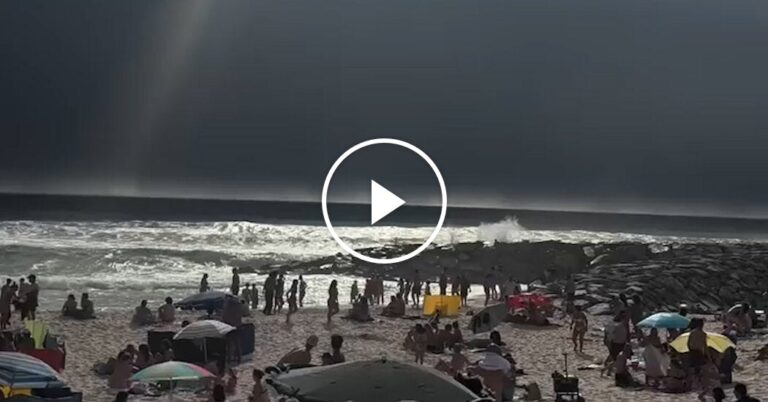
Unusual Cloud Formation Causes Panic Among Beachgoers in Portugal

0

A dramatic “roll cloud“ spotted up and down the country’s central coast formed during a weeklong heat wave.

MBW’s Weekly Round-Up: The Rise of AI Artists and Warner’s $1.2bn JV with Bain

0

Welcome to Music Business Worldwide’s weekly round-up – where we make sure you caught the five biggest stories to hit our headlines over the past seven days. MBW’s round-up is supported by Centtrip, which helps over 500 of the world’s best-selling artists maximize their income and reduce their touring costs.


This week, MBW reported on Aventhis, the outlaw-country “artist” whose AI-generated tracks have garnered over 1 million monthly listeners on Spotify. We also learned that Aventhis’ music was created with a combination of two generative AI music engines: Suno and Riffusion.

Elsewhere, JT Myers and Nat Pastor, the co-CEOs of Virgin Music Group, sent a letter to VMG staff slamming “juvenile and offensive falsehoods” spread by opponents of Virgin’s proposed takeover of Downtown Music Holdings.

Also this week, Scooter Braun stepped down from his role as CEO of HYBE America. He will pursue new ventures while taking on an executive advisory role as a director of HYBE’s Board of Directors and Senior Advisor to the Chairman and CEO of HYBE.

Meanwhile, on Tuesday (July 1), Warner Music Group and private investment giant Bain Capital launched a $1.2 billion joint venture to acquire “legendary” music catalogs across both recorded music and music publishing.

On the same day, WMG announced a plan to reduce the company’s annual costs by around USD $300 million on an annualized run-rate basis by the end of fiscal year 2027 – with $170 million saved via “headcount rightsizing”.

Here’s what happened this week…


1) That AI artist with over 1M listeners on Spotify? His music was created with Suno, says expert report

Earlier this week, MBW reported on Aventhis, the outlaw-country “artist” whose AI-generated tracks have garnered over 1 million monthly listeners on Spotify.

Why did MBW conclude that Aventhis is an AI invention?

Because the person credited as writer and producer on the tracks, David Vieira, appears to have admitted as much in comments on YouTube.

“[The] voice and image is created with the help of AI. The lyrics are written by me,” said the anonymous owner of Aventhis’ YouTube channel.

Now we have further corroboration about the source of Aventhis’ music…


2)  Virgin Music Group bosses slam ‘juvenile and offensive falsehoods’ spread by opponents of Downtown acquisition

Virgin Music Group is having its say.

To date, JT Myers and Nat Pastor, the co-CEOs of the global services company, have publicly refrained from discussing opposition to Virgin’s proposed $775 million takeover of Downtown Music Holdings.

That just changed.

In a new letter to VMG staff, obtained by MBW, Myers and Pastor address several accusations made about Virgin – and its parent company, Universal Music Group – from parties who want regulators to block the Downtown acquisition….


Credit: UPI/Alamy

3) Scooter Braun steps down as CEO of HYBE America

Scooter Braun has stepped away from his role as CEO of HYBE America.

According to the official announcement on Tuesday (July 1), the exec will pursue new ventures, while taking on an executive advisory role as a director of HYBE’s Board of Directors and Senior Advisor to the Chairman and CEO of HYBE.

Isaac Lee, described as “a seasoned entertainment executive” who has been leading HYBE Latin America as Chairman since November of 2023, will become Chairman and CEO of HYBE Americas


Credit: rafapress/Shutterstock

4) WARNER MUSIC GROUP AND BAIN LAUNCH $1.2 BILLION FUND TO BUY RIGHTS; EACH PARTY OWNS 50% OF VENTURE

Warner Music Group and private investment giant Bain Capital are launching a $1.2 billion joint venture to acquire “legendary” music catalogs across both recorded music and music publishing.

MBW understands that roughly half of the $1.2 billion is made up of debt, half with cash, with equal liability on both sides of the JV.

WMG and Bain Capital said on Tuesday (July 1) that they will source and acquire the catalogs together, while WMG will manage all aspects of marketing, distribution, and administration.

The funds might be deployed swiftly: Warner and Bain are reportedly mulling the acquisition of the Red Hot Chili Peppers’ recorded music catalog for around $350 million


5) Warner Music Group to reduce annual cost by another $300M, with $170M saved via ‘headcount rightsizing’

Warner Music Group CEO Robert Kyncl has announced what he calls the “remaining steps in our plan to help future-proof the company”.

This seemingly final stage in Warner’s recent restructuring under Kyncl is expected to further reduce the company’s annual costs by around USD $300 million on an annualized run-rate basis by the end of fiscal year 2027.

Just over half of that annual $300 million cost-cutting target ($170 million) will be achieved via headcount reductions at WMG, said the company.

A further $30 million of savings will be achieved by reducing costs (like admin and real estate expenses) directly related to the headcount reductions. The rest of the cost-cutting will target SG&A expenses…


MBW’s Weekly Round-Up is supported by Centtrip, which helps over 500 of the world’s best-selling artists maximise their income and reduce their touring costs.Music Business Worldwide

Storing Renewable Energy in Enormous Underwater Spheres

0

Renewable energy storage is a recurring topic on this page. We have already covered large-scale projects such as the mega-batteries at Cunningham Park in Texas, designed to store vast amounts of electricity. These solutions offer many benefits, the most important of which is the ability to store surplus energy and release it when production drops—due to a lack of sun or wind—thereby stabilising the energy grid.

This time, however, we are venturing into more experimental territory: giant spheres installed on the seabed that could offer a highly efficient answer to the energy storage challenge. The project, known as StEnSea (Stored Energy in the Sea), is an initiative led by the Fraunhofer Institute, and we explain how it works in this article.

StEnSea: Underwater renewable energy storage 

In essence, StEnSea is an underwater hydroelectric energy storage system that harnesses water pressure at great depths to store power inside hollow concrete spheres. Each sphere weighs around 400 tonnes and measures nine metres in diameter. They are placed on the seabed at depths ranging from 600 to 800 metres. The concept is based on a proven principle known as pumped storage, which operates in two main phases:

  1. Energy storage (pumping phase). When there is a surplus of electricity—typically during periods of high solar or wind energy production—that energy is used to pump water out of the sphere. As water is expelled, the sphere is filled with air.
  2. Energy release (generation phase). When additional power is needed, the process is reversed. Water is allowed to flow back into the sphere. At these depths, ocean pressure is intense, so the incoming water drives a turbine connected to a generator. The resulting electricity can then be fed back into the grid according to demand.

The key advantage of the system lies in its use of natural ocean pressure at depth, which generates a significant amount of potential energy. In fact, the deeper the sphere is installed, the greater the water pressure—and thus the greater the energy yield.

According to the project’s developers, each sphere—especially when paired with offshore wind farms—could store enough energy to power a typical US household for two weeks.

Advantages of the system

  • Efficient use of space. Installed on the seabed, the spheres require no surface land, making them especially attractive in urban or densely populated areas.
  • Durability and sustainability. Concrete is a robust material capable of withstanding harsh underwater conditions for decades. The expected lifespan of each sphere is between 50 and 60 years.
  • Compatibility with renewable energy. The system is an ideal companion to intermittent sources like wind and solar, offering reliable long-term energy storage to help stabilise the grid.
  • Scalability and modularity. Its modular design allows multiple spheres to be deployed across various locations. This makes it possible to tailor storage capacity to the needs of specific regions and scale up as required.

Big challenges (and an ambitious pilot) ahead

Despite its potential in the clean energy transition, the StEnSea project still faces several technical and economic hurdles. Building and deploying the spheres requires substantial investment, and the technology remains in the experimental phase. Still, early trials at Lake Constance in Germany have shown encouraging results.

The next step is a large-scale pilot project, which will involve 3D-printing a prototype off the coast of Long Beach, California. Scheduled for completion by the end of 2026, the goal is to build spheres up to 30 metres in diameter and install entire underwater energy parks to serve as clean energy reservoirs.

A sand battery

The Fraunhofer Institute’s seabed spheres are not the only innovation in renewable energy storage that has caught our eye. Some time ago, we reported on a pilot project in a Finnish village where thermal energy is stored in a giant sand battery. This technology uses an electric resistor to heat the sand, taking advantage of the low heat transfer of silicon dioxide to minimise heat loss.

The system captures and stores heat from solar power, reaching temperatures of up to 500°C, and then gradually releases it. With a storage capacity of up to 8 MWh, the sand battery is already in use in the town of Kankaanpää, where it provides heat for residential buildings and even a municipal swimming pool during the winter months.

If you are interested in the latest developments in renewable energy—from cutting-edge storage systems to next-generation solutions—make sure to subscribe to our newsletter at the bottom of this page.


Source: