Currently, there are over 20,000 desalination plants globally, and this number is expected to rise in the coming years. Climate change, persistent droughts, and increasing population demands are exerting immense pressure on the availability of drinking water. Desalination, particularly reverse osmosis, is addressing these challenges effectively. As desalination gains traction as a viable alternative, the focus has shifted to enhancing its processes.
Firstly, in terms of energy consumption, advancements are being made toward more efficient desalination technologies and integrating renewable energy sources. Secondly, brine processing, which involves the concentrated salt left over after desalination, is gaining attention. How can this waste be transformed into a valuable resource?
This article will cover the following topics:
What exactly is brine?
For this article, we’re focusing on brine from seawater desalination, which is essentially water with a high salt concentration. However, it can also be found in olive jars, seafood cooking water, and salt pans where seawater evaporates to produce sea salt.
Brine is also rich in minerals, some of which have significant value and could be recovered for reuse in various industries, paving the way for sustainable “mining.” But what minerals can be obtained from brine, and what processes are ideal for extracting them? Let’s explore this further.
What resources can be extracted from brine?
In line with the principles of the circular economy, recent research has focused on extracting raw materials from brine. For instance, a study by MIT highlighted the potential to produce caustic soda from brine.
Brine contains numerous elements, including minerals like calcium, lithium, magnesium, and boron, as well as rare, high-value metals like rubidium, vanadium, gallium, and molybdenum. Another research avenue is the indirect production of compounds like beta-carotene by cultivating microalgae in brine solutions.
MINERALS: An R&D project moving from lab to reality
Projects aiming to valorize brine have moved beyond theoretical exercises and have been tested under real-world conditions. One of the most promising examples is the MINERALS project, “Selective extraction of high-value elements from seawater brine,” a collaboration between ACCIONA and the LEITAT Technology Center.
MINERALS will apply advanced technologies to recover critical raw materials from brine that are not only highly useful but also scarce.
ACCIONA is actively researching this field with a pilot project that will employ techniques like liquid membranes, nanofiber adsorbents incorporating selective nanoparticles, and gravity precipitation processes.
The project aims for efficiencies ranging from 90% for monovalent ions like lithium, rubidium, and boron to 65% for calcium. Efficiencies for magnesium and potassium are targeted at 80% and 70%, respectively.
A pilot plant is expected to be set up at a reverse osmosis desalination facility to demonstrate the feasibility of this technological approach. Once scaled, this sustainable process could offer a new revenue stream for desalination plants, enhancing their competitiveness in providing drinking water for all.
If you’d like to learn more about desalination technologies, renewable energy, and advanced materials, don’t hesitate to subscribe to our newsletter at the bottom of this page.
A new deadline is emerging as President Donald Trump’s 90-day pause on his reciprocal tariffs is about to expire. While markets expected an extension ahead of the July 9 end to the tariff reprieve, administration officials signaled only a few weeks’ worth, saying Sunday that duties will return back to their “Liberation Day” levels on Aug. 1, unless countries reach trade deals with the U.S.
U.S. stock futures dropped on Sunday evening as investors weighed more high-stakes drama on tariffs in the coming weeks.
A new deadline is emerging as President Donald Trump’s 90-day pause on his reciprocal tariffs is about to expire on Wednesday.
While markets expected an extension ahead of the July 9 end to the tariff reprieve, administration officials signaled there will be just a few weeks’ worth, saying Sunday that duties will return back to their “Liberation Day” levels on Aug. 1, unless countries reach trade deals with the U.S.
Unless trading partners reach deals with the U.S. Treasury Secretary Scott Bessent said rates will “boomerang back” to the April 2 levels, which triggered an epic stock crash that reversed when Trump announced the 90-day pause to allow for negotiations.
Meanwhile, Commerce Secretary Howard Lutnick said the tariffs will go into effect Aug. 1 “but the president is setting the rates and the deals right now.”
Futures tied to the Dow Jones Industrial Average dropped 120 points, or 0.27%. S&P 500 futures were down 0.41%, and Nasdaq futures fell 0.50%.
That indicates a less bearish start to the trading week compared to Friday, when futures showed steeper declines after Trump said Thursday that would start sending out letters setting tariffs as high as 70%.
The yield on the 10-year Treasury edged down 1 basis point to 4.33%. Gold slipped 0.53% at $3,325.20 per ounce, while the U.S. dollar was down 0.05% against the euro and down 0.03% against the yen.
U.S. oil prices fell 1.72% to $65.85 per barrel, and Brent crude lost 0.95% to $67.65, after OPEC+ announced a bigger increase in August output versus the prior months.
Not much economic data is due in the coming week, but minutes from the Federal Reserve’s last policy meeting will come out on Wednesday.
Introducing the 2025 Fortune 500, the definitive ranking of the biggest companies in America. Explore this year’s list.
Here are the key events on day 1,229 of Russia’s war on Ukraine.
Here is how things stand on Monday, July 7:
Fighting
Russian forces launched missile and drone attacks on the eastern Ukrainian province of Donetsk, killing four people in the town of Kostiantynivka and another in nearby Druzhkivka, according to officials.
Donetsk Governor Vadim Filashkin urged residents of the front-line towns to evacuate, saying: “It is dangerous to stay here! Evacuate to safer regions of Ukraine!”
Elsewhere in Ukraine, large-scale Russian drone attacks wounded three civilians in Kyiv, two in Kharkiv, and damaged port infrastructure in the central region of Mykolaiv, according to the governor.
A woman who was wounded in a Russian attack on the city of Poltava in central Ukraine on July 3 died in hospital, taking the death toll from that attack to three, local officials said.
Russia’s Ministry of Defence said that Russian forces seized the village of Piddubne in the Donetsk region and the village of Sobolivka, near the town of Kupiansk, in the Kharkiv region.
Ukraine, too, launched drone attacks on Russia, injuring two civilians in Belgorod near the border and disrupting flights at airports in the capital, Moscow.
Russia’s aviation agency, Rosaviatsia, said that the Ukrainian attacks forced at least three airports in Moscow, St Petersburg and Nizhny Novgorod to ground some 287 flights on Sunday.
Russia’s Defence Ministry said its air defences shot down 120 Ukrainian drones during nighttime attacks, and 39 more before 2pm Moscow time (11:00 GMT) on Sunday.
Moscow Mayor Sergei Sobyanin later said that Russian air defence units downed six Ukrainian drones headed for Moscow.
Sanctions
Ukrainian President Volodymyr Zelenskyy signed a new sanctions package, “targeting numerous Russian financial schemes, particularly cryptocurrency-related ones”.
Politics and diplomacy
Russian President Vladimir Putin is not attending the BRICS summit in Brazil this week, since he is wanted by the International Criminal Court (ICC) for his role in the 2022 full-scale invasion of Ukraine. Brazil is a signatory to the Rome Statute, and would be required to enforce the arrest warrant.
Putin, speaking via a videolink, told the BRICS leaders that the era of liberal globalisation is obsolete and that the future belongs to swiftly growing emerging markets, which should enhance the use of their national currencies for trade.
A required part of this site couldn’t load. This may be due to a browser
extension, network issues, or browser settings. Please check your
connection, disable any ad blockers, or try using a different browser.
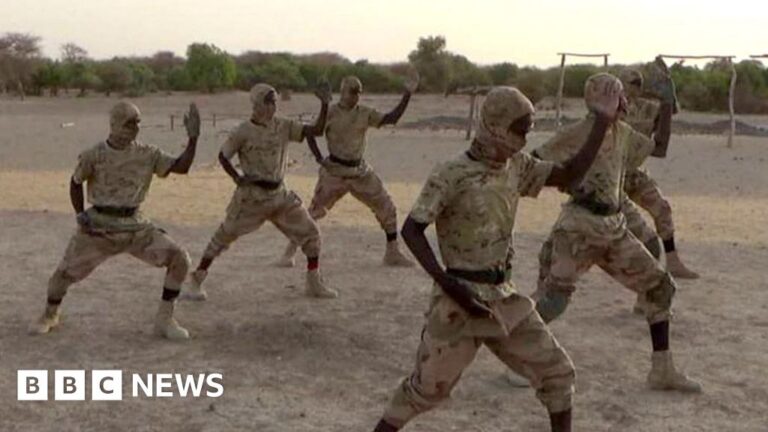
Al-Qaeda affiliate Jama’at Nusrat al-Islam wal-Muslimin (JNIM) is the main group behind a surge in militant jihadist attacks sweeping across several West African nations, especially Burkina Faso, Mali and Niger.
On 1 July, the group said it had carried out a major coordinated attack on sevenmilitary locations in western Mali, including near the borders with Senegal and Mauritania.
There is growing concern about the impact JNIM could have on the stability of the region.
Burkina Faso, Mali and Niger have struggled to contain the violence – and this is one of the factors that contributed to several military coups in the three Sahel countries over the last five years.
But like the civilian governments they replaced, the juntas are seemingly unable to stem the growing jihadist threat, especially from JNIM.
What is JNIM?
JNIM has become one of Africa’s deadliest jihadist groups within the space of just a few years.
It was formed in Mali in 2017, as a coalition of five jihadist militant groups:
Ansar Dine
Katibat Macina
Al-Mourabitoun
Ansar al-Islam
The Sahara branch of al-Qaeda in the Islamic Maghreb
These groups started collaborating after the French military pushed back several jihadist and separatist organisations that were operating in northern Mali in 2012. Eventually, the leaders of the groups came together to create JNIM.
In recent years, they have expanded geographically, establishing new areas of operation.
JNIM is led by Iyad Ag Ghali, a former Malian diplomat who belongs to the Tuareg ethnic group. He was at the helm of the Tuareg uprising against the Malian government in 2012 which sought to establish an independent state for the Tuareg people called Azawad. Deputy leader Amadou Koufa is from the Fulani community.
Analysts believe the central leadership helps guide local branches which operate across the Sahel region of West Africa.
While it is difficult to know exactly how many fighters there are in JNIM’s ranks, or how many have recently been recruited, experts suggest it could be several thousand – mostly young men and boys who lack other economic opportunities in one of the poorest regions in the world.
What does JNIM want?
The group rejects the authority of the Sahel governments, seeking to impose its strict interpretation of Islam and Sharia in the areas where it operates.
Analysts say that in some areas, JNIM has been known to impose strict dress codes, implement bans against music and smoking, order men to grow beards and prevent women from being in public spaces alone.
This version of Islam can be at odds with the religion as practised by local communities, says Yvan Guichaoua, a senior researcher at the Bonn International Centre for Conflict Studies.
“These practices are clearly breaking from established practices and certainly not very popular,” he says.
“But whether it’s attractive or not, also depends on what the state is able to deliver, and there has been a lot of disappointment in what the state has been doing for the past years.”
Disillusionment with the secular justice system can make the introduction of Sharia courts appealing to some.
Where does JNIM operate?
After its beginnings in central and northern Mali, JNIM rapidly expanded its reach. While its strongholds are in Burkina Faso, Mali and Niger, JNIM has also carried out attacks in Benin, Togo and at one point Ivory Coast.
It is now operational throughout Mali and 11 of Burkina Faso’s 13 regions, according to the Global Initiative against Transnational Organised Crime (Gi-Toc), a civil society organisation.
In the last year, Burkina Faso has become the epicentre of the group’s activities – predominately the northern and eastern border regions. This is, in part, because of divisions and defections in the country’s military as well as how deeply embedded the militants are in the local communities, according to Beverly Ochieng, a senior analyst for security consultancy firm Control Risk.
“JNIM have an ability to embed in local communities or to be able to use local grievances as a means of recruiting or winning sympathy towards their cause,” she told the BBC.
Are JNIM attacks increasing in scale?
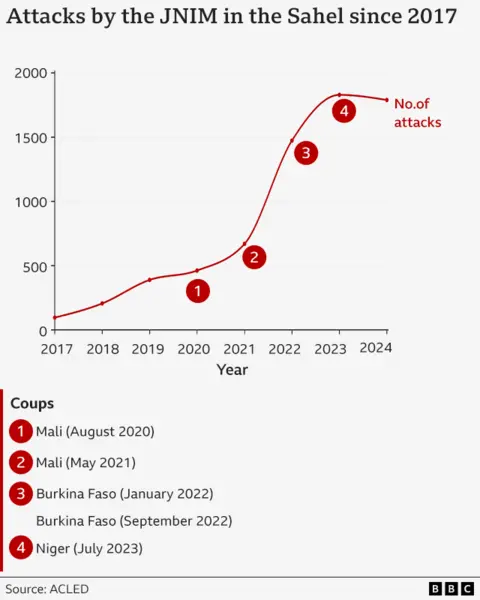
In recent months violent incidents have spiked in Burkina Faso to previously unseen levels, according to analysis from BBC Monitoring’s jihadist media team. Major attacks have also recently been carried out in Mali, Niger and Benin.
In the first half of 2025, JNIM said it carried out over 280 attacks in Burkina Faso – double the number for the same period in 2024, according to data verified by the BBC.
The group has claimed to have killed almost 1,000 people across the Sahel since April, most of them members of the security force or militias fighting alongside government forces, according to BBC Monitoring data.
Almost 800 of these have been in Burkina Faso alone. Casualties in Mali were the next highest (117) and Benin (74).
“The frequency of attacks in June is just unheard of so far,” says Mr Guichaoua. “They have really stepped up their activities in the past weeks.”
The militants use a variety of tactics designed to cause maximum disruption, Ms Ochieng explains.
“They plant IEDs [improvised explosive devices] on key roads, and have long-range capabilities.
“They [also] target security forces in military bases, so a lot of their weapons come from that. They have also attacked civilians – in instances where communities are perceived to be cooperating with the government.”
Starlink – a company owned by Elon Musk which provides internet via satellites – has also been exploited by groups like JNIM to enhance their capabilities, according to a recent report by Gi-Toc.
The company provides high-speed internet where regular mobile networks are unavailable or unreliable.
Militant groups smuggle Starlink devices into the country along well-established contraband routes, G-toch says.
“Starlink has made it much easier for [militant groups] to plan and execute attacks, share intelligence, recruit members, carry out financial transactions and maintain contacts with their commanders even during active conflict,” an analyst from Gi-Toc told the BBC’s Focus on Africa podcast.
The BBC has contacted Starlink for comment.
How is JNIM funded?
The group has multiple sources of income.
At one time in Mali, funds were raised through kidnapping foreigners for ransom but few remain in the country because of the deteriorating security situation.
Cattle-rustling has now become a major source of income, according to an analyst from Gi-Toc. They did not want to be named as it could risk their safety in Mali.
“Mali is a big exporter of cattle so it’s easy for them to steal animals and sell them,” the analyst said.
Research by Gi-Toc shows that in one year in just one district of Mali, JNIM made $770,000 (£570,000) from livestock. Based on this figure, JNIM could be earning millions of dollars from cattle theft.
JNIM also imposes various taxes, according to experts.
“They tax the gold, but basically tax anything that goes through their territory, whether that’s listed goods or illicit goods,” Gi-Toc says.
“There can be an extortion type of tax, where JNIM tell citizens they need to pay in return for protection.”
The militants have also been known to set up blockades, at which people must pay to leave and enter the area, according to Ms Ochieng.
What about efforts to fight them?
France’s armed forces were on the ground supporting the government in Mali for almost a decade – with over 4,000 troops stationed across the Sahel region fighting groups that went on to form JNIM, as well as Islamic State in the Greater Sahara.
While they had some initial success in 2013 and 2014, reclaiming territory from the militants and killing several senior commanders, this did not stop JNIM’s growth after it was formed.
“Counterinsurgency efforts have failed so far because of this idea that JNIM can be beaten militarily, but it is only through negotiation that the group will end,” Gi-Toc’s analyst suggested.
In 2014, Sahelian countries banded together to form the G5 Sahel Task Force, a 5,000-strong group of international troops. However, over the past couple of years, Burkina Faso, Mali and Niger have withdrawn, undermining the task force’s ability to tackle the insurgency.
Minusma, the UN peacekeeping force – while not a counter-insurgency effort – was also in Mali for a decade to support efforts, however it left the country at the end of 2024.
What impact have military coups had on JNIM?
Military coups took place in Mali in 2020 and 2021, Burkina Faso in 2022 and Niger in 2023.
Poor governance under the military juntas in Burkina Faso, Mali and Niger subsequently has allowed militant groups like JNIM to flourish, according to analysts.
These juntas were swift to tell French troops to leave, replacing them with Russian support and a joint force formed by the three Sahelian countries.
Though Russian paramilitary group Wagner has withdrawn its troops from Mali entirely, Africa Corps, a Kremlin-controlled paramilitary group, will remain in place.
In Burkina Faso, a so-called “volunteer” army, launched in 2020 before the military takeover, is one strategy being used to fight militants. Junta leader Ibrahim Traoré has said he wants to recruit 50,000 fighters.
But experts say many of these volunteers are conscripted by force. Inadequate training means they often suffer heavy casualties. They are also often a target for JNIM attacks.
The military juntas in Burkina Faso and Mali have also been accused by human rights organisations of committing atrocities against civilians, particularly ethnic Fulanis. Human rights group say the government often conflates the Fulani community with Islamist armed groups, which has furthered hampered peace efforts.
Between January 2024 and March 2025, the military government and their Russian allies were responsible for 1,486 civilian casualties in Mali, according to Gi-Toc.
This extreme violence against civilians has generated anger towards the government, fuelling further recruitment for JNIM.
Israeli attacks across Gaza have killed at least 82 people as negotiations between Israel and Hamas towards a ceasefire deal begin in Qatar.
On Sunday, at least 39 people were killed in Gaza City alone. A midnight attack on the Sheikh Radwan neighbourhood in the region also trapped victims under debris.
Witnesses have described apocalyptic scenes as neighbours retrieve body parts, including those of children.
Mahmoud al-Sheikh Salama, a survivor of one strike, said it took place at 2am (23:00 GMT on Saturday) while he was sleeping.
“We heard a loud explosion and shortly after, another one. We rushed over… and people were trapped under the rubble – four families, a large number of residents,” he told Al Jazeera.
“We tried to search for survivors and managed to pull out two people alive from under the debris after about three hours of struggle and breaking through. We got two out alive – the rest were martyred and are still trapped.”
Reporting from Gaza City, Al Jazeera’s Hani Mahmoud said Israel’s current military escalation in Gaza is “a chilling and brutal reminder” of the opening weeks of the war because of the intensity and scale of each attack.
“In the span of two hours, we have counted at least seven air strikes across the Gaza Strip,” he said.
“A local community kitchen in the northern part of Deir el-Balah was also struck and three people were killed, including the main operator behind it.”
Attacks near aid sites
Besides Gaza City, medical sources at hospitals told Al Jazeera that at least nine Palestinians were killed by Israeli army fire near aid distribution centres operated by the US- and Israel-backed Gaza Humanitarian Foundation (GHF) since the morning.
Five were killed near the Netzarim Corridor, located just south of Gaza City, which splits the Strip down the middle. The Palestinian Ministry of Health said Israeli forces killed at least 743 Palestinians in attacks at sites run by the GHF since late May.
The GHF has drawn widespread criticism, with multiple reports that its contractors, as well as Israeli forces, have opened fire on desperate aid seekers. Two American contractors were wounded with non-life-threatening injuries on Saturday during an attack on an aid site.
“The attack – which preliminary information indicates was carried out by two assailants who threw two grenades at the Americans – occurred at the conclusion of an otherwise successful distribution in which thousands of Gazans safely received food,” the GHF said.
The United States on Saturday blamed Hamas for the attack. Gaza’s Government Media Office rejected these accusations.
“We categorically and unequivocally reject the claims issued by the US State Department alleging that the Palestinian resistance threw explosives at American personnel operating at sites run by the so-called ‘Gaza Humanitarian Foundation – GHF,’” the media office said in a statement.
Possible ceasefire?
Meanwhile, indirect negotiations between Israel and Hamas towards a ceasefire deal in the Gaza Strip have begun in Qatar.
“Negotiations are about implementation mechanisms and hostage exchange, and positions are being exchanged through mediators,” an unnamed official told the AFP news agency.
US President Donald Trump on Sunday said that there is “a good chance” a Gaza captive release and ceasefire deal could be reached with Hamas this week, “as they’re close”.
Trump told reporters such a deal meant “quite a few hostages” could be released. Trump is set to meet Israeli Prime Minister Benjamin Netanyahu on Monday at the White House.
The US president said last week that Israel has agreed to the conditions for a 60-day ceasefire, and negotiators could meet to carve out a path to finally end Israel’s nearly 21-month war on Gaza.
On Friday, Hamas said it responded to a US-backed Gaza ceasefire proposal in a “positive spirit”.
On Sunday, before boarding his flight to Washington, DC, Netanyahu also said he believed his discussions with Trump on Monday would help advance talks on a Gaza deal.
“I believe the discussion with President Trump can certainly help advance these results,” he said, adding that he is determined to ensure the return of captives held in Gaza and remove the threat of Hamas to Israel.
Analysts, however, say that Netanyahu wants to continue the retaliatory war on Gaza until he can gain enough political leverage to dismiss the court cases against him in Israel and build enough popular support to remain the country’s leader.
Netanyahu is on trial for corruption and is still widely blamed in Israeli society for the security failures that led to Hamas’s deadly attack on October 7, 2023.
“Israel and Netanyahu are not interested in reaching a ceasefire,” Adnan Hayajneh, a professor of international relations at Qatar University, told Al Jazeera, adding that there is a “very slim chance” of a ceasefire.
“What Israel wants is clear… a land without a people,” Hayajneh said.
“So, Palestinians are given three choices… starve to death… get killed… [or] leave the land. But Palestinians have so far proven they will not leave the land, no matter what.”
The so-called Washington consensus that touted the benefits of free trade and fiscal discipline looks headed for the dustbin of history.
That’s as President Donald Trump has launched a stunning trade war and pushed through a tax-and-spending bill with Republican support that will add trillions to the deficit.
Meanwhile, Democrats are still grappling with their own message as they continue to reel from Trump’s brand of populism that returned him to the White House. The turmoil points to a clash between competing visions for a new economic consensus.
Mark Blyth, a political economist at Brown University, sees the economy heading for an epochal change, though a dominant economic order has yet to fully take shape.
“The global economy is getting a hardware refit and trying out a new operating system—in effect, a full reboot, the likes of which we have not seen in nearly a century,” he wrote in the Atlantic last week. “To understand why this is happening and what it means, we need to abandon any illusion that the worldwide turn toward right-wing populism and economic nationalism is merely a temporary error, and that everything will eventually snap back to the relatively benign world of the late 1990s and early 2000s.”
Such churn was on display this weekend as top tech leaders Elon Musk and Sam Altman signaled their dissatisfaction with the current two-party system.
“When it comes to bankrupting our country with waste & graft, we live in a one-party system, not a democracy,” Musk posted on X on Saturday. “Today, the America Party is formed to give you back your freedom.”
Similarly, OpenAI CEO Sam Altman posted on X on Friday that Democrats had lost their way and that he is now “politically homeless.”
He also appeared to refer to New York City mayoral candidate Zohran Mamdani, who said last week “I don’t think that we should have billionaires.” Altman said, “I’d rather hear from candidates about how they are going to make everyone have the stuff billionaires have instead of how they are going to eliminate billionaires.”
At the same time, he advanced his own vision.
“I believe in techno-capitalism,” Altman wrote. “We should encourage people to make tons of money and then also find ways to widely distribute wealth and share the compounding magic of capitalism. One doesn’t work without the other; you cannot raise the floor and not also raise the ceiling for very long.”
In Blyth’s view, a new economic order is not yet discernible, because the governing idea is still being debated.
He described the MAGA vision as a combination of 1950s manufacturing, 1940s immigration and workforce trends, plus a touch of 19th-century, mercantilist “spheres of influence” foreign policy.
Then there’s the “Dark Enlightenment” wing of the tech sector where “Silicon Valley billionaires imagine an economy that runs not as a return to hard-hat industry’s glorious past but as a posthuman future of automation and space exploration,” according to Blyth.
Meanwhile, the Democrats still seem to represent the institutionalist status quo, he added, though Rep. Alexandria Ocasio-Cortez and Sen. Bernie Sanders are pushing another option of left-wing populism.
A third Democratic vision is the “abundance” agenda, which seeks lower-regulation, pro-growth policies for renewed economic vigor.
The intra-party crosscurrents were highlighted recently when Mamdani, a self-described democratic socialist, stunned the Democratic establishment last month when he won the city’s primary with his own brand of populism that includes making bus service free, freezing rents on rent-stabilized apartments, nearly doubling the minimum wage to $30, building city-owned grocery stores, and hiking taxes on the top 1% of earners in the city.
By contrast, California Gov. Gavin Newsom and Democratic allies in the liberal bastion passed reforms to a landmark environmental law last week that will make it easier to build more housing, as state leaders acknowledged the need to boost supply in the face of high costs.
“A new economic order is forming—which means that it is not yet fixed and can still be shaped,” Blyth wrote. “But time is running out. As jumbled as the regressive modernization is, it could win the day if we do not come up with a different governing idea of what the economy is and whom it is for.”
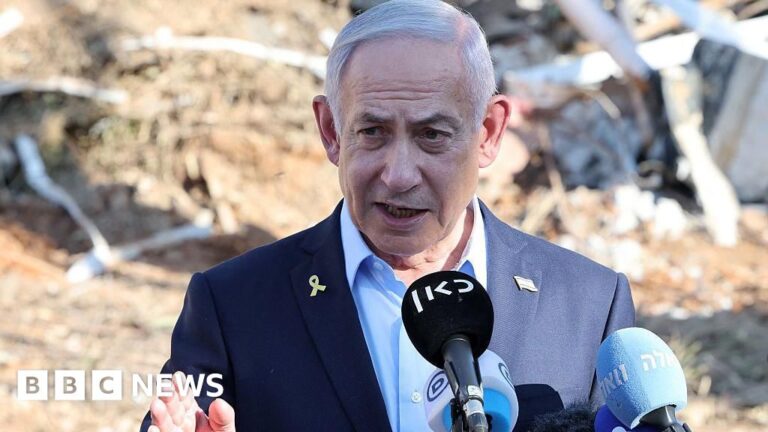
Delegations from Israel and Hamas have begun an indirect round of ceasefire talks in Qatar, as Israeli Prime Minister Benjamin Netanyahu heads to Washington to meet Donald Trump.
Netanyahu said he thinks his meeting with the US president on Monday should help progress efforts to reach a deal for the release of more hostages and a ceasefire in Gaza.
He said he had given his negotiators clear instructions to achieve a ceasefire agreement under conditions Israel has accepted.
Hamas has said it has responded to the latest ceasefire proposal in a positive spirit, but it seems clear there are still gaps between the two sides that need to be bridged if any deal is to be agreed.
For now, Hamas still seems to be holding out for essentially the same conditions it has previously insisted on – including a guarantee of an end to all hostilities at the end of any truce and the withdrawal of Israeli troops.
Netanyahu’s government has rejected this before.
The Israeli position may also not have shifted to any major degree. As he was leaving Israel for the US, Netanyahu said he was still committed to what he described as three missions: “The release and return of all the hostages, the living and the fallen; the destruction of Hamas’s capabilities – to kick it out of there, and to ensure that Gaza will no longer constitute a threat to Israel.”
Qatari and Egyptian mediators will have their work cut out during the indirect talks between Israel and Hamas in trying to overcome these sticking points, which have have derailed other initiatives since the previous ceasefire ended in March.
Israel has since resumed its offensive against Hamas with great intensity, as well as imposing an eleven-week blockade on aid entering Gaza, which was partially lifted several weeks ago.
The Israeli government says these measures have been aimed at further weakening Hamas and forcing it to negotiate and free the hostages.
Just in the past 24 hours, the Israeli military says it struck 130 Hamas targets and killed a number of militants.
But the cost in civilian lives in Gaza continues to grow as well. Hospital officials in Gaza said more than 30 people were killed on Sunday.
The question now is not only whether the talks in Qatar can achieve a compromise acceptable to both sides – but also whether Trump can persuade Netanyahu that the war must come to an end at their meeting on Monday.
Many in Israel already believe that is a price worth paying to save the remaining hostages.
Once again, they came out on to the streets on Saturday evening, calling on Netanyahu to reach a deal so the hostages can finally be freed.
But there are hardline voices in Netanyahu’s cabinet, including the national security minister Itamar Ben Gvir and the finance minister Bezalel Smotrich, who have once again expressed their fierce opposition to ending the war in Gaza before Hamas has been completely eliminated.
Once again, there is the appearance of real momentum towards a ceasefire deal, but uncertainty over whether either the Israeli government or Hamas is ready to reach an agreement that might fall short of the key conditions they have so far set.
And once again, Palestinians in Gaza and the families of Israeli hostages still held there are fervently hoping this will not be another false dawn.
The Israeli military launched a campaign in Gaza in response to Hamas’s 7 October 2023 attacks, in which about 1,200 people were killed and 251 others were taken hostage.
At least 57,338 people have been killed in Gaza since then, according to the territory’s Hamas-run health ministry.
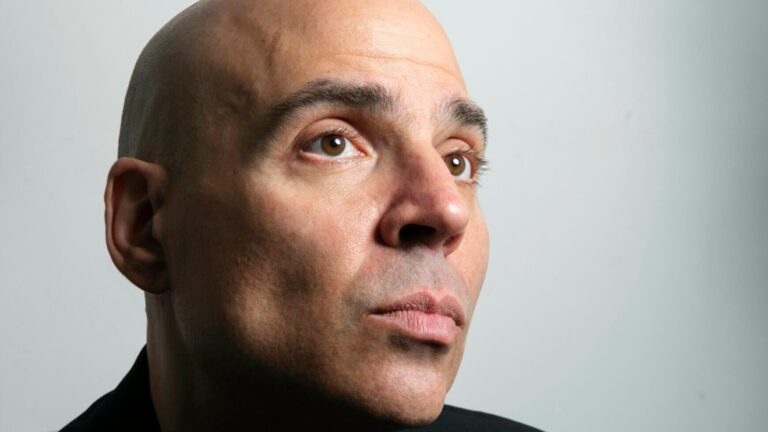
Merck Mercuriadis, the maverick founder of Hipgnosis Songs Fund, is launching a new investment firm targeting artist management companies and music catalogs through a partnership structure that gives acts and their representatives ownership stakes.
The Financial Timesreported on Saturday (July 5) that Mercuriadis’ new venture has already secured commitments in the “hundreds of millions” of dollars, citing people familiar with the matter.
The FT quoted Mercuriadis as saying: “I’m going to amass five or six really important management companies, all of which have superstar artists and superstar managers that go with them.
“It’s all about them having control and all about them making the majority of the money [rather than labels].”
Mercuriadis also plans to buy music catalogs that will provide “very predictable, reliable, low-risk” income, according to the FT.
Mercuriadis’ new company – just like his former company – will be called Hipgnosis.
Mercuriadis stepped down as chairman of Hipgnosis Song Management last year after Blackstone acquired publicly traded Hipgnosis Songs Fund for $1.584 billion (approximately a $2.2 billion enterprise valuation) in July 2024.
“I’m going to amass five or six really important management companies, all of which have superstar artists and superstar managers that go with them.”
Merck Mercuriadis
Following that transaction, HSF’s 40,000 songs were combined with the privately held Hipgnosis Songs Capital (aka Hipgnosis Songs Assets) – home to copyrights associated with Leonard Cohen, Justin Timberlake, Justin Bieber, Nelly Furtado, and Kenny Chesney – along with the investment adviser, Hipgnosis Song Management.
This combined, Blackstone-owned company was then rebranded to Recognition Music Group, removing Hipgnosis’ famous upside-down elephant logo.
In turn, this left Mercuriadis free to revive it for his new venture.
Mercuriadis told the FT, as he previously mentioned at Canada’s Departure conference, that one of his long-term ambitions is to buy back the $2 billion+ catalog of music rights he assembled at (the old) Hipgnosis.
“One of my goals is to buy the catalog back. Blackstone are very smart people. They’re getting a great return on the catalog that I put together.”
Merck Mercuriadis
“One of my goals is to buy the catalog back. Blackstone are very smart people. They’re getting a great return on the catalog that I put together. So I’m going to have to pay properly for it,” he said.
“The one thing that everyone has said post the sale is, ‘OK, this [sale price] now seems cheap.’”
Nearly a month ago, Recognition Music Group formed a Senior Advisory Group and appointed Matt Spetzler as Chairman, alongside Lisa Alter and David H Johnson as members. Spetzler is the founder of Jamen Capital and a veteran technology and media investor.