
9.3 C
New York
Monday, April 6, 2026
Home Blog Page 598

Team news, starting lineups for Chelsea vs Fluminense in the FIFA Club World Cup semi-final | Football News

0

Who: Chelsea vs Fluminense

What: Semifinal, FIFA Club World Cup 2025

Where: MetLife Stadium, New Jersey, United States

When: Tuesday, July 8 at 3pm local time (19:00 GMT)

How to follow: We’ll have all the build-up on Al Jazeera Sport from noon (16:00 GMT) in advance of our live text commentary stream.

Chelsea will be hoping to seal their spot in the 2025 FIFA Club World Cup (CWC) final with victory against Brazil’s Fluminense in the opening semifinal on Tuesday.

The Blues are striving to become the first side to win the CWC for a second time but face a formidable task against the Rio de Janeiro giants, who are unbeaten in the tournament.

Here is all to know before their semifinal showdown at MetLife Stadium, just outside New York:

How did Chelsea reach the semifinals?

Chelsea finished second in Group D to another Brazilian super club, Flamengo.

The London-based club opened their campaign with a 2-1 win over Los Angeles FC, before stumbling to a tough 3-1 loss against Flamengo. They qualified for the knockout stage with a 3-0 defeat of Esperance de Tunisie.

Enzo Maresca’s side faced the Group C winners Benfica in the last 16, beating the Portuguese side 4-1 after extra time.

The Blues then played a second Brazilian club in the quarterfinals, beating Palmeiras 2-1 to qualify for the final four.

Cole Palmer, right, scores the first goal for Chelsea against Palmeiras in the FIFA Club World Cup quarterfinal at Lincoln Financial Field, Philadelphia, Pennsylvania, US, July 4, 2025 [Lee Smith/Reuters]

How did Fluminense reach the semifinals?

Fluminense, who qualified for the CWC as winners of the 2023 Copa Libertadores, were unbeaten in Group F, finishing second behind Borussia Dortmund with one win and two draws.

They played out a 0-0 scoreline with Dortmund in their tournament opener, then defeated South Korean side Ulsan HD 4-2. In their final group fixture, they played out 0-0 against Mamelodi Sundowns of South Africa.

In the knockout phase, Fluminense upset Inter Milan 2-0 in Charlotte, then ended the fairytale run of Saudi club Al Hilal in the quarterfinal, winning 2-1 and booking their place in Tuesday’s semifinal.

Did Fluminense captain Thiago Silva play for Chelsea?

The inspirational 40-year-old, regarded by many as one of the greatest defenders of all time, is the former skipper of Chelsea, having played more than 150 matches for the English club from 2020 until 2024.

Silva was a fan favourite at Stamford Bridge and won three trophies during his time with Chelsea, including the UEFA Champions League, UEFA Super Cup and FIFA Club World Cup.

Silva is expected to be in the starting XI against his old club.

Fluminense's Thiago Silva reacts.
Fluminense’s Thiago Silva will suit up against his old club Chelsea in Tuesday’s Club World Cup semifinal [File: Hannah Mckay/Reuters]

Head-to-head

This will be the first competitive meeting between Fluminense and Chelsea.

When did Chelsea win the FIFA Club World Cup?

Chelsea won the 18th edition of the CWC in 2021, hosted in the United Arab Emirates.

The Blues won the final 2-1 against Palmeiras at the Mohammed bin Zayed Stadium in Abu Dhabi.

The tournament was originally planned to take place in late 2021 in Japan, but was moved to February 2022 in the UAE due to the COVID-19 pandemic.

Chelsea team react.
Cesar Azpilicueta of Chelsea lifts the trophy after the FIFA Club World Cup UAE 2021 final against Palmeiras at Mohammed bin Zayed Stadium in Abu Dhabi, UAE, February 12, 2022 [Francois Nel/Getty Images]

Is this the first CWC appearance for Fluminense?

Fluminense made their Club World Cup debut at the 2023 tournament in Saudi Arabia, making it all the way to the final in Jeddah where they lost to Manchester City 4-0.

Team news: Chelsea

Chelsea will be without Levi Colwill and Liam Delap after both received their second yellow cards of the tournament against Palmeiras in the quarterfinal.

Moises Caicedo will rejoin the Blues squad after serving his suspension.

On the injury front, Romeo Lavia and Reece James were both held back against Palmeiras and are questionable heading into Tuesday’s match. Omari Kellyman is unavailable for selection.

Team news: Fluminense

Fluminense will be without Juan Pablo Freytes and Mathues Martinelli – who scored the game-winner against Al Hilal in the quarterfinal – after both received their second yellow cards of the tournament in their last-eight final against the Saudi club.

Key defender Rene returns to the club from suspension and is expected to reclaim his place in the starting XI at the expense of Gabriel Fuentes, whom coach Renato Gaucho might redeploy in an attacking midfield role against Chelsea.

Talisman Jhon Arias should again lead Fluminense’s forward line.

Central midfielder Otavio was a pretournament scratching after suffering a season-ending Achilles tendon tear in May.

Jhon Arias in action.
Jhon Arias has enjoyed a breakout tournament for Fluminense at the FIFA CWC 2025, providing the Brazilian side with a constant attacking threat [File: Carl Recine/FIFA via Getty Images]

Possible lineups:

Chelsea: Sanchez; Gusto, Tosin, Chalobah, Cucurella; Fernandez, Caicedo; Neto, Palmer, Nkunku; Pedro

Fluminense: Fabio; Ignacio, Silva, Rene; Xavier, Hercules, Bernal, Nonato, Fuentes; Arias, Cano

What the coaches had to say

Chelsea coach Enzo Maresca said: “I watched some games that they [Fluminense] have played. And you can see that they are very well-organised. They have some very good players. The manager [Gaucho] is doing a fantastic job.”

“And again, it will be the same [in the semi] final. The energy from the Brazilian team in this competition has been high … Probably … because you are starting now the season, while we are finishing the season. So, the energy is normal. It is different. And we try to deal with that in a different way.”

Renato Gaucho, who has helped Fluminense defy the odds to knock out Champions League runners-up Inter Milan in the last 16 and Al Hilal in the quarterfinals, spoke after his side qualified for the semifinal against Chelsea.

“It is another step forward, thanks to everyone’s efforts. Participating in the Club World Cup is a unique opportunity … We do not know when we will have the chance to participate again. I dedicate this qualification [victory over Al Hilal] to our fans, and I imagine the wonderful atmosphere in Rio de Janeiro, just as it was wonderful here in the stadium, it was a deserved victory.”

Enzo Maresca reacts.
Chelsea manager Enzo Maresca during training in Miami, Florida, US, on July 3, 2025 [Marco Bello/Reuters]

ICE raids targeting migrant workers at Vermont dairy farms cause industry to feel unsettled

0

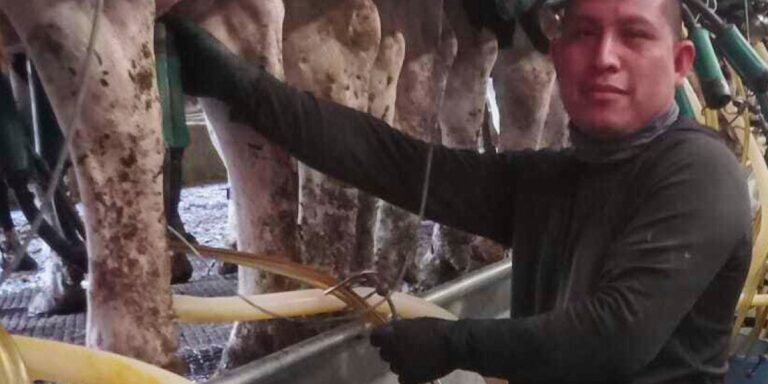
After six 12-hour shifts milking cows, José Molina-Aguilar’s lone day off was hardly relaxing.

On April 21, he and seven co-workers were arrested on a Vermont dairy farm in what advocates say was one of the state’s largest-ever immigration raids.

“I saw through the window of the house that immigration were already there, inside the farm, and that’s when they detained us,” he said in a recent interview. “I was in the process of asylum, and even with that, they didn’t respect the document that I was still holding in my hands.”

Four of the workers were swiftly deported to Mexico. Molina-Aguilar, released after a month in a Texas detention center with his asylum case still pending, is now working at a different farm and speaking out.

“We must fight as a community so that we can all have, and keep fighting for, the rights that we have in this country,” he said.

The owner of the targeted farm declined to comment. But Brett Stokes, a lawyer representing the detained workers, said the raid sent shock waves through the entire Northeast agriculture industry.

“These strong-arm tactics that we’re seeing and these increases in enforcement, whether legal or not, all play a role in stoking fear in the community,” said Stokes, director of the Center for Justice Reform Clinic at Vermont Law and Graduate School.

That fear remains given the mixed messages coming from the White House. President Donald Trump, who campaigned on a promise to deport millions of immigrants working in the U.S. illegally, last month paused arrests at farms, restaurants and hotels. But less than a week later, the assistant secretary of the Department of Homeland Security said worksite enforcement would continue.

Such uncertainty is causing problems in big states like California, where farms produce more than three-quarters of the country’s fruit and more than a third of its vegetables. But it’s also affecting small states like Vermont, where dairy is as much a part of the state’s identity as its famous maple syrup.

Nearly two-thirds of all milk production in New England comes from Vermont, where more than half the state’s farmland is dedicated to dairy and dairy crops. There are roughly 113,000 cows and 7,500 goats spread across 480 farms, according to the Vermont Agency of Agriculture, Food and Markets, which pegs the industry’s annual economic impact at $5.4 billion.

That impact has more than doubled in the last decade, with widespread help from immigrant labor. More than 90% of the farms surveyed for the agency’s recent report employed migrant workers.

Among them is Wuendy Bernardo, who has lived on a Vermont dairy farm for more than a decade and has an active application to stop her deportation on humanitarian grounds: Bernardo is the primary caregiver for her five children and her two orphaned younger sisters, according to a 2023 letter signed by dozens of state lawmakers.

Hundreds of Bernardo’s supporters showed up for her most recent check-in with immigration officials.

“It’s really difficult because every time I come here, I don’t know if I’ll be going back to my family or not,” she said after being told to return in a month.

Like Molina-Aguilar, Rossy Alfaro also worked 12-hour days with one day off per week on a Vermont farm. Now an advocate with Migrant Justice, she said the dairy industry would collapse without immigrant workers.

“It would all go down,” she said. “There are many people working long hours, without complaining, without being able to say, ‘I don’t want to work.’ They just do the job.”

Central Nairobi has been sealed off in preparation for Kenyan protests.

0

Ian Wafula & Basillioh Rukanga

BBC News, Nairobi

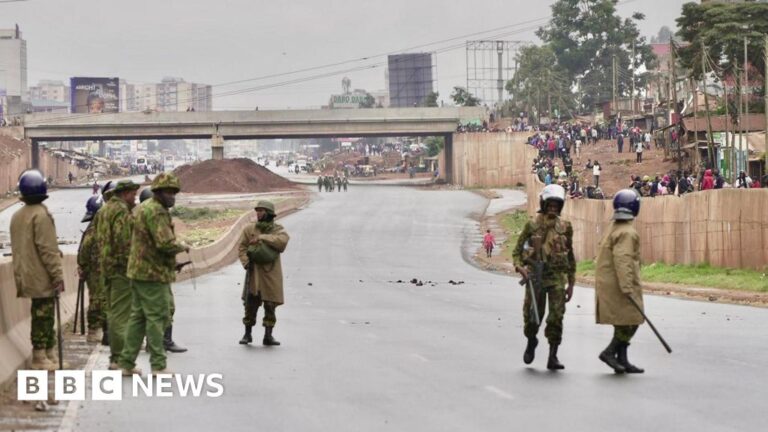
Anthony Irungu / BBC Police in uniform block a highway leading to Nairobi. Crowds of people are seen in the backgroundAnthony Irungu / BBC

Key roads into Nairobi city centre have been blocked

Kenya’s security forces have blocked all major roads leading into central Nairobi, ahead of planned nationwide protests.

Much of the city centre is deserted, with businesses shut and a heavy security presence on the streets. Some schools have advised students to stay at home.

Hundreds of early-morning commuters and overnight travellers were stranded at checkpoints, some located more than 10km (six miles) from the city centre, with only a few vehicles allowed through.

Within the city, roads leading to key government sites – including the president’s official residence, State House, and the Kenyan parliament – are barricaded with razor wire.

In a statement issued on Sunday evening, the police said it was their constitutional duty to protect lives and property while maintaining public order.

Monday’s protests, dubbed Saba Saba (Swahili for 7 July), commemorate the 1990s struggle for multiparty democracy in Kenya.

These demonstrations have been organised primarily by the so-called Gen-Z young people, demanding good governance, greater accountability, and justice for victims of police brutality. They are the latest in a wave of anti-government protests that began last year.

On 25 June, at least 19 people were killed and thousands of businesses looted and destroyed in a day of nationwide protests that were being held in honour of those killed in last year’s anti-tax protests.

Recent demonstrations have turned violent, with reports of infiltration by “goons”, who are accused of looting and attacking protesters. Civil society groups allege collusion between these groups and the police – accusations the police have strongly denied.

On Sunday, an armed gang attacked the headquarters of a human rights NGO in Nairobi. The Kenya Human Rights Commission (KHRC) had been hosting a press conference organised by women calling for an end to state violence ahead of Monday’s protests.

The KHRC spokesman, Ernest Cornel, said that the gang was made up of at least 25 people on motorbikes chanting that “there will be no protest today”.

“They were carrying stones, they were carrying clubs… they stole laptops, they stole a phone and they also took some valuables from journalists who were there,” he told the BBC Newsday programme.

This year marks the 35th anniversary of the original Saba Saba protests – a key moment that helped usher in multiparty democracy in Kenya after years of one-party rule.

The response by the then government under President Daniel arap Moi was brutal. Many protesters were arrested, while at least 20 people were reportedly killed.

Since then, Saba Saba has come to symbolise civic resistance and the fight for democratic freedom in Kenya.

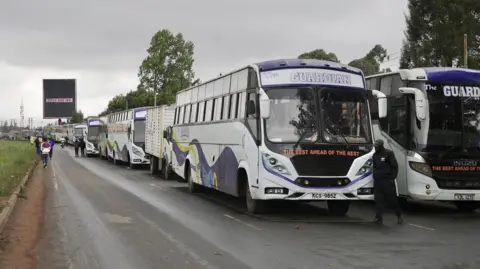
Anthony Irungu / BBC Buses on a highway outside Kenya's capital NairobiAnthony Irungu / BBC

Long-distance buses were stopped far from the city centre

By mid-morning on Monday, hundreds of overnight passengers remained stranded outside the city centre, with major roads still closed.

Some long-distance buses were parked at Kabete area, about 13km from the city centre, with many passengers who could not afford to pay extra money for motorcycle rides to their destinations remaining there.

Humphrey Gumbishi, a bus driver, said they had started their journey on Sunday evening only to find the police road block in the morning.

“We started travelling at 8:30pm last night… We want the government to engage in a dialogue with Gen Zs so all this can come to an end,” he told the BBC.

Elsewhere around the city, police confronted groups of people attempting to break the security cordon. The police fired tear gas to disperse people on Thika Road, as well as in Kitengela, a town on the outskirts of the capital.

In Kamukunji, near the venue where the original Saba Saba protests were held, police battled groups of protesters who lit fires on the streets.

Most other areas around the country have been quiet, with some clashes reported in some towns.

You may also be interested in:

Getty Images/BBC A woman looking at her mobile phone and the graphic BBC News AfricaGetty Images/BBC

Strategic Planning for the Health and Longevity of the Independent Music Sector

0

MBW Views is a series of op/eds from eminent music industry people… with something to say. The following MBW op/ed comes from Simon Wills, Managing Director of UK-headquartered Absolute Label Services. Here, he comments on the current state of the independent sector and looks to the future of its positioning in the global music industry…


MBW’s Tim Ingham caused a bit of a stir in indie-land at the end of April in his analysis of Universal’s acquisition of Downtown (and, as a result, digital distribution keystone FUGA).

In case you missed it, in a Founder’s Letter to subscribers on April 17, he mapped out exactly why he felt that the deal will ultimately be waved through by regulators, largely based on two notions: (a) that the acquisition would not trouble monopoly thresholds; and (b) that, as far as FUGA is concerned, there are plenty of sizable independent alternatives.

In isolation, these points may well be true.

However, I would suggest that the defensive sentiment that the potential UMG/Downtown deal has generated among indie operators does not necessarily stem from a tipping of the balance in market share or fears of a competitive cliff edge.

Instead, it’s driven by a broader emerging picture: a corporate creep that sees major companies gaining more control across multiple verticals.

Not only does this mean an erosion of the independent music market (however slight with each new step), it also means a weakening of the sector at negotiating tables across the industry and an increase in overall influence for the majors.

With that wider lens, UMG engulfing Downtown can be seen as the latest trade in the quiet dismantling of the independent scaffolding.

It’s broadly happening on three fronts where indies need to regain a united foothold: distribution, licensing and streaming deals.

Streaming 2.0 and the Future of Fair Payouts

As majors negotiate new artist-centric payout structures under “Streaming 2.0”, there is a risk that these changes will overwhelmingly favour established, high-stream artists — most of whom are signed to majors. This shift could make it even harder for independent artists to generate sustainable income from streaming.

If indies don’t come together to fight for fairer payout models, we risk being squeezed out of the streaming economy.

The independent sector must engage in these conversations and push for models that reward discovery, innovation, and artist development rather than reinforcing the dominance of major label catalogues.

The TikTok Wake-Up Call

Developments surrounding TikTok towards the end of last year also highlight the need for a unified indie front. The failure of independent distributors and rights holders to negotiate effectively with TikTok demonstrated the vulnerability of a fragmented indie sector.

Indie trade bodies must regain their strength and influence to prevent similar situations from occurring in the future.

The independent community needs to move beyond just representation and towards real, collective action that ensures we are treated as a powerful and valuable sector in our own right.

Protecting Our Infrastructure

Then we come back to distribution. Sony owns AWAL and The Orchard, Warner has ADA, and Universal has Virgin and will probably soon own FUGA.

These aren’t just acquisitions; they’re strategic moves into the indie ecosystem. Many independent labels rely on these services, which means that the majors have significant control over distribution.

When majors own the distribution channels, they also control how and when music reaches audiences, and the data that is returned. Are indie labels truly independent if their route to market depends on major-owned platforms? If you think that majors are going to offer up their data, analysis, bandwidth and infrastructure to third-party independent partners, you’re going to be disappointed.

In fact, as things stand, the reverse is happening: independent companies are allowing their data to be harvested by big corporations with every major services deal they sign.

At least Sony Music isn’t hiding the fact. In mid-June, Rob Stringer told investors that the company represents tens of thousands of both independent labels and artists via The Orchard and AWAL respectively, and that it uses the indie data that comes with that to inform its deals, acquisitions and strategic decisions.


So what’s next?

On May 1, Tim Ingham followed his contentious UMG/Downtown regulatory crystal ball gaze with an arguably bigger rattle of the cage.

In another MBW Founder’s Letter, he pointed a finger at the independent community for complaining about corporate consolidation after the fact – and not swooping to secure Downtown for the indie sector when it had the chance.

On that, I have to say, he’s dead right.

Deciding exactly whose responsibility it might be to make hero acquisitions on behalf of independents globally is up for debate. [Editor note: Tim’s letter suggested Merlin could have made a bid.]

But one thing’s for sure: lip service is no longer enough if we want to secure the future of our sector.

Now, debate around UMG’s Downtown acquisition has reached the ‘war of words’ stage. Indie bodies and leading figures had their say and, just this past week, Virgin and Downtown bosses fired back in no uncertain terms.

But don’t get distracted; the noisy rhetoric hides the real issue.

When we urge business-owners, rights-holders and entrepreneurs to ‘Stay indie!’, what we’re actually doing is asking them to make a business choice: Forgo the services and infrastructure offered by the majors to preserve the independent community.

It may be incredibly unfashionable to say so, but I think that’s an unreasonable ask.

Why should any owner make a business decision based on an altruistic ideal alone? What are they getting in return by remaining independent besides a warm fuzzy feeling?

As a sector, we have to be able to provide something competitive and, actually, something better than the majors if we are going to stop independents from signing major deals.

Absolute Label Services embodies that spirit of independence. For over 25 years, we’ve championed artists and labels without the pressure of shareholder expectations. Our focus is on music, not margins. Many independents will proudly espouse similar qualities  and philosophies – but it’s all for nought if we ultimately rely on major infrastructure for data and distribution.

Independent music companies as a collective need to concentrate on not only protecting our infrastructure and resources but also building upon them to make sure we have access to tools that are truly best in class.

Last month, Absolute unveiled Anthology – a holistic data, analysis, distribution and business management platform that we firmly believe rivals that of the majors and, based on what early adopters have told us, surpasses them in many ways.

Our clients have quietly benefitted from Anthology in-house at Absolute since the start of 2025. Later this year, we will be releasing the software as an agnostic service for all independent businesses and rights-holders.

We’re doing so because every time an independent entity inks a major distribution deal; the indie ecosystem shrinks. We are confident that the technology we have developed in Anthology will allow independent labels and artists globally to operate with the same level of sophistication as majors without giving up control of their rights.

As members of the independent community, we need to think strategically – not just about our own businesses, not just about our clients, but also about the health and longevity of the independent music sector. But we can only do that if we have the tools and infrastructure that enable real choice.

This is a crossroads. The majors are slowly reshaping the dynamic of the global music industry across multiple fronts.

We hope that Anthology will give more independents the tangible reason they need to stay independent, therefore preserving what we have as a creative, risk-taking, dynamic sector and building something even greater.Music Business Worldwide

The Construction of a Mass Grave by the Assad Regime in Syria

0

Months after President Bashar al-Assad’s regime was toppled, Charlie Smart, a reporter at The New York Times, traveled to a mass burial site in Syria to understand how the Assad regime hid the bodies of the people it had made disappear.

Challenging Clients

0


Client Challenge


JavaScript is disabled in your browser.

Please enable JavaScript to proceed.

A required part of this site couldn’t load. This may be due to a browser
extension, network issues, or browser settings. Please check your
connection, disable any ad blockers, or try using a different browser.

Suriname makes history with election of first female president amidst economic uncertainty | Political Updates

0

Jennifer Geerlings-Simons to lead the impoverished Latin American country through crisis before oil wealth arrives.

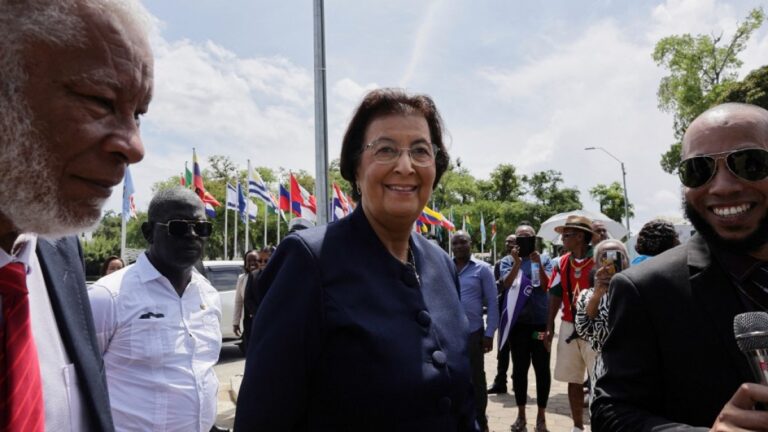
Suriname has elected Jennifer Geerlings-Simons as its first female president, with parliament backing the 71-year-old physician and lawmaker to lead the crisis-hit South American nation.

Her election came after a coalition deal was struck in the National Assembly, which voted by a two-thirds majority on Sunday.

The move followed inconclusive May polls and mounting pressure to replace outgoing President Chandrikapersad Santokhi, whose tenure was marred by corruption scandals and harsh austerity.

Geerlings-Simons, leader of the National Democratic Party, ran unopposed and will take office on July 16.

“I am aware that the heavy task I have taken on is further aggravated by the fact that I am the first woman to serve the country in this position,” she said after her confirmation.

She will be joined by running mate Gregory Rusland, as the pair inherit a country struggling under the weight of economic hardship, reduced subsidies, and widespread frustration. While Santokhi’s government managed to restructure debt and restore macroeconomic stability with IMF backing, it also triggered mass protests over deep cuts.

Jennifer Geerlings-Simons (C) greets parliamentarians after the National Assembly election in Paramaribo on July 6, 2025 [Ranu Abhelakh/AFP]

With Suriname expected to begin producing offshore oil in 2028, Geerlings-Simons has promised to focus on stabilising state finances. She has previously pledged to boost revenues by tightening tax collection, including from small-scale gold miners.

Economists warn she faces a rocky road ahead. Winston Ramautarsingh, former head of the national economists’ association, said Suriname must repay about $400m annually in debt servicing.

“Suriname does not have that money,” he said. “The previous government rescheduled the debts, but that was only a postponement.”

Geerlings-Simons will now be tasked with steering the Dutch-speaking country of 646,000 people through a fragile period, balancing public discontent with the promise of future oil wealth.

As Suriname prepares to mark 50 years since gaining independence from the Netherlands this November, the small South American country is pinning its hopes on a new era driven by oil wealth and deepening ties with China.

In 2019, it joined China’s Belt and Road Initiative, becoming one of the first Latin American states to sign on to the vast infrastructure project.

Suriname is one of the continent’s poorest nations, despite its rich ethnic tapestry that includes descendants of Africans, Indigenous groups, Indians, Indonesians, Chinese, and Dutch settlers.

Jio BlackRock secures over $2.1 billion in inaugural fund offering

0


Jio BlackRock raises over $2.1 billion in first fund offering

Kevin Durant’s Undervaluation of His Own 3-Point Shooting – Basketball Insiders

0

Kevin Durant was shooting and knocking down mid-rangers in Georges Niang’s face but the latter wasn’t backing down. It was in a game where the Cleveland Cavaliers were cruising to victory against the Phoenix Suns last year.

As the two were making their way back down the other end of the court, Niang felt the need to say something.

“You need to shoot more threes!” Niang barked at Durant.

Durant, ever the man to hit reply, hit Niang back with, “No, these dudes around me need to shoot more threes, I need to play my game.”

The thinking on Durant’s part, as he explained to LeBron James and Steve Nash on the Mind The Game podcast, is that mid-range shots are good for him and not his less efficient teammates who need shots created for them. It’s when he is able to draw enough attention from the opposition that teammates need to be ready to catch and shoot.

Durant is one of the greatest offensive talents the league has ever seen and his game has become synonymous with efficiency. He hasn’t shot under 50 percent from the field since 2011-12 and even that was 49.6 percent. Specifically from the mid-range, Durant has shot at 49 percent from the field in each of the last nine seasons.

He is the game’s eighth all-time leading scorer and James called him the most equipped scorer the league has seen.

But does Niang have a point? Does the newest member of the Houston Rockets not shoot enough threes?

Durant’s Underwhelming 3-Point Volume

There is no arguing that Durant is always the best option on his team to take shots from the mid-range. At the same time, though, for as brilliant a jump shooter he is from anywhere on the floor, the numbers suggest he’s probably undervalued his own three-point shot.

He’s a 39 percent three-point shooter for his career but has averaged just five attempts per game for his career. LeBron James, who only improved his outside shooting in the latter half of his career and is still a level below Durant in shooting efficiency, averages 4.7 attempts per game for his career. He’s shot 34.9 percent for his career.

The most three-point attempts Durant has ever averaged for a season is 6.7 in his final season with the Oklahoma City Thunder. Now, one can understand if that number didn’t improve next to the likes of Steph Curry and Klay Thompson in Golden State, but it really ought to have since.

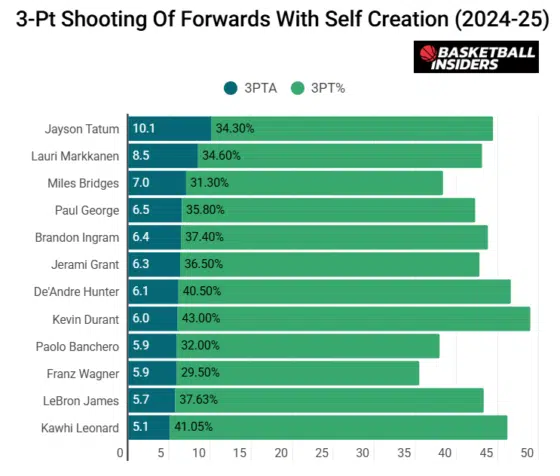
Below is a graphic from this season comparing Durant to other forwards in the league this past season. Durant is obviously a singular talent but I wanted to slot him alongside other forwards who have some level of self creation and see where he stacks up from three-point range. With that in mind, I didn’t include the likes of OG Anunoby and Cameron Johnson.

Why Kevin Durant Hasn't Valued His Own 3-Point Shooting EnoughWhy Kevin Durant Hasn't Valued His Own 3-Point Shooting Enough

Tatum is a good example of someone stepping outside of his comfort zone because of what his team is trying to accomplish. Would he rather operate in the mid-range? Probably.

Brandon Ingram is another player who has preferred to operate in the mid-range and, albeit with a small sample size, made a concerted effort to shift his shot spectrum and take more threes this season.

Why Is Durant Shooting Fewer Threes?

The fact that Durant has the best percentage in this group but eighth in terms of attempts per game tells a story. There have been stretches in both Brooklyn and Phoenix where he’s had to elevate his playmaking. The Nets infamously went stretches without Kyrie Irving during covid while the Suns didn’t prioritize having a point guard until last season.

Last season, though, the Suns did have Tyus Jones in the mix. They have also leaned on Booker more than Durant for playmaking. Point being, Durant slipping into the mid-range whether it be for playmaking or scoring purposes is the least of all evils for opponents.

Breaking things down further, 48.4 percent of Durant’s shots came in the mid-range (10ft. – 3pt line) last season. Tatum took 17 percent of his shots there, James is at 21.7 percent and even Kawhi Leonard was at 36.4 percent. As good as Durant is from the mid-range, he is hindering his own shot spectrum as things currently stand.

He is too good a shooter to have attempted pretty much the same amount of threes per game as Paolo Banchero and Franz Wagner. He should probably be closer to eight attempts per game. Heck, even Tatum’s number of attempts should be plausible for Durant.

Let’s dig a bit further and look at some numbers since Durant left Golden State.

Durant’s 2024-25 Shot Spectrum Not An Exception

Why Kevin Durant Hasn't Valued His Own 3-Point Shooting EnoughWhy Kevin Durant Hasn't Valued His Own 3-Point Shooting Enough

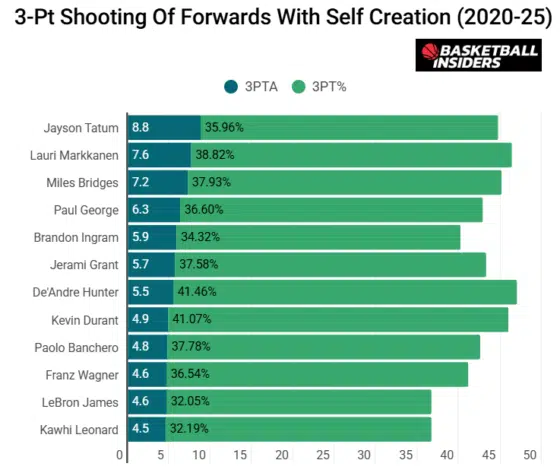
As we can see, the trend holds up even beyond just last season. Even over a five year period, Durant is the second-best in terms of accuracy and still eighth in terms of attempts.

Even further expanding on Durant’s shot spectrum, he has averaged taking nearly 45 percent of his field goal attempts between 10 feet and the three-point line. While he’s right that the difficulty of mid-range shots should be reserved for the game’s best players like himself, taking nearly half his shots from that area is actively hurting the effectiveness of his scoring.

Phoenix finished with the second-highest mid-range frequency rate (37.4%) last season, behind only the Sacramento Kings (38.6%). A good chunk of the Kings’ mid-range bias is courtesy of DeMar DeRozan, and think about how often he gets criticized for his shot spectrum.

Now, let’s also consider that as teams there is no franchise hitting the 40 percent mark as far as mid-range frequency is concerned. Cleveland and Boston were among the two best offenses and they took around a quarter of their shots from the mid-range.

Can Durant’s Shooting Change With Rockets?

In some ways, we take for granted just how easy Durant makes scoring look. His efficiency from every area of the floor makes it seem ridiculous to question any aspect of how he goes about his business.

The Rockets will love having someone who can grease the wheels when things get mucky. That mid-range jumper is going to feel like a cool splash of water on a hot summer’s day, especially in the playoffs. The absolute ceiling of this team, though, on a team lacking three-point threats, may just come down to his willingness to shoot from deep.

When Steve Nash watched prime Steph Curry and reflected on own career, he acknowledged he should have shot the ball more. When Durant’s time comes to look back, he may wonder if things might be any different if he shot threes more often.

In that way, it’s fitting that Durant’s foot was on the line for one of the most pivotal moments of his career. That shot to potentially win Brooklyn the series against the Milwaukee Bucks in Game 7 of the conference semis should have been a three.

To date, the biggest shot Durant has hit is arguably the pull-up three he hit in a Warriors uniform in the NBA Finals against the Cleveland Cavaliers.

Embrace the three, Kevin, you’re too good not to.

Australia’s Mushroom Murder Case: Watch Now!

0

Erin Patterson has been found guilty of murdering three relatives and attempting to kill one other, after cooking them a toxic lunch.