
A required part of this site couldn’t load. This may be due to a browser
extension, network issues, or browser settings. Please check your
connection, disable any ad blockers, or try using a different browser.

A required part of this site couldn’t load. This may be due to a browser
extension, network issues, or browser settings. Please check your
connection, disable any ad blockers, or try using a different browser.

Two people have been fatally shot at a church in Kentucky after a car chase that began with a gunman shooting and injuring a police officer, officials said.
The suspect shot a state trooper during a traffic stop before car-jacking a vehicle and driving to Richmond Road Baptist Church in Lexington, where he opened fire at parishioners, before law enforcement shot him dead.
Two women, aged 72 and 32, died in Sunday’s incident at the place of worship, and two male parishioners were injured, said police.
Investigators believe the suspect had a connection to individuals at the church. Kentucky Governor Andy Beshear posted on X that “violence like this has no place in our commonwealth or country”.
The initial shooting occurred at 11:36 local time (15:36 GMT) on Sunday near the Blue Grass Airport, a regional hub in Fayette County.
A state trooper pulled over the suspect’s car on Terminal Drive after receiving a registration plate reader alert, Lexington Police Chief Lawrence Weathers told a news conference. He said that incident had no connection to the airport.
The suspect shot the trooper, inflicting non-life threatening injuries, according to Chief Weathers.
The gunman then carried out a car-jacking, during which the vehicle’s occupant was not hurt, before driving towards the church about 16 miles (25km) away, with law enforcement in pursuit.
“The suspect fired his weapon at individuals on church property,” Chief Weathers said.
“Preliminary information indicates that the suspect may have had a connection to the individuals at the church.”
Four people – two males and two females – were shot on church grounds.
An official from the county coroner’s office named the two women as Beverly Gum, 72, and Christina Combs, 32. They were pronounced dead at the scene.
The two male victims were transported to a local hospital, with one sustaining critical injuries and the other in a stable condition.
“The suspect was shot by responding law enforcement and was pronounced deceased at the scene,” said Chief Weathers, adding that the gunman’s identity would be released once next-of-kin had been notified.
The county coroner official said the church was small and most attendees were either related or close friends.
“It’s a very tight-knit group of people,” he added.
The incident was being investigated by the Kentucky State Police and the department’s Public Integrity Unit.
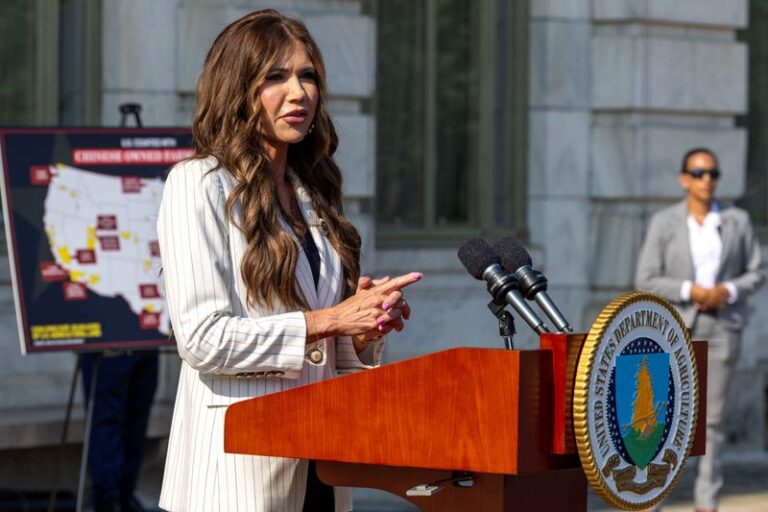
Noem defends FEMA response to Texas floods amid scrutiny

On January 14, 1980, the British band The Buggles released their single “Living in the Plastic Age,” marking our era with the name of this ubiquitous petroleum-based material, following the bronze, iron, and stone ages. Since its release, plastic has only proliferated, leading to challenges like the spread of microplastics in our oceans. One of the most promising scientific breakthroughs in addressing this issue is the development of a method to transform plastic into spider silk, one of the toughest materials found in nature, through the use of bacteria.
Polyethylene, due to its low production cost and versatility, is the most produced plastic, with annual production exceeding eighty million tons. It’s predominantly used for single-use items like grocery bags, food packaging, disposable diapers, and irrigation pipes. In response to its widespread use and environmental impact, researchers at the Rensselaer Polytechnic Institute (RPI) in New York have focused on converting polyethylene into a biodegradable and precious alternative: spider silk. This new biomaterial mirrors the strength of Kevlar, suggesting its potential for a wide range of applications.
To tackle the issue of polyethylene waste, which can linger in the environment for up to 1,000 years, scientists have turned to a novel solution involving a specific strain of Pseudomonas aeruginosa bacteria. This bacteria is uniquely capable of metabolizing polyethylene, a feat that offers a glimmer of hope in the face of such enduring pollution.
This process diverges from traditional fermentation by employing polyethylene slurry as the nutrient medium. After fermenting in small tanks with gentle stirring for seventy-two hours, the bacteria are separated out, and the resultant silk protein is purified and freeze-dried, resulting in a versatile material that can be spun into threads or shaped into various forms.
This biomaterial, reminiscent of bio-inspired spider silk, illustrates the potential of leveraging natural processes to convert waste into valuable materials. According to the dean of RPI, this research is a part of a novel approach towards environmental protection and reducing our reliance on non-renewable resources, though the journey to industrial-scale production is still ahead.
Bioplastic is a type of plastic commonly produced from renewable sources, such as biological and organic materials. Unlike conventional plastics derived from petroleum, bioplastics aim to reduce reliance on non-renewable resources and lessen the environmental impact associated with the production and disposal of petroleum-based plastics. Their numerous applications include disposable packaging and wrapping, as well as uses in the medical and agricultural sectors.
Among the most common types of bioplastics are:
In 2021, the University of Cambridge also announced a promising spider silk derived from plant proteins. However, the novelty of the new bioplastic from RPI lies in its source material: it is derived from conventional plastic rather than plant-based raw material.
In nature, spider silk is primarily composed of proteins known as fibroins. These transform into strong and flexible threads upon contact with air. Spider silk exhibits exceptional mechanical properties, such as high tensile strength, lightness, and flexibility, making it of interest in fields such as materials engineering and medicine.
Despite these incredible qualities, large-scale commercial production of such renewable raw materials remains a challenge. This is why alternative methods, such as the use of bacteria, are being explored.
The approach mentioned by the RPI dean is rooted in a discipline known as biomimicry, which leverages principles found in nature, either by imitating or reproducing them. If you’re interested in learning more about bioplastics and other biomaterials that avoid the use of fossil resources, check out our articles on an ultra-resistant material based on spider webs or bags made from seaweed.
Source:

The Israeli military said that a “technical error” had caused a munition — intended for an Islamic Jihad militant — to land dozens of meters from its target.
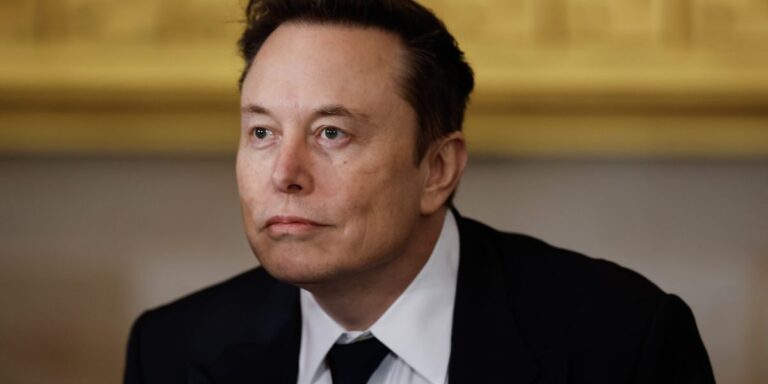
Tesla and SpaceX CEO Elon Musk’s concern over the U.S. debt, which sparked his breakup with Republicans, is shared by some top voices in the Democratic Party.
Last weekend, he announced he’s forming a new political party after feuding with President Donald Trump over the mega-bill that’s expected to add trillions to the deficit.
“When it comes to bankrupting our country with waste & graft, we live in a one-party system, not a democracy,” Musk posted on X. “Today, the America Party is formed to give you back your freedom.”
He also warned earlier of “debt slavery” from the tax-and-spending bill and criticized its treatment of EV and solar energy tax credits versus oil and gas incentives.
On Wednesday, LinkedIn cofounder and top Democratic donor Reid Hoffman told CNBC that he’s “very sympathetic” to Musk’s core cause of reining in deficits, noting that the cost of paying interest on U.S. debt is one of the biggest line items in the federal budget.
But he was doubtful about the prospects of the America Party, given the long history of unsuccessful attempts to sustain third parties.
“So it doesn’t strike me as necessarily the best strategy for that, but I think it’s important to try to focus on the debt,” Hoffman added.
Also this past week, Jared Bernstein, who previously served as the chair of President Joe Biden’s Council of Economic Advisers, said he has had a change of heart when it comes to U.S. debt.
In a New York Times op-ed on Wednesday, he acknowledged that he was once a longtime dove on budget deficits and previously argued that fiscal austerity often does more harm than good.
“No longer. I, like many other longtime doves, am joining the hawks, because our nation’s budget math just got a lot more dangerous,” Bernstein wrote.
Larry Summers, who served as Treasury Secretary in the Clinton administration and National Economic Council director in the Obama administration, sounded the alarm on U.S. debt after the megabill was signed.
In an interview with ABC News last Sunday, he said shrinking the deficit during the Clinton presidency set off a virtuous cycle of increased investment, more economic growth, lower interest rates and even narrower deficits.
He acknowledged that for a decade after 2010, which included the Obama administration, he had preached that deficit reduction didn’t have to be a top priority. But he, too, thinks this time is different.
“Anybody who looks at the numbers sees that we’ve never had deficits remotely like this or the prospect of debts remotely like this—at a moment when the economy was strong and we were at peace—anytime in our history,” Summers warned.
But just because Musk, who had emerged as a top bogeyman for the left, and some Democrats share debt concerns, it doesn’t mean they have similar ideas on what to do about the problem.
Before leaving the Trump administration, Musk’s Department of Government Efficiency sought to slash federal spending by trillions of dollars to reduce the deficit.
By contrast, Summers has said that while the federal government can be more efficient, the U.S. can’t reach a more sustainable fiscal trajectory without significant tax increases.
Still, the dialogue is another sign of the seismic shifts going on in American politics amid a major debate over the new governing principles for the economy in the wake of a shattered consensus.
OpenAI CEO Sam Altman hinted at the churn in a July 4 post on X, where he said Democrats had lost their way and that he is now “politically homeless.” At the same time, he advanced his own economic vision.
“I believe in techno-capitalism,” he wrote. “We should encourage people to make tons of money and then also find ways to widely distribute wealth and share the compounding magic of capitalism. One doesn’t work without the other; you cannot raise the floor and not also raise the ceiling for very long.”
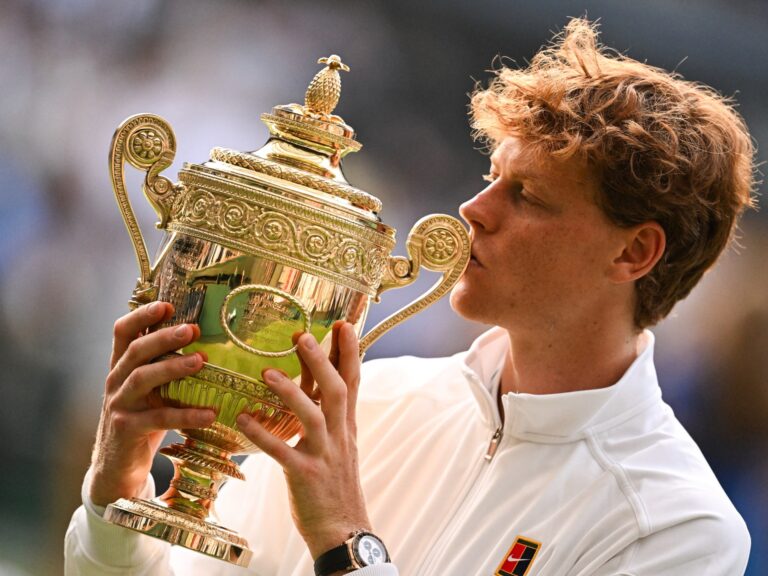
Top seed Sinner defeats Alcaraz 4-6, 6-4, 6-4, 6-4 in the final to win his first Wimbledon and fourth Grand Slam title.
Wimbledon, United Kingdom – It has taken Jannik Sinner just five weeks to exact revenge against Carlos Alcaraz in their blockbuster tennis rivalry and win the men’s singles final at Wimbledon 2025.
The top-seeded Italian overcame the emotional and physical toll of losing the French Open final to Alcaraz by defeating the Spaniard 4-6, 6-4, 6-4, 6-4 at the All England Lawn Tennis and Croquet Club in London on Sunday.
Sinner turned the tables on the defending champion by overcoming a loss in the first set – and some early nerves – to win his fourth Grand Slam trophy and first on the famous Centre Court at SW19.
Two-time champion Alcaraz began the final with a strong service game, pouncing on Sinner’s nervous start in his first appearance in a Wimbledon final. The 22-year-old went on to break the world number one’s serve and wrap up the first set in 45 minutes, deploying a serve-and-volley style strategy to win the crucial points.
Sinner dug deep in the second set and was back to his ice-cool self as he applied the brakes on Alcaraz’s attempt for a three-peat of titles at Wimbledon.
The quality of tennis went up a notch as the 23-year-old matched Alcaraz shot for shot and left the crowd gasping at every other point.
Sinner didn’t waste much time in breaking back against the defending champion by deploying an excellent service game to keep Alcaraz at bay, altering his speed and delivery to ensure his opponent scurried for every point. He was soon on level terms.
The third set was, by far, the highlight of the final as both players threw everything at each other with sensational court coverage, scintillating aces, sublime drop shots and even a “tweener”.
It was end-to-end action up until the eighth game, when Alcaraz slipped up by the barest of margins but ended up having his serve broken. Sinner wasted no time to bring out his ruthless streak and finish off Alcaraz’s chances in the set.
Leading the final two sets to one, Sinner stepped on the gas in the fourth and ensured there would be no late Alcaraz comeback as so memorably occurred in the French Open final on June 8.
He broke Alcaraz in the third game, and the stoic Italian showed a glimpse of emotion as he looked towards his team in the stands.
Crowd favourite Alcaraz had most of the capacity crowd on Centre Court behind him, including King Felipe of Spain, but it was not enough to help him stay in the final for one more set as Sinner sealed the trophy with a faultless service game.
With joy and disbelief etched on his face, and with the match now over, Sinner raised both arms with a jolt before squatting down on the court to pat the grass with the other hand, all the while hiding the emotions on his face.
Not only did he avenge his French Open final loss with a fourth major trophy, Sinner also moved to within one Grand Slam title of his great contemporary Alcaraz.
The two-time Australian Open champion has become the first man from Italy to win the Wimbledon title, a feat he described as akin to “a dream of a dream”.
“I had never thought of being in this position [to win Wimbledon] growing up so far away from here,” an unusually emotional Sinner said on court after the match.
“I had a very tough loss in Paris, but I tried to understand what I did wrong and kept working [hard].”
Sinner has now won Grand Slam titles on two of the three surfaces and said he was happy to have held his nerve while serving for the championship in the fourth set. Alcaraz, ever the gracious opponent in defeat as in victory, kept up his applause for Sinner even after returning to his chair after losing the match. But he said it was a difficult loss.
“I love playing here and I’m going to be back for sure,” the Spaniard told his fans on Centre Court.
Both players walked off to a loud round of applause after providing yet another enthralling glimpse into another “golden era” of tennis.
Sinner and Alcaraz have won all seven Grand Slam finals since the beginning of 2024, and it will only be a matter of eight weeks until tennis fans can hope to see the next instalment of their flourishing rivalry at the last Grand Slam of the year, the US Open.

A required part of this site couldn’t load. This may be due to a browser
extension, network issues, or browser settings. Please check your
connection, disable any ad blockers, or try using a different browser.
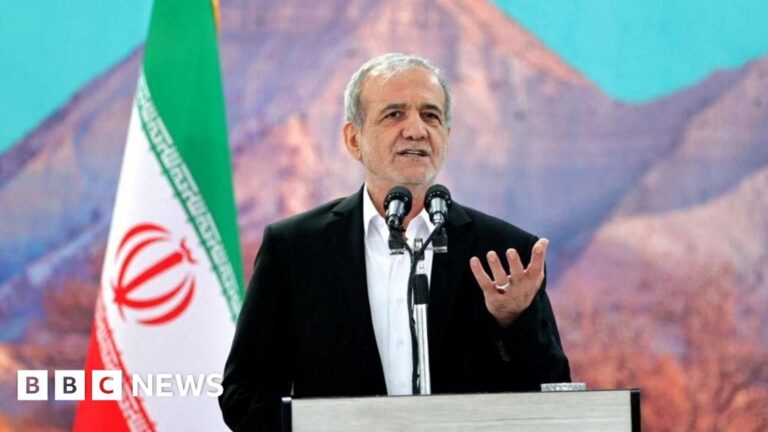
Iranian President Masoud Pezeshkian was reportedly slightly injured during one of Israel’s attacks on Iran last month.
Iran’s state Fars news agency, close to the revolutionary guard, says that on 16 June, six bombs targeted both access and entry points of a secret underground facility in Tehran where Pezeshkian was attending an emergency meeting of the Supreme National Security Council.
The president is said to have suffered leg injuries as he and others escaped through an emergency shaft. Iran is now reported to be following leads of infiltration by Israeli agents.
The Fars report has not been independently verified. Israel has not publicly commented on the report.
Videos posted on social media during the 12-day war showed repeated strikes against a mountain side in north-western Tehran.
Now it has emerged that the strikes on the fourth day of war targeted a secret underground facility in Tehran where Iran’s top leaders were at the time.
The Fars news agency report says the Israeli strikes blocked all the six entry and exit points, and also the ventilation system.
The electricity to the facility was also cut off – but Pezeshkian managed to reach safety.
The Supreme National Security Council is Iran’s top decision-making body after Supreme Leader Ayatollah Ali Khamenei.
Last week, Pezeshkian accused Israel of trying to kill him – a claim denied by Israeli Defence Minister Israel Katz, who said “regime change” had not been not a goal of the war.
Israel wiped out many of top IRGC and army commanders at the very start of the war.
Iranian leaders admit they were taken completely by surprise, and there was a decision-making paralysis for at least the first 24 hours after the attack.
Israel officials admitted that Ayatollah Khamenei was also the target – but that they had lost track of him when he was moved to a secure secret location, cut off to a great extent from the outside world.
There are still many questions about how Israel had gathered critical intelligence about the whereabouts of Iran’s top officials and commanders – not to mention the locations of sensitive secret facilities.
On 13 June, Israel launched a surprise attack on nuclear and military sites in Iran, saying it acted to prevent Tehran from making nuclear weapons.
Iran – who retaliated with aerial attacks on Israel – denies seeking to develop nuclear weapons and says its enrichment of uranium is for peaceful purposes.
On 22 June, the US’s Air Force and Navy carried out air and missile strikes against three Iranian nuclear facilities.
US President Donald Trump later said the attack “obliterated” the facilities, even as some US intelligence agencies have taken a more cautious view.
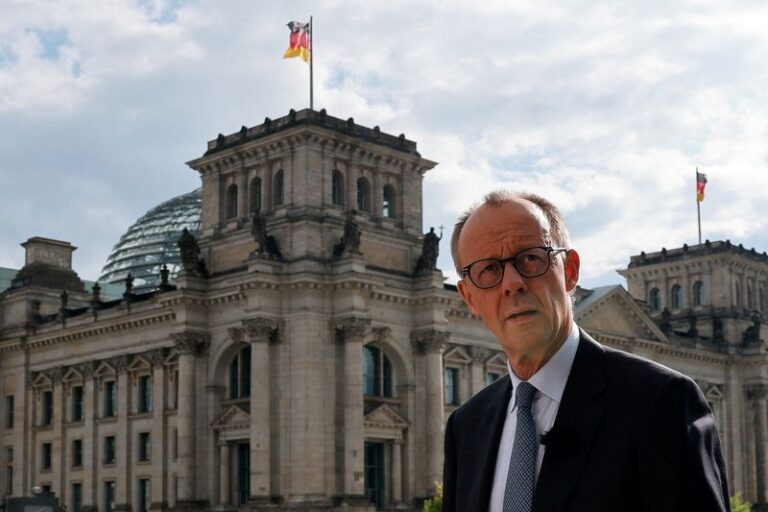
Germany's Merz wants to use coming weeks to find solution to Trump tariff row

Welcome to World Breaking News, your trusted source for fast, accurate, and impactful news coverage from around the globe. We are a dedicated team of journalists, editors, and news enthusiasts committed to delivering breaking stories, in-depth analysis, and real-time updates on politics, business, technology, sports, entertainment, and more.
© Copyright -World Breaking News -2025