
A required part of this site couldn’t load. This may be due to a browser
extension, network issues, or browser settings. Please check your
connection, disable any ad blockers, or try using a different browser.

A required part of this site couldn’t load. This may be due to a browser
extension, network issues, or browser settings. Please check your
connection, disable any ad blockers, or try using a different browser.
I have a big Palestinian family. I grew up in a household full of children: We are eight brothers and sisters. As my older siblings started getting married and having children, our family grew even bigger. Every weekend, our family home would fill up with children’s laughter.
I used to wait impatiently for Thursday to come, the day my married sisters would come to visit us with their children. My father would be out shopping, my mother – busy cooking her daughters’ favourite dishes, and I would be playing with the kids. I have nine nieces and nephews in total, and I have beautiful memories playing with and cuddling each one of them. They are the treasure of my family because a home without children is like a tree without leaves.
Despite the difficult life of occupation and siege in Gaza, my sisters and brothers did their best to provide for their children and give them the best opportunity to study and pursue their dreams.
Then the genocide started. The relentless bombing, the constant displacement, the starvation.
I do not have children of my own, but I feel the excruciating pain of my sisters when they face the cries of their hungry children.
“I no longer have the strength to endure. I am tired of thinking about how to fill my children’s empty stomachs. What can I prepare for them?” my sister Samah shared recently.
She has seven children: Abdulaziz, 20, Sondos, 17, Raghad, 15, Ali, 11, twins Mahmoud and Lana, 8, and Tasneem, 3. Like most other Palestinian families, they have been displaced so many times that they have lost most of their possessions. The last time they saw their home in Shujayea neighbourhood, its walls were blown off, but its roof was still standing on the pillars. The plot of land in front of their house, which was planted with olive and lemon trees, had been bulldozed.
Samah’s family has relied on canned food since the beginning of the war. Since Israel blocked aid in early March and aid distribution stopped, they have struggled to find cans of beans or chickpeas. Now, they are lucky if they manage to find a bowl of lentil soup or a loaf of bread.
Day after day, Samah has had to watch her children suffer, losing weight and falling sick.
Lana is suffering the most. She is 110cm (3 feet 7 inches), but weighs just 13kg (28.7 pounds). Her parents took her to a clinic where she was examined and confirmed to have severe malnutrition. She was registered in a programme for the distribution of nutritional supplements, but she has not received anything yet. There are none available.
Lana’s yellow body is so weak that she is unable to stand for long periods or walk in the event that they are suddenly forced to flee. All she wants is to sleep and sit without being able to play with her brother. I cannot believe what has become of her: she used to be a red-cheeked girl full of energy, who used to play with her siblings all the time.
We regularly hear news about children dying from malnutrition, and this is Samah’s worst fear: that she could lose her daughter.
Despite struggling to feed her family, Samah refuses to allow her husband, Mohammed, to go to one of the aid distribution points of the Gaza Humanitarian Foundation. She knows this is a death trap. She would not have him risk his life for a parcel of food he may not even be able to obtain.
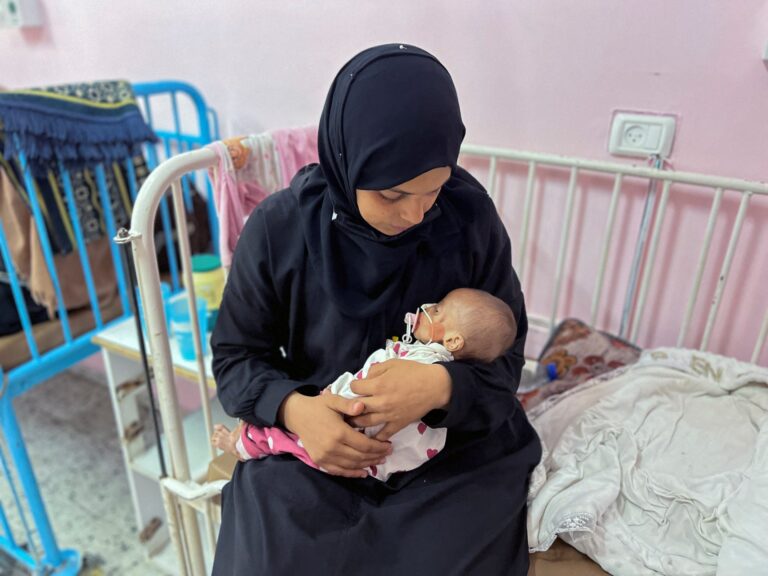
Amid the starvation, my other sister, Asma, gave birth to her second child, Wateen. She is now two months old, and because of a lack of nutrition, she is suffering from jaundice. I have only seen Wateen in photos. She weighed two and a half kilograms (5.5 pounds) when she was born. She looked yellow and sleepy in all her photos.
The doctors said her mother, who is breastfeeding, cannot provide her with the nutrients she needs because she herself is undernourished. Wateen needs to be fed with highly saturated formula milk, which is not available because Israel has been blocking the delivery of all baby formula into Gaza.
Asmaa is now worried that Wateen may develop malnutrition because she is unable to provide her with nutritious milk. “I’m melting like a candle! When will this suffering end?” she told me recently.
My heart is tearing apart when I talk with my sisters and hear about their pain and the hunger that is ravaging their children.
The Israeli occupation forces have already killed more than 18,000 children since it embarked on the genocide. Some 1.1 million are still surviving. Israel wants to make sure they have no future.
This is not an unfortunate consequence of war; it is a war strategy.
Malnutrition is not just a severe loss of weight. It is a devastating condition that damages the body’s vital internal organs, such as the liver, kidneys, and stomach. It affects the growth and development of children and results in higher predisposition to disease, learning difficulties, cognitive impairment and psychological issues.
By starving Palestinian children, depriving them of education and health care, the occupier aims to achieve one goal: creating a fragile generation, weak in mind and constitution, unable to think, and with no horizon other than searching for food, drink, and shelter. This means a generation that is unable to defend the right to its land and stand up to the occupier. A generation that does not understand the existential struggle of its people.
The war plan is clear, and the goal has been stated publicly by Israeli officials. The question now is, will the world let Israel destroy Gaza’s children?
The views expressed in this article are the author’s own and do not necessarily reflect Al Jazeera’s editorial stance.
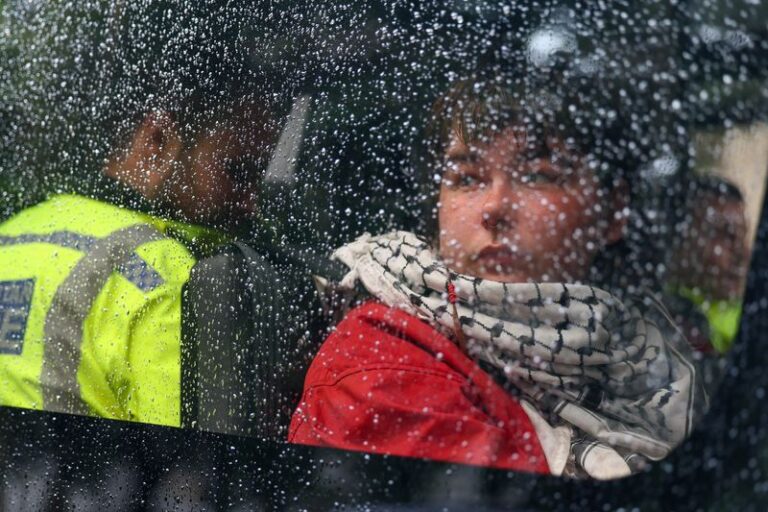
UK police arrest 55 at parliament rally for banned Palestine Action group
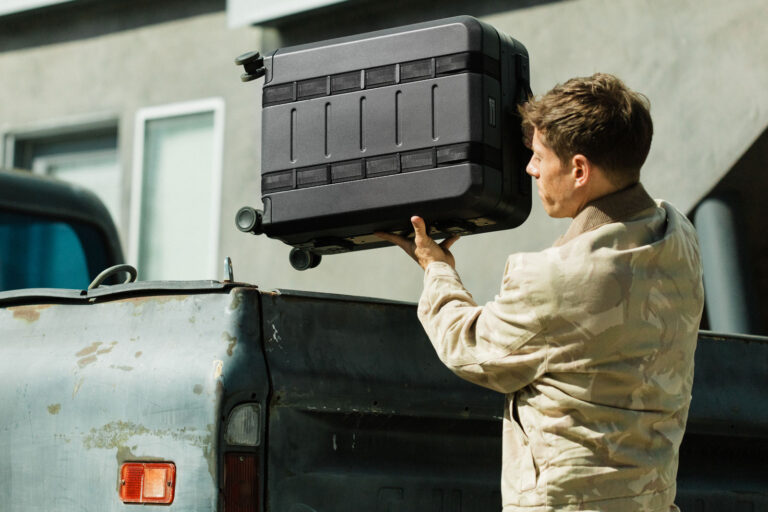
If you’re torn between choosing hardside or softside luggage, consider these points: Hardside luggage is more protective when it comes to water-resistance and scuff marks, but the rigidity means you might be sacrificing space when packing (compression straps and pads, do provide some help though). Softside luggage is more flexible, weighs less, and usually has more external pockets for easy access to essentials during transit, but can be prone to ripping.
Luggage with four wheels (also referred to as spinner luggage) is more convenient and maneuverable for smooth surfaces like airports. But even with the best spinner luggage, more wheels means there’s a higher probability of one getting damaged, and it might be a cumbersome haul on rough terrain since spinner wheels are meant to rotate 360 degrees. 2-wheeled roller luggage (also called roller luggage) is often considered more durable, but can be more prone to tipping if the weight inside is unevenly distributed. Another thing to think about before buying roller luggage is how frequently you’re traveling to hilly destinations, because lugging the 2-wheel suitcase behind you might feel more like a workout.
Before landing on a particular suitcase, it’s important to familiarize yourself with airline carriers’ international and domestic carry-on size requirements because they’re different. Most domestic airlines carry-on measurements are 22 in. x 14 in. x 9 in. As for international airlines, the carry-on measurements are smaller than domestic, and might also have a weight restriction. Be sure to check your airline’s carry-on size limitations to make sure there are no surprises once you get to the gate.
The goal for any carry-on luggage is to be as lightweight as possible (so you can spend those unused pounds packing your clothes and travel items!). Empty luggage can range from around 4 to 5 pounds for soft-sided luggage to as much as 10 pounds for hard-sided counterparts. Before deciding which is right for you, take into account how much you travel and how heavy your luggage usually is once it’s all packed – it might be worth getting a cheap luggage scale to see where you stand and to also check the carry-on weight limit policies of your most flown airlines.
Traveling forces you to confine your life (including everyday essentials) into a pretty small footprint and it can easily get messy, so organization is a key feature to consider. Exterior pockets, hidden pouches, interior dividers, laundry and dedicated toiletry bags, all help us to keep items accessible without having our lives fall into disarray.
Built-in TSA-approved locks allow agents to easily access and inspect your carry-on luggage without causing any damage, and doubled-coiled zippers can help prevent breaking. The YKK zipper is widely considered to be the strongest in the market and used by a variety of brands, including Monos and Travelpro.
Luggage is an expensive investment (a quality piece usually starts north of $250 and sets can be anywhere from $750 to over $1,000, so buying a piece that comes with a good warranty is essential. The best luggage companies (and most) have lifetime warranties that can replace parts or even the entire thing after it’s been put through the paces. Some specific items a company offers might have limited time warranties, and there could be restrictions on what is covered (normal wear and tear, scratches, etc. might be excluded), so it’s important to check the fine print.
Think about your lifestyle and your “look” and consider a suitcase that will help accentuate that. Carry-on luggage can be minimalist with no bells and whistles, or it can be a statement piece that will have passengers asking where you purchased it.
If you value ethical purchasing, look for brands that use recycled materials, offset their emissions, and ensure fair working conditions.
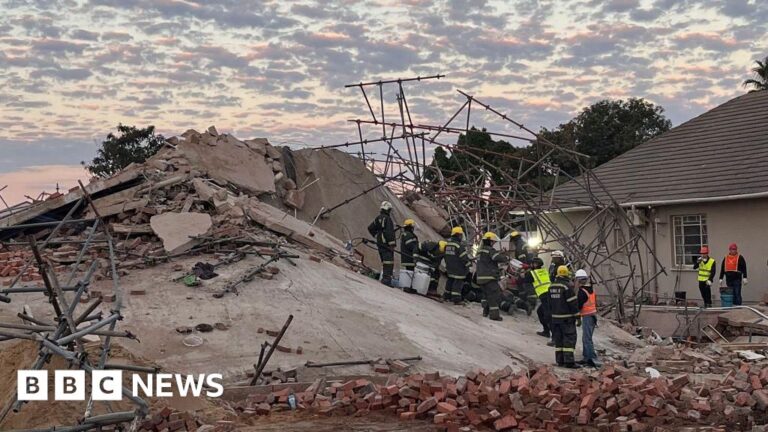
A building collapse that killed 34 construction workers and injured dozens more in the Western Cape, town of George last May was “entirely preventable”, South Africa’s government says.
A newly released report into the 2024 tragedy revealed that serious safety concerns had been raised well before the partially-built five-storey apartment block came crashing down.
Public Works Minister Dean Macpherson said the collapse was the result of multiple failures including the use of substandard materials, structural cracks, and visible gaps.
“There were a number of red flags that were continually raised about this project,” said a visibly angry Macpherson.
Some of the defects in the building were detected a year before the building collapsed. The health and safety officer even resigned in protest but work continued the report found.
“The work should have stopped” Macpherson said.
Macpherson added that these signs were a chance to turn back but instead, problems with the building were “covered up”.
Workers reported feeling vibrations in the partially built structure, and being told to cover up holes with sand and substandard concrete, the report revealed.
Following what the minister described as an “emotional and painful” private meeting with survivors and families of victims, he called for criminal accountability for those found to have been negligent.
A police investigation is still ongoing but no arrests have been made.
Many survivors are still facing trauma, medical bills and struggling to put food on the table, Macpherson said.
One survivor of the disaster, Elelwani, tearfully told local media, that her life had changed dramatically in the last year.
She lost many of her teeth, struggles to eat and has been the subject of bullying. She appealed for money from well wishers.
Macpherson pledged to introduce regulations to improve oversight in construction and reform outdated legislation.
The probe was conducted by the Council for the Built Environment and a parallel investigation by the Engineering Council of South Africa.
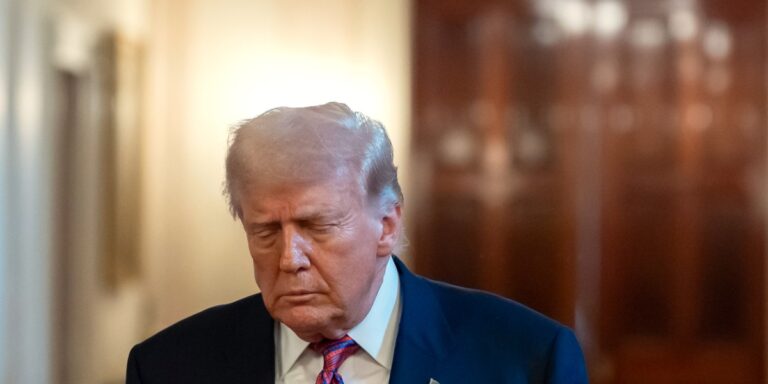
President Donald Trump filed a $10 billion lawsuit against The Wall Street Journal and media mogul Rupert Murdoch Friday, a day after the newspaper published a story reporting on his ties to wealthy financier Jeffrey Epstein.
The move came shortly after the Justice Department asked a federal court on Friday to unseal grand jury transcripts in Epstein’s sex trafficking case, as the administration seeks to contain the firestorm that erupted after it announced that it would not be releasing additional files from the case, despite previously pledging to do so.
The controversy has created a major fissure between Trump and his loyal base, with some of his most vocal supporters slamming the White House for the way it has handled the case, and questioning why Trump would not want the documents made public.
Trump had promised to sue the Wall Street Journal almost immediately after the paper put a new spotlight on his well-documented relationship with Epstein by publishing an article that described a sexually suggestive letter that the newspaper says bore Trump’s name and was included in a 2003 album compiled for Epstein’s 50th birthday.
Trump denied writing the letter, calling the story “false, malicious, and defamatory.”
The suit, filed in filed in federal court in Miami, accuses the paper and its reporters of having “knowingly and recklessly” published “numerous false, defamatory, and disparaging statements,” which, it alleges, caused “overwhelming financial and reputational harm” to the president.
In a post on his Truth Social site, Trump cast the lawsuit as part of his efforts to punish news outlets, including ABC and CBS, which both reached multimillion-dollar settlement deals with the president after he took them to court.
“This lawsuit is filed not only on behalf of your favorite President, ME, but also in order to continue standing up for ALL Americans who will no longer tolerate the abusive wrongdoings of the Fake News Media,” he wrote.
A spokesperson for Dow Jones, the Journal’s publisher, responded Friday night, “We have full confidence in the rigor and accuracy of our reporting, and will vigorously defend against any lawsuit.”
The letter revealed by The Wall Street Journal was reportedly collected by disgraced British socialite Ghislaine Maxwell as part of a birthday album for Epstein years before the wealthy financier was first arrested in 2006 and subsequently had a falling-out with Trump.
The letter bearing Trump’s name includes text framed by the outline of what appears to be a hand-drawn naked woman and ends with, “Happy Birthday — and may every day be another wonderful secret,” according to the newspaper.
Trump denied writing the letter and promised to sue. He said he spoke to both to the paper’s owner, Rupert Murdoch, and its top editor, Emma Tucker, before the story was published and told them the letter was “fake.”
“These are not my words, not the way I talk. Also, I don’t draw pictures,” the president insisted.
The outlet described the contents of the letter but did not publish a photo showing it entirely or provide details on how it came to learn about it.
In the lawsuit, Trump takes issue with that fact. The defendants, it attests, “failed to attach the letter, failed to attach the alleged drawing, failed to show proof that President Trump authored or signed any such letter, and failed to explain how this purported letter was obtained.”
“The reason for those failures is because no authentic letter or drawing exists,” it goes on to charge, alleging that the “Defendants concocted this story to malign President Trump’s character and integrity and deceptively portray him in a false light.”
Earlier Friday, Deputy Attorney General Todd Blanche filed motions in a separate federal court urging them to unseal the Epstein transcripts as well as those in the case against Maxwell, who was convicted of luring teenage girls to be sexually abused by Epstein. Epstein killed himself in 2019 shortly after his arrest while awaiting trial.
The Justice Department’s announcement that it would not be making public any more Epstein files enraged parts of Trump’s base in part because members of his own administration had hyped the expected release and stoked conspiracies around the well-connected financier.
The Justice Department said in the court filings that it will work with with prosecutors in New York to make appropriate redactions of victim-related information and other personally identifying information before transcripts are released.
“Transparency in this process will not be at the expense of our obligation under the law to protect victims,” Blanche wrote.
But despite the new push to release the grand jury transcripts, the administration has not announced plans to reverse course and release other evidence in its possession. Attorney General Pam Bondi had hyped the release of more materials after the first Epstein files disclosure in February sparked outrage because it contained no new revelations.
A judge would have to approve the release of the grand jury transcripts, and it’s likely to be a lengthy process to decide what can become public and to make redactions to protect sensitive witness and victim information.
The records would show testimony of witnesses and other evidence that was presented by prosecutions during the secret grand jury proceedings, when a panel decides whether there is enough evidence to bring an indictment, or a formal criminal charge.
____
Neumeister and Colvin reported from New York.
The Trump administration has threatened Japan with 25 percent tariffs. River Akira Davis, our Tokyo correspondent, explains how automobiles and rice have become the two major sticking points in the negotiations.

As high-stakes copyright lawsuits against Suno rumble on, the AI music generator has launched an update with what it claims to be “previously unimaginable capabilities” for “generative, studio-quality music creation”.
The version 4.5+ release introduces three new features, which Suno calls “first-of-their-kind professional audio production tools”.
“Add Vocals” allows users to layer vocals onto instrumental tracks, while “Add Instrumentals” enables users to add AI-generated backing tracks to vocal recordings. “Inspire” promises to create songs based on user-curated playlists.
The v4.5+ release follows Suno’s acquisition of WavTool in June, which brought browser-based digital audio workstation technology to the platform. WavTool’s capabilities include VST plugin support, sample-accurate editing, live recording, stem separation, and AI-generated MIDI functionality.
Earlier in June, Suno released an updated editing interface featuring an advanced song editor, stem separation capabilities, and audio upload functionality.
The new features suggest Suno is increasingly targeting professional or aspiring professional music makers rather than just AI music-making hobbyists.
The latest capabilities appear to be designed for users who want to layer and manipulate existing audio components rather than simply generate complete songs from text prompts.
The announcement also comes as Suno attempts to strengthen its music industry connections with the recent appointment of Paul Sinclair as Chief Music Officer.
Sinclair, who spent over two decades at Warner Music Group in various roles including General Manager and Executive Vice President of Atlantic Records, will “guide how Suno’s AI-powered tools are integrated into the process of songmaking,” according to the company.
Suno’s new “Add Vocals” feature lets users start with an instrumental track, either generated by Suno or uploaded from their own files, and transform it into a complete song by adding vocals.
“Add Instrumentals” works in reverse, allowing users to upload voice recordings or vocal stems and add Suno-generated instrumentals underneath based on text prompts. The feature is designed to transform voice recordings into full productions.
The “Inspire” feature, meanwhile, analyzes user-created playlists to understand the user’s musical preferences.
“This isn’t a minor upgrade; it’s a glimpse of the future: more people making more music, with better tools, in more intuitive ways.”
Mikey Shulman, Suno
“I’m really excited about this release,” said Mikey Shulman, CEO & Co-Founder, Suno.
“We’re not just giving users a better model that makes better music — we’re introducing new workflows that change how music gets made. This isn’t a minor upgrade; it’s a glimpse of the future: more people making more music, with better tools, in more intuitive ways.”
The company claims that the “Add Vocals” and “Add Instrumentals” features “will continue to improve” with increased usage.
Suno raised $125 million in funding in 2024, valuing the Massachusetts-headquartered company at $500 million. The funding round was led by Lightspeed Venture Partners and included investors such as Founder Collective, Nat Friedman, and Daniel Gross.
The AI music generation platform faces legal challenges on multiple fronts. In June 2024, Sony Music Entertainment, Universal Music Group, and Warner Music Group sued Suno for alleged copyright infringement, claiming the company used their recordings without permission to train its AI models.
Suno and rival platform Udio subsequently admitted to using copyrighted music in their training data, arguing their use falls under fair use exemptions to copyright law.
Adding to its legal troubles, German collection society GEMA sued Suno in January 2025 for allegedly “processing protected recordings of world-famous songs” without permission or remuneration. GEMA accused Suno of generating content “confusingly similar” to original songs by artists including Alphaville, Lou Bega, and Modern Talking.
Last month, Suno and Udio were hit with a class-action lawsuit filed by country musician Tony Justice.
Despite facing multiple legal challenges, Suno has continued to pursue partnerships with prominent figures in the music industry. The company named Grammy-winning producer Timbaland as a strategic advisor in October 2024, with Timbaland taking an active role in day-to-day product development and strategic creative direction.
Despite the legal proceedings, Bloomberg reported last month that the major music companies are in licensing talks with both Suno and Udio, seeking license fees and equity stakes in the platforms.
The Wall Street Journal reported that the major music companies are pushing for Content ID-style fingerprinting technology in their licensing talks with Suno and Udio, which would enable tracking of when and how particular songs are used by the AI platforms.
Suno stated that additional product updates will be released in the coming months.
Music Business Worldwide
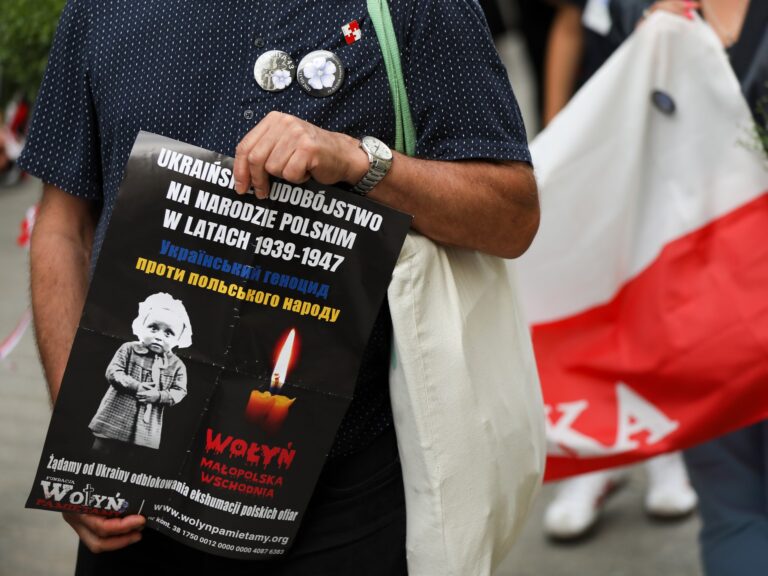
Kyiv, Ukraine – Nadiya escaped the rapists and killers only because her father hid her in a haystack amidst the shooting, shouting and bloodshed that took place 82 years ago.
“He covered me with hay and told me not to get out no matter what,” the 94-year-old woman told Al Jazeera – and asked to withhold her last name and personal details.
On July 11, 1943, members of the Ukrainian Insurgent Army (UIA), a nationalist paramilitary group armed with axes, knives and guns, stormed Nadiya’s village on the Polish-Ukrainian border, killing ethnic Polish men and raping women.
“They also killed anyone who tried to protect the Poles,” Nadiya said.
The nonagenarian is frail and doesn’t go out much, but her face, framed by milky white hair, lights up when she recalls the names and birthdays of her grand- and great-grandchildren.
She also remembers the names of her neighbours who were killed or forced to flee to Poland, even though her parents never spoke about the attack, now known as the Volyn massacre.
“The Soviets forbade it,” Nadiya said, noting how Moscow demonised the UIA, which kept fighting the Soviets until the early 1950s.
Nadiya said her account may enrage today’s Ukrainian nationalists who lionise fighters of the UIA for having championed freedom from Moscow during World War II.
After Communist purges, violent atheism, forced collectivisation and a famine that killed millions of Ukrainians, the UIA leaders chose what they thought was the lesser of two evils. They sided with Nazi Germany, which invaded the USSR in 1941.
In the end, though, the Nazis refused to carve out an independent Ukraine and threw one of the UIA’s leaders, Stepan Bandera, into a concentration camp.
But another UIA leader, Roman Shukhevych, was accused of playing a role in the Holocaust – and in the mass killings of ethnic Poles in what is now the western Ukrainian region of Volyn and adjacent areas in 1943.
Up to 100,000 civilian Poles, including women and children, were stabbed, axed, beaten or burned to death during the Volyn massacre, according to survivors, Polish historians and officials who consider it a “genocide”.
“What’s horrifying isn’t the numbers but the way the murders were carried out,” Robert Derevenda of the Polish Institute of National Memory told Polskie Radio on July 11.
This year, the Polish parliament decreed July 11 as “The Volyn Massacre Day” in remembrance of the 1943 killings.
“A martyr’s death for just being Polish deserves to be commemorated,” the bill said.
“From Poland’s viewpoint, yes, this is a tragedy of the Polish people, and Poland is fully entitled to commemorate it,” Kyiv-based analyst Igar Tyshkevych told Al Jazeera.
However, rightist Polish politicians may use the day to promote anti-Ukrainian narratives, and a harsh response from Kyiv may further trigger tensions, he said.
“All of these processes ideally should be a matter of discussion among historians, not politicians,” he added.
Ukrainian politicians and historians, meanwhile, call the Volyn massacre a “tragedy”. They cite a lower death toll and accuse the Polish army of the reciprocal killing of tens of thousands of Ukrainian civilians.
In post-Soviet Ukraine, UIA leaders Bandera and Shukhevych have often been hailed as national heroes, and hundreds of streets, city squares and other landmarks are named after them.

“[The USSR] branded ‘Banderite’ any proponent of Ukraine’s independence or even any average person who stood for the legitimacy of public representation of Ukrainian culture,” Kyiv-based human rights advocate Vyacheslav Likhachyov told Al Jazeera.
The demonisation backfired when many advocates of Ukraine’s independence began to sympathise with Bandera and the UIA, “turning a blind eye to their radicalism, xenophobia and political violence”, he said.
In the 2000s, anti-Russian Ukrainian leaders began to celebrate the UIA, despite objections from many Ukrainians, especially in the eastern and southern regions.
These days, the UIA is seen through a somewhat myopic prism of Ukraine’s ongoing war with Russia, according to Likhachyov.
Ukraine’s political establishment sees the Volyn massacre and armed skirmishes between Ukrainians and Poles as only “a war related to the Ukrainians’ ‘fight for their land’”, according to Nikolay Mitrokhin, a researcher at Bremen University in Germany.
“And during a war, they say, anything happens, and a village, where the majority is on the enemy’s side, is considered a ‘legitimate target’,” he explained.

Many right-leaning Ukrainian youngsters “fully accepted” Bandera’s radicalism and the cult of militant nationalism, he said.
Before Russia’s full-scale invasion in 2022, thousands of far-right nationalists rallied throughout Ukraine to commemorate Bandera’s January 1 birthday.
“Bandera is our father, Ukraine is our mother,” they chanted.
Within hours, the Polish and Israeli embassies issued declarations in protest, reminding them of the UIA’s role in the Holocaust and the Volyn massacre.
Far-right activists began volunteering to fight Moscow-backed separatists in southeastern Ukraine in 2014 and enlisted in droves in 2022.
“In the situational threat to [Ukraine’s] very existence, there’s no room for reflection and self-analysis,” rights advocate Likhachyov said.
Warsaw, meanwhile, will keep using the Volyn massacre to make demands for concessions while threatening to oppose Ukraine’s integration into the European Union, he said.
As for Moscow, it “traditionally plays” the dispute to sow discord between Kyiv and Warsaw, analyst Tyshkevych said, and to accuse Ukrainian leaders of “neo-Nazi” proclivities.

Today, memories of the Volyn massacre remain deeply contested. For many Ukrainians, the UIA’s image as freedom fighters has been bolstered by Russia’s 2022 invasion, somewhat pushing aside reflection on the group’s role in the World War II atrocities.
For Poland, commemoration of the massacre has become a marker of national trauma and, at times, a point of leverage in political disputes with Ukraine.
In April, Polish experts began exhuming the remnants of the Volyn massacre victims in the western Ukrainian village of Puzhniky after Kyiv lifted a seven-year moratorium on such exhumations. Some believe this may be a first step in overcoming the tensions over the Volyn massacre.
Reconciliation, historians say, won’t come easily.
“The way to reconciliation is often painful and requires people to accept historical realities they’re uncomfortable with,” Ivar Dale, a senior policy adviser with the Norwegian Helsinki Committee, a human rights watchdog, told Al Jazeera.
“Both [Poland and Ukraine] are modern European democracies that can handle an objective investigation of past atrocities in ways that a country like Russia unfortunately can not,” he said.
A required part of this site couldn’t load. This may be due to a browser
extension, network issues, or browser settings. Please check your
connection, disable any ad blockers, or try using a different browser.

Welcome to World Breaking News, your trusted source for fast, accurate, and impactful news coverage from around the globe. We are a dedicated team of journalists, editors, and news enthusiasts committed to delivering breaking stories, in-depth analysis, and real-time updates on politics, business, technology, sports, entertainment, and more.
© Copyright -World Breaking News -2025