


7.3 C
New York
Wednesday, April 22, 2026
Home Blog Page 543

Study finds that while AI is causing mass layoffs in tech, it is also increasing salaries by $18,000 annually in other industries.

0

You’ve read about it all over, including in Fortune Intelligence. Maybe you or friends have been impacted: artificial intelligence is already transforming work, not least hiring and firing. Nowhere is the impact more visible than in the labor market.

The technology industry, the original epicenter of AI adoption, is now seeing many of its own workers displaced by the very innovations they helped create. Employers, racing to integrate AI into everything from cloud infrastructure to customer support, are trimming human headcount in software engineering, IT support, and administrative functions. The rise of AI-powered automation is accelerating layoffs in the tech sector, with impacted employees as high as 80,000 in one count. Microsoft alone is trimming 15,000 jobs while committing $80 billion to new AI investments.

But labor market intelligence firm Lightcast is offering a ray of hope going forward. Job postings for non-tech roles that require AI skills are soaring in value. Lightcast’s new “Beyond the Buzz” report, based on analysis of over 1.3 billion job postings, shows that these postings offer 28% higher salaries—an average of nearly $18,000 more per year. The Lightcast research underscores the split in tech and non-tech hiring: job postings for AI skills in tech roles remain robust, but the proportion of AI jobs within IT and computer science has fallen, dropping from 61% in 2019 to just 49% in 2024. This signals an ongoing contraction of traditional tech roles as AI claims an ever-larger share of the work.

AI demand explodes beyond tech

Rather than stifling workforce prospects, Lightcast’s research suggests that AI is dispersing opportunity across the broader economy. More than half of all jobs requesting AI skills in 2024 appeared outside the tech sector—a radical reversal from previous years, when AI was confined to Silicon Valley and computer science labs. Fields like marketing, HR, finance, education, manufacturing, and customer service are rapidly integrating AI tools, from generative AI platforms that craft marketing content to predictive analytics engines that optimize supply chains and recruitment.

In fact, job postings mentioning generative AI skills outside IT and computer science have surged an astonishing 800% since 2022, catalyzed by the proliferation of tools like ChatGPT, Microsoft Copilot, and DALL-E. Marketing, design, education, and HR are some of the fastest growers in AI adoption—each adapting to new toolkits, workflows, and ways of creating value.

Cole Napper, VP of research, innovation, and talent insights at Lightcast, told Fortune in an interview that he was struck by the lack of a discernible pattern for which industries were most affected by the explosion of AI skills present in job postings, noting that the arts come top of the list.

AI skills are in demand

For the workforce at large, AI proficiency is emerging as one of today’s most lucrative skill investments. Possessing two or more AI skills sends paychecks even higher, with a 43% premium on advertised salaries.

In 2024, more than 66,000 job postings specifically mentioned generative AI as a skill, a nearly fourfold increase from the prior year, according to the Lightcast’s 2025 Artificial Intelligence Index Report. Large language modeling was the second most common AI skill, which showed up in 19,500 open job posts. Postings listing ChatGPT and prompt engineering as skills ranked third and fourth in frequency, respectively.

Sectors such as customer/client support, sales, and manufacturing reported the largest pay bumps for AI-skilled workers, as companies race to automate routine functions and leverage AI for competitive advantage.

Christina Inge, founder of Thoughtlight, an AI marketing service, told Fortune in a message AI isn’t just automating busywork, it’s also becoming a tool AI-fluent workers can leverage to increase their own value to a company—and to outperform their peers. Take, for example, someone in sales using AI to create more targeted conversations to close deals faster, Inge wrote. The same can be said for customer service workers.

“[Customer service workers fluent in AI] know how to interpret AI outputs, write clear prompts, and troubleshoot when things go off script,” Inge said. “That combination of human judgment and AI fluency is hard to find and well worth the extra pay.”

In fields like marketing and science, even single AI skills can yield large returns, while more technical positions gravitate to specialists with advanced machine learning or generative AI expertise.

Crucially, the most valued AI-enabled roles demand more than just technical wizardry. Employers prize a hybrid skillset: communication, leadership, problem-solving, research, and customer service are among the 10 most-requested skills in AI-focused postings, alongside technical foundations like machine learning and artificial intelligence.

“While generative AI excels at tasks like writing and coding, uniquely human abilities—such as communication, management, innovation, and complex problem-solving—are becoming even more valuable in the AI era,” the study says.

Winners and losers

The emerging repercussions are striking. Tech workers whose roles are readily automated face rising displacement—unless they can pivot quickly into emerging areas that meld business, technical, and people skills. Meanwhile, millions of workers outside of tech are poised to translate even basic AI literacy into new roles or wage gains. The competitive edge now lies with organizations and professionals agile enough to combine AI capabilities with human judgement, creativity, and business acumen.

For companies, the risk is clear: treating AI as an isolated technical specialty is now a liability. Winning firms are investing to embed AI fluency enterprise-wide, upskilling their marketing teams, HR departments, and finance analysts to build a future-ready workforce.

AI may be the source of turmoil in Silicon Valley boardrooms, but its economic dividends are flowing rapidly to workers—and companies—in every corner of the economy. For those able to adapt, AI skills are not a harbinger of job loss, but a passport to higher salaries and new career possibilities. Still, the research doesn’t indicate exactly where in the income levels the higher postings are coming, so Napper said it’s possible that we are seeing some compression, with higher-paid tech jobs being phased out and lower-paying positions being slightly better-paying.

Napper said the trend of AI skills cropping up in job postings has exploded over the past few years, and he doesn’t expect a slowdown anytime soon. Napper said there’s a “cost to complacency”—one that includes a significant salary cut. He added that the 28% premium, Lightcast plans to release follow-up research on what level of the income latter the trend is hitting the most.

For this story, Fortune used generative AI to help with an initial draft. An editor verified the accuracy of the information before publishing. 
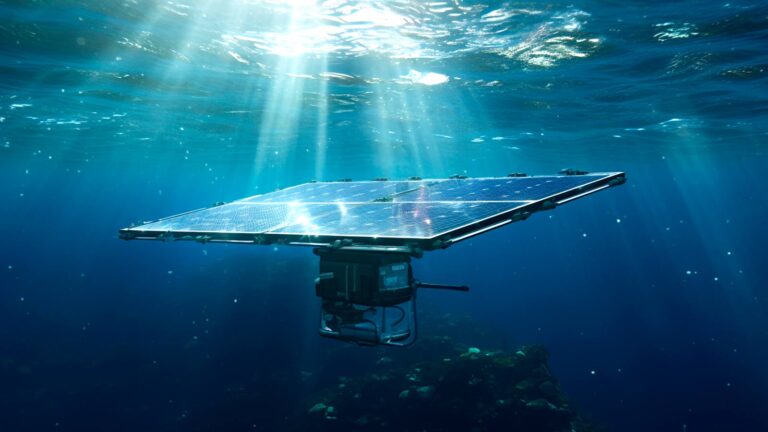
Autonomous Underwater Vehicles Powered by Solar Energy for Ocean Exploration

0

When it comes to our knowledge of the Earth’s oceans, it’s a startling fact that we may know more about distant planets like Mars than about the depths of our own seas. In fact, only a mere 5% of the world’s seabed has been adequately charted and explored. And when it comes to advancing our understanding of the marine ecosystem and working towards its conservation, technological innovations such as autonomous underwater vehicles (AUVs) are poised to play a pivotal role. However, a significant challenge arises when these AUVs venture into the abyss: how do we effectively power them? As recent research suggests, the answer may lie in the untapped potential of solar energy.

Is solar energy a viable option for AUVs?

In a nutshell, yes, but with some caveats. While the oceans offer a plethora of renewable energy sources like wave and tidal power, these tend to be location-dependent. To sustainably power AUVs on long-range missions in the deep sea, solar energy presents itself as a viable solution, employing two distinct methods:

  1. Ocean Thermal Conversion (OTEC): This technique capitalizes on the temperature gradient in water masses, where surface layers are typically warmer due to solar radiation.
  2. Photovoltaics: Photovoltaic technology, similar to its onshore counterpart, is utilized with some adaptations for underwater application, as we’ll explore shortly.

Contrary to what it might seem, solar radiation can reach up to fifty meters deep, especially in the green to blue part of the spectrum. New York University has already published a study pointing to this challenge, since the silicon photovoltaic cells used on land are optimized for the red part of the spectrum. In addition, this type of electronic component is very sensitive to salt and moisture, as well as biological fouling. And that is where New York University has announced new developments to multiply the potential of underwater rovers.

A new generation of underwater photovoltaic cells

The American scientists’ team has used LED lamps in laboratory settings, simulating various spectrum wavelengths. Their findings yield two main insights:

  1. Most efficient photovoltaic cells for underwater operation incorporate materials like cadmium telluride, indium gallium phosphide, and other variants with a broader light-receiving range than traditional silicon cells. Perovskite cells also exhibit superior performance. However, further research is required before commercial prototypes become a reality.
  2. Combatting biological fouling is now feasible with existing commercial solutions. Previously, biological fouling plagued up to half of an AUV’s surface within 30 days. Thankfully, transparent, non-toxic coatings can be applied to photovoltaic panels, mitigating this issue effectively.

SAUV II

Current prototypes of solar-powered AUVs

Although research into solar panels for AUVs is still in its infancy, several promising prototypes have already tackled these challenges head-on. One standout example is MIT’s PEARL project. In 2021, the institute unveiled a floating mothership equipped with solar panels, serving as a recharging station for underwater vehicles, complete with integrated satellite connectivity. This innovative approach sidesteps the complexities of harnessing sunlight at great ocean depths.

Another compelling initiative is the SAUV II, a solar-powered vehicle conceived by the U.S. Autonomous Undersea Systems Institute. Resembling a manta ray in shape, this prototype boasts an impressive depth capability of up to 500 meters, facilitating in-depth underwater exploration. Much like marine mammals such as dolphins or whales, the SAUV II resurfaces to recharge its batteries when energy levels run low. Crafted from fiberglass, it features a comprehensive suite of equipment, including GPS, acoustic altimeters, depth sensors, gyroscopes, and data transmission systems via radio or satellite.

In addition to these examples, we have covered the research on other AUVs. Some, like the Tunabot and robotic jellyfish, draw inspiration from the natural world, mimicking the movements and forms of creatures such as tuna and moon jellyfish. This exciting field is known as biomimicry or biomimetics, a topic we’ve explored extensively in previous articles. If you’re intrigued, you can start your journey with this introductory article to delve deeper into biomimetic engineering.


Source:


Imágenes

SAUV II (Wikimedia Commons)

Greece continues to battle raging wildfires amid ongoing extreme heat

0

Nikos Papanikolaou

BBC News, Athens

Greece firefighters battle to contain major wildfires across the country

Greece is continuing to battle five major wildfires across the country amid a severe heatwave, with extreme temperatures expected to persist.

Temperatures are forecast to reach up to 44C (111.2F) on Sunday, as firefighters focus their efforts on two major fires, one on the island of Kythira and the other in Evia.

Fire brigade spokesperson Vasilios Vathrakoyannis said the situation had improved after an “all night battle” by firefighters, but warned that Sunday remained “extremely dangerous” for the outbreak of new wildfires.

Meanwhile, neighbouring Turkey has recorded its highest ever temperature, with fires raging in several regions.

Getty Images Two men stand in front of a flaming tree. One throws water on the flames from a bucketGetty Images

Smoke and flame rise as firefighting teams respond to a fire that broke out in Krioneri near Athens

Greece’s climate crisis and civil protection minister Giannis Kefalogiannis previously said: “We have injured firefighters, human lives were put at risk, properties have been burned, and forest areas have been destroyed.”

High winds and scorching temperatures continued to fan the flames on Sunday. Greece has formally requested assistance from the EU Civil Protection Mechanism for six additional firefighting aircraft.

In Kythira, a blaze that broke out on Saturday morning in the village of Pitsinades spread rapidly, with residents describing scenes of “total destruction”.

A new evacuation alert was issued for several areas on Sunday, telling residents in Venetianika and Pitsinades to move towards Livadi.

By dawn, firefighters were still tackling flare-ups, supported by helicopters and two water-bombing aircraft.

On the island of Evia, officials said a second blaze near Pissona had got “out of control” on Saturday. Six firefighters were taken to hospital with burns and smoke inhalation, while several villages were left without power.

Local authorities said there were signs of improvement on Sunday, but a significant risk of flare-ups remained due to strong winds.

In Messinia, a third wildfire broke out in the Polithea area of Trifylia on Saturday morning and intensified later in the day. Officials reported significant damage to homes and agricultural land.

On Sunday, Vathrakoyannis said 67 firefighters were attending the Kythira fire and 100 were in Messinia, where an active front remained.

In Attica, the region where Athens is, a fire that started in Afidnes on Saturday spread rapidly through Drosopigi, Kryoneri and Agios Stefanos, forcing residents to flee.

While the fire service says the main front has been contained, scattered hotspots continue to burn.

The smell of burning wood carried as far as central Athens, as Greece requested European Union assistance to fight the spreading blaze.

Meanwhile, in Crete’s Chania region, firefighters are battling a 20km wildfire front that has swept through forest land, beehives, crops and livestock.

Strong southwesterly winds are complicating efforts to contain flare-ups, while several villages remain without electricity.

Last month, fires on Greece’s fifth-biggest island Chios, in the northern Aegean, destroyed 4,700 hectares (11,600 acres) of land.

Earlier in July, a wildfire on the island of Crete forced the evacuation of 5,000 tourists.

On Saturday, Turkey’s environment ministry said meteorologists had recorded a reading of 50.5C in the south-eastern city of Silopi, surpassing the previous heat record of 49.5C.

Firefighters have faced a four-day battle to contain a fire in the northern Karabuk province, AFP news agency reported on Sunday. On Wednesday, ten people died fighting a fire in Eskisehir, a province in the north-west, it added.

Some local authorities have announced restrictions on water consumption, including for the resort of Cesme on Turkey’s west coast.

Challenging Client

0


Client Challenge


JavaScript is disabled in your browser.

Please enable JavaScript to proceed.

A required part of this site couldn’t load. This may be due to a browser
extension, network issues, or browser settings. Please check your
connection, disable any ad blockers, or try using a different browser.

Israeli military institutes daily ‘tactical pause’ in select areas of Gaza facing starvation | Israel-Palestine conflict News

0

Military suspends operations for ‘humanitarian purposes’ in al-Mawasi, Deir el-Balah and Gaza City from 10am to 8pm.

The Israeli military has begun a “tactical pause” in fighting in three areas of Gaza as part of steps it claims will address a worsening humanitarian situation in the Palestinian enclave.

In a statement, the military said it has begun a “tactical suspension of military operations for humanitarian purposes” in al-Mawasi, Deir el-Balah and Gaza City from 10am (07:00 GMT) to 8pm local time every day until further notice, beginning on Sunday.

The Israeli military claims it does not operate in these areas, but there have been fighting and strikes in all of them in recent weeks.

The military also said it would designate secure routes to help aid agencies deliver food and other supplies to people across Gaza, though the Israeli government denies there is starvation in the besieged enclave.

The military also said on Sunday it carried out aid airdrops into Gaza, which included packages of aid with flour, sugar and canned food to stem the rising hunger.

The Israeli announcement to pause aerial bombardment and ground attacks came after months of aid agencies, rights experts and several governments warning of famine as Israel continued to restrict crucial aid for Gaza.

Global criticism, even by Israel’s close allies, has grown as hundreds of Palestinians have been killed in recent weeks while trying to reach food distribution sites operated by a notorious group backed by Israel and the United States.

Meanwhile, the Israeli military also intercepted a Gaza-bound aid ship seeking to break the Israeli blockade of the Palestinian territory, detaining 21 international activists and journalists and seizing all cargo, including baby formula, food and medicine, the Freedom Flotilla Coalition said on Sunday.

The coalition that operates the vessel Handala said the Israeli military “violently intercepted” it in international waters about 40 nautical miles (74km) from Gaza, cutting the cameras and communications, just before midnight on Saturday.

Israeli denial of starvation

Aid organisations said last week there was mass hunger among Gaza’s 2.2 million people, with food running out after Israel cut off all supplies to the territory in March, before resuming them in May with new restrictions.

Dozens of Palestinians have died of malnutrition in the past few weeks, according to the Gaza Ministry of Health. A total of 127 people have died due to malnutrition, including 85 children, since the start of the war, the ministry said.

At least five Palestinians starved to death on Saturday alone.

One-and-a-half-year-old Muhammed Zakariya Ayyub al-Matouk, one of thousands of children suffering from hunger and malnutrition in Gaza [Ali Jadallah/Anadolu via Getty Images]

Al Jazeera’s Hamdah Salhut, reporting from Jordan because the network has been banned in Israel and the occupied West Bank, said Israel, however, has been continuously denying that it is starving the Palestinian people in Gaza.

“Now, the Israeli military, in their statement, still says that they emphasise that there is ‘no starvation in Gaza’, and that they’re trying to refute these claims, even though they are now going to enact a new series of measures aimed at improving the humanitarian situation in Gaza,” she said.

“Israel has largely accused the United Nations of not distributing the aid trucks, while the UN has said that Israel has not allowed them to do so.”

Salhut said the Israeli announcement of a pause in attacks came after the Israeli political echelon directed the military to do so following a call within the Israeli prime minister’s security cabinet.

Israeli forces have killed at least 15 Palestinians in Gaza since the early hours of Sunday, a day after killing at least 71 people, including 42 aid seekers.

Israeli Military Declares Daily Ceasefires in Gaza to Facilitate Delivery of Aid to the Hungry

0

Israeli military announces daily pauses in Gaza areas to allow aid for hungry

Passengers forced to evacuate plane using emergency slides during fire at Denver airport

0

An American Airlines flight was evacuated at Denver International Airport on 26 July after it suffered “a mechanical issue” connected to a tyre during takeoff, the airline said.

Social media footage shows the moment passengers used emergency slides to escape, with flames seen below the plane.

One person was taken to hospital following the incident, according to Denver International Airport.

Hackers breach Allianz Life, gaining access to personal data of over 1.4 million US customers

0

Hackers gained access to personal data on the majority of the 1.4 million customers of Allianz Life Insurance Company of North America, the company confirmed Saturday.

Minneapolis-based Allianz Life, a subsidiary of Munich, Germany-based Allianz SE, said the data breach happened on July 16 when a “malicious threat actor” gained access to a third-party, cloud-based system used by the company.

“The threat actor was able to obtain personally identifiable data related to the majority of Allianz Life’s customers, financial professionals, and select Allianz Life employees, using a social engineering technique,” Allianz Life said in a statement. “We took immediate action to contain and mitigate the issue and notified the FBI.”

The company said its own systems were not accessed, just the third-party’s platform.

Allianz Life said its investigation is ongoing and that the company has begun reaching out to the impacted individuals. It said the incident involves only Allianz Life in the U.S., not other Allianz corporate entities.

In the case of data breaches, a “social engineering technique” usually involves using trickery to gain access. Spokesman Brett Weinberg said he couldn’t provide details because they are still investigating.

Allianz Life also reported the breach to multiple other authorities, including the Maine Attorney General’s Office. A filing on the agency’s website said the company discovered the breach the day after it happened, and that it will be offering those affected 24 months of identity theft protection and credit monitoring.

Allianz Life was known as North American Life and Casualty until it was acquired by German conglomerate Allianz SE in 1979 and changed its name to Allianz Life Insurance Company of North America. It has nearly 2,000 employees in U.S., with the majority working in Minnesota, according to its website.

It is one of five North American subsidiaries of the Munich-based global financial services group Allianz SE, which says it serves more than 125 million customers worldwide.

Introducing the 2025 Fortune 500, the definitive ranking of the biggest companies in America. Explore this year’s list.

Nigeria emerges victorious against Morocco to secure WAFCON title and accomplish Mission X | Soccer Updates

0

Nigeria claim their tenth WAFCON title, ‘Mission X’, as they come from behind to beat Morocco 3-2 in Rabat.

Substitute Jennifer Echegini scored the 88th-minute winner as Nigeria came from two goals behind to beat hosts Morocco 3-2 in a dramatic Women’s Africa Cup of Nations final.

The triumph in Rabat on Saturday confirmed the West Africans as the queens of women’s football in Africa as they pulled off a record-extending 10th title in 13 editions – “Mission X”, as they dubbed their efforts – to win the 2025 edition.

It was the second successive final loss for Morocco, who led by two goals after 24 minutes, only to concede three in the second half.

Esther Okoronkwo played a key role in the Super Falcons’ victory: scoring the first goal, creating the second and delivering the free-kick that Echegini finished to stun the home crowd.

Morocco, backed by a vibrant capacity crowd at the 21,000-seat Stade Olympique in the capital, took the lead on 12 minutes as Nigeria conceded for the first time in open play at the tournament.

Nigeria fluffed several chances to clear the ball, and it fell just outside the area to Chebbak, whose perfectly placed, rising shot gave goalkeeper Chiamaka Nnadozie no chance.

Nigeria’s goalkeeper Chiamaka Nnadozie fails to save a shot during the 2025 Women’s Africa Cup of Nations final [Abdel Majid Bziouat/AFP]

The lead doubled 12 minutes later as the ball flew across the Nigerian goalmouth to Sanaa Mssoudy, who ended a five-match goal drought by steering a low shot into the far corner of the net.

Nigeria had more possession in the opening half than the host nation, but managed only one shot on target, and it did not trouble goalkeeper Khadija Er-Rmichi.

But the Moroccan lead halved after 64 minutes as Okoronkwo sent Er-Rmichi the wrong way from a penalty after a VAR review showed a Folashade Ijamilusi cross striking Nouhaila Benzina’s hand.

The goal lifted the spirits of increasingly assertive Nigeria, and they equalised seven minutes later, when Okoronkwo turned creator with a pull-back that Ijamilusi pushed into the net from close range.

On Friday, Ghana finished third, winning a penalty shootout 4-3 against outgoing champions South Africa after a 1-1 playoff draw in regular time in Casablanca.

After two weakly struck spot kicks in a row by South Africa were saved to give Ghana the advantage, 19-year-old Nancy Amoh converted the decisive penalty with a low shot into the corner of the net.

A blunder by Ghana goalkeeper Cynthia Konlan gifted South Africa the lead on 45 minutes as she lost control of the ball just outside the box, and Nonhlanhla Mthandi struck it into the net.

Persistent Ghanaian pressure finally paid off on 68 minutes when an Alice Kusi header came off the crossbar and long-serving South Africa shot-stopper Andile Dlamini conceded an own goal.

Victory was particularly sweet for the Black Queens as they were outplayed when losing 2-0 to Banyana Banyana (The Girls) in the group stage.

Ghana have won the four third-place playoffs they qualified for, while South Africa have lost four of five bronze medal matches.

The next Women’s Africa Cup of Nations is scheduled for March 2026, also in Morocco, and will double as a qualifying competition for the 2027 Women’s World Cup in Brazil.

Update (2): Former HYBE employees sentenced for insider trading related to BTS’ military enlistment (report)

0

Three individuals who previously worked for HYBE have received suspended prison terms and fines after a Seoul court found them guilty of insider trading related to BTS member enlistments.

UPDATE Korea JoongAng Daily, reported on Tuesday (July 22) that the Seoul Southern District Court handed down the sentences following an investigation into stock sales that occurred before the K-pop giant announced that BTS would pause group activities for mandatory military service.

Late yesterday (July 24), HYBE – via its fully-owned US agency, Tag PR – contacted MBW to strongly deny that any of the trio were former employees of the company. One of the individuals, HYBE said, was known to be an acquaintance of HYBE founder, Bang Si-hyuk.

Today (July 25), HYBE’s central communications team in Korea has once again contacted us with a different version of events.

HYBE spokesperson Rachel Um said in an email: “It’s confirmed that the three individuals addressed were all former HYBE employees as they were charged with insider trading. They had all left HYBE by then. While they did work at HYBE, they had no personal connections with Chairman Bang.”

Um blamed “human error” for the initial correction request from Tag PR.


JoongAng earlier reported that amongst the trio of insider traders was Kim, a 37-year-old employee at HYBE subsidiary Source Music, who received a 10-month prison sentence suspended for two years and must pay a fine of KRW 231 million  ($168,000).

It also named Lee, 33, formerly of HYBE subsidiary BigHit Music, and a 41-year-old ex-Belift Lab staff member. They each received six-month suspended sentences with fines of KRW 51 million ($37,000) and KRW 65 million ($47,000) respectively.

HYBE officially announced the BTS hiatus on June 15, 2024, saying the members would be focusing on solo projects, but added that they will also remain “active as a group.”

On the day of the announcement, HYBE’s share price fell nearly 25% to 145,000 South Korea Won ($105), wiping around $1.5 billion from the K-pop giant’s market cap value. The sell-off came as BTS is HYBE’s biggest revenue generator, accounting for nearly 90% of the company’s revenues in the first half of 2020.

BTS weren’t only HYBE’s top revenue generator at the time. According to IFPI, they were also the world’s biggest recorded music artists in 2021 and 2020.

“In an entertainment company, an artist’s activities have a significant impact on revenue, so whether they continue or suspend activities is a highly sensitive matter.”

Seoul Southern District Court

With BTS’s absence, HYBE’s operating profit dropped 37.5% YoY to KRW 184.82 billion ($135.55 million) in FY 2024, which it attributed to, among other factors, “BTS‘ temporary break”.

Other acts on the company’s roster include KATSEYE, ENHYPHEN, LE SSERAFIM, Seventeen and TOMORROW X TOGETHER.

“This offense constitutes a serious crime that undermines the fairness of the capital market and warrants strong social condemnation.”

Seoul Southern District Court

The court ordered confiscation of amounts equal to the losses the employees avoided through their trades, which violated South Korea’s Financial Investment Services and Capital Markets Act, the report said.

The court said in a statement cited by JoongAng: “In an entertainment company, an artist’s activities have a significant impact on revenue, so whether they continue or suspend activities is a highly sensitive matter.”

“This offense constitutes a serious crime that undermines the fairness of the capital market and warrants strong social condemnation.”

The development comes nearly two months after HYBE’s Seoul headquarters were raided by South Korean authorities as part of an investigation into alleged insider trading by a former executive.

That unnamed former exec allegedly made $176,500 by buying shares in rival K-pop company YG Entertainment’s subsidiary YG Plus, after learning that HYBE was planning to invest in the stock, Korea Times reported at the time.

About two weeks ago, HYBE pledged to cooperate fully with authorities as South Korea’s financial regulator reportedly prepares to refer the K-pop giant’s founder and Chairman, Bang Si-hyuk, to prosecutors over allegations related to the company’s 2020 IPO.

The Korea Herald, Korea Times and other local news outlets reported recently that the Securities and Futures Commission’s capital market investigation team voted to refer Chairman Bang to prosecutors,

The Korea Times said referral to the prosecution is the most severe administrative action that financial regulators in Korea can take against an individual suspected of violating the Capital Markets Act.

HYBE said in a statement issued to MBW: “We regret any concern caused by the recent reports related to our IPO process. HYBE is fully cooperating with the local authorities, including the financial regulators and the police, by submitting relevant materials and providing detailed explanations as part of the fact-finding efforts.

HYBE’s shares closed 1.8% lower in Seoul trading on Tuesday (July 23) at KRW 267,500,

Music Business Worldwide