
A required part of this site couldn’t load. This may be due to a browser
extension, network issues, or browser settings. Please check your
connection, disable any ad blockers, or try using a different browser.

A required part of this site couldn’t load. This may be due to a browser
extension, network issues, or browser settings. Please check your
connection, disable any ad blockers, or try using a different browser.

Stairways have turned into waterfalls as torrential rain has battered the island for more than a week.
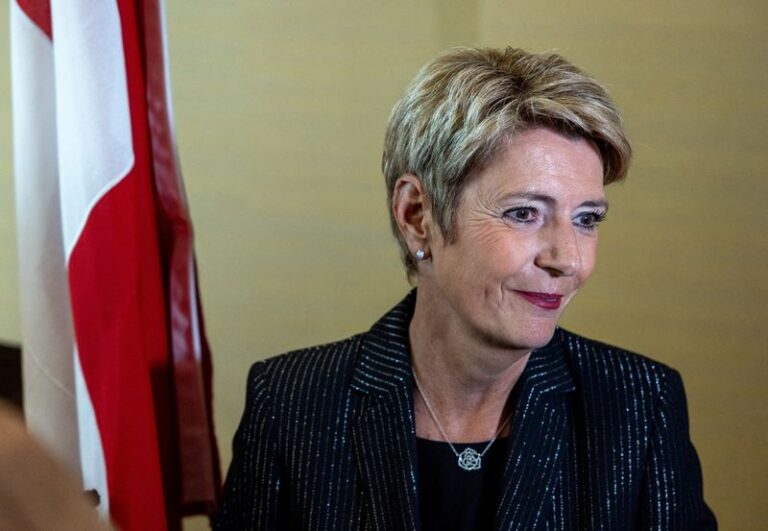
Swiss president heads to US for talks to defuse tariff threat

The EU’s asylum map is shifting. Many applicants now prefer Spain, but fewer people are applying.

Power is precarious: The more of it you possess, the more competitors you attract, gunning for your customers, star employees, and market share. We drilled down on five of the biggest rivalries in business, across chips, AI, EVs, investing and finance, and energy. And though these incumbents and rising rivals are fierce, never count out the dark horses who are hungry for a spot at the top.
Check out the 2025 Fortune Most Powerful People list here.
Nvidia CEO Jensen Huang might be forgiven for taking a moment to savor his company’s meteoric rise to the top of the stock market, driven by soaring demand for its high-performance chips that power generative AI. Now the most valuable company in the world, Nvidia controls over 90% of the market for the specialized chips used to train and run AI systems—cementing its dominance in the hardware race fueling the AI boom. Still, Huang is keeping an eye on the horizon. AMD is positioning itself as a viable alternative, while startups like Groq, Cerebras, and SambaNova are betting on custom chips designed to accelerate AI inference. None pose a serious threat to Nvidia’s dominance—yet.
AMD CEO Lisa Su never met her first cousin once removed, Jensen Huang, until both had risen to lead two of the most powerful chipmakers in the world. “There were no family dinners,” Su said in a recent interview. “It is an interesting coincidence.” But the two can’t avoid each other now. With corporate headquarters just miles apart in the same Silicon Valley town, AMD is pushing hard to establish itself as a viable second source for AI chips amid surging demand. The company has secured wins from major players like Microsoft and Meta—both eager to diversify their supply chains and reduce dependence on Nvidia’s tightly controlled hardware and software ecosystem. —Sharon Goldman

Musk: Win McNamee—Getty Images; Wang: VCG/Getty Images
Elon Musk, the man who brought EVs to the masses, has seen Tesla’s fortunes erode as he gets entangled in social media and politics. Tesla’s annual deliveries in 2024 declined for the first time ever, and have continued to decline year over year each quarter since. Musk has bet the future on Tesla’s AI and camera-only self-driving system, with a soft robotaxi launch in June and the ongoing development of its humanoid robot. Critics argue the company’s self-driving tech is well behind that of competitors like Alphabet’s Waymo and BYD. While Tesla is still the most valuable auto company in the world, it’s not clear it will keep the top spot.
The late Charlie Munger, one of the most successful investors of all time, described Wang Chuanfu, founder and CEO of BYD, as a hardworking “genius.” In 2023, when BYD began dueling with Tesla for the top spot in EV sales, the U.S. auto industry started paying attention. BYD’s affordable models, ultrafast charging technology, and complimentary driver assistance systems have helped the company garner 20% of the global EV market. BYD is also the world’s second-largest EV battery manufacturer to date, with its innovative Blade Battery using iron and phosphate to help keep prices low. —Jessica Mathews

ALTMAN: JOEL SAGET—AFP/Getty Images; Zuckerberg: Chris Unger—Zuffa LLC
Altman’s leadership of OpenAI has made him one of Silicon Valley’s most powerful, and polarizing, figures. The AI company is rapidly ascending to tech’s top table, with more than 780 million weekly ChatGPT users, big corporate and government customers, and expansion plans in areas ranging from office productivity software to a new hardware device being built by former Apple designer Jony Ive. Valued at almost $300 billion in a venture capital round led by SoftBank in March, OpenAI is on track to generate more than $10 billion in revenue this year (while still losing billions of dollars annually).
Altman’s meteoric rise has made him plenty of enemies. He fell out with Elon Musk years ago and has clashed recently with Meta’s Mark Zuckerberg, who has been poaching OpenAI staff with multimillion-dollar comp packages. Google DeepMind competes with OpenAI to build the most capable AI models, and ChatGPT also poses an existential risk to Google’s dominance of internet search. Meanwhile, there’s no love lost between Altman and the Anthropic cofounders, who defected from OpenAI in 2021 in part because of concerns about Altman’s leadership and commitment to AI safety. —Jeremy Kahn

Dimon: Al Drago—Bloomberg/Getty Images; ROWAN: Yuki Iwamura—Bloomberg/Getty Images
As he closes in on his 20th anniversary as CEO of the country’s biggest bank, Jamie Dimon is the undisputed dean of Wall Street and is poised to go down in history as one of the greatest bankers of all time. In times of crisis, the markets turn to Dimon as a source of clear and unvarnished authority. His stature grew in 2024 when he led JPMorgan Chase to record profits of $58.5 billion on $278.9 billion in revenue. Dimon has also responded to growing competition from the private equity world by having JPM establish private credit facilities of its own—and issuing a warning shot to Apollo and others to stop poaching junior bankers.
Marc Rowan, a onetime corporate lawyer, has emerged in recent years as the dominant figure in the fast-growing world of private equity. In 2021, Rowan became CEO of Apollo, which he cofounded, and carved out a bold strategic shift revolving around private credit, a field that has doubled over the past five years to around $2 trillion. The pivot was highly lucrative, helping Apollo notch $1.49 billion in profits in Q4 of 2024. Rowan’s private credit charge poses a growing challenge to traditional banks like JPMorgan Chase, as Apollo and others become the go-to lending venues for large companies and institutions. —Jeff John Roberts

Woods: Andrey Rudakov—Bloomberg/Getty Images; Wirth: Hollie Adams—Bloomberg/Getty Images
Having missed out on the U.S. shale gas boom, Exxon Mobil was playing catch-up when Darren Woods took over as CEO in 2017. While it was the largest publicly traded company by market cap as recently as mid-2013, Exxon bottomed out amid the pandemic in 2020 when it was kicked out of the Dow, and archrival Chevron briefly surpassed it in value for the first time ever. But Woods’ focus on capital discipline, shareholder returns, and M&A has Exxon back on top of the industry, where it leads shale output in the booming Permian Basin. Its oil discoveries in offshore Guyana are the envy of the energy world.
A Chevron lifer who joined as an engineer in 1982, Mike Wirth took over in 2018—one year after Woods at Exxon Mobil. After serving as the energy darling of investors for a few years, Chevron now faces a revitalized Exxon. They’re rivals in the Permian Basin. They just settled a long arbitration rivalry over a dispute in Guyana. They’re even rivals in the burgeoning U.S. lithium business. Both stayed focused on fossil fuels and related low-carbon ventures while Europeans BP and Shell struggled to grow green energy. Meanwhile, TotalEnergies is the only oil major doubling down on a renewable energy focus. —Jordan Blum
This article appears in the August/September 2025 issue of Fortune.
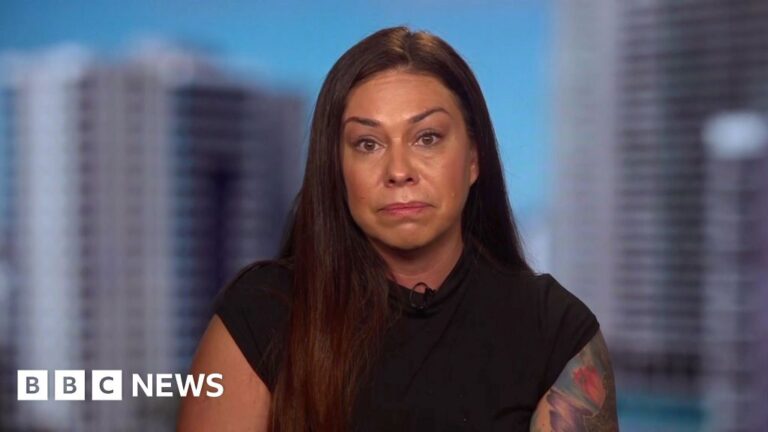
Jeffrey Epstein accuser Haley Robson has told BBC Newsnight that speculation Ghislaine Maxwell could be pardoned has left her “angry and disgusted”.
Maxwell, the convicted associate of sex offender Epstein, was recently moved from a Florida prison to a new minimum-security facility in Texas. She has been at the centre of controversy surrounding the Trump administration’s handling of the Epstein files.
The reason for her transfer from the Florida prison are unclear, and the White House has said “no leniency is being given or discussed”.
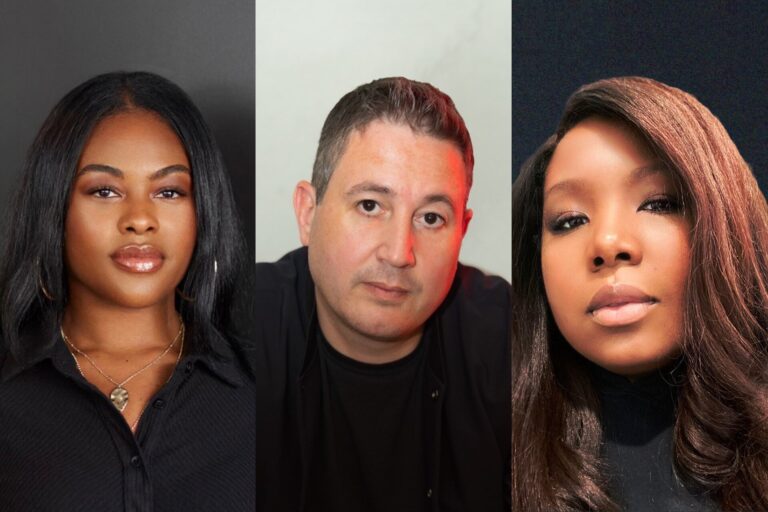
Rayna Bass and Selim Bouab, Co-Presidents of 300 Entertainment, have taken on broadened roles at Atlantic Music Group (AMG).
In addition to their 300 posts, the duo have been appointed joint Co-Presidents of Hip-Hop, R&B, and Global Music at the Atlantic Records label.
At the same time, Lanre Gaba will assume a new advisory role at AMG as Executive Vice President, Artist Strategy & Development. Based in New York, Bass, Bouab, and Gaba will continue to report to AMG CEO Elliot Grainge.
(It’s a day of big changes at AMG: Grainge also announced earlier that he was promoting Marsha St. Hubert to Co-President, 10K Projects and EVP, Atlantic Music Group.)
300 Entertainment was acquired by Warner Music Group in 2021 in a $400 million cash deal.
Grainge said: “Rayna and Selim have been at 300 for over a decade, and they’ve done an incredible job, creating a unique artist-centric community that drives culture. They’re immersed in the tone and taste of what’s next, championing artists with a deep understanding of both how to fuel the creative process and energize fans.
“Their game-changing work at 300 makes them ideally suited to help take our strategy to exciting new places.”
He added: “Lanre brings her wide-ranging knowledge to the AMG center in a new role. Over her many years at Atlantic, she’s been a passionate artists’ advocate, insightful business leader, and team builder, and I know she will continue to carry those values forward in this new position.”
Bass and Bouab both joined 300 Entertainment more than a decade ago.
At 300, Bass has been behind campaigns for artists such as Megan Thee Stallion, Young Thug, Gunna, Mary J. Blige, Fetty Wap, Migos, Tee Grizzley, and others.
In January of 2014, she became 300’s first marketing hire and was promoted to SVP of Marketing in 2019.
Bouab also joined 300 in 2014, moving up the ranks to become SVP/Head of A&R prior to his appointment as Co-President. He has played a key role in signing and developing talent such as Megan Thee Stallion, Fetty Wap, and Tee Grizzley.
Bass and Bouab noted: “At 300, we’ve always had an artist-first, independent mindset and an entrepreneurial spirit of hustle, grit, and creativity. We’re looking forward to working closely with Elliot and bringing that same philosophy to our new posts – helping unlock even more potential in a label that’s already full of brilliance, passion, and so much opportunity.
“We will continue our dedication and service to the culture that has birthed some of our biggest stars and raised some of our brightest executives.”
Gaba has been with Atlantic for over two decades, working in key roles across A&R, marketing, artist development, strategic planning, and operational leadership.
Most recently, she served as President, Black Music for Atlantic Records. Since joining the company in 2002, she has worked closely with artists such as Cardi B, Roddy Ricch, Jack Harlow, Lil Uzi Vert, Gucci Mane, Burna Boy, YoungBoy Never Broke Again, A Boogie Wit da Hoodie, Ravyn Lenae, FKA twigs, and many others.
Gaba said: “I’m proud of everything we’ve achieved at Atlantic and the way we’ve supported artists and culture. It’s a privilege to continue carrying that mission forward and keep elevating powerful, meaningful music that makes a difference. A big thanks to Elliot and the team for this opportunity. The Hip-Hop, R&B, and Global team is in great hands with Selim and Rayna.”Music Business Worldwide
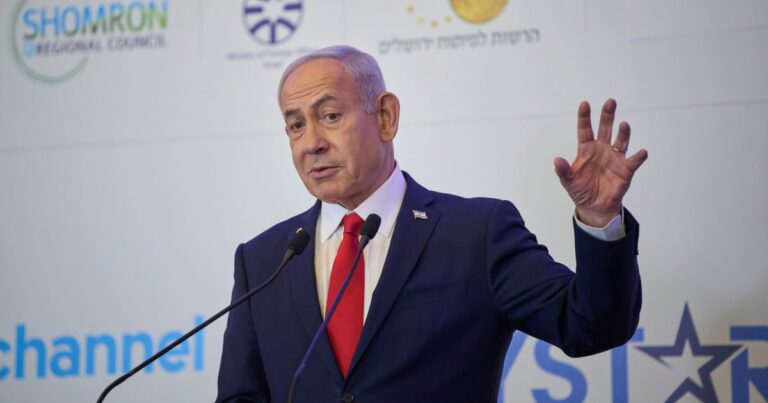
Netanyahu’s war cabinet set to approve military operations across entire enclave, according to Israeli media.
Israeli Prime Minister Benjamin Netanyahu is set to announce plans to fully occupy the Gaza Strip, Israeli media have reported.
Netanyahu’s decision will see the Israeli military expand its operations across the entire enclave, including areas where Hamas’s captives are being held, i24NEWS, The Jerusalem Post, Channel 12 and Ynet reported on Monday.
“The decision has been made,” Amit Sega, chief political analyst with Channel 12, quoted an unnamed senior official in Netanyahu’s office as saying.
“Hamas won’t release more hostages without total surrender, and we won’t surrender. If we don’t act now, the hostages will starve to death and Gaza will remain under Hamas’s control.”
The Palestinian Ministry of Foreign Affairs condemned the reported plans and called on the international community to “intervene urgently to prevent their implementation, whether they are a form of pressure, trial balloons to gauge international reactions, or genuinely serious”.
Netanyahu’s office did not immediately respond to Al Jazeera’s request for comment.
The reports come as Netanyahu is set to convene his war cabinet on Tuesday to discuss the next steps for Israel’s military in Gaza as its war in the besieged enclave nears the two-year mark.
Netanyahu is facing growing international pressure to allow more humanitarian aid into Gaza and halt the war amid mounting Palestinian deaths due to malnutrition and Israeli attacks.
At least 74 Palestinians, including 36 aid seekers, were killed in Israeli attacks on Monday, according to medical sources in Gaza.
The Israeli leader is also facing mounting domestic pressure to secure the release of Hamas’s remaining captives in Gaza, following the release of footage of detainees Rom Braslavski and Evyatar David appearing emaciated.
Netanyahu on Monday doubled down on his war goals, including eliminating Hamas and securing the release of the remaining captives.
“We must continue to stand together and fight together to achieve all our war objectives: the defeat of the enemy, the release of our hostages, and the assurance that Gaza will no longer pose a threat to Israel,” Netanyahu said at the start of a regular cabinet meeting on Monday.
Senior Hamas official Osama Hamdan on Monday accused the United States and other Western countries of turning a blind eye to Israeli atrocities, and said that Netanyahu’s government bore “full responsibility” for the lives of the captives “due to its stubbornness, arrogance, and evasion of reaching a ceasefire agreement, and the escalation of the war of extermination and starvation against our people”.
More than 60,930 Palestinians, including at least 18,430 children, have been killed in Gaza since October 2023, according to Gaza health authorities.
Forty-nine captives, including 27 who are believed to be dead, are still being held by Hamas, according to Israeli authorities.
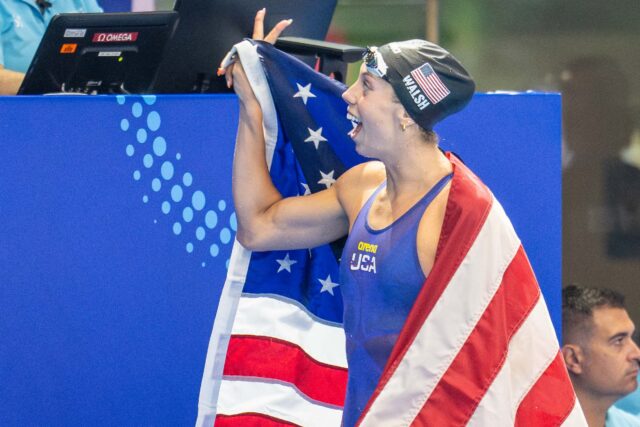
By Sean Griffin on SwimSwam

Three of the five meets used to determine Team USA’s roster for next summer’s Pan Pacific Championships are officially in the books, so it’s time to take stock of where things stand.
As a reminder, the 2026 Pan Pac roster will be selected based on the top times from:
Using the 2025 summer championship meets as selection for Pan Pacs marks a different approach than USA Swimming has used in the past.
In previous editions, the Pan Pac roster would be determined at the U.S. National Championships of that year, usually about two weeks earlier, and then combined results from Nationals and Pan Pacs would be used to select the World Championship team the following year.
There will still be a U.S. National Championship meet next summer prior to Pan Pacs, scheduled to run July 28-August 1 in Irvine before Pan Pacs kicks off less than two weeks later (August 12-15) at the same pool.
Pan Pac Rosters can be a maximum size of 26 men and 26 women.
When swimmers qualify for the team in any event, they become eligible to swim other events at the Pan Pacs. However, only the top two swimmers per nation can advance from prelims to the championship final. ‘B’ finals have also been held in past editions, typically allowing one swimmer per nation, except in 2018 when two per nation were permitted in that heat.
With the stroke 50s being added to the Olympic program for 2028, those events will no longer have a different selection process than the others. Previously, the non-Olympic 50-meter events were the lowest priority for selection meets.
Notes:
Women’s 50 Freestyle:
Women’s 100 Freestyle:
Women’s 200 Freestyle:
Women’s 400 Freestyle:
Women’s 800 Freestyle:
Women’s 1500 Freestyle:
Women’s 50 Butterfly:
Women’s 100 Butterfly:
Women’s 200 Butterfly:
Women’s 50 Backstroke:
Women’s 100 Backstroke:
Women’s 200 Backstroke:
Women’s 50 Breaststroke:
Women’s 100 Breaststroke:
Women’s 200 Breaststroke:
Women’s 200 IM:
Women’s 400 IM:
Men’s 50 Freestyle:
Men’s 100 Freestyle:
Men’s 200 Freestyle:
Men’s 400 Freestyle:
Men’s 800 Freestyle:
Men’s 1500 Freestyle:
Men’s 50 Butterfly:
Men’s 100 Butterfly:
Men’s 200 Butterfly:
Men’s 50 Backstroke:
Men’s 100 Backstroke:
Men’s 200 Backstroke:
Men’s 50 Breaststroke:
Men’s 100 Breaststroke:
Men’s 200 Breaststroke:
Men’s 200 IM:
Men’s 400 IM:
WOMEN:
Priority #1 (12 swimmers):
Priority #2 (5 swimmers):
Priority #3 (1 swimmer):
Priority #4 (9 swimmers, 1 over 26 roster limit):
Only 8 of the 9 swimmers qualified in the priority 4 sector can qualify. Per USA Swimming, the tie is broken as follows:
“Each swimmer’s fastest Time in their Event will be ranked according to the AQUA Points Table, 2025. The swimmer who has the highest ranking shall be Selected to the Team.”
MEN:
Priority #1 (17 swimmers):
Priority #2 (9 swimmers = MAX 26 roster limit, no priority 3, 4, & 5 swimmers):
Read the full story on SwimSwam: How Team USA’s Pan Pacs Roster Is Looking After Worlds, WUGs, and U.S. Nationals
A required part of this site couldn’t load. This may be due to a browser
extension, network issues, or browser settings. Please check your
connection, disable any ad blockers, or try using a different browser.

Welcome to World Breaking News, your trusted source for fast, accurate, and impactful news coverage from around the globe. We are a dedicated team of journalists, editors, and news enthusiasts committed to delivering breaking stories, in-depth analysis, and real-time updates on politics, business, technology, sports, entertainment, and more.
© Copyright -World Breaking News -2025