A required part of this site couldn’t load. This may be due to a browser
extension, network issues, or browser settings. Please check your
connection, disable any ad blockers, or try using a different browser.
A 12-year-old volunteer is making sure visitors to Hiroshima’s Peace Park get a personal look at the tragedy of the world’s first nuclear bombing, recounting his own family’s experiences as passed down generation to generation.
Former Romanian President Ion Iliescu, who presided over the country’s chaotic transition from communism to democracy, has died aged 95.
Iliescu had been diagnosed with lung cancer and hospitalised in early June in Romania’s capital, Bucharest.
“It is with deep regret that the government announces the passing of the former President of Romania, Mr Ion Iliescu,” a government statement said, adding that details of a state funeral would be shared soon.
Iliescu was Romania’s first freely elected president, and served twice, from 1986-1996 and 2000-2004. He was accused of crimes against humanity over the violent revolt that toppled Romania’s communist regime in 1989, but always denied wrongdoing.
Charges were brought in 2019, but he was never convicted.
In a separate case, he was also indicted over his role in calling in miners to crush student protests after his election in 1990.
The bloody crackdown, which became known as the Mineriad, drew widespread international condemnation.
Prior to his latest hospitalisation, Iliescu had been receiving regular medical check-ups at Elias Hospital in Bucharest.
In 2019, he underwent surgery for pericardial effusion – a condition affecting the heart.
Born on 3 March, 1930, in the southern city of Oltenița, Iliescu had largely withdrawn from public life in recent years, though he occasionally shared written messages on his personal blog.
His final post, on 19 May, congratulated Bucharest’s liberal, pro-EU mayor, Nicusor Dan, on being elected president.
Some may call Franz von Holzhausen’s accidental destruction of a Tesla Cybertruck window a blunder; von Holzhausen would prefer to call it a “great meme” instead.
During the 2019 reveal presentation of the Tesla Cybertruck, von Holzhausen, the company’s chief designer, threw steel balls at the vehicle, intending to demonstrate the windows CEO Elon Musk said were made of “armor glass” were indeed extra tough. The windows, however, unexpectedly shattered, leaving Musk to deliver the rest of his presentation of the new truck while standing in front of the damaged car. Tesla’s stock fell more than 5% the next day.
While the incident seemed like an omen, indicative of the Cybertruck being poised to fail, the botched demonstration actually opened up an opportunity to give the new model a spotlight, van Holzhausen said in an interview with Tesla Club Austria published on Saturday.
“It was just one of those Murphy’s Law kind of things where something about happens, but it turned out to be a great meme,” von Holzhausen said, referring to the phenomenon of when something can go wrong, it usually will. “And I think in an odd sort of way—we don’t do marketing—but it turned into a great marketing moment.”
“It was not an expected moment, but in that moment, you have to roll with it,” he added.
Following the reveal of the vehicle, Musk posted a video on X of van Holzhausen throwing a steel ball at the model Cybertruck before its launch, with its windows withstanding the force of the throw with no visible damage. The video was viewed more than 6 million times within three days of its posting.
“Guess we have some improvements to make before production haha,” Musk wrote.
Days later, Musk touted the success of the Cybertruck launch, saying Tesla had received more than 200,000 orders for the vehicle. While Tesla does not break out Cybertruck numbers when it reports earnings, instead grouping them with the Model S and X, the company recalled nearly all of the Cybertrucks it had on the road earlier this year due to an issue where an exterior panel could become detached, and that only tallied around 46,000 vehicles.
Bigger problems than broken windows
Despite Musk’s preorder optimism, Cybertruck’s inauspicious launch was a sign of things to come for the vehicle. Though Musk initially bragged the truck would retail at only $39,900 when it was expected to hit the market in late 2021, the Cybertruck faced years of delays, debuting in November 2023 with a price tag of $60,990.
Tesla tried to reclaim the shattered glass mishap with a $45 T-shirt sold on its website, but the brand was developing an otherwise soured reputation on other parts of the internet, particularly as concerns mounted over the security of the Cybertrucks, which saw numerous recalls as a result of a malfunctioning tire pressure monitoring system, among other issues—including the aforementioned recall of all 46,100 Cybertrucks ever delivered back in March.
To pile onto its troubles, multiple deaths have occurred following Cybertruck crashes. One wrongful death lawsuit alleged the truck had defective safety mechanisms after a man in Houston died in a crashed Cybertruck that burst into flames.
Safety concerns and recalls associated with the Cybertruck have coincided with faltering sales for the truck. The vehicle’s demand remained steady last year, but Cybertrucks are now piling up in lots as dealerships navigate stockpiles of the unwanted vehicles. Last quarter, Cox Automotive reported Cybertruck sales plummeted 51% year-over-year to just 4,300 vehicles, eclipsed by the Ford F-150 Lightning and GMC Hummer EV truck as legacy brands gain market momentum.
“Suffice it to say, the hyper-competitive EV market is providing the troubled automaker no relief,” Cox Automotive said in its report.
Tesla did not respond to Fortune’s request for comment.
Last week, I saw aid dropping from the sky near my central Gaza neighbourhood of az-Zawayda. Neither I nor any of my neighbours had the courage to chase after it because we knew that the moment it hit the ground, a battle would erupt. If the aid survived the air, it wouldn’t survive the looters.
It is almost always the same scene. Gunfire breaks out the second the plane drops the boxes. Armed gangs are already waiting on the ground, ready to take the goods by force. Whoever gets there first, whoever shoots first, also walks away with the food. It is never those who need it the most.
Later, we would see those same “aid boxes” in the market in Deir el-Balah, their contents up for sale at exorbitant prices.
Recently, my little brother was craving a biscuit. I saw biscuits from an aid package at the market and asked for the price. It was 20 shekels ($5) for a biscuit, something we could not afford.
The aid dropped from the sky not only fails to feed the hungry, but it also kills them. On Monday, an airdropped pallet hit a tent for the displaced and killed Uday al-Quraan, a medic working at Al-Aqsa Martyrs Hospital. A week ago, 11 people were injured when another airdropped pallet hit tents in northern Gaza.
Last year, in other failed airdrops, people also died. Five were killed in the Shati refugee camp in Gaza City when the parachute of a pallet did not open; 12 drowned trying to reach boxes that dropped into the sea; six were killed in a stampede after a crowd of people rushed to an airdrop location.
The idea for these latest airdrops came from Israeli Prime Minister Benjamin Netanyahu, who called on the world to help with the process. Many governments welcomed the idea and some joined the effort, including Jordan, the United Arab Emirates and European countries.
But Netanyahu knows very well that the airdrops will not stop the starvation of Palestinians, which is why he called for them instead of opening the land crossings into Gaza and allowing United Nations agencies to distribute aid in a fair and orderly fashion, just like they have always done.
While, the global public may be deceived that something is being done about the hunger, inside Gaza, these airdrops aren’t seen as a real solution or a humanitarian gesture. We see them as nothing more than a PR show – a way to cover up a crime that hasn’t stopped: starving an entire population under tight siege by preventing thousands of trucks from entering while a few boxes fall from the sky for the cameras. It’s all part of a strategy to extend the starvation and ease international pressure on Israel.
And so the famine proceeds at full speed. According to Gaza’s Ministry of Health, more than 180 people have died from hunger, including 92 children.
It is not just in Gaza that airdrops are seen as inefficient and dangerous. In Afghanistan in 2001, airdropped aid was packaged in the same way as cluster bombs. The latter would get mistaken for food boxes by children who would get killed running after them. In Syria, aid airdropped into a besieged area did not reach the starving civilians because it was either damaged or fell into ISIL (ISIS)-held territory.
It is well known that airdrops do not work and when other options are available, there is no reason to use them. The UN has repeatedly said this method is ineffective and ground delivery is safer and far better. A truck can carry four to 10 times more aid than a parachute. It is also much cheaper. Thousands of trucks are waiting on the Egyptian side of the border, enough to feed people and prevent more deaths from starvation.
And yet, we see this futile spectacle once again in Gaza. Here we know not to look to the sky with hope. The same sky that drops bombs can’t be trusted to drop food.
This “humanity with parachutes” is a fig leaf deployed to try to cover the world’s shame and its decision to silently watch starvation.
Gaza is not only under siege by bombs but also by lies, by complicity, by soft language covering bloody massacres. Everyone who stays silent, who justifies, who treats the killer and victim as equal is a partner in this crime.
And we, the Palestinians, are not just victims – we are witnesses. We see the world refuse to act, we see countries continue to arm Israel, to trade with it, to give it diplomatic cover. We see governments think of pitiful excuses not to impose embargoes – as they are obliged to do under international law – on a nation committing genocide.
And tomorrow, when history is written, it won’t be in the language of diplomacy with euphemisms and excuses. It will be in the language of facts with the names of those complicit in the mass killing and starvation of Palestinians written in clear letters.
The views expressed in this article are the author’s own and do not necessarily reflect Al Jazeera’s editorial stance.
AI audio company ElevenLabs has launched Eleven Music – a platform that’s said to generate “studio-grade music” from “natural language prompts” – after striking partnerships with independent music licensing organization Merlin and publisher Kobalt.
London and New York-based ElevenLabs announced the launch on Tuesday (August 5), marking its expansion beyond voice synthesis into full AI music generation.
According to a press release, Eleven Music enables users to create tracks across any genre or style, with or without vocals, in numerous languages… within minutes.
As such, Eleven Music enters the busy generative AI music space, competing with Suno and Udio.
Unlike those two platforms, however, Eleven Music is already inking licensing agreements with major rightsholders. Said rightsholders are convinced their works are being duly protected… and compensated.
Its media release today (August 5) stated: “Eleven Music was built in partnership with artists, labels, and publishers, and includes guardrails to protect rightsholders.”
Laurent Hubert, CEO of Kobalt, said: “Our songwriters and clients entrust us to ensure that the AI revolution includes both strong protections for their intellectual property rights for AI training, as well as forward-looking and thoughtful opportunities to participate in AI revenue streams, subject to clear and fair guardrails.
“ElevenLabs has been a collaborative partner, committed to sourcing data directly from rightsholders and protecting them.”
With that in mind, it’s interesting to scan Eleven Music’sterms and conditions for making tunes on its platform.
Under ‘Prohibited Inputs’, users agree that they are “expressly prohibited” from submitting any of the following prompts:
Any artist’s (whether living or deceased) real name or stage name;
Any songwriter’s (whether living or deceased) real name or stage name;
Any song title;
Any album title;
Any music publisher company’s name;
Any music label’s name; or
A substantial or distinct portion of any song’s lyrics such that a reasonable person would determine the prompt was intended to reference a particular song.
In addition, the T’s and C’s prohibit deliberate infringement of rightsholders’ music rights – and deep-fakery:
Customer shall not prompt or induce Music to generate Output that is known or is reasonably likely to infringe any third party’s intellectual property or other protected rights.
Customer must not deploy any Output that it knew or should have known would or is reasonably likely to infringe a third party’s intellectual property or other protected rights.
Customer shall not prompt Music to generate Output that replicates or mimics the voice, likeness, or identifiable characteristics of any recording artist in a manner that is likely to be found misleading, confusing, or implies a false impression of association or endorsement.
ElevenLabs says its partnerships with Kobalt and Merlin will enable “premier artists and songwriters” represented by both organizations to participate in developing Eleven Music Pro, a subsequent model planned for release in the coming months.
Kobalt’s Hubert added, “ElevenLabs has been a collaborative partner, committed to sourcing data directly from rightsholders and protecting them.
“We are excited about this partnership and seeing ElevenLabs become a pioneer in licensing premium music for its Music Pro offering. Kobalt looks forward to working with our songwriters and partners who wish to be part of this opportunity with ElevenLabs.”
The launch represents a natural progression for ElevenLabs, which was founded in 2022 by CEO Mati Staniszewski and CTO Piotr Dąbkowski.
“ElevenLabs has been a collaborative partner, committed to sourcing data directly from rightsholders and protecting them.”
Laurent Hubert, Kobalt
To date, it’s been best known for its AI voiceover and voice agent tech, which it claims is used by millions of individuals and thousands of businesses, including employees from over 72% of the Fortune 500.
“As an AI audio company, expanding into music was a natural progression, and we are thrilled to introduce Eleven Music today,” said Staniszewski of today’s announcement.
“We’ve heard massive demand from our enterprise partners and users for a music model like this and we took our time to ship one that we’re certain they’ll love.
“We’re proud to do so in collaboration with music industry partners who recognize the vast benefits and possibilities of AI innovation in music.”
Jeremy Sirota, CEO of Merlin, added: “We are excited to partner with ElevenLabs. Our partnership with ElevenLabs demonstrates that music rightsholders can negotiate thoughtful, forward-looking agreements with AI companies.
“Together, we have created responsible guardrails that showcase how AI companies and music rightsholders can collaborate.”
“We’re proud to [launch Eleven Music] in collaboration with music industry partners who recognize the vast benefits and possibilities of AI innovation in music.”
ElevenLabs has also recently signed a training pact with SourceAudio, giving it access to millions of pre-cleared songs for AI training through SourceAudio’s dataset licensing program.
ElevenLabs’ proactive approach to music licensing currently stands in contrast to competitors Suno and Udio, both of which are facing lawsuits from major record labels over alleged copyright infringement in their training data.
While industry rumors suggest some major music companies are in licensing discussions with Suno and/or Udio, no official agreements have been confirmed to date.Music Business Worldwide
The 2025 World Aquatics Championships were nothing if not eventful. There was plenty to talk about both in, and out, of the pool, including on the women’s side, the full-blooming of a budding superstar, one of the greatest battles you’ll ever see, and some gritty swims late in the meet by the Americans.
It’s time to give out the SwimSwam awards for the World Championships for the best and the brightest performers and performances of the meet.
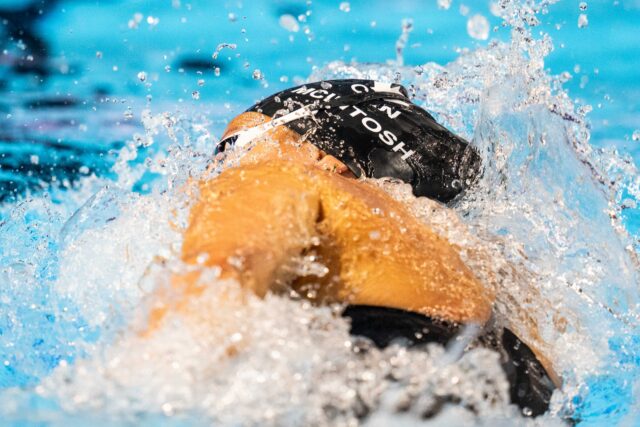
For the 18-year-old Summer McIntosh, the 2025 World Championships was far from her coming out party. She had double gold medals at both the 2022 and 2023 World Championships, and three gold medals at the 2024 Olympics.
But the 2025 World Championships were different, because it was the first where she was clearly the world’s leading female swimmer, and the first with the added pressure of conversation about where her resume stacks up in history.
It was also a transitionary meet, as McIntosh switched coaches after the Olympic Games (and will again), training with Frenchman Fred Vergnoux.
All of that is a lot for an 18-year-old, but McIntosh handled it with a fierce competitiveness, not becoming meek to the moment. While only one of her five individual races was a best time (the 200 fly, which almost took down the toughest World Record on the women’s side right now), she handled a huge schedule well, winning four golds and one bronze medal.
Now McIntosh launches into the phase of her career called “stacking.” She has the World Records, she has the medals, now the game is stacking more of each and seeing just how far she can push herself, and the sport, over the next three to ten years. She is so talented, leaving her a lot of choices to make in the years ahead, and those choices will be the history that will be spoken of for a generation to come.
Honorable Mentions (in no particular order)
Katie Ledecky, USA – Katie Ledecky added two more individual gold medals to her glittering resume, which makes for 23 career World Championships in long course. She also picked up a silver in the 800 free relay and a bronze in the individual 400 free. She was also the only woman to beat McIntosh in an individual race, serving as a reminder that the throne of Greatest Female Swimmer Ever has not yet been usurped.
Kaylee McKeown, Australia – The reliable McKeown again swept the 100 and 200 backstrokes for the third straight year, even after dropping the 50 backstroke. With a resume that is now approaching some of the greats in Australian swimming history, McKeown overcame a dislocated shoulder and a big training break to once again hold off American Regan Smith in both events, affirming her status as the best in the world. Adding a silver medal in the women’s 400 medley relay was icing on the cake.
Gretchen Walsh, USA – The meet that might have been. After battling back from early “acute gastrointestinal” illness, Walsh still salvaged two individual gold medals, a Championship Record in the 100 fly, and a key leg on a medley relay World Record. The 54.7 in the 100 fly, after the week she had early on, indicates she was tuned up for a really special meet, if healthy.
Performance of the Meet: Katie Ledecky, USA, 800 Free
One of the greatest races you will ever see, Ledecky held off not only Summer McIntosh, whose coach proposed she might go sub-8 minutes, but also Australian Lani Palister, who was a surprise disruptor and pushed Ledecky down to the absolute last stroke.
If you haven’t actually watched that race yet, please do. You might never look at the 800 free the same again.
Honorable Mentions:
Summer McIntosh, Canada, 200 Fly – If there’s one event on the women’s docket where you can not break the World Record, it’s the 200 fly. Other than the World Record of 2:01.81 set by Liu Zige of China almost 16 years ago, nobody besides Summer has been faster than 2:03.41 (or 2:03.84 in a textile suit). This might be the best non-World Record time in history. If the 800 free was anything other than what it was, this would be a slam-dunk winner.
U.S. Women’s 400 Medley Relay – It’s not just the time, though that was a banger. Kate Douglass‘ 1:04.27 breaststroke split was amazing. It’s also the circumstance. Regan Smith beating McKeown on the backstroke leg of the medley again was clutch, Torri Huske coming back from the depths of digestional hell to split 52.52 on the anchor, on a double, was heroic. All four legs are in the same ‘generation,’ meaning there’s nothing about this relay that can’t stay together for three more years, and if they catch a meet where they’re all firing, it’s going to be a record that stands for a very, very, very long time.
Using the World Aquatics definition, meaning they must still be 18 at the end of the year.
While China’s Yu Zidi didn’t win any individual medals at the World Championships, a trio of 4th place finishes, at only 12 years old, is an unprecedented feat.
All three finishes were very close, including a 2:06.43 in the 200 fly (missed by .31 seconds), 2:09.21 in the 200 IM (missed by .06 seconds), and 4:33.76 in the 400 IM (missed by .5 seconds). She added a relay bronze medal as a prelims leg of the women’s 800, making her the youngest swimmer to win a major international medal in history.
Another young swimmer who seemed unbothered by the moment, Yu charmed in her interviews and in her races and became the rare swimming sensation to transcend the sport to mainstream airwaves.
Honorable Mentions:
Claire Weinstein, USA – The only junior to medal, Weinstein took bronze in the 200 free in 1:54.67 – a new best time. She also picked up a silver medal by swimming the leadoff leg of the American 800 free relay, which broke the American Record.
Mizuki Hirai, Japan – The official World Junior Record holder in the 100 fly was about half-a-second shy of her best time, but she still did enough to qualify for a final in the women’s 100 fly individually. She ultimately placed 7th in 56.83.
Yang Peiqi, China – The 18-year-old Yang got off to a slow start at the meet. She swam 4:06.47 in the final of the 400 free to finish 7th, four seconds slower than her best time from the Chinese Championships. But her performances picked up as the day went on. She swam 16:04.93 for 8th in the final of the 1500 free, a six-second drop, and then had a really good 1:55.84 relay split for the bronze medal winning 800 free relay. That time is .75 seconds better than her best flat-start swim.
This award does not necessarily go to the fastest split(s), it goes to the swimmer who stepped up and had key splits for theirrelays based on their specific level of expectation.
The swim that brought her back to the 100 free. Meg Harris‘ 50 free World Championship was the obvious front-runner for her at this meet, but her 51.87 split on the winning 400 free relay may have a broader impact for the Australian team on the way to LA.
Harris was just 53.01 in the 100 free at the Australian Trials, and only swam the race in prelims to validate her spot on the relay before scratching the final.
While Australia’s 400 free relay is still the best in the world, especially with 21-year-old Mollie O’Callaghan leading it, there are a lot of question marks behind her, and it is no longer the unbeatable group that it has been the last few years.
But in steps Harris, who sort of had given up on the 100 free individually, splitting 51.87 – the second-fastest split of the field (behind only the individual 100 free champion Marrit Steenbergern from Netherlands).
After the meet, Harris said she was returning to the 100 free, and rightly so after that split. Her overall book of performances in Singapore gives her a chance to chase the medley relay anchor spot too, with MOC.
While Harris only swam one relay leg at the meet, it was a big one.
Honorable Mentions:
Simone Manuel, USA – Simone Manuel was only in Singapore as a relay swimmer – but USA Swimming put her to work. One of the country’s legendary sprinters of all-time, Manuel swam six relay legs to help chew up some prelims slots for a team that became really thin after illness, and swim some key legs in finals. Manuel was sort of the opposite of Harris: while no one leg stood out for her at the meet, the totality of her body of work was crucial to the team winning the medals table.
Lani Pallister, Australia – Maybe lost in the wake of her incredible run to silver in the 800 free was Pallister’s 800 free relay split. She led off the Australian relay with a 1:54.77 split in finals, which was a new lifetime best and the fastest leadoff leg in the field. That helped catapult Australia to gold ahead of the Americans.
Anna Peplowski, USA – In that same relay, Anna Peplowski gave the U.S. a lead after her 2nd-leg split of 1:54.75. Prelims and finals of the 800 free relay were her only races of the meet, and her split was a full .95 seconds better than the flat-start 1:55.70 she did at US Nationals to qualify for the meet (which is her lifetime best). That’s a huge step-up and cements her as a fixture for this relay heading towards the Olympics.
Kate Douglass, USA – Before the meet, Daniel Takataran some data on how rare it was for all four swimmers on a relay to be under their flat-start times on flying legs (an assumption that I think we all as swim people make too easily). That even showed up in the World Record setting 400 medley relay, where both Regan Smith and Gretchen Walsh were slower than the times they did in the individual event. Torri Huske, however, was not on the freestyle anchor, and Kate Douglass had the superhero split of 1:04.27 on the breaststroke leg. That was a full second better than the 1:05.27 that she swam for silver in the 100 breaststroke final.
In the 1972 cult science fiction film Silent Running, a lone astronaut is responsible for maintaining a space station devoted to cultivating plants after an ecological disaster on Earth. Assisting the protagonist are a group of dedicated robots, meticulously tending to the plantations within this self-contained botanical sanctuary, performing tasks like pruning, fertilizing, and irrigation. Drawing parallels to these machines, a new robot has emerged with a similar mission, albeit in a less extreme environment. This remarkable innovation focuses on planting trees in the heart of the Amazon rainforest. In this article, we explore how this technological innovation contributes to preserving the planet’s renowned green lung.
The world’s most remote robot
In 2022, the Amazon experienced its highest level of deforestation in the past six years, witnessing the loss of four thousand square kilometers of forest within a mere six-month period. In response to such alarming situations, reforestation efforts have become imperative, alongside conventional environmental protection measures, aiming to restore the damaged areas with a regenerative approach. Addressing this need, a Swedish-Swiss company has collaborated with an on-ground NGO in the Peruvian Amazon to implement an innovative strategy. Their approach involves the utilization of robotics and cloud computing to combat deforestation and restore over 55,000 acres of the jungle.
The operational framework involves the utilization of an autonomous robot, hailed by its developers as “the world’s most remote,” stationed in a jungle laboratory powered by solar energy derived from photovoltaic panels. Equipped with two arms, the robot carries out the process by creating a small opening in a biodegradable soil bag, extracting a seed, placing it into the opening, and finally sealing and compacting the soil. Each bag is then planted in deforested areas. According to the project’s proponents, the robot can plant up to 600 trees in a single morning, equivalent to the size of two soccer stadiums.
Simultaneously, an engineering team located 12,000 kilometers away in Sweden assesses the outcomes through a cloud computing system. This enables them to refine the robot’s performance and implement necessary adjustments. The developers have affectionately labeled this creation a “cobot” due to its collaborative nature in serving sustainability objectives.
High-tech reforestation, also from the air
The application of advanced technology in reforestation efforts extends beyond drone-based tree planting in the Amazon. Several companies have emerged in recent years, focusing on developing drone solutions for seed dispersal. One such Australian company has devised a system that combines drones and artificial intelligence, capable of planting up to 40,000 seeds per day, with a target of reaching 100 million by 2024.
The drones autonomously fly to predetermined areas afflicted by desertification or fire damage, “shooting” capsules with sufficient force to become partially buried. These capsules, crafted from biomass derived from organic waste, offer sustainable protection against birds and insects while providing essential nutrients for initial plant growth. Furthermore, the drones record the precise coordinates of the dispersed seeds, enabling monitoring of their progress and facilitating visual assessment of the areas already covered.
Meanwhile, in the United States, another company employs swarms of large drones capable of carrying payloads of up to fifty-five pounds to distribute tree seedlings. The company’s team states they can initiate reforestation within a month following a fire. Such strategies prove crucial in expediting the recovery of forested lands, as natural regeneration under normal circumstances can take up to a century, while the risk of soil erosion and subsequent desertification looms.
Company representatives highlight that past fires typically left seeds in treetops and on the ground. However, recent decades have witnessed increasingly intense and devastating fires during heatwaves, destroying virtually all viable seeds. Aside from accelerating reforestation, drones enable access to rugged and steep terrain, where manual labor is arduous or practically impossible.
If, besides drones and tree-planting robots, you want to learn about another interesting environmental project dedicated to protecting and researching an antediluvian plant that fed the dinosaurs, don’t miss this article.
Watch: Texas Speaker plans civil arrest warrants against absent Democrats
Texas Republicans have voted for the arrest of dozens of Democratic legislators who fled the state in an attempt to block a plan to re-draw electoral boundaries.
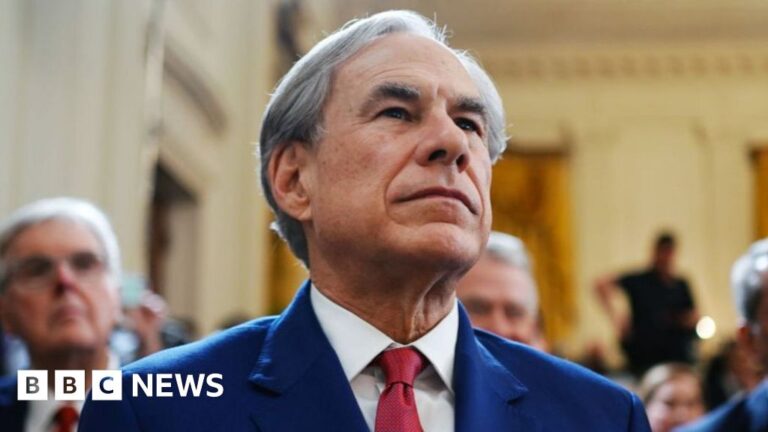
Republican Governor Greg Abbott ordered state troopers “to locate, arrest, and return to the House chamber any member who has abandoned their duty to Texans”.
Abbott has also threatened to charge the absent Democrats with bribery if they raised public money to cover the daily fine they incur for boycotting the chamber.
The re-drawn congressional map would create five more Republican-leaning seats in the US House of Representatives in Washington DC, where Republicans hold a slim majority.
At least two-thirds of the 150-member state legislative body in Texas must be present to proceed with the vote. The quorum became unreachable after more than 50 Democratic lawmakers left the state.
Most of the Democrats fled to Illinois where the state’s Governor JB Pritzker said he was “going to do everything we can to protect every single one of them” amid arrest threats from Abbott.
The Democrats said they planned to stay away from Texas for two weeks until the end of a special legislative session.
Watch: “Texans are being let down,” Governor Abbott tells Fox News
Monday’s vote was mostly symbolic as the warrants only apply within Texas state lines.
The move empowers the chamber’s sergeant-at-arms and state troopers to arrest the absent lawmakers and deliver them to the state Capitol building in Austin.
They would not face any civil or criminal charges as a result of the warrant.
Texas Democratic legislator Ron Reynolds told BBC News from Chicago on Monday that the arrest threat was “nothing more than a scare tactic”.
Members of the Texas House incur a $500 (£377) fine for each day they fail to show up.
Governor Abbott has warned that those who refused to return to vote could face charges.
“It would be bribery if any lawmaker took money to perform or to refuse to perform an act in the legislature,” Abbott told Fox News on Monday.
“And the reports are these legislators have both sought money and offered money to skip the vote, to leave the legislature, to take a legislative act. That would be bribery.”
After legislators voted to issue warrants against the Democrats, Abbott ordered the Texas Department of Public Safety “to locate, arrest, and return to the House chamber any member who has abandoned their duty to Texans”.
He added that his order would remain in effect “until all missing Democrat House members are accounted for and brought to the Texas Capitol”.
Texas Republican legislator Brian Harrison slammed Democrats for their argument that the constituencies were being redrawn along racial lines.
“Preposterous, cynical, dishonest, complete nonsense,” Harrison told BBC News.
He added “these Democrats need to be arrested” and that they “need to have all kinds of other punishments”.
Watch: “Democrats need to be arrested” – Texas representative tells the BBC
Texas Attorney General Ken Paxton, a Republican, also threatened to have the absent Democrats arrested.
Paxton, who is running for the US Senate, wrote on X that the state should “use every tool at our disposal to hunt down those who think they are above the law”.
Texas Republicans currently hold 25 out of the state’s 38 congressional seats.
They hope the new maps could increase that number to 30 – all in constituencies that President Donald Trump won last November by at least 10 points.
Ahead of next year’s midterm elections, the Texas redistricting could help pad the slender Republican majority in the US House of Representatives – the lower chamber of Congress.
In states where they handle the redistricting process, such as Illinois, New Mexico and Nevada, Democrats have already manipulated electoral boundaries for partisan gain just as Republicans have, according to the Princeton Gerrymandering Project.
But other Democratic-controlled states – such as New York, California, Colorado and Washington – assign redistricting to non-partisan, independent commissions, rather than state legislatures.
Some Democratic leaders in other states have suggested they may redraw their own legislative maps to counter the proposed losses of seats in Texas.
New York Governor Kathy Hochul said she was exploring a constitutional amendment to move up the timeline to redraw legislative lines in her state.
States typically undergo redistricting every 10 years, when voting maps are redrawn to account for population changes.
The most recent US Census was in 2020. Redrawing district lines in the middle of a decade is unusual.