15 C
New York
Friday, April 24, 2026
Home Blog Page 508

Travel: The Key to a Long and Healthy Life

0

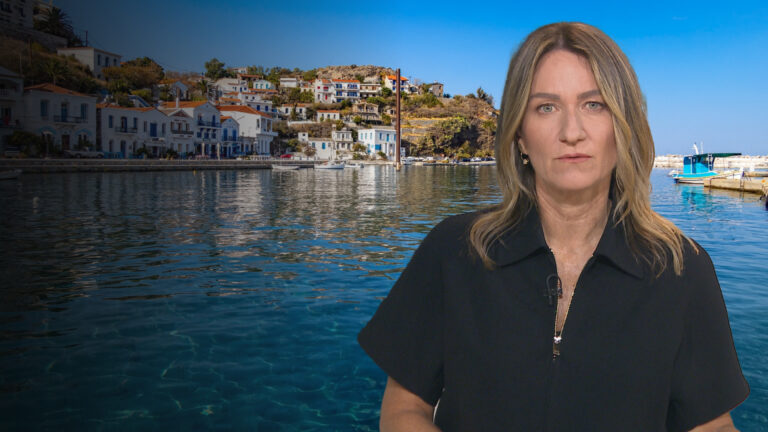
Today on The Stream, five ‘Blue Zones’ host some of the healthiest, longest-living people. What’s behind their longevity?

Blue Zones are five diverse regions where people live longer and stay healthy into their 90s and 100s. Their secrets? Mostly plant-based diets, daily natural movement, strong social ties, and a clear sense of purpose. These simple, sustainable habits keep people active and resilient. As the modern world faces chronic illness and ageing populations, the Blue Zones offer practical lessons on how we might live longer, healthier, and more fulfilling lives.

Presenter: Stefanie Dekker

Guests:
Anna Katsas – Videographer and content creator
Paola Demurtas – Longevity guide
Luigi Fontana – Director, Charles Perkins Centre Clinic

Challenge from the Client

0


Client Challenge


JavaScript is disabled in your browser.

Please enable JavaScript to proceed.

A required part of this site couldn’t load. This may be due to a browser
extension, network issues, or browser settings. Please check your
connection, disable any ad blockers, or try using a different browser.

Intelligent Cities: The Role of AI in Transforming Urban Planning

0

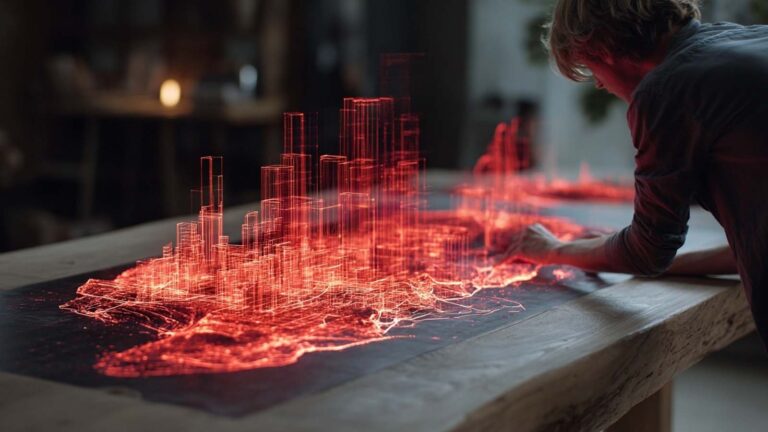
For decades, cities grew in chaotic fashion — or from the 19th century onwards, through rigid and linear plans. Today, however, thanks to the convergence of sensors, data and algorithms, urban environments are shifting towards adaptive models that evolve in real time, based on the continuous collection and analysis of information. In this article, we explore the potential of AI in urban planning and look at real-world examples showing the direction cities are taking.

AI applications in urban planning

The AMIGOS project

Launched in June 2023, the AMIGOS (Active Mobility Innovations for Green and Safe City Solutions) project received €9.1 million in funding from the Horizon Europe programme. Led by Hamburg, the initiative involves 14 cities and 14 partner organisations from 16 countries.

Its goal is to promote active, inclusive and safe mobility solutions through five urban “Living Labs” (Hamburg, Gabrovo, Lappeenranta, Istanbul and Las Rozas) and ten additional “Safety Improvement Areas”, including cities such as Reykjavik, Bologna and Ankara.

Among its core tools is a cloud-based Big Data platform that gathers, stores and analyses large volumes of urban data—on vehicles, pedestrians, air quality, noise, and more—to build predictive models and digital twins that inform urban planning.

The project’s methodology focuses on co-creation with local stakeholders—especially vulnerable users—to optimise public spaces, promote active transport, enhance road safety and cut emissions, all while assessing environmental and social impacts, as well as the potential for replication.

The ELABORATOR project

Another Horizon Europe initiative, ELABORATOR (European Living Lab on designing sustainable urban mobility towards climate neutral cities) has a budget of nearly €12.4 million and brings together a consortium of 38 partners, including cities, academic institutions and technology providers.

This holistic approach includes interventions such as smart control tools, dynamic redistribution of public space, shared mobility services, and active transport options — all co-designed with vulnerable users and local authorities.

These measures will be implemented in six Lighthouse Cities (Milan, Copenhagen, Helsinki, Issy-les-Moulineaux, Zaragoza and Trikala) and six Follower Cities (Lund, Liberec, Velenje, Split, Krusevac and Ioannina), following a model of replication and knowledge transfer.

In Helsinki, for example, the project is rolling out solutions to improve safety at pedestrian crossings (especially where bikes and e-scooters are involved), optimise parking for micromobility, and deliver real-time alerts using the city’s digital twin.

Other city-level initiatives

Beyond these large-scale projects, many cities are developing their own AI-based initiatives to improve traffic flow, protect the environment, or support the design of more socially inclusive spaces. Here are just a few examples we have come across:

  • Aveiro Tech City Living Lab (Portugal): The city of Aveiro has deployed a network of 44 urban nodes — such as smart lampposts and sensor boxes on buildings — equipped with radar, LiDAR, video surveillance, environmental sensors, and multi-protocol communications (5G, ITS-G5, LoRaWAN, etc.), with edge processing capabilities. The platform enables real-time analysis of traffic, pedestrian safety, emergencies and experimental services for industry and universities.
  • SmartSantander (Spain): Santander is home to a large-scale urban IoT lab where technologies are tested in real-world settings across transport, environment and connectivity applications.
  • Bologna Civic Digital Twin (Italy): Bologna is working on a “civic digital twin” that simulates social and spatial dynamics in real time to foster inclusive and participatory urban planning.

As these examples show, AI is becoming a key tool in reimagining our cities in smarter, more participatory ways. The benefits — better mobility, more human-centred spaces, optimised services — are already tangible. But like any technology, urban AI brings its own challenges: from safeguarding privacy and building public trust to ensuring no one is left behind in the digital transformation.

In the end, the goal is not simply more technology — it is applying it in ways that truly respond to people’s needs.


Source:

Zambian Court Allows Repatriation of Former President’s Body from South Africa

0

A South African court has ruled that Zambia’s government can repatriate the body of former President Edgar Lungu and give him a state funeral, despite his family’s opposition.

Lungu’s family had wanted to bury him privately in South Africa, where he died in June. They were left visibly distraught by the Pretoria high court’s decision.

The Zambian state welcomed the ruling, saying that while it mourned with the former statesman’s family, Lungu “belongs to the nation”.

The dispute follows a long-standing feud between Lungu and his successor, President Hakainde Hichilema, with Lungu’s family saying he had indicated that Hichilema should not attend his funeral.

Handing down the ruling, judge Aubrey Ledwaba said the Zambian government was “entitled to repatriate the body of the late president” and ordered his family to “immediately surrender” it to authorities.

Following Lungu’s death from an undisclosed illness at the age of 68, the family wanted to be in charge of the funeral arrangements, including the repatriation of his body, but the Zambian authorities sought to take control.

The government and his family later agreed he would have a state funeral before relations broke down over the precise arrangements, prompting the family to opt for a burial in South Africa.

Zambian attorney general Mulilo D Kabesha, speaking over loud wails from Lungu’s relatives, said the ruling was not a win for the government but rather “what makes good sense”.

“When you are the father of the nation, you can’t restrict yourself to your immediate family,” he said.

Mr Kabesha praised the court for making a “sound judgment” and said that while the family had a right to appeal, this was a “learning curve” for those aspiring to the highest office.

Lungu led Zambia from 2015 until 2021 when he lost the election to Hichilema by a large margin.

After that defeat he stepped back from politics but later returned to the fray.

Boralex Chief Financial Officer Bruno Guilmette to resign in September

0


Boralex CFO Bruno Guilmette to step down in September

Argentina’s Ocean Livestream Mesmerizes Audience Amid Reductions in Scientific Research Funding

0

new video loaded: Ocean Livestream Captivates Argentina Amid Scientific Research Cuts

By Jamie Leventhal and McKinnon de Kuyper

As Argentina’s president cut funding for scientific research, hundreds of thousands of people have watched a livestream of a deep sea exploration, partly out of interest in nature and partly as a form of activism.

Recent episodes in Americas

Unlocking the Power of AI: The Key Elements for Creating Magical Results – LLM, Context, Prompt, Workflow, and Evaluation

0

Good morning. OpenAI’s GPT-5 is live and free! You can read all about Sam Altman’s latest LLM model and what this does to its competition with Google and Meta here. How will it impact all the entrepreneurs and business leaders who are building business models around these ever-changing technologies? The answer may be, “not much.”

I spoke with serial entrepreneur Geoff Nudd yesterday, whose startup Anonymous Health deploys AI to help people overcome addiction and unwanted habits. Launched in June, it now serves more than 10,000 users. While Nudd is pleased to have access to more intelligence, he likens the update to the “heyday of semiconductors where you always want to be planning for what’s going to be out there in 18 months.”

Nudd argues there are five main components to delivering value: the LLM, the context, the prompt, the workflow and the evaluation. “It’s those five things working together in concert that really create magic,” he says. “The frontier models are effectively commoditized. How you create value goes back to those other four components.” 

“Folks like us will go to whatever is cheapest at some point, because they’re all basically the same,” he added. “If I have the system of record for the industry, plus touch points into other systems, then I have the broadest possible context.”

His advice: Seek breadth in your systems, go deep in understanding your customer and deploy new capabilities with purpose. Nudd’s model, for example, uses AI to engage users at times of high risk for addictive behavior. It’s a tool to help humans live better lives in an age of AI.

Top news

Trump demands Intel CEO’s resignation

In a Thursday post on Truth Social, President Donald Trump described Intel CEO Lip-Bu Tan as “highly conflicted” and demanded that he resign. Earlier in the week, Sen. Tom Cotton asked that Tan be removed for his alleged personal investments in Chinese companies.

Tan denounces “misinformation”

“There has been a lot of misinformation circulating about my past roles . . . I want to be absolutely clear: Over 40+ years in the industry, I’ve built relationships around the world and across our diverse ecosystem — and I have always operated within the highest legal and ethical standards,” Tan said.

Context: Intel’s board and CEO disagree on strategy

Board chairman Frank Yeary believes the company should exit the chip manufacturing business entirely; Tan believes it is central to the business and doesn’t want Intel to become dependent on foreign suppliers, the WSJ reports.

Bitcoin jumps on new 401(k) rules

President Trump is set to sign an executive order allowing holders of 401(k) retirement savings plans to invest in crypto. Bitcoin rose on the news. The FT reports that 154 public companies have bought or plan to buy crypto for their balance sheets, committing a total of $98.4 billion. In the previous year companies had only $33.6 billion to crypto. Companies are tempted to acquire Bitcoin because stock investors like having exposure to crypto without actually buying it directly, and the added demand from companies has boosted the price of Bitcoin.

President Trump appointed Stephen Miran to the Fed

Miran will serve temporarily on the Federal Reserve’s Board of Governors, filling a vacancy until January when a permanent appointment can be made. Miran was the head of the White House Council of Economic Advisers. He is best-known as the author of the so-called “Mar-a-Lago Accord” document, titled “A User’s Guide to Restructuring the Global Trading System,” which argued in favor of raising tariffs on imports to rebalance global trade. He is also an inflation hawk. 

Switzerland reels from 39% tariff blow

Swiss businesses are struggling to figure out how they will survive now that their U.S. export market is subject to a 39% tariff, one of the highest on Trump’s list. Switzerland’s main exports are pharmaceuticals, watches, industrial machinery, chocolate and cheese. “The worst-case scenario has become a reality,” said the Swiss lobby group for engineering and tech industries. “If this exorbitant customs burden is maintained, the Swiss tech industry’s export business to the U.S.A. will be effectively annihilated.” To add insult to injury, the CPB added another category of goods into the 39% bracket: gold bars—another Swiss export staple. Context: The Swiss don’t understand why Trump regards the country with such hostility.

Apple gifts Trump “Made in USA” plaque

Apple CEO Tim Cook presented President Trump with a 24-karat gold “Made in USA” plaque during a meeting celebrating the tech company’s plan to invest a further $100 billion in U.S. manufacturing. That increases Apple’s commitment to domestic production to $600 million.

Other news: The Israeli cabinet approved a plan to fully occupy Gaza City … Armenia and Azerbaijan have agreed to a U.S.-brokered peace deal … The U.S. DOJ announced a $50 million reward for the capture of Venezuelan dictator Nicolas Maduro, whom the administration believes supports various organized crime operations, drug dealers, gangs and gun-runners.

The markets

S&P 500 futures were up 0.26% this morning, premarket, after the index closed flat yesterday. STOXX Europe 600 was up 0.15% in early trading. The U.K.’s FTSE 100 was down 0.11% in early trading. Japan’s Nikkei 225 was up 1.85%. China’s CSI 300 was down 0.24%. The South Korea KOSPI was down 0.55%. India’s Nifty 50 was down 0.77%. Bitcoin rose to $116.5K.

Around the watercooler

AI-driven layoffs are shrinking the job market for recent grads by Beatrice Nolan

Here’s everything in GPT-5 that’s new and different than OpenAI’s previous AI models, by Alexandra Sternlicht

Can Allbirds get its groove back? Once the go-to shoe of tech elites, the eco-friendly brand is going back to its roots, by Phil Wahba

Toyota sounds its loudest warning bell yet about tariffs with an expected $9.5 billion profit hit, by Chris Morris

Stunning new data reveals 140% layoff spike in July, with almost half connected to AI and ‘technological updates’ by Nick Lichtenberg

CEO Daily is compiled and edited by Joey Abrams and Jim Edwards.

This is the web version of CEO Daily, a newsletter of must-read global insights from CEOs and industry leaders. Sign up to get it delivered free to your inbox.

China issues warning to Philippines over Taiwan comments as tensions escalate | Political News

0

Beijing warns Manila to stop ‘playing with fire’ after Marcos signals potential Taiwan conflict involvement.

China has sharply criticised Philippine President Ferdinand Marcos Jr after he suggested his country would be drawn into a potential conflict between China and the United States over Taiwan.

During a state visit to India this week, Marcos said the Philippines’ geographic proximity and the large Filipino community in Taiwan meant the country would be forced to get involved in the event of war.

“If there is an all-out war, then we will be drawn into it,” Marcos told Indian broadcaster Firstpost. “There are many, many Filipino nationals in Taiwan and that would be immediately a humanitarian problem.”

In response, China’s Ministry of Foreign Affairs issued a strongly worded statement on Friday, warning Manila not to “play with fire” and urging it to uphold the one China principle.

“Geographical proximity and large overseas populations are not excuses for interfering in others’ internal affairs,” the statement read.

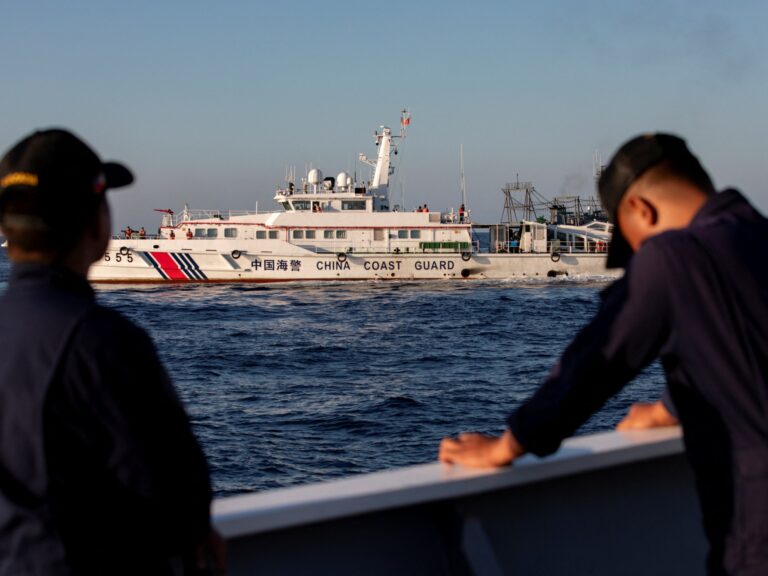
Tensions between China and the Philippines have intensified in recent years over territorial disputes in the South China Sea. Both sides have accused each other of provocations, with altercations at sea involving ramming incidents, water cannon blasts, and clashes involving weapons such as spears and knives.

Beijing continues to assert that Taiwan is part of its territory and a breakaway province, a position Taipei rejects.

China also dismissed Marcos’s justification as undermining both international law and the Association of Southeast Asian Nations charter, saying his comments risk destabilising regional peace and harming the interests of the Philippine people.

Marcos’s trip to India also saw the signing of new security agreements aimed at strengthening defence ties between New Delhi and Manila, including cooperation between both countries’ armies, air forces and navies. Indian warships recently began joint patrols with the Philippine Navy in the contested South China Sea in a move likely to anger China.

In another sign of rising tensions, Philippine officials earlier this week condemned the launch of a Chinese rocket, which they said dropped suspected debris near a western province, alarming residents and threatening local ships and aircraft. No damage or injuries were reported.

The escalating maritime standoff has also increasingly drawn in the United States, which has a mutual defence pact with the Philippines. Washington has reaffirmed its commitment to defend Filipino forces, including coastguard personnel, aircraft and public vessels, should they come under attack anywhere in the South China Sea.

AEG and American Express extend partnership worldwide to include festivals, venues, and events across four continents

0

AEG has renewed and expanded its long-running partnership with American Express, making the credit card brand its official payment partner across 40 assets on four continents.

The new version of the partnership that first launched in 2005 will see Amex engaged in five key verticals at AEG’s properties and events around the world: venues, festivals, touring, ticketing and sports.

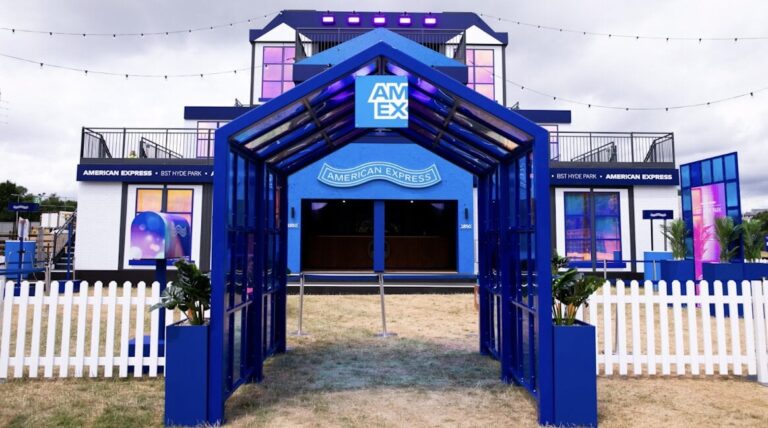
Amex cardholders will enjoy exclusive perks at major festivals such as Coachella, Stagecoach, BST Hyde Park and All Points East. Cardholders will have access to festival perks including exclusive merchandise, offers, and onsite experiences.

Amex card members will also have access to expanded benefits at select AEG venues such as Crypto.com Arena in Los Angeles, Dignity Health Sports Park in Carson, California, The O2 in London, and Uber Arena in Berlin.

Under the American Express Venue Collection program, Amex cardholders can reap benefits at certain venues that include ticket access, dedicated entrances, and exclusive concession offers.

Additionally, there are certain venue-specific offers for Amex cardholders, such as signature branded lounges like the American Express Lounge at The O2, the Centurion Suite at Crypto.com Arena and the American Express Stadium Club at Dignity Health Sports Park.

The renewed partnership will also see deeper integration of Amex into AXS, AEG’s global ticketing platform. Amex will continue to be a partner of two AEG sports teams, Major League Soccer’s LA Galaxy and the NHL’s LA Kings.

“This is a defining partnership for AEG – one that continues to push the boundaries of what’s possible across live entertainment and fan engagement.”

Todd Goldstein, AEG

“This is a defining partnership for AEG – one that continues to push the boundaries of what’s possible across live entertainment and fan engagement,” AEG Chief Revenue Officer Todd Goldstein said.

“Across every stage, field, screen and venue where we partner with Amex, Amex has helped us build a connected, fan-first ecosystem that delivers meaningful value in new and differentiated ways.”

American Express Chief Marketing Officer Elizabeth Rutledge called AEG “one of most trusted and strategic partners.”

“We’re not just expanding what fans can access – we’re reimagining how they connect with the moments that matter,” she said.

“This is a partnership that delivers special access to some of the most unforgettable moments in live entertainment. We’re proud of what we’ve created together thus far, and even more excited about how our collaboration will continue to unfold in the years ahead.”

Russell Silvers, President and COO, AEG Global Partnerships, added: “Amex is more than a partner – they’re a co-architect in how we design the future of live entertainment. From backstage moments to presale innovation, we’re building cultural value at every touchpoint – anchored in our shared mission to deliver unforgettable experiences for fans, artists, and communities around the world.”

“We’re not just expanding what fans can access – we’re reimagining how they connect with the moments that matter.”

Elizabeth Rutledge, American Express

For AEG, the renewed Amex partnership comes hot on the heels of new strategic partnerships for its marquee Paris festival We Love Green, which includes independent media platform Combat and indie music group Because.

AEG has also continued live events-related investments, including the acquisition of Nashville-based events producer Gary Musick Productions, announced this past June, and a stake in Germany-headquartered concert promoter MCT Agentur, announced last December.Music Business Worldwide

Is Perrier’s purity claim in question amidst the bottled water scandal in France?

0

Hugh Schofield

Paris correspondent

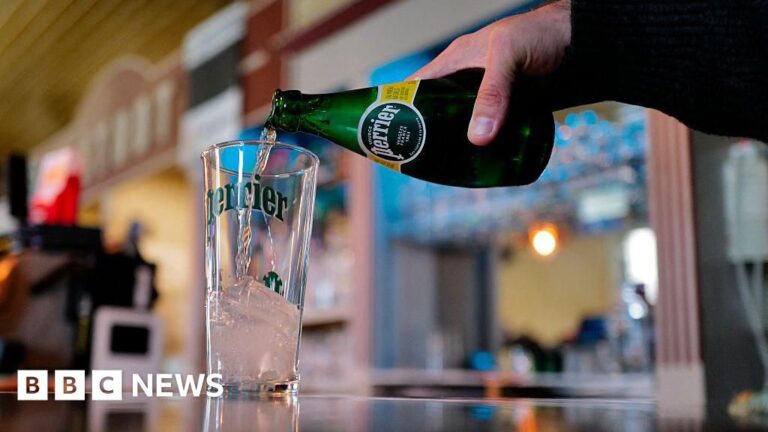
Getty Images A man pours a bottle of Perrier water into a glass on a barGetty Images

Major brands like Perrier are under the spotlight after the scandal broke in France

France’s multi-billion euro mineral water companies are under the spotlight because of climate change and growing concerns about the industry’s environmental impact.

At issue is whether some world-famous brands, notably the iconic Perrier label, can even continue calling themselves “natural mineral water”.

A decision in the Perrier case is due in the coming months. It follows revelations in the French media about illicit filtration systems that have been widely used in the industry, apparently because of worries about water contamination, after years of drought linked to climate change.

“This really is our Water-gate,” says Stéphane Mandard, who has led investigations at Le Monde newspaper. “It’s a combination of industrial fraud and state collusion.”

“And now there is a real Sword of Damocles hanging over the head of Perrier.”

According to hydrologist Emma Haziza, “the commercial model of the big producers has worked very well. But it is absolutely not sustainable at a time of global climate change”.

“When you have big brands that feel they have no choice but to treat their water – that means they know there is a problem with the quality.”

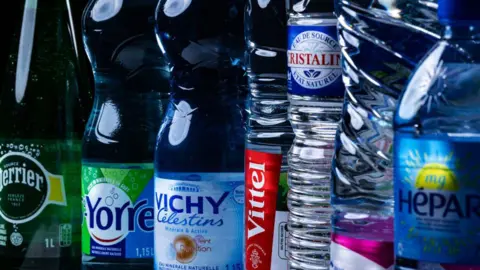
Getty Images Bottles of Perrier, Yorre, Vichy, Vittel, Cristaline, Contrex and Hepar water stand next to each other on a tableGetty Images

EU law says natural mineral water should be unaltered between the underground source and the bottle

The story hit the headlines a year ago in France after an investigation by Le Monde and Radio France revealed that at least a third of mineral water sold in France had been illegally treated, either with ultra-violet light, carbon filters or ultra-fine micro-meshes commonly used to screen out bacteria.

The issue was not one of public health. The treated water was by definition safe to drink.

The problem was that under EU law, “natural mineral water” – which sells at a huge premium over tap water – is supposed to be unaltered between the underground source and the bottle. That is the whole point of it.

If brands like Evian, Vichy and Perrier have been so successful in France and around the world, it is thanks to an appealing image of mountain-sides, rushing streams, purity and health-giving minerals.

Admit filtering the water, and the industry risks breaking the market spell. Consumers might begin to ask what they’d been paying for.

Complicating matters for Perrier and its parent company Nestlé – as well as President Emmanuel Macron’s government – is the charge that executives and ministers conspired to keep the affair quiet, covered up reports of contamination, and re-wrote the rules so that Perrier could continue using micro-filtration.

In their investigations, Le Monde and Radio France alleged that the government considered the mineral water industry so strategic that it agreed to suppress damaging information. A senate inquiry into the affair accused the government of a “deliberate strategy” of “dissimulation”.

Responding to the allegations, the government has asked the European Commission to rule on what level of micro-filtration is permissible for “natural mineral water”. Aurelien Rousseau, who was head of Prime Minister Élisabeth Borne’s cabinet at the time, admitted there had been an “error of appreciation” but insisted there was never any risk to public health.

Getty Images French Senator Alexandre Ouizille (C), flanked by French Senators Laurent Burgoa (L) and Antoinette Guhl (R), presents the Senate commission of enquiry report about French industrial mineral waters during a press conference at the French Senate, Upper house of the French Parliament, in Paris on May 19, 2025Getty Images

A senate report concluded that France’s government covered up the water scandal “at the highest level”

Earlier this year, at the senate hearing into the industry, Nestlé’s CEO Laurent Freixe admitted that Perrier had indeed used illicit methods to treat its water.

But he also had another admission: that an official hydrologists’ report into the company’s historic site in the Gard department in southern France had recommended against renewing “natural mineral water” status for the company’s output.

It raises the possibility that for the first time in its 160-year history, Perrier water may soon not be labelled as what people assume it to be.

According to the hydrologist Emma Haziza, “the link to climate change and global warming is absolutely established”. And if Perrier is feeling the impact ahead of other companies, it is probably because its geographical location sets it apart.

Far from the remote mountain landscape you might imagine, Perrier’s water is pumped from deep aquifers in the coastal plain between Nîmes and Montpellier, a short drive from the Mediterranean. The area is populous, heavily-farmed, and very hot.

“There has been a big climatic shift since 2017,” says Haziza. “For five years there was a succession of droughts, which were particularly badly felt in the south.”

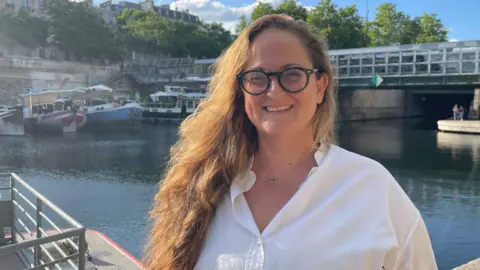
A woman with long wavy strawberry blonde hair in a white shirt and glasses stands in front of a river in the south of France

Emma Haziza says climate change is causing a lot of problems in the south of France

“All the aquifers were affected. This means not just the upper water-table, which is where everyday tap water comes from. We can now see that the deeper aquifers – which the companies thought were protected – are also being hit.

“The unforeseen is taking place. We are moving from a period in which companies could draw water from the deep aquifers and be sure they would be replenished, to a period in which it’s obvious the whole system cannot go on.”

The analysis made by Haziza and other hydrologists is that there is now a clear link between deeper and surface aquifers. Contaminants (farm chemicals or human waste) that drain off the land in the increasingly frequent flash floods, can now make their way into the lower aquifers.

At the same time, the effects of long-term drought and over-pumping mean these lower aquifers contain less volume, so any contamination will be more concentrated, the experts say.

“We can foresee that what has happened first at Perrier’s site will happen to other producers in the years to come. That’s why we need to move away from our current model of consumption,” says Haziza.

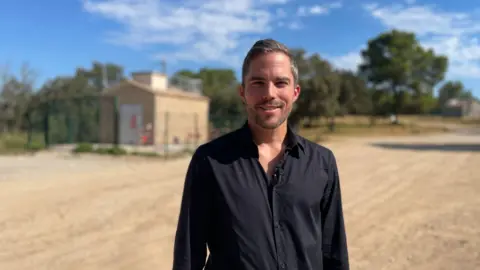
A smiling man with a beard and moustache wearing a black shirt stands on a sunny road in the south of France

Perrier hydrologist Jérémie Pralong insists their water is “100%” pure

Last year at the Perrier site, three million bottles had to be destroyed because of a contamination. But the company insists that any problems are swiftly detected; and it disputes the claim that contaminants are entering the deep aquifers.

“We are pumping water from 130 metres underground, beneath layers of limestone,” says Perrier hydrologist Jérémie Pralong. “We are 100% convinced of the purity of the water. And its mineral make-up is constant.”

Perrier says there is no EU ruling that specifically bans micro-filtration. The relevant text simply says that nothing must be done to disinfect or alter the mineral make-up of the water. The argument is over at what measure of micro-filtration alteration begins.

The original Perrier source was first tapped by a local doctor in the 1860s, but it was under British management that the brand took off 50 years later.

St John Harmsworth – brother of newspaper magnates Lords Northcliffe and Rothermere – made Perrier a byword for mineral water across the British empire.

According to company lore, Harmsworth took inspiration for the bottles’ bulbous shape from the Indian clubs he used for exercise following a crippling car accident.

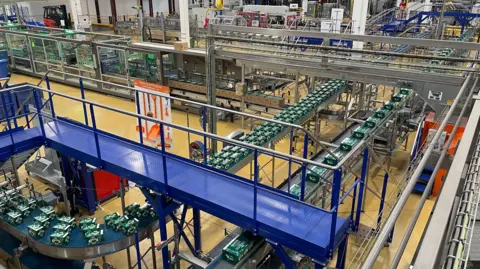
Today the bottling plant at Vergèze is still next to Harmsworth’s residence and the original source. The plant has been heavily automated. A rail track connects with the SNCF network to bring hundreds of millions of cans and bottles every year to Marseille for export.

Crates of Perrier bottles travel around a factory floor on conveyor belts

Perrier’s bottling plant is still next to the water’s original source at Vergèze

The focus for the last year has been on a new brand: Maison Perrier. These energy and flavoured drinks are proving highly successful in France and around the world.

The advantage for Perrier is that the new beverages do not claim to be “natural mineral water”. They can be treated and filtered without difficulty.

Perrier says the new brand is part of the mix, and that it has no intention of abandoning its original Source Perrier natural mineral water. It has stopped the ultra-fine (0.2 micron) microfiltration, and now uses a 0.45 micron system which has been agreed with government.

It has applied for “natural mineral water” status for just two out of the five drilling wells it was using for Perrier mineral water. A decision is due later this year.