

9.5 C
New York
Saturday, April 25, 2026
Home Blog Page 498

Attorneys General from 14 States Raise Concerns Over FireAid’s $100 Million Fund Allocation

0

Fourteen state attorneys general in the US have launched an investigation into FireAid, demanding answers about how its organizers distributed the $100 million raised during a benefit concert for Los Angeles wildfire victims.

The inquiry, led by Oklahoma Attorney General Gentner Drummond, centers on growing complaints that fire victims have received no direct assistance despite public promises that donations would go “directly to the people who need it now.”

Drummond said: “In Oklahoma and across the nation we witnessed the devastation inflicted on Los Angeles County by these massive wildfires. Oklahomans are always quick to offer help. It’s no surprise that many donated to Fire Aid to provide direct relief to victims, but now we are seeing questions about whether these donations are being used as intended.”

The January 2025 benefit concert series was held at the Intuit Dome and the Kia Forum in Inglewood, California, drawing 50 million viewers.

As MBW previously reported, the total funds raised include ticket sales for the two concerts, sponsorships, merchandise sales, and donations from the public, including “generous private gifts” from the Azoff family, the EaglesAndrew Hauptman and Ellen Bronfman Hauptman, and U2.

“Oklahomans are always quick to offer help. It’s no surprise that many donated to Fire Aid to provide direct relief to victims, but now we are seeing questions about whether these donations are being used as intended.”

Gentner Drummond, Oklahoma Attorney General

Republican Congressman Kevin Kiley has already pushed for a Department of Justice investigation, while US President Donald Trump labeled the effort “a total disaster” on Truth Social.

In response to the criticism, FireAid said it has $75 million has been distributed across two phases to more than 160 nonprofit organizations, schools, and local groups that were vetted by Goldman Sachs.

The remaining $25 million is expected to be distributed by year-end, with all results subject to an independent audit by KPMG in December 2025.

In a letter sent August 6 to FireAid President Gillian Zucker, the attorneys general gave the organization 10 business days to provide information about how it distributed the funds, how it vetted the organizations that received or will receive grants, as well as its relationship with The Annenberg Foundation, among others.

“A significant number of recent reports have raised concerns that fire victims have yet to receive any funds or assistance from Fire Aid or the frontline nonprofits and local organizations it partnered with to distribute direct aid.”

Gentner Drummond, Oklahoma Attorney General

The attorneys general’s demands include donation breakdowns by state, copies of grant agreements with recipient organizations, information about restrictions placed on grant recipients, measures to ensure funds benefit victims directly, and whether audit results will be made public.

Participating attorneys general represent Alabama, Arkansas, Florida, Georgia, Idaho, Indiana, Iowa, Mississippi, Montana, Nebraska, South Carolina, Texas, and Virginia.

Drummond said: “A significant number of recent reports have raised concerns that fire victims have yet to receive any funds or assistance from Fire Aid or the frontline nonprofits and local organizations it partnered with to distribute direct aid.”

In his letter to Attorney General Pam Bondi two weeks ago, Rep. Kiley, who represents California’s 3rd congressional district, said some of the nonprofits listed as beneficiaries of the FireAid concert “don’t even operate in the LA area.”

Citing an independent report by Fox11 in Los Angeles and Circling the News, Rep. Kiley said “have uncovered that those donations were instead diverted to a number of nonprofits, many of which have a tenuous connection (at best) to fire relief and recovery.”

Music Business Worldwide
Nvidia and AMD to give US government 15% of Chinese chip sales

0

Chip giants Nvidia and AMD have agreed to pay the US government 15% of Chinese revenues as part of an “unprecedented” deal to secure export licences to China, the BBC has been told.

The US had previously banned the sale of powerful chips used in areas like artificial intelligence (AI) to China under export controls usually related to national security concerns.

Security experts, including some who served during President Donald Trump’s first term, recently wrote to the administration expressing “deep concern” that Nvidia’s H20 chip was “a potent accelerator” of China’s AI capabilities.

Trump on Monday dismissed security concerns, saying the chip in question was “old”.

Under the agreement, Nvidia will pay 15% of its revenues from H20 chip sales in China to the US government.

AMD will also give 15% of revenue generated from sales of its MI308 chip in China to the Trump administration, which was first reported by the Financial Times.

Nvidia told the BBC: “We follow rules the US government sets for our participation in worldwide markets.”

It added: “While we haven’t shipped H20 to China for months, we hope export control rules will let America compete in China and worldwide.”

AMD did not immediately respond to a request for comment.

The deal sparked surprise and concern in the US, where critics said it raised security risks and questions about the Trump administration’s approach to dealing with private businesses.

“You either have a national security problem or you don’t,” said Deborah Elms, head of trade policy at the Hinrich Foundation.

“If you have a 15% payment, it doesn’t somehow eliminate the national security issue,” she added.

On social media, some investors called the arrangement a “shakedown“, while others compared the requirement to a tax on exports – which has long been considered illegal in the US.

“Regardless of whether you think Nvidia should be able to sell H20s in China, charging a fee in exchange for relaxing national security export controls is a terrible precedent,” wrote Peter Harrell, a fellow at the Carnegie Endowment for International Peace who formerly worked for the Biden administration.

“In addition to the policy problems with just charging Nvidia and AMD a 15% share of revenues to sell advanced chips in China, the US Constitution flatly forbids export taxes,” he added.

Democratic congressman Jake Auchincloss said: “Now the US government is financially motivated to sell AI to China? Makes me shudder to think what a TikTok deal might look like.

The H20 chip was developed specifically for the Chinese market after US export restrictions were imposed by the Biden administration in 2023.

Sales of the chip were effectively banned by Trump’s government in April this year.

Beijing has previously criticised the US government, accusing it of “abusing export control measures, and engaging in unilateral bullying”.

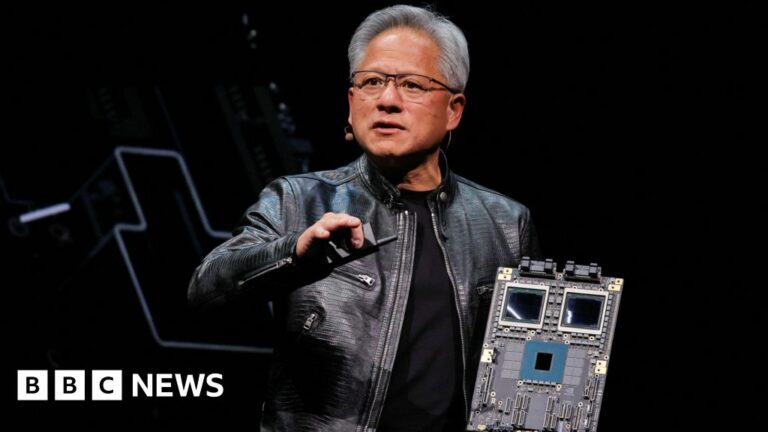
Nvidia’s chief executive Jensen Huang has spent months lobbying both sides for a resumption of sales of the chips in China. He reportedly met US President Donald Trump last week.

Charlie Dai, vice president and principal analyst at global research firm Forrester, said the agreement to hand over 15% of China chip sales to the US government in exchange for export licences was “unprecedented”.

“The arrangement underscores the high cost of market access amid escalating tech trade tensions, creating substantial financial pressure and strategic uncertainty for tech vendors,” he added.

In a letter last month to US Commerce Secretary Howard Lutnick, a group of 20 security specialists said that while the biggest buyers of Nvidia’s H20 chips were civilian companies in China, they expect them to be used by the military.

They wrote: “Chips optimized for AI inference will not simply power consumer products or factory logistics; they will enable autonomous weapons systems, intelligence surveillance platforms and rapid advances in battlefield decision-making.”

In a statement to the BBC, Nvidia said: “America cannot repeat 5G and lose telecommunication leadership. America’s AI tech stack can be the world’s standard if we race.”

The Nvdia and AMD agreement comes as the boss of Intel, a rival chip maker, met with Trump at the White House on Monday after the president called for his immediate resignation due to his ties to China.

Intel said the pair had “a candid and constructive discussion on Intel’s commitment to strengthening U.S. technology and manufacturing leadership”.

Trump wrote on Truth Social the meeting was “a very interesting one”.

“Mr. Tan and my Cabinet members are going to spend time together, and bring suggestions to me during the next week,” Trump added.

Last week, Trump said on social media that Lip-Bu Tan was “highly conflicted”, apparently referring to his alleged investments in companies that the US said were tied to the Chinese military.

Mr Tan pushed back, stating it was “misinformation”.

Escort Boat Breakdown Halts Edmund Fitzgerald Memorial Swim Midway

0

By Terin Frodyma on SwimSwam

The 411-mile Edmund Fitzgerald Memorial Swim, a Great Lakes relay commemorating the 50th anniversary of the sinking of the namesake freighter, has been suspended after the tugboat escorting swimmers lost an engine.

On August 9th, the relay reached Alpena when the 43-foot escort tug began leaking oil, stopping the schedule for a day. Without a replacement boat, organizers say the swim cannot be safely continued, and the remaining stages and the symbolic delivery of the Fitzgerald’s final cargo are in jeopardy.

The relay started July 26th at the Edmund Fitzgerald wreck site, 17 miles northwest of Whitefish Point. From there, swimmers intended to complete the freighter’s original route to Detroit, with an August 27th finish on Belle Isle, followed by a memorial service at Mariners’ Church.

The swimmers have faced challenging conditions from the beginning. They’ve reported respiratory problems, serious cramping, and 57-mph winds on one stage. The relay has drawn crowds at shoreline stops, including the Soo Locks, showing support for the swimmers.

There are 68 swimmers divided into teams of four per stage, working in half-hour rotations over 17 sections of coastline on Lake Superior and Lake Huron. Each athlete is hauling iron ore pellets to symbolize the ship’s last cargo, which will be presented to the mayor of Detroit at the end.

The fundraiser for the Great Lakes Shipwreck Historical Society, which maintains the Whitefish Point Light Station, the lighthouse the Fitzgerald was heading for when it sank in 1975, has raised close to $200,000 to help fix the 164-year-old lighthouse.

“If we don’t have a boat, we really cannot continue until we do,” said Jim Dreyer, the organizer of the event on Sunday, to the Detroit Free Press, “I mean, as horrible as that sounds, there really is no other choice.”

Dreyer used to be terrified of the open water, even saying, “the open water was my biggest fear in life”. In the decades since, Dreyer is just the second man ever to solo swim across all five Great Lakes.

Built in 1958, the 729-foot freighter was headed from Wisconsin to Detroit with 27,000 tons of iron ore when it sank in a Lake Superior storm on November 10th, 1975. All 29 crew members were killed, and it remains the largest ship to ever sink on the Great Lakes.

The swim is meant to honor not only the 29 crew members who died on the Fitzgerald, but also all other mariners lost on the Great Lakes. Whether the relay can resume will depend on finding a seaworthy escort quickly to lead the swimmers to Detroit.

Read the full story on SwimSwam: Edmund Fitzgerald Memorial Swim Halted Midway by Escort Boat Breakdown

Challenging Clients

0


Client Challenge


JavaScript is disabled in your browser.

Please enable JavaScript to proceed.

A required part of this site couldn’t load. This may be due to a browser
extension, network issues, or browser settings. Please check your
connection, disable any ad blockers, or try using a different browser.

The Retro CS-8 Camera Brings Back the Charm of Super 8 Videography

0

Smartphones are one of the biggest distractions to ever exist, which is why we’re seeing a bit of a resurgence in stand-alone devices. One of the latest is Camp Snap’s retro CS-8 video camera, which was inspired by the classic Super 8 movie camera.

The basic idea behind the CS-8 is that unlike a smartphone, it does nothing but shoot video (with sound) – it doesn’t even shoot still photos.

This means users won’t be tempted to send/receive texts, scroll Facebook, take calls, or otherwise “be connected.” The camera is also conducive to use by children, whose parents don’t want them damaging a precious, expensive, fragile smartphone. And of course, its pistol grip handle makes it easier to shoot with than a flat rectangular phone.

The CS-8 has an f/2.0 lens and a 1/2.7-inch image sensor

Camp Snap

Shots are lined up through an optical viewfinder, as the CS-8 even lacks an LCD screen. As a result, users can’t review footage until they’ve downloaded it to a computer via the camera’s USB-C port. There’s also a two-switch electronic zoom control, which operates an 8X digital (not optical) zoom.

As was the case with Super 8 movie cameras, clips are recorded for as long as you hold down the trigger. In this case, however, those clips are recorded not on a film cassette, but on an SD card at a resolution of 2.7K/30fps. An included 4GB card holds about 30 minutes of footage, although users can swap in cards of up to 128GB for recording capacities of as much as 16 hours.

Two separate analog-needle-type gauges show the percentages of recording time and battery life remaining. We’re still waiting to hear back about runtime.

An analog dial allows users to choose between five digital filters: faded sepia tone, washed-out retro tones, black and white, grainy analog (shot at 18fps), and a neutral standard look. Another dial lets them switch between aspect ratios of 9:16 (for Reels), 16:9 (for the cinematic/TV look), 1:1 (for social-media-ready squares), and 4:3 (for the “classic home movie” look).

The CS-8 currently sells for $209

Camp Snap

You can preorder the CS-8 now via the Camp Snap website, for a 25%-off-retail price of US$209. It should ship in September.

And no, this isn’t the first Super-8-inspired video camera we’ve seen.

Along with the Japanese Digital Harinezumi 2++, there was also the Lumenati CS1 – which your smartphone actually went inside of – along with the turret-lens-packin’ Fragment 8. Kodak has even come out with an analog/digital camera that actually shoots on Super 8 film, although it’ll cost you a whopping $5,495 … not counting film stock and processing.

Source: Camp Snap

Indian Legislators Arrested for Demonstrating Against Alleged Voting Irregularities

0

new video loaded: Indian Lawmakers Detained for Protesting ‘Electoral Irregularities’

By Jamie Leventhal

Hundreds of opposition members were briefly detained in New Delhi on Monday after claiming that Prime Minister Narendra Modi’s ruling party and the election commission manipulated voter rolls.

Recent episodes in International

International video coverage from The New York Times.

International video coverage from The New York Times.

Raymond James raises EPR Properties stock price target to $62 from $57

0


EPR Properties stock price target raised to $62 from $57 at Raymond James

Israel’s war on Gaza causing entire families and a generation to be ‘wiped out’, says UN | Israel-Palestine conflict News

0

Five more Palestinians, including a child, have died of malnutrition as a result of Israel’s punishing blockade of Gaza in the past 24 hour reporting period, the Health Ministry has said, as people in the enclave and many beyond its besieged borders mourned several journalists assassinated by Israel.

The ministry on Monday said most of these victims died in the past three weeks, as Israel-imposed starvation engulfs the entire population, with the total number of severe hunger deaths now at 222, including 101 children.

The UN agency for Palestinian refugees, UNRWA, said “children in Gaza are dying from starvation and bombardments”.

“Entire families, neighbourhoods, and a generation are being wiped out,” the UN agency wrote in a post on social media. “Inaction and silence are complicity. It’s time for statements to turn into action and for an immediate ceasefire.”

At least 46 Palestinians were killed in Israeli raids across Gaza since dawn on Monday, including six aid seekers, medical sources have told Al Jazeera.

In one of the latest attacks, the al-Aqsa Hospital reported the killing of four Palestinians by Israeli forces in the south and east of Deir el-Balah, central Gaza.

The Palestine Red Crescent Society said three civilians were killed and others were injured in an Israeli attack on the Zeitoun neighbourhood of southern Gaza City.

Meanwhile, on a daily basis, Israeli forces and US contractors are continuing to kill Palestinians desperately seeking aid at distribution points run by the controversial United States and Israeli-backed GHF.

Among those killed on Sunday was Ismail Qandil’s son. Speaking at the al-Shifa Hospital in Gaza City, Qandil told Al Jazeera that his son was unarmed and was looking for food when he was killed.

“He had no bullets, no weapon to shoot with. What did we do? What did we do for this to happen to us? Enough with the hunger and genocide,” he said.

“We are in a famine. We are being slaughtered. We can’t carry on. We send our sons to bring food, and they kill them. We are not members of the resistance, and we are not members of movements or anything. We are being destroyed.”


Israeli strikes kill Palestinian journalists

Israel’s war on Gaza has killed at least 61,499 people and wounded 153,575 since October 7, 2023. The toll includes at least 270 journalists and media workers.

An outpouring of grief and condemnation followed the Israeli assassination of five Al Jazeera Arabic staff in Gaza, including prominent correspondent Anas al-Sharif, in a drone attack late on Sunday that hit a tent for journalists positioned outside the main gate of Gaza City’s al-Shifa Hospital.

The attack came days after the UN Special Rapporteur on freedom of expression, Irene Khan, warned of “unfounded accusations by the Israeli army” against al-Sharif after Israel repeatedly and falsely accused the 28-year-old reporter of being a Hamas affiliate.

Speaking on Monday, Khan said that Israel killed al-Sharif over his work as a journalist and that Israeli claims he was a Hamas member are totally unsubstantiated.

“If they had real evidence [of this], do you not think that they would put it out, up front, right away in the international arena? Of course they would. But why are they not doing that? Because they don’t have that evidence,” she told Al Jazeera.

“They simply [say] that any journalist who is reporting on Gaza must be a ‘Hamas member’, just as anyone who criticises Israel has to be ‘anti-Semitic’.

Meron Rapoport, a veteran Israeli journalist and editor of the Local Call news site, said the Israeli military’s accusation did not “make sense at all”. “The Israeli explanations are, at best, very lacking,” Rapoport told Al Jazeera from Tel Aviv.

He said Israel likely targeted al-Sharif now because of two main factors: first, his important role in “telling the world that there is famine in Gaza”, which “really hurt Israel internationally”; and, second, because of the planned upcoming seizure of Gaza City, which Israel wants to minimise coverage of.

“The less eyes and the less cameras and the less voices that will document this, what could be really a slaughter … is better for Israel,” Rapoport said.

Al Jazeera correspondent Tareq Abu Azzoum, who reports for the network’s English channel, said the journalists were “working around the clock to unearth facts on the ground and keep the world informed about what has been going on in Gaza”.

“Now, we can see that the Israeli military is stepping up its attacks on journalists,” he said.

Speaking of his colleagues al-Sharif and Mohammed Qreiqeh, Abu Azzoum said their deliberate killings were being seen in Gaza “as an attempt to silence two of the most courageous voices”.

Working Mothers are Leaving the Workplace Due to Return-to-Office Mandates in the US

0

The historic surge in employment among working mothers seen during the pandemic has reversed sharply in 2025, as new data reveal tens of thousands of American women, especially those with young children, leaving the workforce. According to federal labor statistics analyzed by the Washington Post, the labor force participation rate for women aged 25 to 44 with children under five fell nearly 3 percentage points between January and June 2025, reaching its lowest level in over three years.

Workforce trends and gender gaps

Fortune’s analysis integrates these workforce shifts with a broader view of corporate America’s changing priorities. Our coverage finds:

  • While flexible and remote work previously enabled women—particularly mothers—to remain employed, return-to-office requirements have pushed many out, with CEOs openly acknowledging greater losses of female talent.
  • Surveys show that women who work from home report less feedback and mentorship than their in-office peers, raising new barriers to career advancement.
  • Mothers working remotely often face the “motherhood penalty”—less pay, fewer raises, and limited promotion prospects—while those forced back in person are sometimes left with only the option to quit.
  • Despite a recent record in female workforce participation, the disappearance of flexibility risks lasting damage to women’s financial independence and retirement readiness.

Women flee the workforce

  • Labor force participation of mothers with young children dropped from 69.7% to 66.9% between January and June 2025.
  • 212,000 women aged 20 and older have left the workforce since January—compared to 44,000 men who joined it.
  • Full-time office requirements among Fortune 500 firms rose to 24% in 2Q25, up from 13% at the end of 2024.

Flexibility vanishes, mothers exit

This pullback follows the widespread rollback of remote and flexible work policies that initially ushered many mothers back to the job market. Major corporations and the federal government have now instituted strict return-to-office mandates, requiring five-day-a-week in-person attendance. For many mothers, the loss of flexibility means a logistical and financial reckoning. J.P. Morgan, AT&T, and Amazon, among others, ramped up their in-office requirements in 2025, with Fortune reporting that the share of Fortune 500 companies with full-time mandates nearly doubled since late 2024

Employers report difficulty replacing departed female talent, with overall productivity suffering as a result.

Childcare costs and cultural shifts bring complications

Compounding these changes are rising childcare costs, closures of childcare centers due to lapsing federal aid, and a noticeable trend toward traditional gender roles. Social media movements like #tradwife encourage women to prioritize home and children, amplified by calls from political leaders for more parents to stay home.

For many families facing unaffordable childcare, the decision is an economic necessity rather than a cultural choice. Black women and those with college degrees have been hit especially hard. The unemployment rate for Black women climbed to its highest in nearly four years; federal layoffs and the dismantling of diversity initiatives eliminated stable jobs that disproportionately supported minority women.

Why it matters

Experts interviewed by both the Washington Post and Fortune warn these trends, if left unchecked, will have “huge implications” for women’s lifetime earnings, career prospects, and retirement security. With breaks in employment history, women frequently return to lower-paying jobs and face diminished opportunities for advancement.

Studies, including a 2024 University of Pittsburgh analysis, similarly show that aggressive return-to-office mandates have led to a loss of senior employees—many of them women—threatening productivity and competitiveness.

For this story, Fortune used generative AI to help with an initial draft. An editor verified the accuracy of the information before publishing. 

Introducing the 2025 Fortune Global 500, the definitive ranking of the biggest companies in the world. Explore this year’s list.

Trump pledges to reclaim Ukrainian territory in negotiations with Putin

0

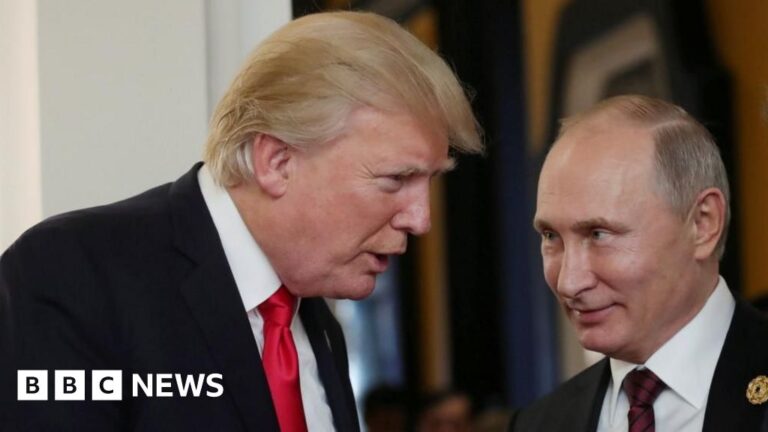
US President Donald Trump has said he will try to get some territory back for Ukraine during his meeting with Russian President Vladimir Putin on Friday.

“Russia’s occupied a big portion of Ukraine. They occupied prime territory. We’re going to try to get some of that territory back for Ukraine,” he told a news conference.

Trump said the talks in Alaska would be a “feel-out meeting” aimed at urging Putin to end the war, and that there would be “some swapping, changes in land”.

It is not the first time he has used the phrase “land-swapping”, though it is unclear what land Russia could cede to Ukraine. Kyiv has never lay claim to any Russian territories.

Trump said he will update European leaders if Putin proposes a “fair deal” during the talks, adding that he would speak to Ukraine’s President Volodymyr Zelensky first “out of respect”.

“I’ll call him first… I’ll call him after, and I may say, ‘lots of luck, keep fighting,’ or I may say, ‘we can make a deal'”, he said.

Trump also said that while he and Zelensky “get along”, he “very severely disagrees with what he has done”. Trump has previously blamed Zelensky for the war in Ukraine, which was sparked by Russia’s full-scale invasion of the country in February 2022.

The US president announced the meeting with Putin last Friday – the day of his self-imposed deadline for Russia to agree to a ceasefire or face more US sanctions.

In response to news of the Alaska summit, Zelensky said any agreements without input from Kyiv would amount to “dead decisions”.