9.4 C
New York
Saturday, April 25, 2026
Home Blog Page 495

Israeli Defense Forces (I.D.F.) Pilots Stage Protest Against Gaza War Outside Military Headquarters

0

new video loaded: I.D.F. Pilots Protest War in Gaza Outside Israeli Military Headquarters

transcript

transcript

I.D.F. Pilots Protest War in Gaza Outside Israeli Military Headquarters

A group of Israeli Air Force reserve and retired pilots protested outside of the military’s headquarters in Tel Aviv on Tuesday, calling for a cease-fire.

“This is the biggest gathering of ex-Israeli Air Force pilots in the history of Israel. More than 500 of us are going to be here with a clear demand, which is basically the same as 75 percent of the Israeli public: to stop the war, to make a hostage deal, certainly not to expand the war because this war and expansion will only cause the death of the hostages, the death more Israeli soldiers and the death of many more innocent Palestinians in Gaza.” “We never went out against any war that we had in the past. Never — it’s the first time ever. But it means something. It’s a kind of hint to the government — look, you’re not free to do whatever you want. You’re not free to kill our people in vain.”

Recent episodes in Israel-Hamas War

New Recyclable Textiles Inspired by Butterflies’ Wings

0

On a planetary highway used to transport global waste to a gigantic landfill, a garbage truck dedicated exclusively to textile waste would pass by every second. Or, in other words, ninety-two million tons per year. We usually think of plastics, glass, or organic waste when discussing recycling. However, the textile industry produces 8% of greenhouse gases. Unfortunately, only 1% of the clothing produced each year worldwide is recycled. Is there a technological breakthrough to reverse this situation?

The main challenge in achieving more efficient recycling is the collection of garments and the difficulty of separating them according to their different materials. Fortunately, butterflies, specifically their wings, show how to optimize it, thanks to a recent technological breakthrough in biomimetics or biomimicry, i.e., applying principles or structures present in nature. Chaos theory says that the flapping of a butterfly in Hong Kong can unleash a storm in New York. Who knows, maybe its wings also hold the secret to revolutionizing how we consume and recycle our clothes.

The structural color out of wings

Separating textiles usually requires manual inspection, often made difficult by the loss of labels, or chemical analysis. Both processes are very demanding in terms of human or economic resources. Fortunately, MIT in the United States has turned to the colorful wings of butterflies to create a kind of barcode that could be integrated into every item of clothing. Let’s see how it works.

The wings of these Lepidoptera are one of the most striking phenomena in nature. However, what we perceive as colors in their wings are not pigments, but nanostructures that reflect light with different wavelengths thanks to their layered arrangement. This is known as “structural color.”

The project’s approach has been to create a new type of fiber that is colorless to the eye but reveals a specific footprint when exposed to infrared light. In this way, they go unnoticed until they reach the recycling plant, where they are scanned and separated according to the material of each garment.

Smart (and recyclable) garments

At MIT’s Lincoln Laboratory, they are working to develop future fabrics. These will be the materials that will make it possible to create intelligent or functional garments, i.e., that add other capabilities in addition to the insulation or protection that traditional clothing usually offers. To this end, the integration of electronic components or the manufacture of unprecedented fibers is being used. In the case of the barcode for textile recycling, they have developed a new fiber based on a block of polymers called preform that will contribute to reducing the ecological footprint of clothing.

Specifically, the preform of this project consists of fifty alternating layers of acrylic and polycarbonate that, when heated, stretch like liquid candy to form filaments barely a micron thick. Once braided, threads with unique reflective qualities can be formed and woven into the fabric. This is where the key to the project lies. The ultimate goal is to create a type of fiber that corresponds to each textile: one type of yarn for cotton, another for wool, and so on. The total amount of these smart fibers would be a tiny percentage of the whole garment. Still, it would be enough to be correctly identified at the recycling plant and thus contribute to a more sustainable textile industry. 

Other technologies inspired by butterfly wings

The exquisite complexity of butterfly wings offers other lessons in biomimetics beyond the smart garments and textile barcodes developed by MIT. In the natural realm, the various colors, patterns, and structures of butterfly wings serve to deter predators, dissipate heat, or even detect ultrasound emitted by bats as they forage for food. These properties have translated into some surprising applications:

  • More efficient solar panels, thanks to photovoltaic cells that better absorb solar radiation.
  • Radiant metamaterials that dissipate heat and allow buildings to be cooled.
  • Wind turbine blades based on their nanostructures.
  • Triboelectric nanogenerators (TENGs) to harvest wave energy.
  • Temperature and light biosensors, including anti-fraud systems thanks to their optical effects.
  • Photocatalytic systems that allow the generation of green hydrogen by means of sunlight.

There are countless other applications for butterfly wings, but we’ll leave it there for now. If you want to know more about biomimetics, you can read this article about systems to improve energy efficiency or this one about new construction materials inspired by the exoskeleton of beetles. You can also find more information about smart clothing here.


Source:


Music publishers claim that Anthropic utilized BitTorrent to illegally download copyrighted lyrics

0

AI company Anthropic not only illegally downloaded copyrighted music lyrics, it also uploaded them to other users, music publishers allege in a new court filing.

Publishers including Universal Music Group, Concord and ABKCO sued Anthropic in 2023 for copyright infringement, alleging that its Claude chatbot regurgitated copyrighted lyrics, indicating the company had trained the chatbot on those lyrics without permission.

Now the music publishers additionally allege that Anthropic hid the fact that it used BitTorrent to pirate copyrighted lyrics, lawyers for the publishers said in a document filed on Monday (August 11) with the US District Court for the Northern District of California.

Instead, the publishers found out about it through a separate copyright lawsuit against Anthropic. A number of book authors sued Anthropic in 2023, alleging that Claude had been trained on their books without permission, and evidence of Anthropic using BitTorrent was presented in that case.

In a ruling in that case in June, Judge William Alsup of the same district court ruled that Anthropic’s unauthorized use of books to train its AI is “fair use” under US copyright law – but pirating books through illicit websites is not. The judge ordered Anthropic to stand trial for piracy in December.

(This past Monday, the judge rejected Anthropic’s motion to stay the case while it appeals the ruling.)

“Inexplicably, Anthropic never disclosed to publishers in this case that it had used BitTorrent to copy books containing their works from pirate sites in this manner, despite publishers’ discovery requests calling for exactly this type of information,” lawyers for the music publishers wrote.

The lawyers asked Judge Eumi K. Lee for leave to amend their complaint against Anthropic to include the new allegations about BitTorrent, and to reschedule future court hearings so that they have time to investigate the matter.

The court filing suggests that the music publishers could add a new charge against Anthropic: distributing copyrighted lyrics without a license.

“Anthropic never disclosed to publishers in this case that it had used BitTorrent to copy books containing their works from pirate sites in this manner, despite publishers’ discovery requests calling for exactly this type of information.”

Lawyers for Concord, ABKCO, UMG

BitTorrent is a decentralized file-sharing system in which anyone who downloads a file also uploads parts of that file to other users, meaning that Anthropic would have also uploaded the lyrics to other users engaged in piracy, and in so doing, violated publishers’ exclusive distribution rights for those lyrics.

In the case brought by book authors against Anthropic, Judge Alsup found that Anthropic torrented 5 million files from the pirate online library LibGen, 2 million files from Pirate Library Mirror (PiLiMi), and nearly 200,000 records in the Books3 collection.

Lawyers for the music publishers pointed out that the LibGen catalog of pirated books includes numerous books of song lyrics and sheet music, including works at issue in the copyright infringement case.

LibGen “contains well over a thousand illegal copies of sheet music, songbooks, and other lyric-related books,” the music publishers’ lawyers wrote in the court filing, which can be read in full here.

“These include numerous standalone copies of sheet music and lyrics to publishers’ works [involved in the lawsuit] specifically, such as Tiny Dancer (written by Elton John and Bernie Taupin), A Thousand Miles (written by Vanessa Carlton), and 7 Rings (recorded by Ariana Grande).”


Anthropic is not the only AI developer that stands accused of using mass piracy techniques to gather the training data for its AI models.

In a congressional hearing last month, led by Missouri Republican Sen. Josh Hawley, a copyright law expert alleged that Meta, the parent company of Facebook and Instagram and developer of the AI tool Llama, used BitTorrent to collect data with the knowledge of CEO Mark Zuckerberg.

Intellectual property lawyer Maxwell Pritt of Boies Schiller Flexner LLP told the hearing that the US’s leading AI companies engaged in “what is likely the largest domestic piracy of intellectual property in our nation’s history. That piracy includes hundreds of terabytes of data and many millions of works, including, for example, at least 12 books authored by members of this subcommittee.”Music Business Worldwide

US judge mandates improvements to be made in New York immigration facility

0

A United States federal judge has ordered immigration authorities to improve conditions at a New York City facility following reports of overcrowding, inadequate food and unhygienic conditions.

On Tuesday, Judge Lewis Kaplan issued a temporary restraining order that mandated Immigration and Customs Enforcement (ICE) to implement reforms at 26 Federal Plaza, a government building in Manhattan where one floor contains holding cells for migrants and asylum seekers.

The restraining order requires the government to limit capacity at the holding facility, ensure cleanliness and provide sleeping mats.

“My conclusion here is that there is a very serious threat of continuing irreparable injury, given the conditions that I’ve been told about,” Kaplan said.

Under Kaplan’s order, the government will be forced to thoroughly clean the cells three times a day and provide adequate supplies of soap, towels, toilet paper, toothbrushes, toothpaste and feminine products.

He has also instructed immigration officials to allocate 4.6 square metres (50 square feet) per person, shrinking the capacity of the largest room from 40 or more detainees to just 15.

Finally, to ensure access to legal representation, Kaplan said the government must ensure detainees have accommodations to make confidential, unmonitored and unrecorded legal telephone calls.

Inside the complaint

The changes come in response to a complaint filed by lawyers for a Peruvian asylum-seeker named Sergio Alberto Barco Mercado, who was taken into custody on August 8 after appearing for a scheduled court date.

He was imprisoned at 26 Federal Plaza after his arrest. But his lawyers have argued that Barco Mercado and others in the facility have faced “crowded, squalid, and punitive conditions”. They also said they were denied access to their client after his arrest.

Barco Mercado testified that the holding room was “extremely crowded” and “smelled of sewage” and that the conditions exacerbated a tooth infection that swelled his face and altered his speech.

“We did not always get enough water,” Barco Mercado said in a sworn declaration. “There was one guard who would sometimes hold a bottle of water up and people would wait to have him squirt some into our mouths, like we were animals.”

Barco Mercado has since been transferred to a facility in upstate New York.

In court filings, other detainees complained that they had no soap, toothbrushes or other hygiene products while locked in the 26 Federal building.

They also said they were fed inedible “slop” and endured the “horrific stench” of sweat, urine and faeces, in part because the rooms have open toilets. One woman having her period could not use menstrual products because women in her room were given just two to divvy up, the lawsuit said.

A mobile phone video recorded last month showed about two dozen men crowded in one of the building’s four holding rooms, many lying on the floor with thermal blankets but no mattresses or padding.

ICE responds to allegations of ill treatment

At Tuesday’s hearing, a government lawyer conceded that “inhumane conditions are not appropriate and should not be tolerated”.

“I think we all agree that conditions at 26 Federal Plaza need to be humane, and we obviously share that belief,” said Jeffrey S Oestericher, a representative for the US Attorney’s Office in the Southern District of New York.

The government also tried to downplay allegations of overcrowding at the facility and inhumane conditions.

In a sworn declaration, Nancy Zanello, the assistant director of ICE’s New York City Field Office of Enforcement and Removal Operations, wrote that 24 people were held in the building’s four holding rooms as of Monday.

That number was well below the 154-person limit imposed by the city fire marshal for the floor.

Zanello also said that each room was equipped with at least one toilet and sink, and hygiene products were available, including soap, teeth cleaning wipes and feminine products.

The 26 Federal Plaza site has become a flashpoint in New York as the city contends with President Donald Trump’s crackdown on undocumented immigration.

The holding cells are on the 10th floor, just two floors below an immigration court. The building also houses the New York field office for the Federal Bureau of Investigation (FBI) and other government offices.

While ICE has conducted high-profile raids on factories, farms and other workplaces elsewhere in the country, New York City has seen its immigration arrests largely unfold in court buildings, as migrants and asylum seekers exit their civil immigration hearings.

Critics have denounced such arrests as violations of the right to due process. They warn that, by carrying out arrests in court buildings, officials could discourage foreign nationals from pursuing lawful paths to immigration.

But in January, the Trump administration rescinded guidelines that limited immigration arrests in “sensitive locations”, court buildings generally considered to be among them.

An analysis published this week by local news outlet The City found that half of all court arrests nationwide in late May and early June took place in New York City.

Challenging the Client

0


Client Challenge


JavaScript is disabled in your browser.

Please enable JavaScript to proceed.

A required part of this site couldn’t load. This may be due to a browser
extension, network issues, or browser settings. Please check your
connection, disable any ad blockers, or try using a different browser.

Zelensky denies giving up Donbas region as Russians push forward

0

Watch: Trump-Putin meeting is a ‘listening exercise’, says press WH secretary

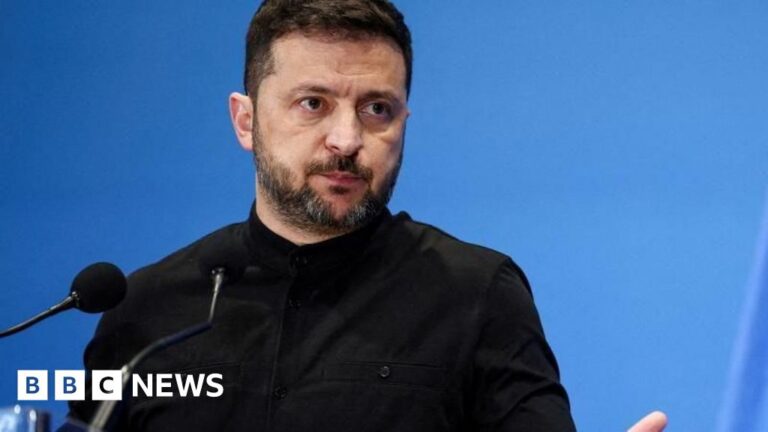
President Volodymyr Zelensky has said Ukraine would reject any Russian proposal to give up the Donbas region in exchange for a ceasefire, warning it could be used as a springboard for future attacks.

Zelensky was speaking ahead of a meeting between US President Donald Trump and Russian counterpart Vladimir Putin in Alaska on Friday.

Trump has said any peace deal would involve “some swapping of territories” and it is believed one of Putin’s demands is that Kyiv surrenders the parts of the Donbas it still controls.

Meanwhile Russia’s troops have continued their summer offensive, making a sudden thrust near the eastern town of Dobropillia and advancing 10km (six miles) in a short period of time.

Zelensky admitted the advance had taken place in “several spots” but said Kyiv would soon destroy the units involved in the attack.

While downplaying Russia’s advance, he added it was “clear to us” that Moscow’s objective was to create a “certain information space” before Putin meets Trump that “Russia is moving forward, advancing, while Ukraine is losing”.

No official details have emerged on what demands Vladimir Putin could make when he meets Donald Trump in Anchorage on Friday.

The Donbas – made up of the eastern regions of Luhansk and Donetsk – has been partly occupied by Russia since 2014.

Moscow now holds almost all of Luhansk and about 70% of Donetsk but speaking to reporters on Tuesday, Zelensky reaffirmed that Ukraine would reject any proposal to leave the Donbas.

“If we withdraw from the Donbas today – our fortifications, our terrain, the heights we control – we will clearly open a bridgehead for the Russians to prepare an offensive,” he said.

Zelensky has previously insisted that Ukrainians would not “gift their land to the occupier”, and pointed to the country’s constitution, which requires a referendum before a change in its territory.

In his nightly address on Tuesday, Zelensky also said Moscow was preparing new offensives on three parts of the front – Zaporizhzhia, Pokrovsk and Novopavlov areas.

Last week Trump said there would be “some swapping of territories to the betterment of both” Russia and Ukraine – sparking concern in Kyiv and across Europe that Moscow could be allowed to redraw Ukraine’s borders by force.

Russia currently controls just under 20% of Ukrainian territory.

Map shows Russian control of Ukraine

The White House on Tuesday said the Alaska talks would be a “listening exercise” for Trump and added having him and Putin sit down in the same room would give the US president “the best indication on how to end this war”.

It follows Trump describing the summit as a “feel-out meeting” on Monday, seeming to tone down expectations that Friday’s meeting could bring Ukraine and Russia closer to peace.

When he announced the summit last week, Trump sounded positive that the meeting could result in concrete steps towards peace.

“I think my gut instinct really tells me that we have a shot at it,” he said.

But Ukrainian President Zelensky once again expressed serious doubts that the talks could result in a positive outcome for Kyiv, which has been excluded from the summit. “I don’t know what they will talk about without us,” he said.

Zelensky has steered clear of criticising Trump but in recent days his frustration at being sidelined has become apparent, and on Tuesday he said the choice of Alaska as a location was a “personal victory” for Putin.

“He is coming out of isolation, because they are meeting with him on US territory,” he said.

The Ukrainian leader has previously said any agreements without Kyiv’s involvement would amount to “dead decisions”.

On Wednesday, Zelensky is due to join a virtual meeting with Donald Trump, EU leaders, UK Prime Minister Sir Keir Starmer and Nato chief Mark Rutte.

All sides will try to convince Trump of the need not to be swayed by Putin when the two meet at the hastily-organised summit.

Spectral AI’s Q2 2025 R&D Revenue Decline Leads to Stock Fluctuations in Earnings Call Transcript

0


Earnings call transcript: Spectral AI sees Q2 2025 R&D revenue drop, stock fluctuates

India mandates removal of stray dogs

0

new video loaded: India Orders Removal of Stray Dogs

transcript

transcript

India Orders Removal of Stray Dogs

Tens of thousands of stray dogs walk the streets of New Delhi. But after a recent spike in dog bites and attacks, the nation’s top court wants them gone.

“It is heartbreaking and shocking to say the least. I feel safer with the dogs than with a lot of human beings.”

Recent episodes in Latest Video

Whether it’s reporting on conflicts abroad and political divisions at home, or covering the latest style trends and scientific developments, Times Video journalists provide a revealing and unforgettable view of the world.

Whether it’s reporting on conflicts abroad and political divisions at home, or covering the latest style trends and scientific developments, Times Video journalists provide a revealing and unforgettable view of the world.

The Model Router: GPT-5’s Controversial Feature and the Future of AI

0

OpenAI’s GPT-5 announcement last week was meant to be a triumph—proof that the company was still the undisputed leader in AI—until it wasn’t. Over the weekend, a groundswell of pushback from customers turned the rollout into more than a PR firestorm: it became a product and trust crisis. Users lamented the loss of their favorite models, which had doubled as therapists, friends, and romantic partners. Developers complained of degraded performance. Industry critic Gary Marcus predictably called GPT-5 “overdue, overhyped, and underwhelming.”

The culprit, many argued, was hiding in plain sight: a new real-time model “router” that automatically decides which one of GPT-5’s several variants to spin up for every job. Many users assumed GPT-5 was a single model trained from scratch; in reality, it’s a network of models—some weaker and cheaper, others stronger and more expensive—stitched together. Experts say that approach could be the future of AI as large language models advance and become more resource-intensive. But in GPT-5’s debut, OpenAI demonstrated some of the inherent challenges in the approach and learned some important lessons about how user expectations are evolving in the AI era.

For all the benefits promised by model routing, many users of GPT-5 bristled at what they perceived as a lack of control; some even suggested OpenAI might purposefully be trying to pull the wool over their eyes.  

In response to the GPT-5 uproar, OpenAI moved quickly to bring back the main earlier model, GPT-4o, for pro users. It also said it fixed buggy routing, increased usage limits, and promised continual updates to regain user trust and stability.

Anand Chowdhary, co-founder of AI sales platform FirstQuadrant, summed the situation up bluntly: “When routing hits, it feels like magic. When it whiffs, it feels broken.”

The promise and inconsistency of model routing

Jiaxuan You, an assistant professor of computer science at the University of Illinois Urbana-Champaign, told Fortune his lab has studied both the promise—and the inconsistency—of model routing. In GPT-5’s case, he said, he believes (though he can’t confirm) that the model router sometimes sends parts of the same query to different models. A cheaper, faster model might give one answer while a slower, reasoning-focused model gives another, and when the system stitches those responses together, subtle contradictions slip through. 

The model routing idea is intuitive, he explained, but “making it really work is very non-trivial.” Perfecting a router, he added, can be as challenging as building Amazon-grade recommendation systems, which take years and many domain experts to refine. “GPT-5 is supposed to be built with maybe orders of magnitude more resources,” he explained, pointing out that even if the router picks a smaller model, it shouldn’t produce inconsistent answers.

Still, You believes routing is here to stay. “The community also believes model routing is promising,” he said, pointing to both technical and economic reasons. Technically, single-model performance appears to be hitting a plateau: You pointed to the commonly cited scaling laws, which says when we have more data and compute, the model gets better. “But we all know that the model wouldn’t get infinitely better,” he said. “Over the past year, we have all witnessed that the capacity of a single model is actually saturating.” 

Economically, routing lets AI providers keep using older models rather than discarding them when a new one launches. Current events require frequent updates, but static facts remain accurate for years. Directing certain queries to older models avoids wasting the enormous time, compute, and money already spent on training them.

There are hard physical limits, too. GPU memory has become a bottleneck for training ever-larger models, and chip technology is approaching the maximum memory that can be packed onto a single die. In practice, You explained, physical limits mean the next model can’t be ten times bigger. 

An older idea that is now being hyped

William Falcon, founder and CEO of AI platform Lightning AI, points out that the idea of using an ensemble of models is not new—it has been around since around 2018—and since OpenAI’s models are a black box, we don’t know that GPT-4 did not also use a model routing system. 

“I think maybe they’re being more explicit about it now, potentially,” he said. Either way, the GPT-5 launch was heavily-hyped up—including the model routing system. The blog post introducing the model called it the “smartest, fastest, and most useful model yet, with thinking built in.” In the official ChatGPT blog post, OpenAI confirmed that GPT‑5 within ChatGPT runs on a system of models coordinated by a behind-the-scenes router that switches to deeper reasoning when needed. The GPT‑5 System Card went further, clearly outlining multiple model variants—gpt‑5‑main, gpt‑5‑main‑mini for speed, and gpt‑5‑thinking, gpt‑5‑thinking‑mini, plus a thinking‑pro version—and explains how the unified system automatically routes between them.

In a press pre-briefing, OpenAI CEO Sam Altman touted the model router as a way to tackle what had been a hard to decipher list of models to choose from. Altman called the previous model picker interface a “very confusing mess.”

But Falcon said the core problem was that GPT-5 simply didn’t feel like a leap. “GPT-1 to 2 to 3 to 4 — each time was a massive jump. Four to five was not noticeably better. That’s what people are upset about.”

Will multiple models add up to AGI? 

The debate over model routing led some to call out the ongoing hype over the possibility of artificial general intelligence, or AGI, being developed soon. OpenAI officially defines AGI as “highly autonomous systems that outperform humans at most economically valuable work,” but Altman notably said last week that it is “not a super useful term.”)

“What about the promised AGI?” wrote Aiden Chaoyang He, an AI researcher and co-founder of TensorOpera, on X, criticizing the GPT-5 rollout. “Even a powerful company like OpenAI lacks the ability to train a super-large model, forcing them to resort to the Real-time Model Router.” 

Robert Nishihara, CEO of AI production platform Anyscale, says scaling is still progressing in AI,  but the idea of one all-powerful AI model remains elusive. “It’s hard to build one model that is the best at everything,” he said. That’s why GPT-5 currently runs on a network of models linked by a router, not a single monolith.

OpenAI has said it hopes to unify these into one model in the future, but Nishihara points out that hybrid systems have real advantages: you can upgrade one piece at a time without disrupting the rest, and you get most of the benefits without the cost and complexity of retraining an entire giant model. As a result, Nishihara thinks routing will stick around. 

Aiden Chaoyang He  agrees. In theory, scaling laws still hold — more data and compute make models better — but in practice, he believes development will “spiral” between two approaches: routing specialized models together, then trying to consolidate them into one. The deciding factors will be engineering costs, compute and energy limits, and business pressures.

The hyped-up AGI narrative may need to adjust, too. “If anyone does anything that’s close to AGI, I don’t know if it’ll literally be one set of weights doing it,” Falcon said, referring to the “brains” behind LLMs. “If it’s a collection of models that feels like AGI, that’s fine. No one’s a purist here.”


Trump sends US National Guard to Washington DC amidst claims of crime emergency | Latest updates from Donald Trump

0

Mayor Muriel Bowser disputes Donald Trump’s emergency narrative, citing crime decline; critics call deployment a political power play.

Some of the 800 National Guard members deployed by US President Donald Trump have started arriving in the nation’s capital, ramping up after the White House ordered federal forces to take over the city’s police department and reduce crime in what the president called – without substantiation – a lawless city.

The influx on Tuesday came the morning after Trump announced he would be activating the guard members and taking over the department. He cited a crime emergency – but referred to the same crime that city officials stress is already falling noticeably.

The president holds the legal right to make such moves – to a point.

The law lets Trump control the police department for a month, but how aggressive the federal presence will be and how it could play out remained open questions as the city’s mayor and police chief went to the Justice Department to meet with the attorney general.

The meeting comes a day after Mayor Muriel Bowser said Trump’s freshly announced plan to take over the Metropolitan Police Department (MPD) and call in the National Guard was not a productive step. She calmly laid out the city’s case that crime has been dropping steadily and said Trump’s perceived state of emergency simply doesn’t match the numbers.

She also flatly stated that the capital city’s hands are tied and that her administration has little choice but to comply. “We could contest that,” she said of Trump’s definition of a crime emergency, “but his authority is pretty broad.”

Bowser made a reference to Trump’s “so-called emergency” and concluded: “I’m going to work every day to make sure it’s not a complete disaster.”

Al Jazeera’s Kimberly Halkett, reporting from Washington, DC, said Trump has accused Democrats of being “weak on crime”.

“He singled out Democrat-run cities like Oakland – which is outside San Francisco – New York, Baltimore, even Chicago,” she said. “Given the fact they’re run by Democrats … this is causing a little bit of concern.”

Democrats are calling the move “a power grab”.

“Even though they’re saying this is technically legal, it is a hostile takeover given that these powers have actually never been executed in modern history,” Halkett said.

Trump’s bumpy relationship with DC

While Trump invokes his plan by saying that “we’re going to take our capital back”, Bowser and the MPD maintain that violent crime overall in Washington has decreased to a 30-year low after a sharp rise in 2023.

Carjackings, for example, dropped about 50 percent in 2024 and are down again this year. More than half of those arrested, however, are juveniles, and the extent of those punishments is a point of contention for the Trump administration.

“The White House says crime may be down, but that doesn’t mean that it’s not a problem and that violent crime exists at levels that are far too high,” Halkett said.

Bowser, a Democrat, spent much of Trump’s first term in office openly sparring with the Republican president. She fended off his initial plans for a military parade through the streets and stood in public opposition when he called in a multi-agency flood of federal law enforcement to confront anti-police brutality protesters in the summer of 2020.

She later had the words “Black Lives Matter” painted in giant yellow letters on the street about a block from the White House.

In Trump’s second term, backed by Republican control of both houses of Congress, Bowser has walked a public tightrope for months, emphasising common ground with the Trump administration on issues such as the successful effort to bring the National Football League’s (NFL’s) Washington Commanders back to the District of Columbia.

She watched with open concern for the city streets as Trump finally got his military parade this summer. Her decision to dismantle Black Lives Matter Plaza earlier this year served as a neat metaphor for just how much the power dynamics between the two executives had evolved.

Now that fraught relationship enters uncharted territory as Trump has followed through on months of what many DC officials had quietly hoped were empty threats. The new standoff has cast Bowser in a sympathetic light, even among her longtime critics.

“It’s a power play and we’re an easy target,” said Clinique Chapman, CEO of the DC Justice Lab. A frequent critic of Bowser, whom she accuses of “over policing our youth” with the recent expansions of Washington’s youth curfew, Chapman said Trump’s latest move “is not about creating a safer DC; it’s just about power”.