new video loaded: Hiker Topples Cairns Along Historic English Hiking Trail
transcript
transcript
Hiker Topples Cairns Along Historic English Hiking Trail
Stuart Cox, a British hiker, is on a mission to raise awareness about the damage that stone stacks, known as cairns, cause on the Mam Tor hiking trail in England’s Peak District.
And today we’re up here kicking cairns over. See here, where people have dug up the wall to get the stones out. Where stones have been removed the path becomes eroded, especially if they’re removed in large quantities. This is an excellent habitat for wildlife. They live in the nooks and crannies. You can see them here.
Recent episodes in International
International video coverage from The New York Times.
International video coverage from The New York Times.
Harvard University and the Trump administration are getting close to an agreement that would require the Ivy League university to pay $500 million to regain access to federal funding and to end investigations, according to a person familiar with the matter.
The framework is still being sorted out with significant gaps to close, but both sides have agreed on the financial figure and a settlement could be finalized in coming weeks, according to the person who spoke to The Associated Press on the condition of anonymity to discuss internal deliberations.
Harvard declined to comment.
The agreement would end a monthslong battle that has tested the boundaries of the government’s authority over America’s universities. What began as an investigation into campus antisemitism escalated into an all-out feud as the Trump administration slashed more than $2.6 billion in research funding, ended federal contracts and attempted to block Harvard from hosting international students.
The university responded with a pair of lawsuits alleging illegal retaliation by the administration after Harvard rejected a set of demands that campus leaders viewed as a threat to academic freedom.
Details of the proposed framework were first reported by The New York Times.
A $500 million payment would be the largest sum yet as the administration pushes for financial penalties in its settlements with elite universities. Columbia University agreed to pay the government $200 million as part of an agreement restoring access to federal funding, while Brown University separately agreed to pay $50 million to Rhode Island workforce development organizations.
Details have not been finalized on where Harvard’s potential payment would go, the person said.
The Republican president has been pushing to reform prestigious universities that he decries as bastions of liberal ideology.
His administration has cut funding to several Ivy League schools while pressing demands in line with his political campaign. None has been targeted as frequently or as heavily as Harvard, the richest U.S. university with an endowment valued at $53 billion.
More than a dozen Democrats in Congress who attended Harvard cautioned against a settlement on Aug. 1, warning the university it may warrant “rigorous Congressional oversight and inquiry.” Capitulating to political demands, they said, would set a dangerous precedent across all of higher education.
___
The Associated Press’ education coverage receives financial support from multiple private foundations. AP is solely responsible for all content. Find AP’s standards for working with philanthropies, a list of supporters and funded coverage areas at AP.org.
Introducing the 2025 Fortune Global 500, the definitive ranking of the biggest companies in the world. Explore this year’s list.
Kuala Lumpur, Malaysia– When four Chinese vessels joined with Russian ships earlier this month in joint naval drills in the Sea of Japan, few eyebrows were raised.
Moscow and Beijing have been reinforcing their military partnership in recent years as they seek to counterbalance what they see as the United States-led global order.
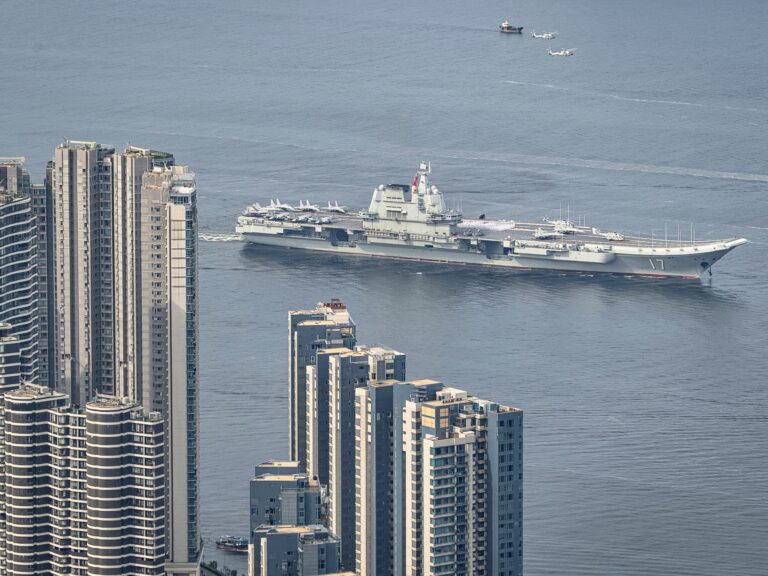
But what did raise eyebrows among defence analysts and regional governments had occurred several weeks earlier when China sent its aircraft carriers into the Pacific together for the first time.
Maritime expert and former United States Air Force Colonel Ray Powell described the “simultaneous deployment” of China’s two aircraft carriers east of the Philippines as a “historic” moment as the country races to realise Chinese President Xi Jinping’s ambition of having a world-class navy by 2035.
“No nation except the US has operated dual carrier groups at such distances since [World War II],” said Powell, director of SeaLight, a maritime transparency project of the Gordian Knot Center at Stanford University.
“While it will take years for China’s still-nascent carrier capabilities to approach that of America’s, this wasn’t just a training exercise – it was China demonstrating it can now contest and even deny US access to crucial sea lanes,” Powell told Al Jazeera.
China’s state-run news agency Xinhua described the exercise by the aircraft carriers as a “far-sea combat-oriented training”, and the state-affiliated Global Times reported that China was soon poised to enter the “three-aircraft-carrier era”, when its Fujian carrier enters service later this year.
East Asia is a ‘home game’ for China
China currently has two operational aircraft carriers – the Liaoning and Shandong – and the Fujian is undergoing sea trials.
While the Chinese navy operates the world’s largest naval fleet with more than 370 ships compared with the US’s 251 active ships in commission, Beijing still lacks the global logistics network and advanced nuclear submarine technology required of a truly mature blue water force, Powell said.
Beijing’s three aircraft carriers run on diesel compared with Washington’s 11 carriers, all of which are nuclear powered.
“[China] fully intends to close these gaps and is applying tremendous resources toward that end, and with its rapidly improving technical prowess and vastly superior shipbuilding capacity, it has demonstrated its potential to get there,” Powell said.
Beijing’s more immediate focus is not directed towards competing with the US globally, Powell added.
Rather, China is focused on changing the balance of power and convincing its allies and adversaries to accept China’s dominance within its chosen sphere of influence in East Asia.
The second option, if ever necessary, is to defeat them.
“East Asia is a ‘home game’ for China – a place where it can augment its small carrier force through its far larger land-based air and rocket forces – including so-called [aircraft] ‘carrier killer’ missile systems that can strike targets up to 4,000km [2,485 miles] away,” Powell said.
Regionally, while the Philippines engages in increasingly frequent high seas confrontations with the Chinese coastguard, it is Japan that is watching China’s naval build-up with concern, experts said.
Japan’s Defence Minister Gen Nakatani said in June – after confirming that China’s two carriers had operated simultaneously in the Pacific for the first time – that Beijing apparently aims “to advance its operational capability of the distant sea and airspace”.
With the US increasingly perceived as becoming more inward-looking under President Donald Trump, Japan is considered a growing force in the contested maritime terrain in the Asia Pacific region amid what Tokyo has called “the most severe and complex security environment since the end of World War II”.
‘Preparation for a more uncertain future’
Even before Trump’s second stint as US president, Japan had embarked on the most pivotal shift in post-World War II military spending.
Tokyo’s defence spending and related costs are expected to total 9.9 trillion yen (about $67bn) for fiscal year 2025, equivalent to 1.8 percent of Japan’s gross domestic product (GDP), and the government has committed to raising spending on defence to 2 percent of GDP by 2027, according to Japanese media reports.
“[Japan’s] naval capacity is growing steadily, not just in support of the US alliance but in quiet preparation for a more uncertain future – perhaps even one in which America withdraws from the Pacific,” said Mike Burke, lecturer at Tokyo-based Meiji University.
Collin Koh, senior fellow at the Singapore-based Institute of Defence and Strategic Studies (IDSS), also said that China’s growing military might, assertiveness and proclivity to resort to coercive behaviour have “aggravated Japan’s threat perception”.
But Japan alone cannot guarantee security in such a regional hotspot as the South China Sea, said Burke.
Instead, Tokyo’s goal is to check Beijing’s growing power through a Japanese presence and building partnerships with other regional players.
This year alone so far, Japan has deployed two naval fleets to “realise” what Japanese officials describe as a free and open Asia Pacific region. The first fleet was deployed from January 4 to May 10 and docked in 12 countries, including Malaysia, Singapore, the Philippines, Saudi Arabia, Bahrain and Oman.
The second was deployed on April 21 and is ongoing until November, with port calls in some 23 countries, as well as roles in multilateral military exercises.
Sailors stand on board the Kokuryu submarine of the Japanese Maritime Self-Defence Force during its fleet review at Sagami Bay, off Yokosuka, south of Tokyo, in 2015 [File: Thomas Peter/Reuters]
Japan aims to build trust with other allies, Burke said, noting that Japan has worked on its soft power by funding radar systems, investing in civil infrastructure from ports to rail networks in Southeast Asia, and supporting maritime domain awareness initiatives in the region.
Noriyuki Shikata, Japan’s ambassador to Malaysia, described Tokyo’s approach as a strength at home and reinforcing collaboration abroad with “like-minded countries and others with whom Japan cooperates”, in order to uphold and realise a free and open international order.
“Japan has been strengthening its defence capabilities to the point at which Japan can take the primary responsibility for dealing with invasions against Japan, and disrupt and defeat such threats while obtaining the support of its [US] ally and other security partners,” the ambassador told Al Jazeera.
Zachary Abuza, professor of Southeast Asia studies and security at Washington, DC-based National War College, said the Japan Maritime Self-Defence Force (JMSDF) is a world-class navy that is focused on building the highest level of capabilities.
Abuza also described Japan’s submarine force as “exceptional”, while it is also building up its capabilities, including more high-end antiship missiles.
“All of these developments should give the Chinese some pause,” Abuza told Al Jazeera in a recent interview.
“That said, they [the Japanese] are nervous about Trump’s commitment to treaty obligations, and you can see the Japan Self-Defence Force is trying to strengthen its strategic autonomy,” he said.
‘Chinese assertiveness could result in an accident’
Geng Shuang, charge d’affaires of China’s permanent mission to the United Nations, said earlier this year that China was committed to working with the “countries concerned” to address conflicting claims in the South China Sea through peaceful dialogue.
He also lambasted the threat posed by the US navy’s freedom of navigation operations in the contested sea.
“The United States, under the banner of freedom of navigation, has frequently sent its military vessels to the South China Sea to flex its muscles and openly stir up confrontation between regional countries,” Geng was quoted as saying by Xinhua.
China claims almost all of the South China Sea, a vast area spanning approximately 3.6 million square kilometres (1.38 million square miles) that is rich in hydrocarbons and one of the world’s major shipping routes.
Vietnam, the Philippines, Taiwan, Malaysia and Brunei are claimants to various parts of the sea.
Ralph Cossa, chairman of the Honolulu-based Pacific Forum research institute, said “the challenge to freedom of navigation is a global one”.
But the challenges posed are particularly worrying when it comes to the rival superpowers China and the US.
“I don’t think anyone wants a direct conflict or is looking to start a fight,” Cossa said.
“But I worry that Chinese assertiveness could result in an accident that it would prove difficult for either side to walk away or back down from,” Cossa said.
Speaking on the sidelines of the Institute of Strategic and International Studies’ Asia Pacific Roundtable 2025 summit in Kuala Lumpur earlier this year, Do Thanh Hai, deputy director-general at Vietnam’s East Sea Institute Diplomatic Academy, said no one will emerge unscathed from an incident in the disputed region.
“Any disruption in the South China Sea will affect all,” he told Al Jazeera.
Independent label Mom+Pop Music has appointed Zoe Barton as Executive Vice President of Digital, Viral (Pipes), Commerce, and Marketing.
Barton will provide strategic leadership across multiple departments, bringing over a decade of experience in artist development, marketing, and viral strategy. She will report to Mom + Pop co-founders Michael Goldstone and Thaddeus Rudd.
Commenting on the appointment, Goldstone said: “Zoe joining Mom+Pop is culturally and musically impactful for us. She is an artist in her own right, a visionary, and we deeply value her acumen and creative instincts. We are looking forward to seeing her soar at Mom+Pop.”
Barton added: “Joining this team feels incredibly full-circle for me. I’ve admired Mom+Pop Music for years—not just for the artists they champion, but for the heart and integrity behind the work. It’s an honor to join a company that consistently leads with passion and purpose, and I’m deeply grateful to Goldie and Thad for trusting me to contribute to that vision in a meaningful way.”
She joins Mom+Pop from ORIGIN, where she served as General Manager and Head of Creative, leading digital strategy and campaigns for artists including A$AP Rocky, LISA, and ONE OK ROCK.
Previously, she also co-led Warner Records’ viral marketing department, working on campaigns for Zach Bryan, Omar Apollo, Dua Lipa, and Sombr, and launched Columbia Records’ viral marketing division, contributing to campaigns such as “Mood” by 24kGoldn, “Stay” by The Kid LAROI & Justin Bieber, and Adele’s “Easy On Me.”
The company announced the launch of its in-house creative and digital agency, Pipes Music, earlier this year.
Pipes is working with artists on Mom+Pop and other independent artists (“both signed and unsigned”, as the company puts it).
The Pipes creative team provides content creation, social media campaign strategy, and – amongst other services – also runs fan accounts for artists.Music Business Worldwide
US President Donald Trump and his Russian counterpart Vladimir Putin are set to meet in Anchorage on Friday
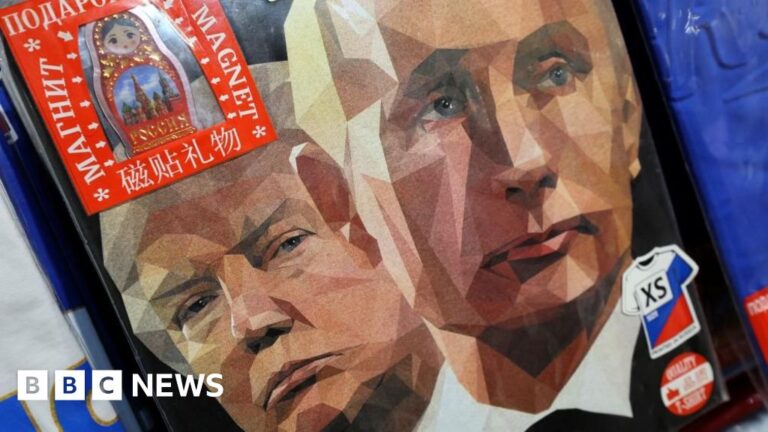
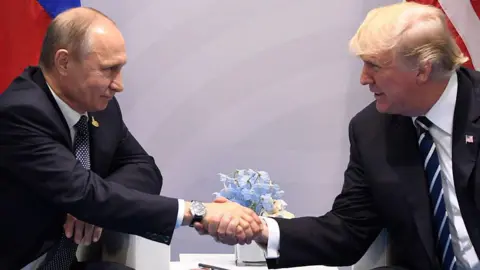
US President Donald Trump and Russian President Vladimir Putin will travel to Friday’s summit in the US state of Alaska with contrasting priorities as they prepare for talks on ending Russia’s war in Ukraine.
Putin has been consistent on his desire to win Ukrainian territory, while Trump has made no secret of his desire to act as a global peacemaker.
But both men may also sense other opportunities, such as diplomatic rehabilitation on the world stage on the part of Putin. Second-guessing Trump’s aims is harder, as he has recently made vacillating statements about his Russian counterpart.
Here’s a fuller look at what the two leaders might want from the meeting.
Putin eyes international recognition… and more
By Russia editor Steve Rosenberg
The first thing Putin wants from this summit is something he’s already been given.
And that’s recognition.
Recognition from the world’s most powerful country, America, that Western efforts to isolate the Kremlin leader have failed.
The fact that this high-level meeting is happening is testament to that, as is the joint press conference that the Kremlin has announced. The Kremlin can argue that Russia is back at the top table of global politics.
“So much for being isolated,” crowed the tabloid Moskovsky Komsomolets earlier this week.
Not only has Putin secured a US-Russia summit, but a prime location for it. Alaska has much to offer the Kremlin.
First, security. At its closest point, mainland Alaska is just 90km (55 miles) from Russia’s Chukotka. Vladimir Putin can get there without flying over “hostile” nations.
Second, it’s a long way – a very long way – from Ukraine and Europe. That sits well with the Kremlin’s determination to sideline Kyiv and EU leaders, and deal directly with America.
There’s historical symbolism, too. The fact that Tsarist Russia sold Alaska to America in the 19th Century is being used by Moscow to justify its attempt to change borders by force in the 21st Century.
“Alaska is a clear example that state borders can change, and that large territories can switch ownership,” wrote Moskovsky Komsomolets.
But Putin wants more than just international recognition and symbols.
He wants victory. He’s been insisting that Russia keep all the land it has seized and occupied in four Ukrainian regions (Donetsk, Luhansk, Zaporizhzhia and Kherson) and that Kyiv withdraw from the parts of those regions still under Ukrainian control.
For Ukraine this is unacceptable. “Ukrainians will not give their land to the occupier,” says the country’s president, Volodymyr Zelensky.
The Kremlin knows that. But if it secures Trump’s support for its territorial demands, the calculation may be that rejection by Ukraine would result in Trump cutting all support for Kyiv. Meanwhile, Russia and the US would get on with boosting relations and developing economic cooperation.
But there is another scenario.
Russia’s economy is under pressure. The budget deficit is rising, income from oil and gas exports falling.
If economic problems are pushing Putin to end the war, the Kremlin may compromise.
For now, there’s no sign of that – with Russian officials continuing to insist that Russia holds the initiative on the battlefield.
Trump seeks chance to claim progress toward peace
By North America correspondent Anthony Zurcher
Trump famously promised during his 2024 presidential campaign that ending the Ukraine war would be easy and that he could do it in a matter of days.
That promise has hung over the American president’s efforts to resolve the conflict, as he has alternated between frustration with the Ukrainians and the Russians since returning to the White House in January.
He harangued Zelensky at a dramatic White House meeting in February, and later temporarily suspended military aid and intelligence sharing with the war-torn nation.
In recent months, he’s been more critical of Putin’s intransigence and willingness to attack civilian targets, setting a series of deadlines for new sanctions on the Russians and other nations that do business with them. Last Friday was the most recent deadline, and as with all the ones before it, Trump ultimately backed away.
Now he’s hosting the Russian president on American soil and talking about “land-swapping”, which Ukraine fears may consist of land concessions in exchange for peace.
So, any discussion about what Trump wants during his Friday talks with Putin is muddied by the president’s vacillating statements and actions.
The president’s path to Alaska – how Trump’s positions on Ukraine shifted
This week, Trump has made a concerted effort to lower the expectations for this meeting – perhaps a tacit acknowledgement of the limited possibilities of a breakthrough with only one party in the war present.
On Monday, he said the summit would be a “feel-out” meeting. He suggested that he would know if he could reach a deal with the Russian leader “probably in the first two minutes”.
“I may leave and say good luck, and that’ll be the end,” he added. “I may say this is not going to be settled.”
On Tuesday, White House press secretary Karoline Leavitt reinforced this message, calling the summit a “listening session”. But by midweek, he was once again talking up the prospects of a deal, saying that he thinks both Zelensky and Putin want peace.
With Trump, it’s often best to expect the unexpected. And Zelensky and European leaders spoke to him on Wednesday in an effort to ensure that he doesn’t strike a deal with Putin that Ukraine won’t – or can’t – accept.
One thing has been clear practically all year, however: Trump would welcome the chance to be the man who ends the war.
In his inaugural address, he said he wanted his proudest legacy to be that of a “peacemaker”. It is no secret that he longs for the international recognition of a Nobel Peace Prize.
In the Oval Office on Thursday, Trump boasted of all the global conflicts he feels he has successfully resolved since taking office in January. But when asked about the war in Ukraine, he offered a rare acknowledgement of the challenge he now faces.
“I thought the easiest one would be this one,” he said. “It’s actually the most difficult.”
Trump is not one to get bogged down in details. But if there is an opportunity for him to claim that he has made progress toward peace during the talks in Anchorage, he will take it.
Putin, always a savvy negotiator, may seek a way to let Trump do just that – on Russia’s terms, of course.
A required part of this site couldn’t load. This may be due to a browser
extension, network issues, or browser settings. Please check your
connection, disable any ad blockers, or try using a different browser.
The University of Florida has hired former Wyoming Associate Head Coach and Recruiting Coordinator Kristin Walker as their Associate Head Coach for the 2025 season.
“I am very excited to join the incredible staff and team at Florida,” Walker said about her new position. “Thank you to Coach Nesty, Mike Spiegler, and the swimming and diving staff for their trust in giving me this opportunity. It is a humbling privilege to be able to contribute to such a respected program. Go Gators!”
Walker has been at Wyoming for the last six seasons, where she coached 11 Mountain West and WAC conference champions over both the men’s and women’s programs. She also helped coach Macey Hansen, who qualified for the 2025 NCAA Championships in the 500 and 1650 freestyle to become the school’s first swimming qualifier since 2016.
She was recently one of the recipients of this year’s American Swim Coaches Association 30 Under 30 Award which awards exceptional young coaches with a full grant to attend the 2025 ASCA World Clinic which will run from September 2nd-5th, 2025 in Reno, Nevada.
Walker swam collegiately at the University of New Mexico, where she swam the 100 and 200 breaststroke and 200 IM all four years she was in college.
After graduating in 2016, she began coaching at Georgia Southern, spending three seasons there as an assistant coach, ultimately winning the CSCAA Jean Freeman Scholarship, which is given to “six collegiate coaches whose exceptional contributions have brought recognition to their institution.”
Walker will be the only female swimming coach on the Florida coaching staff this season after Kristen Murslack was let go in April and Annie Lazor moved to Stanford to become the Associate Head Coach there. The assistant diving coach Laurent Perez Gillooly is also a woman.
Anthony Nesty said “We’re excited to welcome Kristin to our staff as associate head coach. Her gift of connecting with athletes and helping them realize their potential, both in the pool and in life is something every championship program is built on. We’re incredibly fortunate to have her on board.”
new video loaded: Russia and Ukraine Continue Drone Attacks Before Putin-Trump Meeting
transcript
transcript
Russia and Ukraine Continue Drone Attacks Before Putin-Trump Meeting
The Kremlin signaled that apart from Ukraine, it was also interested in discussing other subjects with the U.S., like economic links and nuclear arms. At the same time, Ukrainian President Volodymyr Zelensky met with the U.K. Prime Minister Keir Starmer in a show of unity.
I think it’s going to be a good meeting, but the more important meeting will be the second meeting that we’re having. We’re going to have a meeting with President Putin, President Zelensky, myself — and maybe we’ll bring some of the European leaders along. Maybe not.
“Suleiman lost his football career, and football lost Suleiman.” The family of Palestinian football icon Suleiman al-Obaid mourn his loss after he was killed in an Israeli air strike while waiting for humanitarian aid in Gaza.