US President Trump and Russian President Putin began talks on the war in Ukraine at a US military base in Anchorage, Alaska, meeting with aides in front of a “Pursuing Peace” backdrop. They ignored reporters’ questions during a photo opportunity ahead of a joint press conference.
Despite presidential proclamations, Social Security’s financial outlook is more troubled than ever.
A new report from the Committee for a Responsible Federal Budget (CRFB) warns that as Social Security turns 90, it’s “racing towards involvency,” with its retirement trust fund projected to become insolvent by late 2032, just seven years from now. For a typical dual-earner couple retiring just after insolvency, this would mean an $18,400 reduction in annual benefits.
Prior to Trump’s tax cuts, program trustees estimated insolvency around 2034. With the new tax changes, several independent analyses, including by the CRFB, now suggest the trust fund could run dry as early as 2032. When this happens, all beneficiaries would face an immediate and automatic benefit cut of around 24%, unless Congress acts to shore up the system.
Eliminating federal income taxes on Social Security benefits reduces program revenues by approximately $1.05 trillion to $1.45 trillion over a 10-year period (2025–2035). The lower figure is a Congressional Budget Office (CBO) estimate; the higher end comes from Penn Wharton.
Why the urgency? Social Security faces multiple long-term challenges:
Longer lifespans: Americans are living longer, collecting decades of benefits.
Declining birthrates and slowing immigration: Both trends reduce future payroll tax contributions.
Political stalemate: Lawmakers repeatedly deadlock on fixes like raising payroll taxes, increasing the retirement age, or trimming benefits.
What Americans need to know
The headlines about reducing Social Security taxes offer short-term relief, but Americans should also consider the long-term arithmetic. Social Security is not at risk of vanishing outright — payroll taxes will keep partial payments flowing — but absent reforms, retirees could see sharp benefit cuts within a decade. The changes Trump signed will put more money in seniors’ pockets now, but may worsen the program’s finances for their children and grandchildren.
Key takeaways:
Seniors will pay less (often no) federal tax on Social Security, starting now.
The solvency crisis is now likely to arrive sooner — with potential benefit cuts by 2032 unless new revenue or reforms are enacted.
Younger Americans may face higher payroll taxes, later retirement ages, or both, to sustain future benefits.
The political fight over a permanent fix has just begun, and voters should watch closely for real solutions, not just campaign slogans.
While Social Security remains a safety net for approximately 70 million Americans, it stands at a crossroads — and despite the presidential optimism, its long-term stability depends on tough choices that Washington, so far, has chosen to avoid.
For this story, Fortune used generative AI to help with an initial draft. An editor verified the accuracy of the information before publishing.
Introducing the 2025 Fortune Global 500, the definitive ranking of the biggest companies in the world. Explore this year’s list.
Five thousand miles from Alaska, and feeling left out, Ukrainians were bracing themselves on Friday for the outcome of negotiations to which they were not invited.
The talks, between US President Donald Trump and his Russian counterpart Vladimir Putin, will begin later in the day with no seat for the Ukrainian president Volodymyr Zelensky.
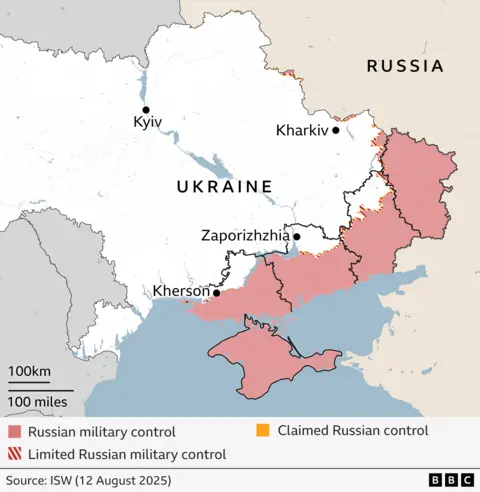
Trump signalled earlier this week that “land swaps” could be on the table – largely interpreted to mean the surrender of Ukrainian land to Russia.
In Ukraine, where polls consistently show that about 95% of the population distrusts Putin, there is a uneasy mix of deep scepticism about the talks and deep fatigue with the war.
“This question touches me directly,” said Tetyana Bessonova, 30, from Pokrovsk – one of the eastern cities whose future is in question if land were surrendered to Russia.
“My hometown is on the line of fire. If active fighting stops, would I be able to return?” she said.
Questions of negotiations, of land swaps, of the redrawing of boundaries were deeply painful to those who grew up in the affected regions, Bessonova said.
“This is the place I was born, my homeland,” she said. “These decisions might mean I could never go home again. That I and many others will lose all hope of return.”
But Trump can be unpredictable. He is often said to favour the views of the person he spoke to most recently. So there is little faith in Ukraine that he won’t be swayed by Putin, particularly in a one-on-one meeting.
The very fact of the closed door meeting was bad for Ukraine, said Oleksandr Merezhko, a Ukrainian MP and chair of the country’s parliamentary committee on foreign affairs. “Knowing Trump, he can change his opinion very quickly. There is great danger in that for us.”
Merezhko said he feared that, such was Trump’s desire to be seen as a dealmaker, he may have privately made advance agreements with the Russians. “Trump doesn’t want embarrassment, and if nothing is achieved, he will be embarrassed,” the MP said. “The question is, what could be in those agreements?”
Various possibilities have been suggested for arrangements that could lead to a ceasefire, from a freezing of the current frontlines – with no formal recognition of the seized territory as Russian – to a maximalist position of Russia annexing four entire regions in eastern and southern Ukraine.
Polls suggest that about 54% of Ukrainians support some form of land compromise in order to hasten the end of the war, but only with security guarantees from Ukraine’s international partners. So deep and widespread is the distrust of Russia, that many believe an agreement to freeze the frontlines without security guarantees would simply be an invitation to Russia to rest, rearm, and reattack.
“If we freeze the frontlines and cede territories it will only serve as a platform for a new offensive,” said Volodymyr, a Ukrainian sniper serving in the east of the country. In accordance with military protocol, he asked to be identified only by his first name.
“Many soldiers gave their lives for these territories, for the protection of our country,” Volodymyr said. “A freeze would mean demobilization would begin, wounded and exhausted soldiers would be discharged, the army would shrink, and during one of these rotations the Russians would strike again. But this time, it would be the end of our country.”
Across Ukraine, people from all walks of life were making very tough decisions about the reality of their future, said Anton Grushetsky, the director of the Kyiv International Institute of Sociology, which regularly polls the population about the war.
One of the toughest decisions was whether to accept the idea of giving de facto control of some Ukrainian soil to Russia, he said. “It’s 20% of our land and these are our people. But Ukrainians are showing us that they are flexible, they are telling us that they will accept various forms of security guarantees.”
According to the institute’s polling, 75% of Ukrainians are totally opposed to giving Russia formal ownership of any territory. Among the remaining 25%, there were some people who were pro-Russian, Grushetsky said, and some who were simply so fatigued by the war that they felt hard compromises were necessary.
“My belief is that the war should be stopped in any way possible,” said Luibov Nazarenko, 70, a retired factory worker from Donetsk region, in Ukraine’s east.
“The further it goes, the worse it becomes,” she said. “The Russians have already occupied the Kherson region and they want Odesa. All this must be stopped, so the youth do not die.”
Nazarenko has a son who is not yet fighting but could be called up. She said she believed that three years into the war, with hundreds of thousands of dead and wounded on the Ukrainian side alone, the preservation of life superseded all concerns over land.
“I just don’t want people to die,” she said. “Not the youth, not the old people, not the civilians who live on the frontline.”
On Friday, as the clock ticked down to the beginning of the talks in Alaska, Ukrainians were celebrating a holy day – the day of the Assumption of the Blessed Virgin Mary. It is the day when she is believed to listen to the prayers of all who need her.
Priest Oleksandr Beskrovniy said it was hard to find words to describe the unfairness of the talks
At St Michael’s Monastery, a church in central Kyiv, priest Oleksandr Beskrovniy was leading a prayer service for several dozen people. Afterwards, he said it was hard to find words to describe the unfairness of the coming talks, but called it a “great injustice and madness” to leave Zelensky out.
Like others, the priest recognised the grim reality facing Ukraine, he said – that it was not in a position to recapture its stolen territory by force. So some deal needed to be made. But it should be thought of less in terms of land, Beskrovniy said, and more in terms of people.
“If we are forced to cede territory – if the world allows this – the most important thing is that we gather all of our people. The world must help us get our people out.”
In his prayers on Friday, the priest did not refer directly to the talks in Alaska, he said – “no names or places of meetings”.
But he prayed for the future strength of Ukraine, he said. “On the frontline, and in the diplomatic space.”
This week, Chord Music Partners secured over $2 billion in investable capital with another $1 billion+ expected, marking a major milestone for the UMG-backed music rights investment vehicle.
Meanwhile, Universal Music Group CEOSir Lucian Grainge fired back at Drake’s defamation lawsuit, calling the rapper’s claims “ridiculous” and “groundless” while confirming Universal’s massive investments in Drake’s career.
Elsewhere, Kobalt inked a direct licensing deal with Spotify in the US, joining Universal and Warner in bypassing the controversial audiobook ‘bundling’ payment structure.
Also this week, Tencent Music revealed its ‘Super VIP’ subscriber tier has reached 15 million users, driving significant revenue growth in China’s streaming market.
Here are some of the biggest headlines from the past few days…
Chord Music Partners has raised over $2 billion in investable capital via a funding round due to close in October, with sources expecting an additional $1 billion to $2 billion before completion. The round has been fueled by equity investments from family offices and pension funds across Europe and the US, with Universal Music Group maintaining its ~26% share through an incremental €30 million investment.
Searchlight Capital Partners has been confirmed as a new investor. MBW understands that Searchlight has contributed $400 million to Chord in equity investment.
Chord has been “deliberately quiet” about deals over the past year, though nine-figure agreements have leaked including a Morgan Wallen acquisition reportedly worth north of $200 million. The company’s portfolio includes music from The Weeknd, Lorde, David Guetta, and other major artists, with publishing rights administered through UMPG and recorded music through Virgin Music Group…(MBW)
Universal Music Group CEO Sir Lucian Grainge has filed a sworn declaration pushing back against Drake’s attempts to force him to provide documents in the rapper’s defamation lawsuit. Grainge describes the artist’s claims in that suit as “farcical” and “groundless.”
In the declaration, filed on August 14 in the US District Court for the Southern District of New York and obtained by MBW, Grainge states that he “had never heard the recording ‘Not Like Us,’ nor ever saw the corresponding cover art or music video, until after they were released by Interscope Records.”
Adds Grainge: “Whilst, as part of my role, I certainly have financial oversight of and responsibility for UMG’s global businesses, the proposition that I was involved in, much less responsible for, reviewing and approving the content of ‘Not Like Us’, its cover art or music video, or for determining or directing the promotion of those materials, is groundless and indeed ridiculous…”… (MBW)
Spotify and Kobalt have signed a direct, multi-year licensing agreement covering the United States. The agreement marks Spotify’s latest direct deal with a prominent music publisher and moves its agreement with Kobalt beyond the traditional CRB model in the US.
This means that Kobalt’s direct deal supersedes the audiobook ‘bundling‘ payment structure that, starting in March last year, saw Spotify dramatically cut the rate of mechanical royalties paid to publishers and songwriters in the US.
Since then, Universal Music Publishing Group and Warner Chappell Music have signed direct licensing deals with Spotify that override the CRB bundling discount. SonyMusicPublishing is the largest outstanding player on SPOT’s list of potential direct licensing deals. MBW understands that Spotify is currently in discussions with the company about a new deal.
Kobalt claims to be the world’s largest independent music publisher, serving over 1 million songs across 10 global offices… (MBW)
Tencent Music Entertainment revealed its premium ‘Super VIP’ tier has reached 15 million subscribers, representing 12% of the company’s total 124.4 million paying music users and driving significant revenue growth in Q2 2025. The milestone represents strong growth from 10 million SVIP subscribers reported in Q3 2024, with users paying approximately RMB 40 ($5.58) monthly compared to the standard RMB 8 ($1.12) subscription.
TME’s music subscription revenues reached RMB 4.38 billion ($611 million) in Q2, representing 17.1% YoY growth, while monthly ARPPU increased 9.3% YoY to RMB 11.7 ($1.63). The SVIP tier offers premium sound quality, exclusive digital albums, priority concert ticket access, and collectible ‘star card’ series with artists like JC-T, Silence Wang, and aespa.
Despite total monthly active users declining 3.2% YoY to 553 million, TME’s focus on premium monetization through SVIP memberships has driven overall profitability. The company’s total revenues reached RMB 8.44 billion ($1.18 billion) in Q2, up 17.9% YoY, with music operations now accounting for 81% of total quarterly revenues compared to 76% in the same period last year…(MBW)
The quarterly filing, covering the three months ended June 30, 2025, reveals a USD $70 million pre-tax impairment charge on “long-lived assets associated with certain of [WMG’s] non-core e-tailer operations” – following what Warner describes as a “triggering event”.
In previous Warner annual filings, only one subsidiary is referred to as an “e-tailer”: EMP….(MBW)
Partner message: MBW’s Weekly Round-up is supported by BMI, the global leader in performing rights management, dedicated to supporting songwriters, composers and publishers and championing the value of music. Find out more about BMIhere. Music Business Worldwide
The swimming power couple has been together for almost four years, first going public on social media in November 2021.
Hopkin made her Olympic debut at the Tokyo Games, where she was part of Great Britain’s gold medal-winning mixed 4×100 medley relay. In addition to bringing home a gold medal, she also placed 5th in the women’s 4×100 free relay and 7th in the 100 free in Tokyo.
Hopkin competed in Paris last summer, but did not pick up any medals at the 2024 Olympics. Her highest placing performances were the mixed 4×100 medley relay and the women’s 4×100 free relay, finishing 7th in both, while she placed 10th in the 50 free and 11th in the 100 free.
A fellow member of Team GB, Greenbank also made his Olympic debut in Tokyo, where he picked up two medals. He earned silver as part of the men’s 4×100 medley relay and won bronze in the 200 back.
He clocked another first for Team GB two years earlier in 2019, having helped bring home his country’s first gold medal in the men’s 4×100 medley relay at the World Championships in Gwangju.
The pair have been making waves on the international racing scene for several years now, racking up plenty of hardware between the two of them. Together, Greenbank and Hopkin have accumulated three Olympic medals, six World Championships medals, 11 European Championships medals and eight Commonwealth Games medals. That tally includes nine golds, seven silver and 13 bronze medals.
Hopkin attended the University of Bath before transferring to the University of Arkansas in 2018 for her junior and senior year. While swimming for the Razorbacks, she broke six individual team records and two relay records.
Hopkin announced her retirement from competitive swimming back in December, while Greenbank is still an active competitor for Great Britain and raced at the World Championships in Singapore a few weeks ago, where he placed 8th in the 200 back.
Tiny “hidden” proteins lurking in DNA once dismissed as junk may hold the key to the next generation of obesity drugs, according to a new study that has uncovered dozens of new fat-regulating molecules using cutting-edge gene-editing technology.
GLP-1 drugs like Ozempic and Wegovy have taken the weight loss world by storm. And they’ve started a revolution to discover other drugs that are effective at treating obesity, the worldwide prevalence of which has more than doubled since 1990, and that is closely associated with diseases such as diabetes and heart disease.
In their search for a new obesity treatment strategy, researchers from the Salk Institute for Biological Studies in California have used CRISPR/Cas9 gene editing technology to closely examine an understudied class of molecules once thought to be junk: microproteins. They’ve presented their findings in a recently published study.
“CRISPR screening is extremely effective at finding important factors in obesity and metabolism that could become therapeutic targets,” said the study’s co-corresponding author, Professor Alan Saghatelian, head of the Salk Institute’s Clayton Foundation Peptide Biology Laboratories, otherwise known as the Saghatelian Lab. “These new screening technologies are allowing us to reveal a whole new level of biological regulation driven by microproteins. The more we screen, the more disease-associated microproteins we find, and the more potential targets we have for future drug development.”
Microproteins are tiny proteins, often made from “small open reading frames” (smORFs) – previously overlooked sections of our DNA once thought to be junk – that can have surprisingly big effects on how the body works. They’re typically less than 100 amino acids long, but they can act like switches or fine-tuners for important biological processes such as controlling how cells grow, how they use energy, how the immune system responds, or how tissues develop. In health, microproteins help keep body systems balanced, but when they’re missing, overactive, or faulty, they can contribute to diseases ranging from metabolic disorders and cancer to heart disease and immune problems. GLP-1 is a peptide that’s small enough to be considered a microprotein, according to the researchers.
Adipocytes, or fat cells, with their lipid-transporting vesicles stained red
In the present study, the researchers used CRISPR/Cas9 gene editing to screen thousands of genes in mouse fat cells, or adipocytes, to see which ones might produce microproteins that influence fat cell growth (proliferation) and fat storage. From this massive screen, they identified dozens of potential microproteins. From that shortlist of 38 candidates, one microprotein, called Adipocyte-smORF-1183, actually affected how fat cells develop and store fat.
“We wanted to know if there was anything we had been missing in all these years of research into the body’s metabolic processes,” said lead and co-corresponding author Victor Pai, a postdoctoral researcher in Saghatelian’s lab. “And CRISPR allows us to pick out interesting and functional genes that specifically impact lipid accumulation and fat cell development. We’re not the first to screen for microproteins with CRISPR, but we’re the first to look for microproteins involved in fat cell proliferation. This is a huge step for metabolism and obesity research.”
While Adipocyte-smORF-1183 can still only be considered a “potential” obesity treatment at this stage, its discovery points toward a new class of drug targets that could work differently from current treatments, be more precise, reduce unwanted side effects, and open the door to “microprotein-based” therapies for obesity and metabolic disorders. Nonetheless, the takeaway message from this research is that we may be standing on the edge of discovering new obesity drugs from the parts of our DNA we once thought were useless.
Next steps will include repeating the process using human fat cells to identify microproteins that could be directly relevant for human treatments, and to continue working through the shortlist of 38 microproteins identified by the researchers.
“That’s the goal of research, right?” Saghatelian said. “You keep going. It’s a constant process of improvement as we establish better technology and better workflows to enhance discovery and, eventually, therapeutic outcomes down the line.”
Southern Europe’s wildfires intensify amid a searing heatwave and major religious holidays.
Firefighters in Spain, Portugal and Greece are battling fierce wildfires as scorching, dry, intense heat fuels blazes across the region, coinciding with major religious holidays, as global warming leaves its mark on Europe.
Spain faced 14 major fires on Friday, said Virginia Barcones, the emergency services chief, as temperatures were forecast to rise further over the weekend.
“Today will once again be a very tough day with an extreme risk of new fires,” Prime Minister Pedro Sanchez warned on Friday.
The State Meteorological Agency placed most of the country under extreme fire danger alerts, particularly in the north and west, where the largest blazes raged. The current heatwave, with temperatures topping 40 degrees Celsius (104 degrees Fahrenheit) on several days this month, is expected to linger until Monday.
In Galicia, fires shut down several highways and halted high-speed rail services to Madrid. The EU’s European Forest Fire Information System reported that wildfires in Spain this year have already burned 158,000 hectares (390,000 acres), an area the size of metropolitan London.
Friday marked the Feast of the Assumption in Spain and Portugal, a major Catholic holiday usually observed with family gatherings and processions. In Portugal, almost 4,000 firefighters battled seven active fires, as authorities extended a state of alert until Sunday. The government also sought European Union assistance under its civil protection mechanism.
A day earlier, Spain received two Canadair water bomber aircraft from the European Union, the first time it had ever activated the bloc’s emergency firefighting aid.
Elsewhere in Southern Europe, Greece continued to struggle with a major wildfire burning for four days on the island of Chios. Several overnight evacuations took place as flames spread through the island’s northern region. Two planes and two helicopters dropped water during calmer winds early on Friday.
After devastating fires earlier this week in western Greece, the fire service remained on high alert outside Athens and in southern areas, where strong winds and high temperatures heightened the danger.
Across the Balkans and Southern Europe, demand for the EU’s shared firefighting resources has soared this year. Bulgaria, Montenegro and Albania have all called for help in recent days as the system has already been deployed as often as during the whole of last year’s fire season.
Ecumenical Patriarch Bartholomew, the spiritual head of the world’s Orthodox Christians, expressed solidarity with wildfire victims during prayers for the Dormition of the Virgin Mary, one of the faith’s most significant feast days.
A required part of this site couldn’t load. This may be due to a browser
extension, network issues, or browser settings. Please check your
connection, disable any ad blockers, or try using a different browser.
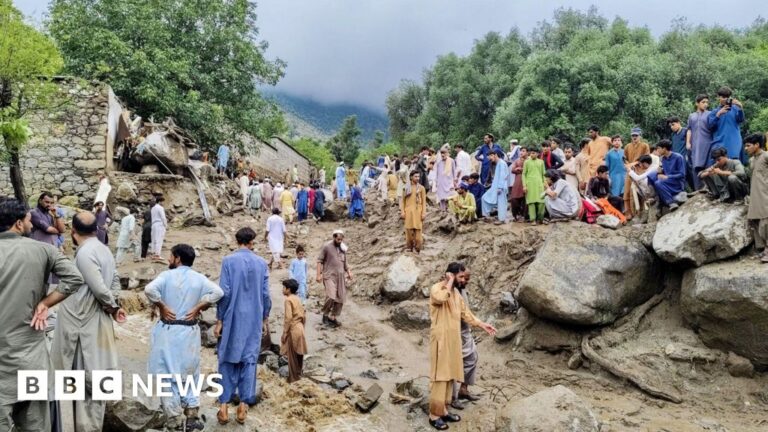
At least 194 people have died in the last 24 hours in heavy monsoon floods and landslides in Pakistan and Pakistan-administered Kashmir.
Most of the deaths, 180, were recorded by disaster authorities in the mountainous Khyber Pakhtunkhwa province in north-west Pakistan. At least 30 homes were destroyed and a rescue helicopter crashed during operations, killing its five crew.
Nine more people were killed in Pakistan-administered Kashmir, while five died in the northern Gilgit-Baltistan region, it said.
Government forecasters said heavy rainfall was expected until 21 August in the northwest of the country, where several areas have been declared disaster zones.
In Buner, one survivor told AFP the floods arrived like “doomsday”.
“I heard a loud noise as if the mountain was sliding. I rushed outside and saw the entire area shaking, like it was the end of the world,” said Azizullah.
“The ground was trembling due to the force of the water, and it felt like death was staring me in the face.”
The chief minister of Khyber Pakhtunkhwa, Ali Amin Gadapur, said that the M-17 helicopter crashed due to bad weather while flying to Bajaur, a region bordering Afghanistan.
In Bajaur, a crowd amassed around an excavator trawling a mud-soaked hill, AFP photos showed. Funeral prayers began in a paddock nearby, with people grieving in front of several bodies covered by blankets.
In the Indian-administered part of Kashmir, rescuers pulled bodies from mud and rubble on Friday after a flood crashed through a Himalayan village, killing at least 60 people and washing away dozens more.
Monsoon rains between June and September deliver about three-quarters of South Asia’s annual rainfall. Landslides and flooding are common and than 300 people have died in this year’s season.
In July, Punjab, home to nearly half of Pakistan’s 255 million people, recorded 73% more rainfall than the previous year and more deaths than in the entire previous monsoon.
Scientists say that climate change has made weather events more extreme and more frequent.