
5.6 C
New York
Sunday, April 26, 2026
Home Blog Page 486

South Africa’s army chief facing criticism for supporting Iran | International Trade News

0

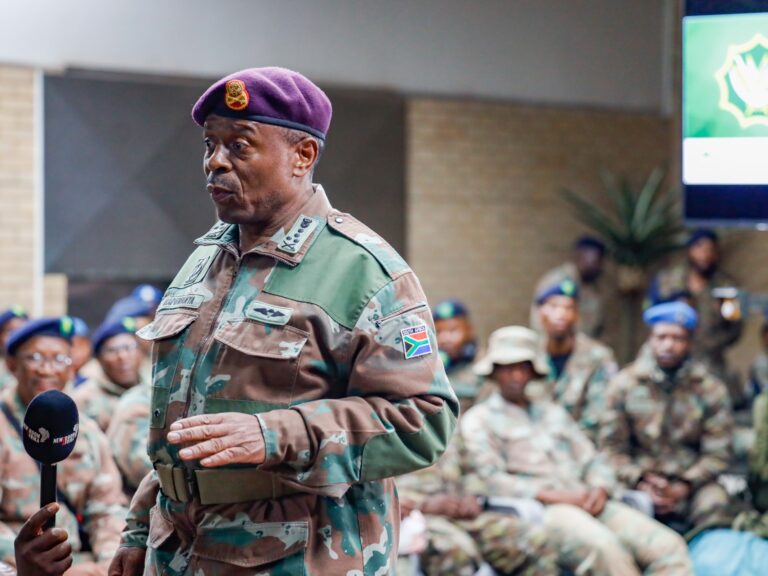
South African Army Chief General Rudzani Maphwanya is facing backlash in his home country following the release of alleged comments he made during an official visit to Iran, which analysts say could further complicate the already turbulent relations between South Africa and the United States.

The comments, which appeared to suggest that Iran and South Africa have common military goals, come at a time when Pretoria is attempting to mend strained relations with US President Donald Trump to stabilise trade.

Last week, a 30 percent trade tariff on South African goods entering the US kicked in, alarming business owners in the country. That’s despite President Cyril Ramaphosa’s attempts to appease Trump, including by leading a delegation to the White House in May.

Here’s what to know about what the army chief said and why there’s backlash for it:

What did the army chief say in Iran?

Meeting with his Iranian counterpart, Major-General Seyyed Abdolrahim Mousavi in Tehran on Tuesday, Maphwanya is reported to have stated that the two countries had close ties, according to Iran’s state news agency, Press TV and the Tehran Times.

“Commander Maphwanya, recalling Iran’s historical support for South Africa’s anti-apartheid struggle, stated that these ties have forged a lasting bond between the two nations,” the Press TV article read.

According to Tehran Times, he went on to say: “The Republic of South Africa and the Islamic Republic of Iran have common goals. We always stand alongside the oppressed and defenceless people of the world.”

Maphwanya also reportedly condemned Israel’s “bombing of civilians standing in line for food” and its “ongoing aggression in the occupied West Bank”, Tehran Times reported.

His visit, the publication quoted Maphwanya as saying, “carries a political message”, and comes “at the best possible time to express our heartfelt sentiments to the peace-loving people of Iran”.

On the other hand, General Mousavi hailed South Africa’s genocide case against the “Zionist regime” at the International Court of Justice, and said that the effort was aligned with Iran’s policies, according to Press TV.

He also condemned the US and Israel’s military and economic actions against Iran as “violations of international laws and norms”. He added that Iran’s army is prepared to deliver “a more decisive response in the event of renewed aggression”, Press TV reported.

General Rudzani Maphwanya at Air Force Base Waterkloof on June 15, 2025, in Centurion, South Africa [Sharon Seretlo/Gallo Images via Getty Images]

How has the South African government reacted?

President Cyril Ramaphosa’s office on Thursday clarified that the president was not aware of General Maphwanya’s visit to Iran, although such a trip would normally be approved by the Ministry of Defence, not the president’s office.

Ramaphosa appointed Maphwanya as army chief in 2021. The general, in apartheid-era South Africa, served in the army wing of the African National Congress (ANC), which started as a liberation movement, and commanded a parliamentary majority until 2024.

Presidency spokesperson Vincent Magwenya, at a press briefing, said the general’s decision to visit Iran was itself badly timed.

“At this period of heightened geopolitical tensions and conflict in the Middle East, one can say the visit was ill-advised, and more so, the general should have been a lot more circumspect with the comments he makes.”

He added, “We are in the delicate process of resetting political relations with the US, but more importantly, balancing the trade relationship in such a manner that the trade relationship is mutually beneficial.”

Similarly, the Ministry of International Relations and the Defence Ministry dissociated the government from the army chief’s alleged comments.

“It is unfortunate that political and policy statements were reportedly made…The minister of defence and military veterans [Matsie Angelina Motshekga] will be engaging with General Maphwanya on his return,” a statement by the Defence Ministry on Wednesday read.

Meanwhile, the Democratic Alliance (DA) party, one of the four parties that form the South African coalition government, is calling for the army chief to be tried in a military court on grounds of “gross misconduct and a flagrant breach of the SANDF [South African National Defence Force] Code of Conduct.”

“According to Iranian state media, General Maphwanya went far beyond his constitutional and professional mandate, pledging ‘common goals’ with Iran, endorsing its stance on Gaza, and calling for deeper strategic alignment,” the DA said in a statement on Thursday.

“Such political statements are explicitly prohibited for serving officers, violate the SANDF’s duty of political neutrality, and undermine the constitutional principle of civilian control over the military,” the party added.

The US and South Africa’s relations are at their lowest in decades, making this a particularly sensitive time, analysts say, as it follows June’s 12-day war between Iran and the US-Israel coalition.

President Trump slapped a 30 percent tariff on South African goods entering the US as part of his wide-ranging reciprocal tariff wars in April. The US is a major destination for South African goods such as cars, precious metals and wine.

Trump’s main gripes with Pretoria include South Africa instigating a genocide case against Israel, the US’s ally, at the International Court of Justice, amid the ongoing war in Gaza. He earlier accused South Africa of strengthening ties with Iran.

Trump has also wrongly claimed that white South Africans are being persecuted in the country under the majority Black leadership of the ANC, the country’s main political party to which President Ramaphosa belongs. He also claims South Africa is confiscating land belonging to whites.

White South Africans are a wealthy minority and largely descendants of Dutch settlers. Afrikaner governments controlled the country under the racist apartheid system until 1990.

South African wealth, particularly land, continues to be controlled disproportionately by the country’s white population. In recent times, fringe, extremist Afrikaner groups claiming that whites are being targeted by Black people have emerged, pointing to cases of white farmers being attacked by criminals on their farmland.

Elon Musk, Trump’s one-time adviser before their public fallout in June, had also made claims of white persecution and claimed that the South African government’s business laws were blocking his internet company from operating in the country.

He was referring to laws requiring that foreign businesses be partly owned by Blacks or other historically disadvantaged groups, such as people living with disabilities.

The South African government denied Musk’s accusations.

In early May, Trump’s government admitted 59 white “refugees” in a resettlement programme meant to protect them.

Previously, the US, under former President Joe Biden, was at loggerheads with South Africa over its close ties with Russia and its vocal criticism of Israel.

The latest incident echoes a 2022 scandal when a sanctioned Russian cargo ship called the Lady R docked at Simon’s Town Naval Base in the Western Cape, said analyst Chris Vandome of think tank Chatham House. The US alleged at the time that South African military supplies were loaded onto the ship and used in the Ukraine war, claims South Africa denied.

“It lies with South African foreign policy formation and the lack of clarity and consistency around it that has created this confusion whereby people think they are saying things in line with what the nation thinks,” he said.

Donald Trump meets South African President Cyril Ramaphosa in the Oval Office of the White House
US President Donald Trump meets South African President Cyril Ramaphosa in the Oval Office of the White House in Washington, DC, on May 21, 2025 [Kevin Lamarque/Reuters]

How has South Africa tried to appease the US?

On May 21, President Ramaphosa led a delegation to the White House in a bid to “reset relations” with Trump and hopefully secure lower tariff deals.

At the heated meeting, however, Trump refused to back down from his claims of white persecution, despite Ramaphosa clarifying that South Africa was facing widespread crime in general, and that there was no evidence that whites in particular were being targeted.

South Africa, during the meeting, offered to buy US liquefied natural gas and invest $3.3bn in US industries in exchange for lower tariffs. The delegation also agreed to a review of the country’s business ownership laws.

However, Trump’s 30 percent tariffs went into effect last week. Analysts say it could put up to 30,000 South African jobs at risk, particularly in the manufacturing and agricultural sectors.

Meanwhile, Ramaphosa’s government promised to take further action to ease the burden on manufacturers and exporters. On Tuesday, Trade Minister Parks Tau told reporters that South Africa has submitted a revised proposal to Washington, without giving details.

General Maphwanya’s pronouncements this week, therefore, “couldn’t have come at a worse time” for South African diplomatic ties with the US, security analyst Jakkie Cilliers of the International Security Institute said, speaking to South African state TV, SABC.

“For the chief of the national defence force to pronounce so clearly and so unequivocally at this time is remarkably politically sensitive,” Cilliers said, adding that the general could be asked to resign upon his return.

What has General Maphwanya said?

Maphwanya, who the presidency said has returned to the country, has not put out public statements on the controversy. It is unclear how the government might sanction him. President Ramaphosa is set to meet with the army chief for briefings in the coming weeks, a presidency spokesperson said.
Waymo executive emphasizes importance of LiDAR and radar sensors for safety in self-driving technology platform

0

Waymo is experimenting with generative AI and other technologies for its self-driving cars, but the company believes the assortment of laser sensors and radars mounted on its cars remains the safest way to run a robotaxi service at scale—at least for now.

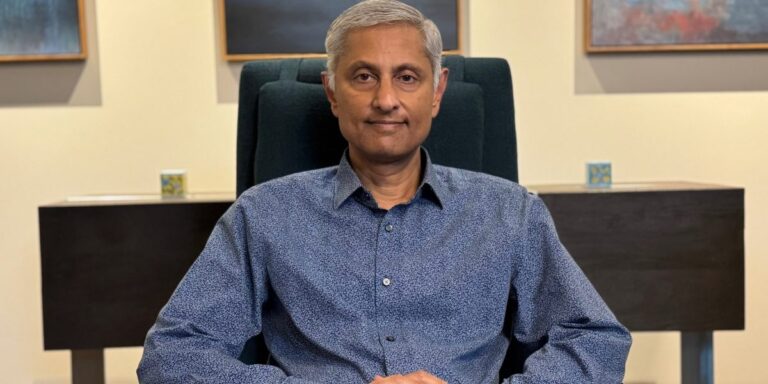
“We’ve done a lot of research. We’re aware of what works and what doesn’t work at our scale and what we need to do,” Srikanth Thirumalai, who is vice president of onboard engineering for the current robotaxi industry incumbent, Waymo, said this week at the Ai4 Conference in Las Vegas. 

While rivals like Tesla are pushing self-driving cars that rely solely on video cameras, Waymo’s Thirumalai says the combination of LiDAR and radar provides “an additional safety net” to make sure that the company has the adequate data it needs to make driving decisions “under all conditions”—including extreme weather.

Thirumalai was speaking on stage in an interview with Fortune. Earlier that day, Thirumalai gave a solo presentation, describing Waymo’s AI stack and approach to safety in detail that has allowed the company to scale its operation to five cities by mid-2025 and conduct more than 100 million driverless miles. In his presentation, Thirumalai showed a video of how LiDAR sensors on the Waymo Jaguar I-PACE had picked up movement from human beings readying to jump in the road, even when the vehicle’s cameras had not—or a woman preparing to go around a stopped bus and directly into the path of a Waymo robotaxi. In both instances, Waymo’s robotaxi stopped or maneuvered out of the way to avoid contact with the pedestrians, according to the videos.

The presentation showed the stark contrast in approaches between Waymo and one of its newer rivals, Tesla, which launched a small-scale, invite-only robotaxi service in Austin this June, with safety drivers in the passenger seat. Tesla, which was demonstrating its full self-driving (FSD) technology via demo rides at the Ai4 Conference, is only using video cameras and its AI technology for FSD and Tesla Robotaxi, after years of Elon Musk stating that other sensors are expensive and unnecessary. “LiDAR is a fool’s errand,” Elon Musk said in 2019. “Anyone relying on LiDAR is doomed. Doomed! [They are] expensive sensors that are unnecessary.”

Thirumalai wouldn’t say directly whether he considered camera-only self-driving systems like Tesla’s to be safe for the public roads. He said that you have to consider “the whole process” of how a system is built, tested, then validated, and he also said that you cannot statistically compare Waymo’s system to another, because of the lack of comparable safety metrics. General Motors’ subsidiary Cruise, which also used LiDAR and radar systems, suspended operations earlier this year after it failed to relaunch after a serious accident in San Francisco. For context, Tesla said it had driven 7,000 driverless miles at the end of July, compared to Waymo’s 100 million.

“If we are talking about objective measures, then we have to look at the statistics of our safety record, at scale, right?” Thirumalai said. “When someone actually says: Yes, we matched your safety at your scale with a different system, that’s great. We’ll take that.” 

Waymo is regularly testing new technology as it becomes available, according to Thirumalai. As part of that experimentation, he said that Waymo has researched how multimodal models like Gemini can be incorporated into the Waymo tech stack (Waymo has not tested any other generative AI models besides Google’s Gemini, Thirumalai confirmed). The robotaxi company has published several papers of its research into multimodal models, including a city-scale traffic simulation with a generative world model as well as Waymo’s research around EMMA, Waymo’s End-to-end Multimodal Model for Autonomous driving. Waymo has reported that co-training its vehicles with EMMA helped with things like object detection and road graphs, saying there was “potential” for EMMA as a generalist model for autonomous driving applications. However, EMMA is expensive, can only process a small number of image frames, and does not incorporate LiDAR sensors or radar—all of which lead to “challenges” for using EMMA as a “standalone model for driving”

Thirumalai said incorporating generative AI models into the self-driving tech stack is an area of “intense research,” and that he believes this will continue. “But there’s a lot more work that’s going to be needed to make the system as simple as possible,” he said.

Introducing the 2025 Fortune Global 500, the definitive ranking of the biggest companies in the world. Explore this year’s list.

Trump and Putin convene in Alaska for discussions on Ukraine

0

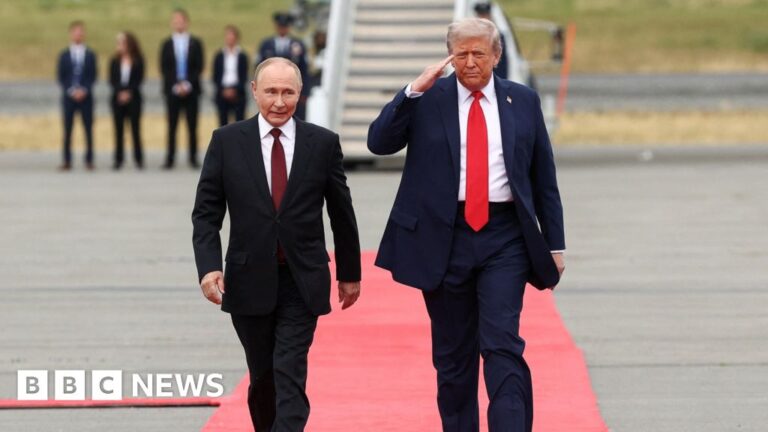
This is the moment US President Trump and Russia’s President Putin simultaneously disembarked their planes in Alaska to meet for talks about the Ukraine war.

They shook hands on a red carpet and had what appeared to be a friendly but animated conversation before walking together to a nearby car.

Ukraine’s President Zelensky, who is not invited to the summit, says his country is “counting on America” and there’s “no indication” Russia is preparing to end the war.

Stony Brook Secures Multi-Talented Swimmer Carson Kien for 2025

0

By Casey Murphy on SwimSwam

Fitter and Faster Swim Camps is the proud sponsor of SwimSwam’s College Recruiting Channel and all commitment news. For many, swimming in college is a lifelong dream that is pursued with dedication and determination. Fitter and Faster is proud to honor these athletes and those who supported them on their journey.

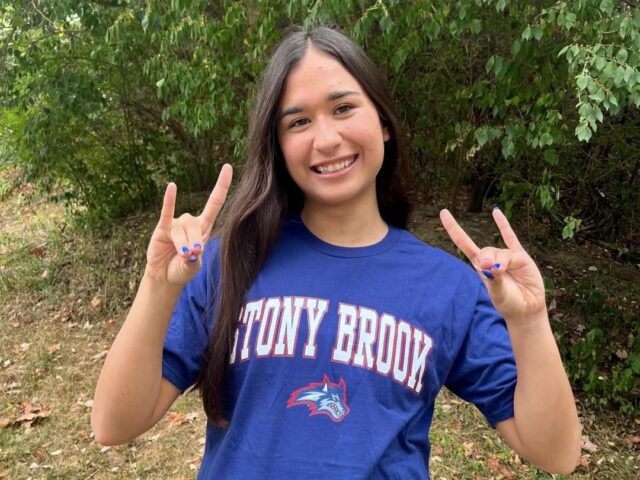
Versatile swimmer Carson Kien will head to New York this fall to attend Stony Brook University, where she will continue her swimming career with the Seawolves. Kien attended Centerville High School in Ohio and trains with the WTRC Sharks Swim Team.

At Centerville High School, Kien earned four varsity letters and served as captain for one season. She was a 12-time state qualifier and specializes in butterfly, freestyle, and medley events.

Kien shows particular strength in butterfly. Recently, she posted her fastest times in the 100 and 200 fly at the 2025 OH MAKO Senior Meet (SCY) in February. In the 100 fly, she swam a time of 57.13 in prelims and placed 17th in the finals (58.32). Her finals time of 2:08.80 in the 200 fly earned her 11th place. Kien also captured 12th in the 200 breast (2:30.26), 26th in the 100 back, and 27th in the 200 back (2:10.35).

In March 2024, Kien competed at the OH Tim Myers Memorial SC Senior Champs. She finished 10th in the 200 free (1:55.06), 5th in the 500 free (5:16.90), 12th in the 200 back (2:07.44), 10th in the 200 IM (2:10.37), and 6th in the 400 IM (4:35.14). Her times in the 200 free, 500 free, 200 back, and 200 IM still stand as lifetime bests.

Kien recorded her fastest 100 free at the 2024 OHSAA SW District Championship (SCY) in February, finishing 5th with a time of 52.32. She also competed individually in the 50 free, placing 10th with a 24.36.

Top Yard Times

  • 100 Fly – 57.13
  • 200 Fly – 2:08.80
  • 200 IM – 2:10.37
  • 100 Free – 52.32
  • 200 Free – 1:55.06

Stony Brook finished 9th out of nine teams at the 2025 Women’s Coastal Athletic Association Championships. Kien has the potential to be a key contributor to the team, especially in the butterfly events.

Her 200 fly time would have been the fastest on the team last season and would have qualified for the ‘C’ final at the conference championships. Her 100 fly time would have ranked 2nd on the team and also earned a spot in the ‘C’ final.

Kien will join fellow recruits Pelagia Chazov, Elaine Liu, and Avari Wischhof on campus this fall. Liu is also strong in the 100 fly, with an altitude-adjusted time of 57.17, as is Chazov, who has posted a 56.71.

If you have a commitment to report, please send an email with a photo (landscape, or horizontal, looks best) and a quote to Recruits@swimswam.com.

About the Fitter and Faster Swim Tour 

Fitter & Faster Swim Camps feature the most innovative teaching platforms for competitive swimmers of all levels. Camps are produced year-round throughout the USA and Canada. All camps are led by elite swimmers and coaches. Visit fitterandfaster.com to find or request a swim camp near you.

Instagram – @fitterandfasterswimtour
Facebook – @fitterandfastertour
Twitter – @fitterandfaster

Read the full story on SwimSwam: Stony Brook Snags Versatile Swimmer Carson Kien For 2025

South Korea’s Supreme Court rules that Pinkfong’s ‘Baby Shark’ is not infringing copyright, despite being irritating

0

It’s YouTube’s most-viewed video of all time with over 16 billion plays, and it’s racked up a further 1 billion+ streams on Spotify.

But Pinkfong’s Baby Shark, released in 2015, did not plagiarize an earlier version of the song recorded by US songwriter Jonathan Wright, South Korea’s Supreme Court ruled today (August 14).

The court rejected Wright’s copyright dispute over the viral children’s track, determining that his 2011 version of the folk song – yes, it’s a folk song – could not be considered a “creative work” because (i) prior versions already existed and (ii) Wright did not add sufficient new creativity to merit copyright protection.

“The plaintiff’s song is difficult to be protected as a secondary copyrighted work because it did not reach a substantial alteration to the extent where it could be considered as a separate work, by social norms, from the oral song mentioned in this case,” the court stated, affirming an earlier lower court decision.

That will be music to the ears of Seoul-based Pinkfong, which reported 45.1 billion won ($32.6 million) in revenue during the first half of 2025.

(Sony likely won’t hate it, either: Sony Music Publishing signed an agreement with Pinkfong in November 2020 to publish its entire catalog of children’s songs, including Baby Shark; Pinkfong has previously also signed a deal with Sony’s The Orchard/Relentless to distribute its records.)


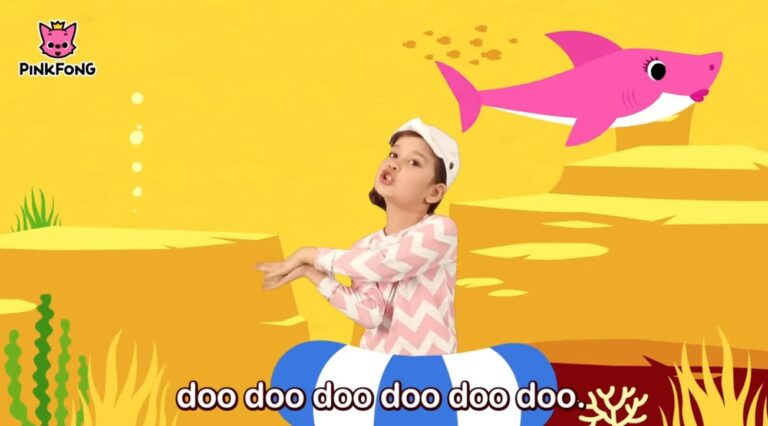
The success of Pinkfong’s Baby Shark Dance video on YouTube, released ten years ago, has spawned a lucrative multimedia franchise.

Said franchise now spans TV shows, movies, smartphone apps, and even touring musicals, featuring characters Baby Shark, Mama Shark, Papa Shark, Grandma Shark, and – how could we forget? – Grandpa Shark.

Pinkfong said in a statement to the Associated Press that the ruling confirmed its version of Baby Shark was based on a “traditional singalong chant” that was in the public domain.

The company said it gave the tune a fresh twist by adding “an upbeat rhythm and catchy melody, turning it into the pop culture icon it is today.”

Jonathan Wright, who performs under the name Johnny Only, had sought 30 million won (USD $21,600) in compensation, claiming Pinkfong’s version was “substantially similar” to his YouTube upload from 2011.

Wright argued that both songs shared “same key, same tempo change, same melody and rhythm.”

Wright’s South Korean attorney, Chong Kyong-sok, called the outcome of the case “a little disappointing” but confirmed the matter was now settled.

“It’s our work that came out first, so we can handle the licensing on our side and I guess we then each go our separate ways,” he said, according to reports.


The case centered on whether Wright’s version qualified as a “secondary work” of the original folk song and whether Pinkfong had subsequently based their version on his work.

The Supreme Court determined that Wright had not made sufficient changes to the original song to grant him copyright as a secondary work, and found “no substantial similarities” between his version and Pinkfong’s.

The ruling highlights the complex copyright issues surrounding folk songs and traditional melodies in the digital age.

Various versions of Baby Shark existed before Wright’s 2011 upload, including a German version called Kleiner Hai that gained traction in Europe in 2010.


The song has roots as a traditional melody used at children’s summer camps in the United States for years before either Wright’s or Pinkfong’s versions.

Wright’s legal challenge began in 2019 after Pinkfong’s version captured global attention, sparking social media phenomena like the #BabySharkChallenge and reaching No. 32 on the Billboard Hot 100 chart.

Today’s decision echoes similar high-profile copyright disputes over folk songs, including the 2015 case that removed Happy Birthday to You from Warner Chappell copyright claims after a federal judge ruled the publisher’s rights applied only to a specific piano arrangement rather than the underlying melody and lyrics.Music Business Worldwide

Sunlight-Based Semiconductor Unleashes the Potential of Green Hydrogen

0

Cars with a range of thousands of kilometers, sustainable aviation, or renewable electricity storage are some of the possibilities opened up by the production of green hydrogen. It is also the second pillar of the renewable revolution. If wind and solar energy provide electricity, green hydrogen will also be an alternative to fossil fuels in industrial processes that require heating power. The main challenge for this technology is to achieve commercial viability, for which the new catalyst developed by the University of Michigan in the USA could provide a significant boost.    

In this article, you will read about:

What are the main techniques to produce green hydrogen?

Most of the hydrogen on our planet can be found in water, so all efforts to obtain green hydrogen are aimed at splitting its atomic bonds and separating it from oxygen. Three types of reactions are currently used to achieve this:

  1. Electrochemical (Electrolysis). They are based on transmitting an electric current through electrodes – an anode and a cathode – immersed in water with an electrolyte such as salt or acid that enhances conductivity. In this case, electricity from renewable sources is used to generate green hydrogen.
  2. Photocatalysis/Photoelectrochemical. These use sunlight which, when in contact with catalysts or semiconductors made of photoelectrochemical materials as catalysts, releases hydrogen from water by converting photons into free electrons. This process is similar to photosynthesis, in which plants obtain hydrogen atoms from water from sunlight.
  3. Thermochemical. It is based on applying high temperatures that can break the water molecule, thus transforming thermal energy into chemical energy. Either in a single step – thermolysis – with temperatures above 2,000 ºC or in thermochemical cycles in stages with lower temperatures.

A new self-healing green hydrogen catalyst

So far, industrial-scale green hydrogen production is focusing on electrochemical technologies, but research into photocatalytic and photoelectrochemical technologies is offering encouraging results. The main advantage is that sunlight is used directly to generate the reaction rather than transforming it into electricity to carry out the electrolysis, which could ultimately offer higher conversion efficiency. The main obstacle to this technology was that the catalysts used degraded rapidly or were very unstable. Hence, the new self-healing green hydrogen catalyst developed by the University of Michigan is such a promising technology.

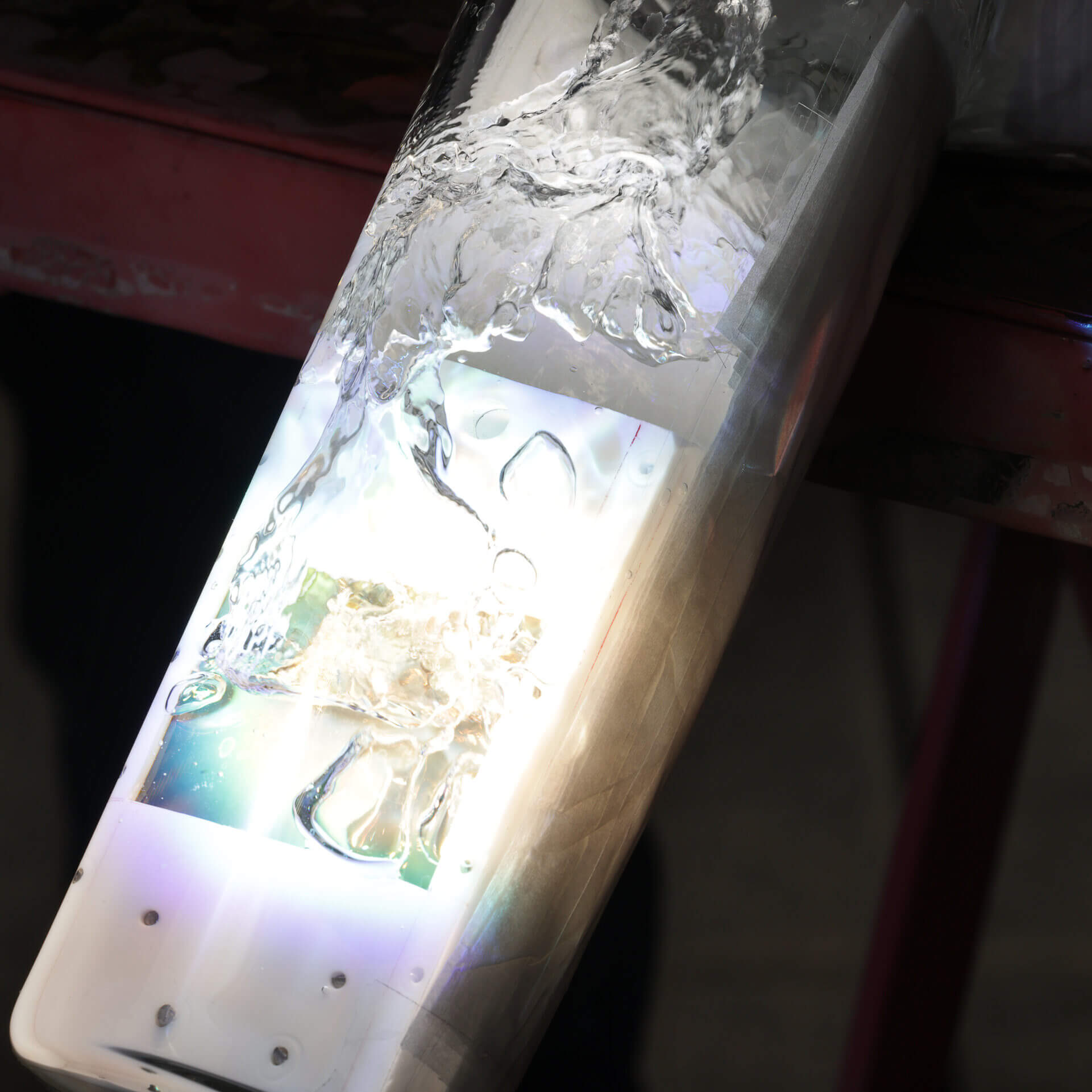
The device created by a team of scientists at the U.S. university consists of a window-sized lens that concentrates sunlight onto a transparent panel containing the water and the new catalyst. The latter is based on indium gallium nitride nanostructures grown on a silicon surface. Thanks to an insulating layer on the panel, temperatures of up to 75°C are reached, stimulating the photocatalytic reaction. The result is an efficiency of 9 % in the extraction of hydrogen from water, which is almost ten times the efficiency of similar technologies.  

The semiconductor used offers several advantages. Firstly, it is very durable. Specifically, it can withstand the equivalent of the light of one hundred and sixty suns without deteriorating, even demonstrating self-healing capabilities. Secondly, it harnesses the entire solar spectrum: the higher wavelengths to generate the reaction and the infrared radiation to enhance it. Both aspects could result in the generation of green hydrogen at a much lower cost.   

Accelerating green hydrogen production with ultrasonics

Irrespective of these advances, the production of green hydrogen utilizing electrochemical processes is also undergoing significant improvements. The latest of these, pioneered by the University of Melbourne in Australia, involves ultrasound, which increases the amount of hydrogen generated by conventional electrolysis techniques by fourteen. Besides boosting hydrogen production, the technology prevents oxygen and hydrogen bubbles from accumulating on the electrodes.    

On the other hand, the efficiency of the new technique makes it possible to dispense with the usual acid electrolytes. In turn, the absence of acid enables using electrodes without high-cost anti-corrosion materials such as platinum or iridium. All this makes the green hydrogen production process cheaper and closer to commercial viability.

Overcoming the challenges of producing green hydrogen on an industrial scale will open up an infinite range of applications. For example, as pointed out in this article, it may become a great ally of sustainable aviation. And who knows if it will play a crucial role in urban mobility, as demonstrated by this bicycle powered by a hydrogen fuel cell.


Source:

Indonesians Hoist Anime Pirate Flag in Protest During Independence Day Celebrations | Protests in Focus

0

Medan, Indonesia – Indonesia is celebrating 80 years of independence from Dutch colonial rule, but not everyone is in a celebratory mood, and an unusual protest movement has rallied around a cartoon pirate flag.

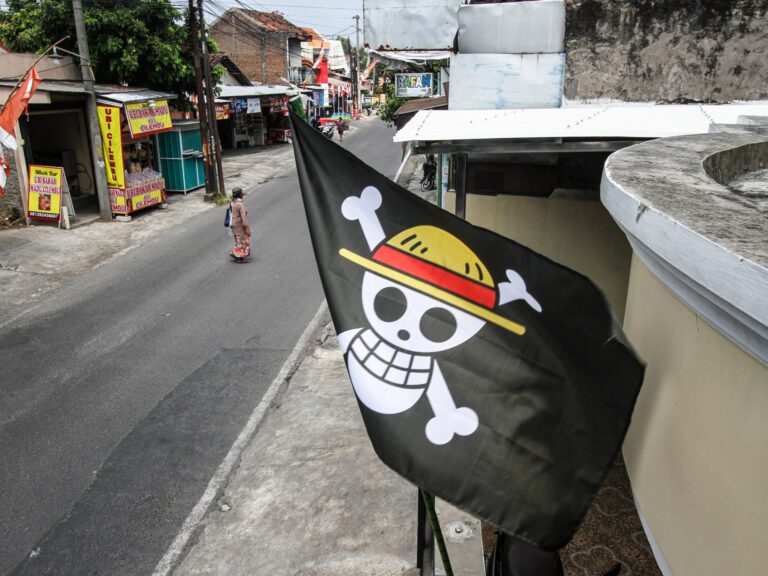
The flag, which features a skull and crossbones wearing a straw hat, has been spotted adorning homes, cars, trucks, motorcycles and boats across Indonesia.

Popularised by the hit Japanese anime One Piece, the flag has even been flown beneath the Indonesian flag – known as the merah-putih (red and white) – which is widely raised throughout the month of August in the lead-up to Independence Day on Sunday.

In the anime series, which was adapted by Netflix in 2023, the hatted skull and crossbones flag is used by adventurer Monkey D Luffy – who one day hopes to become a pirate king – and is seen as a sign of hope, freedom and a pushback against authoritarianism.

In Indonesia, the flag has been raised as a sign of protest amid increasing public frustration with the government.

“Rising prices, difficulties in getting a job and the incompetencies of the government have prompted the people to use satire and sarcasm,” Radityo Dharmaputra, a lecturer in international relations at Airlangga University in Surabaya, told Al Jazeera.

Raising the pirate flag is a sign of “growing dissatisfaction in society, even with all the so-called progress that the government has claimed”, Dharmaputra said.

Prabowo Subianto was sworn in as the new president of Indonesia in October, promising fast economic growth and social change in this country of almost 286 million people.

But Southeast Asia’s largest economy and most populous democracy is faltering.

A graffiti of the pirate flag from Japanese anime One Piece, adopted by some Indonesians as a symbol of frustration with their government, is seen on a street in Sukoharjo, Central Java, on August 6, 2025 [Dika/AFP]

‘A symbol of my disappointment and resistance’

Indonesia has one of the highest youth unemployment rates in Southeast Asia, with an estimated 16 percent of the 44 million Indonesians aged 15-24 unemployed, while foreign investors are pulling capital out of the country and the government is cutting the budget.

In a survey published by the ISEAS-Yusof Ishak Institute in Singapore in January, about 58 percent of young Indonesians said they were optimistic about the government’s economic plans, compared with an average of 75 percent across five other countries in the region – Thailand, Malaysia, Singapore, the Philippines and Vietnam.

Before the flag protest, in February, the “Indonesia Gelap” or “Dark Indonesia” movement gained momentum, with citizens using the #IndonesiaGelap hashtag on social media to vent their frustrations about the future of the country following widespread budget cuts and proposed changes in legislation allowing the military to have a greater role in the government.

The online protest was followed by student demonstrations, which erupted across a number of cities.

President Prabowo accused the Dark Indonesia movement of being backed by “corruptors” bent on creating pessimism in the country.

“This is fabricated, paid for, by whom?” Prabowo said, according to Indonesian news outlet Tempo.

“By those who want Indonesia to always be chaotic, Indonesia to always be poor. Yes, those corruptors are the ones financing the demonstrations. Indonesia is dark, Indonesia is dark. Sorry, Indonesia is bright, Indonesia’s future is bright,” the president said.

Kemas Muhammad Firdaus, 28, paints a mural depicting a Jolly Roger from the popular Japanese anime and manga series 'One Piece' in Bekasi, West Java province, Indonesia, August 7, 2025. REUTERS/Ajeng Dinar Ulfiana
A graffiti artist paints a mural depicting a Jolly Roger from the popular Japanese anime and manga series One Piece in Bekasi, West Java province, Indonesia, on August 7 , 2025 [Ajeng Dinar Ulfiana/Reuters]

Adi*, a truck driver in the city of Malang in East Java, told Al Jazeera that he has been flying the anime pirate flag on the side of his truck for the past three weeks.

“Many, many people have been flying it in East Java. To me, it is a symbol of my disappointment and resistance against the government,” he said.

Adi said that he had long been frustrated, but that the flag had provided him with a new way of displaying this frustration.

Members of his family had died, Adi said, when police fired tear gas into the Kanjuruhan Stadium in East Java’s Malang city on October 1, 2022, following what police claimed was a pitch invasion by fans at the end of a football match.

This tear gas led to panic and a crowd crush at locked exit gates that killed 135 people.

Three police officers and two match officials were prosecuted for their roles in the tragedy, one of the worst in international footballing history.

“I am disappointed by the lack of justice for the victims of Kanjuruhan. Until now, we have received none of the restitution we were promised. I am also disappointed by other problems in Indonesia, including rising prices,” he said.

‘An attempt to divide unity’

The One Piece pirate flag has caught the attention of the government, with Budi Gunawan, the coordinating minister for political and security affairs, warning that authorities would take “firm action” if the flag was flown on Sunday’s Independence Day.

“There will be criminal consequences for actions that violate the honour of the red and white flag,” he said.

Indonesia’s Deputy House Speaker Sufmi Dasco Ahmad branded the hoisting of the pirate flag an attempt to deliberately sow dissent.

“We have detected and received input from security agencies that there is indeed an attempt to divide unity. My appeal to all the nation’s children is to unite and fight against such things,” he said.

Yohanes Sulaiman, a lecturer in international relations at Jenderal Achmad Yani University, told Al Jazeera that the government’s warnings were likely an attempt to clamp down on the show of symbolic dissent.

“I suspect they didn’t know how Prabowo would react and thus thought it better to show their loyalty and take the extreme position than be sorry later,” Sulaiman said.

The government threats had “backfired spectacularly”, he said, adding that it was left looking like a “laughing stock”.

“Saying that the flag has the potential of breaking apart the nation is too much. It is hyperbolic and nobody takes it seriously,” he said.

A worker holds a replica of the pirate flag from Japanese anime One Piece, made for sale as some Indonesians adopt the symbol from a story about resisting a corrupt world government to express frustration with their own, at a T-shirt workshop in Karanganyar, Central Java, on August 6, 2025, ahead of the country’s 80th Independence Day. As Indonesia's independence day approaches red and white flags will be flown across the country, but a viral anime pirate banner has drawn government threats against flying the swashbuckling ensign. A Jolly Roger skull and bone symbol topped with a straw hat from Japan's anime series 'One Piece' has caused concern among officials in Jakarta that it is being used to criticise President Prabowo Subianto's policies. (Photo by DIKA / AFP) / TO GO WITH 'INDONESIA-POLITICS-PROTEST-ANIME, FOCUS' BY DESSY SAGITA & JACK MOORE
A worker holds a replica of the pirate flag from Japanese anime One Piece, made for sale as some Indonesians adopt the symbol from a story about resisting a corrupt world government to express frustration with their own, at a T-shirt workshop in Karanganyar, Central Java, on August 6, 2025 [Dika/AFP]

Sulaiman said the origins of the flag’s use in Indonesia could be traced back to truck drivers.

“Truckers were the ones first flying it to protest a recent regulation that forbade overweight trucks from hitting the road. If the government had just ignored it, the flag would have ended up on the back of trucks and nobody would have taken it seriously,” Sulaiman said.

“But, they had to make it about a national threat, a threat to national unity and disrespect of the national flag,” he said.

He added that the increased visibility of the pirate flag comes at a sensitive time in Indonesia – ahead of Independence Day – which is traditionally a moment for the government and the public to celebrate.

Ian Wilson, a lecturer in politics and security studies at Murdoch University in Perth, Australia, said the flag furore demonstrated “sensitivity around perceptions of popularity” in the current government.

The flag as a symbol of protest appeared to be a more fragmented movement than recent and historical protests in Indonesia, Wilson said, which have traditionally been largely driven by students.

“Students are a more singular group, but this is a more dispersed phenomenon across different groups and parts of the country, which is indicative of widespread dissatisfaction. It touches a nerve due to the diffused representation,” he said.

“We are seeing this phenomenon in places like villages and by regular people in semi-rural areas, which are not conventional sites of dissent in Indonesia,” he added.

‘An expression of creativity’

According to reports by local Indonesian media, anime pirate flags have been seized in raids by authorities in East Java, while citizens found displaying them have been questioned in the Riau Islands.

So far, no one has been criminally charged, as flying the pirate flag is not technically illegal.

Usman Hamid, Amnesty International Indonesia’s executive director, said the raids were “a flagrant violation of the right to freedom of expression”.

“Raising an anime flag is not ‘treason’ or ‘propaganda to disunite the country’, as suggested by government officials,” Hamid said in a statement.

“Authorities, including lawmakers, must stop harassing people by threatening them with jail terms for ‘disrespecting the national flag’ and ‘treason’ if they raise One Piece flags,” he added.

A pirate flag from the Japanese anime One Piece, installed a week earlier to follow an internet trend using the symbol to criticise government policies, is seen at a house in Solo, Central Java, on August 7, 2025, ahead of the country ' s 80th Independence Day. As Indonesia's independence day approaches red and white flags will be flown across the country, but a viral anime pirate banner has drawn government threats against flying the swashbuckling ensign. A Jolly Roger skull and bone symbol topped with a straw hat from Japan's anime series 'One Piece' has caused concern among officials in Jakarta that it is being used to criticise President Prabowo Subianto's policies. (Photo by DIKA / AFP) / TO GO WITH 'INDONESIA-POLITICS-PROTEST-ANIME, FOCUS' BY DESSY SAGITA & JACK MOORE
A pirate flag is seen at a house in Solo, Central Java, on August 7, 2025 [Dika/AFP]

Truck driver Adi told Al Jazeera that he had seen no indications that the government’s threats had had any impact on those flying the flag and that they could still be seen prominently on display across East Java – both on trucks and buildings.

“Why would I be scared of any sanctions?” Adi asked.

The president’s office has denied any involvement in the police confiscating flags or questioning civilians.

For his part, Prabowo – a retired army general who oversaw crackdowns on the 1998 student protests that precipitated the fall of the country’s longtime dictator President Soeharto – said that the flag was “an expression of creativity”.

Murdoch University’s Wilson said that the government had perhaps been rattled by the Dark Indonesia protests, which came early on in Prabowo’s presidency.

“No one wants that at the start [of a presidency], as they are trying to generate optimism,” Wilson said.

“But now, further down the track, people have some serious issues with government performance,” he said.

*Adi is a pseudonym as the interviewee did not want his name revealed for personal safety reasons when criticising the government.

Challenging the Client

0


Client Challenge


JavaScript is disabled in your browser.

Please enable JavaScript to proceed.

A required part of this site couldn’t load. This may be due to a browser
extension, network issues, or browser settings. Please check your
connection, disable any ad blockers, or try using a different browser.

80 Years On, Royals and Veterans Commemorate VJ Day

0

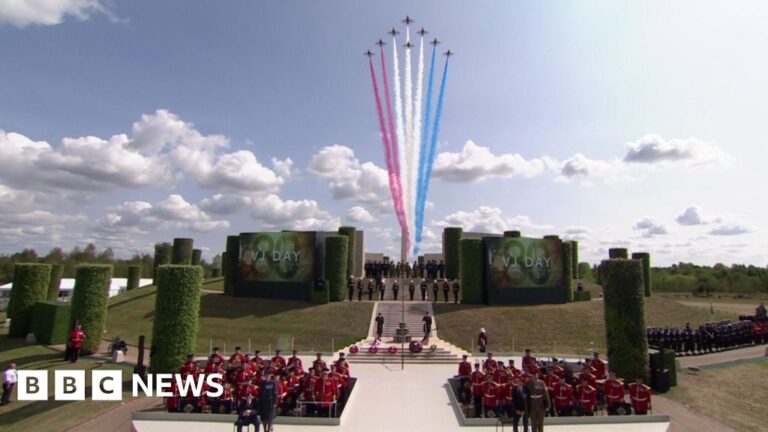
The King and Queen led a two-minute silence at a service in Staffordshire to commemorate 80 years since VJ Day.

Among the attendees were veterans, some of whom participated in the ceremony by laying wreaths and giving readings.

VJ Day, or Victory over Japan Day, is marked each year on 15 August – the date in 1945 when Japan surrendered to the Allied forces and World War Two ended.

General Counsel of Centessa Pharma sells $103,000 worth of shares

0


Centessa Pharma general counsel sells $103k in shares