Army says military doctors are treating survivors and engineers are repairing damaged infrastructure.
Pakistan has restored 70 percent of electricity service and reopened damaged roads in the north and northwest after flash floods killed more than 300 people, officials say.
Information Minister Attaullah Tarar said on Tuesday that engineers were working to fully restore the electricity system that was knocked out by flooding last week.
Monsoon rains triggered floods that have killed more than 700 people nationwide since June 26, the National Disaster Management Authority reported, while Tarar said more than 25,000 people have been evacuated.
The information minister said most roads have been cleared, facilitating the supply of food and other essentials to flood-affected areas.
Army spokesman Ahmed Sharif said military doctors are treating survivors and engineers are repairing damaged infrastructure. Soldiers using helicopters have also delivered food and supplies to remote villages cut off by floods and landslides.
Monsoon rains continued to lash the country on Tuesday, including the southern port city of Karachi, flooding streets and disrupting everyday activities, officials said. Despite the government’s claims of preparedness, people could be seen wading through chest-high water along many roads.
Prime Minister Shehbaz Sharif ordered authorities to accelerate recovery efforts in Buner, a district in Khyber Pakhtunkhwa province, where torrential rains and a cloudburst on Friday killed at least 280 people, Tarar said. It was among the worst flooding since the rains began,
Twenty bodies were found on Tuesday there, the local district commissioner said.
Rescue teams are still searching for about 150 missing people, rescue official Mohammad Suhail said.
Angry villagers said there was no warning broadcast from mosque loudspeakers, as is often the case, and government relief has been slow. The government said the deluge struck before residents could be informed.
Sharif chaired a high-level meeting on Monday to review relief efforts in flood-hit areas.
Every year, many cities in Pakistan struggle to cope with the annual monsoon deluge, drawing criticism about poor planning. The monsoon season runs from July through September.
Authorities have warned of a possible repeat of Pakistan’s catastrophic 2022 floods, which killed more than 1,700 people and were blamed on climate change.
A required part of this site couldn’t load. This may be due to a browser
extension, network issues, or browser settings. Please check your
connection, disable any ad blockers, or try using a different browser.
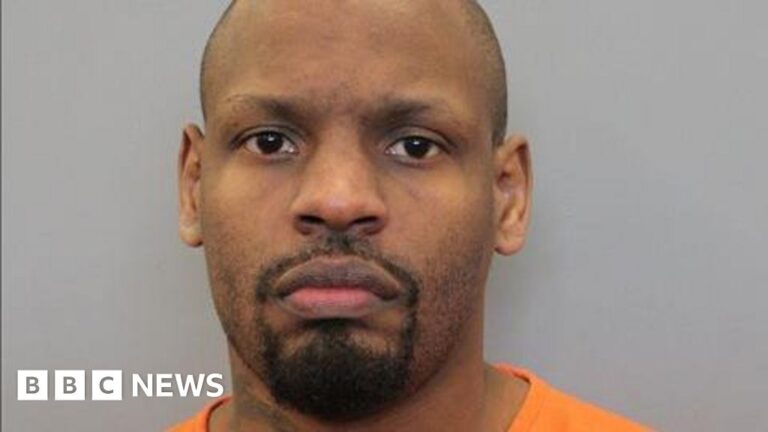
Police in Texas are searching for a man they say was “mistakenly” released from jail as he was set to begin a seven-year sentence.
Tory Dugas, 36, had been sentenced to five years in state prison for assaulting a family member and two years for evading arrest, Harris County Sheriff’s Office said.
Instead, Dugas, who had been in Harris County jail since Thursday on other charges that were dismissed, was released at 04:30 local time on Sunday.
A “thorough investigation” is under way to determine the reason for his “erroneous release” from jail, the sheriff’s office said.
It appears that jail staff did not “properly document his state prison sentence in his file”, the office said in a statement. It led to the assumption that Dugas was eligible for release.
Police spokesperson Jason Spencer was quoted by the Houston Chronicle as saying that the jail had not realised Dugas was missing until Monday morning when officials were checking the list of people meant to be transferred to state custody.
Police have asked the public to contact them if they spot Dugas.
This is not the first time the Harris County jail has mistakenly released someone.
Earlier this year, a man arrested on capital murder charges was released from the jail after being confused for someone else with the same name. However, the man turned himself in after being free for 24 hours.
Welcome to the 2025 World Junior Championships in Otopeni, Romania! We’re in for a great week of racing amongst many of the best junior swimmers in the world. Let’s take a look at this morning’s event schedule:
TUESDAY MORNING PRELIMS EVENT SCHEDULE:
Boys 400 Freestyle
Girls 50 Breaststroke
Boys 100 Backstroke
Girls 400 IM
Boys 100 Breaststroke’
Girls 100 Backstroke
Boys 4×100 Freestyle Relay
Girls 4×200 Freestyle Relay
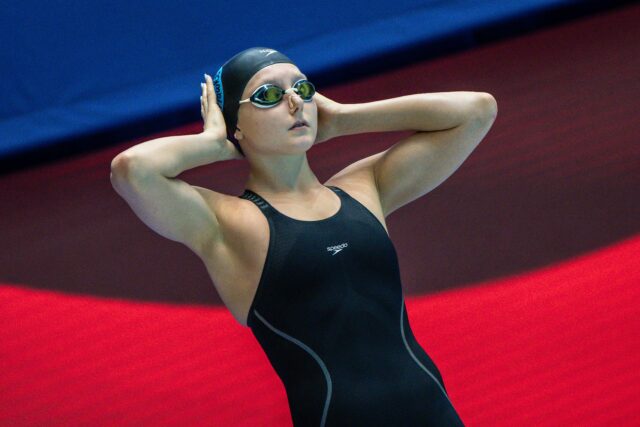
This morning’s prelims session is set to be a fairly long one, clocking in at about 3.5 hours. One of the most exciting events on today’s schedule is the girls 100 back, where American Charlotte Crush enters the meet just 0.19 seconds off the championship record. Crush comes in with a 59.30, the only sub-1:00 entry time in the field.
Japan’s Shin Ohashi should be another star of the day. Ohashi set the World Junior Record in the men’s 100 breast earlier this year with a 58.94. Ohashi is entered slower than that, and he actually comes in as the 2nd seed. Great Britain’s Filip Nowacki is the top seed, coming in with a 59.59.
BOYS 400 FREESTYLE – PRELIMS
World Record: 3:39.96 – Lukas Maertens, GER (2025)
World Junior Record: 3:44.31 – Petar Mitsin, BUL (2023)
Championship Record: 3:46.06 – Gabor Zambori, HUN (2019)
The action kicked off this week and this morning with the boys 400 free, where NAB’s Egor Babinich posted the top time with a 3:49.72. That was a strong morning swim out of Babinich, who was entered with a 3:48.71.
American Aiden Hammer clocked a 3:49.74 for 2nd this morning, touching within half a second of his personal best. Hammer also pulled off a negative split this morning, going 1:55.26 on the opening 200m, then coming home in 1:54.48. The other American in the field, Norvin Clontz, came in 9th this morning with a 3:51.86, missing out on tonight’s final.
Japan’s Kazushi Imafuku, who came into the morning as the top seed, was 3rd in prelims with a 3:50.13. Imafuku has been as fast as 3:47.77, which still gives him a bit of an edge heading into tonight’s final.
GIRLS 50 BREASTSTROKE – PRELIMS
World Record: 29.16 – Ruta Meilutyte, LTU (2023)
World Junior Record: 29.30 – Benedetta Pilato, ITA (2021)
Championship Record: 30.19 – Eneli Jefimova, EST (2023)
NAB’s Ralina Giliazova had an excellent swim in prelims of the girls 50 breast this morning, cracking the 31-second barrier with a 30.89. That performance has earned her the top seed for semifinals tonight.
The American duo of Elle Scott and Rachel McAlpin both made it through to semifinals comfortably, seeing Scott take 3rd with a 31.16, while McAlpin was 5th in 31.25. Scott tied her career best with the swim this morning.
Lithuania’s Smilte Plytnykaite came in 2nd this morning with a 31.11. She chipped 0.09 seconds off her entry time with the swim.
Australia also saw both their swimmers make it through to the semifinals, with Hayley Mackinder coming in 8th with a 31.45, while Lily Koch was 11th in 31.68.
BOYS 100 BACKSTROKE – PRELIMS
World Record: 51.60 – Thomas Ceccon, ITA (2022)
World Junior Record: 52.08 – Miron Lifintsev, NAB (2024)
Championship Record: 52.91 – Ksawery Masiuk, POL (2022)
While men’s backstroke has been a slight weak point for Australia at the senior level over recent years, things are looking great on the junior front for the Aussies. Henry Allan led prelims this morning in 54.15, touching within half a second of his career best 53.73. Allan showed off some impressive early speed this morning, going 25.66 on the opening 50m, marking the only 1st split under 26 seconds in this morning’s field.
On top of Allan, Australia’s Jack Morrow also made it through to semifinals tonight with a 55.20, which was good for 9th.
American Gavin Keogh was 2nd this morning in 54.18, touching just off his career best of 53.83. Keogh has the next-fastest opening 50 split behind Allan this morning, clocking a 26.01 on the 1st lap. The US also saw Collin Holgerson advance to semifinals, taking 10th in 55.28.
Georgii Iakovlev (NAB) was 3rd this morning, swimming a 54.27. Iakovlev came into the morning as the top seed with a 53.65.
GIRLS 400 INDIVIDUAL MEDLEY – PRELIMS
World Record: 4:23.65 – Summer McIntosh, CAN (2025)
World Junior Record: 4:24.38 – Summer McIntosh, CAN (2024)
Championship Record: 4:36.84 – Leah Hayes, USA (2023)
Argentina’s Agostina Hein had a huge performance this morning in the girls 400 IM, clocking a 4:37.87. With the swim, Hein shredded her previous best by over 3 seconds and led the field this morning by 2 seconds. Additionally, Hein just missed the Argentine Record by 0.36 seconds. That record has stood since 2004 and she’ll have another chance to break it tonight.
American Audrey Derivaux also had a huge performance this morning, swimming a 4:39.86 for 2nd. Derivaux came into the morning with a best of 4:41.39. She was good across the board this morning but was particularly great on backstroke, where she split a field-leading 1:08.93.
The other American in the field, Kayla Han, came in 7th with a 4:43.97 this morning, also advancing to tonight’s final. Han was excellent on the free leg of the race this morning, splitting 1:04.47.
Japan also saw both its swimmers advance to finals tonight, with Misuzu Nagaoka taking 3rd in 4:41.78, while Shuna Sasaki was 5th with a 4:43.36.
BOYS 100 BREASTSTROKE – PRELIMS
World Record: 56.88 – Adam Peaty, GBR (2019)
World Junior Record: 58.94 – Shin Ohashi, JPN (2025)
Championship Record: 59.01 – Nicolo Martinenghi, ITA (2017)
Japan’s Shin Ohashi led the way in the boys 100 breast this morning, swimming a 59.64. The swim marks a very solid morning performance, coming in just off his career best of 58.94, which also stands as the World Junior Record in the event. Ohashi had the fastest opening 50 in the field this morning, clocking a 28.01.
Filip Nowacki (Great Britain) was right behind Ohashi this morning, taking 2nd overall with a 59.84. Like Ohashi, Nowacki was just off his personal best of 59.59.
Canada’s Oliver Dawson rounded out the top 3 this morning, swimming a 1:00.28.
GIRLS 100 BACKSTROKE – PRELIMS
World Record: 57.13 – Regan Smith, USA (2024)
World Junior Record: 57.57 – Regan Smith, USA (2019)
Championship Record: 59.11 – Regan Smith, USA (2017)
Charlotte Crush (USA) came in as the top seed this morning and wound up clocking the top time in prelims. Crush was the only swimmer under 1:00 this morning, swimming a 59.82. That’s a very good morning swim for Crush, whose career best comes in at 59.30.
The other American in the field, Julie Mishler, took 8th this morning in 1:01.04. Mishler was about half a second off her career best of 1:00.64.
South Korea’s Kim Seungwon came in 2nd this morning with a 1:00.32. Of note, Kim was out fast this morning, splitting 29.08 on the opening 50, which was just 0.03 seconds slower than Crush.
BOYS 4×100 FREESTYLE RELAY – PRELIMS
World Record: 3:08.24 – USA (2008)
World Junior Record: 3:15.49 – USA (2023)
Championship Record: 3:15.49 – USA (2023)
TOP 8 QUALIFIERS:
Great Britain – 3:16.58
USA – 3:17.37
Neutral Athletes B – 3:17.59
Italy – 3:18.23
Brazil – 3:18.43
Japan – 3:19.35
Canada – 3:19.83
France – 3:20.33
Great Britain was exceptional in prelims of the boys 4×100 free relay this morning, swimming a 3:16.58. They got off to a phenomenal start with Jacob Mills leading off in 48.17. Incredibly, despite being a lead-off split, Mills’ leg this morning was the fastest in the field. Gabriel Shepherd was 2nd on the GBR relay with a 49.04, Harry Milne was 3rd with a 49.77, and Rio Daodu anchored in 49.60. Additionally, Great Britain was roughly a second off the World Junior Record this morning. The record stands at 3:15.49.
Italy’s Carlos D’Ambrosio put up a fantastic split this morning, anchoring the Italian relay in 48.19, which was the 2nd-fastest split in the field this morning, behind only Mills.
GIRLS 4×200 FREESTYLE RELAY – PRELIMS
World Record: 7:37.50 – Australia (2023)
World Junior Record: 7:51.47 – Canada (2017)
Championship Record: 7:51.47 – Canada (2017)
TOP 8 QUALIFIERS:
USA – 7:58.10
Italy – 8:01.26
China – 8:01.82
Neutral Athletes B – 8:03.66
Canada – 8:06.71
Australia – 8:09.25
Lithuania – 8:11.24
Hungary – 8:15.89
The USA earned the top seed for finals in the girls 4×200 free relay tonight, coming in as the only team under 8:00 with a 7:58.10. Kennedi Dobson got the Americans off to a great start, splitting 1:58.14 on the lead-off leg. Liberty Clark then clocked a 2:00.18 on the 2nd leg, followed by Brinkleigh Hansen with a 2:01.39 on the 3rd leg. Lily King then took charge on the US anchor, bringing the team home in 1:58.39. Dobson and King were the two fastest splits in the field this morning, giving the US some really great momentum heading into finals tonight.
Italy took 2nd this morning with an 8:01.26. Lucrezia Domina (2:00.62), Alessandra Mao (2:00.16), Chiara Sama (1:59.76), and Bianca Nannucci (2:0.72) teamed up to get the job done, earning a middle lane for tonight’s final.
Hennessey has quietly unveiled its shiny new Venom F5 Revolution LF hypercar, which makes other hypercars look… well, subdued. Not only is it monstrously powerful, it’s also extremely exclusive, limited to just one example.
The vehicle was recently on show at Monterey Car Week, where the Texas-based carmaker launched a new bespoke division called Maverick, which will solely take charge of producing some one-off custom versions of the brand’s already bonkers Venom F5 hypercar.
Speaking of which, the Revolution LF is powered by Hennessey’s 6.6-liter twin-turbo V8, which now delivers a ridiculous 2,031 horsepower – that’s nearly double the Dodge Demon 170’s record-shattering 1,025 hp.
It sports a massive 290-millimeter rear wing, reshaped dive planes, and a revised rear deck – all of which ought to help with stability at higher speeds
Hennessey
These are not electric vehicles, mind you. So to have that amount of power on a street-legal internal combustion engine is a big deal. And while that output is the same as the Venom F5 Evolution production car, on this one-off it’s channeled through a gated six-speed manual as opposed to an automatic.
That means proper stick shifting as per your whims – a true enthusiast’s car. That’s thanks to an all-new carbon monocoque called XCell_2, which is designed for increased rigidity, better seating ergonomics, and enough room for a third pedal without imposing concessions elsewhere. There’s a floor-mounted machined aluminum pedal as well, and a milled-aluminum H-pattern shifter.
Its looks are based on the Stealth Series, featuring tinted Cocoa Brown carbon flowing from nose to tail. It sports a massive 290-mm (11.4-in) rear wing, reshaped dive planes, and a revised rear deck – all of which ought to help with stability at higher speeds. Those River Sand Metallic highlights and racing-inspired stripes add a bit of drama to that whole exterior.
Inside, the switchgear has been reengineered with horological precision, from luminous-infill toggles that capture daylight and glow softly at night to a parking brake lever that feels like a bolt-action rifle
Hennessey
Every aerodynamic surface has been revised, including a larger front splitter and new fender louvers, both of which come as part of the Evolution aero package, which also includes suspension adjustments and comfort improvements.
The old-school style flows through to the inside. The switchgear has been reengineered with horological precision, from luminous-infill toggles that capture daylight and glow softly at night to a parking brake lever that feels like a bolt-action rifle. But the heart of its cabin is invariably the gated shifter.
Louis Florey, an American entrepreneur and collector, commissioned the LF, individually customizing every component of the car. “I wanted something that spoke to me in every way possible,” he explains. “The car had to be beautiful, it had to be extreme, but above all, it had to be mine.”
The LF goes for around $3 million, which puts it squarely at the pinnacle of hypercar exclusivity
Hennessey
The LF exemplifies what Hennessey’s new Maverick division is designed to produce. This ultra-limited program lets a select group of clients collaborate directly with the brand’s engineers and designers to develop their own Venom F5 fantasies, ranging from insane paint schemes to entirely new mechanical components.
“When our customers have a dream, we work to make their dreams come true – exceeding customer expectations is a badge of honor,” said John Hennessey, company founder and CEO. “Our new Maverick division enables our customers to take our American Hypercar to a totally new dimension. I see it as the ultimate expression of the American Dream.”
The LF goes for around US$3 million, which is more than the Revolution coupe’s $2.7-million price tag and the around $3 million Roadster trims. That figure puts it squarely at the pinnacle of hypercar exclusivity.
In the age of 3,000-hp electric hypercars and self-driving technology, the Venom F5 LF is a big, beautiful reminder that old-school mechanical ideology can still exist. Don’t let that maddening 2,031-horsepower number blind you; Hennessey’s Maverick division is all about making something incredibly personal. If you have the money for it, that is.
North Korea’s leader threatens to speed up Pyongyang’s nuclear arsenal expansion over a sign of ‘hostile intent’.
North Korean leader Kim Jong Un has threatened to accelerate the expansion of his country’s nuclear arsenal, condemning ongoing United States-South Korea military exercises as a sign of “hostile intent”, according to state media.
Kim, who made the remarks during a visit to a naval destroyer, called the drills “an obvious expression of their will to provoke war”, according to a report published on Tuesday.
He insisted North Korea must “rapidly expand” its nuclear weapons programme, pointing to the inclusion of what he called “nuclear elements” in the drills.
The annual Ulchi Freedom Shield drills began this week, combining large-scale field manoeuvres with upgraded responses to what the US and South Korea claim are North Korea’s growing nuclear capabilities.
The exercises will run for 11 days, with half of the 40 field training events rescheduled to September.
Purely defensive
South Korean officials said the adjustment reflects President Lee Jae Myung’s call to lower tensions, though analysts doubt Pyongyang will respond positively.
Seoul and Washington claim the exercises are purely defensive, but Pyongyang regularly denounces them as preparations for invasion and has often replied with weapons tests.
North Korea’s position is expected to feature in talks between US President Donald Trump and South Korean President Lee in Washington later this month, with efforts to curb Pyongyang’s nuclear ambitions high on the agenda.
“Through this move, North Korea is demonstrating its refusal to accept denuclearisation and the will to irreversibly upgrade nuclear weapons,” said Hong Min, an analyst at the Korea Institute for National Unification in Seoul.
Research published by the Federation of American Scientists last year estimated that North Korea may have produced enough fissile material for up to 90 nuclear warheads, though the number actually assembled was likely closer to 50.
Alongside its nuclear ambitions, Pyongyang is also advancing its naval capabilities. The North Korean public broadcaster KCNA reported that the country aims to complete construction of a third 5,000-tonne Choe Hyon-class destroyer by October next year, and is testing cruise and anti-air missiles for the vessels.
Investors are pouring money into initial public offerings like it’s 2021, with this season alone unleashing several new tickers, including FIG, BLSH, and soon, STUB. For some, the surge is a welcome sign of renewed optimism after tariff-related chaos in the spring threatened a promised IPO revival.
But an analysis of recent IPO-related filings shows that women leaders are largely missing from the boards and executive teams at the vast majority of new public companies, despite years of calls for more diversity in corporate leadership. The data may even be an early signal of future losses for executive women, as DEI, already facing a backlash, is abandoned or sidelined, especially in the tech industry.
Damion Rallis, cofounder of board data firm Free Float Analytics, combed through information about 61 companies that filed IPO-related documents in the first two weeks of August. He found that nearly 88% of the firms (most of which were in tech) had only one or no women on their board of directors, while 93% had only one or no women in their C-suite. Rallis is now calling this the “Bro-PO market,” and said his findings were “crazy.”
“We’ve given up our ideals. We’ve just given up,” he said on Free Float’s Business Pants podcast.
Only seven of the 61 companies Rallis examined had two or more women on their boards, while only four listed two or more women executives. In total, women represented only 12% of the 349 directors and 11% of 205 executives identified in the filings. Stubhub listed one female executive on its team of five, and one female director on a board of seven. Bullish listed two executive leaders, both men, and one woman on its six-person board.
For reference, women represent about 30% of board members at Russell 3000 companies, according to recent studies, and 29% of C-suite roles, according to a 2024 McKinsey survey.
In recent years, corporate boards have made gender and racial diversity a central focus of recruitment efforts, especially after Nasdaq issued a rule that said listed companies must disclose their board gender and diversity statistics. That directive was set to expand: Eventually, it would have imposed minimum diversity requirements or asked companies to explain why their boards weren’t diverse. However, that effort was shut down in late 2024 by a federal appeals court that decided Nasdaq had overstepped its statutory authority when it set the policy.
In 2020, Goldman Sachs CEO David Solomon declared that “IPOs are a pivotal moment for firms,” as he described his bank’s then-landmark pledge not to take companies public if their boards were entirely male. But the company abandoned that promise this year, citing “legal developments related to board diversity requirements,” my colleague Emma Hinchliffe reported in February. “We continue to believe that successful boards benefit from diverse backgrounds and perspectives, and we will encourage them to take this approach,” Goldman told Fortune at the time.
Despite these policy shifts, most investors have come to expect companies to form diverse boards and C-suites as part of optimizing a leadership team. The bar is lower for “starter boards” of newly IPO’d companies, says Matt Moscardi, cofounder of Free Float Analytics. But he says he was still surprised that today’s fledgling public companies are not even nodding at market norms. Instead, they’re leaving out 50% of humanity.
“You’d expect them to look and say, ‘Well, you’re going to IPO, what do other publicly traded companies look like?’” Moscardi told Fortune, “and there is basically no effort to do that.”
Introducing the 2025 Fortune Global 500, the definitive ranking of the biggest companies in the world. Explore this year’s list.
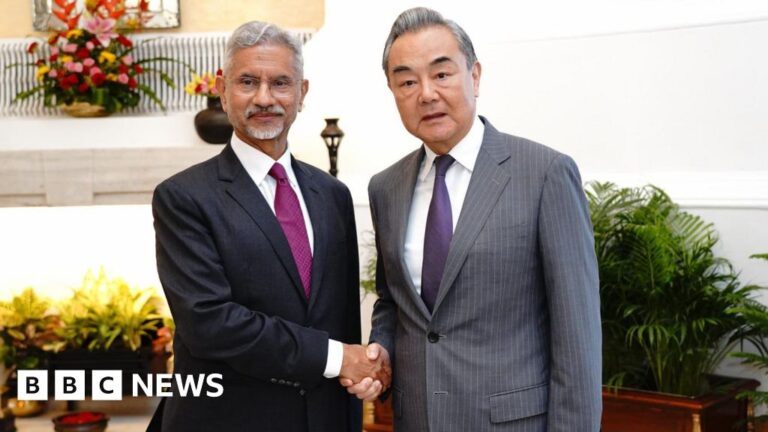
India and China should view each other as “partners” rather than “adversaries or threats”, Chinese Foreign Minister Wang Yi said on Monday, as he arrived for a two-day visit to Delhi.
Yi met with Indian Foreign Minister S Jaishankar – only the second such meeting between the two sides since 2020 – when deadly clashes in the Galwan valley in Ladakh, a disputed Himalayan border region, led to a complete breakdown of ties between the countries.
Relations are now on a “positive trend” towards cooperation, Yi said ahead of a meeting with Indian Prime Minister Narendra Modi on Tuesday.
Jaishankar said that India and China were seeking to “move ahead from a difficult period in our ties”.
The two counterparts held discussions on a range of bilateral issues from trade to pilgrimages and river data sharing.
Yi also met India’s National Security Advisor Ajit Doval on Tuesday for on-going negotiations on resolving the boundary dispute between the two countries.
“We are happy to share that stability has now been restored at the borders,” Yi said during the delegation-level meeting with Doval.
“The setbacks that we faced in the last few years were not in our interest,” he said.
Yi’s visit is being seen as the latest sign of a thaw in ties between the nuclear-armed neighbours.
India and China had agreed on patrolling arrangements to de-escalate tensions along the disputed Himalayan border in October last year.
Since then, the two sides have taken a range of steps to normalise relations, including China allowing Indian pilgrims to visit key places in the Tibet autonomous region this year. India has also restarted visa services to Chinese tourists and agreed to resume talks to open border trade through designated passes.
There are also reports that direct flights between the two countries will resume this year.
Yi’s meetings are expected to lay the groundwork for Modi’s first visit to China in seven years later this month, to attend the summit of the Shanghai Cooperation Organisation (SCO), a regional security bloc.
Reports suggest Modi might also hold bilateral talks with China’s President Xi Jinping, but neither side has confirmed this.
The rapprochement between the countries comes in the backdrop of India’s worsening bilateral relationship with the US.
Earlier this month, US President Donald Trump imposed an additional 25% penalty on Indian imports for buying oil and weapons from Russia, taking total tariffs to 50% – the highest in Asia.
On Monday, White House Trade Advisor Peter Navarro wrote an opinion piece in The Financial Times in which he accused India of “cozying up to both Russia and China”.
“India acts as a global clearinghouse for Russian oil, converting embargoed crude into high-value exports while giving Moscow the dollars it needs,” Navarro wrote.
“If India wants to be treated as a strategic partner of the U.S., it needs to start acting like one,” he said.
In his remarks after meeting with Yi on Monday, Jaishankar said talks would include global developments.
“We seek a fair, balanced and multi-polar world order, including a multipolar Asia,” Jaishankar said.
“Reformed multilateralism is also the call of the day. In the current environment, there is clearly the imperative of maintaining and enhancing stability in the global economy as well,” he added.
MBW Explains is a series of analytical features in which we explore the context behind major music industry talking points – and suggest what might happen next. Only MBW+ subscribers have unlimited access to these articles. MBW Explains is supported by Reservoir.
What’s happened?
Digital service providers (DSPs) like Spotify and Netflix breathed a sigh of relief in July, when a US federal appeals court struck down the Federal Trade Commission’s planned “click-to-cancel” rule.
That rule would have mandated that cancelling a digital service like music or TV streaming has to be as easy as signing up for it in the first place.
The idea places DSPs in a bind. On the one hand, consumers have been growing increasingly frustrated with the obstacles that service providers have set up to slow down the cancellation process. Customers complaining about having a hard time cancelling their service isn’t good for a company’s image.
On the other hand, a simplified process could lead to significant revenue reductions, pose security risks and damage DSPs’ ability to understand the market for their product (we’ll discuss this in more detail below).
But just when the idea seemed to have been shot down – due to what the Eighth Circuit Court of Appeal called an procedural error by the FTC – it’s been brought back as legislation.
A group of US House representatives have introduced the Click to Cancel Act, a two-page bill that would turn the FTC’s overturned regulation into law, in exactly the same form as the FTC set it out last fall. That would allow the rule to get past the regulatory requirements the FTC faces when it makes changes to how businesses operate. For instance, the FTC has to carry out an assessment whenever it makes a rule that has an impact of more than $100 million annually (which the court said the FTC failed to do with the click-to-cancel rule). With legislation, there are no such hurdles, regardless of how much of a hit businesses might take.
Democratic US House Reps. Brad Sherman of California, Seth Magaziner of Rhode Island, and Chris Deluzio of Pennsylvania introduced the bill in the House of Representatives, while Democratic Sen. Ruben Gallego of Arizona introduced it in the Senate.
For now, DSPs don’t need to panic. With the Trump administration’s opposition to heavier regulation of businesses, and both houses of Congress controlled by Republicans, the chances of this bill passing are fairly low. But in the longer run, rules similar to the Click to Cancel Act stand a solid chance of becoming the norm, not just in the US but worldwide.
Below, we’ll take a look at the impact click-to-cancel could have on streaming services, the politics behind the Click to Cancel Act – and why DSPs would be wise to prepare for such policies to come into force, sooner or later.
How could such a rule impact music streaming services?
The plaintiffs who took the FTC to court and won over the click-to-cancel rule are among the largest companies in the US that rely at least in part on revenue from subscriptions: Telecom firms Charter Communications, Comcast, and Cox Communications, and entertainment giants Disney and Warner Bros. Discovery.
It’s safe to say they didn’t go to court simply because they didn’t feel like implementing this rule.
For one thing, click-to-cancel could be a major headwind to revenue. According to an analysis at BizTechWeekly, an increase in cancellations of just 0.5% could result in a 2-3% decrease in annual revenue forecasts. Given that many DSPs already operate on tight margins, that could have a big impact on profitability and stock prices.
The analysis notes that as the streaming subscription business has matured, streaming giants have come to rely on long-tenured subscribers for some 80% of their revenue. An increase in cancellations among these customers could be hard to claw back, requiring major new investments.
Besides revenue decreases, there could be other serious negative impacts for streamers. While there’s little doubt that subscription-driven businesses use difficult processes to reduce churn (i.e. reduce the number of subscribers who leave), there are also some other reasons for why they would throw roadblocks in the way of cancellations.
One such reason is security: It’s not hard to imagine a malicious actor using bots to game a simple unsubscribe mechanism, cancelling thousands or even millions of accounts without subscribers’ knowledge. Not only would that cost the streaming service massive amounts of revenue, it would also damage the company’s reputation as subscribers complain of having suddenly lost access to their service.
Another reason is market data. The unsubscribe process can provide valuable insight into why some customers are choosing to cancel, and those reasons are crucial for a company’s response to churn. If subscribers are leaving because they’re facing reduced incomes or a rising cost of living, that requires a very different response to – for example – customers leaving because they’re unhappy with the streaming service’s features.
All of this means that a simplified unsubscribe process would require major changes at digital service providers. From a subscriber’s perspective, making cancellation simpler looks like simply stripping away unnecessary steps. But from a DSP’s perspective, it might mean entirely new security architecture, or entirely new ways of gathering data for analytics. Not easy, or cheap.
What are the chances of the click-to-cancel coming into force?
As long as Donald Trump is in the White House and the Republicans control Congress, the chances are slim.
The Trump administration – which is more interested in deregulation than new regulations – appears to be opposed to the rule, or at least skeptical of it. The clearest sign of that is that one of the two FTC commissioners who voted against the click-to-cancel rule – Andrew Ferguson – was appointed by Trump to chair the Commission.
With Republican allies now firmly in control of the FTC, the regulator looks unlikely to pursue click-to-cancel any further. And in fact, Lina Khan, who headed the FTC under then-President Joe Biden, suggested that the Trump administration “slow-walked” the click-to-cancel rule to give the court challenge a chance to succeed.
Having lost at the appellate court, the FTC could now appeal to the Supreme Court, restart the regulation from scratch (and carry it out correctly this time), or abandon the effort. It appears the FTC has chosen to abandon the effort.
As for the legislation, barring the support of at least some Republicans, the Democrat-led Click to Cancel Act is unlikely to pass through both houses of Congress, and equally unlikely to be signed into law by President Trump.
But this could change. If Democrats take control of Congress in the 2026 mid-term elections, the Click to Cancel Act could be brought back a few years from now. And if a Democrat wins the White House in 2028 and reshapes the FTC, the click-to-cancel rule could be back with or without new legislation.
A final thought…
While the Click to Cancel Act isn’t about to become law in the United States right away, it’s important to take a look at the broader picture and understand which way the political winds are blowing. And they’re blowing in the direction of making it easier to cancel subscriptions.
US states and countries worldwide have in recent years passed various consumer protection laws that pressure DSPs to make unsubscribing easier.
California’s updated Automatic Renewal Lawstates that subscribers should be allowed to cancel “without any further steps that obstruct or delay the consumer’s ability to terminate the automatic renewal or continuous service immediately.” That law has been subject to numerous challenges in courts.
Other states are either deliberating or have passed similar laws. Legal advice publisher Nolo estimates that 20 US states have laws regulating automatic subscription renewals which include click-to-cancel rules that are “similar and, in some cases, more burdensome” than what the FTC’s rule.
Outside the US, the European Union’s Digital Services Act, which has been in full effect since last year, includes a ban on the use of “dark patterns,” which the EU defines as “designing online platforms to trick users into doing things they otherwise would not have considered, often but not always involving money.” One of the examples of a dark pattern is “making it difficult to unsubscribe to newsletters and more.”
Depending on how regulators in EU member states and courts interpret the law, some of the cancellation processes used by DSPs might already be illegal in Europe.
Meanwhile, in the UK, the 2024 Digital Markets, Competition and Consumers Act requires providers to allow consumers to cancel contracts “in a way which is straightforward, and without having to take any steps which are not reasonably necessary for bringing the contract to an end.” (The law also requires DSPs to send reminders to customers before a subscription auto-renews.)
And in South Korea, the country’s Fair Trade Commission has been cracking down on major DSPs, including Spotify and the Korean affiliate of Netflix, alleging that they have not provided users with the ability to terminate their subscriptions mid-billing cycle, or have failed to inform consumers of their refund rights.
These are all signs that patience is wearing thin – among consumers, regulators and politicians – with the complex cancellation processes that many DSPs have implemented. In light of that, it might be a good idea for businesses that rely on subscription revenue to prepare for the day when cancelling has to be as easy as signing up – however costly that may be.
Reservoir (Nasdaq: RSVR) is a publicly traded, global independent music company with operations across music publishing, recorded music, and artist management.Music Business Worldwide