
A required part of this site couldn’t load. This may be due to a browser
extension, network issues, or browser settings. Please check your
connection, disable any ad blockers, or try using a different browser.

A required part of this site couldn’t load. This may be due to a browser
extension, network issues, or browser settings. Please check your
connection, disable any ad blockers, or try using a different browser.
By Spencer Penland on SwimSwam

Welcome to Day 2 of the 2025 World Junior Championships in Otopeni, Romania! The meet got off to a roaring start yesterday, seeing a World Junior Record and a pair of championship records fall. Neutral Athletes B leads the medal table following day 1, so we’ll see how the standing progress as today rolls on.
DAY 2 PRELIMS SCHEDULE:
The morning will kick off with the boys 200 IM, where Japan’s Yumeki Kojima comes in as the top seed with a 1:58.47.
After splitting a 1:56 on the US 4×200 free relay last night, Rylee Erisman comes in as the top seed in the girls 100 free this morning. Erisman has been as fast as 53.75, which puts her just off the championship record of 53.63 that Taylor Ruck set back in 2017.
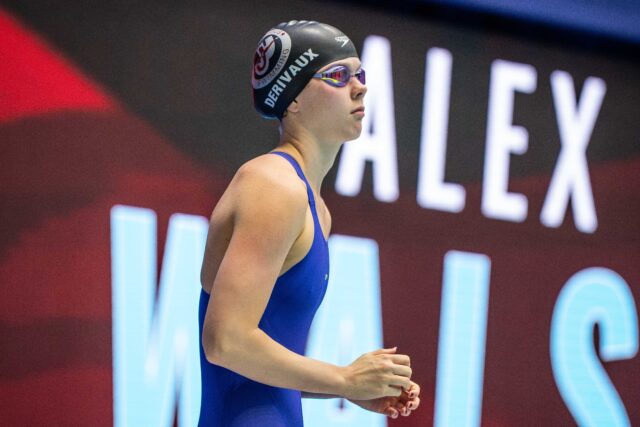
Fellow American Audrey Derivaux comes in as the top seed in the girls 200 fly today. Derivaux enters with a 2:06.46, which makes her the top seed by nearly a second and puts her under the championship record of 2:07.20.
TOP 8 QUALIFIERS:
TOP 16 QUALIFIERS:
TOP 16 QUALIFIERS:
TOP 8 QUALIFIERS:
TOP 8 QUALIFIERS:
TOP 8 QUALIFIERS:
TOP 8:
Read the full story on SwimSwam: 2025 World Junior Championships: Day 2 Prelims Live Recap

The Delsey Chatelet Air 2.0 is, without a doubt, the flagship of the Delsey line, and my testing confirmed it’s worthy of the title. From the moment I unboxed it, the quality was apparent. The 100% polycarbonate shell feels robust, and the faux-leather accents and reinforced corners give it a timeless, vintage look that stands out at the baggage claim.
During my maneuverability tests, the dual-density spinner wheels were exceptionally smooth and quiet, gliding effortlessly across polished airport floors and transitioning to carpet without a snag. The telescoping handle has three height settings and felt sturdy with minimal wobble.
Inside, the organization is superb. The 50/50 clamshell opening reveals two fully zippered compartments, which I love for keeping everything secure. It also comes with included laundry and shoe bags, a small touch that makes a big difference in staying organized on the road. With a build quality score of 8.7, this bag is built to last, making it my top pick for the frequent traveler who values both style and substance.

The company behind high-performance in-ear monitors and the award-winning ActiveBuds has launched its most ambitious product yet: iKKO’s MindOne Pro AI smartphone. This ultra-compact Android phone combines built-in AI tools, free global internet access, and a dual operating system – all packed into a body not much bigger than a credit card, and for less than US$400 – while its fundraising campaign is running, anyway.
Measuring 86 x 72 mm (3.39 × 2.83 in) and 8.9 mm (0.35 in) thick, the tiny MindOne Pro easily fits in the palm of your hand or a small pocket. But don’t let its size fool you – it’s a fully functional Android 15 smartphone, complete with a sharp 4.02-inch AMOLED display (as seen with the iKKO ActiveBuds), a rotating 50-MP Sony camera and a surprising amount of performance packed into its slim frame.
Designed for users who want a functional smartphone without the overwhelm, MindOne offers a focused, minimalist experience – a capable unit without the constant pings, scrolls and distractions of the mini-computers most of us have in our hands right now.
iKKO
At the heart of this is its dual operating system. The MindOne Pro runs both full Android, with all your usual apps and services, and iKKO custom-built, lightweight AI OS, a streamlined second operating system for tasks like translation, transcription, voice-to-text documenting and summaries. In demos, it looks sleek and functional (and you can still run Android apps through it), and it has some handy features like a text translator that appears to perform a whole lot better than Google Lens).
Its 4.02-in square screen is protected by sapphire glass, a supremely scratch-resistant material that outperforms the Gorilla Glass covering most phone faces. The screen features an AMOLED (Active Matrix Organic Light-Emitting Diode) display – a type of OLED tech commonly seen in larger and more advanced display systems – with each pixel lighting up individually, delivering solid blacks and vibrant color without draining the battery.
While iKKO hasn’t revealed the display’s resolution, early hands-on use – as well as the AMOLED tech – suggests it offers a crisp, bright display ideal for reading and taking and viewing photos and video, with the screen easy to see in bright sunlight. The single-lens 50-MP camera, decent for high-resolution captures, sits flush against the unit, but can flip up to instantly to switch to selfie/vlogging mode.

iKKO
One of the standout features is NovaLink, iKKO’s custom vSIM (virtual SIM) system. It provides built-in, SIM-free global internet for AI functions in more than 60 countries (though the countries haven’t been listed yet). Essentially, this means you can access tools like Google Maps or translation without a dedicated SIM or having to connect to Wi-Fi or signing up to a local plan – which is very handy, if you’ve ever tried to use Google Lens to translate signs only to find your eSIM has run out of data and there’s no Wi-Fi around. For broader use, vSIM data top-ups are available in more than 140 countries – and there’s also a nano-SIM slot for traditional mobile use.
While the MindOne Pro has a fully functional touchscreen, users wanting more have the option of purchasing the extra Snap-In Expansion Case, which locks on a small keyboard below the phone. This magnetic accessory adds the aforementioned QWERTY keyboard, as well as a DAC, 3.5-mm audio jack and an extra battery – without dramatically increasing the size or weight of the phone.
MindOne Pro also features 4G+ connectivity instead of 5G, in order to preserve battery life and make real-world roaming more viable. Meanwhile, the camera system – which features an impressive sensor, optical image stabilization (OIS) and wide f/1.88 aperture – looks strong on paper, though we’re still waiting on real-world photo samples to make a call on this one.
As for longevity, the MindOne Pro houses a 2,200-mAh battery, which iKKO claims offers up to 16 hours of video playback – and, with the Snap-In Expansion Case, users get an extra 500 mAh. While we’re yet to test it, even half that playback time outperforms my iPhone 11 Pro, which is about double the physical size of this device.

iKKO
And while the phone itself doesn’t have any in-built audio jacks besides the one provided by the extension case, wireless connectivity comes via Bluetooth 5.2, and there are built-in stereo speakers. Storage-wise, you get 8 GB of RAM and 256 GB of storage within the hardware, which is also equipped with a USB-C port for charging.
This isn’t a phone trying to compete with the latest Samsung or Apple devices. Instead, the MindOne Pro offers a focused, functional alternative for travelers, creatives and anyone who wants to carry smart tools – rather than distractions – in their pocket. And as the Kickstarter campaign winds down in its final days, you can still pick this up at a heavily discounted price.
Right now, the MindOne Pro (in jet black, pearl white, sky blue or blush pink) is available from $369 ($130, or 26%, off retail price), which gives you the phone and accessories (screen protector, charging cable, manual), a one-year warranty and an option to add the magnetic extension case – choose from five colors – for $79 (RRP $109)
And because the campaign was so successful, all buyers will now score some extra bonuses – four screen protectors and a lanyard-style silicone case. iKKO will be shipping worldwide, with an estimated delivery by December if all goes to plan. There’s free standard shipping for most regions.
But like we said, jump on this one – at the time of writing, there’s only 34 hours left to get the MindOne Pro at a discount – even though it looks like a solid investment at full price.
Source: Kickstarter
Note: New Atlas may earn commission from purchases made via links.
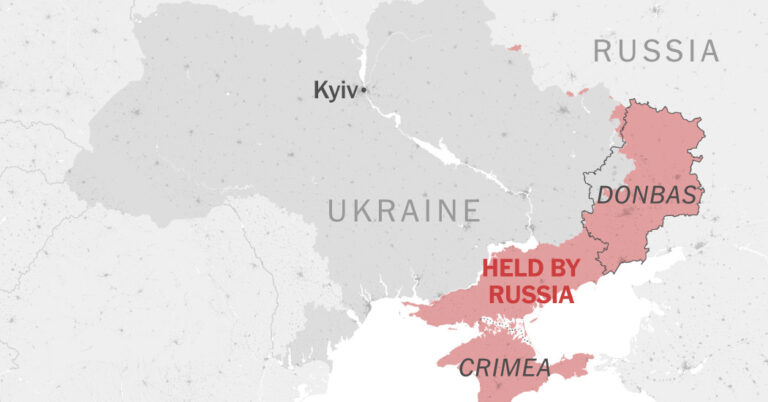
President Vladimir V. Putin’s demand that Ukraine cede the entirety of the Donbas region before Russia stops fighting has highlighted a central question of any negotiations: where to draw a border both sides could accept.
But finding a solution will be fraught. President Volodymyr Zelensky flatly rejected Russia’s proposal, invoking Ukraine’s Constitution, which states that its territory is indivisible and inviolable.
Ukraine has long said that its goal is to restore the borders that were in place before Russia first invaded more than a decade ago. Mr. Putin has shown no willingness to end his pursuit of the Donbas.
Agreeing to a new border will require formalizing a 750-mile front that has violently shifted — sometimes in Ukraine’s favor, other times in Russia’s — for years.
Here is a look at Russia’s advances into Ukrainian territory since it first invaded Crimea in 2014.
Russian forces seized Crimea, a peninsula extending from Ukraine’s southern coast, in 2014. Mr. Putin then annexed the territory, a move that is not recognized internationally, after staging a widely disputed referendum.
Later that year, Russian-backed separatist forces also seized territory in eastern Ukraine. Fierce fighting saw approximately one-third of the Donbas occupied by Russian-backed forces, which declared breakaway republics. Separatists fought against the Ukrainian Army along a largely static front line until the full-scale invasion in 2022.
Russia made sweeping territorial gains in the first month of its full-scale invasion of Ukraine. Its forces seized a wide corridor of territory connecting Crimea to the Donbas; launched a massive assault toward Kyiv, Ukraine’s capital; and advanced deeper into eastern Ukraine.
By late March, Russia had reached the high watermark of its territorial control of Ukraine.
After failing to capture Kyiv, Russia withdrew from northern Ukraine in April 2022 to refocus efforts on the Donbas. Later that year, Ukrainian forces mounted two huge counteroffensives, recapturing most of the Kharkiv region in the east, then pushing Russian forces back across the Dnipro River in the south and regaining control of Kherson city.
By November 2022, Russia was forced out of many areas it had seized earlier in the war.
Since then, Russia has continued to push forward across much of the 750-mile front, although it has failed to make a significant breakthrough.
Recently, Russia has made its largest territorial gains since the summer of 2022, capturing more than 200 square miles in July, according to open-source estimates. Most of its advances have resulted from assaults by small groups of infantry, often moving on foot or by motorbike.
But Russia is still some way from achieving full control of the Donbas, which the Kremlin typically sees as comprising the Donetsk and Luhansk regions in eastern Ukraine. Moscow now controls almost all of Luhansk, but Ukraine still controls more than 2,500 square miles of territory in Donetsk.
The territory Ukraine holds in Donetsk is among the most heavily fortified areas of the front, and includes two major cities, Sloviansk and Kramatorsk, which have served as a Ukrainian military hub since 2014. A Ukrainian withdrawal from that area would see it lose its defensive positions. At least 200,000 Ukrainians also still live on the land.

US examines equity stake in chip makers for CHIPS Act cash grants, sources say
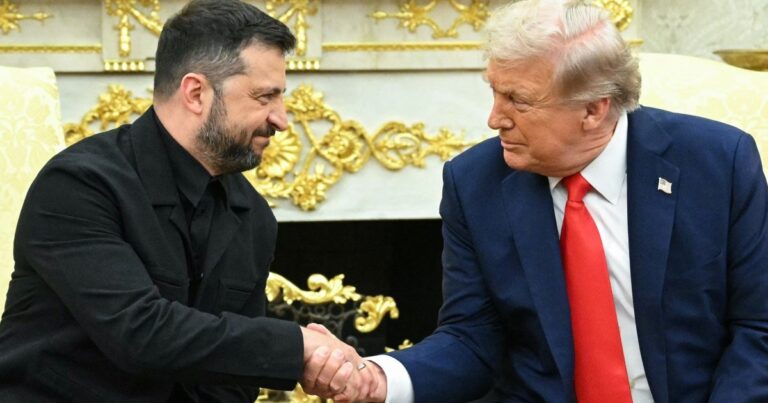
US president suggests security guarantees for Ukraine could see Washington provide air support.
United States President Donald Trump has ruled out sending US troops to Ukraine to guarantee its security in the event of an agreement to end Russia’s war in the country.
Asked during an interview with Fox News on Tuesday what assurances he could provide that US troops would not be deployed to defend Ukraine’s borders, Trump said: “You have my assurance, and I am president. I am just trying to stop people from being killed.”
Trump said that European countries were willing to provide troops to bolster Ukraine’s security, but the US could provide support “by air”.
“We’re willing to help them with things, especially, probably if you talk about by air, because there’s nobody that has the kind of stuff we have,” Trump told the Fox & Friends programme.
“I don’t think it’s going to be a problem.”
White House Press Secretary Karoline Leavitt later reiterated that US troops would not be part of any peace deal between Moscow and Kyiv, but that Washington would assist with “coordination” and “perhaps provide other means of security guarantees”.
Trump’s comments came a day after he hosted Ukrainian President Volodymyr Zelenskyy and top European leaders at the White House in his latest push to bring an end to the three-and-a-half-year-long conflict.
While Zelenskyy and European leaders cast Monday’s meeting as positive and productive, the question of how to ensure Ukraine’s post-war security remains a major sticking point in the negotiations on ending the war.
Although Trump has suggested that Russian President Vladimir Putin could agree to the deployment of Western troops in Ukraine to uphold a peace deal, Moscow has repeatedly dismissed the idea.
Russia and Ukraine also appear to be far apart on the issue of territorial concessions and implementing a ceasefire in advance of a comprehensive peace deal.
Trump on Tuesday also elaborated on his plans for a bilateral summit between Putin and Zelenskyy, telling conservative radio host Mark Levin that “they’re in the process of setting it up”.
While Zelenskyy has said he is ready to meet Putin, Moscow has not confirmed that the Russian leader will attend a summit.
On Tuesday, Switzerland’s foreign affairs minister, Ignazio Cassis, told the national broadcaster that his country would be willing to host a Putin-Zelenskyy summit despite the International Criminal Court’s outstanding arrest warrant for the Russian leader.
After attending Monday’s talks at the White House, French President Emmanuel Macron said he was pushing for Geneva to be the location for a summit between the two leaders.
Residents of developed Asian economies, like Singapore, Japan, Hong Kong, and South Korea, consistently top the rankings of places with the world’s longest lifespans. Singapore, for example, boasts an average life expectancy of 86.7 years, putting it at No. 2 behind Monaco, according to the CIA’s world factbook.
Yet long lifespans come with a drawback: An extended period of ill-health or disability. Singapore’s average health span—the length of time where someone is deemed to be in good health—is 75 years, as noted by the country’s prime minister in a speech on Sunday. That’s a gap of almost a decade, which can strain both families and public healthcare institutions.
Allen Law, founder of the Park Hotel Group, sees an opportunity in trying to “bridge the gap” between lifespan and healthspan. “We have a vision zero: Zero gap between your health span and life span, and we literally pass away in a healthy state.” Law admits the goal may “never be achieved, but it’s something we should work towards.”
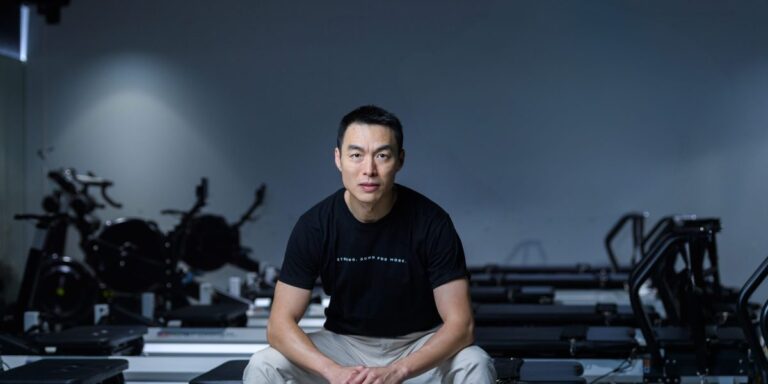
Law plans to open a longevity and lifestyle medical center, titled “Morrow”, in the fourth quarter of this year, in the same building as his Grand Park City Hall hotel, in Singapore. He said the center will function as a one-stop center for those interested in improving their health and wellness, providing access to medical professionals, physiotherapists, dieticians, and wellness coaches all under one roof.
“If you look at these services today in Singapore, you’ll have to go to five, six or seven locations,” Law said.
Courtesy of Park Hotel Group
Allen Law is the third generation of Hong Kong’s Law family. His grandfather, Law Ting Pong, started the family’s textile business; his father, Law Kar Po, expanded into real estate. Allen Law became a hotelier by accident, when his family bought the Park Hotel brand in 2003, amid the SARS crisis. Law Kar Po, Allen’s father, has a net worth of around $7.7 billion, according to Forbes.
Law suggested that this practice of having new generations branch out into new sectors is part of the Law’s “family philosophy” that one family member should take care of one business unit.
“Generations have grown and family members has grown as well. If you stick with the same family philosophy, in theory, we actually need more business units,” Law explained, adding that it “keeps the family dynamic clear so we don’t get into a fight.”
The Park Hotel Group currently runs seven hotels spread across Hong Kong, Singapore, Japan, the Maldives, and mainland China.
Like many hospitality groups, the Park Hotel Group was affected during the COVID pandemic when governments enacted harsh travel restrictions, and the company had to divest some assets in 2021. Earlier this month, Singapore’s High Court found Law to have breached his fiduciary duties and prejudiced the interest of creditors while navigating his company through the financial challenges stemming from the COVID pandemic.
“When his company was in financial peril, he transferred its viable assets and businesses (effectively) to himself at a gross undervalue and manipulated the books of the company to eliminate receivables owed by him and his entities, leaving the creditors with nothing,” wrote Justice Hri Kumar Nair. According to court documents, Law must repay 10.1 million Singapore dollars ($7.86 million) in cash payments and 22.3 million Singapore dollars ($17.36 million) in receivables. The judgment can still be appealed.
When asked about the judgment, Law said it was an “unfortunate case” related to the COVID pandemic and the company was evaluating the judgments. He declined to comment further.
Law sees longevity as one of the two biggest business opportunities over the next decade, citing the rapid advancement in AI applications and post-COVID lifestyle changes.
In addition to his longevity endeavor, Law also backs Seveno Capital, an investment fund that owns several other health and wellness businesses, including fitness chains.
For Morrow, Law wants to target people in the upper half of Singapore’s household income distribution; he hopes AI will allow him to cater to those in the city-state’s middle and upper-middle class, as opposed to just the very wealthy, by allowing wellness professionals to cater to more clients in the same period of time.
Morrow clients will receive a diagnostic assessment that measures the gap between their current and optimal health status. Those results are used to design a personalized plan, with technology including wearables and AI applications delivering real-time lifestyle advice.
After Singapore, Law thinks Hong Kong could likely be the next location for a second Morrow clinic as the city shares many similarities in terms of population age, income, and density with Singapore.
Law is unsure that Morrow will be able to expand its business to cover the bottom half of the income distribution at this point in time, but he hopes governments will put more resources behind preventive care, spurred by the region’s aging population.
“There’s a need to start the change now, but some of these legacy infrastructure and framework of the governments can be slow to change; that’s why you see the private sector moving in first,” he said.
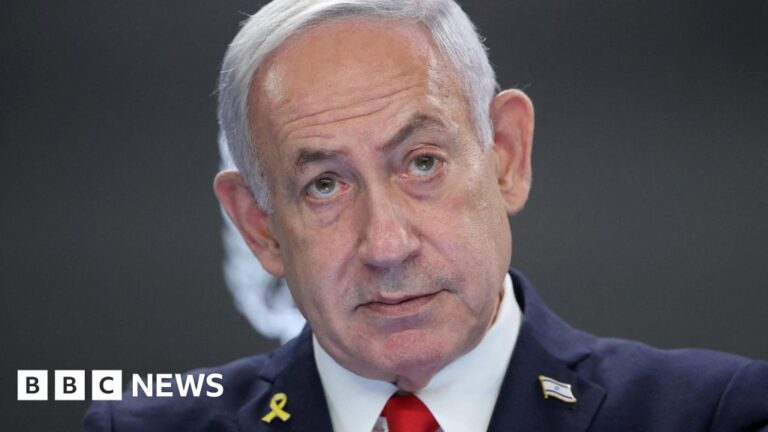
Israel’s prime minister accused his Australian counterpart of having “betrayed Israel” and “abandoned” Australia’s Jewish community, after days of growing strain between the two countries.
Benjamin Netanyahu said on Tuesday that history would remember Anthony Albanese “for what he is: a weak politician”.
Australia barred a far-right member of Netanyahu’s ruling coalition from entering the country on Monday, and Israel in turn revoked the visas of Australian representatives to the Palestinian Authority.
Australian Immigration Minister Tony Burke said Netanyahu was “lashing out” in response to Canberra recently announcing it would join the UK, France and Canada in recognising a Palestinian state.
“Strength is not measured by how many people you can blow up or how many people you can leave hungry,” Burke told the Australian Broadcasting Corporation on Wednesday.
Israel’s opposition leader criticised Netanyahu’s remarks, branding them a “gift” to the Australian leader.
Yair Lapid wrote on X: “The thing that most strengthens a leader in the democratic world today is a confrontation with Netanyahu, the most politically toxic leader in the Western world.
“It is unclear why Bibi is rushing to give the Prime Minister of Australia this gift.”
Diplomatic tensions flared on Monday after far-right Israeli politician Simcha Rothman’s Australian visa was cancelled ahead of a visit to the country, where he had been due to speak at events organised by the Australian Jewish Association (AJA).
Burke told local media at the time the government took “a hard line” on people seeking to “spread division”.
“If you are coming to Australia to spread a message of hate and division, we don’t want you here,” he said.
Last year, Burke also denied a visa to Israel’s former justice minister Ayelet Shaked, a right-wing politician who left parliament in 2022.
A few hours after the revocation of Rothman’s visa was announced, Israel’s Minister of Foreign Affairs Gideon Sa’ar said he had instructed the Israeli Embassy in Canberra to “carefully examine any official Australian visa application for entry to Israel”.
He added in a post on X: “While antisemitism is raging in Australia, including manifestations of violence against Jews and Jewish institutions, the Australian government is choosing to fuel it”.
In recent months, there have been a string of antisemitic attacks in Australia – which is home to one of the world’s largest populations of Holocaust survivors per capita.
On Tuesday, the AJA said Rothman would still appear at their speaking event virtually.
“The Jewish community won’t bow down to Tony Burke or [Foreign Minister] Penny Wong,” it said in a social media post.
Australia announced in early August that it would recognise a Palestinian state, with Prime Minister Albanese saying at the time that Netanyahu was “in denial” about the consequences of the war on innocent people.
“The stopping of aid that we’ve seen and then the loss of life that we’re seeing around those aid distribution points, where people queuing for food and water are losing their lives, is just completely unacceptable,” he said.
The state of Palestine is currently recognised by 147 of the UN’s 193 member states, and Australia’s announcement came about two weeks after similar moves by the UK, France and Canada.
In response, Netanyahu launched a scathing attack on the leaders of the three countries, accusing Sir Keir Starmer, Emmanuel Macron and Mark Carney of siding with “mass murderers, rapists, baby killers and kidnappers”.
More than 62,064 people have been killed as a result of Israel’s military campaign since 7 October, according to the Hamas-run health ministry.
Israel launched the offensive in response to the Hamas-led attack on 7 October, in which about 1,200 people were killed and 251 others were taken hostage.
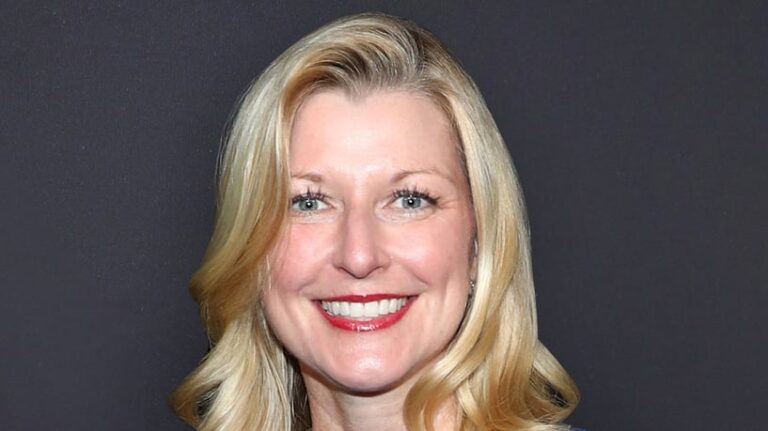
The American Society of Composers, Authors and Publishers (ASCAP) has reached a settlement agreement with the Radio Music License Committee (RMLC) that will see higher royalty rates paid by almost 10,000 commercial terrestrial radio stations in the United States.
The deal covers the public performance of more than 20 million musical works in ASCAP’s repertory across AM/FM radio stations nationwide.
ASCAP CEO Elizabeth Matthews said: “This deal locks in an important royalty stream for our members at higher rates. It will deliver enhanced benefits, payments and financial certainty to ASCAP songwriters, composers and publishers, which is important to ensuring their creative and economic health and security now and in the future.”
The settlement includes year-over-year increases in the percentage of revenue rate paid by radio stations to publicly perform music by ASCAP members.
ASCAP claims the agreement better reflects how AM/FM radio stations currently broadcast and transmit music to listeners, while recognizing distinctions between terrestrial radio and internet music services.
The announcement comes on the same day that rival performing rights organization BMI revealed it had secured what it called its “largest rate increase ever” for radio royalties in the United States, following its own settlement with the RMLC.
ASCAP represents more than one million songwriters, composers and music publisher members. The organization reported record-high financial results in 2024, with $1.835 billion in revenues and $1.696 billion available in royalty distribution monies to members.
Over the past nine years, ASCAP has delivered a 7% compound annual growth rate for total revenues and an 8% compound annual growth rate for total royalty distributions to members, according to the organization.
ASCAP operates on a not-for-profit basis.
The settlement covers licensing fees collected from hundreds of thousands of businesses that use music, including streaming services, cable television, radio and satellite radio, plus brick and mortar businesses such as retail stores, hotels, clubs, restaurants and bars.
ASCAP’s blanket license system allows businesses to legally perform music from its repertory while ensuring songwriters and composers receive payment for the use of their works.
The organization processes and pays royalties to members for what it describes as trillions of performances every year, using technology to identify, match and distribute payments across its vast catalog.
Both ASCAP and BMI settlements with the RMLC represent significant developments in the ongoing negotiations between performing rights organizations and radio broadcasters over royalty rates in the United States.
The Radio Music License Committee represents commercial radio stations in rate negotiations with performing rights organizations, serving as a collective bargaining entity for the terrestrial radio industry.
ASCAP thanked members of the RMLC Licensing Committee for their participation in reaching the settlement agreement, though specific details of the rate increases were not disclosed in the announcement.
The settlement ensures continued licensing of ASCAP’s catalog across the AM/FM radio landscape, maintaining access to both contemporary hits and classic songs across all musical genres for radio programmers and listeners.Music Business Worldwide

Welcome to World Breaking News, your trusted source for fast, accurate, and impactful news coverage from around the globe. We are a dedicated team of journalists, editors, and news enthusiasts committed to delivering breaking stories, in-depth analysis, and real-time updates on politics, business, technology, sports, entertainment, and more.
© Copyright -World Breaking News -2025
