A required part of this site couldn’t load. This may be due to a browser
extension, network issues, or browser settings. Please check your
connection, disable any ad blockers, or try using a different browser.

A required part of this site couldn’t load. This may be due to a browser
extension, network issues, or browser settings. Please check your
connection, disable any ad blockers, or try using a different browser.

Palestinians have had to cope with the sound of Israeli drones overhead for years before Israel’s current war on Gaza.
Published On 30 Aug 2025
A music teacher in Gaza has found a way to help others around him cope with the relentless and terrifying sounds and horrific impact of Israel’s genocidal war.
The nonstop buzz of Israeli drones overhead long predates the constant bursts of gunfire and explosions since the start of Israel’s war on the besieged enclave.
“In Gaza, there is no escape from the reality of war,” said Al Jazeera’s Ibrahim al-Khalili, reporting from Gaza City, where exploding buildings and chaos reign and desperate people attempt to escape gunfire at food distribution sites.
Added to these horrors is the ever-present sound of Israeli drones, he said, pausing to listen to the sound of a drone flying above.
Al-Khalili said drones had hovered over Gaza for years before the Hamas-led October 7, 2023, attacks on southern Israel that led to Israel’s war.
Many Palestinians living in Gaza City find the sound of them unbearable, he said, explaining that “it’s not just surveillance. It’s psychological warfare – a noise meant to unnerve, to break people down.”
Even before the current war, a report published by Save the Children in 2022 found that four out of five children in the Gaza Strip suffered from depression, sadness and fear caused by the punishing Israeli blockade on the territory.
However, music teacher Ahmed Abu Amsha has found a creative way to help those feeling distressed by the threatening buzzing above, by turning this sound meant to torment into something positive: a song.
“We had this idea come from what we live, what we suffer here,” said Abu Amsha. “When we have [drone] activity here, the kids ask me ‘Mr, We are tired from the annoying sound,’ [but] I told them ‘No, we have to sing with it.’”
“We have to turn it into something good, and [so] we sing,” said Abu Amsha, adding that the group often records videos of themselves as they sing to post onto the social media platform Instagram. “The idea from these video songs, it’s to turn the sound of the war into music and make it something beautiful.”
The videos shared on Abu Amsha’s Instagram account, which have been viewed by thousands of people, aren’t about creating art, but about refusing to “let a machine – built to watch and intimidate – define what it means to live” in Gaza, said al-Khalili. It’s a form of resistance.
Israel has killed more than 63,005 people and wounded nearly 160,000 in its war on Gaza since October 7, 2023.
By Madeline Folsom on SwimSwam

With fall around the corner, we are in the middle of NCAA preview season. We will continue our ranking of the 2025 women’s recruiting classes with #9-12. We have already released the honorable mentions and the #13-16 rankings
See Also:
A few important notes on our rankings:
Honorable Mentions
Previously Ranked
As a reminder, we don’t give as much weight to transfers in these rankings because they do not have four years of eligibility, which affects their strength as a “recruit”. Bella Sims is the top swimmer coming into the Wolverines this year, having won the NCAA title in the 200 and 500 free in 2024 and winning silvers in both backstroke events in 2025. She will be a very strong addition to the Michigan team, but she only has two years of eligibility remaining.
Sims has struggled the last two years, particularly in the distance freestyle events, but her backstroke events were very strong last year. In 2025, she finished 17th in the 500 freestyle, failing to make the final entirely as the reigning champion, and she earned runner-up finished in both backstroke events. On top of her individual points, she will be a strong relay addition to the Wolverines as the fastest backstroker and 100 freestyler and one of the fastest 200 freestylers on the team.
Of the incoming freshmen, there are two BOTR recruits moving to Ann Arbor later this month. Lila Higgo is a freestyler and backstroker who trains in Florida and will be coming in with sprint freestyle times of 22.64 and 49.25. She also has a 100 backstroke time of 52.72, which would be in scoring position at the Big Ten Championships, and sits about a second over the cutline of 51.68.
The other BOTR recruit is Montserrat Spielmann, whose times of 52.70 and 1:57.00 will add depth to the Michigan fly program that is led by rising senior Brady Kendall and rising junior Hannah Bellard.
The University of Southern California (USC) lost its top female swimmer at the end of last year. Kaitlyn Dobler won the 100 breaststroke conference title all five years she was in college, and she won the NCAA title in 2022.
The Trojans prepared for the loss exceptionally well with their recruiting class this year, bringing in the #15-ranked recruit, breaststroker Bella Brito. Brito had huge drops in the events this year, swimming 59.09 in the 100 breast and 2:08.72 in the 200 breast, which are both comfortably under the NCAA cutline and close to ‘B’ final position. She also has strong sprint freestyle times of 22.39 and 48.55, which will likely earn her spots on the freestyle relays as well as the medleys.
Brito will be joined by Kaitlyn Nguyen, who is bringing in lifetime bests of 1:00.80 and 2:10.28, which are both near the NCAA cutline. They will come in as the two fastest breaststrokers on the USC team, helping make up for the loss of Dobler.
They also picked up a few international recruits in Hungarian Olympian Dora Molnar and Belgian distance swimmer Alisee Pisane. Molnar, a backstroker, recently swam in the final of the 200 backstroke at the 2025 World Championships, where she finished 7th. Her prelims swim of 2:08.53 converts to 1:50.75, which would have been in the ‘A’ final at last year’s NCAAs. She also has very strong freestyle times that would be NCAA qualifications in their own right.
Pisane is a distance freestyle specialist, which sort of hurts her at the Division I level. She holds the Belgian National records in the 800 and 1500 freestyles, but only the 1500 is a conference and NCAA event. Her national record time of 16:22.18 converts to 15:53.26, which is well under the cutline in the event and would have been just outside the top 8.
As we have mentioned a few times, and will mention a few more as we continue moving through this list, it is incredibly difficult to predict how international swimmers will perform in the NCAA, which is why their commitments are not rated as high on these lists.
Finally, USC picked up graduate transfer Nicole Maier from Miami. Maier swam the 100 free, 500 free, and 400 IM at the 2024 NCAA Championships, where her highest finish was 11th in the 400 IM. Maier was originally intending to swim her 5th year for the Florida Gators, but she did not end up competing last year, and will instead spend her last year with the Trojans.
#10 Princeton Tigers
Princeton is not one of the teams that is typically in contention for a top finish at the NCAA Championships, finishing 39th at last season’s NCAA Championship with six points. They were the best team in the Ivy League last year, though, winning the meet by almost 200 points over Harvard, and their recruiting class this year only makes them stronger.
Their recruiting class is solely American recruits, which means we have a good idea of how they will perform, and it looks good for them. With the #16-ranked recruit and four BOTR recruits, they had one of the highest numbers of top recruits in the class.
Chloe Kim is their only top 20 recruit, coming in at #16 with her IM and distance freestyle events coming in under the NCAA cutline, and putting her in scoring position as a freshman. Kim saw massive improvements this year, dropping to 4:07.11 in the 400 IM, which would have been 16th in the “B” final. Her time also would have been 2nd at the Ivy League Championships behind Princeton’s Eleanor Sun. Sun was their highest scorer at the 2025 NCAAs, bringing in five points from her 12th-place finish in the 400 IM.
She was also under the cutline in the 500 free and 1650 free and she is within 2% of the cutline in the 200 backstroke and 200 butterfly, making her an incredibly versatile swimmer that could score in a wide variety of events at the conference championship this year, and potentially at the NCAA Championships in the future.
Sophia Sunwoo was our fastest BOTR recruit in the sprint freestyle events, dropping to 22.19 in the 50 and 49.16 in the 100. Both events would have been 2nd on the team last year behind rising senior Sabrina Johnston, and her 50 free would have won the Ivy League Championships. She will be a major addition in the relay events, and she is not far from a potential NCAA qualification.
Delaney Herr is another 22-second 50 freestyler and 49-second 100 swimmer who can make serious relay impacts, potentially helping Princeton’s relays score points this year, which would significantly improve their NCAA placement. Herr’s impact goes further than just freestyle relays, however. Her best times of 24.12 in the 50 back and 52.41 in the 100 back would have been first on the team last year, and could put her in the backstroke position on both medley relays.
Sophie Segerson is another backstroker who also swims the IM events. Her 200 backstroke would have been 2nd on the team last year to graduate Isabella Korbly at 1:55.47 and her 200 IM would have been 3rd, just behind Sun and rising junior Dakota Tucker. She also brings depth to the 200 freestyle, and potentially the 800 freestyle relay, with her 1:49.66 200 free time.
Their final BOTR recruit is Savannah Skow, a butterfly and IMer. She will slide in just behind senior Heidi Smithwick in the 100 fly at 52.90. Her biggest contribution, though, will come in the 200 freestyle, where her 1:45.80 is just a second over the NCAA cutline and would have been the fastest on the Princeton team and the fastest in the Ivy League conference. This will be a huge boost in the relays and in their point standings.
The Tennessee recruiting class for 2025 is huge with 17 new athletes coming in for the 2025-2026 swim season, and there are some heavy hitters.
Starting with the American-ranked recruits, we have honorable mention Amelia Mason. A sprint freestyler out of Colorado, Mason had a very strong senior year, dropping significant time in all three of the shorter freestyle events to be 22.64 in the 50, 48.89 in the 100 and 1:45.97 in the 200. Tennessee is not hurting for sprint freestylers, at least in the 50 and 100 events, as their top sprinter from last year, Camille Spink, still has two years of eligibility remaining. Mason will likely make an impact in the 200 freestyle, however, with only two returning swimmers having faster times from last season.
The Volunteers also picked up BOTR IMer Nicole Zettel, whose times of 1:58.08 and 4:11.10 would have been 2nd and 3rd among returning swimmers from last year and are just over the NCAA cutlines.
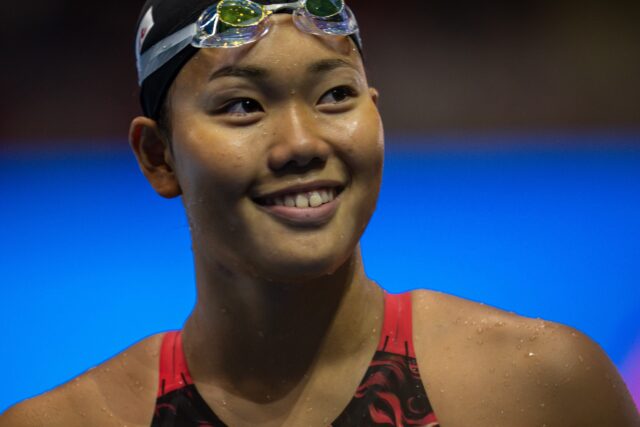
They also have a few huge international recruits coming in, namely World Junior Record holder Mizuki Hirai from Japan. Hirai holds the WJR in the women’s 100 butterfly at 56.33 from June of last year. This converts to 50.16, which would have been 5th at last year’s NCAA Championships with two graduates ahead of her. Hirai also has strong times in the 100 back and the sprint freestyle events, but her biggest contribution will come in the 100 fly. Hirai has also deferred her enrollment to the Spring, which doesn’t give her a ton of time to get used to yards swimming before conference meets and the NCAA Championships.
There will be two divers joining the program as well in Emma Rhines and Desharne Bent-Ashmeil. Rhines was our #5 diving recruit, having qualified for the three-meter finals at Junior Nationals in 2024. Bent-Ashmeil will be a significant addition to the program with three European Championship gold medals under her belt from 2024. The Tennessee divers only scored 25 points at last year’s SECs, so they have a lot of room for improvement in this area.
Ultimately, despite having a lot of recruits, their top two American recruits don’t fill huge areas of weakness within the team and their top international recruit will not have a lot of time to make the transition before she will be needed to perform, which is what earned them the 9th spot on this list.
Read the full story on SwimSwam: Ranking the 2025 Women’s NCAA Recruiting Classes: #9-12

Does a common heart attack pill help everyone? Studies disagree

When you meet someone and shake hands with them, you are sharing information: it is a friendly gesture that signifies a desire for social interaction. In the future, however, such a gesture may be used to share everything from your first and last name to your contact address. And that’s thanks to a new generation of smart clothing that will make it possible to exchange data and activate devices utilizing sensors and integrated circuits. It’s a technological breakthrough that will advance so-called invisible computing. And two researchers from the University of California have just given it a new push.
In this article, you will read about:
Wearables are all those electronic devices that can be worn as an extension of our body. This includes sports wristbands, smartwatches, and even smart contact lenses. By definition, smart clothing is the ultimate wearable. After all, if we are wearing anything, it is usually clothing.
Smart clothing is any garment equipped with sensors, with the ability to communicate with other devices and computing capacity. However, the latter is not essential since the data processing can be executed on another device, such as a smartphone. There are passive, active, or even ultra-intelligent smart clothing, i.e., that adapts to the environment as if it were an organism.
Here are some examples of smart clothing:
So far, so good, but then comes the real world where daily wear, washing, and the ravages of time make it challenging to integrate fragile electronics. According to researchers at the University of California who have just unveiled their new smart clothing prototype, the key lies in simplification. And it involves creating a new NFC (Near-Field Communication) standard.
The system they have opted for is flexible, durable, and battery-free. To achieve this, they have used copper and aluminum foils modified to operate employing magnetic induction. Thanks to the treatment applied, they can emit signals up to three feet away, unlike current NFC technologies, which have a range of fewer than three inches. The modification of these metals turns them into metamaterials, i.e., elements with radically different capabilities to the original ones.
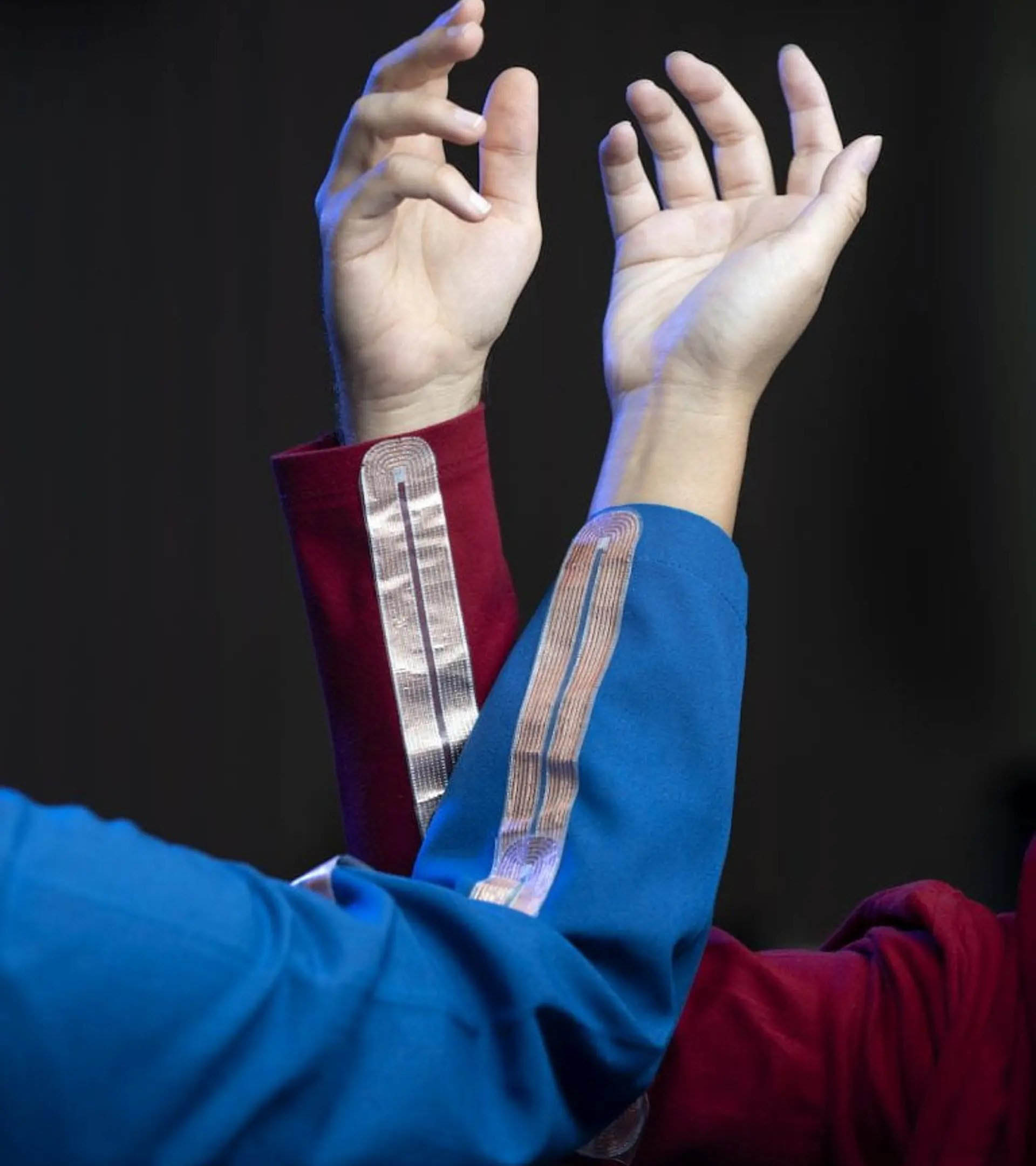
The research team points out that magnetic induction dispenses with continuous circuits throughout the garment. Thus, for example, it is possible to integrate these meshes into existing garments so that pants can measure the number of steps and a T-shirt can measure heart rate. It also makes it easier for two different people’s garments, whether the sleeves of a shirt or gloves, to communicate with each other.
This quality also implies the possibility of creating smart textiles for hospitals with multiple integrated functionalities. In any of these cases, bringing a cell phone within range would activate the sensors.
While it is true that smart clothing applications are promising, they must compete against other wearables. For example, if someone wears a smartwatch that measures their pulse, they are likely to do without a T-shirt that offers similar functionality. That’s why researchers are still looking for breakthrough applications that will enable the leap to mass-adopted smart clothing.
One of the most exciting applications in this regard comes from the laboratories of MIT in the United States. Their approach has been to develop tactile smart clothing, i.e., clothing that captures a person’s whole-body movements. This would range from twisting an arm to bending or stretching.
The prototypes they have developed use conventional textile fibers combined with specially modified pressure-sensing fibers that operate as sensors. Thus, the smart garment does not have isolated sensors, but becomes a sensor in its entirety. Among the garments, they have presented are socks that monitor step patterns or a T-shirt that monitors all movements or contact surfaces. And all this in washable and flexible garments.
The fact that the sensors are distributed throughout the garment also reduces the impact of wear and tear. Thus, in anticipation of any part of the garment ceasing to emit signals, the inventors have bolstered their technology with an AI system that detects the problem and automatically adjusts the interpretation of the data.
The researchers believe that this innovative smart clothing technology could have interesting applications in the training of athletes, correcting bad posture, or rehabilitating patients. They even suggest that these garments could teach robots to move in different situations.
If you want to learn more about these technologies, you should definitely check out articles like this one on life-saving garments.
Sources:
Michael Sheils McNameeBBC News
Three people have been killed after protesters set fire to a council building in eastern Indonesia, amid nationwide demonstrations over the death of a ride-sharing driver.
Affan Kurniawan, 21, was run over by a police vehicle in Jakarta during earlier – and ongoing – protests about low wages and politicians expenses.
The demonstrations are seen as a key test for President Prabowo Subianto, who visited the family of Kurniawan late on Friday to pay his condolences.
Elsewhere across the country, tear gas was fired at crowds in the cities of Jakarta and Surabay as violent clashes broke out.
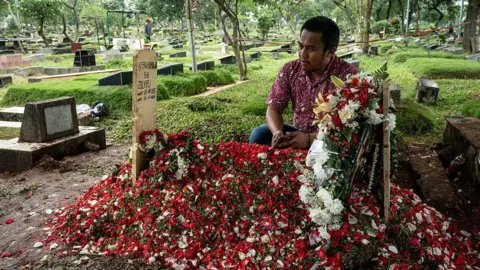
Affan Kurniawan’s funeral took place on Friday, with his former colleagues accompanying him to his final resting place.
They were joined by Jakarta police chief Asep Edi Suheri, as well as politicians Rieke Dyah Pitaloka and former Jakarta governor Anies Baswedan, who expressed hope that the case would be thoroughly investigated but called delivery riders to stop their protest in order to maintain stability.
The police chief also repeated an apology.
As this was happening, protesters gathered outside the police headquarters to demand justice for his death.
An apology has also been issued to Mr Kurniawan’s family by President Prabowo Subianto, who said he was “shocked and disappointed by the excessive actions of the officers”.
The governor of Jakarta, Pramono Anung, also visited Mr Kurniawan’s family, expressing condolences and offering financial assistance for funeral arrangements.
 Getty Images
On Friday, seven members of the Mobile Brigade Corps (Satbrimob) were “found to have violated the police professional code of ethics”.
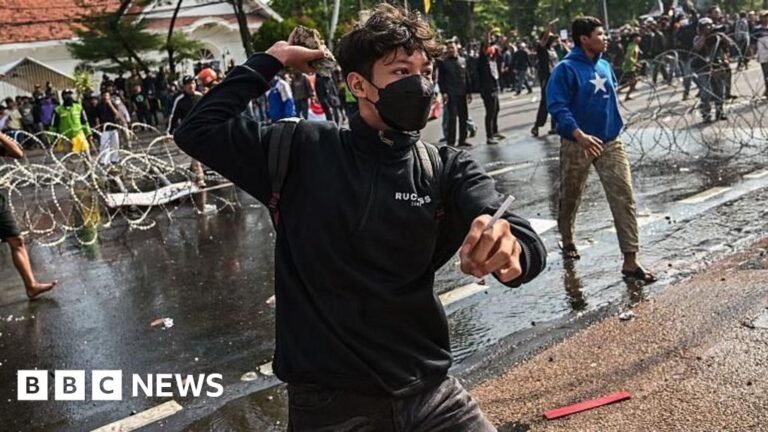
As the day went on, tensions ramped up, with protesters trying to block a police convoy and throwing rocks at the vehicles.
The crowd continued to grow, as students from the local Pertamina University arrived.
Earlier, protesters had put up a banner on a nearby pedestrian bridge that read “arrest the damn officers”.
In Kwitang, an area of central Jakarta, tensions rose as the protesters marched to the road in front of the Indonesian National Police headquarters in Kwitang, central Jakarta. Earlier, they had been blocked by the marine and army squad.
Police fired tear gas at protesters from inside the station, with protesters also attempting to block a police convoy and throwing rocks at the vehicles.
Despite heavy rain, some protesters threw Molotov cocktails and firecrackers towards the police compound, the BBC’s partner in Indonesia, Kompas, reported.
Protests were also seen taking place outside of Jakarta in Jawa Barat, Surakarta, Bandung and Medan.
Dozens of vehicles were also set alight, the state news agency reported.
Drone footage of Mr Kurniawan’s funeral showed thousands of riders turning out in support, some on foot and others on their vehicles – many dressed with the distinctive green of their employer Gojek, a multipurpose app that includes ride-sharing services.
 EPA
EPAFollowing Mr Kurniawan’s death, Gojek released a statement which read: “Behind every green jacket, there’s a family, prayers, and struggle.
“Affan Kurniawan was part of that journey, and his departure leaves a deep sorrow for all of us.”
The company added that it would provide support to Mr Kurniawan’s family.
While the protests – which have taken place throughout this week – are about a wide-ranging set of issues, one of the core complaints is about a new monthly allowance for lawmakers.
They are set to receive 50 million rupiah ($3,030; £2,250), which is almost 10 times the minimum wage in Jakarta, Indonesia’s capital and its largest city.
Protestors are also demanding higher wages, lower taxes and stronger anti-corruption measures.
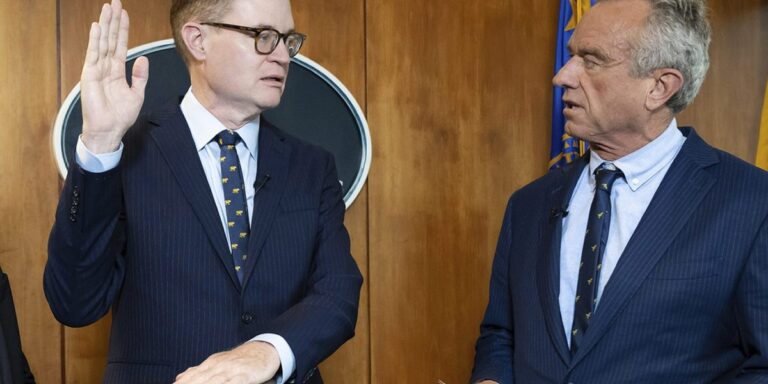
President Donald Trump has picked Jim O’Neill, a former investor and critic of health regulations serving under Health Secretary Robert F. Kennedy Jr., to take control of the Centers for Disease Control and Prevention, following a tumultuous week in which the agency’s director was forced out.
O’Neill, Kennedy’s deputy at the Department of Health and Human Services, will supplant Susan Monarez, a longtime government scientist who had been the CDC director for less than a month.
Monarez’s lawyers said she refused “to rubber-stamp unscientific, reckless directives and fire dedicated health experts.”
O’Neill takes over as acting director of an agency that has been rocked by firings, resignations and efforts by Kennedy to reshape the nation’s vaccine policies to match his long-standing suspicions about the safety and effectiveness of long-established shots.
An HHS spokesperson said Friday that O’Neill would continue to serve as deputy of the department but did not provide details on his new role.
A former associate of billionaire tech entrepreneur Peter Thiel, O’Neill previously helped run one of Thiel’s investment funds and later managed several of his other projects. Those included a nonprofit working to develop manmade islands that would float outside U.S. territory, allowing them to experiment with new forms of government.
He has no training in medicine or health care and holds bachelor’s and master’s degrees in humanities.
O’Neill has kept a markedly lower profile than Trump’s other top health officials, who all joined the administration as Washington outsiders. He’s also the only one with experience working at HHS, where he served for six years under President George W. Bush.
Those who know him say he’ll likely be tasked with trying to calm the situation at CDC — though it’s unclear what, if any, independence he’ll have from Kennedy.
“Jim O’Neill is a health care policy professional and I don’t think anybody can accuse him of being an RFK Jr. sock puppet,” said Peter Pitts, a former FDA official under Bush. “The question becomes whether the role of CDC director becomes a strictly paper tiger position, where the person only does what they’re told to by the secretary.”
O’Neill is not closely associated with Kennedy’s “Make America Healthy Again” movement and its efforts against food dyes, fluoride and ultraprocessed foods.
He was also not a major critic of public health measures during the pandemic, unlike Food and Drug Administration chief Marty Makary and other Trump officials. Although O’Neill did use social media to criticize FDA efforts to stop the prescribing of unproven treatments for COVID-19, including the anti-parasite drug ivermectin.
O’Neill has long-standing ties to the libertarian wing of the Republican Party, including Thiel, one of Trump’s leading supporters from Silicon Valley. Like Thiel, O’Neill has expressed disdain for many parts of the federal bureaucracy, saying it hinders advances in medicine, technology and other areas.
During Trump’s first term, O’Neill was vetted as a possible choice to lead the FDA, although his past statements about the agency raised alarms among pharmaceutical and medical technology executives.
In particular, O’Neill proposed doing away with FDA’s 60-year-old mandate of assuring new drugs are both safe and effective in treating disease. In a 2014 speech, O’Neill suggested drug effectiveness could be established after they hit the market.
Trump ultimately nominated Dr. Scott Gottlieb, a former FDA official and supporter of the agency’s regulatory approach, as commissioner.
After being nominated to the HHS post, O’Neill voiced his support for the federal government’s traditional system for overseeing vaccines — including the role of the CDC — while refusing to criticize Kennedy’s views on the topic.
“I support CDC’s recommendations for vaccines,” O’Neill told Louisiana Republican Sen. Bill Cassidy at a confirmation hearing in June. “I think that’s a central role that CDC has. It’s mandated in law.”
In follow-up questions, ranking Democrat Ron Wyden pressed O’Neill on statements by Kennedy downplaying the safety and effectiveness of vaccines to prevent measles and other diseases.
“Secretary Kennedy has not made it difficult nor discouraged people from taking vaccines,” O’Neill responded.
Within weeks, O’Neill could be asked to sign off on new recommendations from a CDC panel that Kennedy has reshaped with vaccine skeptics. The group is scheduled to meet next month to review vaccinations for measles, hepatitis and other conditions that have long been established on the government schedule for children.
Traditionally, the CDC director signs off on recommendations from the panel. But Monarez was ousted after, among other things, she refused to automatically sign off the committee’s recommendations, according to Dr. Richard Besser, a former CDC acting director who spoke to her.
As an acting official, federal law limits O’Neill to no more than 210 days heading the agency before he must step aside or be formally nominated to the post.
Dr. Anne Schuchat, who served twice as acting CDC director, says there are essentially no limits on the powers of the acting agency chiefs, beyond the time constraints.
“I was told, ‘You’re the director. Do what you need to do,’” Schuchat said.
Both of O’Neill’s roles at HHS and CDC are demanding, full-time jobs that would be extremely challenging for one person to do simultaneously, Schuchat said.
“But if the goal is to have an acting CDC director fulfill a predetermined decision about vaccines, it’s a different story,” Schuchat said.
It won’t help O’Neill that there was an exodus this week of four veteran CDC center directors, leaving the agency with few leaders who have a background in medicine, science or public health crisis management, she added.
___
AP Medical Writer Mike Stobbe contributed to this story from New York
___
The Associated Press Health and Science Department receives support from the Howard Hughes Medical Institute’s Department of Science Education and the Robert Wood Johnson Foundation. The AP is solely responsible for all content.

At least three people have been killed and several injured in a fire blamed on protesters in Sulawesi island.
Published On 30 Aug 2025
At least three people have been killed and five were injured in a fire blamed on protesters at a regional parliament building in eastern Indonesia, as widespread demonstrations rock the Southeast Asian nation.
Indonesia’s disaster management agency, in a statement on Saturday, confirmed the deaths following the Friday evening fire in Makassar, the capital of South Sulawesi province, some 1,600km (994 miles) east of the capital, Jakarta.
“From last night’s incident, three people died. Two died at the scene, and one died at the hospital. They were trapped in the burning building,” the secretary of Makassar city council, Rahmat Mappatoba, told the AFP news agency on Saturday.
He accused protesters of storming the office to set the building on fire.
Indonesia’s official Antara news agency also said the victims were reported to have been trapped in the burning building, while the disaster agency said two of the injured were hurt while jumping out of the building.
Several people injured in the fire are being treated in hospital, officials said.
The fire has since been extinguished.
Indonesia has been rocked by protests across major cities, including Jakarta, since Friday, after footage spread of a motorcycle delivery driver being run over and killed by a police tactical vehicle in earlier rallies over low wages and perceived lavish perks for government officials.
In West Java’s capital city of Bandung, commercial buildings, including a bank and a restaurant, were also reportedly burned on Friday during demonstrations.
In Jakarta, hundreds of demonstrators massed outside the headquarters of the elite Mobile Brigade Corp (Brimob) paramilitary police unit that was blamed for running over motorcycle delivery driver Affan Kuniawan.
Protesters threw stones and firecrackers, and police responded with tear gas as a group tried to tear down the gates of the unit, which is notorious for its heavy-handed tactics.
On Saturday, a local online news site reported that young protesters had massed in Jakarta and were heading to the Brimob headquarters before they were stopped by a barricade.
Police said they had detained seven officers for questioning in connection with the driver’s death. The number of protesters injured in the violence is reported to be more than 200, according to the Tempo news site.
The protests are the biggest and most violent of Indonesian President Prabowo Subianto’s tenure, and are a key test less than a year into his presidency.
Prabowo has urged calm, ordered an investigation into the unrest, visited the family of the slain delivery driver, while also warning that the demonstrations “were leading to anarchic actions”.

While some major recorded music markets, like the US and India, have seen a slowdown in revenue growth recently, the same can’t be said for Italy.
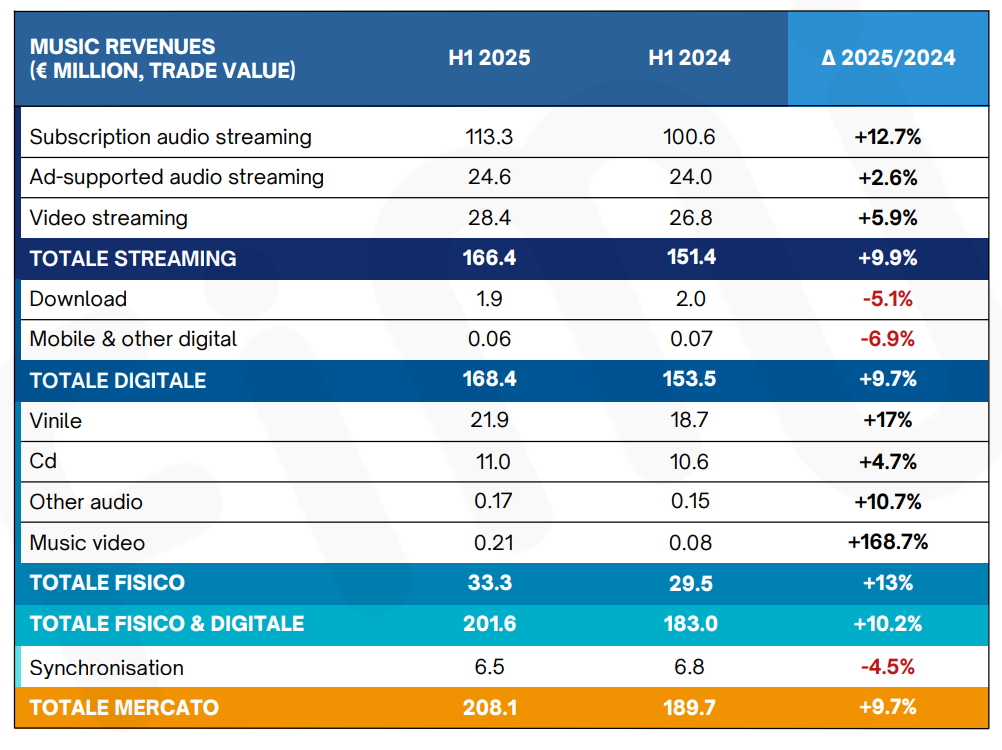
Europe’s third-largest music market continues to go from strength to strength, with recorded music trade turnover rising 9.7% year-over-year to EUR €208.1 million in the first half of 2025.
That’s equal to USD $236.1 million at the average exchange rate for Q2 2025.
The growth rate marks an acceleration from the 8.5% YoY growth Italy’s recorded music market saw in 2024.
Streaming revenues grew even faster, rising 9.9% YoY to €166.4 million ($188.8 million).
Of that, €113.3 million ($128.5 million) came from subscription streaming, where revenues grew 12.7% YoY, according to data released on Wednesday (August 27) by the Federation of the Italian Music Industry (FIMI).
Maybe even more remarkable is that physical music revenue grew faster than digital in H1 2025, led by vinyl sales, which jumped 17% YoY to €21.9 million ($24.8 million). Even CD sales grew, rising 4.7% to €11.0 million ($12.5 million).
That was partly offset by a 4.5% YoY decline in synch revenues, to €6.5 million ($7.4 million).
A great deal of this success can be attributed to Italy’s own artists, who occupied 90% of the slots in the top 10 album and singles charts in H1 2025, FIMI said.
Italian singer/songwriter OLLY’s Tutta Vita was the top-selling album (physical, download and free and premium streaming) of H1 2025, according to data from FIMI/GfK, and his single Balroda Nostalgia topped the singles charts for H1.
In fact, among the top 25 albums, Bad Bunny’s Debí tirar más fotos was the only non-Italian title, FIMI noted.
The dominance of local artists in Italy reflects a shift seen in many countries – particularly in Europe – in which local acts that were once sidelined on the radio in favor of major international acts have found greater prominence on streaming platforms.
FIMI also noted a shift in consumption of physical music (vinyl, CDs and cassettes).
“For the first time, this chart is more oriented toward contemporary repertoire, leaving residual space for legacy catalog titles,” the industry group said in a report earlier this month.Music Business Worldwide
Khanyisile NgcoboBBC News in Johannesburg
 Media 24 / Gallo Images
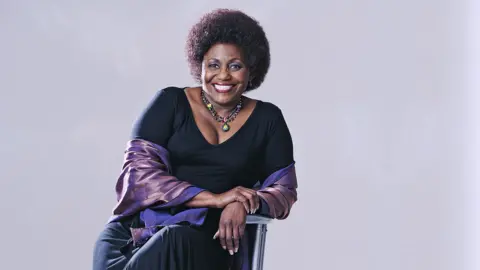
The death of a much-loved star is normally followed by an outpouring of grief, but in South Africa last week’s loss of 75-year-old actress Nandi Nyembe also came with an outpouring of anger.
People were distressed that in the last months of her life an obviously sick woman was reduced to appearing on videos appealing for financial help.
Sitting in a wheelchair, with thin, grey hair, wearing a loose T-shirt and fleece pyjama trousers, she said she did not like people feeling pity for her, but she needed money to cover the basics. Her biggest plea was for more work so she could support herself.
This was a far cry from her more famous screen appearances.
As the lead in some major television series over recent decades, her face was beamed into the homes of South Africans and she became a familiar weekly presence.
Respectfully known as mam’Nandi, her passing, for some, felt like losing a close relative.
A tribute jointly released by her family and the government hailed her as the “very soul of South African storytelling”.
She was “far more than an actress” but also a teacher and guide who “broke barriers” and “inspired young actors in villages and townships to dream beyond their circumstances”.
Given that status, the way she appeared late in life was all the more shocking.
Her death, after a long illness, has reignited the debate about the lack of support available to South African artists who are unable to work and has shone a spotlight on the struggle many face behind the scenes.
After an initial appearance fee, actors in South Africa do not receive any royalties for subsequent broadcasts of their work.
They are employed as freelancers and as a result they get none of the possible benefits – such as a pension and health coverage – which may be available to regular employees.
This means that “every single actor who is active in this country right now is on an inevitable path to where mam’Nandi was,” Jack Devnarain, South African Guild of Actors (Saga) chairperson, told the BBC.
He said it had been painful to witness Nyembe’s struggles in those final videos, knowing that “this was not going to end well”.
“Because there is no amount of charity in the world that’s going to fix the structural problems within the creative sector.”
An actor himself, Devnarain fondly remembered Nyembe’s glory years, saying how “welcoming and warm” she had been towards him as a young artist.
“In mam’Nandi’s presence, you knew you were in the presence of performance royalty.”
Nyembe was born in 1950 in Kliptown, the oldest part of Soweto – the black township just outside Johannesburg. Her mother was an actress and tap dancer and her father was a boxer, according to the online publication Actor Spaces.
Her family moved around a lot during her childhood and as a result she grew up with “different, diverse people”, she is quoted as saying.
Her acting career began in the 1970s at the height of the apartheid era, when the state legally enforced racial segregation.
With limited opportunities for black people, Nyembe was mostly cast in the role of a maid whenever she auditioned. She told South African magazine Bona in 2017: “Inequality and oppression angered me and I started taking part in protest theatre.”
Despite this typecasting, she would later go on to make her mark, first in theatre and then in various TV shows and films by the 1990s.
Among the television roles she was best known for was the recurring character of an HIV-positive nurse in the hospital drama Soul City. It ran from 1994 – the year of South Africa’s first democratic election and at a time when people struggled to speak about HIV/Aids, which was rapidly becoming a national crisis.
In another popular series, Yizo Yizo, she played a nurturing mother in a show that captured the raw realities of life in a South African township.
On the big screen, she captivated audiences with her role as a sangoma, or traditional healer, in the 2004 Oscar-nominated South African film Yesterday.
“She was extremely passionate about her work… it’s what she lived for outside of her family,” her grandson, Jabulani Nyembe, said.
She “was always looking to better her craft” and “always wanted to do better”, but at the same time “her career was also [about] building other actors and actresses through her work”.
 Netflix / Alamy
Beyond acting, he remembers her as someone always willing to help others within her community and as “the pillar of the family” and their “backbone”.
He touched on the viral video, admitting that Nyembe had faced challenges towards the end of her life, before adding that the family helped her as much as it could.
The actor’s guild Saga has been at the forefront of pushing for legal changes to prevent similar situations.
Two bills were introduced to parliament in 2017 aimed at giving actors “the right to earn royalties for the first time in South African history”, according to Devnarain.
“That is why they are critical for the survival of the sector,” he said.
After years of back-and-forth, they finally ended up on President Cyril Ramaphosa’s desk for his signature in 2024.
But he has since referred both bills to the Constitutional Court, concerned that they could affect elements enshrined in the constitution by placing retrospective restrictions on copyright.
This has left actors stuck in limbo.
“Any actor who is on film or television right now must understand that for as long as you keep working, you are going to end up outliving your money,” Devnarain said.
“Government has failed the entire sector and they have failed mam’Nandi.”
At a memorial service in Johannesburg on Thursday actress Lerato Mvelase also blasted the government for offering little more than a “lullaby” to actors.
“How long must we hear the same speeches [at memorial services]? How long must we have the same engagements about the need for policy structures that are going to protect us as actors?” she asked.
But Culture Minister Gayton McKenzie, who rarely shies away from a fight, hit back at critics, saying that he had personally responded to Nyembe’s plight when she was alive and the government has helped the family and is paying for Saturday’s funeral.
“We work day and night to change the plight of creatives, soon they would have funeral cover, hospital care and policy payout for their children. We truly care and we are tasked with changing their lives,” he wrote on Facebook.
Any changes now, of course, are too late for Nyembe.
At the memorial, renowned filmmaker Angus Gibson touched on this, describing how she would ask him for work during difficult times.
“As great an actor as she was, it didn’t protect her from a tough world,” he said.
 Getty Images/BBC
Welcome to World Breaking News, your trusted source for fast, accurate, and impactful news coverage from around the globe. We are a dedicated team of journalists, editors, and news enthusiasts committed to delivering breaking stories, in-depth analysis, and real-time updates on politics, business, technology, sports, entertainment, and more.
© Copyright -World Breaking News -2025