

0.6 C
New York
Tuesday, March 3, 2026
Home Blog Page 415

Tony Xu, CEO of DoorDash, says that while M&A may seem easy in theory, it is actually very difficult to execute successfully.

0

Good morning. Automation, AI agents, and M&A are top of mind for the on-demand delivery platform and tech company DoorDash.

During Fortune Brainstorm Tech, which kicked off Monday in Park City, Utah, DoorDash CEO Tony Xu spoke with Fortune’s Jason Del Rey about M&A, noting he has learned the importance of partnering with operating teams that share DoorDash’s values.

“That’s what we found when we met Wolt in 2021—a team with very shared values, which to me is probably the hardest thing to get right in M&A,” Xu said. “M&A is very easy to get right on a sheet of paper; it’s very hard to get right in practice.”

Earlier this year, DoorDash closed the $1.2 billion acquisition of SevenRooms, which helps businesses gain a 360-degree view of their guests with marketing as a service, he said. Also this year, the company acquired ad-tech platform Symbiosys for roughly $175 million. And DoorDash has also agreed to acquire UK-based Deliveroo for about $3.9 billion, expecting to close in Q4 2025, pending regulatory approval.

Automation and AI

DoorDash has been working on autonomous delivery, such as drones and sidewalk robots, since 2017. But there have been challenges, Xu said.

“Candidly, it’s mostly been filled with lots of pain and suffering,” he said, explaining that achieving reliable, scalable autonomous delivery requires excelling across multiple domains: hardware, software, network building, and service quality—few companies master all of these simultaneously.

Xu compared the process to learning a multi-level sport and emphasized that DoorDash is still early in building these broad capabilities. However, he noted that DoorDash is beginning to see commercial progress, with successful tests and pilots in the U.S. (including partnering with Coco Robotics for robot delivery), and drone deliveries with Alphabet’s Wing in Australia, for example. 

DoorDash builds and deploys AI agents, developed both in-house and with partners. Key use cases include customer service, voice ordering, logistics, and merchant support. “We launched an AI agent to help merchants better buy advertisements and promotions,” Xu said.

Founded in 2013, DoorDash debuted on the Fortune 500 last year. “We have three customers: consumers, merchants, and Dashers,” CFO Ravi Inukonda told me in 2024. “When we first started, our goal wasn’t to build a food delivery business. The goal was to build a local commerce business.”

The company has gone beyond food delivery, enabling purchases and delivery from restaurants, grocery stores, pharmacies, pet shops, retail stores, and more.

This year, DoorDash climbed 49 spots to No. 394 on the Fortune 500. The company reported its Q2 2025 earnings last month, beating expectations: Revenue was $3.28 billion, up 25% from $2.63 billion a year earlier. Earnings per share were 65 cents, versus 44 cents expected. Total orders increased 20% year-over-year to 761 million.

DoorDash also announced on Monday an exclusive partnership with Waffle House for the rollout of all-night delivery (9 p.m.–8 a.m.). It’s the first delivery service in Waffle House’s decades in business.

The goal is to deliver in under 15 minutes from when the food is ready, to “offer a quality experience,” Xu said.

Sheryl Estrada
sheryl.estrada@fortune.com

Leaderboard

Fortune 500 Power Moves

Yvonne McGill, CFO of Dell Technologies (No. 44), will step down from her role after a career at Dell that spanned nearly 30 years, effective Sept. 9.


Dell has named David Kennedy, SVP of Dell Global Business Operations, Finance, to serve as interim CFO, effective Sept. 9. Kennedy is also the former SVP and COO of Dell Global Sales and SVP and CFO of the company’s Client Solutions Group. He has 27 years of experience at Dell.


McGill will serve in an advisory capacity through Oct. 31, 2025, as part of the transition period. The company has also initiated a search process to find a permanent successor.

“As I reflect on my 28-plus years with Dell, I am incredibly honored to have worked alongside such a talented global team,” McGill said in a statement. “I am proud of all we have accomplished together and believe that, after such long service with one company, this is the right time for me to embark on my next chapter.”

McGill began the CFO role in August 2023, making her first woman to become finance chief at the company. There will be different times in your career where you’re given “opportunities—or you could call them risks, however you want to see it”—and you should take them because they will help you grow, McGill told CFO Daily in 2023.

Every Friday morning, the weekly Fortune 500 Power Moves column tracks Fortune 500 company C-suite shiftssee the most recent edition

Big Deal

A new report from the American Institute of CPAs (AICPA) and North Carolina State University’s Enterprise Risk Management Initiative finds that just 11% of senior finance leaders consider their organization’s risk management process to be a strategic tool that provides competitive advantage. Meanwhile, 64% say it provides no or only minimal advantage.

Additionally, 61% of finance leaders acknowledge that the volume and complexity of risks have changed “mostly” or “extensively” over the past five years.


To strengthen an organization’s risk management, executives and boards must first identify cultural obstacles, according to the report. The respondents cite competing priorities and insufficient resources (both at 41%) as the most common barriers, along with a lack of perceived value in risk management efforts (29%).


The findings are based on a survey of 273 CFOs and senior finance leaders at U.S. organizations. 

Going deeper

How Financial Frictions Can Delay Firm Growth” is a new report in Wharton’s business journal. Wharton’s Thomas Winberry explains how financial constraints can delay innovation and long-term growth for firms, as well as the economy. 

Overheard

“AI is only as effective as its inputs, and the interpretation and action steps that follow are only as sound as the skills and contextual understanding of the people involved. In short: reducing human oversight creates breeding grounds for security gaps.”

This is the web version of CFO Daily, a newsletter on the trends and individuals shaping corporate finance. Sign up for free.

The Impact of the Ukraine-Russia War on Tank Warfare

0

When Russia launched its full-scale invasion of Ukraine in 2022, the two sides’ tank divisions looked much as they did during the Cold War.

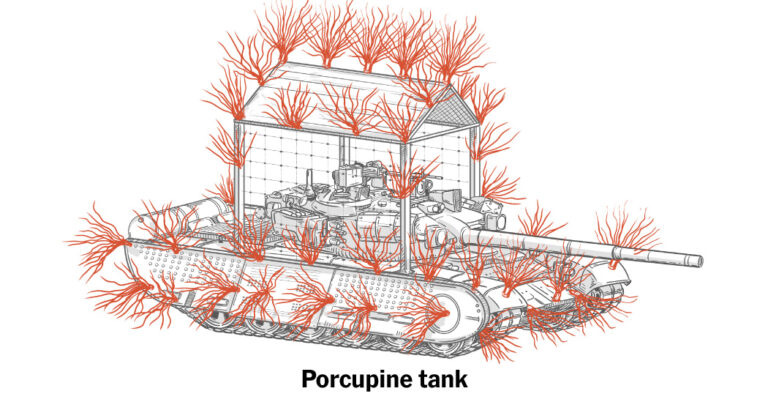
Now, Russia’s and Ukraine’s Soviet-era tanks rumble across the battlefield covered in anti-drone nets and spikes, dangling chains and unwieldy cages.

The exterior transformations of these hulking vehicles are a testament to how quickly drones have changed the war in Ukraine in just over three years. Lethal drones have pushed traditional missiles and artillery to the sidelines.

Russian Defense Ministry Press Service via EPA-EFE and AP (first three photos); @milinfolive via VKontakte

Roman Pilipey/Agence France-Presse — Getty Images (first three photos); Florent Vergnes/Agence France-Presse — Getty Images

The armor changes began early in the war after Ukrainian forces used U.S.-supplied anti-tank missiles to strike Russian tanks directly from above, piercing weaker points in vehicles’ armor.

To counter the explosive projectiles, Russian tank crews began mounting homemade cages above their turrets to cushion the tanks from blasts. Other Russian units already had cages on their tanks, anticipating strikes from above.

Since then, the battlefield has completely changed. It is now driven by small, cheap first-person-view (F.P.V.) drones that can be used like homing missiles.

In response, both Ukrainian and Russian tanks have undergone transformations to address their vulnerabilities. Here’s how it happened:

1 Earlier in the war, anti-tank missiles and drones that dropped grenades primarily threatened tanks from above.

2 To protect the tanks from above, mechanics built structures on the tops. Then, soldiers began using F.P.V. drones to maneuver like homing projectiles into other vulnerable areas of the vehicles.

3 In response, tank crews learned to build their own defenses on the fly, like anti-drone netting, to protect themselves from other angles.

4 When signal jammers began disabling wireless drones, a new type of drone emerged, guided by fiber-optic cable. Soldiers then added spikes to tanks to catch the cables.

Source: Photos from correspondents in Ukraine; videos and images posted by military bloggers on Telegram and X.

The New York Times

Since tanks were first widely introduced to cross the shell raked battlefield in World War I, their hulls and armor have stayed largely the same: Most protection was mounted on the front of the vehicle, where the crews believed the threat would materialize.

With the small, guided drones on the battlefield in Ukraine, the threat can come from any direction with a level of accuracy capable of hitting weak spots in the armor.

Configurations are rarely uniform, and it is difficult to pinpoint when these armor changes became widespread. But the outgrowth of these new types of protection has aligned with the proliferation of different types of drones, especially in 2023, when the F.P.V. drones became widespread on the battlefield.

Now, tanks are used in battle far less than in 2022. To maintain tanks’ relevance, Russian and Ukrainian soldiers have covered them in different configurations of armor as ad hoc solutions to rapidly shifting tactics.

This Russian ”turtle” tank was equipped with metal grids against drone attacks and a mine roller in front to clear the way.

@milinfolive via Telegram

Some of the first tank modifications came early in the war, when the main threats to military vehicles were Ukraine’s anti-tank missiles, supplied by the United States, and drones that dropped grenades.

Videos from early in the war show Russian troops modifying the T-72, one of Russia’s most widely used tanks in the Donbas in eastern Ukraine. This is what they added:

The Ukrainians also upgraded their tank armor as Russian drone numbers surged to match Ukraine’s homegrown fleet of lethal drones.

Much of the development, whether in bomb-dropping drones or F.P.V.s, came from Ukraine as Kyiv met Moscow’s much larger military by improvising with cheaper but equally deadly weapons.

The United States sent M1 Abrams battle tanks, long seen as the top of their class, to Ukraine in the fall of 2023. But the tanks were thrust into battle lacking the appropriate armor to defend against drones.

Once the Ukrainian troops realized that the American tank was susceptible to the same threats as their older Soviet models, they began to adapt the Abrams for the modern battlefield.

These are some of the modifications the Ukrainians have used:

The added protection can come with a cost: Cages, coverings and more armor mean it can be even harder for crews to see from their small hatches and windows.

So Ukrainian and Russian mechanics keep tinkering with their contraptions to keep the tanks in the fight.

A view beneath a Russian tank’s anti-drone net.

Russian Defense Ministry Press Service, via EPA-EFE/Shutterstock

As it stands, Ukraine’s 750-mile front line looks much different from three years ago. Fiber-optic cables line abandoned fields, and drones hunt individual soldiers at all hours of the day.

It is extremely dangerous to move large vehicles, especially tanks. A drone that cost several hundred dollars can quickly take out a multimillion-dollar tank.

At greater threat than three years ago, tanks are used far less in battle now, facing a combination of the proliferation of drones and legacy threats, such as landmines. But they remain important, especially for trying to take and hold territory. With their heavy firepower, they will continue to have a role in attacking, defending and supporting the foot soldiers of the infantry.

TikTok Surpasses 200 Million Monthly Users in Europe

0

TikTok has reached a significant milestone in Europe.

The ByteDance-owned app revealed Friday (September 5) that it has reached more than 200 million monthly users in the region.

That’s up from 175 million people last year, and approaching a third of the population of the continent across the EEA and UK, the company noted.

In other words, roughly one in three citizens in Europe use the app monthly, according to TikTok.

Commenting on the milestone, Marlene Masure, General Manager, Content Operations, for EMEA said: “Our European community goes from strength to strength, with more than 200 million people now regularly coming to TikTok to be entertained, learn new hobbies or skills and make a living.”

“Our European community goes from strength to strength, with more than 200 million people now regularly coming to TikTok to be entertained, learn new hobbies or skills and make a living.”

Marlene Masure, TikTok

Added Masure: “As our community grows, so does the economic, cultural and societal impact that TikTok adds to Europe’s rich ecosystem.

“From bringing the arts to new audiences, to inspiring a new generation of readers and seeing small businesses flourish and create growth and jobs, TikTok has helped contribute positively to so many stories.

“On TikTok, ideas have turned into careers, passions into viable businesses, niche interests into thriving communities, and I want to thank the more than 200 million people that make TikTok what it is today across Europe.”

According to TikTok, 32 countries are included in this ‘Monthly Active Recipients (MAR) figure’ of 200 million users.

They include: Austria, Belgium, Bulgaria, Croatia, Cyprus, Czech Republic, Denmark, Estonia, Finland, France, Germany, Greece, Hungary, Iceland, Ireland, Italy, Latvia, Liechtenstein, Lithuania, Luxembourg, Malta, Netherlands, Norway, Poland, Portugal, Romania, Slovakia, Slovenia, Spain, Sweden, Switzerland, and the UK.

The latest figure for these 32 countries arrives just a few days after TikTok released its fifth transparency report on content moderation in Europe.

In the report, TikTok published the average number of ‘monthly active recipients’ in the European Union, broken down by each EU Member State between January 1 to June 30, 2025.

According to TikTok, there were 169.7 million monthly users across the 27 states of the European Union as of the end of June.

The app’s three largest markets within the European Union were FranceGermany, and Italy, with 27.8 million, 25.7 million, and 23.9 million, respectively (see below).


TikTok’s latest 200 million user stat is for the broader European region, including the 27 EU states listed above, EEA nations, plus Switzerland and the UK (which left the EU after Brexit).

That means that the five non-EU countries included within the 200 million stat (IcelandLiechtensteinNorwaySwitzerland, and the UK) collectively account for roughly 30 million of TikTok’s monthly users in the broader European region.

Elsewhere on Friday, TikTok noted that there are now “millions of businesses” on its platform across Europe. The company cites stats from Oxford Economics suggesting that activities of small and medium-sized enterprises (SMEs) on TikTok added €4.8 billion to the economies of Germany, France, Italy, the Netherlands, and Belgium and supported more than 51,000 jobs.

TikTok also announced last week that it has expanded its SoundOn music distribution service into Germany, one of the flagship social app’s largest markets in Europe.Music Business Worldwide

Nepal protests over corruption and internet bans result in the deaths of nineteen individuals | Protests News

0

Nepal has lifted its social media ban one day after protests turned deadly, with at least 19 people killed by security forces as demonstrators rallied against internet restrictions and government corruption.

Police fatally shot 17 people in Kathmandu, according to spokesman Shekhar Khanal, with two additional deaths reported in eastern Nepal’s Sunsari district. Officers deployed rubber bullets, tear gas, water cannons and batons when protesters broke through barbed wire barriers attempting to reach Parliament.

Approximately 400 people sustained injuries, including more than 100 police officers. Home Minister Ramesh Lekhak resigned following the violence.

“I had been there for a peaceful protest, but the government used force,” said 20-year-old Iman Magar, who was struck in his right arm. “It was not a rubber bullet but a metallic one, and it took away a part of my hand. The doctor says I need to undergo an operation.”

Emergency vehicles rushed the wounded to hospitals throughout the city. “I have never seen such a disturbing situation at the hospital,” said Ranjana Nepal, information officer at the Civil Service Hospital. “Tear gas entered the hospital area as well, making it difficult for doctors to work.”

The social media ban triggered widespread anger, particularly among younger Nepalis who depend on these platforms for communication. Amnesty International reported that authorities used live ammunition against protesters, while the United Nations called for a transparent investigation.

Millions of Nepalis use platforms like Instagram for entertainment, news, and business purposes. “This isn’t just about social media – it’s about trust, corruption, and a generation that refuses to stay silent,” wrote the Kathmandu Post newspaper. “Gen Z grew up with smartphones, global trends, and promises of a federal, prosperous Nepal. For them, digital freedom is personal freedom. Cutting off access feels like silencing an entire generation.”

Nepal has previously restricted online platforms, blocking Telegram in July over fraud concerns and implementing a nine-month TikTok ban that ended last August when the company agreed to comply with local regulations.

Challenging Clients

0


Client Challenge


JavaScript is disabled in your browser.

Please enable JavaScript to proceed.

A required part of this site couldn’t load. This may be due to a browser
extension, network issues, or browser settings. Please check your
connection, disable any ad blockers, or try using a different browser.

Thai court decides former Prime Minister must serve a one-year jail sentence

0

Tessa WongBBC News, Asia Digital Reporter

Watch: Former Thai PM Thaksin Shinawatra arrives at court

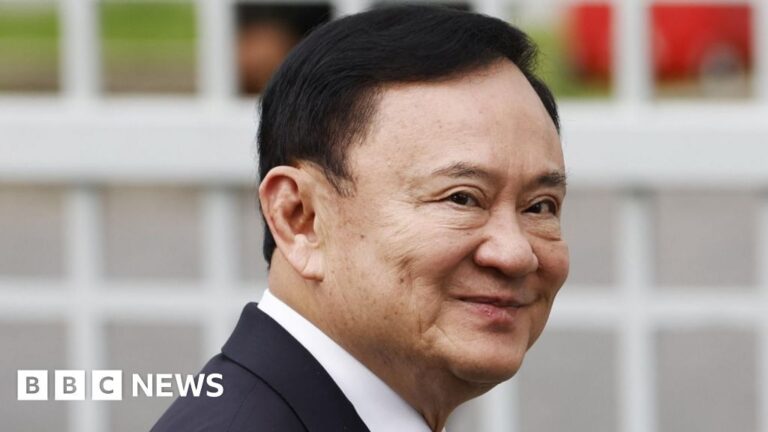
Thailand’s top court has ruled that former prime minister Thaksin Shinawatra must serve a year in jail, in yet another blow to the influential political dynasty.

The decision relates to a previous case where he was sentenced to years in prison for corruption, but ended up spending less than a day in a jail cell as he was moved to a hospital.

On Tuesday, the Supreme Court ruled that this transfer was unlawful – and that the 76-year-old would have to serve his sentence in jail.

Thaksin and his family have dominated Thai politics since he was first elected PM in 2001. His daughter Paetongtarn previously served as leader but was removed from office last month over a leaked phone call.

Shortly after the ruling was announced, Thaksin released a statement on social media stating that “even though I lose my physical freedom, I will still have freedom of thought for the benefit of my country and its people”.

He also vowed to maintain his strength to serve the monarchy, Thailand and its people.

The former PM was ousted in a military coup in 2006 and spent years living in self-imposed exile, mostly in Dubai.

When he returned to Thailand in 2023, he was promptly tried and found guilty of corruption and abuse of power during his time in office and sentenced to eight years in prison.

But Thaksin spent only hours in a jail cell before he complained of heart issues – and was later moved to a luxury wing of Thailand’s Police General Hospital.

Following his plea for a royal pardon, the Thai king commuted his sentence to one year.

Thaksin stayed in hospital for six months, then received parole and moved to his home in Bangkok.

On Tuesday, a Supreme Court judge said in a statement that Thaksin “knew or could perceive that he was not in a critical or emergency condition”.

While Thaksin had underlying chronic medical conditions, he could have been treated as an outpatient, the judge said while ruling that the hospital stay was illegal.

EPA A woman wearing a black jacket and red shirt, surrounded by others wearing red shirts, holds up a poster of Thaksin depicting him wearing sunglasses and a white shirtEPA

Supporters of Thaksin wearing his party’s trademark red colour showed up at the court on Tuesday

The “14th floor case”, as it is known in Thailand because of the hospital floor he stayed at, has attracted intense scrutiny.

The handling of the case has led to criticism from many Thais, who say the rich and powerful are often given privileged treatment.

Prior to Tuesday’s ruling many were closely monitoring Thaksin’s movements.

Last week he flew out of Thailand in a private jet to Dubai, where he said he was seeking medical treatment. He said on social media that he intended to fly back for the court hearing.

He showed up in court in Bangkok on Tuesday morning with Paetongtarn, smiling and greeting the media and a group of supporters. Thaksin was wearing a suit with a yellow tie, the colour associated with Thailand’s monarchy.

Paetongtarn told reporters after the ruling that she was “worried” for her father but that he and their family were in “good spirits”.

She also said she would take the family’s Pheu Thai party forward in their work as an opposition party.

Political turmoil in Thailand

Thaksin’s case took place at a time of political turmoil in Thailand, and Tuesday’s court decision is yet another sign of the changing fortunes of the Shinawatra clan and Pheu Thai.

The “14th floor case” is not the only case Thaksin has faced in recent months.

He was also separately accused of insulting the Thai king, but last month a court acquitted him of lese-majeste.

Meanwhile Paetongtarn was embroiled in controversy after Cambodian leader Hun Sen leaked a phone call he had with her over the Thai-Cambodia border conflict, in which she was heard addressing him as “uncle”.

She was then removed from office after the constitutional court found her to be violating ethical standards expected of her office.

Last week Thailand’s parliament chose Anutin Charnvirakul as the new PM, the third in two years.

Anutin’s Bhumjaithai party broke from the coalition led by Pheu Thai, and secured enough support in parliament from another party to win the premiership.

Regional REIT achieves 9.6% shareholder return despite office market obstacles

0


Regional REIT reports 9.6% shareholder return amid office market challenges

Delivery Workers in Washington D.C. Concealing Themselves from ICE

0

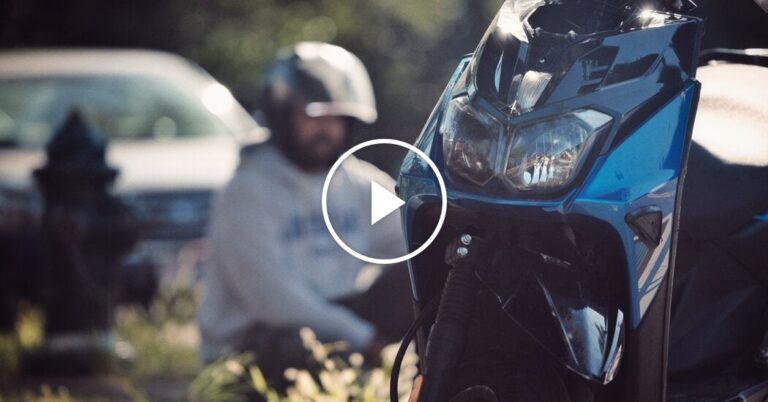
One month into President Trump’s federal takeover of Washington, D.C., some of the city’s most visible workers have gone into hiding. Hector is one more than a dozen people we spoke to who work for apps like Uber Eats, DoorDash and Grubhub. He and others say they have drastically cut back their hours or stopped working entirely. They also told us that federal agents in D.C. are detaining immigrants both with and without work permits. Drivers also told us they’re afraid of being targeted, so we agreed not to show their faces and are using only first names. During the first three weeks of President Trump’s federal takeover in D.C., immigration agents detained more than 400 people. Although it’s not known how many delivery workers were arrested, fear has spread. Videos of masked agents pulling drivers from mopeds have flooded immigrant group chats, alongside ads for bikes being sold by workers who are quitting altogether. D.C. police and U.S. Immigration and Customs Enforcement did not respond to our questions about whether certain groups in the city are being targeted. But in a press release, immigration officials said the arrests are part of an effort to tackle violent crime and make the city safe. On Aug. 21, this driver, Javier, was arrested while picking up a coffee order in D.C.’s Navy Yard neighborhood. Soon after he was detained, we spoke to Javier’s family — his brother-in-law, Leo, and his wife, Maria — at the apartment they share. Maria told us her husband had applied for asylum in the U.S. and had a work permit, as well as a Social Security card. She arrived just in time to see federal agents loading her husband into an unmarked vehicle. His moped was left to the side. Hours later, Maria tried to track down Javier through a legal aid hotline that has received more than 2,500 calls since the takeover began. But the operator wasn’t able to locate Javier. Maria also worked as a food delivery driver, but stopped after her husband’s arrest. Her brother-in-law, Leo, didn’t work for two days, but says he was forced to go back in order to help the family pay bills. Leo has also applied for asylum, but does not have a work permit. As Leo delivers an order, he notices a police cruiser parked near the entrance. On a typical day, Leo would make around $200. Today, he calls it quits after just two orders.

Texas and Virginia Dominate with 14 Swimmers on 2025-2026 US National Team Roster

0

By Anya Pelshaw on SwimSwam

Both Texas and Virginia placed 14 athletes on the USA Swimming 2025-2026 National Team. That leads the way for all NCAA programs.

Texas, who notably won the 2025 NCAA men’s team title, led the way on the men’s side with 10 athletes named to the roster and had four women named as well. The Virginia women, who won the 2025 NCAA women’s team title, placed 11 athletes on the women’s roster and had three named on the men’s side.

Last year, Texas led the way with 14 swimmers, with nine men and five women. Virginia had 12 athletes named to the 2024-2025 roster, 10 women and two men.

Indiana had 13 athletes named to the roster for this upcoming 2025-2026 year. “N/A” also had 13 athletes, although that includes junior swimmers such as Rylee Erisman and Luka Mijatovic.

It is important to note that this these affiliations are based on the what the athlete specified during USA Swimming’s roster announcement. For example, Shaine Casas is listed as N/A despite spending three years competing at Texas A&M before he transferred (and went pro) at Texas. Another example is Regan Smith listed as N/A, although she swam one season at Stanford and currently trains at Texas.

Men + Women By College Affiliation (Alphabetical)

Alabama 1
Arizona State 7
Cal 10
Florida 6
Georgia 2
Harvard 1
Indiana 13
Kentucky 1
Louisville 2
Michigan 3
Minnesota 1
N/A 13
NC State 8
Nebraska 1
North Carolina 3
Notre Dame 1
Ohio State 3
Penn 1
Stanford 6
Tennessee 3
Texas 14
Texas A&M 1
USC 2
Virginia 14
Virginia Tech 1
West Virginia 1
Wisconsin 2

Men’s Roster By College Affiliation

Alabama 1
Arizona State 6
Cal 7
Florida 4
Georgia 1
Harvard 1
Indiana 9
Kentucky 1
Michigan 1
Minnesota 1
N/A 6
NC State 4
North Carolina 2
Notre Dame 1
Ohio State 2
Penn 1
Stanford 1
Tennessee 2
Texas 10
USC 1
Virginia 3
Virginia Tech 1
West Virginia 1

Women’s Roster By College Affiliation

Arizona State 1
Cal 3
Florida 2
Georgia 1
Indiana 4
Louisville 2
Michigan 2
N/A 7
NC State 4
Nebraska 1
North Carolina 1
Ohio State 1
Stanford 5
Tennessee 1
Texas 4
Texas A&M 1
USC 1
Virginia 11
Wisconsin 2

Read the full story on SwimSwam: Texas, Virginia Lead Way With 14 Swimmers On 2025-2026 US National Team Roster

New Generation of Intelligent Traffic Lights Powered by AI Hits the Streets

0

Have you ever been late for a meeting and found yourself at a red light with no traffic or pedestrians in sight? Many urban solutions, such as lighting or traffic lights, have worked mechanically until now: turning on or changing color at fixed intervals, regardless of the circumstances. This has become a source of inefficiency, leading to illuminated streets with no pedestrians or traffic, or red lights at empty intersections. Now smart traffic lights, based on AI and big data, could help reverse the situation.

This article covers the following topics and offers a comprehensive infographic:

The city of the future

Do you like what you see? Download the PDF here

What are smart traffic lights?

A smart traffic light is a traffic control system that reacts to environmental conditions in real time. It is one of the elements of smart cities and, like other applications such as electricity supply or water management, it depends on two fundamental factors:

  1. Sensor network. They range from simple cameras to radar sensors, all interconnected through IoT (Internet of Things) technologies. It is also expected that, as Car2X communication protocols are implemented, the vehicles will report their position, speed, and direction, both to nearby cars and to traffic signals and systems in the vicinity.
  2. Artificial intelligence and big data systems. The massive data collected through the sensors is processed by artificial intelligence, which allows management of the current situation and anticipates events such as peak traffic hours or off-peak holidays.

AI for smooth traffic flow

Smart traffic lights look set to become one of the cornerstones of sustainable mobility. Mainly, they will save time and fuel while reducing the environmental pollution in cities.

But what is the current situation of this technology? Well, it seems that significant progress is being made. One example is the work of Aston University in the UK. This is artificial intelligence software that, through machine learning, is capable of analyzing images from traffic cameras in real time and modifying the behavior of traffic lights.

To achieve this, British researchers have created a photorealistic traffic simulator, codenamed Traffic 3D, where AI can be trained without endangering drivers. The simulator generates different traffic conditions, including rainy situations or accidents.

The reinforcement learning used by AI is a bit like human learning: a reward for getting it right, a penalty for mistakes. Thus, every time there are waiting times or a traffic jam, the system receives a penalty. In this way, the AI has been improving its performance and has already been successfully tested on an actual crossing. In this case, instead of obtaining the information from the simulator, it obtains it from the cameras located on site. The AI also adapts to new circumstances, such as an accident.

Until now, many smart traffic light control systems were based on magnetic induction loops. In other words, a wire crosses the roadway and records the number of passing cars. The program counts and reacts to this data. The new model, on the other hand, will allow a more agile and faster reaction, since it can monitor the traffic that is arriving at an intersection, not just the traffic that is passing through a specific point.

Cities with smart traffic lights

Although Aston University’s software is one of the most advanced in this field, the implementation of smart traffic lights has been going on for years. Thus, in the US, AI-assisted traffic lights began to be implemented in 2018. An example of a city with this type of traffic lights would be Pittsburgh, which managed to reduce by 40% the time lost in traffic jams with 20% fewer emissions. And all this by using software that combines images from cameras, radars, radio frequency devices, and artificial intelligence.

Other cities in China, Malaysia, and India are implementing AI-based traffic management solutions. Some of them have been developed by Ali Baba, the e-commerce giant. However, traffic is not the only target of these management systems. In the UK, a company is already applying AI-based technology that monitors crosswalks and modulates smart traffic lights based on detected pedestrians and their potential behaviors—anticipating whether or not they will cross based on their movements.


Sources