

0.6 C
New York
Tuesday, March 3, 2026
Home Blog Page 410

People CEO criticizes Google’s AI as the worst for content theft

0

When Google became the dominant search engine around 2004, not everyone was happy. Everyone from book publishers to music studios blasted the company for helping itself to copyrighted content without paying. The search giant eventually smoothed things over but now, twenty years later, Google has become the media industry’s villain all over again—this time for gobbling that same content to train its AI tools.

Speaking at Fortune’s Brainstorm Tech conference on Wednesday, People Inc CEO Neil Vogel—whose firm’s titles include People and Food & Wine—said other big AI firms are paying for publishers to use the content they create, but that Google has so far refused.

“Some AI shops are good actors. Open AI is a good guy,” said Vogel. “The worst guy is Google.”

Vogel made his comments during an on-stage panel discussion about the future of digital media in the new AI-driven internet. The comments come as media and news publishers are squaring off with AI companies at the deal table and in the courtroom. The New York Times has sued OpenAI alleging that it trained its chatbots on its content without permission or payment. OpenAI has called the suit baseless.

Cloudflare CEO Matthew Prince, who was also on Wednesday’s Brainstorm panel, said it has become far harder for websites to attract traffic at a time when AI firms serve as “answer engines” that provide what people are looking for in quick snippets.

Prince observed that, in the past, Google served as a “great patron” to the Internet by ingesting the content of web pages in order to display links to those pages in response to people’s search queries. This arrangement directed traffic to companies’ websites, offering them a chance to make money from the visitors.

Today, that traffic is falling dramatically since AI-generated answers often provide all the information users need. Google is among those supplying AI answers based on information it has crawled from companies’ websites but, unlike its traditional search results, Google’s AI answers don’t deliver the same traffic to websites—leading the likes of Vogel to fret that publishers have already traded analog dollars for digital dimes, and are now trading those dimes for AI pennies.

In the case of other big AI companies, publishers have obtained some leverage by working with firms like Cloudflare to cut off the so-called crawlers that read and ingest their content. In the case of Google, though, that hasn’t proved a viable option since the company’s crawler for AI is the same as it uses for showing search results. A publisher intent on preventing Google’s AI machine from crawling its content would have to sacrifice its discoverability in search too.

Vogel noted that, while Google searches are bringing less traffic to People Inc websites than in the past, they still account for between 25-30% of visits, making it financially unviable to cut off the company’s crawlers. He added that some AI firms have already agreed to pay content creators—including Anthropic, which this month reached a $1.5 billion settlement with book publishers—and that others are actively working on similar arrangements. The exception is Google, which Vogel dubbed a “bad actor.”

Google declined to comment on Vogel’s remarks.

The YouTube model as a possible solution

The current controversy over Google and other big AI’s use of others’ content has strong echoes of the early internet era. That era—and Google—may also offer a solution. Bill Gross, an influential early Internet figure credited with pioneering the paid search advertising business model and who is now founder and publisher of ProRata.ai, points to what happened with YouTube, which Google acquired in 2006.

Stuart Isett/Fortune

In its early days, YouTube outraged content creators like musicians and movie studios by letting users blatantly pirate their content. This triggered a series of lawsuits but, in time, YouTube came up with a compromise: It would give creators the option to monetize their content through advertising. That solution has proved workable and mutually beneficial for more than a decade—Google says it has paid more than $12 billion in shared ad revenue to rights holders as of December 2024—and Gross says it can work equally well for the AI era.

“The right way to solve this is not with lawsuits but with royalties,” said Gross, whose firm offers AI-related monetization options. “It opens up incentives for lots of new content to be created.”

Prince sounded even more bullish, predicting a “golden age” where AI companies would provide annual payments to those who produced unique and valuable content. He cited recent deals in which OpenAI agreed to pay the New York Times, Reddit and others.

Not everyone, however, is optimistic that the AI era will be an improvement. Janice Min, the CEO of Ankler Media, says that the past two decades show that big tech platforms like Google and Facebook may temporarily create arrangements that benefit publishers—but that they will abruptly yank them away as soon as they get what they need.

“I don’t see any benefit to partnerships with AI,” said Min. “I see the tech story happening over and over again. They come in and offer you money and it’s hard not to say no to shiny things.”

Min says Ankler has blocked all AI crawlers and is sticking with its strategy of building a media business around paid newsletters and Substack content instead.


Fortune Global Forum returns Oct. 26–27, 2025 in Riyadh. CEOs and global leaders will gather for a dynamic, invitation-only event shaping the future of business. Apply for an invitation.

Understanding the Mass Protests in Nepal: What You Need to Know

0

new video loaded: What to Know About the Mass Protests in Nepal

By Alex Travelli, Melanie Bencosme and Jon Hazell

The explosion of unrest in Nepal — with fires around the capital, Kathmandu, and the prime minister fleeing the country — was years in the making. Alex Travelli, a New York Times correspondent, describes what happened and why it happened now.

Armada’s BEAT Music Fund purchases Laidback Luke and Olga Heijns’ Mixmash Records master rights catalog

0

Armada’s BEAT Music Fund, which bills itself as “the world’s first dance music investment company,” has acquired the entire master rights catalog of Netherlands-headquartered Mixmash Records.

The deal, whose financial terms were not disclosed, will add to Armada’s growing catalog a number of hits including Show Me Love by Steve Angello and Laidback Luke feat. Robin S (169 million streams) and Turbulence by Steve Aoki and Laidback Luke feat. Lil Jon (40 million streams).

Overall, the newly acquired tracks from Mixmash have garnered over 200 million streams.

Launched in 2004 by Olga Heijns and DJ/producer Laidback Luke, Mixmash “has been a cornerstone of house music for two decades,” Armada Music Group said in a statement on Wednesday (September 10). It’s known for its releases in a number of house music subgenres including electro house, future house and progressive house.

“We ultimately chose BEAT Music Fund because their vision and capabilities aligned perfectly with our goal: to place the Mixmash catalog in expert hands, ensuring our artists’ work is properly monetized and respected,” said Heijns, who serves as Mixmash’s Managing Director.

“Their robust infrastructure and deep industry know-how were essential factors for both Luke and me – Mixmash represents 20 years of our legacy, and with BEAT we feel confident that our history and values will be carried forward.”

“Mixmash represents 20 years of our legacy, and with BEAT we feel confident that our history and values will be carried forward.”

Olga Heijns, Mixmash Records

Laidback Luke added that BEAT Music Fund’s “dedication to honoring the legacy of dance music deeply resonates with my greater purpose as an artist. I am confident that both my work and the label’s catalog are in excellent hands with the team.”

Armada Music Group CEO Maykel Piron said the company is “incredibly excited” to bring the Mixmash Records catalog into BEAT Music Fund.

“Olga and Laidback Luke have built an exceptional legacy over two decades, and this acquisition underscores our commitment to preserving and elevating the rich history of dance music,” he said.

BEAT Music Fund was launched in 2023 to be the catalog investment arm of Armada Music, the legendary Netherlands-headquartered indie dance label, shortly before the company was reorganized as Armada Music Group.

“This acquisition underscores our commitment to preserving and elevating the rich history of dance music.”

Maykel Piron, Armada Music Group

Since then, the fund has invested into the catalogs of such notable electronica artists and labels as Kevin Saunderson’s KMS Records, electronic music star ARTY, legendary NYC-based house label King Street Sounds, chart-topping producers Chocolate Puma, acclaimed UK duo Solardo’s Sola Records and Grammy-nominated DJ and producer Jax Jones.

In 2024, BEAT Music Fund said it aimed to spend $500 million on catalog acquisitions over the coming five years.Music Business Worldwide

Tara Talwar, Finalist at Speedo Sectionals, to Attend United States Air Force Academy in 2026

0

By Madeline Folsom on SwimSwam

Fitter and Faster Swim Camps is the proud sponsor of SwimSwam’s College Recruiting Channel and all commitment news. For many, swimming in college is a lifelong dream that is pursued with dedication and determination. Fitter and Faster is proud to honor these athletes and those who supported them on their journey.

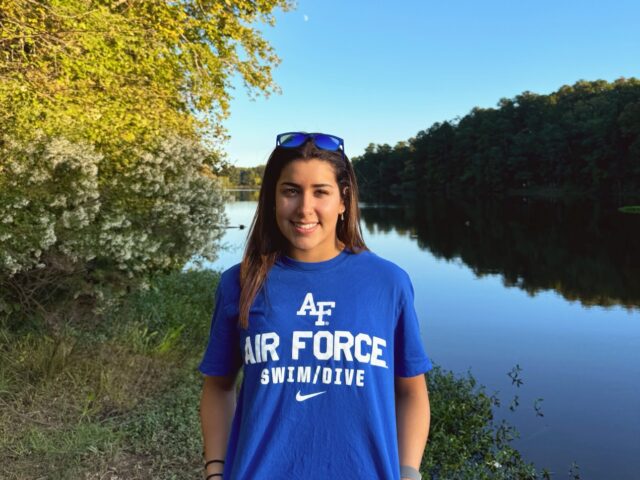
Sectionals finalist and Futures qualifier Tara Talwar has sent her verbal commitment to the United States Air Force Academy for the fall of 2026.

“I chose the United States Air Force Academy because it offers incredible opportunities and the privilege of serving my country. I’m beyond thrilled to grow as a leader and athlete while training with an amazing team of swimmers and coaches!”

Talwar lives in Cary, North Carolina where she swims club for the TAC Titans. At the 2025 Speedo Sectionals in Cary, Talwar qualified for finals in the 100 back (58.45), 200 back (2:06.49), 100 fly (58.44), and 200 fly. Her highest finish came in the 200 fly, where she swam a season best 2:11.22 to finish 20th in the final.

She also attends Green Level High School, where she swam at the Southwest Wake Conference meet. There, she finished 7th in the 100 back (1:01.20) and 4th in the 100 fly (59.34).

Talwar’s SCY Best Times:

  • 100 fly- 56.08
  • 200 fly- 2:05.25
  • 20 back- 2:03.58
  • 200 IM- 2:07.85

The United States Air Force Academy women’s team competes in the Mountain West Conference, and they finished 8th out of 10 teams at the 2025 championships, more than 150 points behind Colorado State in 7th.

On last season’s team, Talwar would have been 5th in the 100 fly, 8th in the 200 fly, 8th in the 200 back, and 13th in the 200 IM. Most of the athletes ahead of her in the fly and backstroke events will have graduated by the time she arrives on campus, and she will be crucial in helping to rebuild those events.

If you have a commitment to report, please send an email with a photo (landscape, or horizontal, looks best) and a quote to Recruits@swimswam.com.

About the Fitter and Faster Swim Tour 

Fitter & Faster Swim Camps feature the most innovative teaching platforms for competitive swimmers of all levels. Camps are produced year-round throughout the USA and Canada. All camps are led by elite swimmers and coaches. Visit fitterandfaster.com to find or request a swim camp near you.

FFT SOCIAL

Instagram – @fitterandfasterswimtour
Facebook – @fitterandfastertour
Twitter – @fitterandfaster

FFT is a SwimSwam partner.

Read the full story on SwimSwam: Speedo Sectionals Finalist Tara Talwar Commits To The United States Air Force Academy for 2026

Neo Light RemigoOne Ultra-Slim Portable Electric Outboard Motor

0

Slovenian e-drive innovator Remigo brought its 1,000-W electric boat drive to the North American market earlier this year and has been quickly growing out its lineup ever since. Now it launches a new flagship motor drive that puts out 50 percent more power without giving up the RemigoOne’s classic blade-slim integrated packaging or easy-carry sub-30-lb (13.6-kg) weight. The RemigoOne Neo gives small e-boaters a little more oomph without any of the inconvenience of a larger, bulkier electric or gas outboard.

The RemigoOne Neo does dial up 1,500 watts of power, but the catch is that the full load is accessed via “Boost” mode for a period 60 seconds. This helps to protect the integrated 1085-Wh lithium battery’s runtime while still giving boaters extra power for accelerating up to speed or battling a bout of gusting wind. After those 60 seconds, the drive returns to its normal ceiling of 1,000 watts.

The all-new RemigoOne Neo can jump to boost mode, raising top speed over 6 mph

Remigo

Should the wind or need for extra power prove a little more persistent, boaters can hit Boost again to crank things right back up to the full 1,500 watts.

“The boost mode gives skippers an extra gear when they need it, without wasting battery on marginal gains the rest of the time,” Remigo CEO Marko Vrtovec explained it during this month’s launch. “The difference between 1 kW and 1.5 kW is minimal, especially when cruising away from shore, but when you need that burst of torque and acceleration, it’s right there.”

The Neo dials up to 36 kg (79 lb) of static thrust in boost mode to complement its 1,500-watt burst, dropping back down to 31 kg (68 lb) once boost mode kicks off. It’s designed for a variety of small boats weighing up to 25 feet (7.6 m) and/or 1.5 tons (1,361 kg), such as dinghies and tenders. Shaft length is adjustable between 15 and 25 inches (38 to 64 cm) for fitting to different vessels.

While it gains 50 percent more available power, the Neo packs on less than 10 percent more carry weight, or 2.2 lb (1 kg). The slimline aluminum unibody housing the motor and battery pack weighs in at 28.7 lb (13 kg), while the entire package tops out at 34 lb (15.5 kg). That latter figure includes the transom mounting bracket that’s designed to be left on the boat, so users are only meant to carry around the 28.7-lb package, conveniently outfitted with a tiller that folds to work as a carry handle.

The 34-lb RemigoOne Neo includes a transom bracket that weighs roughly 5 lb and allows the main motor drive to be carried on and off the water as needed

Remigo

The new 1,500-W peak rating doesn’t have much of an impact on estimated range, but we suppose your nautical mileage will ultimately depend on how frugally you use that boost button. If using Boost throughout the trip, top speed jumps to 6.3 mph (10.2 km/h) and total available range drops to an estimated 4.2 nautical miles (7.8 km).

That’s a minor difference from the 5 nautical miles (9.3 km) you can expect at the 1,000-W top speed of 5.8 mph (9.3 km/h). If you kick it down to the 2.3-mph (3.7-km/h) Eco mode, on the other hand, you can extend the journey up to roughly 30 nautical miles (55.6 km). Real-world ranges will, of course, depend on the vessel, water conditions and other factors.

Enjoying the all-new RemigoOne Neo electric outboard on the water

Remigo

Once the battery is depleted, it takes six hours to charge from a standard electrical socket with the included charging hardware or three hours with the optional fast charger. Using the optional 12-/24-V charger out in the field raises that time up between 10 and 12 hours.

Like the original RemigoOne, the 4-foot-long (125-cm) Neo features an IP67 waterproof marine-grade aluminum construction protecting all the electrical hardware inside. It’s controlled via simple two-button operation or with the available remote that docks atop the tiller handle.

The available remote control can dock in the tiller handle or be used freely around the boat within 49 feet of the motor

Remigo

The RemigoOne Neo is available to order now for an MSRP of US$3,499. The fast charger can be added on for $259 and the remote control for $239.

Source: Remigo

Israel accused of ‘state terrorism’ by Qatar PM after 70 killed in Gaza | Updates on Israel-Palestine conflict

0

Challenging Client

0


Client Challenge


JavaScript is disabled in your browser.

Please enable JavaScript to proceed.

A required part of this site couldn’t load. This may be due to a browser
extension, network issues, or browser settings. Please check your
connection, disable any ad blockers, or try using a different browser.

A Guide to Charlie Kirk: The Conservative Activist and Trump Supporter

0

Charlie Kirk was one of the most high-profile conservative activists and media personalities in the US and a trusted ally of President Donald Trump.

Kirk, 31, who died Wednesday in a shooting at a Utah college, was known for holding open-air debates on campuses across the country.

In 2012, at the age of 18, he co-founded Turning Point USA (TPUSA), a student organisation that aims to spread conservative ideals at liberal-leaning US colleges.

His social media and eponymous daily podcast often shared clips of him debating with students about issues such as transgender identity, climate change, faith and family values.

The son of an architect who grew up in the well-to-do Chicago suburb of Prospect Heights, Kirk attended a community college near Chicago before dropping out to devote himself to political activism. He applied unsuccessfully for West Point, the elite US military academy.

Kirk often referred tongue-in-cheek to his lack of a college degree when engaging in debates with students and academics on esoteric topics such as post-modernism.

His role in TPUSA took off after President Barack Obama was re-elected in 2012.

The mission of the non-profit organization’s mission is to organize students to “promote the principles of fiscal responsibility, free markets, and limited government”. TPUSA now has chapters in more than 850 colleges.

Kirk toured the country speaking at Republican events, many popular with members of the ultra-conservative Tea Party movement. His daily conservative talk radio show had millions of followers on social media, CBS News reported.

An avid public speaker, Kirk addressed the Oxford Union earlier this year, and wrote a 2020 best-seller The Maga Doctrine, a reference to Trump’s Make America Great campaign.

TPUSA played a key role in the get-out-the-vote effort for Trump and other Republican candidates in last year’s election. The millennial was credited widely with helping to register tens of thousands of new voters and flipping Arizona for Trump.

Kirk attended Trump’s inauguration in January in Washington DC, and has been a regular visitor at the White House during both Trump terms in office.

On Wednesday, Trump announced the death, paying tribute to Kirk: “The Great, and even Legendary, Charlie Kirk, is dead. No one understood or had the Heart of the Youth in the United States of America better than Charlie.”

The president and his aides valued Kirk’s political antenna for the grassroots of the MAGA movement. He’s spoken at Republican conventions and last year Donald Trump repaid the favour by giving a speech at a Turning Point conference in Arizona.

Earlier this year, he travelled with Trump’s son, Donald Trump Jr, to Greenland, as the then-incoming president was arguing that the US should own the Arctic territory.

Kirk’s evangelical Christian religion and family – he married a former Miss Arizona, with whom he had two children – were front and centre in his politics, and he was seen as both the future of conservative activism and a highly polarising figure.

Perhaps the biggest tribute to his contribution to Republican politics came from Trump himself in a clip played at the beginning of Kirk’s podcast.

The president says: “I want to thank Charlie, he’s an incredible guy, his spirit, his love of this country, he’s done an amazing job building one of the most powerful youth organisations ever created.”

Kirk discussed numerous political and social issues at his events and on his podcasts – gun control was one of them.

A few months ago Kirk said: “It’s worth it to have a cost of, unfortunately, some gun deaths every single year so that we can have the Second Amendment”.

Some of his views were considered controversial. He spread anti-transgender views and skepticism over the Covid-19 pandemic, according to CBS, the BBC’s news partner. He also publicly promoted the false claim that the 2020 election was stolen from Trump.

He also highlighted the Great Replacement conspiracy theory, which is based on a plot to replace White people with minorities, according to CBS.

Olivan Javier offloads Meta Platforms shares for $390k

0


Olivan Javier sells Meta Platforms shares for $390k

After an evacuation order, numerous Palestinians depart Gaza City.

0

new video loaded: Many Palestinians Leave Gaza City After Evacuation Order

By McKinnon de Kuyper

Nearly all of the city’s residents have already been forced from their homes at least once during the war, many of them multiple times. Several Palestinians do not believe that any place in Gaza is safe from Israeli strikes.