-1.4 C
New York
Tuesday, March 3, 2026
Home Blog Page 405

Ultra-Portable 1-oz Flextail Zero 2.0 Camping Pump

0

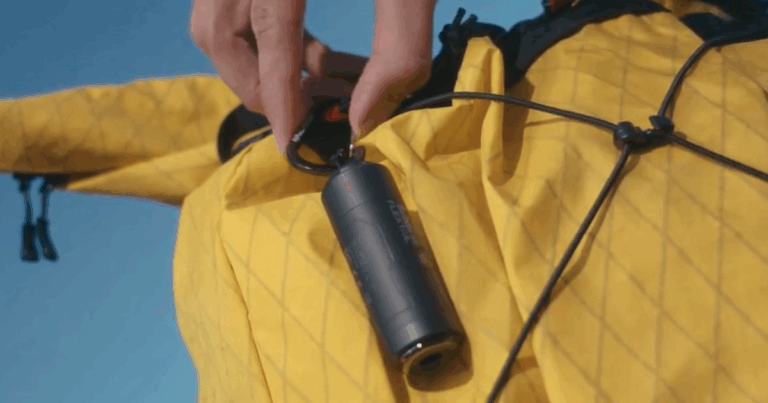
We didn’t expect Flextail to let Nitecore’s APO5C backcountry micro-inflator stand for too long without firing a counterstrike. And what a strike it is. The all-new Zero 2.0 takes Flextail’s already highly popular, benchmark-setting Zero pump to the next level with a lighter build that weighs an even ounce, increased output and a swappable extreme-weather battery system. It’s everything backcountry adventurers loved about the original Zero, just enhanced from end to end.

Flextail debuted the Zero pump in 2023 as the world’s “smallest and lightest” pump, and the little e-inflator reigned for close to two years as the lightest battery-integrated pump we’d ever looked at. Flextail has called it not only its flagship pump but its flagship innovation, period, saying it’s gotten Zero pumps into the hands of no less than 200,000 adventurers worldwide. Those folks rely on the pump’s combination of tiny, beyond-lightweight packability and fast, simple inflation/deflation to support them on everything from quick overnighters to extended many-day expeditions in environments entirely unfit for longterm human life.

Then, just like that, the Zero got bumped off the top of the ultralight electric pump pyramid earlier this summer by the APO5C from fellow Chinese brand Nitecore, a pump that weighs roughly 10 grams less than the Zero while offering comparable performance.

Flextail is currently hosting a Kickstarter to launch the Zero 2.0 micro pump

Flextail

No way could Flextail let the APO5C stand alone at the top for long – or even four full months, as it turns out. It launched the Zero 2.0 on Kickstarter this week, taking on Nitecore and other competitors with a tiny new battery inflator that boasts a fully revamped spec sheet.

We would have named this one the “Sub Zero,” both because it’s lighter than the original Zero and because it features an all-new cold-weather battery. Flextail, however, sticks with Zero 2.0, a name that still does a good job letting buyers know it’s just like original, only updated to be even better. Maybe it’s pocketed “Sub Zero” for a future evolution of ultra-lightweight inflator technology.

Regardless, Flextail shaves the pesky 0.2 clean off the 2.0’s bold graphics to bring its well-advertised weight down to an even 1.0 ounce (28 g). The recommended battery still weighs in at the same 0.6 oz (17 g) as the original, bringing total weight to 1.6 oz (45 g), also a round 0.2 oz (6 g) less than the original Zero’s 1.8-oz (51-g) weight with battery installed.

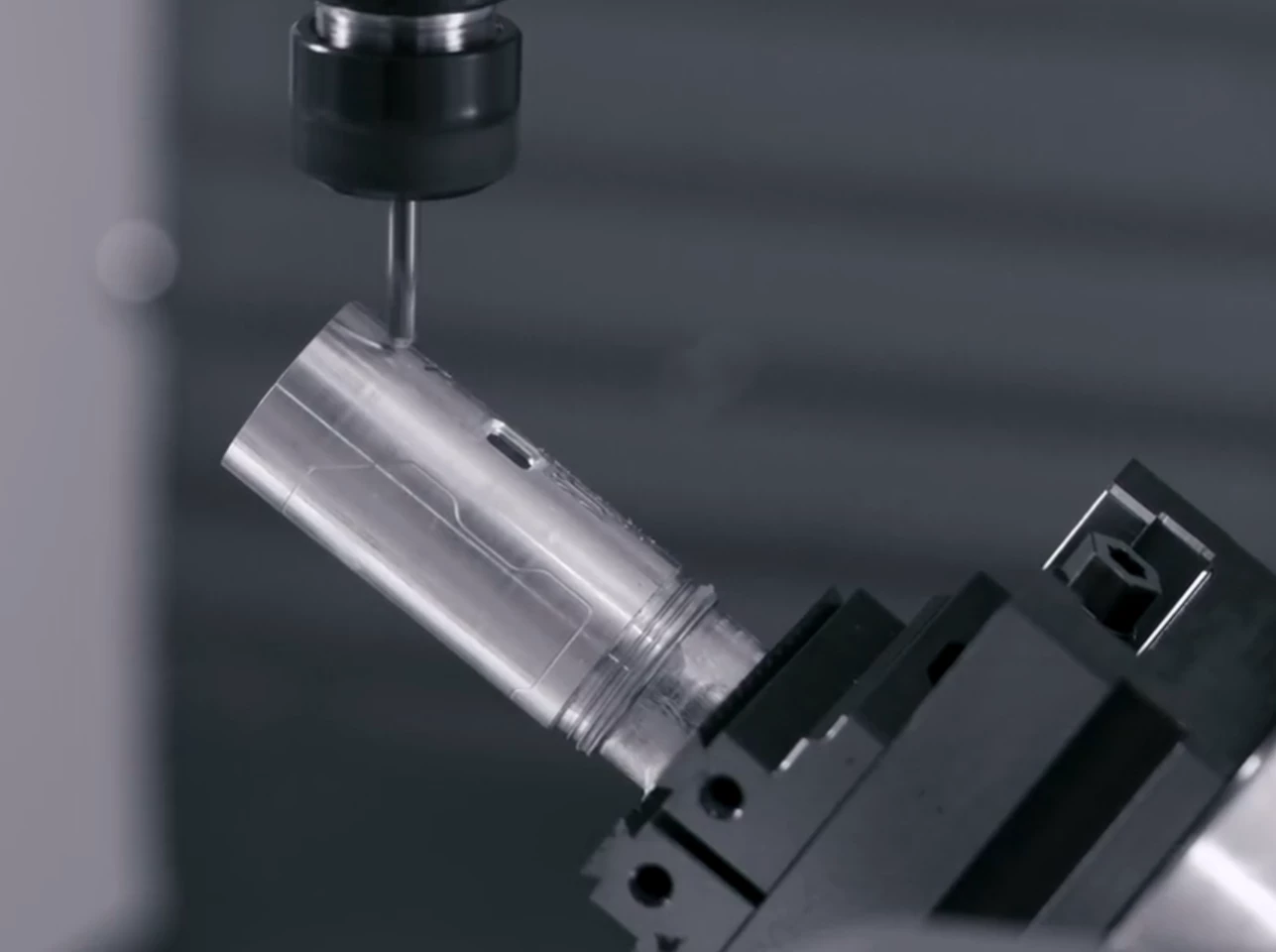
Flextail optimized the Zero 2.0's aluminum alloy unibody to save weight
Flextail optimized the Zero 2.0’s aluminum alloy unibody to save weight

Flextail

Flextail’s anodized aluminum unibody construction does leave the Zero 2.0 about 0.2 oz heavier than Nitecore’s carbon fiber APO5C.

On the performance front, the Zero 2.0 increases pressure by 1 kPa over its predecessor, up to 3.5 kPa, a figure that’s also higher than the 2.7-kPa APO5C. It also raises fill rate from 180L/min to 200L/min, equalling the rate of the APO5C.

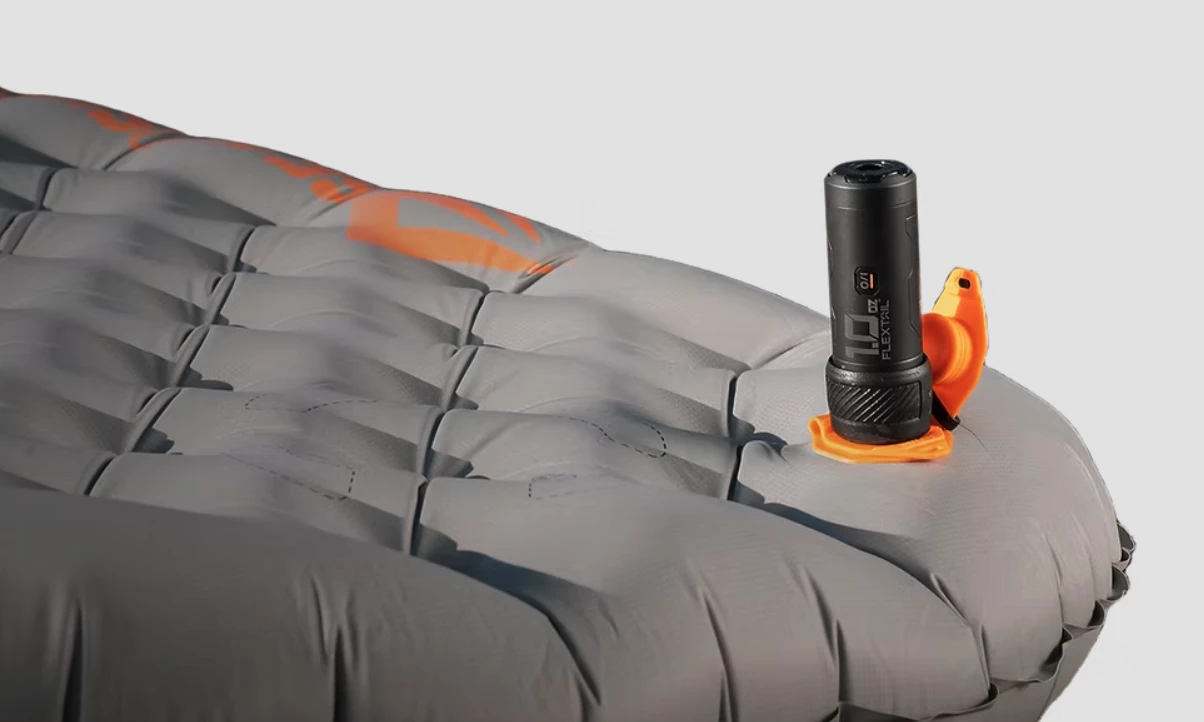
Flextail estimates that the Zero 2.0 will fill up a variety of popular sleeping pads from manufacturers like Big Agnes and Nemo in roughly 45 to 63 seconds, depending upon model. The inflator comes with six different nozzles to adapt quickly to different valve styles and can be secured to the valve, switched on with one push and left to fill the pad on its own, freeing users to complete other camp tasks simultaneously. Runtime comes in at around 24 to 30 pads’ worth of fill-ups, or 22 minutes per battery-charge.

Set it and forget it: The new Flextail Zero 2.0 pump is designed for hands-free fill-ups

Flextail

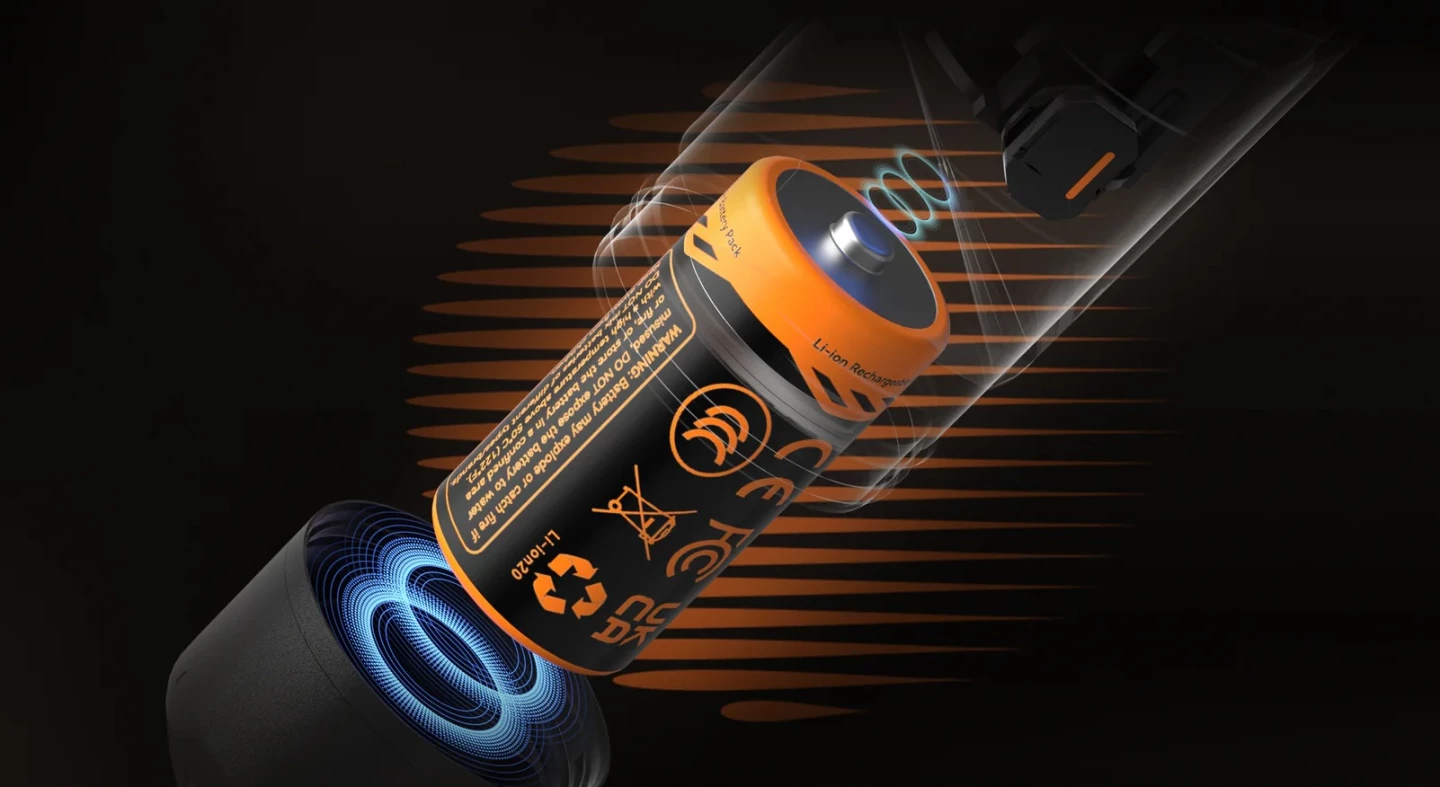
Flextail has also used the 2.0 update process to rethink the Zero’s battery system. In place of the basic (R)CR123A upon which the previous generation relied, the Zero 2.0 gets a dedicated dual-battery selection. The swappable 900-mAh orange-and-black Zero 900 CHT battery boosts capacity over the original Zero’s 650-mAh battery and works in a full temperature range between 14 and 122 °F (-10 to 50 °C) to perform seamlessly through three+ seasons of camping. It also features an integrated USB-C port for light, simple charging.

The icy-looking replaceable 900 ZHF battery, meanwhile, is formulated specifically for use in cold, sub-zero weather down to -40 °F (-40 °C), making it the choice for mid-winter, high-altitude and extreme-condition mountaineering and backcountry expeditions. Using nano electrode structures and anti-freeze electrolytes, the 900 ZHF is able to maintain 80 percent capacity in those -40 temperatures, ensuring uninterrupted operation in some of the world’s coldest conditions.

The batteries can be swapped not only in and out of the Zero 2.0 itself but also with compatible Flextail gear like the micro-sized 1,200-lumen Zero Flashlight and the Tiny Helio headlamp. The Zero 2.0 also works with other rechargeable and disposable CR123A batteries, as well as 16340 batteries.

Flextail is launching the Zero 2.0 with two dedicated batteries

Flextail

Like the original Zero, the Zero 2.0 is designed to double as a highly portable automatic fire bellows for blowing air to ignite tinder or smoldering embers into a full fire. It also works to deflate sleeping pads and other compact inflatable gear.

The Zero 2.0 is available at a Kickstarter super early bird pledge of US$43, right about the same price at which Nitecore sells the APO5C. That base level includes a single battery, and Kickstarters will also find pledge levels that package the pump with multiple batteries and additional small, ultra-portable Flextail gear items. Flextail plans to begin deliveries in November, assuming things keep going as smoothly as they did in reaching its $5,000 goal, which it has already surpassed 12 times over with nearly four weeks left to go.

Source: Flextail

The suspect in custody for shooting Charlie Kirk: Tyler Robinson

0

Brajesh UpadhyayBBC News, Washington

BBC Verify examines Tyler Robinson’s social media accounts

The man accused of fatally shooting conservative activist Charlie Kirk has been identified as Tyler Robinson, 22, a Utah native who had been living with his parents “for a long time”, authorities said.

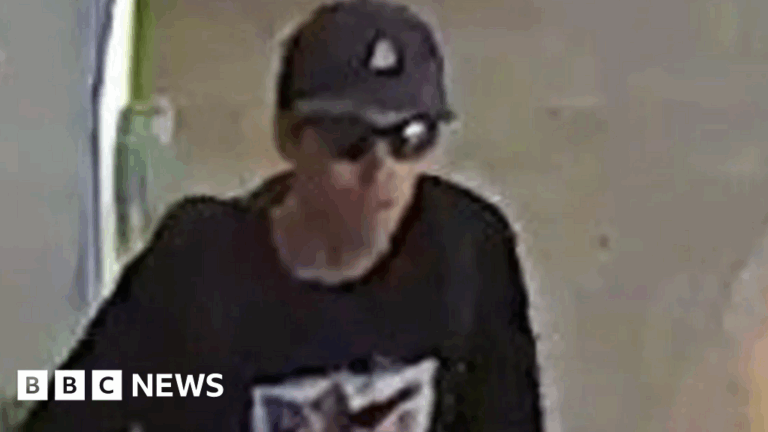
Robinson was taken into custody on 12 September after a family member recognised him in surveillance images, a development investigators described as pivotal in ending a nationwide manhunt.

That family member was apparently Robinson’s father, who encouraged him to turn himself in, the BBC’s US partner CBS News has reported, citing two law enforcement sources. The father then reportedly contacted a family friend who informed the sheriff’s office.

At a press briefing on Friday announcing the arrest, FBI officials declined to discuss Robinson’s background, political leanings, or possible motive, saying the investigation was ongoing.

“We are confident we have the right individual in custody,” an FBI spokesperson said, “but we are still working to establish the full picture of who he is and why he acted.”

Utah Governor Spencer Cox said a family member interviewed by investigators stated that Robinson had become “more political” in recent years.

The relative also said that during a dinner conversation before the attack, Robinson had stated Kirk “was full of hate and spreading hate” and mentioned Kirk’s upcoming event at Utah Valley University, according to Cox.

“They talked about why they didn’t like him and the viewpoints that he had,” Cox said referring to the conversation.

FBI Grainy photo taken from video of young white man with gray-black hat with triangle logo, black sunglasses, black T-shirtFBI

Public records reviewed by the BBC suggest Robinson had in the past registered as an unaffiliated, or nonpartisan, voter in Utah. Matthew Carl Robinson, the suspect’s father, and Amber Denise Robinson, the suspect’s mother, are registered Republicans, according to state records.

Robinson was not enrolled at UVU, the site of the shooting.

In a statement, the Utah Board of Higher Education said Tyler James Robinson was a third-year student in the electrical apprenticeship programme at Dixie Technical College.

“He previously spent one semester at Utah State University in 2021 and earned concurrent enrolment credits through Utah Tech University while in high school between 2019 and 2021,” it added.

Social media accounts indicate Robinson’s father runs a kitchen countertop and cabinet installation business, while his mother is a social worker. The family is Mormon and active in the local church.

Utah governor details how Charlie Kirk murder suspect apprehended

Investigators say Robinson was steeped in online culture, pointing to inscriptions on shell casings linked to the case.

Two casings displayed apparent references to online trolling humour. The inscription “notices bulges OwO what’s this?” on a fired shell casing may refer to a “copypasta” – a piece of text that is repeated over and over again, often to troll people online. Another casing, that was unfired, was inscribed with the words “If you read this, you are gay lmao” – again an apparent reference to a trolling joke.

Meanwhile, other casings could be interpreted as sympathetic to Antifa, or the anti-fascist movement, a loose collection of far-left activists who have been active in the US over the last decade and often demonstrate against Trump policies and far-right groups.

One unfired casing had the words “Hey fascist! Catch!” and an up, right and three down arrows.

The three down arrows alone could be a common symbol used for anti-fascism. As a whole, the arrows could reference a sequence of control inputs in a video game – although this remains unclear, and authorities have not yet released images of the casings.

A second casing was inscribed with lyrics to the song “Bella Ciao” that honours World War Two-era partisans of the Italian resistance who fought Nazi Germany.

Authorities said Robinson also appeared to have been active on Discord, the social media platform primarily used by gamers, but now also popular with other communities.

His roommate reportedly showed investigators a series of messages on Discord from a contact named “Tyler” referencing a rifle “drop point” and instructions about retrieving and hiding the weapon.

Discord later issued a statement saying his account had been suspended. “We have removed the suspect’s account for violating our off-platform behavior policy,” it said.

For now, Robinson remains in custody as prosecutors prepare formal charges.

The investigation into his background, motives, and potential affiliations continues in what officials are calling one of the most significant political killings in recent US history.

US pledges to protect NATO territory following suspected Russian drone violation in Poland

0

US vows to defend NATO territory after suspected Russian drone incursion in Poland

What is known about Bolsonaro’s conviction

0

new video loaded: What We Know About Bolsonaro’s Conviction

By Ana Ionova, Katrin Bennhold, Christina Thornell, Leila Medina and Laura Salaberry

Brazil’s top court convicted former President Jair Bolsonaro on charges of plotting a coup to remain in power after losing the 2022 presidential election. Ana Ionova, reporting from Brasília, explains the charges and what comes next.

Zohran Mamdani, New York’s Likely Next Mayor, Meets with Influential Figures from Mike Bloomberg to Jamie Dimon and Kathy Hochul

0

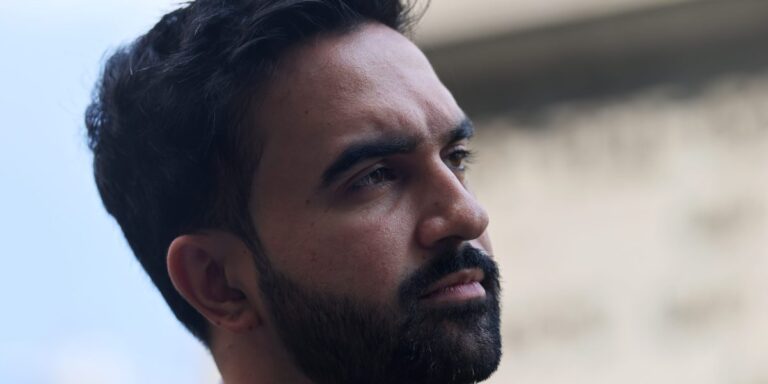
New York Governor Kathy Hochul has labeled herself a “staunch capitalist” while affirming her intent to collaborate with Zohran Mamdani, the Democratic Socialist mayoral candidate who has rapidly become the frontrunner for New York City’s top job. The political spotlight on Mamdani intensified throughout the week as he met with Mike Bloomberg, a former three-term mayor and a billionaire with deep ties to the city’s business class and philanthropic community. And in a Thursday interview with The New York Times, Mamdani signaled that he will apologize for his previous criticisms of the New York Police Department. The trio of developments reveal a moment when New York’s powers that be seem to be making peace with an incoming heavyweight player, while they clarify just how socialist they’re willing to be in their policies. Translation: not very.

Hochul’s declaration was delivered during an interview with Bloomberg TV, in which she underscored her opposition to tax increases and reinforced her pro-business values. Hochul said businesses need to know that “the city of New York, as powerful and mighty as it is, is still a subdivision of the state, so any tax increase has to come across my desk first.” Mamdani campaigned on tax increases including a new tax on millionaires and an increase in the state’s corporate tax rate.

The governor’s remarks were widely seen as both a pitch to reassure nervous business leaders and a marker of her intent to maintain a pragmatic working relationship with whoever occupies City Hall—even if it’s a Democratic Socialist like Mamdani. She said she’ll work “to help him understand that when we want to solve society’s problems, and there are many, we also need to make sure we have the resources to do it.” That involves, in Hochul’s opinion, being business-friendly in the sense of “letting people know” that building companies, creating wealth and hiring people is appreciated.

Mamdani and Bloomberg: An unexpected summit

While Hochul was affirming her capitalist bona fides, Mamdani took the extraordinary step of meeting with Mike Bloomberg, the billionaire businessman and former mayor known for his centrist politics. Bloomberg, who previously spent millions to oppose Mamdani’s primary bid, did not endorse the socialist but spent the session discussing transportation, policing, and the mechanics of City Hall staffing.

The encounter was described as friendly and “quite substantive,” according to Bloomberg’s advisor Howard Wolfson. Mamdani’s willingness to engage with establishment figures like Bloomberg signals his intent to build a broad coalition, despite marked differences on issues like taxation and policing. The Times reported that they had never before met each other.

The optics of this meeting present a balancing act for Mamdani as he seeks both progressive support and the confidence of business elites increasingly anxious about his economic platform. It represents a departure from the style of former Mayor Bill De Blasio, who was Bloomberg’s left-wing successor, widely known to keep a close counsel. Kathy Wylde, CEO of the Partnership for New York, said on Bloomberg’s Odd Lots podcast in July that De Blasio was not known for engaging with major business leaders in this fashion throughout his eight years in office. She also said business leaders were anxious, if not terrified, at the idea of Mamdani being elected, but also quite complimentary of his political skills.

One of those business leaders, JPMorgan CEO Jamie Dimon, called Mamdani “more of a Marxist than a socialist” in July, while breaking with many of the “idiots” in the Democratic Party. Dimon, long thought to be sympathetic to the Democrats if not always a registered Democrat himself, said the party had “big hearts and little brains.” And yet Dimon got on the phone and had a friendly conversation with Mamdani soon afterward, Bloomberg reported, citing people briefed on the call. Bloomberg further reported that Wylde had been helping to facilitate meetings beween Mamdani and the business class, giving out his campaign contact information to roughly a dozen executives while also arranging connections with other candidates.

Mamdani’s changing tone

In another dramatic development, Mamdani issued an apology for remarks made during the 2020 George Floyd protests, when he called the NYPD “racist, anti-queer & a major threat to public safety.” Mamdani also repeated the slogan, trending at that time and later criticized by figures including James Carville as harmful to left-wing causes, advocating for the defunding of the police. In comments to the Times, he acknowledged that his previous words were delivered “at the height of frustration” and do not reflect his current outlook or campaign priorities.

Union leaders cautiously welcomed the apology, viewing it as a necessary step in establishing trust between Mamdani and law enforcement—a group historically skeptical of his platform. However, critics and some rank-and-file officers remain unconvinced, accusing Mamdani of political opportunism as Election Day approaches.

With recent polls showing Mamdani leading his rivals by double digits, the intersection of Hochul’s pragmatism, Mamdani’s outreach, and the powerful symbolism of their evolving relationship promises a uniquely unpredictable contest for New York’s future.

For this story, Fortune used generative AI to help with an initial draft. An editor verified the accuracy of the information before publishing. 

NATO fighter jets deploying to eastern Europe as part of new ‘Eastern Sentry’ mission

0

NewsFeed

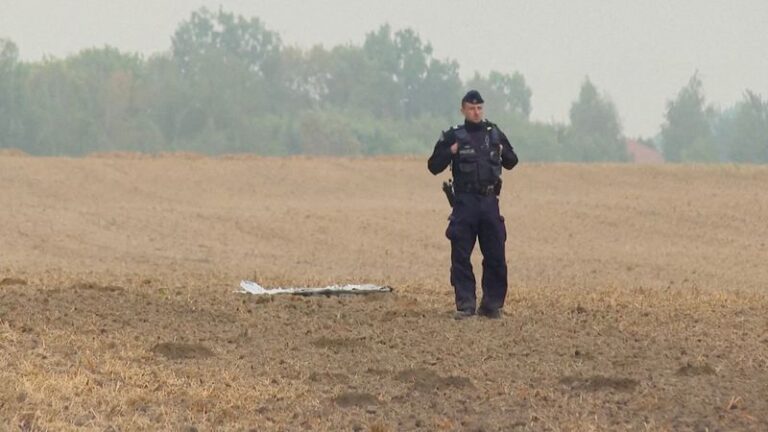
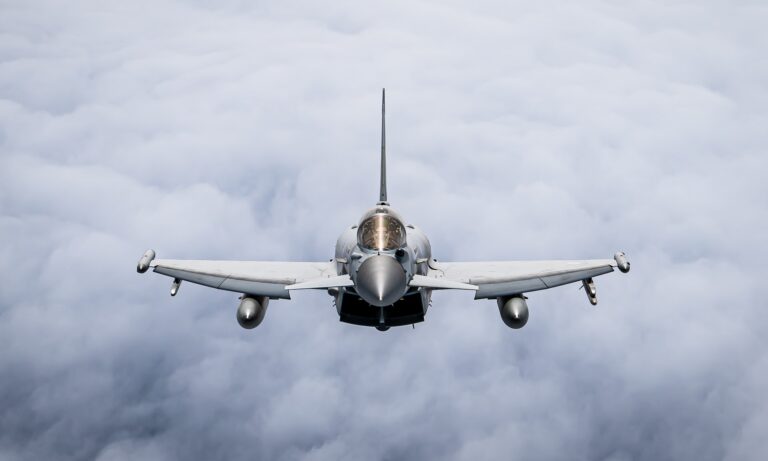
NATO is deploying additional fighter jets and a naval vessel to eastern Europe under a new program called Eastern Sentry. The military bloc shot down Russian drones over Polish territory earlier this week in a large-scale violation of the military bloc’s airspace.

MBW’s Weekly Round-Up: From Streaming’s AI Issue to Spotify’s Lossless Launch

0

Welcome to Music Business Worldwide’s Weekly Round-up – where we make sure you caught the five biggest stories to hit our headlines over the past seven days. MBW’s Round-up is exclusively supported by BMI, a global leader in performing rights management, dedicated to supporting songwriters, composers and publishers and championing the value of music.


This week, Deezer revealed that nearly a third of all tracks uploaded to its platform are now fully AI-generated, marking a dramatic surge to over 30,000 AI tracks daily.

Meanwhile, Spotify finally launched its long-awaited lossless audio feature for Premium subscribers in select markets, though it’s not part of a rumored super-premium tier.

Elsewhere, TikTok’s SoundOn distribution platform, which has seen over 1.1 million artists register to access its services since launching in 2022, is expanding into Germany.

Also this week, a US Appeals Court temporarily reinstated copyright official Shira Perlmutter after blocking the Trump administration’s attempt to remove her from office.

Plus, we learned that US streaming subscriptions hit 105.3 million in H1 2025, but recorded music revenue was up by less than 1% YoY.

Here are some of the biggest headlines from the past few days…


1. NEARLY A THIRD OF ALL TRACKS UPLOADED TO DEEZER ARE NOW FULLY AI-GENERATED, SAYS PLATFORM

Fully AI-generated music now constitutes 28% of all tracks delivered to Deezer each day, according to new data from the French streaming service.

The platform says it now receives over 30,000 fully AI-generated tracks daily, marking a sharp increase from the 20,000 figure it reported in April and the 10,000 it disclosed in January when it first launched its proprietary AI detection tool. According to Deezer, up to 70% of plays for these fully AI-generated tracks have been detected as fraudulent, with the company filtering these streams out of royalty payments.

Although fully AI-generated music currently accounts for only around 0.5% of all streams on Deezer, the platform believes the primary purpose of uploading these tracks is fraudulent activity rather than genuine creative expression.

“Following a massive increase during the year, AI music now makes up a significant part of the daily track delivery to music streaming and we want to lead the way in minimizing any negative impact for artists and fans alike,” said Alexis Lanternier, CEO of Deezer… (MBW)


2. SPOTIFY IS FINALLY LAUNCHING LOSSLESS – BUT IT’S NOT PART OF A ‘SUPER PREMIUM’ TIER

Spotify has finally added lossless audio to its platform.

The new feature comes amid Spotify’s ongoing efforts to develop a new “super-Premium” tier, possibly branded as “Music Pro,” previously reported to be launching as soon as this year.

Despite reports that the company would likely gate lossless behind a higher-priced subscription tier, the feature will be available for Premium subscribers starting Wednesday (September 10) in select markets. The rollout arrived a couple of weeks after Spotify launched a direct message feature inside its app, which the platform said is meant to make sharing music and other content easier.

A big question the wider music industry will be asking this week is whether these new features, direct messaging and lossless audio, could one day become perks of a pricier ‘super Premium’ subscription tier…. (MBW)


3. OVER 1 MILLION ARTISTS HAVE REGISTERED WITH TIKTOK’S SOUNDON. NOW IT’S EXPANDING INTO GERMANY.

TikTok’s SoundOn has seen over 1.1 million artists register to access its services since launching in 2022.

Now, the platform is launching in Germany, the world’s fourth-largest recorded music market.

The Germany roll-out marks the distribution and services platform’s latest expansion following its initial launch in markets such as the UK, US, Brazil and Indonesia, and Australia.

According to its website, SoundOn currently counts 1.158 million “partners and growing”. MBW understands this to mean artists who have registered (i.e. signed up) on the platform.

Of these registered artists, TikTok noted, SoundOn has seen “hundreds of thousands” of acts release music and generate revenue on the platform… (MBW)


4. TOP US COPYRIGHT OFFICIAL SHIRA PERLMUTTER REINSTATED, AS APPEALS COURT BLOCKS FIRING BY TRUMP

A US federal Appeals court has blocked the Trump administration’s attempt to remove Shira Perlmutter from her position as the Register of Copyrights and Director of the US Copyright Office. The injunction pending appeal, filed on Tuesday (September 10), temporarily reinstates Perlmutter and prevents the Trump administration from installing Executive Branch officials to run the Library of Congress and the Copyright Office.

The saga around Perlmutter’s ousting started in May 2025 after the Trump Administration fired Carla D. Hayden, the Librarian of Congress, and replaced her with Todd Blanche, the Deputy Attorney General with the Department of Justice.

Blanche then immediately fired Perlmutter and replaced her with Paul Perkins, an Associate Deputy Attorney General at the DoJ. The Appeals Court’s 2-1 decision rules that Perlmutter’s removal in May was likely unlawful and temporarily restores her as Register of Copyrights while the case continues. “The President does not have the authority to remove the Register of Copyrights or to install his own officials to run the nation’s library,” said Brian Netter, Legal Director at Democracy Forward… (MBW)


5. US STREAMING SUBSCRIPTIONS HIT 105.3M IN H1 2025, BUT RECORDED MUSIC REVENUE WAS UP BY LESS THAN 1% YOY

The United States’ recorded music industry saw revenue growth of just 0.9% YoY in the first half of 2025.

That’s according to the new data published by the RIAA on Tuesday (September 9), which shows the United States generated USD $5.59 billion in wholesale recorded music revenue in the six months to end of June.

(Unlike previous years, the RIAA has shifted to reporting industry revenues on a wholesale, rather than retail, basis. This represents actual revenue flowing to music companies rather than total consumer (retail) spending, but makes comparisons with earlier years more complicated.)

One positive stat: There were 105.3 million total paid premium music subscriptions in the period, up 6.3 million YoY.

That +6.3 million YoY net growth was significantly higher than the equivalent growth seen in H1 2024 (+2.5m) (MBW)


Partner message: MBW’s Weekly Round-up is supported by BMI, the global leader in performing rights management, dedicated to supporting songwriters, composers and publishers and championing the value of music. Find out more about BMI hereMusic Business Worldwide

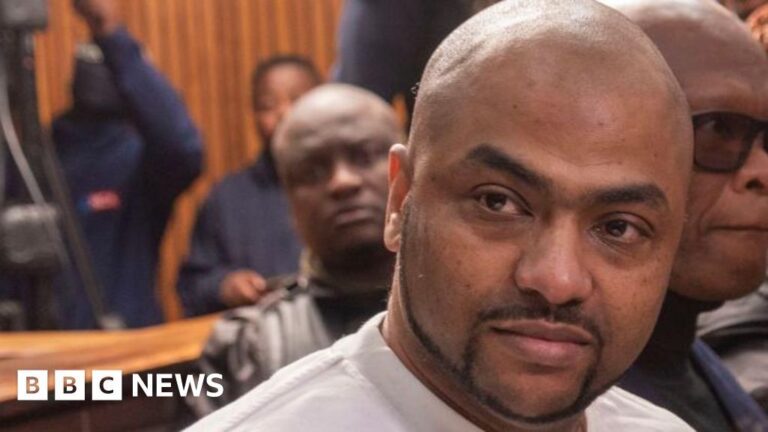
Thabo Bester, South African rapist, denied request to block Netflix movie

0

Convicted South African rapist Thabo Bester has lost a court bid to block Netflix from broadcasting a documentary about his life – including how he allegedly faked his death and escaped from prison.

His lawyers argued that Beauty and the Bester was defamatory, but the streaming giant defended its plan to release the three-part investigation.

Bester’s partner, celebrity doctor Nandipha Magudumana, features in the documentary, having allegedly helped him escape. She was part of the court bid to halt the release.

In a court ruling on Friday, a judge said the rape case was “firmly in the public domain” and that they had failed to prove that their petition was urgent.

She however said that the pair would still be free to sue for defamation if they wished, after the documentary airs. It was released hours after Friday’s judgement was delivered.

Bester was convicted in 2012 for the rape and murder of his model girlfriend Nomfundo Tyhulu.

A year earlier, he was found guilty of raping and robbing two other women.

Bester became known as the “Facebook rapist” for using the social networking site to lure his victims.

He was serving a life sentence when he allegedly escaped from a maximum security prison in 2022.

A fire broke out in prison, with the authorities finding a charred body that they thought was Bester’s. However, it turned out to be that of another person.

Undetected for a year, Bester then allegedly lived under an alias in South Africa’s main city, Johannesburg, helped by his partner.

The pair were arrested while on the run in the East African state of Tanzania in April 2023, and were deported.

They are currently in custody, awaiting trial on several charges – including violating a corpse, defeating the ends of justice and fraud.

They have not yet pleaded to the charges.

The two had petitioned the court to halt the much-anticipated Netflix documentary, saying it infringed their right to a fair trial.

Handing down judgment on Friday, Judge Sulet Potterill said the applications lacked urgency, terming it a “self-created urgency”.

The judge said Bester and Magudumana had ample time to launch their applications and “waited until the last minute” to file it as urgent.

But the court ruled that it was open to hear their substantive redress, including suing for defamation, as the case law was clear about that.

“A defamation claim can be instituted and damages sought. I cannot find in any way that the screening of the utterances they find to make the doctor guilty affects her right to a fair trial,” the judge ruled.

Challenging Client Situation

0


Client Challenge


JavaScript is disabled in your browser.

Please enable JavaScript to proceed.

A required part of this site couldn’t load. This may be due to a browser
extension, network issues, or browser settings. Please check your
connection, disable any ad blockers, or try using a different browser.

NC State Men’s Swimming Team Gains Strength from Redshirt Returners in 2026

0

By Robert Gibbs on SwimSwam

It’s that time of the year again. SwimSwam will be previewing the top 12 men’s and women’s teams (and then some) from the 2025 NCAA Championships. Follow along with the College Swimming Preview Channel. Want to read even more? Check out the latest edition of the SwimSwam magazine

#9 NC State Wolfpack

Key Losses: Owen Lloyd (15 NCAA points), Luke Miller (7 NCAA points, 5 NCAA relays), Sam Hoover (4 NCAA relays)

Key Additions: #7 Gavin Keogh (CO- back), BOTR Maximus Buff (OH – fly/back), BOTR Ian Stutts (NC – IM), BOTR Tyler Bardak (IL – IM), Max Carlsen (NV – free), Bjørnar Laskerud (Norway – free)

GRADING CRITERIA

Over the years, we’ve gone back and forth on how to project points, ranging from largely subjective rankings to more data-based grading criteria based on ‘projected returning points.’ We like being as objective as possible, but we’re going to stick with the approach we’ve adopted post-COVID. The “stars” will rely heavily on what swimmers actually did last year, but we’ll also give credit to returning swimmers or freshmen who have posted times that would have scored last year.

Since we only profile the top 12 teams in this format, our grades are designed with that range in mind. In the grand scheme of college swimming and compared to all other college programs, top 12 NCAA programs would pretty much all grade well across the board. But in the interest of making these previews informative, our grading scale is tough – designed to show the tiers between the good stroke groups, the great ones, and the 2015 Texas fly group types.

  • 5 star (★★★★★) – a rare, elite NCAA group projected to score 25+ points per event
  • 4 star (★★★★) – a very, very good NCAA group projected to score 15-24 points per event
  • 3 star (★★★) – a good NCAA group projected to score 5-14 points per event
  • 2 star (★★) – a solid NCAA group projected to score 1-4 points per event
  • 1 star (★) –  an NCAA group that is projected to score no points per event, though that doesn’t mean it’s without potential scorers – they’ll just need to leapfrog some swimmers ahead of them to do it

We’ll grade each event discipline: sprint free (which we define to include all the relay-distance freestyle events, so 50, 100 and 200), distance free, IM, breaststroke, backstroke, butterfly and diving. Use these grades as a jumping-off point for discussion, rather than a reason to be angry.

Also, keep in mind that we are publishing many of these previews before teams have posted finalized rosters. We’re making our assessments based on the best information we have available at the time of publication, but we reserve the right to make changes after publication based on any new information that may emerge regarding rosters. If that does happen, we’ll make certain to note the change.

2024-2025 Lookback

It was a bit of a down year for the Wolfpack, although still a strong year by most standards. Stalwarts Aiden Hayes and Arsenio Bustos were lost for the season due to injury, and that definitely hurt.

Those two alone probably wouldn’t have been enough for NC State to defend its ACC title against Cal in a new-look conference, but they probably would’ve kept the Wolfpack ahead of the Stanford Cardinal. There were certainly highlights. Relays continued to be a strength as the Wolfpack won the 200 free relay (breaking the ACC record) and the 400 medley relay. Individually, Quintin McCarty returned from a medical redshirt to win the 50 free, and Owen Loyd bounced back after a headlines-generating DQ in 2024 to win the 1650 title.

Ultimately, however, NC State couldn’t compete with the depth of Cal and Stanford. At the end of the meet, the Wolfpack stood in 3rd, their lowest finish at ACCs in over a decade, although they presumably would’ve rolled to another ACC title without the addition of the West Coast schools.

It was a similar story at NCAAs, where they slipped to 9th and 178 points after finishing 5th with 318 points in 2024. The top-end talent just wasn’t there, as Quintin McCarty (50 free) and Owen Lloyd (1650) were the only two swimmers to finish in the top eight individually. But the relays were still solid, with four relays finishing between 5th and 8th, and one finishing 9th.

Sprint Free: ★★ ½

NC State has displayed an interesting dichotomy in recent years: impressive sprint free depth, but inconsistent NCAA scoring.

Last season, that trend continued. Quintin McCarty and Drew Salls were the Wolfpack’s only NCAA scorers in sprint free, with McCarty placing 8th and Salls 16th in the 50 free. In prelims, McCarty and Salls hit lifetime bests of 18.62 and 18.90, respectively, while Jerry Fox finished 21st with a 19.05 after going 18.83 earlier in the season.

In the 100 free, McCarty, Fox, and Kai Winkler finished between 19th and 26th, with none hitting season-best times. McCarty (41.45) and Winkler (41.39) would’ve made the B-final had they matched their bests, while Fox (41.65) would’ve placed 17th.

Winkler also led the team with a 1:32.23 in the 200 free, followed by Daniel Diehl at 1:32.28. After the Swimflation boom of the last few years, those are no longer NCAA scoring times, but it wouldn’t be surprising to see either one of those guys pop off and drop the sub-1:32 it’s likely to take to score.

This isn’t quite the sprint free juggernaut that it used to be, but there’s plenty of depth, and Braden Holloway continues to turn under-the-radar swimmers into NCAA qualifiers. Hudson Williams didn’t hit best times last year, but owns marks of 19.32 and 42.01. Wells Walker (19.21/42.91) missed ACCs last year, but he could score there and/or develop into a sprint relay option.

Freshman Bjornar Laskerud arrives from Norway with international experience under his belt, including swims in the 50 free and 4×100 free relay at the recent World Championships. He’s been 22.23/50.11 in LCM, and his SCM times of 21.27/47.84 convert to roughly 19.1/43.0 in yards. 

A pair of Polish swimmers could also provide an immediate impact for the Wolfpack. Mikolaj Filipak is 1:49.10 in the long course 200 free, while Przemyslaw Pietron is 22.72/49.89 in the sprint freestyles, which suggests he should be sub-20 and sub-43 in yards sooner rather than later.

Distance Free: ★★

Last year’s 500 free depth chart was tightly packed, with the top four swimmers posting times within 0.30 seconds of each other. Owen Lloyd (4:14.13 in the 500 free, 5th in NCAA 1650) and Will Gallant (14th in 1650) have graduated.

Lance Norris returns after a 13th-place finish in the 1650 at NCAAs (14:38.31). Kyle Ponsler went 4:14.42 and 15:03.31 at ACCs but skipped those events at NCAAs to focus on the 400 IM and 200 back. Chase Mueller hit a 4:14.16 midseason, narrowly missing NCAA qualification.

A trio of new swimmers could help boost the distance squad this season. Freshman Max Carlsen‘s 1650 time of 14:59.44 would’ve been good enough for 10th at last season’s ACCs. He’s been 4:18.87 in the 500, and could develop into an impact swimmer very quickly.

Mikolaj Filipiak was the Polish national champion in the 400 free this spring, clocking a 3:54.00. He’s also been 8:12.82 in the long course 800 and 15:59.90, but his SCM times of 3:51.07/8:02.77/15:34.12 suggest he should at the very least be a scoring threat at ACCs.

Finally, the NC State website lists Texas transfer Landon D’Ariano under “IM/FL,” but it’s worth noting he was as fast as 4:24.46/15:20.35 in high school, and he swam a 9:02.51 at a dual meet last season.

Backstroke: ★★★½

While it’s not exactly the Coleman Stewart Era anymore, the Wolfpack returns two scoring swims in this discipline and have the times to add a few more.

Last year, Quintin McCarty and Daniel Diehl led the way at NCAAs, as McCarty took 13th in the 100 back (44.98) and Diehl finished 14th in 200 back (1:40.07).

Both men have been faster – McCarty’s went 44.56 en route to finishing 9th in prelims, while Diehl’s 200 back best is a 1:39.01 in the 200. Diehl has also been 46.57 in the 100, an event that falls on the same day as the 200 free in the NCAA schedule.

Hudson Williams‘ 100 back PR is 45.15, which would’ve just made the ‘B’ final last year, while Oleksandr Zheltyakov popped a very fast 1:38.78 in the 200 at ACCs, before adding over two seconds to finish 20th at NCAAs. Watch for Zheltyakov to make strides in the 100 this year, and he should score points in the 200 at NCAAs. Kyle Ponsler also swam the 200 back at NCAAs, going 1:41.15 for 31st.

Aiden Hayes‘ return should give the Wolfpak another NCAA scorer – his best time of 44.55 is just a hair faster than McCarty’s and again, is right on the cusp of making the ‘A’ final.

Additionally, freshman Gavin Keogh has already been 21.62/46.28/1:40.53 with steady drops over the last year. He should be an immediate scorer at ACCs, and that 200 back time isn’t far off from what it took to qualify for NCAAs last year. He had a great summer in long course, and while we take LCM-to-SCY with a pinch of salt, his LCM best time of 53.52 converts to roughly a 45.4 in yards.

Breaststroke: ★★

NC State loses its top breaststroker with the departure of Sam Hoover, but the Wolfpack has some promising talent in the form of Arsen Kozhakhmetov and Will Heck.

Kozhakhmetov went 52.13/1:55.80 at the 2025 ACC Championships, while Heck hit lifetime bests of 52.22/1:54.80 at a last chance meet in early March. Those times won’t qualify for, much less score at, NCAAs, but at least NC State has a couple of serviceable medley relay options, especially if either or both swimmers improve.

Additionally, Arsenio Bustos returns after taking a medical redshirt last year. His best event is the 200 breast, where his lifetime best of 1:50.49 is just off what it took to make the ‘A’ final at NCAAs. He’s also been 52.77 in the 100, but that time is three years old. Still, it feels like there’s at least some chance that Bustos emerges as the Wolfpack’s primary medley relay breastroker this season.

Butterfly: ★★★★

Long a strength for the Wolfpack, this discipline looks like it’d be lacking firepower this year if Aiden Hayes and Arsenio Bustos weren’t returning. It wasn’t long ago that NC State had five or more guys able to swim under 45 in the 100 fly. Last year, only Luke Miller did so, and he’s now exhausted his eligibility.

However, Hayes has a lifetime best of 44.35, and Bustos has been 44.49, so as long as they’re able to come close to matching those lifetime bests, NC State should be assured of a couple of scoring swims.

The fastest returner from last year’s squad is sophomore Kaii Winkler, who holds a lifetime best of 45.98 from high school, but focused more on the 200 free this past year.

NC State didn’t have anyone go under 1:44 in the 200 last season, but reinforcements have arrived in Raleigh. Again, Hayes, the 2023 NCAA champion in this event, provides an instant scorer. Additionally, Hungarian swimmer Anton Kochu arrives with a LCM time of 1:57.25, which converts to roughly to 1:43 in yards. If he can build on that, he could get in the mix for an NCAA invite He’s also been 53.43 in the LCM 100 fly.

Texas transfer Landon D’Ariano did go 1:44.76 last season, which could provide some additional depth at ACCs. Freshman Max Buff arrives with fly bests of 46.97/1:45.58.

IM: ★★★

The oft-mentioned Arsenio Bustos owns a best time of 1:39.83 from 2024, making him an instant threat to make the NCAA ‘A’ final.

NC State doesn’t have anyone who’s likely to score in both IM events, but Kyle Ponsler complements Bustos well with his 3:37.42 in the 400 IM. He swam that to win the NCAA ‘B’ final last year, and that time would’ve finished 4th in the A-final had he made it.

Daniel Diehl has been 1:41.39/3:44.64. While he’ll probably stick with the 200 free over the 400 IM at championship meets, that 200 time would’ve made the B-final at NCAAs.

The aforementioned D’Ariano’s best event is probably the 400 IM, where he’s been 3:42.20, right on the edge of making NCAAs. He’s “only” been 1:45.87 in the 200 IM, but that 3:42 makes it feel like he should have more in store for the 200 IM.

Freshmen  Ian Stutts (1:45.09/3:47.36) and Tyler Bardak ( 1:46.60/3:45.47) provide additional depth, and both would have scored in the 400 at ACCs last season.

Diving: N/A

The Wolfpack appears to have cut all male divers as teams restructure rosters in the wake of the House settlement.

Relays: ★★★★

Note that the grading system doesn’t align perfectly for relays as double points.

Relay grading system:

  • 5 star (★★★★★) – 31+ points per relay event
  • 4 star (★★★★) – 22-30 relay points per event
  • 3 star (★★★) – 12-21 relay points per event
  • 2 star (★★) – 5-11 relay points per event
  • 1 star (★) – 0-4 relay points per event

The good news is that NC State only needs to replace two men from their NCAA relays. The bad news is that those two men, Luke Miller and Sam Hoover, accounted for nine of the 20 relay spots. There’s more good news in that Aiden Hayes and Arsenio Bustos should help blunt the losses.

It’s been a while since Hayes was on an NCAA sprint relay, but he’s been 19.0 individually and should be able to replace Luke Miller‘s 18.6 split on the 200 free relay.  Wells Walker (19.21), Hudson Williams (19.32), Kai Winkler (19.37 this summer), or one of the new international swimmers are all also possibilities.

The rest of the relays will need to replace both Miller and Hoover. The Wolfpack left their fastest 100 freestyler, Kai Winkler, off the 400 free relay last year, but it’s safe to assume that he should be on the relay this year, along with Quintin McCarty and Jerry Fox. Some combination of Hayes, Hudson Williams (42.01), Drew Salls (42.24), or one of the international freshmen should fill out the fourth spot.

Go ahead and pencil in Bustos to return to the 800 free relay, although the fourth leg isn’t quite as clear. Jerry Fox may be the frontrunner as he split 1:32.97 at ACCs. After him, there are a bunch of guys in the 1:34 and 1:35 range who could develop in the 1:31/1:32 types that this relay needs to remain competitive these days.

The medley relays could get interesting. Hayes led off the 200 medley relay at the 2024 NCAA Championships, clocking a 20.07 that remains the fastest time ever. But, with Miller gone, there’s not really an obvious replacement on the fly leg, so Hayes could end swimming fly, while McCarty remains on back for medley relays.

It wouldn’t be surprising to see either of Arsenio Bustos, Will Heck, or Arsen Kozhakhmetov end up on the breaststroke legs, and Kozhakhmetov may be the early frontrunner after nearly matching Hoover’s 200 MR split at midseason.

The bottom line is that, while there are holes to fill, the Wolfpack has the depth and the track record of developing relay stars, so they should be able to more or less match last year’s 122 relay points.

Total Stars: 21/40

2025/2026 Outlook

Over the last decade, NC State has consistently finished between 4th and 9th at NCAAs, and this season looks to be more of the same. They still seem to be lacking either a few guys who could step and make three A-finals, or else a roster deep enough to have 10-12 guys score.

But, having five relays all capable of finishing in the top ten, plus the return of Hayes and Bustos, means that the Wolfpack should certainly find themselves as one of the top ten teams in the NCAA quite comfortably this season.

The talent is there to push higher. A healthy Arsenio Bustos, more development from Daniel Diehl, Kai Winkler, and/or Hudson Williams, plus one or two freshmen popping off could help the Wolfpack make a run for the top five.

Men’s College Preview Index:

Rank (2024) Team Sprint Free Distance Free Backstroke Breaststroke Butterfly IM Diving Relays Total Stars
1 Texas Longhorns
2 California Golden Bears
3 Indiana Hoosiers
4 Florida Gators
5 Tennessee Volunteers
6 Arizona State Sun Devils
7 Georgia Bulldogs
8 Stanford Cardinal
9 NC State Wolfpack ★★ ½ ★★ ★★★½ ★★ ★★★★ ★★★ N/A ★★★★ 21/40
10 Virginia Tech Hokies ★★ ★★ ★★ 11/40
11 Michigan Wolverines ★★★½ ★★½ ★★★ ★★★ ★★★ ★★★ ★★★★ 23/40
12 Texas A&M Aggies ★★★ ★★ ★★★ ★★★ 15/40

Read the full story on SwimSwam: 2026 College Swimming Previews: #9 NC State Men Get Boost From Returning Redshirts