
A required part of this site couldn’t load. This may be due to a browser
extension, network issues, or browser settings. Please check your
connection, disable any ad blockers, or try using a different browser.

A required part of this site couldn’t load. This may be due to a browser
extension, network issues, or browser settings. Please check your
connection, disable any ad blockers, or try using a different browser.

Nikos Michaloliakos, the leader of the Greek neo-Nazi party Golden Dawn, has been released from prison less than halfway into his sentence.
The far-right politician and Holocaust denier was allowed by a judicial council to serve the remainder of his 13-year sentence in the confines of his home on health grounds on Friday, state media reports.
The 67-year-old’s conditional release after five years in prison has angered left-wing parties, arguing the judiciary should not have shown clemency.
It is the second time Michaloliakos has been allowed out following his 2020 conviction over a litany of violent attacks on immigrants and political opponents perpetrated by Golden Dawn supporters.
He was briefly released in May 2024, news agency AFP reports, before judicial officials found he had not shown adequately good behaviour and forced him to return to prison.
Michaloliakos founded and presided over a party which was found to be a criminal organisation tied to the murder of an anti-fascist musician, as well as the attempted murder of Egyptian fishermen and communist activists.
It came third in Greece’s 2012 elections on an anti-immigrant, nationalist vote fuelled by economic hardship due to the country’s financial crisis.
Michaloliakos himself has been an admirer of Nazism and gave the Hitler salute at party rallies. While Golden Dawn officially denied being a neo-Nazi movement, it adopted Nazi-influenced iconography.
He and its former MPs were found guilty of running or belonging to the criminal group.
Greece’s New Left party said in a statement to state media that Michaloliakos’s release was “a serious blow to the collective memory and the struggle for democracy and justice”, adding that the justice system “cannot send a message of impunity to those who embodied hatred and fascism”.
The nation’s communist party KKE said the decision should be overturned, adding Golden Dawn’s “crimes are not time-limited in the consciousness of the people and the youth”.
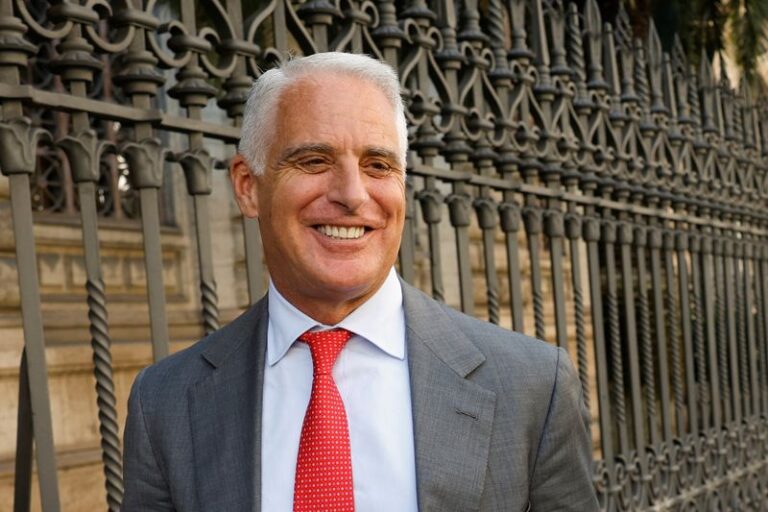
Unicredit could sell Commerzbank stake to non-EU bank, CEO tells German paper

Khas Kunar, Afghanistan – Stoori was pulled out from under the rubble of his house in Kunar province after it was destroyed by the magnitude 6 earthquake which struck on the night of August 31. But the guilt of not being able to save his wife haunts him.
“I barely had enough time to pull out the body of my dead wife and place her on the rubble of our collapsed home before my children and I were evacuated,” the grief-stricken 40-year-old farmer says.
Authorities say about 2,200 people have been killed and more than 5,000 homes destroyed in eastern Afghanistan, most of them in Kunar province, where houses mostly built from wood and mud bricks crumbled in the shocks of the quake.
Stoori, who only gave one name, is now staying with his children in a sprawling evacuation camp 60km (37 miles) from his village – in Khas Kunar.
“My village has become a graveyard. All 40 families lost their homes. The earthquake killed 12 people in my community and left 22 others badly injured,” he says.
In all, the UN says half a million people have been affected by the quake.
In this camp, which is lined with tents provided by international NGOs, nearly 5,000 people are sheltering, each with stories of loss and pain.
Thankfully, the camp has access to water and sanitation, and there are two small clinics ready to receive injured newcomers, as well as an ambulance which can be dispatched to collect people.
Right now, workers are digging a trench to install another water pipe, which will divert water to areas in need around the camp.
Just a few hundred metres away, what were once United States military warehouses have been transformed into government offices coordinating the emergency response.

The Taliban, which returned to power after US-led forces withdrew in 2021 after 20 years of occupation, has been overwhelmed by the scale of the disaster.
Tens of thousands of people are without any shelter at all just weeks before the onset of winter, and the mountainous terrain makes relief and rescue efforts difficult.
Najibullah Haqqani, Kunar’s provincial director for the Ministry of Information and Culture, says the authorities are working through a three-step emergency plan: Evacuate those at risk, provide shelter, food, and medical care in camps, and, eventually, rebuild homes or find permanent housing.
But the situation is becoming more challenging by the day. “Fortunately, we have received support from the government, local businesses, volunteers and international NGOs. They all came and helped with food and money for the displaced people,” he tells Al Jazeera.

More than 10 days after the tremor, new arrivals join the camp daily, inside the fortified walls of the former US base on the banks of the Kabul River.
Among them is Nurghal, a 52-year-old farmer from Shalatak village who was able to reunite with the surviving members of his family only on Wednesday morning. “From my large extended family, 52 people were killed and almost 70 were left badly injured,” he says. The devastation is “unimaginable”, he adds.
“The weather is cold in our area, and we don’t sleep outside this time of the year. That is why many people were trapped in their houses when the earthquake hit, and they were killed. Everything is destroyed back home, and all our animals are buried in debris. The smell of dead animals fills the air in my village.”
Life before the quake, he says, was stable. “Before the earthquake, we had everything we wanted: A home, livestock, our crops, and land. Now life is in the hospital and tents.”

Women face particular challenges in the aftermath of this disaster, as Taliban laws prevent them from travelling without male guardians – meaning it is hard for them to either get medical assistance or, in the case of female medical workers, to provide it.
The World Health Organization (WHO) asked Taliban authorities last week to lift travel restrictions for Afghan female aid workers, at least, to allow them to travel to help women in difficulties following the earthquake.
“A very big issue now is the increasing paucity of female staff in these places,” Dr Mukta Sharma, the deputy representative of WHO’s Afghanistan office, told the Reuters news agency.
Furthermore, since women have been banned from higher education by the Taliban, the number of qualified female medical staff is dwindling.
Despite these difficulties, the Taliban leadership says it is committed to ensuring that women will be properly treated, by male health workers if necessary.
Haqqani, Kunar’s provincial director for the Ministry of Information and Culture, tells Al Jazeera: “During the emergency situation, the military and volunteers evacuated and cared for everyone. On the second day, UNICEF set up a medical clinic in Nurghal district and they had female doctors as well. We took as many injured people as the clinic could handle there and they were treating everyone, male and female. In any emergency situation, there is no gender-based discrimination; any doctor available will treat any patients coming in. The priority is life saving.”
At a field hospital which has been set up inside the old US barracks by the displacement camp at Khas Kunar, six male doctors and one female doctor, 16 male nurses and 12 female nurses are tending to the injured. Currently, there are 34 patients here, 24 of whom are women and children – most of them were taken to Gamberi from their remote villages by Taliban military helicopters and then transferred the last 50km (30 miles) to the hospital by car.
The hospital’s director, Dr Shahid, who only gave one name, says male doctors and nurses are permitted to treat women and have been doing so without any issue.

From his bed in the field hospital, Azim, a farmer in his mid-40s from Sohail Tangy village, 60km (37 miles) away, is recovering from fractures to his spine and right shoulder.
He fears returning to the devastation at home.
“The earthquake was like a curse from the sky. I don’t want to move back to that hell,” he tells Al Jazeera. “The government should give us land to rebuild our lives. My village has become the centre of destruction. My only request is to give us land somewhere else.”
Azim is still coming to terms with the loss of his loved ones. “Yesterday, my son told me that three of my brothers are dead. Some of my family members are in the Kabul and Jalalabad hospitals. And my wife is in Kabul military hospital,” he says.

Back in the evacuation camp, Stoori says he is holding onto hope, but only just.
“If God blesses us, maybe we can go back to our village before the winter comes,” he says.
“We have nothing left except our trust in God, and we ask the international community and authorities for help.”
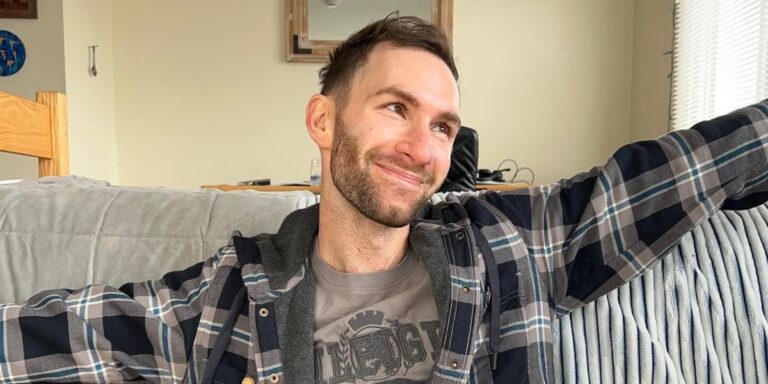
Like many recent high school graduates choosing their careers, Bradley, who declined to give his full name, once felt the pressure of trying to have it all figured out in his late teens. A degree felt like a life or death decision for your future.
With no strong interests outside of baking and pastries, he enrolled in the prestigious Culinary Institute of America. But a week before graduation, with little financial guidance or preparation, he learned he’d racked up $134,000 in debt. With interest, that ballooned to about $147,000. His monthly payments were projected to hit $1,500, even while earning only $12 to $13 an hour at his first farm-to-table restaurant job in upstate New York.
Traumatized by his student loan burden, a switch flipped at 20: he turned extremely frugal and adapted several side hustles to find a way to pay it off, embracing the life of underconsumption.
“My brain in that one instant was like, I have to completely overhaul my life,” Bradley, now 32 and known on TikTok as @BradleyOnABudget, tells Fortune.
Since September of 2013, he’s paid off $80,000 toward his loans. He still has $114,000 left in a Parent PLUS loan under his mother’s name, which he hopes will be forgiven through the Public Service Loan Forgiveness Program. The federal loans in his own name—originally around $25,000 but grown to $35,000—were recently discharged through the Borrower’s Defense to Repayment program.
But the underconsumption didn’t stop in his 20s. Since implementing these habits he still lives this way today.
“I’d rather have my $2 lunch than a $20 meal, that’s just how my brain works,” Bradley says. “A lot of people spend money to fit in. I don’t see the point in spending more for things when it’s unnecessary like clothes, going out to eat, a newer car.”
Bradley still lives the same ultra-frugal life he adopted in his early 20s. From dog sitting to crisis counseling, he juggles 10 side hustles—and avoids unnecessary spending at every turn. He now earns a significant portion of his income through content creation and brand deals.
His frugal habits include eating the same meals, making wipes out of napkins and water, buying kids clothes, skipping AC in the summer months, unplugging appliances when leaving the house, bringing his own meals on vacation, reusing towels, trimming his nails with scissors and living with no insurance. He can’t imagine living his life any other way.
But despite saving over $250,000, his audience often questions why he still chooses to live “in survival mode.”
“I get a lot of opinions and judgment, but I’m the one paying my bills, right?” he said.
Online critics have accused him of “hoarding money” or “cosplaying” poverty.
“The only thing I wanted when I was in my 20s and struggling in debt was to be financially stable,” he said. “I think some people can’t grasp that now that I’ve increased my income and accomplished my financial goals, I would still find joy in how I choose to live.”
And he’s not the first high-earner to be extra cautious of his choices. Some high-net-worth individuals and $100,000+ earners that previously spoke to Fortune said they keep their discretionary spending as minimal as possible by cooking for themselves, for example, or even buying frozen groceries because they’re cheaper than fresh ones.
Others choose to mend their own “capsule” wardrobes, find some of their children’s toys on Facebook marketplace, or not own cars.
“I don’t go to Starbucks, I avoid it like the plague. It just feels comfortable too because I’ve always been frugal,” tech entrepreneur Brenda Christensen previously told Fortune, whose fortunes run into the multi-millions.
By the end of July this year, Bradley calculated he made $120,000. In August, he raked in over $18,000.
This August, his monthly income with 10 side hustles were broken down as follows, according to his TikTok account.
Content creator: $10,633
OnlyFans: $4,105
Financial coach: $1,724
Dog sitter: $875
Crisis counselor: $396
Partnership: $416
CD account: $342
Lawn mower: $160
Dancer at a night club: $124
House cleaner: $85
Dumpster diving: $37
Change found on the ground: $0.43
Total: $18,897.43
“For me, ‘treating myself’ means watching my bank account grow. And I guess that’s my advice for younger folks trying to save: focus on your mindset. That’s been the biggest factor in everything I’ve been able to do.”
He also hopes his story can help others who are struggling, especially with debt and depression:
“I thought all my life was going to be drowning in debt and not making a lot of money, and I just always had this thing within me to be like, just keep going. Just keep going,” he said.

Colombia’s highest court has ruled that Meta violated a porn star’s right to freedom of expression when it deleted her Instagram account.
The South American nation’s Constitutional Court said on Friday that the tech firm had removed Esperanza Gómez’s account “without a clear and transparent justification” and without offering similar treatment to other, similar accounts.
The 45-year-old, whose account had more than five million followers, is one of Colombia’s best known adult content actresses.
Meta argued in the case that she had violated its rules on nudity. The company, which also owns Facebook and WhatsApp, did not immediately react to the ruling.
Ms Gómez had alleged that the closure of her account had affected her ability to work and had been influenced by her pornographic work beyond the platform. She also claimed Meta had not followed due process.
In its ruling, the court said that, while it recognised the social media platform’s need to moderate content, this did not justify closing a porn star’s account “without a clear and transparent justification”.
It also found Meta “applied its policies on nudity and sexual services inconsistently”, with other accounts with similar content remaining active.
The court said social media posts were protected under Colombia’s constitution and should only be limited in a proportionate way where necessary.
It ordered Meta to “review and adjust Instagram’s terms of use and privacy policy so that users are clearly aware of the mechanisms for challenging moderation decisions” and “more precisely define” its rules on implicit sexual content.
If social media platforms use offline activities as a criterion for content moderation, they must clearly state these, the court said.
The court did not specify sanctions for non-compliance, nor whether Ms Gómez would receive any redress.
The BBC has contacted Meta for comment.
It is not the first time that a South American court has required a social network to change its policies.
Brazil’s Supreme Court recent ruled that social media were directly liable for illegal content, including hate speech, and must immediately act to remove it and accounts proliferating it.
That ruling followed a judge ordering the suspension of dozens of X accounts for allegedly spreading disinformation.
It led to the social media platform briefly being banned in Brazil, before it began complying with the ruling and paid a $5.1 (£3.8m) fine.
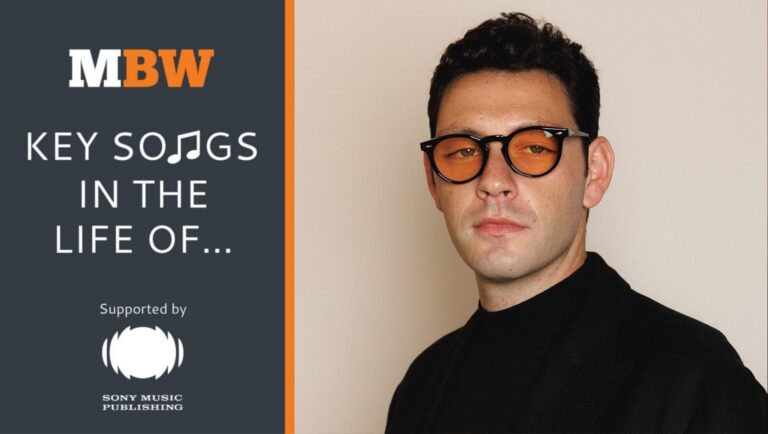
MBW’s Key Songs In The Life Of… is a series in which we ask influential music industry figures about the tracks that have — so far — defined their journey and their existence. Rifling through the jukebox of his years this time is Elliot Grainge, CEO of Atlantic Music Group. The Key Songs… series is supported by Sony Music Publishing.
Elliot Grainge should be in a happy and relaxed mood.
He’ll soon have completed his first year in charge of Atlantic Music Group, overseeing major global successes with artists like Charli XCX, Alex Warren, Bruno Mars, ROSÉ, The Marias, and more.
Meanwhile, his decision to sell his indie label, 10K Projects, to Warner Music Group continues to pay off: 10K’s total US market share jumped more than half a percentage point in the last 12 months, according to Luminate data.
In hindsight, by majority-buying 10K, WMG was making an acqui-hire as much as a label acquisition – a down-payment on Grainge’s potential to lead Atlantic into a new era.
Last week, yet more good news for Grainge arrived: Atlantic Records UK will now report directly to his Atlantic Music Group, consolidating additional international power under Grainge’s control.
The move, partly driven by cost-cutting, positions the UK label as a Nashville-style A&R repertoire source for Atlantic’s global HQ. For Grainge, it also provides the keys to coordinate transatlantic marketing campaigns for priority releases.
As Elliot tells MBW: “This is about plugging talent from both countries into a bigger amplifier.”
Despite all of these pluses, Grainge isn’t feeling content. In fact, he’s downright antagonized.
Not by his professional or personal life, both of which appear to be going swimmingly.
No, he’s tortured by MBW’s Key Songs In The Life Of… request: to pick seven songs that have defined his existence to date.
“This is genuinely one of the hardest exercises I’ve ever been asked to do,” he says from his home in Los Angeles. “I’ve really overthought it. You’ve caused me sleepless nights.”
Grainge’s list reveals a musical education that spans everything from Eddie Van Halen’s guitar solos to The Sex Pistols’ snarl, taking in dashes of Pavarotti, Tupac, and Funkadelic along the way.
There’s mention of the influence of his dad, Universal Music Group boss Sir Lucian Grainge, and – particularly – that of his late uncle Nigel, the founder of Ensign Records.
Elliot’s Key Songs tell the story of an executive who was raised on rebellion, educated by vinyl collecting, and ultimately found his professional calling in the digital age.
Here’s his list, in his own words…
1) Michael Jackson, Beat It (1982)
Anyone who doesn’t like this song is a psychopath.
It’s my daughter’s favourite song – we both love it. Any time it’s on, she’s dancing to it. [Grainge welcomed Eloise, his daughter with wife Sofia Richie, into the world last year.]
Beat It reminds me of a time when I was 11 or 12, and obsessed with becoming a guitarist. I just wanted to shred guitar like Jimi Hendrix.
I would go on this website, UltimateGuitar.com, which gave you the top 100 solos of all time. Stairway To Heaven was in there, Comfortably Numb, While My Guitar Gently Weeps, Santana, obviously… and Beat It.
“I was 11 or 12, and I just wanted to shred like Jimi Hendrix.”
At first I thought, ‘What is a Michael Jackson track doing on this list?’ Of course, it’s because of the amazing Eddie Van Halen guitar solo, which he nailed in one take. I don’t even think he got any splits on it; he did it as a work-for-hire.
It opened my mind to the fact that guitar riffs can be used in different genres and still sound great.
I’ll play my daughter 150 different songs. But when it comes to Beat It, I don’t know what it is, but she’s drawn to that riff. She just starts moving – her knees go.
2) Sex Pistols, Anarchy In The UK (1976/1977)
My dad has had a massive influence on why I’ve got such a broad palette of decades and genres [in my music collection].
When I was a kid, he played me ABBA, Pavarotti, and The Bee Gees, but he also played me The Sex Pistols, The Clash, The Damned, Buzzcocks — I could go on and on.
When I was 13, I started going to these vinyl fairs at Olympia in London, close to Kensington High Street. I’d take my pocket money, and the yellow sleeve of Never Mind The Bollocks: Here’s The Sex Pistols jumped out at me. I’d never seen anything like it before.
These American vinyl collectors used to fly over to London for this vinyl fair, looking to buy special UK editions [of LPs] and fly back to the US with them. I remember being very proud of myself for swapping an early UK edition of Never Mind The Bollocks – the one released on Virgin, not EMI – with the US version with the orange sleeve. My first ever trade; I must have been 12 years old.
“We still have rebellion culture in the music business. It might come far more infrequently than it did. But when it does, I sprint towards it.”
My favourite songs on [Bollocks] are Bodies, God Save The Queen, and Anarchy In The UK. When you hear that opening of [Anarchy], it’s game over. You can taste Britain, 1977.
The Sex Pistols are a great example of what happens when artists are allowed to push boundaries.
I can find parallels in XXXTentacion. If you went to an X show in 2016-2018, it was very close to punk rock. There was a mosh pit, spit, he was climbing the fence and jumping down.
We still have rebellion culture in the music business. It might come far more infrequently than it did. But when it does, I sprint towards it.
3) Funkadelic, Maggot Brain (1971)
Maggot Brain is a 10-minute guitar solo, with no lyrics aside from some spoken word at the beginning.
My late uncle Nigel had a really cool home in Notting Hill, and in his attic, he had all this vinyl. The sleeve for [the Maggot Brain album], that image, it really took me. I’d never seen anything like it before.
Nigel put the album on the turntable and played [the title track]. I just remember listening to this shrieking guitar for 10 minutes and thinking, What the fuck is this?!
I was 13 or 14, and discovering one of the most extraordinary songs ever.
I spent months trying to learn that solo. I can still play about a minute and a half of it because of the muscle memory.
“I just remember listening to this shrieking guitar for 10 minutes and thinking, What the fuck is this?!”
Along with While My Guitar Gently Weeps, it taught me that sometimes a song can say more with just a guitar than it could with words.
Nigel was encyclopedic — that’s the right word to describe him. He knew every song, [every] B-side, of any genre. It was the same with TV and with film; he was like a sponge. He was a total savant, and he had so much success in the ’70s and ’80s. [During his career, Nigel Grainge signed Thin Lizzy, 10cc, the Steve Miller Band, Sinead O’Connor, The Waterboys, and many more.]
And he had such strong opinions. If you told him, ‘There’s this B-side by Genesis I quite like,’ he’d say, ‘No. It’s terrible, the worst thing they ever did.’ But then you’d look and he’d still have three versions in his collection.
That was Nigel. If he loved something, he really loved it, and he had to tell you. And if he hated something, he had to tell you that too!
4) Clairo, Sofia (2019)
Sofia is the name of my better half, my one true love. When she and I were dating, I would play this song on repeat and sing along to it [in the car]. She was like, ‘You gotta change this,’ and then she ended up loving it.
I fucking love this song. I love it obviously as a [tribute] to my wife. But also, Clairo’s just got something. She’s one of our generation’s really incredible, true artists.
“I’m a massive Clairo fan; she can do no wrong.”
I’m a massive Clairo fan; she can do no wrong. If she releases a pop record or a peculiar art record, it doesn’t matter – I’ll be at the front of the queue to buy it.
I’m telling you, she’s one of the greats. In 30 years’ time, you’ll be [saying], ‘You were right about Clairo.’
5) Eminem, Like Toy Soldiers (2004) / Tupac, Changes (1998)
For my 11th birthday, I got an iPod Mini. It was light blue, and had a low storage capacity – I think I could put 400 songs on it.
I’d carry it everywhere. If I was in bed, I’d fall asleep listening to the music on it. I’d honestly spend 17, 18 hours a day with it.
I just remember playing Like Toy Soldiers on that iPod constantly. It’s from a very underrated album called Encore.
“If I was in bed, I’d fall asleep listening to music. I’d honestly spend 17, 18 hours a day with my iPod Mini.”
Eminem was one of the first hip-hop icons to really break out in the UK. Of course you had Biggie, Tupac, Jay-Z, Nas, The Game, 50 Cent, Dre, and Snoop. But [mainstream-wise] Eminem took it to a different place.
Speaking of Tupac, I’m insisting on having Changes included here too, mainly because of the balls it took to put that out when the expectation on him was for ‘gangsta rap’.
California Love and Hit ‘Em Up are bangers, but Changes is a very special record; it was a hit without trying to be.
6) Jamiroquai, Virtual Insanity (1996)
I’m three or four years old. It’s the 1990s. I’m at my uncle and aunt’s house in Gerrards Cross with my family.
The birds are chirping, Arsenal are winning the double. On the TV is [Jamiroquai frontman] Jay Kay in that iconic video where the couches and the walls are moving.
Life is good.
7) L’Impératrice, Sonate Pacifique (2012)
It’s 2015, and I’m in my 20s at college in Boston. I’m no longer a wannabe rock star guitarist. I’m living an independent life, and it’s cold.
This cool Colombian kid in my class says to me,’ You’ve got to hear this song.’ It’s like Phoenix meets Daft Punk, meets psychedelic dance, meets I-don’t-even-know-what.
“It’s like Phoenix meets Daft Punk meets psychedelic dance meets I don’t even know what.”
I really get into it. The artwork is cool. I love it to this day. It’s a really unusual album.
It opened the door into French electronic music for me. It’s part of the whole ‘French Touch’ era, which is one of the most iconic and underrated genres I’ve ever heard.
This was in my senior year at Boston, where I was thinking, ‘There’s something brewing here on SoundCloud; this is where the future is, and people are missing it. This is cool, this is my passion – I can do this.’
That was the beginning of what became 10K Projects.
Partner message: At Sony Music Publishing (SMP), we believe every voice matters. We are the #1 global music publisher, advancing the artistry of the world’s greatest songwriters and composers for over 25 years. We keep songwriters at the forefront of everything we do, and design our suite of services to amplify opportunities, build connections, and defend their rights. Our roster benefits from an international team committed to providing support at every career stage. From classic catalogues to contemporary hitmakers, history is always being written. We are a part of the Sony family of global companies. Learn more about SMP here.Music Business Worldwide
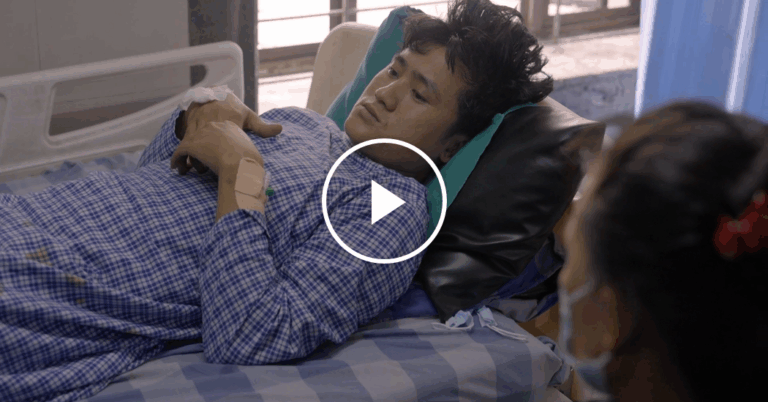
new video loaded: ‘This Is Our Nepal’: A Wounded Gen Z Protester’s Fight for a Better Future
By Shanta Nepali, Ang Li and Meg Felling•
By Anya Pelshaw on SwimSwam

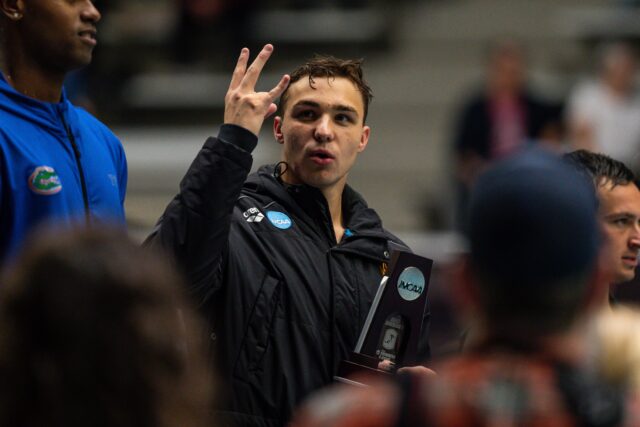
Ilya Kharun posted a 44.15 in the 100 butterfly during practice on Friday evening. That time was just off his lifetime best of a 43.43 that he swam at the 2025 NCAA Championships to finish 2nd. In addition to being just off his lifetime best, Kharun’s time from today would have still made the NCAA ‘A’ final in the event in March as it took a 44.52 to make the ‘A’ final.
Kharun set a new Arizona State pentathlon record in his 100 butterfly swim that kicked off 5x100s fast that are all on 15 minutes, meaning the set takes a total of an hour and 15 minutes. The set is done IM order with an additional 100 IM at the end. Kharun’s time broke his own record of a 45.00 that he swam at last year’s edition of the practice. In addition to breaking his own record in the 100 fly, he also swam to a new pentathlon record in the 100 back posting a 45.72, matching his time from a year ago.
Kharun totaled a time of 3:54.21, less than a second off of the overall record of a 3:53.31 that Leon Marchand swam back at the 2022 edition of the pentathlon. The biggest difference is that Marchand was faster on the breaststroke 100 as he swam a 52.00.
Kharun was the top finisher in the 100 free as well as the 100 IM. Jonny Kulow touched right behind Kharun in the 100 free as Kulow swam to a 42.90.
The only 100 that Kharun did not lead the way in was the 100 breast as Lucien Vergnes earned the win in a 53.60. The French native did not even swim the 100 breast at the 2025 Big 12 Championships, instead opting for the 100 back. Vergnes has a best time of a 52.29 in the 100 breast from last November’s dual meet against Cal and Stanford.
Two records were set on the women’s side of the day. Miriam Sheehan touched in a 53.13 in the 100 backstroke to tie the previous record set by Caroline Bentz last year. Sheehan led off the team’s 200 medley relay at the 2025 NCAA Championships while Bentz anchored that relay to an 8th place finish. Bentz, who has now graduated, holds the school record in the 100 back with a 51.79.
Also setting a record was Julia Ullmann who swam to a 52.28 in the 100 fly. That broke the previous pentathlon record of a 52.80 set by Lindsay Looney back in 2022. Ullman went on to swim the fastest overall 5x100s as well as she touched in a 4:37.69, touching first in the 100 free and 100 IM as well.
Ginger McMahon touched the wall first in the 100 breast in a 1:01.44. Despite swimming the 100 fly and 100 back beforehand, McMahon was less than a second off her lifetime best of a 1:00.66 that she swam in January at the Eddie Reese Showdown.
Arizona State kicks off their season on October 3rd as they host UNLV at 6 pm MST.
Read the full story on SwimSwam: Ilya Kharun Posts 44.15 100 Butterfly In Practice At ASU Pentathlon
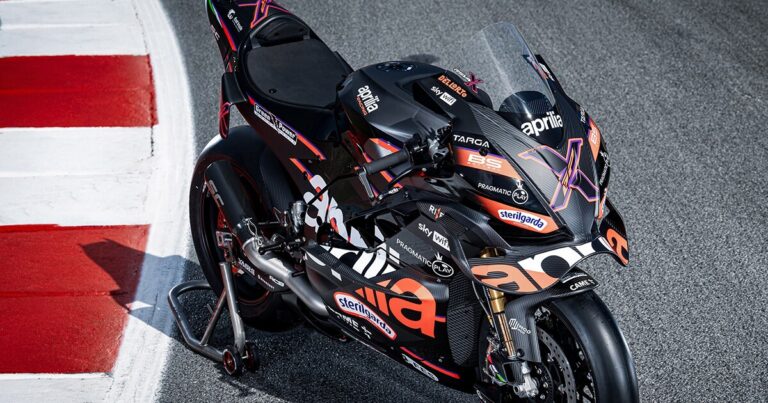
Aprilia has gone all out with its new RSV4 X-GP, a beast of a track-only superbike that arguably makes more power than anything else you can buy outside of Kawasaki’s supercharged Ninja lineup this year.
The X-GP puts out 238 hp (up from the standard RSV4’s 220 hp), which is more than enough to get you in trouble even on a controlled circuit. What’s special about this one is that Aprilia’s also got the weight down to just 368 lb (167 kg), which is awfully close to that of MotoGP racing bikes. The extensive use of carbon fiber, from the entire fairing to the structural seat support, contributed to that low figure.
For reference, Kawasaki’s forced induction Ninja H2 for 2026 puts down 240 hp – but weighs a lot more at a hefty 524 lb (237 kg). There are multiple factors including gearing and torque curve that influence their acceleration, but between the two, it’s likely the X-GP will be quicker off the line. Even the 2023 Ducati Panigale V4, with its 998c firebreather that made 240 hp, came in at 395 lb (179 lb) when fitted with a special full racing exhaust.
Aprilia
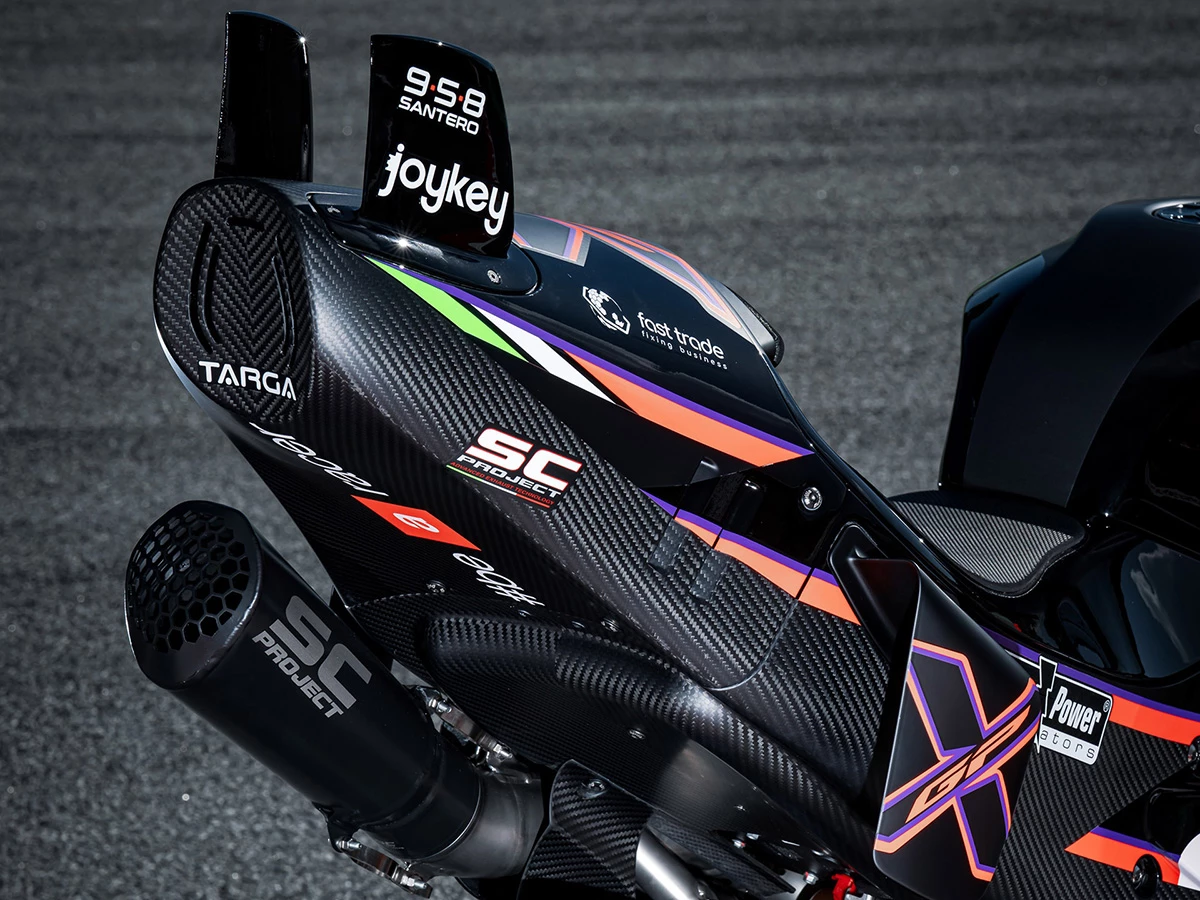
All that power comes at a screaming 13,750 RPM from a race-derived 1,099 cc; it also makes a beefy 96.6 lb.ft (131 Nm) of torque. It’s paired with a Sprint Filter air filter, a dry clutch, and a titanium dual-pipe exhaust system from SC Project.
Aprilia
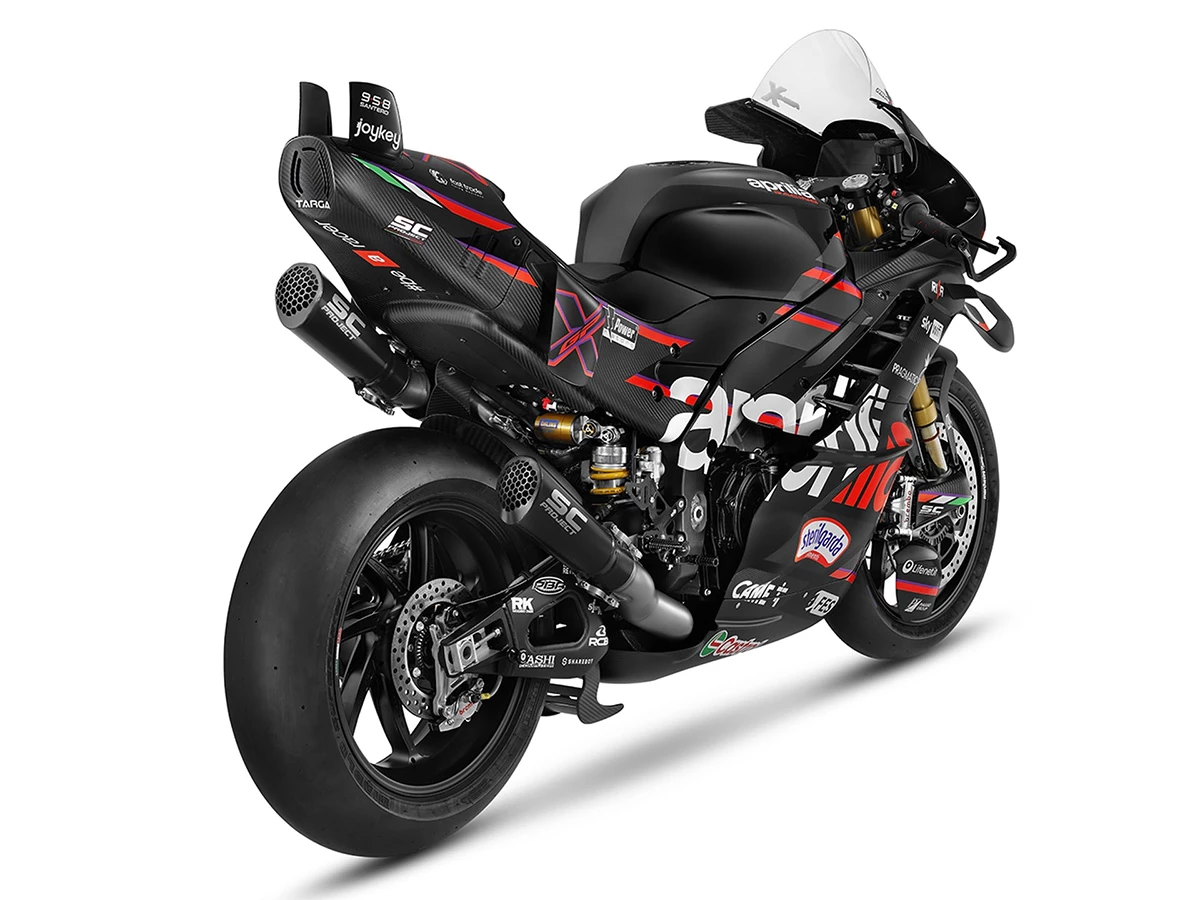
This model is big on aerodynamic elements. There’s a prominent wing protruding in front of the beak, as well as leg wings and tail wings which Aprilia notes are a first for any production bike.
Look closer and you’ll also spot an under wing near the rear tire, and cornering wings. All these help increase downforce during braking and cornering, which increases stability at high speeds and prevents wheelie lift.
Aprilia
As you’d expect on a high-performance machine like this, the X-GP is fitted out with top-of-the-line kit. The fully adjustable Öhlins mechanical suspension setup includes FKR front forks and a rear monoshock. They’re mated to a Brembo radial 19×16 master cylinder with 330-mm T Drive discs for plenty of stopping power. Forged magnesium Marchesini wheels grace Pirelli Superbike slicks. You’ll also be treated to Jetprime racing switchgear and Spider adjustable rearsets machined from billet aluminum.
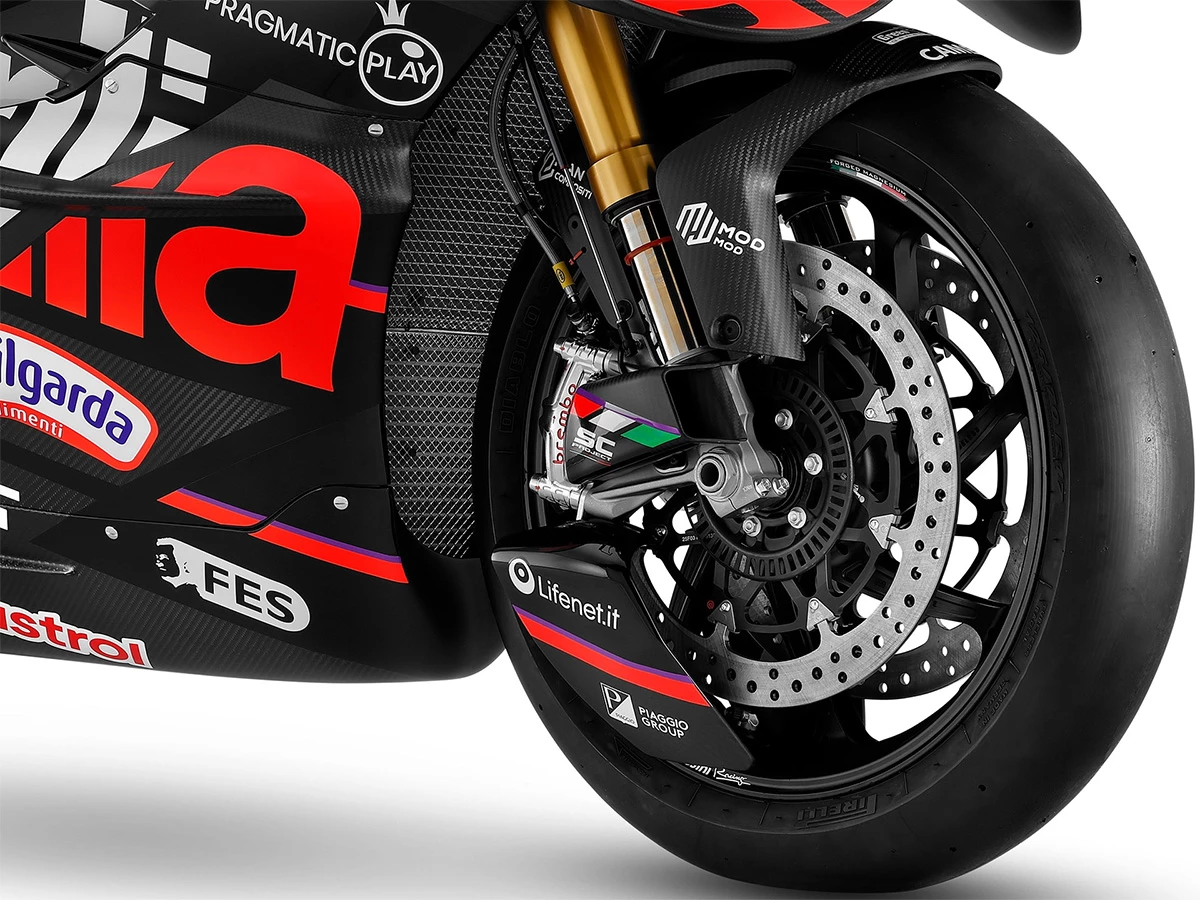
Aprilia
The onboard active electronics are configured for racing performance: that includes wheelie control, traction control, engine braking, and power delivery. You can fine-tune the ECU to your liking further with an included Yashi laptop.

Aprilia
All of this equates to more performance than even the bonkers BMW Concept RR superbike that we saw in May. That monster’s inline four pumps out 230 hp. Other mad Italian machines from Ducati and MV Agusta for this model year deliver around 210 hp, and aren’t close to matching the X-GP on the weighing scale.
Only 30 RSV4 X-GPs will be made through Aprilia Racing’s Factory Works program, and you’ll need to wait almost three months for yours to be delivered. Aprilia is asking for €90,000 (US$105,000) apiece. That’s more than thrice the cost of the aforementioned Ninja H2 (MSRP $32,700) – but that’s the price you pay for a competition-grade steed with a combination of specifications we’ve almost never seen before in a production bike.
Source: Aprilia

Welcome to World Breaking News, your trusted source for fast, accurate, and impactful news coverage from around the globe. We are a dedicated team of journalists, editors, and news enthusiasts committed to delivering breaking stories, in-depth analysis, and real-time updates on politics, business, technology, sports, entertainment, and more.
© Copyright -World Breaking News -2025