Ione WellsSouth America correspondent in Brasília and
Leandro PrazeresBBC News Brasil
Watch: Brazil’s Lula talks Trump, US tariffs and oil in BBC interview
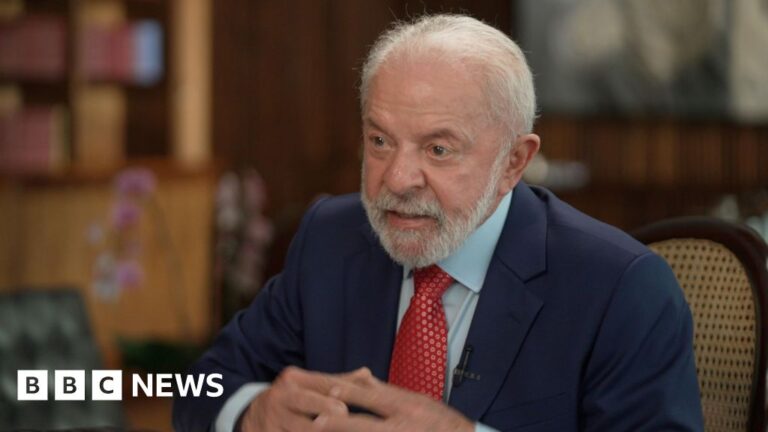
Brazil’s President Luiz Inácio Lula da Silva has told the BBC in an exclusive interview that he has “no relationship” with US President Donald Trump.
Lula has frequently criticised Trump, but this is the clearest signal yet that he thinks communication between him and his US counterpart is now broken.
Even though the US has a trade surplus with Brazil, Donald Trump imposed 50% tariffs on Brazilian goods in July, citing the trial on coup charges of Brazil’s right-wing former president Jair Bolsonaro as a trigger.
Lula described the tariffs as “eminently political” and said US consumers would be facing higher prices for Brazilian goods as a result.
The tariffs imposed by Trump have hit Brazilian exports to the US, like coffee and beef, which Lula said would become more expensive: “The American people will pay for the mistakes President Trump is incurring in his relationship with Brazil.”
The two leaders have never spoken directly to each other. When pushed on why he had not just tried to pick up the phone or form a relationship, President Lula said: “I never tried that call because he never wanted to have a conversation.”
Trump has previously said that Lula can “call him anytime.” But Lula insisted that members of the Trump Administration “do not want to talk”.
He told the BBC that he had found out about the US tariffs from Brazilian newspapers.
Referring to Trump, he said that the US president “didn’t communicate in a civilised manner. He just published them [the tariffs] on his portal – on social media.”
When asked how he would describe his relationship with his US counterpart he simply said: “There’s no relationship.”
‘He’s not emperor of the world!’
Lula said that his poor relations with the US leader were the exception, listing how he had built relationships with former US presidents, UK prime ministers, the EU, China, Ukraine, Venezuela and “all the countries in the world”.
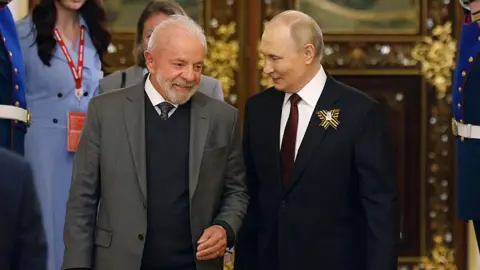
The Brazilian president attended the World War Two anniversary celebrations in Russia this year and has not cut ties with President Putin. Asked who he had a better relationship with – Trump or Putin – he defended his ties to the latter, saying they had formed them when they had both been presidents “in previous times”.
“I don’t have a relationship with Trump because when Trump was elected the first time, I wasn’t president. His relationship is with Bolsonaro, not Brazil,” Lula responded.
He also said that if he passed Trump at next week’s United Nations General assembly he would “greet him because I am a civilised citizen”, but added that Trump may be “president of the United States, [but] he’s not emperor of the world!”.
When approached for comment on Lula’s criticism of Trump, a White House spokesperson referred the BBC to the US president’s past public comments on Brazil.
Lula said if the 6 January 2021 Capitol riot had happened in Brazil rather than in the US, Trump would have been put on trial
Lula also spoke about his predecessor in office, Jair Bolsonaro, who was convicted last week.
A 4-1 majority of justices on Brazil’s Supreme Court found the ex-president guilty of plotting a coup after losing the election to Lula and sentenced him to 27 years in prison.
Lula told the BBC that Bolsonaro and his co-conspirators had “hurt the country, attempted a coup, and plotted my death”.
Referring to the appeals Bolsonaro’s lawyers said they would lodge, Lula said that he hoped that Bolsonaro would continue “to present his defence” but that “for now he is guilty”.
He also criticised Trump for “inventing untruths” by claiming Bolsonaro was being persecuted and denouncing what the US leader said was a lack of democracy in Brazil.
Lula also told the BBC that if the 6 January 2021 Capitol riot had happened in Brazil rather than in the US, Trump would have been put on trial.
In the wide-ranging BBC interview, he also advocated for reform of the United Nations.
He criticised the fact that five countries – the permanent members of the UN Security Council – have the power to veto decisions and argued that this tilted the balance in favour of those who won World War Two, excluding nations representing billions of people like Brazil, Germany, India, Japan, as well as African countries.
The result, he said, was that the UN didn’t “have the strength to solve conflicts” and the five permanent members made “unilateral” decisions about going to war.
Getty Images
Lula travelled to Moscow for World War Two victory celebrations in May
He defended his continued alliances with Russia and China – two nations where unfair elections and human rights abuses have been documented – while calling for a more “democratic” UN.
Pressed on Brazil’s continuing purchases of Russian oil while Russia wages war in Ukraine, he said Brazil was one of the first countries to condemn Russia’s occupation of Ukraine and that “Brazil doesn’t finance Russia, we buy oil from Russia because we need to buy oil just like China, India, the UK or the US needs to buy oil”.
He said that if the UN was “functioning” then neither the Ukraine war nor the Gaza war – which he described as “not a war” but a “genocide” – would have happened.
The BBC also asked President Lula about November’s COP30 climate summit, when Brazil will host world leaders in the Amazon city of Belém.
Domestically, the Brazilian president has faced criticism over his support for exploratory drilling for oil near the mouth of the Amazon River.
Brazil’s state oil company Petrobas and other firms have bought blocks for exploration and are awaiting licenses.
His own environment minister, Marina Silva, has strongly opposed the plans and some conservation groups fear it could risk oil spills in waters close to the Amazon.
President Lula insisted Brazil was strictly following the law in its research and if there were any oil spills then “Brazil would be liable and responsible and take care of any problem”.
He added that he supported a world without fossil fuels but “this moment has not come yet”.
“I want to know of any country that is prepared to have an energy transition and capable of giving up fossil fuels,” he replied. But the issue has proven controversial with left-wing voters.
Lula, who is 79, said he had not yet decided if he would run for re-election in the 2026 presidential elections.
He said that his health and his party would determine that – as well as whether it was politically opportune and whether he stood a chance of winning.
Lula slipped in the polls recently, but received a boost after Trump imposed tariffs on Brazil.
He concluded by saying that his legacy included reducing hunger, lowering unemployment, and the incomes of the working classes growing.
For months, Wall Street commentators have fretted that the artificial intelligence boom looks like a bubble, with capital spending – which some analysts estimate could reach $3 trillion by 2028 – fattening a few mega-cap firms, while lower-income workers suffer from a slack labor market.
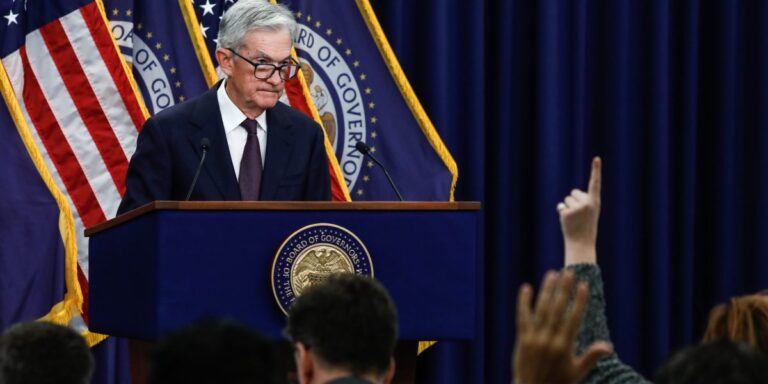
On Wednesday, they got validation from an unlikely source: the chair of the Federal Reserve.
Jerome Powell said the U.S. is seeing “unusually large amounts of economic activity through the AI buildout,” a rare acknowledgement from the central bank that the surge is not only outsized, but also skewed toward the wealthy.
That imbalance extends beyond markets. Roughly 70% of U.S. economic growth comes from consumer spending, yet most households live paycheck to paycheck. That demand picture has taken on a shape that analysts call K-shaped: while many families cut back on essentials, wealthier households continue to spend on travel, tech, and luxury goods—and they continued to do so in August. For now, the inflation recovery depends heavily on this dynamic remaining in fragile stasis. It’s a fix that works well until it doesn’t, if it could be described as working at all.
“[Spending] may well be skewed toward higher-earning consumers,” Powell told reporters after the Fed’s latest policy meeting. “There’s a lot of anecdotal evidence to suggest that.”
That skew has become increasingly obvious in markets. Just seven firms — Microsoft, Nvidia, Apple, Alphabet, Meta, Amazon, and Tesla — now make up more than 30% of the S&P 500’s value. Their relentless AI capex is keeping business investment positive, even as overall job growth has slowed to a crawl. Goldman Sachs estimates AI spending accounted for nearly all of the 7% year-over-year gain in corporate capex this spring.
The comments underscore a widening concern at the Fed: that while headline GDP growth is holding above 1.5%, the composition of that growth is uneven, unlike previous booms in housing or manufacturing.
Powell pointed to “kids coming out of college and younger people, minorities” as struggling to find jobs in today’s cooling labor market, even as affluent households continue to spend freely and companies funnel cash into cutting-edge technologies.
The imbalance reflects what Powell described as “a low firing, low hiring environment,” where layoffs remain rare but job creation has slowed to a crawl. That dynamic, combined with the concentration of economic gains in AI and among the wealthy, risks deepening inequality, and complicates the Fed’s attempt to balance its inflation and employment mandates.
That disconnect risks widening the gap between Wall Street and Main Street. While affluent households continue to spend freely and tech titans pour billions into data centers and chips, revised jobs data show the economy added just 22,000 positions in August, with unemployment edging up to 4.3%.
“Unusually large” AI investment may sustain top-line growth, Powell suggested, but it’s doing little to lift the broad labor market.
“The overall job finding rate is very, very low,” he said. “If layoffs begin to rise, there won’t be a lot of hiring going on.”
Fortune Global Forum returns Oct. 26–27, 2025 in Riyadh. CEOs and global leaders will gather for a dynamic, invitation-only event shaping the future of business. Apply for an invitation.
new video loaded: Trump Visits Britain as Protesters March in London
transcript
transcript
Trump Visits Britain as Protesters March in London
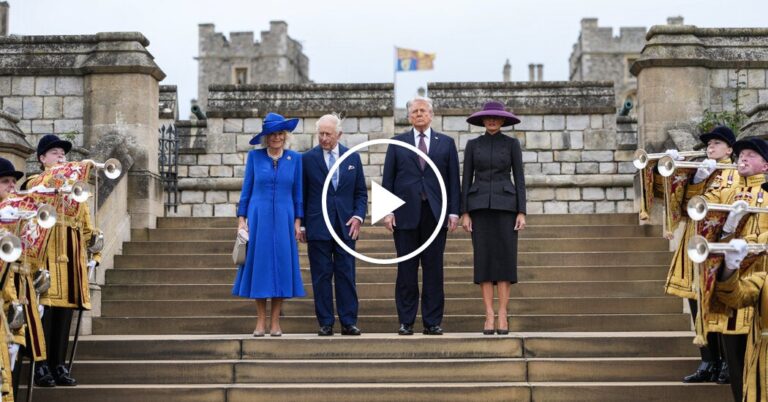
President Trump and the first lady, Melania Trump, met with the British royal family at Windsor Castle on Wednesday, as demonstrators gathered in central London to protest his visit.
“I don’t understand how someone who’s calling for complete — like the breakdown of international law. The targeting of people of color, is just allowed to come into this country. It’s just ridiculous.” “Donald Trump, you can’t hide.” “We charge you with genocide.” “You should look back into his own country affairs and let us not interfere to other people country, especially in Gaza. He should stop. He should stop arming Israel.” “Donald Trump’s not welcome here.” “Stop the hate. Stop the fear.”
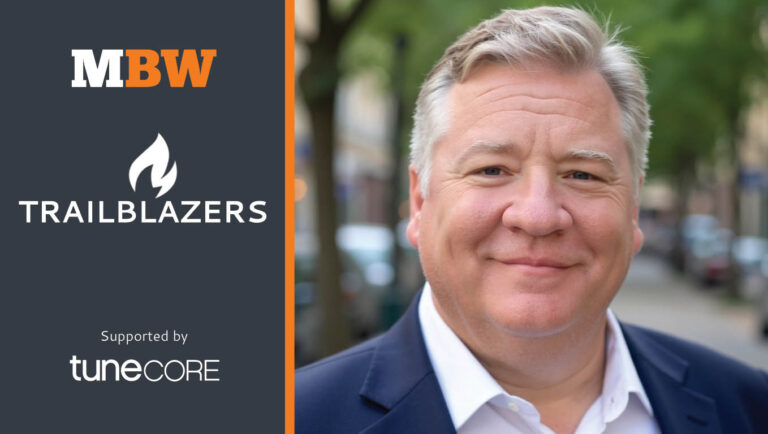
Trailblazers is an MBW interview series that turns the spotlight on music entrepreneurs with the potential to become the global business power players of tomorrow. This time, we meet Randy Fusee, CEO of music streaming platform Coda Music. Trailblazers is supported by TuneCore.
The dominance of algorithmic music discovery on streaming platforms has become a source of mounting frustration for artists and managers.
Enter Coda Music, which claims to be the first fully licensed, on-demand premium streaming service to launch in almost a decade. It’s taking direct aim at this long-standing machine-driven approach.
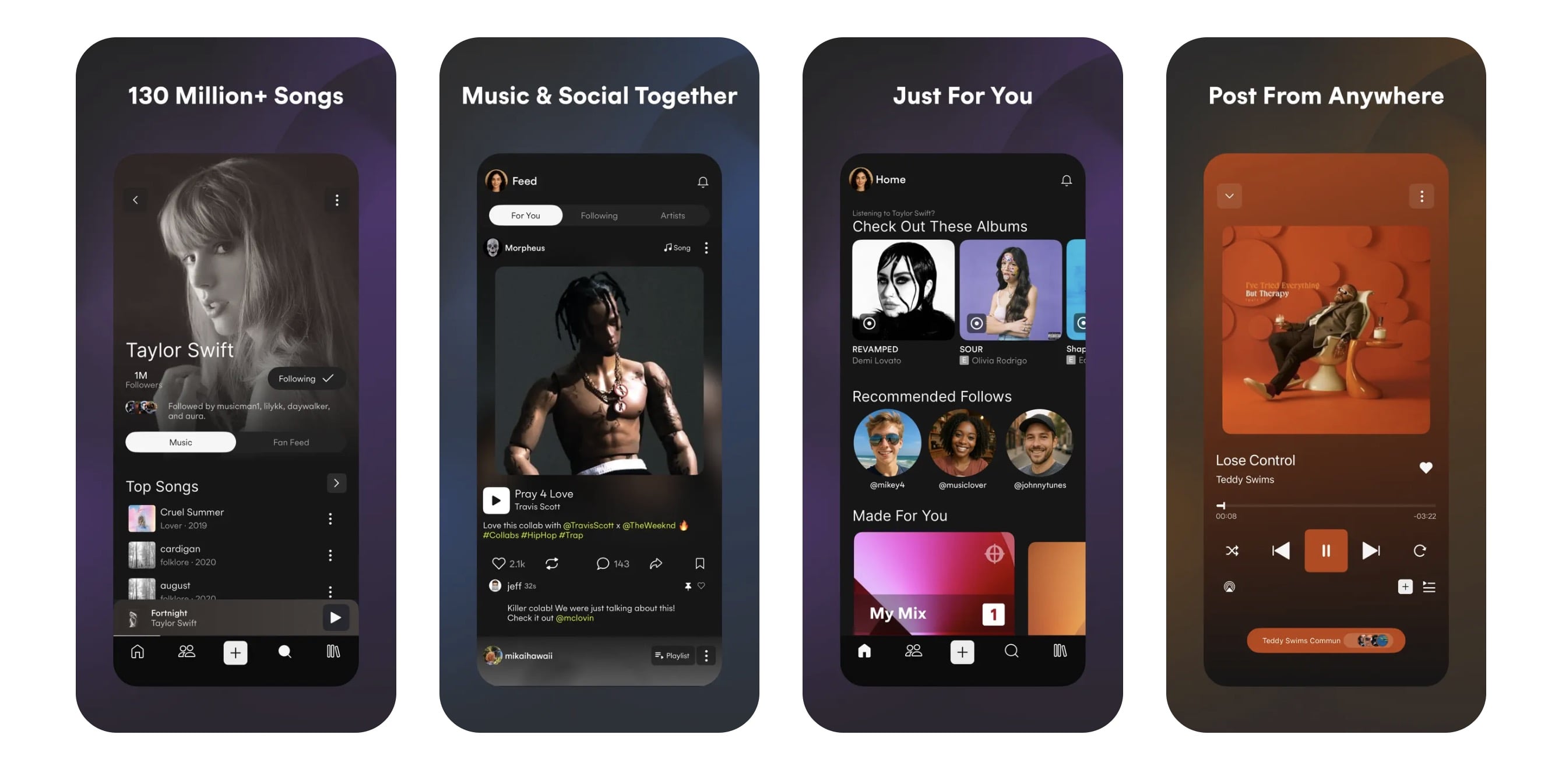
Coda Music positions itself as an alternative to algorithmic curation, with user-generated playlists and social sharing features designed to prioritize human recommendation over machine learning.
Fans can share listening activity through social feeds and customize profiles, while artists can engage directly with their audiences within the app.
“True discovery happens in those unexpected moments – not through recycled recommendations like ‘If you like artist A, here’s artist B,’” CEO Randy Fusee argues.
“Algorithms can’t replicate that. Only humans can.”
Fusee calls Coda “the first platform to seamlessly combine the global music catalog with a social network, powered by artists and fans.”
While Western streaming platforms have largely treated social features as an afterthought, services in China like NetEase Cloud Music have demonstrated the power of community-driven discovery.
NCM, for example, combines streaming with social features that allow users to share and comment on music. Artists respond directly in comment sections to build fan connections, and users spend around 90 minutes daily on the service.
Coda is betting that Western audiences are equally hungry for human connection around music. “Every major platform runs on the same algorithmic logic – prioritizing profit over artistry, and passive consumption over real connection,” Fusee claims.
He adds: “We’re rebuilding the middle class of artists and giving fans the power to shape what gets heard. It’s a return to authenticity, driven by community.”
More provocatively, Coda introduces a “FanDirect” program that allows subscribers to allocate $1 of their monthly fee directly to any qualifying independent artist.
Combined with what the company claims are “the highest per-stream rates in the industry,” it’s an attempt to address streaming’s notorious artist compensation problem through what Fusee calls a “per-fan” rather than “per-stream” model.
Coda has launched in the US and Canada with plans to expand into Europe and Asia in 2026. The service is priced at $10.99 per month for an individual plan or $16.99 for a Family plan, which lets you access up to four accounts.
Co-founded by a team with deep tech and music backgrounds – Fusee and CTO Jeff Teles previously built tablet systems used across NFL and MLB – Coda says it has secured licensing deals with all three major music companies, plus key independents like Merlin and Beggars Group.
Russell Gaskins (Chief Creative Officer) spent over a decade at BMG, most recently as Vice President of Creative and Business Strategy. Ted Andre, Chief Operating Officer, is a producer and production executive with over 20 years’ experience in the entertainment business.
Here, MBW speaks with Randy Fusee about launching a new streaming service in a competitive market, challenging algorithmic dominance, rebuilding music’s “middle class,” and more…
WHAT PAIN POINTS IN THE STREAMING MARKET WERE YOU TRYING TO ADDRESS?
We’re music fans first. Coda Music was born out of a deep frustration with a streaming landscape that had become completely homogenized. Every service offered the same catalog at the same price, paid artists the same way, and relied on the same algorithmic delivery system. The entire model was built to serve the platform, not the fans, and certainly not the artists.
We saw no value in building yet another service that followed the same playbook. So we built Coda Music to solve two fundamental problems:
Discovery and Curation: Today, discovery is gated by algorithms that prioritize engagement metrics over artistic value. That doesn’t serve fans or artists. Coda takes a radically different approach: we put humans in charge. Fans and artists drive curation through a unique blend of full-catalog streaming and robust social features.
Playlists are created and shared by real people — not machines. Fans can post what they are listening to directly to the social feed and customize their profile to reflect their unique taste. Our role is to facilitate those connections, not to act as gatekeepers.
It might get a little weird sometimes. You’ll stumble across music you’ve never heard before. That’s the point. True discovery happens in those unexpected moments, not through recycled recommendations like “If you like artist A, here’s artist B.” Algorithms can’t replicate that. Only humans can.
Fairness for Artists: Streaming has financially gutted the vast majority of artists. The ‘per stream’ model simply doesn’t work for most creators. Worse, many platforms charge artists — or third parties — to promote their own music.
Coda introduces a new ‘per fan’ model designed specifically for independent and qualifying artists. Our social network is free for any artist who wants to promote their music. Fans also have agency: they can direct a portion of their subscription to the artist of their choice.
Artists shouldn’t have to beg for tips. Fans shouldn’t have to pay extra just to support the artists they love. There’s enough money in streaming to pay artists fairly, we built the infrastructure to make that possible.
WHAT MAKES YOUR SOCIAL-STREAMING INTEGRATION DIFFERENT FROM PREVIOUS ATTEMPTS IN THE MARKET?
Coda Music is the first fully cataloged, premium on-demand streaming service that also functions as a true social network. That combination has never existed before. The major streaming platforms were all built over 15 years ago, and their architecture reflects that – they’re utility-driven, not community-driven.
“The major streaming platforms were all built over 15 years ago, and their architecture reflects that – they’re utility-driven, not community-driven.”
What most people don’t realize is that there hasn’t been a new premium, full-catalog streaming service in well over a decade. New music apps launch all the time, but only a handful offer access to 130 million songs on-demand and everyone knows who they are.
Some of those platforms have bolted on social features, but it’s nearly impossible to retrofit community into a product that was never designed for it.
Coda was built from the ground up to integrate streaming and social as a single experience. Fans don’t just listen – they connect, share, and discover together. Artists don’t just upload – they engage, build followings, and grow careers. It’s not about adding features to an old model. Coda Music is curated by the crowd, not the cloud.
TELL US ABOUT THE TECHNOLOGY AND LICENSING INFRASTRUCTURE UNDERPINNING THE PLATFORM?
Coda Music operates on a technology and licensing foundation similar to other major streaming services. The music streaming industry is mature, with well-established frameworks that have supported its growth for over two decades.
“we benefit from a wave of modern infrastructure and third-party innovation.”
But because Coda is the first new premium streaming platform to launch in years, we benefit from a wave of modern infrastructure and third-party innovation.
Today’s ecosystem includes powerful service providers that solve complex challenges from stream aggregation to metadata management to rights tracking. That allows us to build leaner, faster, and smarter. Lower overhead means we can redirect more value to the people who create the music. It’s a key part of how we deliver better financial outcomes for artists without compromising the listener experience.
THE press RELEASE about the launch NOTES THAT YOU’VE PARTNERED WITH Universal Music, SONY AND WARNER, PLUS MERLIN AND OTHERS. HOW DID YOU CONVINCE ALL THREE MAJORS AS WELL AS KEY INDIES TO PARTNER WITH YOU?
Rights holders are essential partners. Without them, there’s no access to the music that powers the entire ecosystem. Securing those partnerships took years of work. Each company had its own path, its own priorities, and its own process for evaluating a new service model. Aligning those moving parts was complex, but ultimately worth it.
“What encouraged us most was how many people inside the majors genuinely wanted to solve the same problems we were tackling.”
What encouraged us most was how many people inside the majors genuinely wanted to solve the same problems we were tackling. When we showed them what we were building, it was the social layer – the direct connection between artists and fans, and fans with each other – that resonated most.
They saw what had been missing: a platform that didn’t just distribute music, but rebuilt the relationships that legacy streaming had unintentionally fractured. Instead of putting the service between artists and their audiences, Coda puts community at the center.
IN REGARD TO THE LICENSING INFRASTRUCTURE QUESTION, YOU MENTIONED THIRD-PARTY INNOVATION, JUST WANTED TO CLARIFY IF THAT’S VIA MASSIVEMUSIC IN ADDITION TO SEPARATE PARTNERSHIPS WITH UMG, SONY, WMG, MERLIN, AND BEGGARS ETC?
MassiveMusic plays a key role in our licensing and delivery infrastructure, but they’re part of a broader ecosystem of third-party innovators that help make Coda Music possible.
“We also maintain direct licensing relationships with all rights holders and publishers.”
We’ve built a lean, high-impact tech stack that allows us to scale artist compensation without inflating operational costs. Companies like Xperi, Singular, Music Story, AWS, Tipalti, and ACR cloud are essential to our operation.
We also maintain direct licensing relationships with all rights holders and publishers.
These partnerships ensure catalog depth and rights clarity, while our third-party integrations allow us to deliver a premium experience without compromising artist payouts. Building all of this in-house would dramatically increase our costs and that’s exactly what we’re trying to avoid. By staying lean and modular, we’re able to pay artists significantly more than any other streaming service.
HOW DO YOU DEFINE THE “MIDDLE CLASS OF ARTISTS” YOU’RE TRYING TO REBUILD?
The middle class of artists is far larger than most fans realize. We define it as artists with anywhere from 50,000 to 5 million fans. Artists who have built real audiences but haven’t broken into the top 1% that dominate streaming revenue.
“The reality is very different. In today’s streaming economy, income flows almost entirely to the top fraction of a percent. Everyone else is left treating platforms like Spotify as marketing tools, necessary for visibility, but never expected to pay the bills.”
This definition underscores the scale of the problem. Many people assume that if an artist has a few million followers, they must be living the rock star lifestyle. The reality is very different. In today’s streaming economy, income flows almost entirely to the top fraction of a percent. Everyone else is left treating platforms like Spotify as marketing tools, necessary for visibility, but never expected to pay the bills.
It doesn’t have to be this way. There’s enough money in streaming to support a thriving middle class of artists. What’s missing is the infrastructure and the integrity to distribute it fairly. That’s what Coda Music is here to rebuild.
TELL US ABOUT THE STRATEGY BEHIND GIVING ARTISTS D2C (MERCH ETC) TOOLS ON THE PLATFORM?
Supporting artists is our north star. It’s not about maximizing revenue, subscriber counts, or listening time. It’s about helping artists build sustainable careers. That means giving them the tools to monetize beyond streaming.
Merchandise, live shows, and direct fan engagement have become essential income streams for artists. So it’s only natural for us to integrate those opportunities directly into the platform.
“It’s about helping artists build sustainable careers. That means giving them the tools to monetize beyond streaming.”
Coda Music was built to connect artists and fans, not just through music but through meaningful interactions. That makes it the ideal environment for direct-to-consumer transactions.
Whether it’s selling merch, promoting tour dates, or offering exclusive content, our goal is to make those connections seamless. When artists thrive, the entire ecosystem gets stronger. That’s the strategy and the mission behind everything we build.
HOW DO THE FANDIRECT PROGRAM AND $1 DIRECT PAYMENT FEATURE WORK?
FanDirect is entirely powered by fans. On legacy streaming platforms, listeners have no control over where their subscription dollars go, even if they stream the same artist nonstop for a month, the financial impact is negligible. The reality is that most of their money ends up with the top 1% of artists, regardless of what they actually listen to.
Coda flips that model. We give fans agency, not just creatively, but financially. With FanDirect, every subscriber can allocate $1 of their monthly payment to any qualifying artist they choose. It’s real money, going directly to the artist, with no extra cost to the fan.
“With FanDirect, every subscriber can allocate $1 of their monthly payment to any qualifying artist they choose.”
Other platforms offer tipping, but tipping has a natural ceiling. It asks fans to spend more. We believe artists shouldn’t have to rely on tips, and fans shouldn’t have to pay extra just to support the artists they love. There’s enough money in streaming to do this right.
Artists become eligible simply by signing up and claiming their social profile on Coda. It’s free and open to all independent artists. Those signed to labels may need to review their contracts to confirm eligibility.
CODA SAYS THAT IT “PAY[S] THE HIGHEST PER-STREAM RATE IN THE INDUSTRY”. HOW DO YOU ACHIEVE HIGHER PER-STREAM RATES WHILE KEEPING SUBSCRIPTION PRICES COMPETITIVE?
This is one of the most misunderstood aspects of the streaming business. While it’s true that Coda pays the highest per-stream rate in the industry, it’s not the badge of honor people assume. That claim is possible because we’re both the newest and smallest premium streaming service in the market.
People often point to platforms like Tidal or Qobuz as examples of higher per-stream payouts. But the reality is that those numbers only appear higher because those services have smaller user bases and lower total revenue than giants like Spotify, Apple, Amazon, or YouTube.
“Our FanDirect program realigns artist compensation with actual revenue, not play counts.”
Here’s the truth: No one actually pays “per stream.” It’s a false narrative. Consumers pay a flat monthly fee for unlimited listening. Streaming services then pay out a portion of that revenue to rights holders, who then pay the artists. So the smaller the revenue pool, the higher the apparent per-stream rate.
That’s why Coda doesn’t chase streams; we build fans. Our FanDirect program realigns artist compensation with actual revenue, not play counts. Fans can direct a portion of their subscription to the artists they love, creating a direct financial relationship that’s more transparent and more sustainable.
AND HOW DO YOU ACHIEVE PROFITABILITY WITH HIGHER ARTIST PAYOUTS AND ADDITIONAL DIRECT PAYMENTS?
As discussed, our per-stream payments follow the same revenue-based structure as every other streaming service. What sets us apart is the $1 direct payment we allocate from each subscription to the artist of the fan’s choice. That comes straight from our margin and it’s a deliberate choice.
We treat direct artist payments as an extension of our marketing budget. Unlike the major platforms, we’re not trying to outspend competitors in traditional advertising. The Big Four streaming services spend billions annually on ads. When they say they can’t afford better artist payouts, it’s worth asking where the money is actually going because it’s not going to artists.
“We treat direct artist payments as an extension of our marketing budget.”
Coda isn’t built to compete in that arena. We believe it’s a losing game for artists and a missed opportunity for fans. Instead, we redirect that spend into the ecosystem itself. FanDirect replaces the standard ad-based user acquisition model with something more transparent, more equitable, and more sustainable. Our core economics are similar to other streaming platforms. We just choose to invest in artists and fans instead of ads. That’s how we build profitability with integrity.
WHAT ARE YOUR POLICIES AROUND AI-GENERATED MUSIC ON THE PLATFORM?
Coda Music is built to champion human creativity. While we would prefer not to host AI-generated music, the reality is that the problem is vast, complex, and difficult to fully contain. The tools for generating synthetic content are widely accessible, and the lines between human and machine-made music are increasingly blurred.
“While we would prefer not to host AI-generated music, the reality is that the problem is vast, complex, and difficult to fully contain. We do have AI-generated music on the platform, but we’re actively working to identify and remove it whenever possible.”
We do have AI-generated music on the platform, but we’re actively working to identify and remove it whenever possible. Our priority is to support real artists who create from lived experience and connect with fans through authentic expression. We’re committed to doing our best, but we won’t be perfect. This is an evolving challenge, and we’ll continue refining our approach as the technology and the industry shift.
Our pledge is simple: we will always prioritize human artistry, and we’ll be transparent with our community as we navigate this space.
THERE’S NO AD-SUPPORTED OPTION. IS THAT SOMETHING YOU’D EVER CONSIDER, OR WILL YOU KEEP IT PREMIUM ONLY?
We’re committed to building a streaming model that puts artists first. Ad-supported tiers and promotional gimmicks – like extended free trials or bundling offers – may boost platform metrics, but they rarely benefit the artists whose music powers those platforms.
In fact, they often dilute the available revenue pool, redirecting money to advertisers and intermediaries instead of artists.
“Until a model emerges that supports artists without compromise, we won’t offer an ad-supported tier.”
At Coda Music, we’re keeping our focus on sustainable, fan-powered compensation. We’ll always explore ways to improve the listener experience and expand access, but not at the expense of artist earnings. Until a model emerges that supports artists without compromise, we won’t offer an ad-supported tier. And we won’t chase gimmicks that serve the platform more than the people who make the music.
WHERE DO YOU SEE MUSIC STREAMING IN FIVE YEARS AND WHAT’S CODA’S ROLE?
Music streaming isn’t going anywhere. The convenience of having 130 million songs in your pocket for a low monthly fee is undeniable. But the model needs to evolve. In five years, we believe the industry will shift from passive consumption to active participation, where fans play a meaningful role in discovery, support, and sustainability.
“Coda won’t make every artist a millionaire, but it will help thousands find a sustainable path forward.”
Coda Music’s role is to lead that shift. We’re here to restore equity and fairness to the artists who make it all possible. Our impact goes beyond streaming – it’s societal. What happens when more creators have a viable path to financial stability? When artistry isn’t reserved for the lucky few, but accessible to anyone with talent and drive?
Coda won’t make every artist a millionaire but it will help thousands find a sustainable path forward. Artists need income to live, create, tour, and grow. Fans want to support them. Our job is to bring those two groups together and build a platform where art can thrive, careers can grow, and music can breathe again.
Trailblazers is supported by TuneCore. TuneCore provides self-releasing artists with technology and services across distribution, publishing administration, and a range of promotional services. TuneCore is part of Believe.Music Business Worldwide
The widow of vocal Kremlin critic Alexey Navalny says two independent labs have found that he was poisoned shortly before his death in a Russian prison in February 2024.
A required part of this site couldn’t load. This may be due to a browser
extension, network issues, or browser settings. Please check your
connection, disable any ad blockers, or try using a different browser.
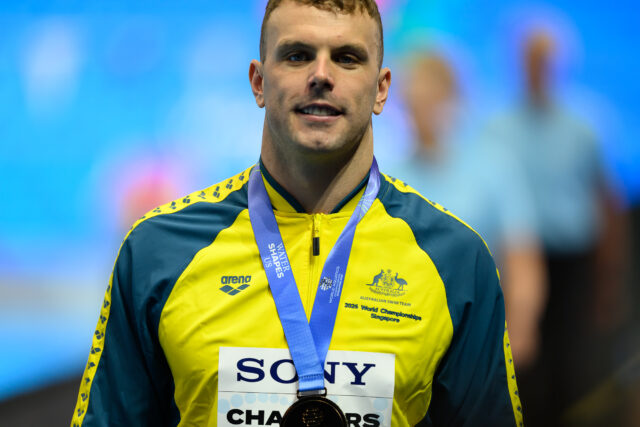
According to journalist Tom Decent, 27-year-old Chalmers recently turned down a three-year contract offer to the tune of US$1.08 million ($1.6m) to defect to the Enhanced Games.
Decent wrote that Chalmers was secretly approached by organizers not only to compete at next year’s event in Las Vegas, but also to become an ambassador for the competition. (The Age)
All told with bonuses, Chalmers stood to earn an estimated US$2.54 million ($3.8m).
However, the South Aussie’s manager, Phoebe Rothfield of W Sports & Media, said her client was focused on reaching a fourth Olympic Games in 2028 in Los Angeles. (The Age)
“It is life-changing money for a swimmer – or any Australian Olympic athlete, for that matter,” Rothfield said. “It could have set him and his young family up and helped with the mortgage, but Kyle said no from the onset. It was a brief discussion.
“What drives him is competing for his country, standing on the podium in the green and gold and doing the sport because he loves it.” (The Age)
For Proud’s part, the 30-year-old men’s 50m free silver medalist from Paris last year said it would take him “13 years of winning a World Championship title” in order to earn the same amount of money that’s up for grabs at the Enhanced Games, which is offering $500,000 for an event win and $1 million for breaking the world record in either the 50-meter freestyle or 100-meter dash.
Chalmers, who became a first-time dad last month, has been consistent in saying his career representing Australia is far from over.
In June, the sprinter stated, “The new 50s format (with all the form strokes now on the Olympic program) will keep me swimming until Brisbane 2032. I am in the very best position I’ve been in a very long time. My body is feeling good.
“And I’ve been swimming some really fast times. I can see myself swimming until Brisbane 2032 … and by then our little girl will be seven years old, so that would be pretty cool.”
This summer in Singapore, Chalmers earned silver in the men’s 100m freestyle and produced a heroic anchor to help the green and gold top the men’s 4x100m free relay podium.
High-end consumer drone producer DJI has announced the release of its Mini 5 Pro. Not only does it claim to be the world’s first palm-sized drone with a one-inch image sensor, but it’s got a few other hard-to-resist tricks up its sleeve.
When it comes to drones, size really does matter. That’s firstly true about the size of the drone itself. If you’re a drone hobbyist, you might be happy with a pocket-sized drone that flies in pre-determined patterns, doesn’t require specialized goggles, and has a great return-home feature if something goes wrong. In that case, DJI’s Flip or the HoverAir X1 Promax would do you right.
If you’re more of a pro drone jockey, or someone who really cares about image quality, then DJI’s larger and much more expensive (the size of your wallet matters in the drone game as well), Mavic 4 Pro would do the trick.
But size also matters when it comes to the image sensor embedded inside any drone’s camera system. Until now, only larger drones had image sensors coming in at an inch or more (the Mavic has a 1.5-inch sensor, for example). Thanks to the Mini 5 Pro, though, consumers can now get pro-level image processing, in an easy-to-operate, lightweight, handheld flyer.
When folded, the Mini 5 Pro measures just 157 × 95 × 68 mm (about 6 x 3.7 x 2.6 in)
DJI
According to DJI, the one-inch CMOS sensor inside the Mini 5 Pro’s camera will deliver pro-level images, even in low light. It supports 4K/60fps video recording with up to 14 stops of dynamic range, meaning it can handle itself well in a wide variety of lighting conditions. It can also step things up to 4K/120fps for slow-motion video capture. Of course, the camera is also packed with a range of onboard intelligent modes and algorithms that work hard to produce cinematographer-level images as they are being captured. The video quality certainly looks top-rate in the following promotional clip released today by DJI.
Meet DJI Mini 5 Pro – All-In-One 1-Inch Large CMOS Mini Camera Drone
The drone also features a new 48-mm Med-Tele mode, which is a zoom feature besting what was previously available in the DJI’s Mini Pro line. Additionally, the shooter comes with DJI’s portrait optimization feature to make shots of people look their best.
An onboard gimbal supports 225° roll rotation for some very cool acrobatic shots, and the camera is also capable of what DJI calls True Vertical Shooting, which allows it to record in a portrait orientation rather than requiring post-capture editing to achieve the same effect. The Mini Pro 5 also has an upgraded version of DJI’s tracking feature called ActiveTrack 360° which, the company says, means that “tracking performance has been enhanced to balance speed, agility, and safety.”
DJI’s ActiveTrack 360° keeps the Mini 5 Pro on task, even in fast-moving sports scenarios
DJI
In terms of the drone side of things, the Mini 5 Pro is equipped with a set of forward-facing LiDAR sensors, front and back fisheye lenses, and binocular lenses and a 3D infrared sensor on the bottom that keep it from running into obstacles, even when flying at night.
All of that comes in a package that measures 157 × 95 × 68 mm (about 6.2 x 3.7 x 2.6 in) when folded, and 255×181×91 mm (about 10 x 7 x 3.5 in) when unfolded, and weighs just under 250 grams (about a half pound). The drone promises a max flight time of 36 minutes when using the standard battery or 52 minutes when equipped with DJI’s Intelligent Flight Battery Plus. That translates into a max flight distance of 32 km (about 20 miles) with the better battery.
The drone is available now in Europe for €809 (link not yet available in the USA), which includes a controller. Stepping that up to €1,019 will get you three Intelligent Flight Batteries, a charging hub, shoulder bag and a few other accessories.
We reached out to DJI regarding a possible US release and received the following response from a company spokesperson: “The DJI Mini 5 Pro will not be available officially in the United States upon its global launch on September 17. DJI remains dedicated to the US market and is optimizing our strategy to best serve our customers amidst evolving local conditions.”
Israeli tanks – like those pictured in this file photo – have been deployed into areas of Gaza City
Local residents and eyewitnesses say dozens of Israeli tanks and military vehicles have pushed into a major residential district of Gaza City, on the second day of Israel’s ground offensive aimed at occupying the area.
Video footage shows tanks, bulldozers and armoured personnel carriers moving on the edges of Sheikh Radwan, in northern Gaza City. Thick clouds of smoke can be seen as Israeli forces fire artillery shells and smoke bombs to cover their advance.
The Sheikh Radwan district was home to tens of thousands of people before the war and is considered one of the city’s most densely populated areas.
Israel says the aim of its Gaza City offensive is to free hostages held by Hamas and defeat up to 3,000 fighters in what it describes as the group’s “last stronghold” – but the operation has drawn widespread international condemnation.
The leaders of more than 20 major aid agencies, including Save the Children and Oxfam, warned that “the inhumanity of the situation in Gaza is unconscionable”.
Residents in Sheikh Radwan said Wednesday’s incursion followed a wave of heavy airstrikes targeting buildings and main streets across the neighbourhood, in what appeared to be preparation for the ground assault.
Saad Hamada, a local resident who fled south with his family earlier on Wednesday, told the BBC: “The drones didn’t leave anything. They hit solar panels, power generators, water tanks, even the internet network.
“Life became impossible, and that is what forced most people to leave despite the danger.”
Reuters
The incursion into Sheikh Radwan has triggered yet another wave of displacement, with thousands of families fleeing south
Sheikh Radwan includes the areas of Abu Iskandar, al-Tawam, and al-Saftawi, and is intersected by al-Jalaa Street, a vital artery linking central Gaza City with its northern districts.
Locals say Israeli control of the neighbourhood could open the way for forces to advance deeper into the city and reach its central areas.
The images of tanks in Gaza City’s streets have caused widespread panic among residents, particularly those still living in the western and central parts of the city.
Witnesses said the sight of tanks approaching their homes revived memories of previous incursions, that ended with entire neighbourhoods being flattened.
The incursion into Sheikh Radwan has triggered yet another wave of displacement, with thousands of families fleeing south.
Long lines of cars and carts loaded with belongings were seen on the roads, as the Israeli army opened a route to the south via the Salahedin Road. Residents reported journeys taking hours and costing hundreds of shekels due to the scarcity of transport and soaring prices.
Getty Images
The Sheikh Radwan neighbourhood has already suffered massive damage in the war
Before the war, Sheikh Radwan was one of Gaza City’s busiest districts, home to dozens of schools, mosques, and marketplaces.
It had already been struck repeatedly by air raids in recent months, and there is widespread destruction, but the sight of tanks inside the area now marks a significant new phase in Israel’s ground campaign.
As part of its operations, the IDF is also reportedly utilising old military vehicles loaded with explosives that have been modified to be controlled remotely. They are being driven to Hamas positions and detonated, according to Israeli media.
Resident Nidal al-Sherbi told the BBC Arabic’s Middle East Daily programme: “Last night was extremely difficult, with continuous explosions and shelling that lasted from night until dawn.”
“Israeli vehicles advanced from Sheikh Radwan, Tal al-Hawa, and also from Shejaiya. It was a very, very frightening night.”
Aid groups, UN agencies and others say the “humanitarian area” people are expected to move to is heavily overcrowded and insufficient to support the roughly two million Palestinians who are expected to cram into it.
Some who followed the military’s orders to evacuate to the zone say they found no space to pitch their tents, so they returned north.
“Everyday leaflets are thrown at us ordering evacuation, while the Israeli army shells buildings in every direction,” Munir Azzam, who is in northern Gaza, told the BBC. “But where can we go? We have no refuge in the south.”
The IDF said on Tuesday that around 350,000 people had fled Gaza City, while the UN put the figure at 190,000 since August. Estimates suggest at least 650,000 remain.
Watch: ”Fear is making us flee” say displaced Gazans
Israel launched its war in Gaza in response to the Hamas-led attack on southern Israel on 7 October 2023, in which about 1,200 people were killed and 251 others were taken hostage.
At least 65,062 people have been killed in Israeli attacks since then, almost half of them women and children, according to Gaza’s Hamas-run health ministry.
It said on Wednesday that 98 people had been killed and 385 injured by Israeli fire in the past 24 hours. Another four people had died from malnutrition, taking the total number of malnutrition-related deaths since a UN-backed body declared famine in Gaza City in late August to 154, it added.
The UN has warned that an intensification of the offensive will push civilians into “even deeper catastrophe”.



 Getty Images