1.3 C
New York
Sunday, March 1, 2026
Home Blog Page 383

Human Stem Cells Age Faster Due to Spaceflight

0

Your body’s blood-making stem cells, hematopoietic stem cells (HSC), are like factory managers who work best when calm and rested. But when stress hits, like infection or injury, they spring into action, churning out immune cells to defend you. Over time, too much stress wears them down, making them age faster and lose their spark.

Now imagine sending those managers to space. In low Earth orbit (LEO), gravity vanishes, radiation spikes, and the rules of biology bend. NASA’s Twins Study showed that astronauts exposed to space for nearly a year had changes in telomere length, chromosomal inversions/instability, and upregulation of inflammatory cytokines.

While previous research has shown that microgravity affects the immune system, what about the stem cells that build it? Until recently, no one had tested how spaceflight affects the aging and fitness of human blood-forming stem cells (HSPCs).

So University of California San Diego’s Sanford Stem Cell Institute teamed up with NASA and Space Tango to establish an Integrated Space Stem Cell Orbital Research (ISSCOR) center. They studied the impact of the LEO environment on HSPC fitness before, during, and after spaceflight in four SpaceX Commercial Resupply Services missions to the International Space Station (ISS).

For this study, they built bone marrow niche nanobioreactors for real-time HSPC tracking in artificial intelligence-driven CubeLabs. This “nanobioreactor” platform, which includes miniaturized 3D biosensing systems, enables human stem cells to grow in space. These smart little systems use AI-powered cameras to watch the cells in action, tracking how they behave in orbit.

The researchers discovered that HSPCs returned from orbit showing clear signs of wear: they lost some of their ability to produce fresh, healthy cells, became more vulnerable to DNA damage, and showed fraying at the ends of their chromosomes, on those protective caps known as telomeres. All of these changes point to accelerated aging. It’s like sending young cells into space and getting back older, more tired versions.

Catriona Jamieson, director of the Sanford Stem Cell Institute and professor of medicine at UC San Diego School of Medicine, described space as “the ultimate stress test for the human body.” She emphasized the significance of recent findings suggesting microgravity and cosmic galactic radiation are all factors in aging stem cells.

“Understanding these changes not only informs how we protect astronauts during long-duration missions but also helps us model human aging and diseases like cancer here on Earth,” said Jamieson. “This is essential knowledge as we enter a new era of commercial space travel and research in low Earth orbit.”

Building on the findings from NASA’s Twins Study and the Space Omics and Medical Atlas group, this new research provided a detailed mechanistic look at how space triggers molecular aging.

After just 32 to 45 days in space, HSPCs began showing signs of premature aging. Researchers found that these cells became hyperactive, burning through their energy reserves and losing their ability to rest, a crucial trait for long-term regeneration. Their capacity to produce healthy new cells dropped, while molecular damage piled up: DNA breaks, fraying telomeres, and stress signals flared inside their mitochondria, the cell’s power plants. Even usually silent parts of the genome were switched on, disrupting cellular stability.

Altogether, these changes mimic the aging process on Earth and could weaken immune defenses or raise the risk of disease, suggesting that space doesn’t just challenge the body; it may accelerate its biological clock.

One major culprit behind stem cell aging in space appears to be the genotoxic stress induced by increased exposure to the space radiation environment. During these month-long space missions, NASA recorded radiation levels between 7.6 and 10.7 milligray (mGy), roughly the same dose you’d get from a routine medical scan like a CT or X-ray. While that might sound mild, even small doses of cosmic radiation can stir up trouble at the cellular level, especially when combined with the other stressors of space.

But interestingly, when these space-exposed cells were later placed in a young, healthy environment back on Earth, some of the damage began to heal. It’s a positive sign that with the right conditions or interventions, even aging cells might bounce back, like astronauts returning from orbit and hitting the cellular spa.

These findings highlight an urgent need to shield stem cells from the harsh realities of space. Equally important is the search for biological “warning lights”, early markers that can flag stress-induced aging before it spirals out of control.

The research team isn’t stopping here. Building on their 17 missions to the International Space Station, they plan to launch even more studies, this time with astronauts in the mix. Their goal: to track molecular changes in real time and explore pharmaceutical or genetic tools that could shield human health from the stresses of space.

The new study was published in Cell Stem Cell.

Source: University of California, San Diego

Trump introduces a $100,000 fee for skilled worker visa applicants

0

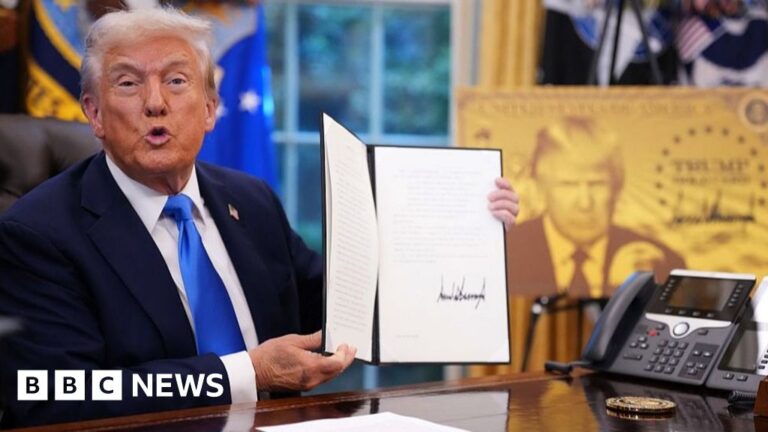
US President Donald Trump has signed an executive order that will add a $100,000 (£74,000) annual fee for applicants to the H-1B visa programme for skilled foreign workers.

Trump’s order mentions “abuse” of the programme and will restrict entry unless payment is made.

Critics have long argued that H-1Bs undercut the American workforce, while supporters – including billionaire Elon Musk – argue it allows the US to attract top talent from around the world.

In another order, Trump set up a new “gold card” to fast-track visas for certain immigrants in exchange for fees starting at £1m.

Trump’s order is due to come into force on 21 September. It would only apply to new requests, but companies would have to pay the same amount for each applicant for six years, US Commerce Secretary Howard Lutnick said.

“The company needs to decide… is the person valuable enough to have a $100,000-a-year payment to the government, or they should head home, and they should go hire an American,” he said, adding: “All of the big companies are on board.”

Since 2004, the number of H-1B applications has been capped at 85,000 per year.

Until now, H-1B visas have carried various administrative fees totalling around $1,500.

Data from US Citizenship and Immigration Services (USCIS) shows that applications for H-1B visas for the next fiscal year fell to about 359,000 – a four-year low.

The greatest beneficiary of the programme the previous fiscal year was Amazon, followed by tech giants Tata, Microsoft, Meta, Apple and Google, according to government statistics.

Late on Friday, Amazon told employees with H-1B visas who were already in the US to remain there.

According to an internal advisory, seen by Business Insider, the company said those abroad should “try to return before tomorrow’s deadline if possible”.

Anyone unable to make it back before the order takes effect should avoid attempting US re-entry “until further guidance is provided”, the company is also quoted as saying.

Tahmina Watson, a founding attorney at Watson Immigration Law, told the BBC that the ruling could be a “nail in the coffin” for many of her clients that are mostly small businesses and start-ups.

“Almost everyone’s going to be priced out. This $100,000 as an entry point is going to have a devastating impact,” she added, noting that many small or medium-sized companies “will tell you they actually can’t find workers to do the job”.

“When employers sponsor foreign talent, more often than not, they’re doing that because they have not been able to fulfil those positions,” Ms Watson added.

Jorge Lopez, the chair of the immigration and global mobility practice group at Littler Mendelson PC, said a $100,000 fee “will put the brakes on American competitiveness in the tech sector and all industries”.

Some companies might consider setting up operations outside the US, though doing so can be challenging in practice, he added.

The debate over H-1Bs had previously caused splits within Trump’s team and supporters, pitting those in favour of the visas against critics such as former strategist Steve Bannon.

Trump told reporters at the White House in January that he understands “both sides of the argument” on H-1Bs.

The year before – while seeking to attract support from the tech industry while on the campaign trail – Trump vowed to make the process of attracting talent easier, going as far as to propose green cards for college graduates.

“You need a pool of people to work for companies,” he told the All-In Podcast. “You have to be able to recruit these people and keep these people.”

Early in his first term in 2017, Trump signed an executive order that increased scrutiny of H-1B applications, seeking to improve fraud detection.

Rejections rose to an all-time high of 24% in the 2018 fiscal year, compared to between 5% and 8% under Barack Obama and then between 2% and 4% under Joe Biden.

At the time, tech companies pushed back, harshly criticising the Trump administration’s H-1B order.

The potential for additional restrictions to the H-1B programme has caused considerable concern in countries such as India – which is by far the largest source country for such visa applications.

Turning Point received $85 million in revenue from a network of 500,000 donors left by Charlie Kirk

0

Charlie Kirk was only a teenager when he launched a scrappy conservative student group out of his parents’ suburban Illinois home. A decade later, that group—Turning Point USA—has grown into a political juggernaut, generating nearly a half-billion in total revenue in the 13 years since its inception, creating a sprawling network of campus chapters, and building a media machine that rivals legacy establishments. 

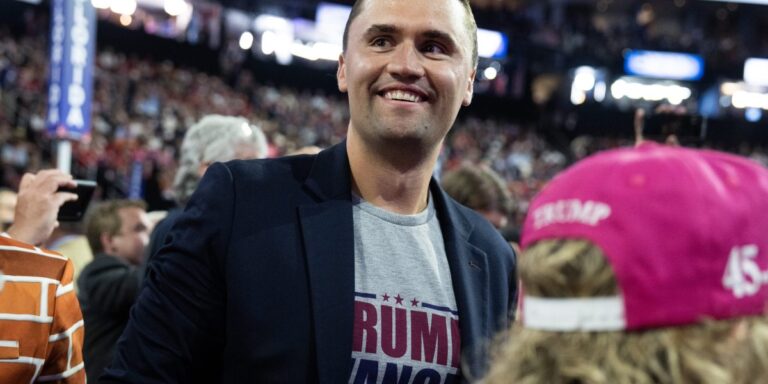
On Sept, 10, Kirk, a husband and father of two, was shot and killed at a Turning Point event at Utah Valley University. He was 31 years old. His death has ignited conspiracy theories, calls for gun control, and a nationwide political debate over his legacy. But it has also left the future of his formidable conservative business and non-profit enterprises hanging in the balance.  

By channeling polarization and student engagement, Kirk not only built an empire that sits at the center of the American right’s culture wars, but also made himself a multi-millionaire, according to the Associated Press—and one of the nation’s youngest political power brokers, with a seat at President Donald Trump’s table. A review of Kirk’s and Turning Point’s finances shows just how much Kirk benefited from and capitalized on two key trends of the last decade-plus: an energized web of right-wing donors from the business community, and the meteoric rise of the conservative media ecosystem. 

Turning Point USA netted $85 million in revenue in 2024 alone, up more than 142% over the last five years. The vast majority, 99.2%, of that revenue comes from charitable contributions, including at least $350,000 from Kirk himself in 2024.

According to Kolvet, the organization brought in approximately 350,000 grassroots, “small dollar” donors. 

“The goal was to get over 500,000 this year. And, given all that’s happened, we’ve eclipsed that goal, and that’s exciting,” he added. 

Large and hard to trace

How exactly Turning Point spends its money, and who benefits from the organization’s hefty annual revenue, is unclear. Like many political advocacy groups, it’s organized as a 501(c)3 non-profit; the IRS does not require such groups to publicly disclose detailed expenditure accounts. The lack of clarity is compounded by the fact that many of Turning Point’s largest vendors are limited liability companies registered in states that do not mandate public ownership disclosure. 

Within Turning Point’s organizational structure, there are also several interconnected nonprofit groups, political action committees, and a for-profit merchandise company, none of which are required to publicly report their finances. One branch, the Turning Point Endowment, held $64.3 million in 2024, having grown from $7.2 million in 2020. The funds in this branch, according to Turning Point, are part of the group’s “50-100 year plan to continue reaching generation after generation of young Americans.” 

Turning Point spokesperson Andrew Kolvet told Fortune that the fund exists to ensure the organization’s ability to operate for years to come. “Charlie always had a vision that Turning Point would grow into an institution that would outlive his tenure as CEO, and the endowment was always part of the vision,” he said.

$10,000 and a dream

Kirk often described his political awakening as Barack Obama’s presidency. As he told his podcast listeners last year, “In my local high school, progressive, left-wing Marxist ideas were widespread, and I looked around and I was unimpressed by the conservative organizations that were out there.” 

His first taste of political involvement, aside from classroom debates, came in 2010 when he began volunteering for the campaign of Illinois Senator Mark Kirk (no relation) while still in high school. 

The trajectory of Kirk’s life, and his future business endeavors, changed dramatically after he met William “Bill” Montgomery, a retired Tea Party activist and marketing entrepreneur. 

Montgomery encouraged Kirk to drop out of college entirely, and within one month of their meeting, they launched Turning Point. 

Montgomery provided Kirk with the Republican rolodex and access to investors he would need to build his empire. The first person to cut a check to Turning Point was investment manager turned Republican donor Foster Friess, whom Kirk met at the 2012 Republican National Convention. 

“I was 18 at the time and Turning Point USA had zero donors, no real presence, and I was just a kid from Chicago with a dream & energy to try and change the world,” Kirk later wrote about meeting and pitching Friess. His proposal, according to Kirk, was simple: “I felt young people needed to hear the conservative message.” 

A few weeks later, Friess sent Turning Point $10,000, an investment Kirk would turn into many millions of dollars.

A growing donor base

The organization’s initial years were difficult, with Kirk later admitting he nearly shuttered the operation several times due to financial constraints. But with the help of significant backing from prominent right-wing donors who had made their fortunes in business, Turning Point stayed afloat and gained momentum with students across the nation. Starting in 2013, Turning Point began receiving financial backing from serial entrepreneur Gary Rabine (CEO of the Rabine Group). In 2014, the group received a $100,000 donation from the Bruce Rauner Family Foundation, connected to venture capitalist and former Illinois Governor Bruce Rauner. Kirk also received $275,000 from the Ed Uihlein Family Foundation, the philanthropic arm of the estate of the founder of the Uline packaging and office supply firm, and more than $72,000 from Home Depot co-founder Bernard Marcus’ philanthropic organization. 

By 2015, Turning Point had increased its annual revenue from approximately $52,000 in 2012 to $2 million. Kirk claimed at the time the organization had established a presence on 1,000 college and high school campuses nationwide and had more than 40 full-time “field staff.”

Turning Point’s donor base has expanded over the years and includes several key parties in the oil and natural gas industry, including the Hanley family, which owns Hanley Petroleum, an oil and gas field operator, and Barry Russel, president and CEO of the Independent Petroleum Association of America. Many of the organization’s top donors, according to Kirk, also serve on Turning Point’s advisory council, which currently includes the likes of hospitality executive Mike Leven; heir to the Gristedes supermarket fortune John Catsimatidis Jr.; and venture capitalist David Blumberg. 

Scaling up a young audience

Kirk’s early messaging at Turning Point focused heavily on traditional conservative tenets of free market economics and limited government. More notably, he aimed to engage younger audiences by ditching traditional lecture-style events and using outdoor and interactive formats that encouraged spontaneous debate. 

The 2016 Trump election, however, marked a strategic pivot for Kirk and ultimately Turning Point. Although he once described himself as “not the world’s biggest Donald Trump fan,” Kirk quickly embraced the then-presidential candidate and began mirroring his populist, anti-establishment messaging, which resonated with disaffected youth in the U.S.. This shift would prove extremely successful in bolstering Turning Point’s reputation. 

It also proved personally lucrative for Kirk, who would, by 2020, secure a book contract with Donald Trump Jr’s Winning Team Publishing, and, later, rake in ad revenue from social media platforms, where his increasingly confrontational approach helped him rapidly build an audience.
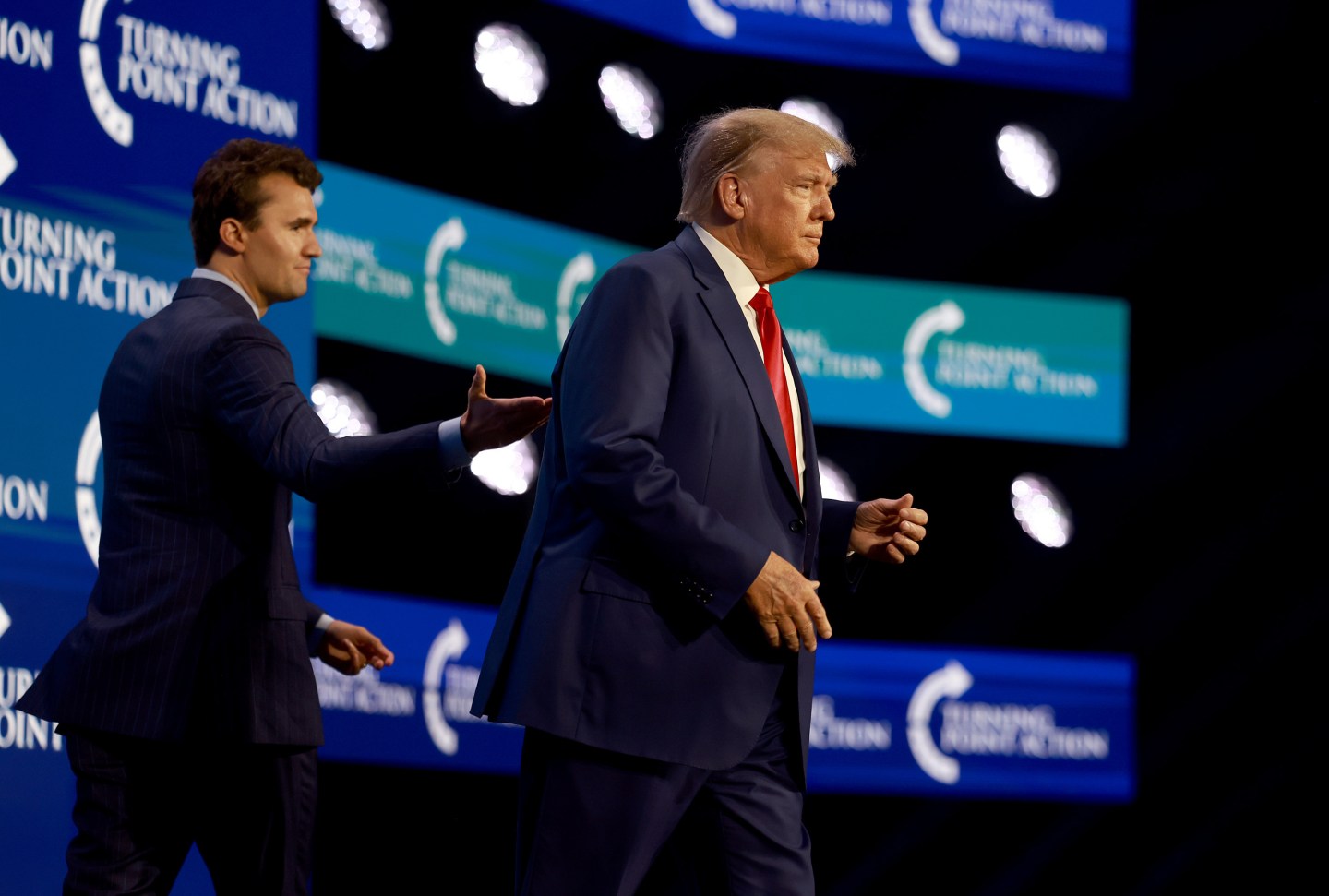
Charlie Kirk walks with Donald Trump
Charlie Kirk built a relationship with President Donald Trump during his first term in the White House.

JOE RAEDLE—Getty Images

Kirk’s breakthrough came with his signature “Prove Me Wrong” campus format, which he launched in 2018. Unlike traditional campus speakers who delivered lectures in auditoriums, Kirk would grab a microphone, often in busy campus hubs, and invite debate from anyone in the audience. These confrontations positioned Kirk as accessible and confident in his polarizing beliefs and created a sense of intellectual challenge that appealed to competitive young students. But most importantly, these interactions generated viral social media content that reached millions of people unfamiliar with Turning Point. On social media platforms, these clips generated ad and engagement revenue for both Turning Point and Kirk personally. 

While it is unknown whether Kirk or Turning Point were paid directly for the Prove Me Wrong appearances, Kirk generated income through speaking fees of upwards of $10,000 per appearance. 

From 2016 to 2019, Turning Point’s annual revenue grew 563%, reaching $28.5 million. Membership numbers and chapters increased just as steeply, from an estimated 450 chapters and 25,000 members during Trump’s first campaign to approximately 1,500 chapters and 200,000 members by the end of his first term. 

A surge in growth

Kirk’s digital savvy positioned him well during the COVID-19 pandemic. With disgruntled students unable to congregate on campuses, Kirk leaned into the growing angst and launched his podcast, the “Charlie Kirk Show.” As the pandemic fundamentally shifted youth political engagement, the show quickly became one of the nation’s most popular political podcasts, reaching 5 million monthly listeners and 750,000 daily downloads by mid-2025. Kirk’s podcasting venture, according to him, was his primary source of income in addition to his investment portfolio and a $400,000 salary from Turning Point.

Kirk’s podcast benefitted heavily from the explosive growth of the conservative podcast and new media industry. Since 2020, the U.S. podcast industry has seen listenership more than double, reaching 160 million listeners in 2024. Ad revenues have also skyrocketed from $1.5 billion in 2021 to upwards of $4 billion in 2024. Right-leaning shows dominate the political podcast ecosystem, bringing in nearly five times the number of total followers and subscribers across major platforms in 2024 compared to their left-leaning counterparts. 

As Kirk grew his brand and notoriety through a mixed media approach, leaning increasingly into provocative rhetoric and conspiracy theories—including equating being transgender to blackface, and calling the Civil Rights Act a “huge mistake”—Turning Point’s success and presence only grew. Revenues rose from nearly $40 million in 2020 to nearly $56 million in 2021. 

By 2022, the organization had branched out into events, launching AmericaFest in 2022 with 10,000 attendees. Turning Point’s Student Action Summit hosts approximately 5,000 people annually and its latest Young Women’s Leadership Summit had 3,000 participants

These events were also revenue drivers. Tickets for the organization’s national summit (Student Action Summit) start at $50 for general admission and reach upwards of $500 for VIP access. Admission to AmericaFest starts at $50 as well, but includes a $300 VIP option. Aside from ticket sales, the conferences benefit from sponsorship deals with prominent conservative organizations, including the Heritage Foundation, the National Rifle Association, and the Alliance Defending Freedom. (The conferences presumably have corresponding overhead costs, but those are not available in existing filings.)

Conservatives worship and pray at a Turning Point USA conference
Thousands of conservative Americans flock to Turning Point USA’s conferences annually.

REBECCA NOBLE—Getty Images

Above all, Kirk’s willingness to court controversy continued to be both strategically deft and lucrative. His most controversial statements generated millions of views, expanding his reach far beyond traditional conservative audiences. When he joined TikTok in 2024, he gained 2 million followers in less than a year, with individual videos reaching up to 50 million views. 

Social media algorithms fed his content to a young user base that has increasingly leaned to the right. In 2016, 32% of Americans between the ages of 18 and 29 identified as conservative. By 2024, that number had reached 46%. Turning Point’s expansion has continuously reflected this trend. The organization netted $85 million in annual revenue last year, reaching 3,350 chapters (850 college, 2,500 high school), and 700,000 members.

After death, popularity and uncertainty

Posthumously, Kirk’s books and podcasts have soared in the charts. Kirk’s personal Instagram account has gained more than 3.5 million followers since his death, while Turning Point’s account gained more than 1 million. Similar surges have occurred with Kirk and Turning Point’s accounts on TikTok and YouTube. The organization said on Sunday that it reportedly received “over 32,000 inquiries” in the 48-hours after Kirk’s assassination to start new campus chapters. 

His widow, Erika, has vowed to continue his legacy at Turning Point. In a tearful, live-streamed public address on Sept. 12, she promised “my husband’s voice will remain,” adding that his distinct college campus tours and his eponymous podcast would continue in the years to come. She did not provide further details about who would take Kirk’s place at those events.

Kolvet told Fortune that he is dedicated to seeing Kirk’s podcast continue, but a detailed plan is still in the works. “I certainly plan on making sure that that happens, whether I have to take a more leading role, or if it’s guests, and friends, and tributes to Charlie. It will probably be an amalgamation of those things,” he said.

In one of his final interviews before his death, Kirk told reporters that his ultimate ambition for Turning Point was for it to “become an institution in this country that is as renowned and influential as the New York Times, Harvard, and major tech companies. And we believe we are on the path to creating that.” Whether or not that path will continue to be forged without Kirk’s bravado and formidable presence, and who will officially take his place atop Turning Point remains unknown. Kolvet told Fortune that it was “too early” to get into a detailed succession plan.

But, in his eyes, one thing is certain: “Erica Kirk is the beating heart, the spiritual center of the Turning Point family moving forward.”


First treaty to protect marine life in high seas set to go into effect in January | Climate Crisis News

0

The first-ever treaty to protect marine diversity in international waters will come into force early next year, after it was ratified by the 60th nation, Morocco.

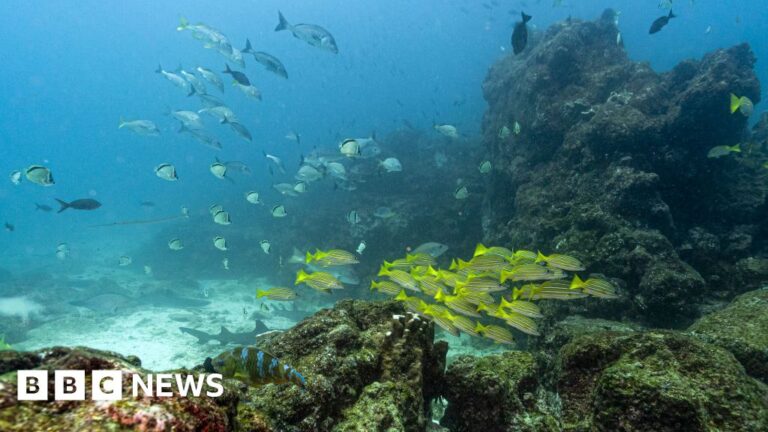
Morocco’s formal adoption of the Marine Biodiversity Treaty on Friday means the agreement will now enter into force on January 17, 2026, offering new protections to an area covering two-thirds of the world’s oceans and as many as 10 million different species, many of which are still unidentified.

Recommended Stories

list of 4 itemsend of list

Countries have rushed to ratify the treaty as the world’s oceans face growing threats, including from climate change, over-fishing and deep-sea mining, which United States President Donald Trump has pledged to help jumpstart in international waters.

Morocco’s Mission to the United Nations said in a statement that the entry into force of the treaty marked a “milestone for the protection of the ocean” and “collective commitment” to protecting “marine biodiversity beyond national jurisdiction”.

Marine animals like the North Atlantic right whale face threats from changes to the high seas, including climate change and deep-sea mining [File: Michael Dwyer/AP Photo]

Commending the governments that have ratified the treaty so far, UN Secretary-General Antonio Guterres described it as “a lifeline for the ocean and humanity” from problems including “climate change, biodiversity loss and pollution”.

“Covering more than two-thirds of the ocean, the agreement sets binding rules to conserve and sustainably use marine biodiversity, share benefits more fairly, create protected areas, and advance science and capacity-building,” Guterres said, urging the governments that had yet to join to do so without delay.

In addition to the 60 countries that have fully ratified the treaty, a further 122 countries, as well as the European Union, have signed the agreement, signalling their intention to ratify.

True test lies ahead

Leneka Rhoden, the Caribbean Regional Coordinator at the High Seas Alliance, says the “true test” of the treaty now “lies ahead in implementation”.

“Our communities already experience the impacts of climate change and ocean degradation, and we depend directly on healthy marine ecosystems for food security, livelihoods, and cultural identity,” Rhoden said in a statement.

“We are confident that this agreement will deliver on its promise of real protection on the water, fair access to resources, and resilience for the most vulnerable,” she added.

The treaty does not create a punitive enforcement body of its own. Instead, it largely relies on individual countries to regulate their own ships and companies. If a ship flying a German flag violates the rules, for example, it’s Germany’s responsibility to act, said Torsten Thiele, founder of the Global Ocean Trust and an adviser on ocean governance and blue finance. That makes universal ratification essential, he said.

“If somebody hasn’t signed up, they’ll argue they’re not bound,” he said.

What are the High Seas?

The treaty covers international waters that fall outside any single country’s exclusive economic zone and account for nearly two-thirds of the ocean and nearly half of Earth’s surface.

It also covers what is known as “the Area”, shorthand for seabed and subsoil beyond the limits of national jurisdiction. That comprises just more than half of the planet’s seabed.

Now that the treaty is law, a decision-making body, a Conference of the Parties (COP), will have to work with regional and global organisations that already oversee different aspects of the oceans, such as the International Seabed Authority.

Deep-Sea mining risks

One aspect of the Marine Biodiversity Treaty is to ensure that countries can work towards more fair and equitable sharing of benefits from activities related to marine biodiversity beyond the borders of any one nation, as a handful of governments and companies push to rapidly expand deep-sea mining.

Environmentalists say the potential consequences of dredging the ocean floor used to extract deep-sea minerals are difficult to calculate and range from endangering ancient lifeforms like dumbo octopuses and twilight zone corals to causing further distress to whales by distorting their sonar communication.

At least 38 countries are calling for a moratorium on deep-sea mining until more is known about its potential harm to marine ecosystems, including those which have yet to be explored.

They include island states like the Marshall Islands and Vanuatu, as well as bigger countries like Brazil and the United Kingdom, while other countries, including the US under Trump, and the small Pacific island nation of Nauru, want to press ahead.

a large ship with smoke rising from it
Deep-sea mining vessel Hidden Gem, commissioned by Canadian miner The Metals Company, returns after test mining in the Clarion-Clipperton Zone between Mexico and Hawaii, off the coast of Manzanillo, Mexico, on November 16, 2022 [File: Gustavo Graf/Reuters]

International efforts continue

The Marine Biodiversity Treaty is the latest example of continued efforts to combat environmental threats at the global level, despite pushback from some governments.

Earlier this year, countries at the UN shipping agency struck a deal on a global fuel emissions standard for the maritime sector, which will impose an emissions fee on dirty fuels and reward vessels that reduce their emissions.

The deal was reached after the US pulled out of the climate talks at the International Maritime Organization (IMO) in London and threatened to impose “reciprocal measures” against any fees charged to US ships.

In August, global talks to develop a landmark treaty to tackle plastic pollution failed to reach an agreement, amid deadlock at the sixth round of talks in under three years.

But in July, the UN’s highest court found that countries must meet their climate obligations, and that failing to do so could violate international law, potentially opening the door for affected nations to seek reparations in future legal cases.

Vanuatu’s minister for climate change, Ralph Regenvanu, who led the case at the International Court of Justice, reacted to the Marine Biodiversity Treaty entering into force, saying: “Everything that affects the ocean affects us.”

Peermusic names Dave Ayers as Executive Vice President of A&R

0

Peermusic has named Dave Ayers as Executive Vice President, A&R. Ayers will lead the East Coast contemporary creative team in New York.

The announcement was made this week by Mary Megan Peer, CEO of Peermusic, and Jamie Cerreta, President US and Canada, to whom Ayers will report directly.

In his new role, he will oversee the signing and development of talent, shaping creative strategy across Peermusic’s roster of artists, songwriters, and producers.

On Ayers’ promotion, Peer said: “Dave’s passion for finding, developing and nurturing talent is legendary. His deep experience, creative vision, and commitment to independent publishing make him a perfect fit for our team. I know our current writers and future signings will greatly benefit by working with him.”

Cerreta added: “I am so pleased to have Dave join us here at Peermusic. Dave and I have shared a long history together, and I’m proud to continue working with him.”

“He is an extraordinary A&R man who brings exceptional taste and a unique ability to build careers time and time again. His deep devotion to his writers makes him a perfect match for what Peermusic stands for and what we want to continue to foster.”

Jamie Cerreta, President US and Canada

Ayers commented: “I’m grateful and excited to be able to do what I do in a place that’s set a standard of bravery and excellence for nearly 100 years.”

“It’s all about finding and supporting truly special people—singular, tireless, and dedicated to creating work that connects and lasts.”

Dave Ayers as Executive Vice President, A&R

With over four decades of experience as a manager, publisher, and label A&R executive, Ayers has been launched and developed artists across multiple genres.

His career includes roles at Twin/Tone, Capitol Records, Chrysalis, and Big Deal Music Publishing—which he co-founded with Cerreta and others.

His past signings and collaborations include The Jayhawks, Ween, Soul Asylum, Bon Iver, TV on the Radio, St. Vincent, The Black Keys, Nathaniel Rateliff, Kamasi Washington, Sylvan Esso, and Pavement, among others.

Following the 2020 sale of Big Deal, Ayers served as Executive Vice President at Hipgnosis Songs, where his recent highlights included Model/Actriz and Cameron Winter/Geese.

This appointment aligns with Peermusic’s broader strategy to strengthen its global presence and creative leadership.

Notably, in 2023, Peermusic acquired Arctic Rights Management, one of Norway’s largest independent music publishers, further expanding its international reach.Music Business Worldwide

Key Treaty for Oceans Reaches Crucial Milestone to Become Effective

0

A global agreement designed to protect the world’s oceans and reverse damage to marine life is set to become international law.

The High Seas Treaty received its 60th ratification by Morocco on Friday, meaning that it will now take effect from January.

The deal, which has been two decades in the making, will pave the way for international waters to be placed into marine protected areas.

Environmentalists heralded the milestone as a “monumental achievement” and evidence that countries can work together for environmental protection.

“Covering more than two-thirds of the ocean, the agreement sets binding rules to conserve and sustainably use marine biodiversity,” United Nations Secretary-General Antonio Guterres said.

Decades of overfishing, pollution from shipping and warming oceans from climate change have damaged life below the surface.

In the latest assessment of marine species, nearly 10% were found to be at risk of extinction, according to the International Union for Conservation of Nature (IUCN).

Three years ago countries agreed that 30% of the world’s national and international waters – high seas – must be protected by 2030 to help depleted marine life recover.

But protecting the high seas is challenging. No one country controls these waters and all nations have a right to ship and fish there.

Currently just 1% of the high seas are protected, leaving marine life at risk from overexploitation.

So, in 2023 countries signed the High Seas Treaty pledging to put 30% of these waters into Marine Protected Areas.

But it was only able to enter force if more than 60 nations ratified it – meaning they agreed to be legally bound by it.

With many nations requiring parliament approval, ratification can often take more than five years, Elizabeth Wilson, senior director for environmental policy at environmental NGO The Pews Charitable Trust, told the BBC at the UN Oceans Conference earlier this year. She said this was “record time”.

The UK introduced its bill for ratification to Parliament earlier this month.

Kirsten Schuijt, director general of WWF International, hailed “a monumental achievement for ocean conservation” after the treaty threshold was reached.

She added: “The High Seas Treaty will be a positive catalyst for collaboration across international waters and agreements and is a turning point for two-thirds of the world’s ocean that lie beyond national jurisdiction.”

Mads Christensen, executive director of Greenpeace International, called it “a landmark moment” and “proof that countries can come together to protect our blue planet”.

“The era of exploitation and destruction must end. Our oceans can’t wait and neither can we,” he added.

Once the treaty comes into force, countries will propose areas to be protected, and these will then be voted on by the countries that sign up to the treaty.

Critics point out that countries will conduct their own environmental impact assessments (EIA) and make the final decision – although other countries can register concerns with the monitoring bodies.

The ocean is crucial for the survival of all organisms on the planet. It is the largest ecosystem, is estimated to contribute $2.5 trillion to world economies, and provides up to 80% of the oxygen we breathe.

Challenging Client

0


Client Challenge


JavaScript is disabled in your browser.

Please enable JavaScript to proceed.

A required part of this site couldn’t load. This may be due to a browser
extension, network issues, or browser settings. Please check your
connection, disable any ad blockers, or try using a different browser.

Portugal Set to Officially Recognize Palestinian State amidst Israel-Palestine Conflict

0

Nine other countries, including France and the UK, also plan to recognise Palestinian statehood next week.

Portugal has joined Australia, Canada, France and the United Kingdom in announcing plans to recognise a Palestinian state.

In a statement on Friday, the Portuguese Ministry of Foreign Affairs said the recognition will take place on Sunday, a day before a high-level conference on Palestinian statehood at the United Nations General Assembly (UNGA).

Recommended Stories

list of 4 itemsend of list

“The Ministry of Foreign Affairs confirms that Portugal will recognise the State of Palestine,” the ministry wrote in a statement on its website.

“The Official Declaration of Recognition will take place on Sunday, September 21st, before next week’s High-Level Conference,” the statement added.

According to Portugal’s Correio da Manha newspaper, the country’s centre-right Prime Minister Luis Montenegro consulted with the president and parliament before finalising the decision.

It marked the end of nearly 15 years of debate in the Western European country’s parliament, Correio da Manha reported, after the proposal was first put forward by the country’s Left Bloc political party in 2011.

People carry a banner with the words ‘Free Palestine’ during a demonstration demanding a ceasefire in Gaza and in support of Palestinians, in Lisbon, Portugal, on April 7, 2024 [Armando Franca/AP Photo]

Global outcry

Portugal’s announcement comes days after a landmark UN inquiry found that Israel’s war on Gaza amounts to a genocide.

At least 65,141 people have been killed and 165,925 wounded since Israel’s onslaught began in October 2023. Many thousands more are believed to be buried under the rubble.

The Portuguese government first announced its intentions on recognising Palestine as a state in July, citing “extremely worrying evolution of the conflict”, as well as the humanitarian crisis and Israel’s repeated threats to annex Palestinian land.

Earlier on Friday, an adviser to French President Emmanuel Macron said that Andorra, Australia, Belgium, Luxembourg, Malta and San Marino plan to recognise the State of Palestine alongside France at the high-level meeting it is co-organising with Saudi Arabia in New York on Monday.

Canada and the United Kingdom have also said they intend to do the same.

They will join some 147 countries, representing 75 percent of UN members, that had already recognised Palestinian statehood as of April this year.

Portugal was also among 145 countries which voted on Friday to create an option for Palestinian President Mahmoud Abbas to address the UNGA in New York next week by video, after the United States denied him a visa.

Nauru, Palau, Paraguay, as well as Israel and the US, were the five countries that voted no, while six countries abstained.

Israel and the US have strongly criticised countries moving to recognise Palestine, with US Secretary of State Marco Rubio describing France’s announcement as a “reckless decision” that “only serves Hamas propaganda”.

Israel’s Finance Minister Bezalel Smotrich warned last year that a new illegal Israeli settlement would be established in the occupied West Bank for every country that recognises Palestine.

Luxembourg considers sanctions

Earlier this week, Luxembourg’s Prime Minister Luc Frieden and Foreign Minister Xavier Bettel told a parliamentary commission that their country intends to recognise Palestinian statehood at the UNGA.

Bettel also said that he would propose a bill to parliament so that Luxembourg could take further measures, such as sanctions, according to the country’s broadcaster RTL Letzebuerg.

Francesca Albanese, the UN special rapporteur on human rights in the occupied Palestinian territory, has implored countries to take more measures to end Israel’s war on Gaza, including by imposing sanctions and an arms embargo on Israel.

Under its 1947 plan to partition Palestine, the UNGA said it would grant 45 percent of the land to an Arab state.

At the time, the UNGA had just 57 member states, with dozens of countries under colonial rule unable to vote.

Supply Chain Chief Receives $2 Million Retention Grant from Dentsply Sirona

0


Dentsply Sirona awards $2 million retention grant to supply chain chief

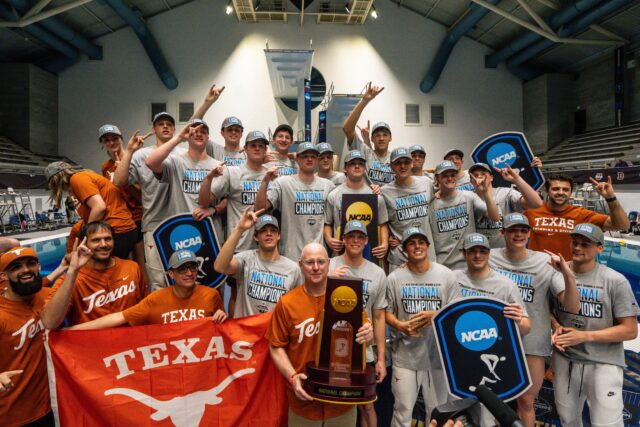
Texas, the defending Men’s NCAA Champions, reveal their schedule for the 2025-2026 season

0

By Anya Pelshaw on SwimSwam

Texas has announced its swimming and diving schedule for the upcoming 2025-2026 season. The team will host eight competitions in Austin during the season.

The programs will open their season at home on September 26th for the Sam Kendricks Dust Off Your Boots Classic. They when will travel to Alabama on October 10th for their first dual meet of the season.

The team’s only “dual” meet at home, a meet with one other team, is on October 24th against Tennessee. That looks to be a competitive dual meet as Texas captured the 2025 SEC titles on both the men’s and women’s sides while Tennessee was 3rd on both sides.

In November, the Longhorns will host the Texas Diving Invite from November 13-15 a week before hosting the Texas Swimming Invite as midseason from November 19-21.

Lee and Joe Jamail Texas Swimming Center, the home of the Longhorns, will be home to two national level competitions this winter as it is set to host the US Open from December 3-6 and the first stop of the Pro Swim Series for 2026 set to take place from January 14-17.

At the end of January, Texas will host the Eddie Reese Showdown. Last year, the meet featured Texas, Arizona State, Virginia, and NC State.

Texas will travel to Texas A&M for the final dual meet of the season on January 30. The Texas women defeated Texas A&M 197 to 102 last year while the Texas men won 218.5-80.5. A day later, Texas will host The Sterkel Classic which featured TCU, SMU, and Rice this past season.

The 2025 SEC Championships are set to take place at the University of Tennessee from February 17-21. The women will travel to Texas A&M for a last chance meet at the end of February before the team’s divers go to Texas A&M for the Zone ‘D’ Championships.

Georgia Tech will serve as host to both the women’s and men’s NCAA Championships. The women’s meet is scheduled to run from March 18-21 while the men’s meet is from March 25-28.

The Texas men captured the 2025 NCAA team title under Bob Bowman while the women finished 3rd at 2025 NCAAs. The women were only 23 points behind 2nd place Stanford.

Read the full story on SwimSwam: Defending Men’s NCAA Champions Texas Announces 2025-2026 Schedule