


Palestinian foreign minister says recognition brings independence, sovereignty closer
Late Martinelli goal secures Arsenal a 1-1 draw against Manchester City | Football News

Manchester City sought to defend an early Erling Haaland goal, but Gabriel Martinelli came off the bench to equalise.
Arsenal equalised in the third minute of stoppage time through Gabriel Martinelli to snatch a 1-1 draw with Manchester City, whose rare defensive performance under Pep Guardiola narrowly failed to deliver a win in the Premier League.
Erling Haaland scored an early goal on the counterattack on Sunday and City went on to frustrate Arsenal with a defensive approach that was so unlike a team coached by Guardiola, who is famed for possession and attacking football.
Recommended Stories
list of 3 itemsend of list
There was a late twist, however, when Eberechi Eze played a ball over City’s packed defence and Martinelli latched onto it before lobbing goalkeeper Gianluigi Donnarumma.
It left Liverpool, the defending champions, with a five-point lead after just five games, with Arsenal in second place on goal difference over Tottenham and Bournemouth. City are already eight points off the pace.
Arsenal controlled the opening exchanges until City scored from a rapid counter in the ninth minute.
Tijjani Reijnders broke from deep with Haaland on his shoulder before he played the Norwegian striker in to finish coolly past David Raya.
Arsenal looked short on ideas before a double change at half-time gave them more impetus, substitute Eberechi Eze forcing a sharp save from Gianluigi Donnarumma as the hosts swarmed all over City.
The visitors recorded 32.8 percent possession, the lowest-ever possession average by a Guardiola team in his 601st top-flight league match, according to Opta.
City had seemed to have weathered the storm, though, finishing the game with five at the back as Arsenal probed without creating the killer opening they needed.
But substitute Martinelli – who delivered a goal and an assist off the bench against Athletic Bilbao on Tuesday – ran on to Eze’s speculative ball over the top and produced a superb lob in the 93rd minute to give Arsenal a share of the spoils.
Arsenal captain Declan Rice suggested City’s defensive approach was a sign of respect for the Gunners, and he praised Martinelli for his “moment of magic” in grabbing the equaliser.
“We’ve gained the respect of the opposition. They know the quality we have from front to back,” Arsenal’s Rice told Sky Sports.
“We passed and moved well in the first half and in the second, but there was always the threat on the counter.
“In the end, we deserved the goal and would have been disappointed to come away losing.”
Speaking about Martinelli’s late equaliser, he added: “The run and finish is unbelievable. He fully deserves it – you wouldn’t meet a nicer guy. He’s come on and produced a moment of magic.”
Guardiola conceded that Arsenal were the better team in a post-match interview.
“It’s difficult to analyse with all that’s happened this week. We play games like United and in the Champions League on Thursday, and now today. The teams are like so powerful in all aspects,” Guardiola told Sky Sports.
“[It’s] so difficult when you’re not effective or high pressing and you’re not effective in build-up.”
He added: “I think the result is fair. But in general, Arsenal were better.”
Elsewhere in the Premier League on Sunday, Aston Villa ended their goal drought but still could not beat 10-man Sunderland in a 1-1 draw.
Matty Cash blasted a swerving shot from 25 metres (27 yards) that Sunderland goalkeeper Robin Roefs could only parry into his own net in the 67th minute, giving Villa their first goal after five games in the league.
However, Sunderland – playing with 10 men from the 33rd minute after Reinildo’s red card for kicking out at Cash – equalised in the 75th minute through Wilson Isidor to leave Villa without a victory and third from bottom.
Meanwhile, Newcastle rotated their team after a Champions League loss to Barcelona on Thursday and struggled to create many clear-cut chances in a 0-0 draw at Bournemouth.
It meant Newcastle manager Eddie Howe, who used to coach Bournemouth, has now not beaten his former side in seven attempts.
Republican senator criticizes FCC chair for inappropriate comments about Kimmel
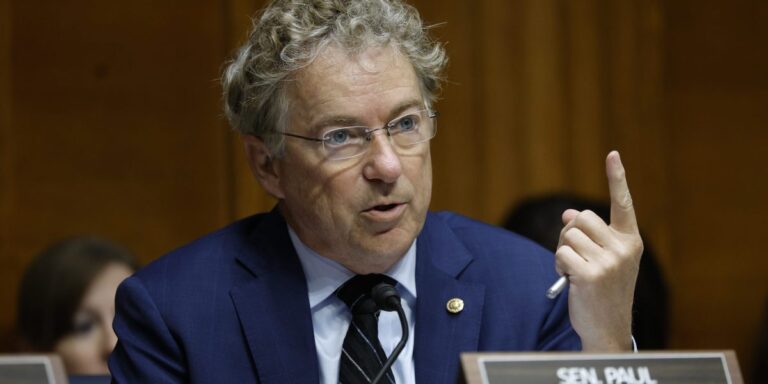
Sen. Rand Paul became the latest GOP name to push back against a top federal regulator’s remarks over comedian Jimmy Kimmel and the media.
In an interview on NBC’s Meet the Press with Kristen Welker on Sunday, the Kentucky Republican was asked about FCC Chairman Brendan Carr’s comment that “we can do this the easy way or the hard way” when it comes to companies taking action against Kimmel.
“Absolutely inappropriate,” Paul replied. “Brendan Carr has got no business weighing in on this. But people have to also realize that despicable comments, you have the right to say them. But you don’t have the right to employment.”
During his late-night show, Kimmel criticized what he called the “MAGA gang” for “desperately trying to characterize this kid who murdered Charlie Kirk as anything other than one of them and doing everything they can to score political points from it.”
Nexstar Media Group, which owns 32 ABC affiliate stations and is pursuing a $6.2 billion merger with Tegna requiring FCC approval, announced it would pre-empt the show “for the foreseeable future.” Sinclair Broadcasting, the nation’s largest ABC affiliate group, also removed the show and demanded Kimmel apologize to Kirk’s family.
Disney-owned ABC said it was pre-empting Kimmel’s show indefinitely, setting off another backlash among people angry that the media giant caved to the pressure.
On Sunday, Paul noted that most employers have a code of conduct that could trigger dismissal when employees violate it. But that’s a business decision that shouldn’t involve the FCC, he said.
“I mean, this is television, for goodness’ sakes. You have to sell sponsorships. You have to sell commercials. And if you’re losing money, you can be fired,” Paul added. “But the government’s got no business in it. And the FCC was wrong to weigh in. And I’ll fight any attempt by the government to get involved with speech, I will fight.”
Paul’s comments echo those of Texas Republican Sen. Ted Cruz, who said he hated what Kimmel said but also likened Carr’s threat to something a “mafioso” would say.
In an episode of his podcast on Friday, Cruz similarly warned against the government meddling in free speech and called Carr’s remarks “dangerous as hell.”
“I think it is unbelievably dangerous for government to put itself in the position of saying, ‘We’re going to decide what speech we like and what we don’t, and we’re going to threaten to take you off air if we don’t like what you’re saying,’” Cruz added. “And it might feel good right now to threaten Jimmy Kimmel, but when it is used to silence every conservative in America, we will regret it.”
President Donald Trump, who has said the FCC could reexamine licenses for broadcasters that repeatedly criticize him, called Carr an American patriot in response to Cruz’s comments, adding he disagreed with the senator.
But Cruz and Paul aren’t the only conservatives raising alarms about free speech. Political commentator Tucker Carlson also said he hopes Kirk’s murder “won’t be leveraged to bring hate speech laws to this country.”
To be sure, other Republicans have voiced support for the FCC or downplayed the importance of the First Amendment. Rep. Chip Roy (R-Texas) told NBC on Friday that the FCC is right to question broadcast networks regarding their licenses.
And Sen. Cynthia Lummis (R-Wyo.) told Semafor on Thursday that a broadcasting license issued by the FCC is a privilege, not a right.
“Under normal times, in normal circumstances, I tend to think that the First Amendment should always be sort of the ultimate right. And that there should be almost no checks and balances on it,” she said. “I don’t feel that way anymore. I feel like something’s changed culturally. And I think that there needs to be some cognizance that things have changed.”
Fortune Global Forum returns Oct. 26–27, 2025 in Riyadh. CEOs and global leaders will gather for a dynamic, invitation-only event shaping the future of business. Apply for an invitation.
Press risks losing Pentagon access for unauthorized information release
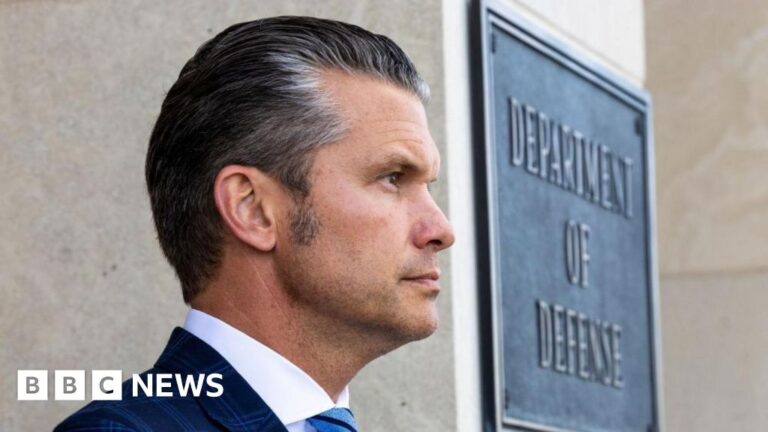
The Pentagon has told journalists they must agree not to disclose unauthorised information or else risk losing access to the building.
The change is among a number of new restrictions, which also seek to impose limits on the movement of journalists within the facility, which is home to the Department of War, formerly known as the Department of Defense.
It follows a series of leaks in recent months.
Pete Hegseth, who was recently given the new title of Secretary of War, said on social media: “The ‘press’ does not run the Pentagon — the people do. The press is no longer allowed to roam the halls of a secure facility. Wear a badge and follow the rules — or go home.”
The new restrictions were set out in a briefing note sent to members of the press, which they will be required to sign in order to maintain their Pentagon press credentials.
The department said it “remains committed to transparency to promote accountability and public trust”.
But it added: “DoW information must be approved for public release by an appropriate authorising official before it is released, even if it is unclassified”.
It asks signatories to acknowledge that determinations on press credentials for the building “may be based on the unauthorised access, attempted unauthorised access, or unauthorised disclosure” of classified national security information, or information designated as controlled unclassified information.
“The guidelines in the memo provided to credentialed resident media at the Pentagon reaffirms the standards that are already in line with every other military base in the country,” said Chief Pentagon Spokesman Sean Parnell in a statement. “These are basic, common-sense guidelines to protect sensitive information as well as the protection of national security and the safety of all who work at the Pentagon.”
Democratic lawmakers and members of the press have denounced the edict.
The National Press Club, an organisation for journalists in the US, called it “a direct assault on independent journalism at the very place where independent scrutiny matters most: the US military”.
Senator Jack Reed, a Democrat and the ranking member on the Senate Armed Services Committee, called the restrictions “an ill-advised affront to free speech and freedom of the press”.
Speaking to the media on Saturday, Trump dismissed the impact the restrictions would have on freedom of the press.
“Nothing stops reporters,” he said.
Hegseth has previously come under scrutiny for his own handling of sensitive information after it was revealed he shared details about the bombing of Yemen on a group chat that included a reporter in March. Former national security advisor Michael Waltz, who was recently confirmed as the US’s ambassador to the UN, had invited the journalist to the chat inadvertently.
The administration reacted angrily in June when a leaked intelligence report appeared to contradict statements it had made about the damage caused by US strikes on Iran’s nuclear programme.
Sony and Spotify agree on new global deals, including a direct agreement for Sony Music Publishing in the US

Sony Music Group and Spotify have struck a new multi-year global licensing deal that spans both recorded music and publishing.
The partnership sees Sony Music Entertainment and Sony Music Publishing each enter into multi-year agreements with Spotify.
Spotify’s agreement with Sony Music Publishing includes a new direct licensing arrangement in the US, which the streaming company says will “ensur[e] songwriters share more directly in the growth of streaming”.
The agreements mark Spotify’s latest direct deal with a prominent music publisher and moves its agreement with SMP beyond the traditional CRB model in the US.
This means that the direct deal supersedes the audiobook ‘bundling‘ payment structure that, starting in March last year, saw Spotify dramatically cut the rate of mechanical royalties paid to publishers and songwriters in the US.
All three majors have now inked direct publishing agreements with Spotify.
Universal Music Publishing Group and Warner Chappell Music signed direct licensing deals with Spotify in January and February, respectively, that override the CRB bundling discount.
Spotify also signed a direct licensing deal with Kobalt covering the US last month.
Commenting on the deal, Rob Stringer, Chairman of Sony Music Group, said: “Sony Music Group and Spotify have long been mutually committed to advancing music streaming and growing the marketplace for all.”
“Sony Music Group and Spotify have long been mutually committed to advancing music streaming and growing the marketplace for all.”
Rob Stringer, Sony Music Group
Added Stringer: “This is further reflected in our new agreements where we’re working to develop futuristic approaches that ensure our artists and songwriters remain appropriately compensated for their work, and audiences are getting a high-quality experience that’s ever evolving.”
“Our partnership with Sony is built on a shared drive to shape the future of music.”
Daniel Ek, Spotify
Daniel Ek, Spotify’s Founder and CEO, said: “Our partnership with Sony is built on a shared drive to shape the future of music. Together, we’re accelerating the pace of innovation to create powerful new opportunities and increasing revenue for artists and songwriters.
“These agreements aren’t just a milestone; they’re a catalyst for building a more dynamic and prosperous music ecosystem for everyone.”
“This alignment creates space for new opportunities and long-term growth for everyone involved.”
Alex Norström, Spotify
Alex Norström, Co-President & Chief Business Officer at Spotify, said: “These deals with Sony Music Group are built to better support artists and songwriters by unlocking new formats and forging deeper connections with fans.
“This alignment creates space for new opportunities and long-term growth for everyone involved.”
Key phrases in today’s official statement offer important clues about what might appear on Spotify’s product roadmap soon.
In the press release announcing the news on Thursday (September 18), the companies said that Sony Music Entertainment and Sony Music Publishing “have each entered into multi-year agreements with Spotify focused on delivering continued growth and innovation in music streaming that provides greater value for artists, songwriters and consumers worldwide”.
The statement added: “The companies will work together to keep improving the listening experience while creating more opportunities for artists and songwriters to reach audiences everywhere.
“These initiatives will launch new product offerings, including enhanced audio and visual formats that enable deeper connections with fans.”
As we pointed out last month when Spotify announced its Kobalt deal, and also hinted then about working on “new formats,” one particular new “audiovisual format” not yet available on Spotify in the US is music videos.
If music videos in the US are indeed one of Spotify’s “new product offerings,” a licensing deal with Sony that covers music video usage in the US ahead of the format’s probable launch there would make sense.
Other recent deals struck by Spotify include a multi-territory, multi-year renewal deal with Amra, the global digital licensing collection society.
The agreement followed a week after Spotify’s direct licensing deal with Kobalt, which covered only US operations.
Kobalt’s catalog is globally licensed outside the US by Amra. Indeed, amra is a sister company of Kobalt, representing both Kobalt’s rights and those of third-party clients.Music Business Worldwide
UK officially recognizes State of Palestine amidst Israel-Palestine conflict

UK Prime Minister Keir Starmer has announced the United Kingdom’s formal recognition of Palestinian statehood, joining Canada and Australia in a move aimed at reviving the push for a two-state solution. The US and Israel have criticised the decision.
Published On 21 Sep 2025
Why You Should Be a Scientist Like Elite Athletes

By SwimSwam Partner Content on SwimSwam

Courtesy of Lyvecap, a SwimSwam partner
The Best Swimmers in the World are Scientists–Why You Should be Too
The best swimmers in the world aren’t just logging more meters. They’re not just training harder.
They’re optimizing every part of their preparation: from nutrition to sleep to breathing patterns, recovery protocols, and yes, even gut health.
In other words, they’re not just guessing, but testing, refining, and learning. Elite swimmers treat their bodies like systems. They observe what works, what doesn’t, and they make science-backed changes to improve swim performance.
They train like athletes. But they think like scientists.
Elite Swimmers Ask Better Questions
Ask any elite coach or high-level swimmer and you’ll hear questions like:
● Am I clearing lactate fast enough between sets?
● What’s my HRV telling me about recovery today?
● Is my nutrition actually being absorbed effectively?
● Why do I feel drained even after sleeping 8 hours?
These are performance questions grounded in biology, not just effort.
And increasingly, swimmers are realizing that the answers often lie inside–in the body’s systems that regulate energy, inflammation, and recovery.
The Gut: Your Body’s Performance Control Center You’ve Been Overlooking
Among the most important—and least talked about—systems is the gut.
Your gut isn’t just for digestion. It plays a critical role in:
● Delivering oxygen efficiently to working muscles, a key factor in improving VO2 Max
● Supporting lactate clearance and managing fatigue between high-intensity swim sets
● Modulating inflammation after hard practices and races
● Allowing nutrients to actually be absorbed and used
● Supporting your immune system during long meet weekends
When your gut is in balance, your body runs smoother. When it’s not, you may hit invisible performance ceilings—fatigue that shouldn’t be there, inflammation that lingers, recovery that doesn’t stick.
And that’s exactly what elite swimmers work to prevent.
The Pro Approach: Precision, Not Guesswork
Top swimmers today are taking an increasingly detailed approach to performance. That means:
● Tracking HRV to guide recovery
● Monitoring iron levels for oxygen transport
● Timing nutrition to maximize energy availability
● Using targeted supplementation to support systems like the gut
They’re not leaving their progress up to chance. They’re leveraging every advantage that science allows–legally, ethically, and intelligently.
For years, swimmers believed that performance gains came mostly from more volume, more meters, and more time in the weight room. But the sport is evolving. The edge now comes from understanding the systems behind performance, and building them to work more efficiently. That means moving beyond effort alone and embracing tools that optimize recovery, energy delivery, and resilience at the cellular level. There’s a seismic shift from how much you train to how well your body can adapt to the training you do.
Where Lyvecap ELITE Fits In
Lyvecap ELITE is a next-generation probiotic designed specifically for performance.
Built with elite endurance athletes and researchers, it targets one of the biggest under-optimized systems in the body: the gut.
Unlike typical probiotics meant for general digestion, Lyvecap ELITE is formulated to support:
● Enhanced oxygen delivery and VO₂ Max
● Faster lactic acid clearance
● Lower inflammatory response post-training
● Quicker recovery between workouts or races
Small Changes, Big Gains
This isn’t about chasing gimmicks or shortcuts. It’s about doing what elite swimmers already do: using evidence-backed tools to get the most out of their training.
Ready to Train Smarter?
Whether you’re competing at Nationals or pushing for a personal best in your age group, it’s time to start thinking like the best: not just how hard you train, but how well your body performs under that training.
Learn how Lyvecap ELITE supports elite oxygen efficiency, faster recovery, and internal performance–through one of the most powerful systems you’re probably not training yet: your gut.

Read the full story on SwimSwam: Elite Athletes are Scientists–Why You Should Be Too
Research Connects Dog Behavior with Breed, Size, and Age

The largest-ever study of dog behavior, tracking more than 47,000 pets, reveals how breed, size, sex, and age shape canine traits. It provides insights that could help identify early signs of illness and improve training and welfare.
In addition to breed-specific traits, dog behavior is, broadly speaking, inextricably linked to well-being. Everyday behaviors are an effective way of gauging a dog’s emotional state and their state of physical health.
A new large-scale study jointly led by researchers from Virginia Tech and the University of Washington has established a crucial baseline for understanding the link between dog behavior and health.
“Most importantly, with these data, we’re excited to now have a starting point from which we can continue to follow changes in the behaviors of tens of thousands of dogs as they age, which will ultimately help us understand how behavior and health are linked,” said the study’s co-lead and corresponding author, Courtney Sexton, PhD, a postdoctoral researcher in the Virginia-Maryland College of Veterinary Medicine.
The researchers used information from the Dog Aging Project (DAP), which follows tens of thousands of pet dogs in the US over their lifetimes. For the present study, they utilized data on 47,444 dogs enrolled between 2020 and 2023. Owners completed the Health and Life Experience Survey (HLES), which included a shortened version of the Canine Behavioral Assessment and Research Questionnaire (aptly abbreviated to C-BARQ). The researchers used a statistical technique called principal component analysis (PCA) to group dog behaviors into four broader domains: fear, attention/excitability, aggression, and trainability. Statistical models were used to see how behavior related to factors like breed, sex, size, spay/neuter status, life stage, region, and year of enrollment.
“When you have a data set this big, you really do have power in numbers,” Sexton said. “While we can’t understand all the factors, when we find statistical significance, there is likely something there worth thinking about in its real-world context.”
The researchers found that enrollment year affected behavior. Dogs that joined between 2021 and 2023 scored lower in trainability than those who joined in 2020. Whereas fear scores stayed fairly stable across years, and attention/excitability was slightly higher for dogs enrolled in 2022. Only in 2023 did aggression scores dip significantly compared to 2020, not as a consistent trend across years.
Mixed-breed dogs scored higher on fear, attention and aggression than purebreds, though not on trainability. Smaller dogs – those under 20 lb (9 kg) – were reported as more fearful, more aggressive, and more attention-seeking, but less trainable than larger dogs. Puppies, as you might expect, demanded more attention, were less fearful and aggressive, but also less trainable than adults (though still more trainable than senior dogs).
Female dogs were reported as more trainable than males. Spayed or neutered dogs were generally rated as more fearful, more aggressive, and less trainable compared to intact dogs. This contradicts the belief that spaying or neutering a dog reduces aggression. As you’d hope, service and therapy dogs showed less aggression, and obedience dogs scored higher on trainability than pet dogs. Some regional differences were noted. For example, dogs in the Midwest were rated as more attention-seeking than those in other areas.
“We saw that certain factors, such as a dog’s life stage, sex, and size had some influence on their behavior,” said Sexton. “Interestingly, we found that throughout the COVID-19 pandemic time period, there were not substantial changes in dogs’ overall behavioral profiles from year to year despite what we might have expected given the changes in environment and routines that many were experiencing at that time.
“What was interesting was that the difference in reported trainability between the first year and the last year was the smallest of any in the averages. It’s a small statistical significance but could show that dogs, or their owners, are bouncing back [from conditions imposed during the pandemic].”
One of the study’s largest limitations is that it relied on owner-reported data, which relies on owners’ perceptions, which may be biased or inconsistent. Additionally, household factors such as training style, family stress during the COVID-19 pandemic, and owner experience weren’t directly measured. There were few intact dogs included in the study, which may skew results. And, importantly, the study shows associations, not proof that traits like breed cause certain behaviors.
Nonetheless, the huge study gives scientists a starting point to track how dog behavior changes over time, especially as dogs age. Shifts in behavior – a change in fear or aggression, for example – could be early warning signs of illness or cognitive decline. These insights can help trainers, vets, and owners tailor approaches by breed, size, or life stage.
Further studies are needed to explore how factors such as a dog’s location or their health status influence behavior over time.
The study was published in the journal PLOS One.
Source: Virginia Tech
Challenge from the Client

A required part of this site couldn’t load. This may be due to a browser
extension, network issues, or browser settings. Please check your
connection, disable any ad blockers, or try using a different browser.
Airports issue warning of continued disruption for second day

Air travellers are facing another day of disruption at several European airports including Heathrow, after a cyber-attack knocked out a check-in and baggage system.
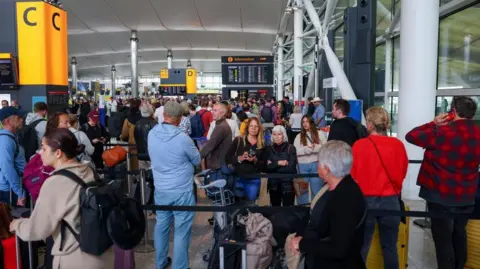
There were hundreds of delays on Saturday after the software used by several airlines failed, with affected airports boarding passengers using pen and paper.
Brussels Airport said it had “no indication yet” when the system would be functional again and had asked airlines to cancel half their departing flights.
RTX, which owns software provider Collins Aerospace, said it was “aware of a cyber-related disruption” to its system in “select airports” and that it hoped to resolve the issue as quickly as possible.
It identified its Muse software – which allows different airlines to use the same check-in desks and boarding gates at an airport, rather than requiring their own – as the system that had been affected.
The company has yet to disclose what went wrong or how long it expects the outage to last, but said on Sunday it will “provide details as soon as they are available”.
Heathrow said on Sunday that efforts to resolve the issue were ongoing.
It apologised to those who had faced delays but stressed that “the vast majority of flights have continued to operate”, urging passengers to check their flight status before travelling to the airport and arrive in good time.
The BBC understands that British Airways has continued to operate as normal at the airport using a back-up system, but that most other airlines that service it had been affected by the outage.
There have already been more cancellations across Heathrow, Berlin and Brussels so far on Sunday than throughout Saturday, according to flight data firm Cirium, though not all of these are due to the cyber-attack.
There were hours-long queues on Saturday and some 47% of Heathrow’s departing flights were delayed, according to flight tracker FlightAware. Additional staff were at hand in check-in areas to help minimise disruption.
 Naomi Rowan
Naomi Rowan, from Sudbury in Suffolk, was supposed to be moving to Costa Rica with her dog Dusty, but both are now in a hotel after their Air France flight from Heathrow on Saturday was affected by the cyber attack.
She said staff were boarding passengers with pen and paper due to the outage but told her they were unable to board Dusty without the electronic system.
“I had a cry, booked a hotel and managed to get through to Air France on WhatsApp, who say the next available flight for me is Monday,” she said.

 Reuters
Brussels Airport said manual check-in would continue on Sunday and that extra staff had been drafted in to help minimise disruption.
It said 44 departing flights had been cancelled so far on Sunday, and that it anticipated long queues at check-in and further delays.
Europe’s combined aviation safety organisation, Eurocontrol, said airline operators had been asked to cancel half their flight schedules to and from the airport until 02:00 on Monday due to the disruption.
Meanwhile, Dublin Airport said that while the technical issues persisted and some airlines were continuing to check in manually, it was expecting to operate a full schedule on Sunday.
A spokesperson told the BBC: “Passengers are advised to contact their airline directly for updates on their flight.”
Dublin Airport previously said that Cork Airport, which is owned by the same parent company, had experienced a “minor impact” from the cyber-attack – but Cork Airport has since said it has faced no disruption with all services operating as normal.
Berlin Brandenburg Airport is asking travellers to use online or self-service check-in instead of the desks while the outage is ongoing.
It said there had been 12 cancellations in and out of the airport on Saturday, but that delays were generally less than 45 minutes.
EasyJet and Ryanair, which do not operate out of Heathrow but are among Europe’s biggest airlines, said on Saturday that they were operating as normal.
 Reuters
A National Cyber Security Centre spokesperson said on Saturday that it was working with Collins Aerospace, affected UK airports, the Department for Transport and law enforcement to fully understand the impact of the incident.
The European Commission, which plays a role in managing airspace across Europe, said it was “closely monitoring the cyber-attack”, but that there was no indication it had been “widespread or severe”.
Transport Secretary Heidi Alexander also said she was aware of the incident and was “getting regular updates and monitoring the situation”.
It was only last July that a global IT crash due to a faulty software update from cybersecurity firm Crowdstrike caused disruption to aviation, grounding flights across the US.
Analysts said at the time that the incident highlighted how the industry could be vulnerable to issues with digital systems.
Additional reporting by Rozina Sini