new video loaded: Palestinian Authority Ready to Take Responsibility for Gaza, Abbas Says
transcript
transcript
Palestinian Authority Ready to Take Responsibility for Gaza, Abbas Says
Mahmoud Abbas, the president of the Palestinian Authority, said Hamas will not govern Gaza and called on the group to lay down its arms.
Translator: We want a modern and democratic state that abides by international law, the rule of law and multilateralism, and the peaceful transition of power. We declare that we are ready to work with U.S. President Donald Trump, the Kingdom of Saudi Arabia and France, the United Nations and all partners. Peace cannot be achieved if justice is not achieved, and there can be no justice if Palestine is not freed. Palestine is ours. Jerusalem is the jewel of our heart and our eternal capital. We will not leave our homeland. We will not leave our lands. Our people will remain rooted like the olive trees, firm as the rocks.
Mahmoud Abbas, the president of the Palestinian Authority, said Hamas will not govern Gaza and called on the group to lay down its arms.
Universal Music Group and Sony Music plan to use what they call “groundbreaking neural fingerprinting technologies” to detect copyright infringement in AI-generated music.
The two major music companies have each partnered with a research lab called SoundPatrol, which has developed a patent-pending method to analyze music.
SoundPatrol, which originated at Stanford University, is developing what it calls a “forensic AI model for audio-video fingerprinting,” which it claims “represents a step change from existing detection methods.”
The partnership arrives as rightsholders face mounting challenges from AI music generators that allegedly use copyrighted material without permission to train their models. The RIAA has cases going against AI startups Udio and Suno. The majors also filed an amended complaint against the latter company just a few days ago, accusing it of illegal “stream-ripping”.
UMG and Sony Music-backed SoundPatrol was co-founded by Michael Ovitz, the prominent entertainment exec who co-founded Creative Artists Agency, and Walter De Brouwer, a noted linguist and entrepreneur.
Producer Oak Felder and Milk & Honey President, Lucas Keller, were two of the co-founding partners in Soundpatrol, and continue to hold stakes in the platform.
Current music fingerprinting technology looks for exact matches of snippets of music, but SoundPatrol’s patent-pending tech can also detect covers, remixes, and derivatives created by AI, the lab said in an announcement on Thursday (September 25).
According to a press release, SoundPatrol’s tech “employs neuralembeddings that capture and analyze musical semantics in order to identify the influence of original human-created music in fully or partly AI-generated music content”.
A “neural embedding” is a way of turning elements of music (or words or other data) into numbers. Musical elements like chords or melodies are given a numerical representation that makes it easier to recognize similarities between them.
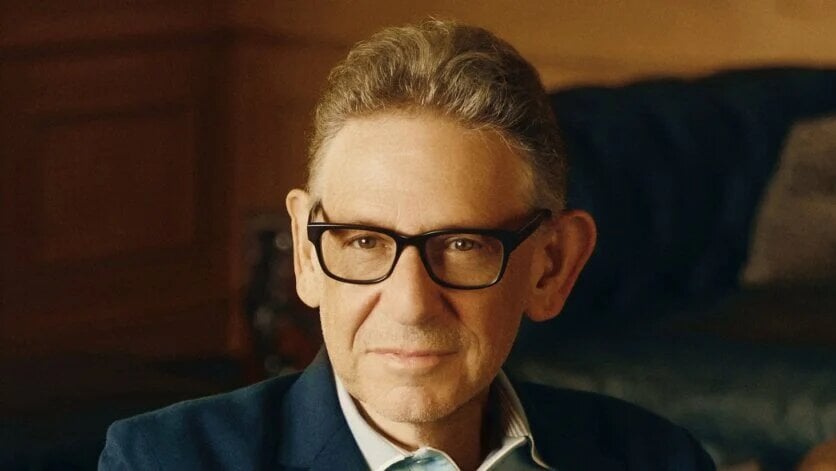
UMG Chairman and CEO Sir Lucian Grainge said: “We’re constantly focused on enabling AI – bringing to market the many commercial and creative opportunities that will benefit our artists while establishing effective tools to protect them.
“Bringing solutions to the table that support the entire industry is at the heart of our relationship with SoundPatrol, who share our commitment to safeguarding our artists’ creative integrity and work.”
Photo: Austin Hargrave
“Bringing solutions to the table that support the entire industry is at the heart of our relationship with SoundPatrol, who share our commitment to safeguarding our artists’ creative integrity and work.”
Sir Lucian Grainge, Universal Music Group
Dennis Kooker, President of Global Digital Business at Sony Music, said AI presents “opportunities for artists and creators” when used correctly.
“We’re committed to navigating this developing landscape by protecting [artists’] work while also exploring the innovative potential of these technologies. Our collaboration with SoundPatrol is about respecting artists’ rights to build a sustainable and equitable ecosystem for everyone,” he said.
The technology could prove to be a boon to music companies that have pursued legal action against AI companies they believe have violated the law by using copyrighted music without permission to train their AI models.
The current spate of lawsuits against AI companies largely rely on comparisons of sheet music or lyrics to make the case that an AI-generated piece of music ripped off a human-made original.
Data from SoundPatrol could back up those claims with algorithmic data. It could also help rightsholders detect AI rip-offs where they hadn’t noticed them before.
“SoundPatrol has answered the long-standing problem of IP theft by creating a frontier lab with neural fingerprinting capabilities that can identify all pipelines of directly transmitted content, whether on its own or intermixed, in real time,” said Ovitz, who serves as SoundPatrol’s board chair.
“This is the first of-its-kind technology implemented to protect all copyright holders and creators of any type of intellectual property.”
He called it a “huge victory for all artists in the creative universe”.
“If we abandon copyright, we risk severing artists from ownership of their own work,” said De Brouwer, SoundPatrol’s CEO.
“It is compulsory to proactively feed deep embeddings of these neural signatures into streaming infrastructures so that owners can maintain control, authenticity, and monetization of their intellectual property in the generative AI era.”
SoundPatrol’s key advisors include Percy Liang, founder of the MARIN foundation models lab, Chris Re of Stanford’s AI lab, and Dan Boneh, director of Stanford’s Applied Cryptography Lab.
“Our collaboration with SoundPatrol is about respecting artists’ rights to build a sustainable and equitable ecosystem for everyone.”
Dennis Kooker, Sony Music
Headed by John Thickstun, Associate Professor of Computer Science at Cornell University, SoundPatrol’s research team includes computer engineers, AI experts and musicologists.
The team includes graduate students from Stanford University’s CCRMA and London’s C4DM, the UK’s leading digital music research group at Queen Mary University. It also includes AI engineers from Carnegie Mellon University, Brown University and the University of California-Berkeley
Aber Whitcomb, the former Chief Technology Officer at MySpace and Jam City, and Frederick Kautz, former Chair of KubeCon and CloudNativeCon, are coordinating teams to strengthen security and innovation, SoundPatrol said.Music Business Worldwide
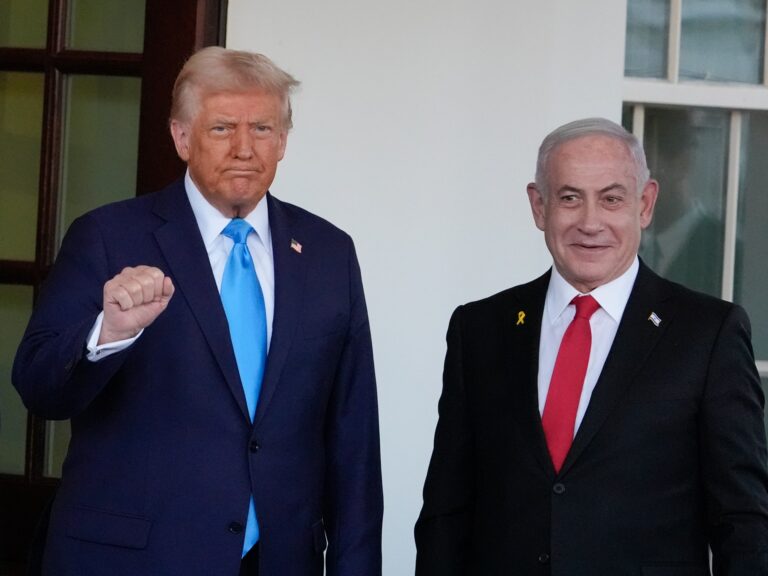
United States President Donald Trump has said that Israel cannot annex the occupied West Bank, a statement that puts him firmly at odds with Israeli Prime Minister Benjamin Netanyahu and members of his ultranationalist government who have been pressing for annexation of the Palestinian territory.
Trump made his surprise remarks while speaking to reporters on Thursday, ahead of Prime Minister Netanyahu’s arrival in the US to address the United Nations General Assembly in New York on Friday.
Recommended Stories
list of 4 itemsend of list
“ I will not allow Israel to annex the West Bank. Nope. I will not allow. It’s not gonna happen,” Trump said.
Asked whether he had discussed his plans to block any Israeli annexation attempts with Netanyahu, Trump was noncommittal.
“Yeah, but I’m not gonna allow it. Whether I spoke to him or not, I’m not allowing Israel to annex the West Bank. There’s been enough. It’s time to stop now, OK?” the US president said.
Trump did not offer details of what actions he would take to prevent the possible annexation of the occupied West Bank, and analysts questioned whether the notoriously capricious US leader would change his mind.
Speaking to Al Jazeera, Mouin Rabbani, an analyst and non-resident fellow at the Qatar-based Center for Conflict and Humanitarian Studies, said Trump’s statement was a “positive” development, but he questioned whether the President would “follow through”.
“One attaches value to Trump’s words at their own peril,” Rabbani said.
“So the question now becomes, is he going to ensure that Israel does not annex the West Bank, and if it does, what will he do about it? Will his mind perhaps be changed by another conversation that he has?”
Trump’s comments potentially place his administration on a collision course with the far-right Israeli government led by Netanyahu, members of which have made the annexation of the occupied West Bank and Gaza a formal political goal.
The proposal was initially brought by Israel’s finance minister and far-right political leader, Bezalel Smotrich, who lives in an illegal settlement in the occupied West Bank and holds a position within Israel’s Ministry of Defence where he oversees the administration of illegal settlements on occupied Palestinian land.
Smotrich and other far-right members of Netanyahu’s governing coalition have also voiced staunch opposition to efforts to reach a deal to end Israel’s war on Gaza, even threatening to topple the government if an agreement is reached.
In advance of Australia, France, Britain, Canada, Portugal and other countries moving to recognise Palestinian statehood, Smotrich unveiled a plan allowing for the construction of thousands of homes in a controversial illegal settlement that bisects the occupied West Bank.
The massive settlement expansion on occupied land, when completed, “finally buries the idea of a Palestinian state, because there is nothing to recognise and no one to recognise”, he said in August.
“Anyone in the world who tries today to recognise a Palestinian state will receive an answer from us on the ground,” he added.
Israeli settlement in the occupied West Bank has been ongoing since 1967, stretching deep into Palestinian territory and carving up the landscape thanks to a network of roads and other infrastructure controlled by the Israeli government and military.
The International Court of Justice ruled in July 2024 that Israeli settlements in the occupied West Bank are illegal and must be discontinued and the land returned to Palestinians.
Israel has been a cornerstone of US foreign policy in the Middle East, and the Israeli government is heavily dependent on financial, military and intelligence support from the US to maintain its ongoing campaign in Gaza, the occupied West Bank and parts of Lebanon and Syria.
Any reversal of US policy could trigger a political crisis in Israel, particularly among the far-right parties who make up Netanyahu’s coalition government.
Referring to Gaza briefly on Thursday, Trump described the overall situation as “really bad, very bad”.
Despite suggesting a peace deal could happen “soon”, Trump offered no details or clarity except to say that “very, really good talks” had been held with leaders of Arab states and Netanyahu.
Earlier this week, Trump met with the leaders of Saudi Arabia, Qatar, the UAE, Egypt, Jordan, Turkiye, Indonesia and Pakistan on the sidelines of the UN General Assembly to discuss ending Israel’s ongoing military assault on Gaza.
A required part of this site couldn’t load. This may be due to a browser
extension, network issues, or browser settings. Please check your
connection, disable any ad blockers, or try using a different browser.
Fitter and Faster Swim Camps is the proud sponsor of SwimSwam’s College Recruiting Channel and all commitment news. For many, swimming in college is a lifelong dream that is pursued with dedication and determination. Fitter and Faster is proud to honor these athletes and those who supported them on their journey.
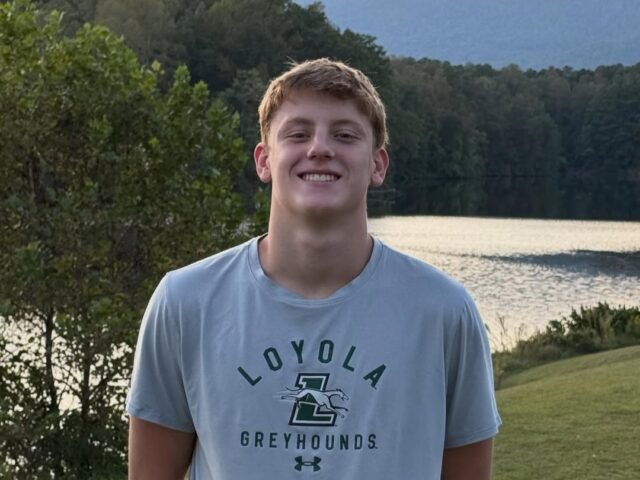
Ben Tungate has committed to swim at Loyola University Maryland for his collegiate career. He hails from Crozet, Virginia, where he swims for Cavalier Aquatics and competes for Western Albemarle High School. He will join the Greyhounds in the fall of 2026.
He publicized the announcement on social media, writing:
I am very honored to announce my verbal commitment to further my academic and athletic career at Loyola University Maryland. I want to thank my parents, brothers, teammates, and coaches for helping me through the journey. Go Hounds!!!
Tungate is a rangy freestyler who excels in the 200-1650 distances.
The future Greyhound’s first key meet of the 2024-25 season was the NC YOTA 31st Annual Arena Capital Classic meet in December. He touched the wall second in the 1650 with his current personal best of 16:13.20, and collected a pair of fourth-place finishes in the 200 free (1:42.40) and 500 free (4:37.42). He also secured 17th in the 400 IM with a career best of 4:12.38 and 17th in the 200 fly with a lifetime best of 1:57.98.
Tungate’s target meet of the high school season was the Class 3 State Championship, held at the beginning of March. Individually, he was the runner-up in the 500 free (4:45.08) and fourth in the 200 free (1:39.86), and helped the 200 free relay to gold with a 22.76 lead-off and the 400 free relay to bronze with a 49.42 lead-off.
He closed out his season at the beginning of April at the YMCA National Championships. His highest finish came in the 1000 free, where he produced a lifetime best of 9:38.52 for 13th. He also swam a career best in the 500 free, where he hit the wall 16th in 4:36.60. Outside of his PB swims, he was 24th in the 1650 free (16:27.96) and 49th in the 200 free (1:43.22).
Top SCY Times:
200 Freestyle: 1:42.40
500 Freestyle: 4:36.60
1650 Freestyle: 16:13.20
The Loyola men, led by head coach Brian Loeffler, placed third out of 10 teams at the 2025 Patriot League Championships.
The conference meet scores ‘A,’ ‘B,’ and ‘C’ finals, and Tungate is slated to have an immediate impact for the Greyhounds. His best 1650 time would have been fast enough to score in 2025, as it would have earned him 22nd. He is also within striking distance of the 1:41.15 and 4:34.65 marks needed to advance into the ‘C’ final of the 200 free and 500 free.
On the team’s 2024-25 depth chart, Tungate would have ranked eighth in the 500 free, ninth in the 1650 free, and 15th in the 200 free. Senior Alex Plavoukos led the way in the 500 and 1650 with marks of 4:24.66 and 15:26.26, and fellow senior Henry Mueller was the quickest 200 freestyler at 1:36.78.
Tungate joined Cristian Pong and Tim Hanway in committing to the Greyhounds’ class of 2030.
If you have a commitment to report, please send an email with a photo (landscape, or horizontal, looks best) and a quote to Recruits@swimswam.com.
About the Fitter and Faster Swim Tour
Fitter & Faster Swim Camps feature the most innovative teaching platforms for competitive swimmers of all levels. Camps are produced year-round throughout the USA and Canada. All camps are led by elite swimmers and coaches. Visit fitterandfaster.com to find or request a swim camp near you.
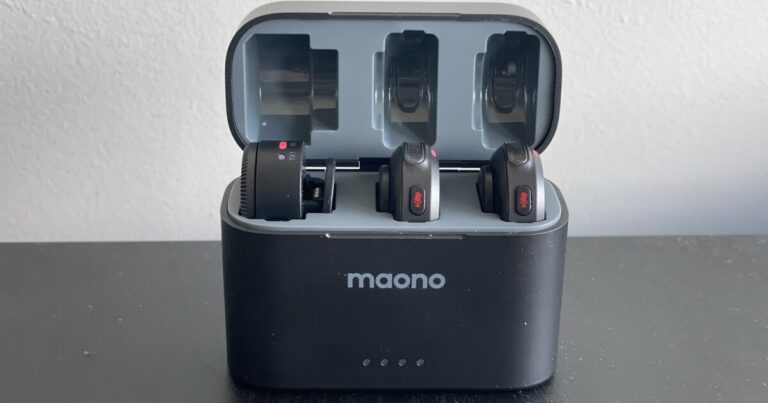
Whether you’re a content creator or a casual recording enthusiast, the Maono Wave T5 wireless lavalier microphone kit may not be on your radar – but it ticks a lot of boxes. If you’re after clean audio in different environments, decent battery life and charging on-the-go, this handy setup is on par with its peers at a fraction of the price (from US$89.99 to $129.99).
First up: Sound quality. The T5 microphones – two small discs that can be attached easily with a very strong magnetic clip – capture crisp, clear voice recordings, with relatively low background noise. With the AI-powered noise canceling switched on, even moderate ambient noise such as office fans, background chatter or traffic noise, can be significantly filtered out. What’s more, it doesn’t distort voices in the process, providing a natural clear sound that can be recorded to a phone or camera. An accompanying app also offers three-mode/14-level noise cancelation, for added control. The mics record at 48 kHz/24-bit – the video standard – so you get high-resolution, low-noise audio to play with.
The combo kit provides a lot of hardware flexibility
New Atlas
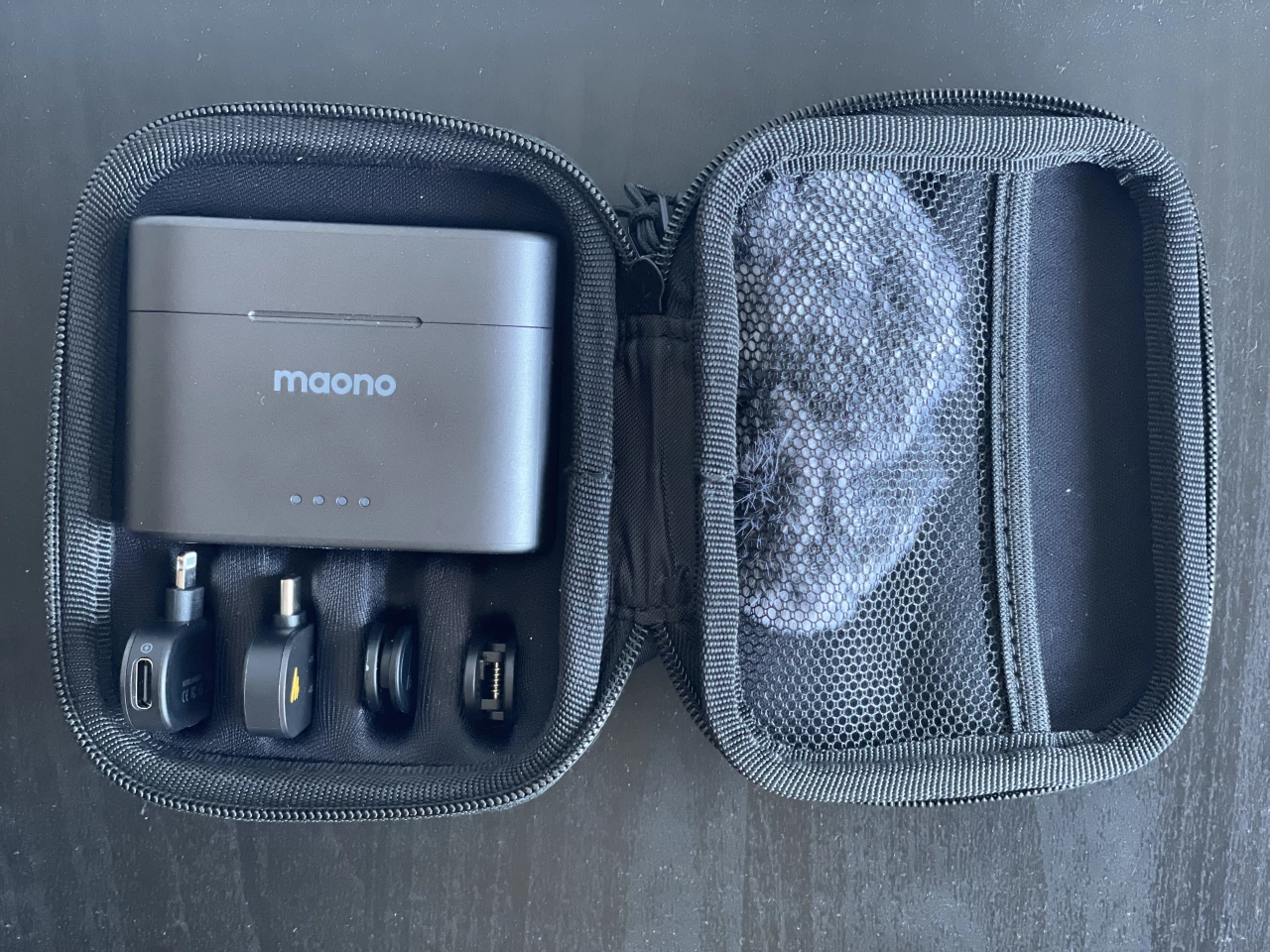
This combo kit comes with two mics plus multiple receivers – USB-C, Lightning and 3.5-mm “camera” jack version for cameras. This allows you to switch between devices – iOS or Android phones, DSLR/compact camera – easily. The T5 is also available with fewer options, but we think the combo kit, which essentially future-proofs the tech, is worth it given the small price difference.
Having two mics also lends itself to more flexibility with recording, be it for capturing multiple voices in an interview setting, or being able to set up a more studio-like dual-speaker system.
The full Wave T5 kit comes with the Lighting and USB-C connections, as well as the camera receiver and cable, and wind socks
New Atlas
Battery life is another impressive feature. Each mic offers around nine hours of use, and the charging case – much like with a pair of earbuds – extends their life significantly. what’s more, a quick five-minute charge will offer an additional hour of recording out of the box. It’s worth noting that the noise-canceling function will reduce battery life more rapidly. The T5 also enables phone charging while recording, which is rather handy for continuous use when on the move or out in the field.
The mics are lightweight at just 9 g each, attaching to jackets or shirts, or other surfaces, via the magnetic clip. And, might we add, those magnets are strong – so you won’t need to worry about the mic falling off if you’re out recording in the field. At the same time, you can simply use the mic without any attachments, by placing it on a flat surface to record meetings, talks or lectures.
The receivers for phones are plug-and-play, so you don’t need to be a sound-recording whiz to get the most out of this system. There are one-touch controls – a mute button, in addition to noice canceling – and a long-press option to start/stop video or take photos. There’s also a volume/gain dial on the camera receiver for quick audio-level tweaks.
The microphones’ strong magnetic clips allow you to attach the recording device to more than just clothing
New Atlas
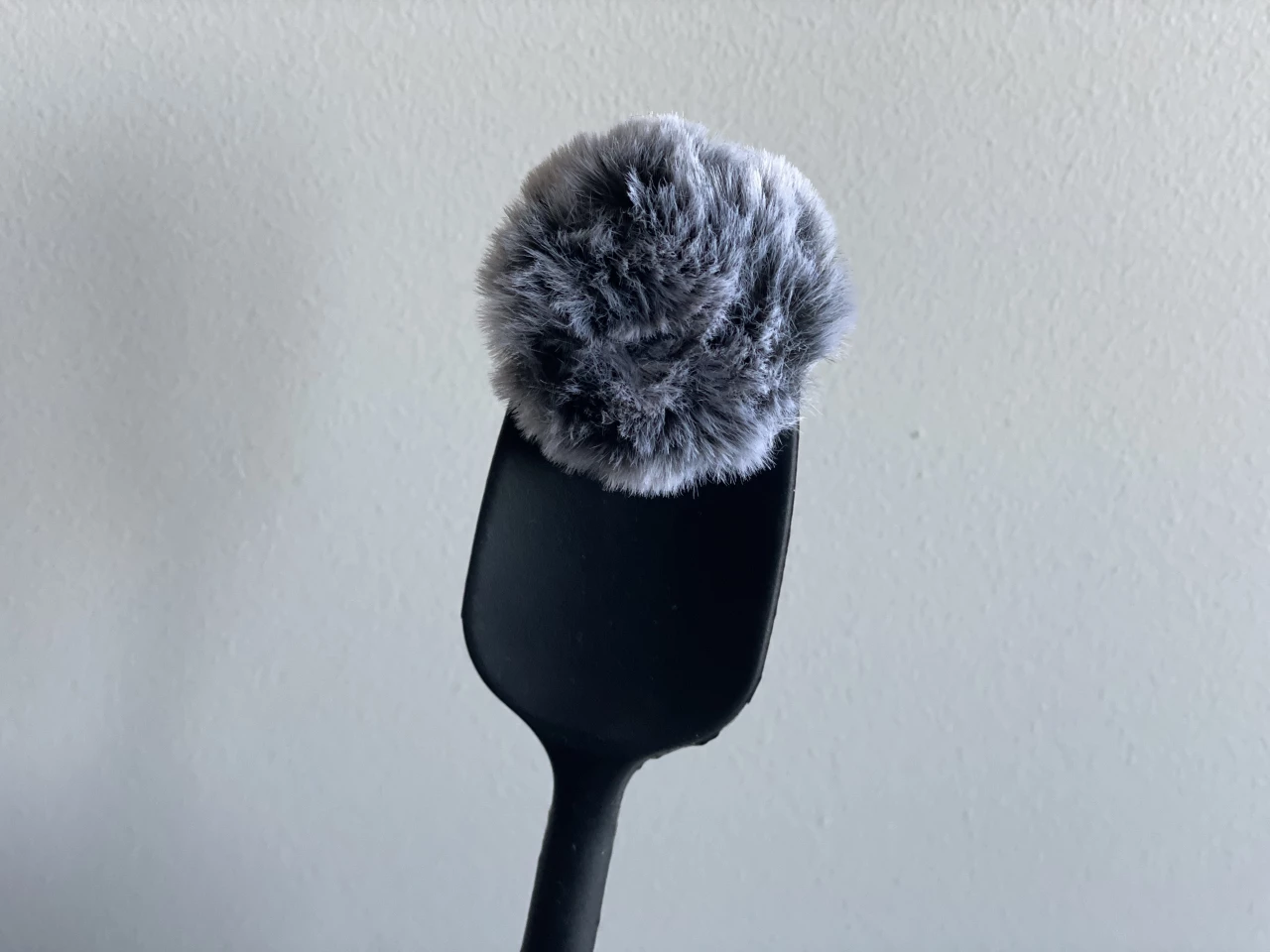
Using the wind socks and noise canceling, a significant amount of background sound can be blocked – but it won’t totally silence it. However, you can also expect this from market-leading tech – DJI wireless mics, for example – so it’s not necessarily a negative of the T5 itself. It’s also worth noting that while the advertised range is up to around 300 m (1,000 ft), real-world conditions with walls and obstructions will shorten that distance.
The Maono Link app supports desktop and phone production, across Mac/iOS and PC/Android, allowing more control over noice canceling and recordings – however, it’s not required. Though you will be restricted to the settings you can change on the hardware.
The T5 combo (the bundle with multiple receivers/transmitters) is significantly cheaper than competing wireless lavalier systems (DJI, for example), especially when you factor in that it includes two mics and multiple receiver formats. The full kit is $129.99 ($20 off retail price right now), which comes with iPhone, Android and camera connectivity. If you’re just after one connection, choose between USB-C/Android/iPhone 15/16 ($89.99, $40 off retail), Lightning/older iPhone models ($99.99, $30 off retail) or camera ($109.99, $20 off retail). You can also buy additional receivers for different devices, but the combo kit still works out at a better price overall.
The Israeli military says its air force has carried out its “most powerful strike” in Yemen in response to the Houthi movement’s repeated drone and missile attacks on Israel.
The Israel Defense Forces (IDF) said dozens of its aircraft bombed targets belonging to the Houthis’ security and intelligence services, and military in the capital Sanaa.
The Houthi-run government’s health ministry denounced what it called Israel’s “brutal crime”, saying civilian facilities and residential buildings were hit and that eight people were killed.
It comes a day after 22 people were injured, two of them seriously, in a Houthi drone attack in the Israeli Red Sea resort of Eilat.
The Houthis have controlled much of north-western Yemen since they ousted the country’s internationally recognised government from there 10 years ago, sparking a civil war.
They began attacking Israel and international shipping in the southern Red Sea and the Gulf of Aden shortly after the start of the war between Israel and Hamas in Gaza in October 2023, saying they were acting in support of the Palestinians.
Israel has carried out many rounds of air strikes in Yemen in retaliation for the hundreds of missiles and drones that have been launched at the country by the Houthis.
Videos from Sanaa showed large plumes of black smoke rising from at least three locations in the city following the Israeli strikes on Thursday afternoon.
The attack took place moments before Houthi-run Al-Masirah TV began broadcasting a speech by the movement’s leader, Abdul Malik al-Houthi.
Al-Masirah reported that the strikes targeted residential areas in the Maain and Sabaeen districts, as well as the Dhahban power station. It posted photographs showing several destroyed and damaged buildings.
Health ministry spokesman Dr Anees al-Asbahi accused the IDF of the “deliberate and systematic targeting of civilian, service, and residential facilities”, which he said was “a war crime in every sense of the word.
He reported that eight people were killed and 142 injured, and that civilians were among them. He added that first responders were still searching under rubble for casualties.
Israeli Defence Minister Israel Katz wrote on X that his country had “delivered a powerful strike on numerous terror targets of the Houthi terror organisation in Sanaa”.
The IDF said in a statement that the targets included the Houthi military’s General Staff Command Headquarters, security and intelligence compounds, the Houthis’ “military public relations headquarters”, and military camps used to store weapons.
“The IDF will operate against the ongoing and repeated attacks of the Houthi terrorist regime against the State of Israel, will conduct additional offensive operations against the Houthi regime in the near future,” it added.
A separate statement from the Israeli military said an inquiry into Wednesday’s Houthi attack on Eilat had suggested that the drone launched from Yemen was “detected relatively late, and that warning sirens were activated in accordance with protocol.
“Interception attempts were made using the Iron Dome [air defence system], but were unsuccessful. The cause for that has been identified, and corrective measures were implemented.”
Since the beginning of the war in Gaza, Israeli forces have intercepted more than 98% of the drones launched towards Israel by the Houthis, according to the IDF.
The Houthis’ military spokesman said the attack was a “response to the crimes of genocide and the dangerous escalation carried out by the Israeli enemy against our people in the Gaza Strip”.
On 10 September, four days after a Houthi drone attack on Eilat’s Ramon airport wounded one person, the Israeli military carried out a series of strikes in Sanaa and al-Jawf province that killed 35 people, according to the Houthi-run health ministry.
The Committee to Protect Journalists (CPJ) said last week that 31 journalists and media support workers were among those killed in Sanaa and that the incident constituted the deadliest single attack on the press worldwide in 16 years.
Yemen’s September 26 newspaper said all but one of them had worked in its office or the headquarters of the government’s Moral Guidance Directorate, which were both bombed.
The IDF said at the time that it had targeted the “Houthi Public Relations Department”.
new video loaded: Israel Launches Deadly Strikes on Yemeni Capital
Israel’s military bombed several sites across the Yemeni capital, a day after Yemen’s Houthi militia launched a drone attack against Israel that injured 20 people.
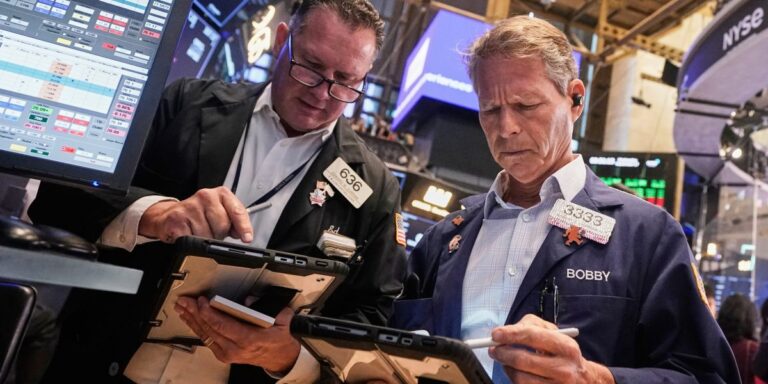
Wall Street stumbled to a third straight loss on Thursday as U.S. stocks gave back more of their big gains for the year so far.
The S&P 500 fell 0.5% and marked its longest losing streak in more than a month. The Dow Jones Industrial Average dropped 173 points, or 0.4%, and the Nasdaq composite sank 0.5%. All three indexes are still near their records set at the start of the week, though.
The Fed just delivered its first cut of the year last week, and officials had penciled in more through the end of next year. That was critical for Wall Street after U.S. stocks shot to records since April in large part because of expectations for rate cuts. Easier rates can boost the economy and make investors more willing to pay high prices for stocks and other investments.
But a stronger-than-expected economy could remove some of the Fed’s urgency, particularly because cuts to rates carry the risk of worsening inflation that’s already stubbornly high. If the Fed doesn’t cut rates as often as investors expect, it would empower criticism that the U.S. stock market is too expensive after rising so much, so quickly.
“Buckle up,” warned Jonathan Krinsky, chief market technician at financial services firm BTIG.
Stocks look to be in their most vulnerable position since their April lows given how much complacency has built up and how the rubber band has recently been “as stretched as it gets in some parts of the market,” Krinsky wrote in a research report.
Wall Street’s ultimate hope is that the U.S. economy stays in a delicate balance where it’s slow enough to convince the Fed to cut rates but doesn’t become so weak that it leads to a recession.
Treasury yields ticked higher in the bond market as traders pared bets for the number of upcoming cuts to rates by the Fed. The yield on the 10-year Treasury rose to 4.17% from 4.16% late Wednesday.
Another report said the U.S. economy grew at a faster pace during the spring than earlier thought, while a third said orders blew past economists’ expectations last month for U.S. manufactured goods with a relatively long life span.
On Wall Street, CarMax tumbled 20.1% after the seller of used autos reported a weaker profit for the latest quarter than analysts expected. It sold fewer vehicles during the quarter than it had a year earlier. It also was hurt because it increased its expectations for losses from loans made in earlier years.
Jabil fell 6.7% even though it reported a stronger profit for the latest quarter than analysts expected, thanks in part to demand coming because of artificial intelligence. It also gave forecasts for upcoming revenue and profit that topped analysts’ expectations.
Such moves typically send a stock’s price higher, but Jabil came into the day with an already huge gain of 56.6% for the year so far. That was more than quadruple the S&P 500’s rise over the same time.
On the winning side of Wall Street was IBM. It rose 5.2% after HSBC announced a promising trial with IBM of quantum computing in hopes of improving bond trading. The bank said they delivered an improvement of up to 34% in predicting how likely a trade would be filled at a quoted price.
Companies are racing to develop quantum computing in order to solve complex problems beyond the reach of classical computers.
KB Home swung between gains and losses after the homebuilder reported a stronger profit for the latest quarter than analysts expected. CEO Jeffrey Mezger said he was encouraged to see mortgage rates ease through the quarter, which could encourage more potential customers to buy homes.
Mortgage rates have been sinking on expectations for coming cuts to rates by the Fed. KB Home’s stock finished the day with a dip of 0.6%.
All told, the S&P 500 fell 33.25 points to 6,604.72. The Dow Jones Industrial Average dropped 173.96 to 45,947.32, and the Nasdaq composite sank 113.16 to 22,384.70.
In stock markets abroad, indexes dipped in Europe following modest moves across much of Asia.
___
AP Writers Matt Ott and Teresa Cerojano contributed.
Fortune Global Forum returns Oct. 26–27, 2025 in Riyadh. CEOs and global leaders will gather for a dynamic, invitation-only event shaping the future of business. Apply for an invitation.