

0.4 C
New York
Saturday, February 28, 2026
Home Blog Page 362

Link between soccer heading, brain alterations and learning problems

0

Soccer heading has long been suspected of impacting brain health, but exactly where and how it leaves a mark has been a blind spot. Now, for the first time, scientists have a clear picture of the damage and why the zone of impact contributes to issues with learning and problem-solving over time.

Columbia University researchers have used new imaging techniques to identify that repeated heading of soccer balls affects the the junction between white and gray matter in the orbitofrontal cortex, the region just behind the forehead that helps with planning and strategy. Newly developed diffusion MRI analyses has revealed that more frequent heading is linked to subtle microstructural disruption in this region – and that this disruption explains the small but measurable drops in verbal learning performance among adult amateur players.

“What’s important about our studies is that they show, really for the first time, that exposure to repeated head impacts causes specific changes in the brain that, in turn, impair cognitive function,” said study lead Michael Lipton, M.D., a professor of radiology and biomedical engineering at Columbia University’s Vagelos College of Physicians and Surgeons.

Soccer heading and the brain’s gray matter/white matter interface

Lipton and his team developed two new dMRI techniques to examine white matter in the cerebral cortex; one method focused on the microstructure of white matter where it meets the layer of gray matter. The other, developed by graduate student Joan Song, homed in on the microstructure inside the transition zone between gray and white matter. In the brain scans of heavy headers, the normally crisp gray-white boundary looked fuzzier in the orbitofrontal cortex – exactly where models predict the most shear – while there were no significant changes in other regions.

“In healthy individuals, there’s a sharp transition between these tissues,” Song said. “Here we studied if an attenuation of this transition may occur with minor impacts caused by heading.”

In one study of 352 New York–area amateurs aged 18 to 53 years, players reported how often they headed the ball over the prior year. Brain scans were then analyzed with one dMRI method that profiled how sharply tissue properties transition across the gray-white interface. Essentially, during impact, the head accelerates and then slows quickly. Gray and white matter have slightly different stiffness and density, so they don’t move together at the same velocity. That mismatch makes them slide against each other at their boundary, creating sideways stretching (shear force). And the gray-white junction – especially near the grooves (sulci) in the orbitofrontal cortex – is where that sliding stress is concentrated.

“Gray and white matter have different densities and move at different rates in response to head impact, which creates shear forces between the two types of tissue,” said Lipton. This leaves the white matter vulnerable to injury, especially adjacent to the sulci.”

In a second study, the team used a different, complementary dMRI method developed by Columbia researcher Bluyé DeMessie, focused on the same gray-white transition zone and compared the brain scans of the 352 players with scans of 77 non-contact athletes, in order to show the effect is specific to soccer heading exposure. Participants from both studies then undertook a simple memory test.

Ultimately, the researchers found that heading exposure was associated with lower scores on this standard learning task. This finding aligned with the brain scans of the heavy headers, and both dMRI methods produced consistent results. While the cognitive differences were small – nowhere near what would be considered clinical impairment – they were consistent across the cohort when age, sex and prior concussion history were taken into account.

“The fact that both techniques, looking at two different features, find the same association strengthens our conclusion that these changes are mediating heading’s cognitive effects,” Lipton said.

Two new dMRI methods reveal more about the impact of soccer heading than previously known

Columbia University

What’s more, the brain area in question here overlaps with regions often affected in traumatic brain injury and, in some athletes with many years of head impacts, chronic traumatic encephalopathy (CTE). However, the authors caution that this isn’t proof of CTE – more research is needed, following these markers over time, to see if these scan abnormalities can predict future cognitive problems.

“We’re especially interested in looking at the potential relationship between these biomarkers and the later development of chronic traumatic encephalopathy (CTE), a neurodegenerative disease that has been diagnosed in athletes who experienced many head impacts over their playing careers,” Lipton said. “The location of the abnormalities we report is remarkably similar to CTE pathology, though we don’t yet know if they are linked to CTE or if any of these currently healthy athletes will develop CTE.”

It’s also worth noting that these findings are more a cross-sectional snapshot, which can’t prove causation. Secondly, the exposure metric ranks players by how much they headed the ball in the past 12 months and don’t capture a lifetime of impacts.

What does this mean for players and parents? The authors stop short of providing concrete thresholds, but prior work – and the new analyses –suggest that low levels of heading (a couple of times per week) results in scans that look very similar to non-contact athletes, while the heaviest heading group shows the most significant differences. Because individual susceptibility likely varies with factors like genetics and concussion history, a one-size-fits-all “safe” number is unlikely to be decided on. Instead, these gray-white interface biomarkers could give clinicians a way to identify when a player’s exposure is starting to matter biologically, long before symptoms arise, and help inform changes to training and coaching in order to moderate contact.

“We don’t have enough information to make generalized recommendations,” said Lipton. “But when we divided the players into four groups according to their heading frequency, we found that the players who only headed the ball about twice a week looked similar to the non-contact athletes in our study.

“The impact of heading is likely to vary from person to person, depending on genes, concussion history, and other factors,” he added. “For example, a person who only occasionally heads the ball, but carries a genetic risk, may experience comparatively large effects, while a person without the genetic risk could head the ball dozens of times a week, but experience few effects.”

These findings advance our knowledge of how sports-related brain impacts appear to be contributing to cognition deficits in amateur and professional players. It’s also seen researchers look to design better diagnostic and protective equipment – from mouth guards to helmets – that can both monitor and cushion the blows that are still a common occurrence in contact sports.

The research was published in two papers, in the journal Neurology and the journal JAMA Network Open.

Source: Columbia University

ICE officer forcefully throws woman to the ground at immigration court | Newsfeed

0

NewsFeed

An ICE officer has been placed on leave after video emerged of him forcefully shoving an Ecuadorian woman to the ground at a New York immigration courthouse, where her husband was taken into custody.

MBW’s weekly round-up: MLC lawsuit revival and Spotify’s deletion of 75m+ ‘spammy’ tracks

0

Welcome to Music Business Worldwide’s Weekly Round-up – where we make sure you caught the five biggest stories to hit our headlines over the past seven days. MBW’s Round-up is exclusively supported by BMI, a global leader in performing rights management, dedicated to supporting songwriters, composers and publishers and championing the value of music.


This week, a Court in New York issued an order granting The MLC’s request to file an amended complaint in its ‘Bundling’ case against Spotify.

Meanwhile, Spotify announced it has removed more than 75 million “spammy tracks” from its platform over the past year as it unveiled new AI music policies.

Elsewhere, Universal Music Group and Sony Music partnered with research lab SoundPatrol to detect AI music copyright theft using groundbreaking neural fingerprinting technology.

Also this week, Donald Trump signed an executive order paving the way for a TikTok deal that would transfer US operations to American investors.

Here are some of the biggest headlines from the past few days…


1. MLC CAN FILE AMENDED COMPLAINT IN ‘BUNDLING’ LAWSUIT AGAINST SPOTIFY, COURT SAYS

The Mechanical Licensing Collective has secured a crucial procedural ruling in its legal battle with Spotify over streaming royalty payments.

On Thursday (September 25), the Federal District Court in New York issued an order granting The MLC’s request to file an amended complaint in the case.

The original complaint, filed by the Mechanical Licensing Collective last May, alleged that Spotify significantly underpaid royalties after its decision to report its Premium subscription streaming offerings as bundles.

The MLC must file its amended complaint by October 2, 2025… (MBW)


Spotify has deleted 75m+ ‘spammy tracks’ – as it unveils new AI music policies

Spotify has removed more than 75 million “spammy tracks” from its platform over the past year, the streaming giant revealed this week as it announced a suite of new policies for managing AI-generated content on its service.

The figure was disclosed during a press briefing this week, where executives outlined a three-pronged approach to combat AI-enabled fraud while supporting legitimate artistic use of artificial intelligence tools.

“In the past 12 months alone, a period marked by the explosion of generative AI tools, we’ve removed over 75 million spammy tracks from Spotify,” the company confirmed in its official blog post announcing the measures.

The announcement comes as the streaming industry grapples with an unprecedented influx of AI-generated content… (MBW)


3. UNIVERSAL AND SONY MUSIC PARTNER WITH NEW PLATFORM TO DETECT AI MUSIC COPYRIGHT THEFT USING ‘GROUNDBREAKING NEURAL FINGERPRINTING’ TECHNOLOGY

Universal Music Group and Sony Music plan to use what they call “groundbreaking neural fingerprinting technologies” to detect copyright infringement in AI-generated music.

The two major music companies have each partnered with a research lab called SoundPatrol, which has developed a patent-pending method to analyze music.

SoundPatrol, which originated at Stanford University, is developing what it calls a “forensic AI model for audio-video fingerprinting,” which it claims “represents a step change from existing detection methods.”

The partnership arrives as rightsholders face mounting challenges from AI music generators that allegedly use copyrighted material without permission to train their models. The RIAA has cases going against AI startups Udio and Suno. The majors also filed an amended complaint against the latter company just a few days ago, accusing it of illegal “stream-ripping”.

UMG and Sony Music-backed SoundPatrol was co-founded by Michael Ovitz, the prominent entertainment exec who co-founded Creative Artists Agency, and Walter De Brouwer, a noted linguist and entrepreneur… (MBW)


4. TRUMP SIGNS EXECUTIVE ORDER PAVING WAY FOR ‘$14BN’ US TIKTOK DEAL

A deal to transfer TikTok’s US operations to US owners appears to be getting closer.

Donald Trump yesterday (September 25) signed an executive order providing the legal framework for a “qualified divestiture” that would transfer majority control of TikTok’s US operations to American investors, though the deal still requires Chinese government approval.

The executive order, titled “Saving TikTok While Protecting National Security,” establishes the structure for a transaction that would allow TikTok’s 170 million US users to continue accessing the video-sharing platform under strict new security protocols, while granting a 120-day enforcement delay to finalize the deal.

Speaking on Thursday, Vice President JD Vance said the proposed transaction would value TikTok’s US operations at “around $14 billion.”… (MBW)


5. INSPIRED BY ANTHROPIC’S $1.5B BOOK PIRACY PAYOUT, RECORD LABELS ACCUSE SUNO OF ILLEGALLY ‘STREAM RIPPING’ MUSIC FROM YOUTUBE

The major music companies have escalated their copyright infringement lawsuit against AI music generation company Suno, filing an amended complaint that alleges the startup illegally “stream ripped” copyrighted recordings from YouTube to train its AI models.

The amended complaint, filed on September 19, 2025, in the US District Court for the District of Massachusetts and obtained by MBW, introduces damaging new allegations that Suno “acquired many (if not all) of the copyrighted sound recordings in its training data by illicitly downloading them from YouTube using a notorious method of music piracy known as ‘stream ripping.’”

The complaint suggests that Suno may have ‘stream-ripped’ millions of copyrighted sound recordings to train its model.

The timing of the new allegations appears directly connected to Anthropic’s recent USD $1.5 billion settlement with authors, who claimed the service obtained pirated books to train its AI models… (MBW)


Partner message: MBW’s Weekly Round-up is supported by BMI, the global leader in performing rights management, dedicated to supporting songwriters, composers and publishers and championing the value of music. Find out more about BMI hereMusic Business Worldwide

Kenyan authorities dismantle human trafficking ring sending individuals to Russia for combat in Ukraine

0

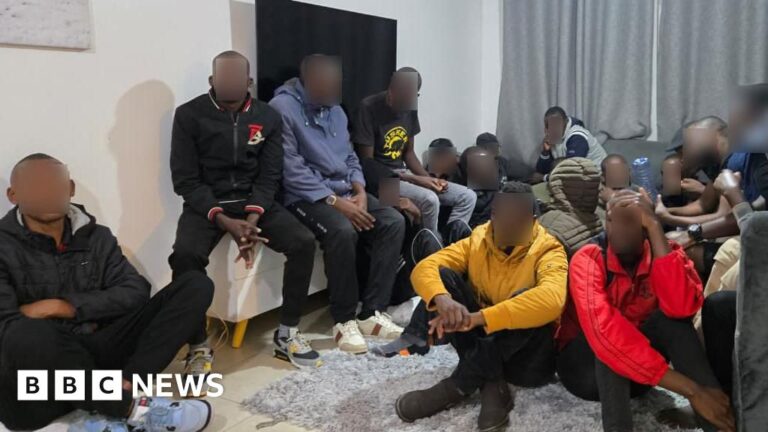
More than 20 people have been rescued in Kenya from a suspected human trafficking ring that lured them with job offers in Russia but intended to send them to fight in Ukraine, police said.

It follows an intelligence-led raid on a residential apartment on the outskirts of the capital, Nairobi, where officers seized recruitment materials, travel documents, and job offer letters.

One suspect, accused of coordinating the victims’ travel to Russia in September and October, has been arrested.

He was taken to court, which allowed him to be detained for 10 days while the police complete their investigations.

There have been growing concerns over the rising number of Kenyans being trafficked abroad under false job promises.

A young Kenyan athlete was recently captured in Ukraine, saying he was tricked into joining the Russian army.

Authorities said Wednesday’s arrest followed a coordinated multi-agency security operation targeting the criminal network, which has been extorting huge sums from desperate Kenyan job seekers.

A total of 22 Kenyans were found in an apartment in Athi River area, “awaiting processing to Russia”.

Police said the “mysterious trafficking syndicate” was luring Kenyans with job offers in Moscow, only to send them to fight for the Russian military in Ukraine.

Detectives said the victims revealed they had signed contracts with an unnamed overseas employment agency, committing to pay up to $18,000 (£13,000) for visas, travel, accommodation, and other logistics.

Some of the victims also indicated that they had already paid deposits of $1,500.

Once recruited, police said many return home injured, traumatised, or in some cases, never make it back.

Two Kenyans are reported to have recently returned, with one currently admitted to a city hospital.

A senior foreign ministry official recently said the Kenyan government was following up reports of several Kenyan nationals who had allegedly been trafficked to Russia and were now being held as prisoners of war in Ukraine.

Citizens of Somalia, Sierra Leone, Togo, Cuba and Sri Lanka , among others, are currently held in Ukrainian prisoner-of-war camps, Petro Yatsenko, Ukraine’s spokesperson on the treatment of prisoners of war, recently told the BBC.

However, speaking about other prisoners-of-war, he added that “most African states show little interest in the return of such citizens and do not wish to take them back”.

Challenging Client

0


Client Challenge


JavaScript is disabled in your browser.

Please enable JavaScript to proceed.

A required part of this site couldn’t load. This may be due to a browser
extension, network issues, or browser settings. Please check your
connection, disable any ad blockers, or try using a different browser.

2025 Asia Cup Final: India vs Pakistan – Everything You Need to Know

0

Who: India vs Pakistan
What: T20 Asia Cup 2025 final
When: Sunday, September 28 at 14:30 GMT
Where: Dubai International Cricket Stadium, Dubai, United Arab Emirates

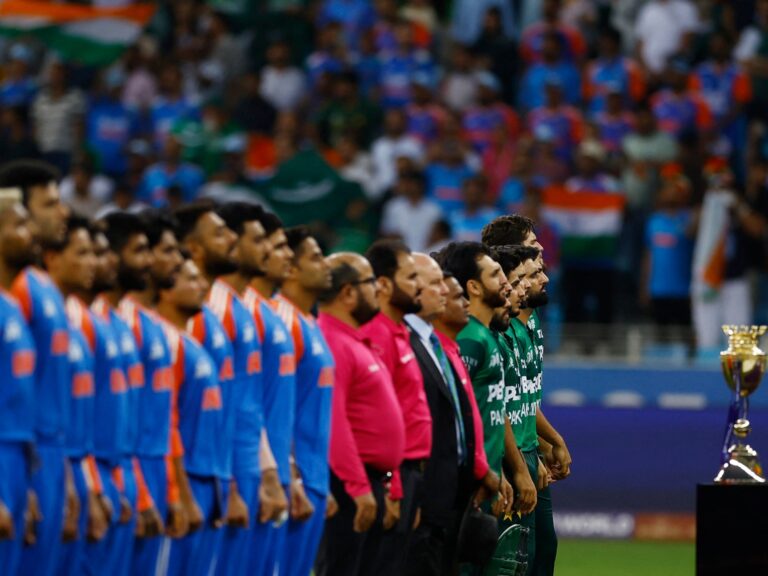
India and Pakistan will face off in a high-stakes Asia Cup final in Dubai on Sunday, with political and on-field friction overshadowing their first title clash in the regional tournament.

Recommended Stories

list of 4 itemsend of list

Pakistan secured their place in the decider after edging past Bangladesh by 11 runs on Thursday, setting the stage for a blockbuster meeting with their neighbours and archrivals India.

Defending champions India were the first team to book a place in the final following their win over Bangladesh on Wednesday.

Suryakumar Yadav’s team finished their Super Fours campaign in a thrilling Super Over win over Sri Lanka on Friday.

Here’s what you need to know about the Asia Cup 2025 final:

What has caused the recent tension between India and Pakistan?

The showdown comes months after an intense four-day conflict between the nuclear-armed neighbours, who have not played a bilateral series in more than a decade.

What happened in the last India vs Pakistan match?

Their most recent meetings in the group stage and Super Four round of this Asia Cup saw India win both matches, but their skipper Suryakumar Yadav refused to shake hands with counterpart Salman Agha.

Players from both sides also skipped post-match handshakes after both fixtures.

What is India’s form at the Asia Cup?

They have won all six of their matches in this 17th edition of the Asia Cup, played in the T20 format, and are chasing a record-extending ninth title.

Opener Abhishek Sharma has been in scintillating form with successive half-centuries, while left-arm wrist spinner Kuldeep Yadav leads the bowling charts with 12 wickets.

But their fielding has been suspect, with 12 dropped catches in the tournament so far.

Spinner Varun Chakravarthy blamed the “ring of fire” created by the stadium’s 350 floodlights for the butter-fingered display.

“We have to pick up our fielding, and definitely, the fielding coach has a lot to say,” Chakravarthy said.

India’s Hardik Pandya in action in the Super Fours meeting with Pakistan [Satish Kumar/Reuters]

What are Pakistan’s chances of beating India in the final?

Pakistan, two-time Asia Cup champions, will rely on their pace duo of Shaheen Shah Afridi and Rauf to provide early breakthroughs, while spinners Abrar Ahmed and Mohammad Nawaz will aim to contain India’s powerful batting lineup.

Their batting, however, remains a concern after collapsing to 49-5 against Bangladesh before recovering to post 135-8, which proved to be a winning total.

Suryakumar downplayed the on-field rivalry after hammering Pakistan for the second time in the tournament, but coach Mike Hesson believes his team can throw up a challenge to the number one-ranked T20 side.

How many times have India and Pakistan won the Asia Cup?

Pakistan have lifted the trophy on two occasions – in 2000 and 2012 – and qualified for the final five times.

India are seven-time Asia Cup champions, with 11 appearances in the final.

When was the last time Pakistan beat India?

Pakistan’s last Asia Cup win over India came in the 2022 edition of the Asia Cup in the UAE. Mohammad Rizwan top-scored with 71 runs in the Super Four clash, but it was Mohammad Nawaz’s 20-ball 41 that saw Pakistan home.

India vs Pakistan: Head-to-head in T20Is

Since the inaugural ICC T20 World Cup in 2007, the countries have met in 15 T20Is. India have won 12 times, including the first match in 2007, which was tied and then decided in a Super Over.

Two of Pakistan’s three wins came in Dubai.

Pakistan's Shaheen Shah Afridi in action against India
Pakistan’s Shaheen Shah Afridi in action against India in the Super Fours match [Satish Kumar/Reuters]

Players to watch: India

Abhishek Sharma: The fact that the young top-order batter has managed to carve a spot in a highly competitive T20 Indian batting lineup marks Sharma as one to watch in the Asia Cup. The 24-year-old boasts the highest career strike rate of 198 among all batters in T20s, and backs it up with two centuries and five half-centuries in the format – three of those coming in his last three innings, including the Super Fours win against Pakistan.

Players to watch: Pakistan

Shaheen Shah Afridi: The former Pakistan captain has returned to form for his country and was the star turn in the crucial victory against Bangladesh. Although going wicketless in the two games against India at the tournament, the 25-year-old left-arm quick has taken eight wickets in the other three games, including his Player of the Match performance against the Tigers following figures of 3-17.

Form guide: India

India are unbeaten in the Asia Cup and have not lost a T20 series since winning the World Cup in June 2024.

Last five results (most recent first): W-W-W-W-W

Form guide: Pakistan

Pakistan’s form in T20s has been mixed for some time but at this edition of the Asia Cup, their only defeats have come against India, with four wins recorded overall at the tournament.

Last five results (most recent first): W-W-L-W-L

Team news: India

The holders are expected to go back to the same team that beat Pakistan in both the group and Super Fours stages.

Predicted India line-up:

Abhishek Sharma, Shubman Gill, Suryakumar Yadav (captain), Sanju Samson (wicketkeeper), Tilak Varma, Hardik Pandya, Shivam Dube, Axar Patel, Jasprit Bumrah, Varun Chakravarthy, Kuldeep Yadav.

Team news: Pakistan

Pakistan are expected to field the same XI that beat Sri Lanka.

Pakistan predicted line-up:

Sahibzada Farhan, Fakhar Zaman, Saim Ayub, Salman Agha (captain), Hussain Talat, Mohammad Haris (wicketkeeper), Mohammad Nawaz, Faheem Ashraf, Shaheen Shah Afridi, Haris Rauf, Abrar Ahmed

How can I follow and stream the India vs Pakistan Asia Cup final?

Al Jazeera Sport will have live build-up ahead of our comprehensive photo and text commentary stream of the final from 09:30 GMT.

The match will be shown live on terrestrial and satellite channels, as well as live-streaming platforms across the world.

How can I buy tickets for the India vs Pakistan Asia Cup final?

While tickets for the general stands are sold out, some are still available in the hospitality sections of the stadium, starting at $991 and can be purchased at the tournament’s official ticketing website.

US government shutdown causes slight setback but further damages credibility

0


US shutdown a modest drag but fresh blow to credibility

Resumption of UN Sanctions Against Iran Due to Prohibited Nuclear Activity

0

Lyse DoucetChief international correspondent, New York and

Raffi Berg

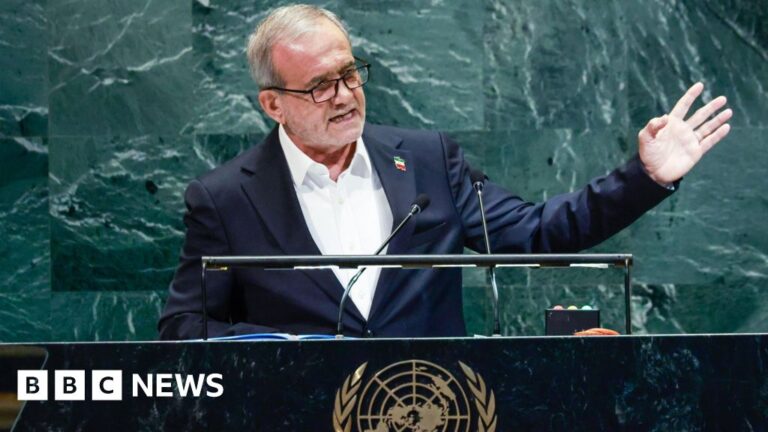
EPA Iranian President Masoud Pezeshkian spoke at the UN General AssemblyEPA

Iranian President Masoud Pezeshkian spoke at the UN General Assembly

The United Nations’ sweeping economic and military sanctions look set to be reimposed on Iran a decade after they were lifted in a landmark international deal over its nuclear programme.

It comes after the UK, France and Germany wrote to the UN Security Council last month, accusing Iran of failing to fulfil its commitments. That triggered a mechanism giving Iran 30 days to find a diplomatic solution to avert renewed sanctions.

Iran’s President Masoud Pezeshkian condemned the re-imposition of international sanctions as “unfair, unjust, and illegal”.

A last-minute resolution, led by China and Russia, to delay the move by six months only received four votes in the 15-member council.

The sanctions are set to come into force at 00:00 GMT on Sunday.

Iran stepped up banned nuclear activity after the US quit the deal in 2016. Donald Trump pulled the US out in his first term as US president, criticising the deal – the Joint Comprehensive Plan of Action (JCPOA) – negotiated under his predecessor Barack Obama as flawed.

Iran barred IAEA inspectors from accessing its nuclear facilities after Israel and the US bombed several of its nuclear sites, as well as military bases, in June after negotiations held indirectly between the US and Iran to try to reach a new nuclear deal became deadlocked.

President Pezeshkian told the UN this week that his country would never seek to build a nuclear bomb.

Speaking to a group of journalists, Pezeshkian accused foreign powers of seeking a superficial pretext to set the region ablaze, insisting that, despite previous threats, Iran would not quit the Non-Proliferation Treaty.

But he added that Tehran would need reassurances that its nuclear facilities would not be attacked by Israel in order to normalise its nuclear enrichment programme.

Pezeshkian kept pointing to the negotiations which had taken place before Israel and the US bombed Iran’s nuclear sites in June and accused the Americans of not taking the talks seriously. The sanctions add yet more strain to an already fraught situation.

The sanctions would include:

  • an arms embargo
  • a ban on uranium enrichment
  • a ban on activity connected to ballistic missiles capable of delivering nuclear weapons
  • a freeze of assets and a travel ban on Iranian figures and entities
  • authorisation of countries to inspect Iran Air and Iran Shipping Lines cargo
Reuters People walking through a market place in Tehran (file photo)Reuters

Sanctions crippled Iran’s economy before they were lifted under the 2015 deal

Unless a solution is found, UN sanctions would come into force first, followed by EU sanctions next week.

European foreign ministers had tried to avert the council’s step by urging Iran to resume negotiations with the US; to cooperate with the UN’s nuclear watchdog the IAEA, and to account for its highly enriched uranium stockpile.

Speaking at the UN on Friday, Iranian Foreign Minister Abbas Aragchi said: “The United States has betrayed diplomacy, but it is the E3 (Britain, Germany and France) which have buried it.”

“The negotiation with the United States is in fact a pure dead end,” Aragchi added.

Iran is legally obliged under the nuclear treaty to allow inspections.

It has been in talks this week with the IAEA to find a way forward, but has warned that a return of sanctions will put that in jeopardy.

On Friday, the IAEA confirmed that inspections of Iranian nuclear sites had resumed this week after a hiatius following Washington and Israel’s strikes.

Western powers and the IAEA say they are not convinced that Iran’s nuclear programme has purely peaceful purposes.

Iran strongly insists it is not seeking nuclear weapons, and that its programme is solely a civilian one.

Russia on Friday signed a $25bn deal with Iran to build four nuclear power reactors in southern Iran, Iranian state-run IRNA news agency reported.

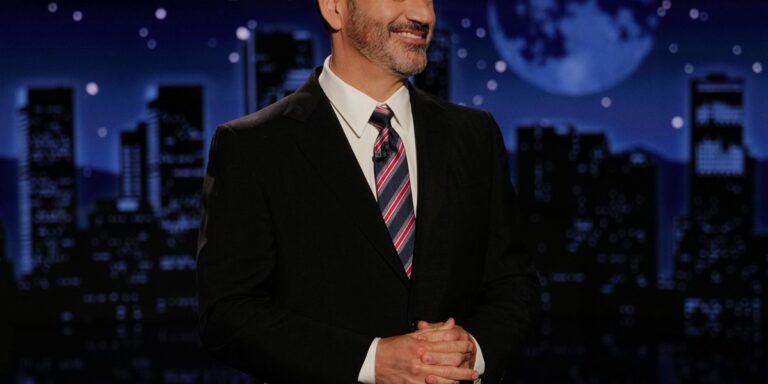
Nexstar and Sinclair are reviving Kimmel, but some viewers may have discovered other options during his absence.

0

Nexstar joined Sinclair on Friday in calling off its Jimmy Kimmel boycott just days after ABC returned the comedian to late-night television. 

Beginning Friday night, Jimmy Kimmel Live! will return to air on the ABC affiliates, which had preempted the show last week over remarks he made about Charlie Kirk’s assassination. 

“As a local broadcaster, Nexstar remains committed to protecting the First Amendment while producing and airing local and national news that is fact-based and unbiased and, above all, broadcasting content that is in the best interest of the communities we serve,” a Nexstar statement said.  “We stand apart from cable television, monolithic streaming services, and national networks in our commitment–and obligation–to be stewards of the public airwaves.”

Similarly, Sinclair issued a statement earlier on Friday reversing its decision to keep the comedian off its airwaves.

It cited “feedback from viewers, advertisers, and community leaders representing a wide range of perspectives.”

Sinclair had previously vowed not to put Kimmel back on air unless meetings were held with ABC to discuss the network’s “commitmentment to professionalism and accountability.”

Those discussions are still ongoing, though ABC and Disney have not yet accepted any measures proposed by Sinclair, which included a network-wide independent ombudsman, per the company’s Friday release.

The stand-down comes days after Kimmel’s first episode back on air had the highest ratings for a regularly scheduled episode in over a decade. His monologue at the top of the show ranged from the First Amendment and the Trump administration to Erica Kirk’s speech at her late husband’s memorial, garnering over 21 million views on YouTube in just a couple days—the most for a monologue in his show’s history.

Kimmel’s comeback on Tuesday drew 6.3 million TV viewers, about four times the show’s average, despite nearly a quarter of ABC’s national reach blacking out his return episode. Sixty-six local stations owned by the ABC affiliates did not broadcast Jimmy Kimmel Live!, but this cost them a natural influx of viewership, and possibly some of their market, according to media experts.

“Blackouts like this often highlight the strength of digital platforms,” Natalie Andreas, a communications professor at the University of Texas, told Fortune

Instead of limiting reach, blackouts push viewers toward spaces like YouTube where content spreads faster, lingers longer, and attracts new audiences who may not have tuned in live, she said.

Susan Keith, a professor in the Rutgers School of Communication and Information, told Fortune the blackouts can push viewers to seek—and easily find—Kimmel on their digital cable packages or YouTube if local stations didn’t air the show.

“There’s this idea of public interest, necessity and convenience that over-the-air broadcast media were supposed to fulfill,” she said. “So if we all move to streaming services for content because (of) incidents like this one,” it trains viewers to seek media this way.

Earlier this year, streaming overtook cable and broadcast as America’s most-watched form of TV, according to Nielsen data

The FCC does not license TV or radio networks such as CBS, NBC, ABC or Fox, but rather individual stations that may air programming from these networks. But the shift to streaming has raised questions about what its continued role might be as viewers lean away from individual broadcast stations. 

“I think this is an open question,” Keith said. “I think we don’t really know what to think about the ultimate usefulness of the FCC.”

Fortune Global Forum returns Oct. 26–27, 2025 in Riyadh. CEOs and global leaders will gather for a dynamic, invitation-only event shaping the future of business. Apply for an invitation.

What is the significance of Nicolas Sarkozy’s conviction?

0

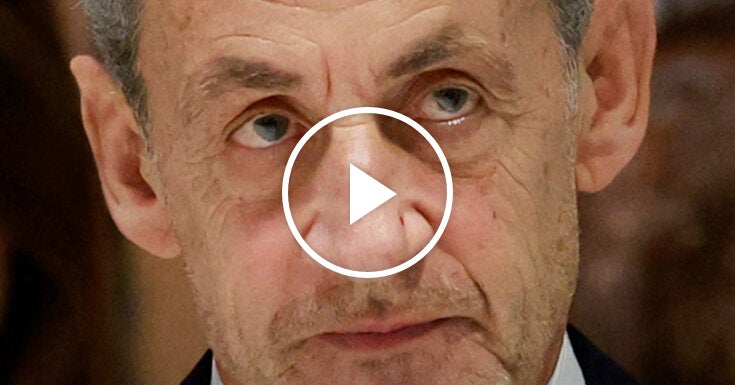
new video loaded: What Does Nicolas Sarkozy’s Conviction Mean?

Nicolas Sarkozy, president of France from 2007 to 2012, was found guilty on Thursday of plotting to finance his 2007 election bid with help from the government of Col. Muammar el-Qaddafi. Aurelien Breeden, a reporter for The New York Times covering France, explains what led to his conviction.

By Aurelien Breeden, Rebecca Suner and Laura Salaberry

September 26, 2025