

0.8 C
New York
Saturday, February 28, 2026
Home Blog Page 359

Training Managers on How to Work with Gen Z: The Chief People Officer of a $1.5 Billion AI Startup Leads the Way

0

Meet Rebecca Adams, the Chief People Officer at Cohesity, a data protection startup with $1.5 billion-plus in revenue and, she notes, close to 6,000 employees. The key to driving further growth, she’s decided, is training her managers in how to work with—even talk to—Gen Z. Speaking of her own and her managers’ interactions with younger colleagues, and even some of her conversations with her children, ages 18 and 20, “it gives me some empathy,” she says. “It also is mindboggling” to see how differently young people approach work.

This new generation of workers is different in that they don’t accept a manager’s directions at face value, she says. “They want to know why, how, they want constant feedback.” Adams said Cohesity has had to teach the managers how to lead this generation of workers, while also teaching some seemingly “basic things” to younger workers, like “how do I manage my calendar? You actually have to accept the meeting request. You can’t just walk out of the meeting that you’re in because you have another one while it’s still going on.”

Boundaries and oversharing

Adams related an anecdote of a lunch program where a senior leader takes an intern out, and an instance where a manager was kept waiting by a successful intern who had just signed on to convert to full-time. The intern explained, “Sorry, I’m late, I just had to walk, I was just in a meeting.” The manager was horrified to learn that their lunch date had interrupted a business meeting, but the intern said they had “a lot going on” so it was fine for them to leave the meeting early for lunch.

She said on one hand, she thought it was “adorable” that the intern didn’t realize that a meeting would rank ahead of a previously agreed-upon lunch date. But on the other hand, there’s a clear need for some training on both sides here. Managers have to very explicitly explain the terms of each invite to their colleagues, in other words.

“When I was in my 20s and when I was out of school,” Adams says, “I learned so much from sitting in the cube next to my manager and hearing her and experiencing people dropping by my office.” She described a “struggle,” more on senior leaders’ part than her Gen Z interns, one part from the “mind shift” that comes with really understanding Gen Z, but “it’s also a shift trying to get [older] people back into the office. The Z’s want to come into the office, hybrid … they have no problem with it,” but that’s not the case with the rest of her workforce, which might find return-to-office more disruptive to family commitments. “I find the other workers are resisting coming back to the office because they had the taste of working from home and they … just want to keep it that way.”

She added that older workers also seem to have a hard time communicating with Gen Z, particularly when using different tools all day long. “Videos, slacks, everything being text, quick, quick, quick. The later-in-career employees want emails, spreadsheets.” This is a struggle for Gen Z, who has what she calls a “don’t-want-to-talk-on-the-phone disease.”

Hard learnings

Adams’ home life became a sounding board for the fast-changing workplace. She brought up the example of her older son and the subject of internships. His attitude equates to “I really need to love the job and I need to love the company.” Her first response was bafflement: “What do you mean? I was a waitress for many years.”

But she came to see this in her workforce, too, and an admirable transparency compared to previous workplace norms. “they have no problem saying, ‘Yeah, I can’t do that. I walk my dog at that time or I have a nail appointment.’ Like, they share everything, which I admire.” Adams said this oversharing tendency “fascinates me” and added that when she was pregnant in her 20s, she wouldn’t even disclose when she had doctor’s appointments, and would come back to work as if nothing happened. She said it used to be normal to “omit” information in the workplace, in the days before “bring your whole self to work,” but her younger colleagues are “very transparent with all of their thoughts and activities.”

Adams found that to work with Gen Z, she had to shift away from the “because I told you so” mentality common with the bosses of old. Instead, she taught leaders to explain the “why” behind workplace decisions and foster a sense of shared mission. Adams is far from the only workforce expert to see these patterns in Gen Z and their often-befuddled older coworkers: they ask “why” a lot and they don’t like being told to do things without good explanations.

Marlo Loria, Director of Career and Technical Education and Innovative Partnerships at Mesa Public Schools in Arizona, previously told Fortune that her school district is full of inquisitive Gen Zers who are questioning traditional ways of doing things. “Our youth want to know why. Why do I need to go to college? Why do I want to get in debt? Why do I want to do these things?” Loria specifically said that “because I told you so” as an explanation isn’t cutting it anymore.

And Derek Thomas, national partner-in-charge of university talent acquisition at KPMG U.S., previously told Fortune that he also hears the “why” question a lot. He said he’s seen an attitude among Gen Zers like, “Okay, you’re telling me it’s going to be good for me, but is it really?” The more that leaders can demonstrate why something is worth doing, in his experience, the more Gen Z will follow through.

Fundamentals matter

Coming at this issue from another perspective, HR leader Jeri Doris insists that “stereotypes are hard” for her: she actively rejects applying generalizations to different generations at work. As Chief People Officer at Justworks, which manages HR for over 14,000 small and medium-sized businesses, Doris emphasizes fundamentals to managers. She told Fortune that she believes viral catchphrases like “quiet quitting” or “job hugging” are just confusing buzzwords that get in the way of real management.

courtesy of Justworks

A cornerstone of Doris’ approach is to “not make assumptions—ask.” She stressed the value of data in the forms of engagement surveys and analytics. Most importantly, she said, simply talking to employees, both as groups and individuals, is invaluable for good management. Nevertheless, Doris acknowledges that her own use of data reflects a significant shift toward mission- and impact-driven work, especially among Gen Z employees. From her own survey data at Justworks—where she notes that pride and mission orientation score in the 85th percentile—she sees younger workers in particular wanting to understand the “why” behind their tasks. “It’s just table stakes now,” Doris said, urging managers to always link daily work to overall strategy and organizational purpose.

Referring to herself as something of a throwback, Doris explains that she’s a product of the “old-school” General Electric HR rotational program, which dates back to the 1940s and the dawn of modern management theory. (Much of this dates back to one man, the “original management guru” Peter Drucker, who consulted with GE, IBM and other blue-chip Fortune 500 firms as he pioneered a shift away from top-down corporate structure and into a modern structure, with midlevel management and delegation of responsibilities.)

Doris noted that that she went to both GE’s famous Crotonville campus in the Hudson Valley of Upstate New York as well as Deloitte University, and later worked at Groupon when it was one of the fastest-growing companies of all time, onboarding 100 people a day. Modern management, Doris asserts, especially in the startup space, has a lot of leaders who “haven’t had time to invest in themselves.” (Midlevel managers in their late 30s and early 40s recently told Fortune that they had received minimal training, with mentorship few and far between.)

Adding that “new manager leadership training is absolutely paramount,” Doris says that she feels there’s a need for leaders to create more “space” for themselves. She said she thinks that new managers often aren’t reflective enough. They don’t ask themselves, “How did I show up today? What do I want to show up as?” As Doris continued talking, she sounded like she was describing a lot of the Cohesity managers in Adams’ Gen Z training.

Tremendous pressure

Adams did sound a note of concern, something that she says is both “scary and fascinating” to her: the amount of pressure she sees her Gen Z colleagues piling on themselves. They are intensely focused on the future, she said, laying out a litany of concerns that recalls Jonathan Haidt’s thesis on Gen Z as the smartphone-raised “anxious generation.” (Adams did not specifically cite Haidt’s book, but Fortune has previously reported on the role of workplace dynamics in rising young worker “despair.”)

The Cohesity executive said she sees tremendous self-imposted pressure to accomplish many things as soon as possible, with the attitude being “because I might not want to do this later, by age 30.” She described it as, “I want to have everything locked in so that I can then decide if I want to get married, if I want to have kids, so I want to career-climb as much as possible before that, but I also want to travel and have lots of work-life balance.” She said she was frustrated recently when a very successful intern turned down a full-time offer to travel for a year instead. (Adams later clarified that she does not watch TikTok and had no awareness of the viral fall trend of “the great lock-in,” so any resemblance in her remarks was coincidental.)

Adams said she sees so much anxiety in Gen Z: What will AI do to their jobs? Will they even have a job? Will they be replaced? “It’s like a lot of pressure that they’re putting on themselves.” They’re different from millennials, though, she added, summing up their attitude like, “OK, you gave me a job. When am I going to get promoted?” Gen Z is “willing to work hard,” she concludes, just “at their own pace.”

When asked about this program’s success, Adams cites internal data showing decreased attrition and a “weekly pulse check” with high engagement and improving scores. Cohesity is planning to keep growing and is actually doubling its number of interns in the upcoming season, she added. This is a real commitment, since Cohesity commits to hiring on any intern who proves themselves a good performer. “We really do want to teach them, set them up for success and have them be a future employee.

Adams issues a call to corporate America, saying that 30% of all workers will be Gen Z by 2030, so “they are the future of our workplace and the organization.” She said “we have to be open and patient and not just expect them to be like us … They think different. I learn from them because the way they go about things is just different, and they have a fresh approach. So we can’t get stuck.”


Greta Thunberg refutes allegations that Gaza flotilla is a publicity stunt

0

Greta Thunberg has pushed back on criticism that a Gaza-bound flotilla she is a part of is a publicity stunt, saying no one would imperil themselves purely for attention.

The Swedish activist is aboard one of 52 boats that form the Global Sumud Flotilla (GSF), which is travelling toward Gaza with the aim of delivering humanitarian aid to Palestinians there.

Israeli authorities have ridiculed the GSF flotilla and similar seaborne attempts to reach the territory, calling the boat Thunberg travelled on in June a “selfie yacht”.

Asked about these criticisms of the flotilla by the BBC’s Laura Kuenssberg, the activist said: “I don’t think anyone would risk their life for a publicity stunt.”

Speaking while sailing off the Greek coast, she said the flotilla was not just a humanitarian mission but was also sending a message to people in Gaza that “when our governments fail to step up, the people will step up”.

International aid agencies have been attempting to get food and medicine into the Palestinian territory – but note Israel is restricting the flow of supplies. Israel claims it is attempting to stop those supplies falling into the hands of Hamas, and has approved a US-backed aid agency.

Last month, a UN-backed body confirmed that there was famine in Gaza and the UN’s humanitarian chief said it was the direct result of Israel’s “systematic obstruction” of aid entering the territory. Israeli Prime Minister Benjamin Netanyahu has called this an “outright lie”.

Thunberg said the purpose of the flotilla was to “break Israel’s illegal and inhumane siege on Gaza by sea”. The Israeli military has long controlled the waters that border Gaza.

Earlier this month, the flotilla came under attack by drones which dropped unidentified objects onto boats outside the Tunisian port of Sidi Bou Said.

Another suspected drone attack on Wednesday, off the coast of Crete, led Spain and Italy to deploy naval ships to assist the flotilla.

Addressing the incidents, Thunberg accused Israeli officials of making “baseless threats” that violate international law, and asked: “Why would they attack a peaceful humanitarian mission aiming to bring humanitarian aid to a starving population?”

Israel has not commented on the drone attack, but has previously said it would not let the flotilla reach its destination.

Thunberg and 11 other activists were detained by Israeli authorities in June after they intercepted another boat heading for Gaza with a token amount of aid in the Mediterranean.

She was held in Tel Aviv for a day before being deported to France.

Thunberg accused Israel of illegally kidnapping her and the other activists while they were in international waters. Israel said it had prevented a breach of the maritime blockade around Gaza.

AI is reshaping the balance of power in the music industry – but who will oversee future licensing agreements?

0

MBW Views is a series of exclusive op/eds from eminent music industry people… with something to say. The following op/ed comes from Ran Geffen Levy the Founder of OG.studio, a platform that claims to be “bridging music industry evolution, technological innovation, and capital investment”. He is also the CEO of Amusica Song Management.


In my last op-ed, I outlined the vision for Songwriting 2.0 – a world where creators embrace Vibe Songwriting, form strategic clusters, and truly own their complete creative output. But vision without infrastructure remains wishful thinking.

In August 2021, MBW published my first op-ed – “How Future Proof is the Current Evaluation of Music Copyrights?” I wrote about personality rights (Name, Image, and Likeness – NIL) becoming the key battleground and that AI-based music creation tools would democratise creativity through Fan-Generated Music. I envisioned an evolution, and it came to pass. Only it has not been an evolution, it has been nothing short of a revolution.

Every day we delay building creator-friendly infrastructure, other stack holders gain more control over the future of music Udio and Suno have already evolved from simple music generators into sophisticated DAWs – and they’re just getting started. What I am presenting here is an outline of what we must build, and an action plan for both artist managers and collective management organizations to reclaim that power.


Artist Management 2.0

The priority for artist managers right now is to address rights that have so far never been defined or transferred. The transformation of college athletics offers the perfect blueprint: For decades, universities generated billions while athletes received scholarships and exposure. Everyone agreed this was just how it worked. Then Name, Image, and Likeness rights changed everything overnight.

Today, college athletes control their personal brand and license their likeness. Universities still benefit, but they no longer own what they never actually purchased. The ecosystem didn’t collapse – it evolved.

Music faces even greater opportunities.


Three critical moves for artist managers
  • Build a Portfolio of Unassigned Rights

Audit every client contract. Identify rights never transferred to third parties: voice rights, AI training rights, synthetic persona licensing, cross-format development – some never existed when deals were signed.

Simple question: an agency licenses a public domain recording for a commercial without paying the label. Does this require a separate licence from the singer’s manager or estate for using their unique vocal signature?

Complicated answer: Laws vary by country, but in many jurisdictions, publicity and moral rights absolutely exist. There’s money on the table. Lots of it.

  • Map Territory-Specific Opportunities

These rights play differently across territories. Worthless in Australia, gold in France. Future-proof management requires jurisdiction arbitrage – identifying where clients’ unassigned rights portfolios have value and building territory-sensitive monetisation mechanisms.

This is where cluster creation becomes practical. Look across your roster for natural collaborations, complementary skills, shared audiences – but also for unfulfilled dreams and hidden aspirations. The goal isn’t managing individual careers – it’s orchestrating creative ecosystems where artists can become who they’ve always wanted to be without having the full skill or natural ability.

These opportunities often appear as “invisible ships” – like the legend of native peoples who could not see European vessels approaching their shores because they had no concept for them. So foreign to our experience that we literally can’t see them, even when they’re right in front of us.


Learning to see invisible ships

Recently, I met with the owner of a management company with an impressive roster: actors, screenwriters, songwriters, influencers and more. I tried to explain cluster creation and gave him a few examples.

“What’s the difference from what I do now?” he asked. “I already connect my clients when it makes sense.” I paused, searching for the right words, but couldn’t find them. What I should have said was: “Yes, but not all of them have to be human.”

We were looking at the same ocean but seeing different horizons. He was thinking traditional collaborations – screenwriter writes script, songwriter contributes theme song, actor stars in it. Clean, separate, familiar.

But AI creates invisible ships between these roles. His songwriter, who writes beautiful melodies but has stage fright, can now perform through an AI avatar – finally living his dream of being centre stage while maintaining creative control. Each client has the potential to become a Renaissance creator.

The invisible ships aren’t just bigger opportunities – they’re entirely new categories of creative collaboration. But seeing them demands finding each client’s Archimedes point – that leverage point from which you can move them into territories they never imagined.

We’re all learning to navigate this together. The challenge isn’t intelligence – it’s that we’re using old maps for new territory.


Collective Management 2.0

At 80, Björn Ulvaeus is writing a new musical “assisted by AI”. He has described the technology as “such a great tool” and “like having another songwriter in the room with a huge reference frame.” He is at the helm of one of these invisible ships – the same visionary who created ABBA Voyage, partnered with YouTube and Universal’s innovation labs, and continues to pioneer uncharted creative waters.

But as president of CISAC, an organisation that just predicted creators will lose 24% of their income to AI by 2028, Ulvaeus carries both immense responsibility and a voice that commands attention.

He can ask the uncomfortable question: will the millions of songwriters whose work built that “huge reference frame” finally secure an equal share of AI’s economic windfall – or will they, as so often before, be left collectively behind?

Which brings us to the collective challenges facing every CMO and PRO worldwide…


A collective Kodak moment

Collective management organizations are reporting unprecedented results – record payouts, rising memberships, expanding territories… By every traditional metric, the system looks stronger than ever. But this picture-perfect moment risks becoming music’s Kodak moment. In 1999, Kodak celebrated record revenues and global dominance. Within a decade it had collapsed because it treated digital as an add-on instead of the core. What happened to Kodak in 10 years could happen to CMOs in five.

While CMOs collect royalties, fight for scraps from digital revenues and talk about the risks around AI, master owners are already building the infrastructure for music’s next chapter: filing AI patents, launching innovation labs, monetising superfans, and striking deals with AI companies. Meanwhile, the value gap – that persistent drain on songwriter income – has returned like a broken record.

Which raises the real question: what must CMOs do now to avoid becoming the next Kodak?


5 strategic imperatives for CMOs

Help Björn Ulvaeus turn his AI-assisted musical into the tipping point where songwriters secure both their fair share of AI-driven revenues and compensation for training on their works. Talking to legislators is important, but not enough. We must follow GEMA’s proactive lead: take legal action against infringing platforms and stop anyone who grants access to train recordings without songwriters’ consent.

Revenues are set to contract. CMOs must use AI to cut costs and improve services: AI tools can answer member queries instantly, process licences, and manage workflows. Trusted technologies already exist – use them to protect margins while the pie gets smaller. Take it further: make AI the operational backbone, not a side project.

We cannot cling to centralised systems that cannot handle the tidal wave of data and micro-rights AI brings. Every delay shifts power to platforms thriving on fragmentation. The answer is tokenisation – making new and derivative rights transparent, enforceable, and tradeable. What was once dismissed as “too complicated” is now straightforward with AI. If we fail to decentralise together, others will build the system without us – locking songwriters out of the future economy.

What once seemed impossible is now survival. With CMOs turning private and GEMA acquiring a digital distribution company, collecting royalties alone is not enough. CMOs must evolve from administrators into platform builders, creating licensing tools that connect songwriters directly with brands, fans, and new ecosystems. If we leave this to tech companies, they will control not just the data but the relationships – and once lost, no amount of collection power will bring them back.

The next wave won’t come from traditional models but from vibe songwriters and cluster creators. Their value lies not in data payments but in derivatives – rights tied to physical products, experiences, and cross-format creations. If we don’t open the gates to them, someone else will – and they’ll control tomorrow’s licensing. The question is: who?


Who will control the licensing of tomorrow?

The truth is, no one knows. Since publishing this piece on the value gap, I’ve spoken with players across the industry – and with those who could soon become ones. A likely scenario: the very platforms now selling cheap subscriptions for content creation will change their terms, demand a cut of derivative revenues, and build their own monetisation systems.

The money is there. The question is whether it will preserve the past or build the future. From SESAC’s new capital to Merck Mercuriadis’ evolving management venture – the stakes are enormous.

And from my own conversations, the boldest appetite to build new systems that could support cluster creation isn’t coming from the usual suspects. It’s emerging from Saudi Arabia, India and the Emirates – warming up on the sidelines. Not the usual power brokers.


Who has the power?

In 1935, Walter Benjamin wrote “The Work of Art in the Age of Mechanical Reproduction” – the cornerstone of art philosophy for 90 years. He understood that when technology changes how art is made, it reshapes who controls it. When art loses its “aura”, its unique presence,  that power redistributes.

AI redistributes it among far more human beings, where it will grow within them, with varying intensity.. The secret of this “aura” has always resided in the divine spark that exists within each of us.

Benjamin opened his essay with a prescient warning from Paul Valéry, written in 1928 in “De la musique avant toute chose” (Music Before Everything Else):

“Our fine arts were developed, their types and uses were established, in times very different from the present, by men whose power of action upon things was insignificant in comparison with ours. But the amazing growth of our techniques, the adaptability and precision they have attained, the ideas and habits they are creating, make it a certainty that profound changes are impending in the ancient craft of the Beautiful.”

Who has the power? Humans do – with the choice to exploit or to empower. The hope, and the responsibility, is that the latter will prevail.

Human-to-Human (H2H) ecosystems will emerge. What will they look like, and how will they reshape licensing? That’s for next time.Music Business Worldwide

Israel, Iran, and the Tragic Family Caught in the Middle

0

new video loaded: Israel, Iran — and the Family Killed in the Crossfire

transcript

transcript

Israel, Iran — and the Family Killed in the Crossfire

In June, Israel attacked Iran’s nuclear facilities, defense systems and top military officials. Iran’s retaliation included ballistic missiles that struck major cities in Israel, killing 31 people. Among the more than 1,000 victims in Iran was a family of four, killed in the crossfire. Their relatives are full of grief — and anger.

On the 13th of June, Israel attacked Iran. Drones and missiles hit civilian and military sites as well as targets associated with the country’s nuclear program, which Israel has long seen as an existential threat. Iran retaliated, attacking civilian areas in Israel. In Tehran, this residential neighborhood, home to one of Iran’s top nuclear scientists, was among the locations hit. A floor below him lived the Abbasi family. Hasan Shaygan was their building manager. Parviz and Masoumeh Abbasi lived with their son, 16-year-old Parham, and their daughter, 24-year-old Parnia. They moved into the apartment last year and filmed this moment of celebration. Azadeh Shariarifar is Masoumeh’s sister and aunt to Parham and Parnia. She’s an artist and photographer. Her first exhibition dealt with the theme of life and death, and it was due to open on the day of the bombing. Parnia made this compilation of her and her boyfriend, Sajad. They had been together for five years and were planning a future together. The family was buried in the city’s main cemetery, in an area dedicated to victims of the 12-day war with Israel. Azadeh had only visited a few times. She says the place attracts both grief and politics, becoming too loud and crowded to mourn peacefully. While Azadeh is critical of Israel, she also expected more from her own country.

In June, Israel attacked Iran’s nuclear facilities, defense systems and top military officials. Iran’s retaliation included ballistic missiles that struck major cities in Israel, killing 31 people. Among the more than 1,000 victims in Iran was a family of four, killed in the crossfire. Their relatives are full of grief — and anger.

By Gelareh Kiazand, Monika Cvorak and Jon Hazell

September 28, 2025

Client’s Challenge

0


Client Challenge


JavaScript is disabled in your browser.

Please enable JavaScript to proceed.

A required part of this site couldn’t load. This may be due to a browser
extension, network issues, or browser settings. Please check your
connection, disable any ad blockers, or try using a different browser.

Iranians are concerned about increased economic hardship and the possibility of war as UN sanctions are reinstated | Israel-Iran conflict News

0

Tehran, Iran – After about a decade, Iran is once more subject to United Nations sanctions as the West piles pressure on Tehran, despite opposition from Russia and China.

The sanctions were automatically reinstated at midnight GMT on Sunday after the European signatories of Iran’s 2015 nuclear deal invoked the “snapback” mechanism of the landmark accord to reactivate them.

Recommended Stories

list of 3 itemsend of list

They include an arms embargo, asset freezes and travel bans, and nuclear, missile and banking sanctions that are expected to impact all sectors of the beleaguered Iranian economy, as most of over 90 million people pay the price over the coming months.

The sanctions are binding for all member states, to be enforced using nonmilitary measures.

Iran’s turbulent regional situation has some fearing more military strikes by Israel and the United States, who perpetrated 12 days of attacks on the country in June that killed more than 1,000 people and caused billions of dollars in damage.

Iranians are concerned that Israel would use them as an excuse to attack again, as it used the resolution issued by the global nuclear watchdog in June as a pretext for a war that was cheered by Israeli officials and the public alike.

Nervous markets, worried people

On Sunday, market reactions showed economic anxiety over Iran’s increasing isolation due to the sanctions.

The Iranian rial traded at more than 1.3 million per US dollar in Tehran’s open currency market on the second day of the working week, but activity was limited amid fluctuations.

This marked an all-time low for the rial, which has dropped from 1.06 million per dollar when European powers triggered the snapback process a month ago.

“Things are not looking stable at all,” said Rouzbeh, a 35-year-old who works at the Grand Bazaar of Tehran, selling electric motors imported from China and other countries.

“Just like with the past few years, when the dollar has been going up, imported goods will get more expensive and scarce,” he told Al Jazeera.

“Some people here close off all sales for a few days until there’s some price stability. Others take advantage of the situation and hike prices. When prices go up, sales go down because people’s purchasing power is not going up.”

Hardliners in Tehran seemed happy with the renewed UN sanctions, likely because it means the demise of a nuclear accord that they vehemently opposed for a decade as allegedly amounting to “pure loss”.

Saeed Jalili, ultraconservative member of Iran’s Supreme National Security Council and longtime failed presidential candidate, posted online a video of a speech made last week to condemn the nuclear deal and engagement with the West.

“Today we must neutralise the enemy’s excessive demands and prevent his further threats,” he said, without elaborating how.

Iranian newspapers reflected people’s concerns, with reformist Shargh daily mourning the “death” of the nuclear deal and Donya-e-Eqtesad, the country’s largest economic daily, pointing out that inflation is at its highest point in 28 months at more than 40 percent.

Kayhan, whose editor-in-chief is appointed by Supreme Leader Ayatollah Ali Khamenei, tried to downplay the situation, claiming that “economic growth was positive without negotiations, negative with negotiations”.

Khamenei last week ruled out any talks with the US.

Who abused the snapback mechanism?

The snapback process was part of the nuclear deal, known as the Joint Comprehensive Plan of Action (JCPOA), set up to punish Iran if it reneged on strict limits set to ensure the peacefulness of its nuclear programme in exchange for the lifting of sanctions.

Iran, China and Russia argue that the West has abused the mechanism – set to expire on October 18 – since it was US President Donald Trump who withdrew from JCPOA in 2018 and imposed unilateral sanctions while Iran remained committed.

Tehran started gradually abandoning the curbs only a year after that, but maintains that it will never seek a bomb.

After numerous tit-for-tat measures over the years, Iran’s enrichment of uranium was up to 60 percent – but it had not attempted to build a bomb – as claimed by Israel and the US in their pretext for the attack.

The fate of its high-enriched uranium and the exact damage to its underground nuclear facilities remain unclear since the International Atomic Energy Agency (IAEA) was denied access to most sites after the war.

Trying to avert the crisis

Perceiving Iran to be at its weakest in decades and fuming over its alleged supply of explosive drones to Russia for the Ukraine war, the US and its three European allies – France, Germany and the United Kingdom, also known as the E3 – have applied pressure while rejecting Iranian proposals for an interim understanding.

Repeated calls and a last-ditch UN Security Council vote put forward by China and Russia on Friday to defer snapback were rejected as well.

While Israel was attacking Iran in June, German Chancellor Friedrich Merz went as far as saying Israel was “doing the dirty work” for the West by attacking Iran.

Araghchi, whom the West accused at one point of not being an authoritative representative of Iran, said on Sunday that the West “buried” diplomacy and chose bullying.

“Terminated sanctions cannot be revived,” he insisted on X, adding that Iran considers the UNSC resolution underpinning the nuclear deal as expiring in October, as previously planned.

China and Russia appeared to be on the same page, the three countries stressing last month that the move lacked a legal basis.

Moscow delivered strong rhetoric on Friday, telling the UNSC meeting in New York that any attempts to resuscitate the sanctions are “null and void”, even threatening that it will “seriously reconsider our relations” with the UN Secretariat.

On Thursday, Russia and Iran signed a memorandum of understanding worth $25bn to build several nuclear power reactors in Iran.

China has remained the largest buyer of Iranian oil over the years despite US sanctions, enjoying hefty discounts from an isolated Iran.

It remains to be seen whether the two world powers, or any other of Iran’s limited allies, will risk exposing themselves to secondary UN sanctions by significantly dealing with Iran.

‘US policy, delegated to Israel’

Ali Akbar Dareini, a researcher for the Tehran-based Center for Strategic Studies, said the Europeans and the US “showed utmost animosity” and “slaughtered” the nuclear Non-Proliferation Treaty (NPT).

“The US has delegated its Iran policy to Israel since Trump has taken office,” he told Al Jazeera.

“The US in the past refused to be drawn into a war with Iran, but Christian evangelists and Zionists, including the US ambassador to Israel, have been instrumental in convincing Trump to join the Israeli war of aggression against Iran,” Akbar Dareini said.

He said Iran will be working to circumvent sanctions as it has for years, but also has other options, like putting an end to IAEA monitoring of Iran’s nuclear facilities, leaving the NPT, or stopping implementation of all NPT commitments without formally withdrawing.

“America’s top priority is to focus on and contain China. Before doing that, the US needs to bring the Middle East into a new regional order with Israel at the top. The big obstacle is Iran, so they are trying to weaken and destabilise Iran to achieve their goal.”

Goldman Sachs downgrades Zhejiang HangKe stock to “Sell” due to competitive worries

0


Goldman Sachs downgrades Zhejiang HangKe stock to Sell on competitive concerns

Golden Goggle Award for Relay of the Year Goes to US Women’s 4×100 Medley Relay

0

By Anya Pelshaw on SwimSwam

2025 Golden Goggle Awards

The US women’s 4×100 medley relay earned the 2025 Golden Goggle Award for relay of the year. The relay set a World Record at the 2025 World Championships.

The only other nominee was the mixed 4×100 free relay that also swam to a World Record. The women’s 4×100 medley relay also won the award a year ago, although that relay had a slightly different composition.

The US women’s 4×100 medley relay consisted of Katharine Berkoff, Lilly King, Claire Curzan, and Simone Manuel in prelims as they posted the top time to set the finals relay up for a swim out of lane 4. The finals relay of Regan Smith, Kate Douglass, Gretchen Walsh, and Torri Huske made a statement on the final day of competition in Singapore, posting a new World Record with a 3:49.34 in their win. The relay won by over three seconds as Australia was 2nd in a 3:52.67.

The previous World Record was a 3:49.63 that Smith, King, Walsh, and Huske swam at the 2024 Paris Olympics for gold. The group also broke the previous Championship Record set back in 2019 by the US in a 3:50.40. Smith was the only member of that relay from 2019 to also swim on the finals relay this year in Singapore while King and Manuel were on the relay in 2019 and swam in prelims this year.

Read the full story on SwimSwam: US Women’s 4×100 Medley Relay Wins Golden Goggle Award For Relay Of The Year

Despite breaking sleep guidelines, teenagers still manage to get quality rest.

0

You can forget the “no screens, no exercise, no snacks” bedtime rules that are designed to provide teens with good sleep. New research shows that almost all teens break them – and they still sleep just fine.

Sleep hygiene refers to a set of habits, behaviors and environmental factors that promote and maintain good sleep. For teens, the so-called “cardinal rules” of sleep hygiene are: no screens, physical activity, or food in the hour before bed.

A new study by New Zealand’s University of Otago explored whether older children and teens typically adhered to these pre-sleep recommendations and, if they did or not, how that affected their sleep time and quality.

“Sleep is incredibly important for teenagers to enable them to develop and function at their best, but so few studies have looked at pre-bed behavior and how it can impact rest using objective measures such as cameras,” said Chao Gu, the study’s lead author and a PhD candidate in the university’s Department of Medicine.

The reason behind these sleep “rules” is that screen use can disrupt melatonin and circadian rhythms, exercise may keep the body too alert, and eating – especially caffeine or sugary food – might interfere with sleep. Most of the evidence for these rules came from questionnaires and cross-sectional studies, which aren’t very reliable and can’t prove cause-and-effect. The present study set out to test whether harm was caused by those common pre-bed behaviors when measured with objective tools.

Eighty-three 11 to 15-year-old New Zealanders (37% Māori; 42% female) were studied over eight nights. They wore body cameras for four nights, and they were also monitored using stationary cameras in their bedrooms. Moderate-to-vigorous physical activity during the hour before bedtime and in-bed screen use was identified from camera footage. Wrist-worn accelerometers tracked sleep onset, duration, and quality over those eight nights. Food and drink consumed before bed were tracked using dietary recall. Using repeated-measures regression, the researchers compared each child’s own behavior on different nights to their own sleep outcomes.

Screen use before bed didn’t change sleep length or quality, it just took kids 20 minutes longer to go to sleep

They found that 99% of participants used screens before bed on most nights. The median screen time was around 32 minutes. Screen use had no significant effect on total sleep time or quality, but kids took about 23 minutes longer to fall asleep on screen-use nights. Only 22% of kids did moderate-to-vigorous exercise before bed, in rare, short bouts. On the nights they did exercise, kids got about 34 minutes more sleep, though this wasn’t tied to other sleep measures. Insofar as food and drink consumption was concerned, two-thirds (63%) ate (mostly snacks) before bed. No significant link was found between eating or drinking – including products containing caffeine, sugar, or fat – and any sleep outcomes.

“Not many teenagers followed current sleep guidelines, but those who did experienced little difference in their sleep,” Gu said. “It is very common for youth to use screens, quite common for them to have some food, but less common for them to be very physically active in the hour before bed.”

The study couldn’t establish cause-and-effect, only associations between these behaviors and sleep. Other limitations are that while the sample group was ethnically diverse, it was skewed toward socioeconomically advantaged families, and diet data was based on recall, not camera footage, making it less precise. Pre-bed exercise occurred rarely, so results should be interpreted cautiously.

Nonetheless, the findings suggest that the current sleep hygiene advice may be too strict. In practice, these behaviors had little measurable impact on how long or how well kids slept, except that screen use delayed falling asleep slightly. The guidelines might need revising, with a shift in focus away from strict prohibition toward balance and moderation.

More studies are needed. The researchers are currently undertaking a study of 10 to 15-year-olds, the results of which they hope will improve bedtime guidance for families.

The study was published in the journal Pediatrics Open Science.

Source: University of Otago

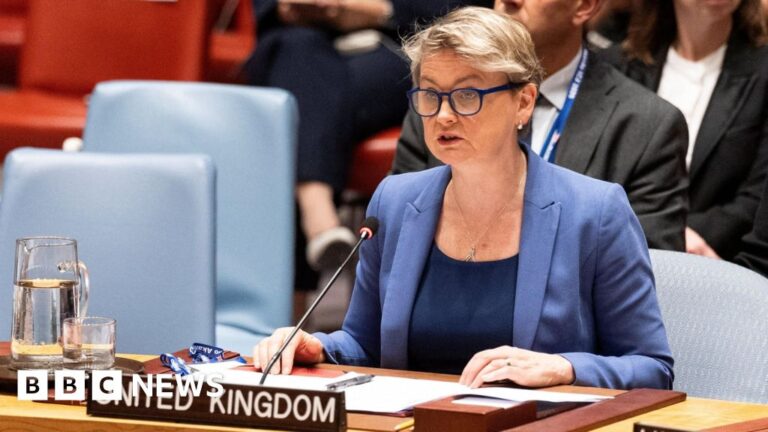
Sanctions on Iran reinstated a decade following historic nuclear agreement

0

Sweeping UN economic and military sanctions have been reimposed on Iran – 10 years after they were lifted in a landmark international deal over its nuclear programme.

The new measures took effect as the three European partners to the deal – the UK, France and Germany – activated the so-called “snapback” mechanism, accusing Iran of “continued nuclear escalation” and lack of co-operation.

Iran suspended inspections of its nuclear facilities – a legal obligation under the terms of the 2015 deal – after Israel and the US bombed several of its nuclear sites and military bases in June.

Its President Masoud Pezeshkian insisted last week that the country had no intention of developing nuclear weapons.

The reintroduction of sanctions – which Pezeshkian described as “unfair, unjust, and illegal” – is the latest blow to a deal that was heralded as a turning point in Western relations with the long-ostracised Islamist nation when it was first struck.

The Joint Comprehensive Plan of Action (JCPOA) places limits on Iran’s nuclear installations, its stockpiles of enriched uranium, and the amount of research and development it can undertake.

It aims to allow Iran to develop its nuclear power infrastructure without straying into making nuclear weaponry.

Iran stepped up its banned nuclear activity after Donald Trump pulled the US out of the agreement during his first term as president in 2016.

He has persistently criticised the deal, negotiated under his predecessor Barack Obama, as flawed, vowing to negotiate better terms.

The US and Israeli bombing of nuclear facilities in June was intended to reverse some of Iran’s nuclear progress, as well as punish it for arming regional proxies that have repeatedly attacked Israel.

While Trump said these had caused “monumental damage”, others cast doubt on the extent to which they had hindered Iran’s nuclear programme.

Iran said the strikes “fundamentally changed the situation” and rendered international support for the nuclear deal “obsolete”.

European allies that remain party to the deal still hope negotiations will yield a cooling of tensions.

“We urge Iran to refrain from any escalatory action,” they said in a joint statement, adding: “The reimposition of UN sanctions is not the end of diplomacy.”

Talks between the three countries and Iran on the sidelines of the UN General Assembly earlier this week failed to produce a deal which would have delayed the sanctions being reimposed.

The foreign ministers of the so-called E3 said they had “no choice” but to trigger the snapback procedure, as Iran had “repeatedly breached” its commitments.

They cited Iran’s failure to “take the necessary actions to address our concerns, nor to meet our asks on extension, despite extensive dialogue”.

Specifically, they mentioned Tehran’s refusal to co-operate with the UN nuclear watchdog, the International Atomic Energy Agency (IAEA).

“Iran has not authorised IAEA inspectors to regain access to Iran’s nuclear sites, nor has it produced and transmitted to the IAEA a report accounting for its stockpile of high-enriched uranium,” the statement read.

The suspension of IAEA inspections began following the US/Israeli bombings, but the agency confirmed on Friday that they had resumed.

In a statement on Sunday, Iran said it did not recognise the “illegal” and “unjustifiable” sanctions.

Its foreign ministry warned that “any action aimed at undermining the rights and interests of its people will face a firm and appropriate response”.

Pezeshkian has softened earlier threats of Iran quitting the Non-Proliferation Treaty altogether – but has warned that a return of sanctions would put negotiations in jeopardy.

He told reporters on Friday that Tehran would need reassurances that its nuclear facilities would not be attacked by Israel in order to normalise its nuclear enrichment programme.

He also rejected a US demand to hand over all of Iran’s stockpile of enriched uranium in return for a three-month exemption from sanctions, saying: “Why would we put ourselves in such a trap and have a noose around our neck each month?”

Western powers and the IAEA say they are not convinced by Iran’s insistence that its nuclear programme has purely peaceful purposes.