


Frequency Electronics stock jumps 8% on potential DoD missile spending boost
Frequency Electronics stock surges 8% due to potential increase in DoD missile spending
Court in South Sudan denies Riek Machar’s request to stop trial for murder and treason
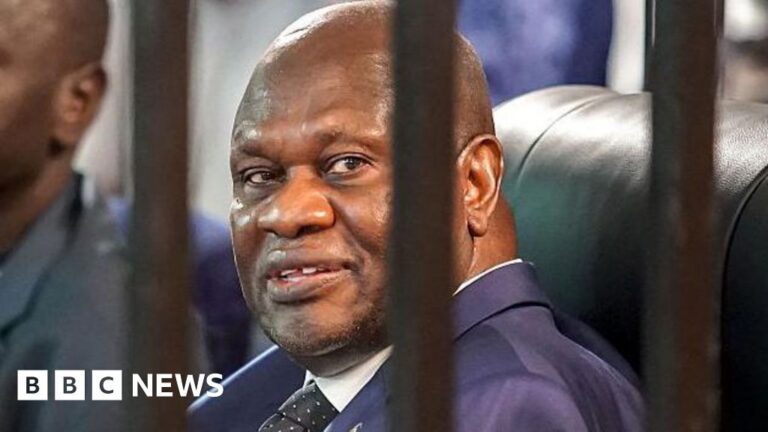
A special court in South Sudan has ruled that it does have the jurisdiction to prosecute suspended Vice-President Riek Machar and seven co-accused, who are charged with murder, treason and crimes against humanity.
The court dismissed all objections by Machar’s legal team regarding its authority, the constitutionality of the proceedings, and the claim that he was immune from prosecution. The case will continue on Wednesday.
Machar has dismissed the charges brought against him two weeks ago as a political “witch-hunt”. They have raised fears of return to civil war.
The charges stem from an attack in March by a militia allegedly linked to Machar, which killed 250 soldiers and a general.
Since then, he has been under house arrest.
Machar’s defence team had argued that the alleged crimes should not be tried by a national court but by a hybrid court under the African Union, in accordance with the 2018 Peace Agreement that ended the five-year civil war between his forces and those loyal to President Salva Kiir.
The court however argued that it had the authority to try national offences, as a hybrid court had not yet been established.
“The special court enjoys jurisdiction to try this case according to the Transitional Constitution 2011 as amended,” Presiding Judge James Alala ruled.
It also dismissed the argument by Machar’s team that he had immunity from prosecution, adding that the provision only applied to the president.
“The First Vice-President does not have constitutional immunity, according to the transitional constitution,” the judge ruled.
The court also expelled two of Machar’s lawyers after the prosecution argued that they did not have valid licences.
The presiding judge ruled that the two could only participate once they have renewed their licences.
Machar’s lead lawyer Geri Raimondo Legge Lubati told the court that his client and the co-accused had been “subjected to politicised media campaign” by ministers and other senior officials.
“To the public, this conduct amounts to unlawful and prior conviction of our accused and a blatant violation of the constitutional guarantee of presumption of innocence… The accused is innocent until proved beyond reasonable doubt,” he said.
The charges have sparked fears of renewed conflict in the country, with the UN, African Union and neighbouring countries all calling for calm in the world’s newest country, which only gained independence from Sudan in 2011 following decades of war.
BNY reveals new Eliza platform, reports 98% of staff have received AI training
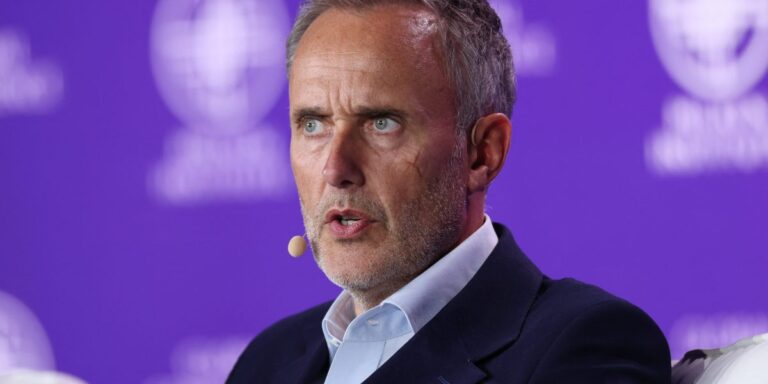
The oldest continuously operating bank in the U.S. is getting an upgrade. On Thursday at an internal town hall, BNY CEO Robin Vince unveiled the next-generation version of Eliza, its AI platform that allows employees to create bespoke agents and carry out tasks such as accelerated check processing built on reams of company data.
“We think of AI as generating capacity for us,” Vince said at the town hall. According to a BNY spokesperson, 98% of the company’s employees are trained on generative AI, with the majority using Eliza daily.
The announcement comes as the broader banking industry embraces AI, often through internally-developed products such as BNY’s Eliza. Research firm Evident tracks the 50 top banks and, according to its October 2024 report, every firm on the index have referenced AI in at least one investor relations document. Evident ranked BNY as 14th in terms of AI adoption, with JPMorgan Chase and Capital One in the lead, though BNY’s standing is likely to change given its recent push.
The AI financial future
Named after the wife of Alexander Hamilton, who founded BNY’s corporate predecessor, Eliza has stood as the flagship AI product of the 240-year-old bank. The new update for Eliza, which first launched in 2024, will focus on allowing employees to access data across different sources, from different hubs within BNY to live market data, with the goal of increasing speeds for responding to clients.
In an email sent to employees and shared with Fortune, chief people officer Shannon Hobbs and chief information officer & global head of engineering Leigh-Ann Russell wrote that the upgrade would allow them to develop client briefings in minutes rather than hours.
The broader question for banks, which are constrained by compliance requirements and red tape, is whether AI tools will evolve beyond pilot programs and transform core functions. According to the Evident report, just six of its tracked banks reported that AI had a financial impact.
BNY chief data and AI officer Sarthak Pattanaik previously told Fortune that the bank uses a “walled garden” approach to train its systems, though it uses external models from companies like Anthropic, Google’s Gemini, and OpenAI, and conducts red team testing to simulate cyberattacks.
In their email, Hobbs and Russell referenced different use cases already adopted by bank employees for Eliza, including reconciling weekly transactions, which has increased automatic processing, repairing payments, and writing code. “Fluency in AI is no longer optional, it’s critical,” they wrote.
Fortune Global Forum returns Oct. 26–27, 2025 in Riyadh. CEOs and global leaders will gather for a dynamic, invitation-only event shaping the future of business. Apply for an invitation.
Taiwan Facing Threat of Missiles – The New York Times
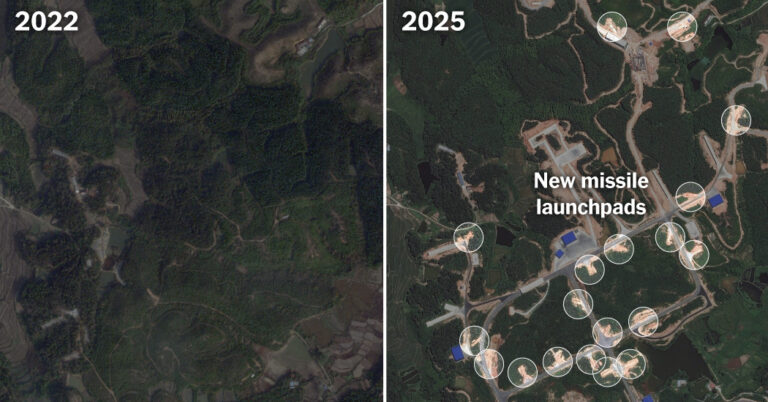
China is transforming parts of its east coast into a platform for potential missile strikes against Taiwan and the nearby seas. The buildup is a vital part of the Chinese leader Xi Jinping’s ambitions to bring Taiwan under Beijing’s control and counter U.S. power in Asia through the threat of overwhelming force.
The Pentagon estimates that China’s Rocket Force, which controls nuclear and conventional missiles, has increased its stockpile by almost 50 percent in four years, to about 3,500 missiles. While it is unclear how many are on the east coast and targeting Taiwan, satellite images show that missile brigades have built new and bigger bases and added more launchpads in recent years.
And the bases are deploying increasingly advanced missiles like the Dongfeng-17, a hypersonic missile that is maneuverable and harder to intercept, and the Dongfeng-26, nicknamed the “Guam Express” by some Chinese for what researchers say is its ability to strike U.S. military bases in the region.
Along China’s eastern seaboard, soldiers have been practicing launching missiles from farm fields and secluded valleys, near expressways and from coastal outcrops facing Taiwan, which lies across a 100-mile strait.
Missiles are “really the starting point for any type of military coercion campaign that China would use against Taiwan,” said Jennifer Kavanagh, a senior fellow at Defense Priorities, a research group in Washington. “For the Chinese, I think, having an overwhelming number of missiles is also intended as a political signal — to Taiwan that there’s no point in fighting back, to the United States that you can’t intervene.”
In a war, China’s missiles would be critical for knocking out Taiwan’s defenses as well as threatening U.S. bases in Guam and Japan and targeting U.S. Navy ships sent to Taiwan’s aid. In peacetime, China uses missile tests, exercises and displays to project strength and to attempt to intimidate Taiwan and its partners.
The latest show of force was a military parade in Beijing in early September, when China revealed an array of new missiles. The parade featured new anti-ship missiles that appear to have hypersonic capabilities, as well as intercontinental nuclear missiles.
“The Rocket Force is the crown jewel of the Chinese military,” said Thomas Shugart, a former U.S. naval officer now at the Center for a New American Security. “It increases, by a huge degree, the range at which China can reach out suddenly with very little warning.”
Corruption scandals and leadership upheavals have recently blighted the Rocket Force. But Mr. Xi signaled his commitment to in the force last year, when he visited Brigade 611 in Anhui Province in eastern China, the region where the People’s Liberation Army concentrates its forces on Taiwan and the western Pacific. Chinese state television showed him watching as troops simulated preparing mobile missiles for launch. He urged them to “deepen your sense of peril and crisis, and your combat mind-set.”
A Growing Hub for Missile Training and Launches
Satellite images show that the base for Brigade 611 has doubled in area in recent years. The new area includes what some experts said might be, at least in part, a training complex with launchpads and dummy tunnels for simulating operations.
“It’s a huge facility, a pretty cohesive training facility for practicing basically a full range of operations,” said Decker Eveleth, a researcher at CNA, a research organization, who has closely studied China’s missile forces and who examined the images of Brigade 611 at the request of The New York Times.
The base expansion features what appear to be three dozen missile launchpads, an unusually dense cluster since launchpads are normally dispersed away from bases to avoid detection, said David C. Logan, an assistant professor at the Fletcher School of Law and Diplomacy at Tufts University who studies China’s nuclear and missile forces.
Another unit, Brigade 616, in Jiangxi Province south of Brigade 611, has also grown rapidly. Satellite images from 2020 show that even at the height of the pandemic, China was clearing and leveling farmland, and after only 18 months, the construction of a new site was nearly complete.
New Generation of Missiles
Brigade 616 is now being prepared for the Dongfeng-17, according to Mr. Eveleth and other experts. Such missiles are capable of traveling at least five times the speed of sound and can maneuver to evade defenses. Mr. Eveleth noted details in the satellite images — such as the height of a storage bay — that suggested it would be used to hold the new missile.
The unit that Mr. Xi visited, Brigade 611 in Anhui, is now deploying the Dongfeng-26, which can be armed with a conventional or nuclear warhead and, as implied by the “Guam Express” nickname, is able to reach American military installations in parts of the Asia-Pacific. The missile can be transported by road, making it harder for enemies to track and destroy. (Hans M. Kristensen and other researchers from the Federation of American Scientists had first reported the expansion of the brigade in March.)
The Pentagon estimates that the Rocket Force has about 500 Dongfeng-26 missiles.
In a war, should Chinese leaders decide to send nuclear warheads to some Dongfeng-26 units, U.S. satellites might be able to detect them being moved from a depot in central China, Mr. Eveleth said. But such tracking may not be foolproof, leaving uncertainty about which units had nuclear warheads close at hand, he and other experts said.
That uncertainty could heighten the dangers of escalation and perhaps miscalculation.
“If there is a Taiwan conflict, particularly if there’s some level of U.S. involvement or the threat of U.S. involvement, then from the start it has a nuclear dimension,” said Kelly Grieco, a senior fellow with the Stimson Center who coauthored a recent study warning that U.S. bases in the Asia-Pacific could be decimated by China’s missiles. “A system like the Dongfeng-26 makes this potentially even more dangerous.”
In a war over Taiwan, Chinese commanders would scatter mobile missile units to caves and protected sites to try to evade detection, Chinese military textbooks and videos of exercises indicate. The launch sites along the coast would allow units to fire rockets at targets in Taiwan or at ships at sea, and then shift to another site.
One of these launch sites is near China’s closest point to Taiwan. During military exercises in 2022 — which Beijing said were in retaliation for a visit to Taipei by the then-House Speaker Nancy Pelosi — that area was used to test fire army rockets able to hit Taiwan, according to Joseph Wen, an independent Taiwanese researcher who tracks the People’s Liberation Army forces. Mr. Wen studied footage from Chinese state television about the exercises to determine the site that was used.
China’s military has also built targets in the shape of U.S. warships in the country’s western deserts, apparently for missile practice, including dummy warships mounted on rails to simulate movement at sea. In a war, U.S. and other forces may try to destroy Chinese missile and long-range artillery units, though striking at targets on the Chinese mainland could be a risky escalation.
Chinese planners appear to be wagering that their missile numbers and mobility can prevail in a game of hide-and-seek, evading strikes and exhausting the enemy’s missile defenses. Recent studies say U.S. air bases in Asia could be highly vulnerable to Chinese missiles, partly because the bases lack enough hardened shelters for planes.
“We’re working on defenses,” said Mr. Shugart, a co-author of one of the studies, “but I have a hard time imagining them not getting overwhelmed with the kind of numbers that we see,” he said, referring to China’s missile forces.
Still, China’s rapid buildup of its missile systems has not been without problems. A Pentagon assessment suggested that graft in the Rocket Force may have compromised China’s new nuclear missile silos.
And while China’s radars and satellites have improved missile accuracy, some experts question how its missiles will perform in real conditions. Striking at ships across the sea in the chaos of war, for instance, would be much harder than hitting fixed targets, Professor Logan of Tufts University said.
UVA Freshmen Dominate in Exhibition Meet Against Navy to Start Season Strong

By Charlotte Wells on SwimSwam

UVA vs. Navy
- September 27, 2025
- Lejeune Hall – Annapolis, MD
- SCY (25 yards)
- Results
The UVA Cavaliers showed off their talent in the pool on Saturday, throwing down a number of top swims and winning all but three events as they kicked off the 2025-2026 season with a non-scored exhibition meet against the U.S. Naval Academy.
While there were no official team scores for the meet, all individual times still counted. The meet also featured unofficial events like 150 distances of all four strokes.
Women’s Recap
The Virginia women swept the competition in the swimming events, with UVA’s newcomers making a splash in their collegiate debut. The freshmen contributed five individual victories over the course of the competition.
Sara Curtis, a rising star from Italy who broke the Italian record in the 50-meter free at the World Championships over the summer, made some noise right from the start by leading off the 200 free relay on the Cavaliers’ ‘A’ squad in a showstopping time of 21.97. Her opening split marks the 10th-fastest time in UVA history. Curtis was joined by Melissa Nwakalor (21.96), Sylvia Roy (22.56) and Bryn Greenwaldt (21.13), with all four women notably wearing tech suits.
Curtis went on to win the 50 fly (24.17) and 150 back (1:24.57), making it clear she will be a strong contributor for UVA this season. Freshman teammate Madi Mintenko also drew some attention, winning the 150 free (1:17.16) and 200 IM (2:00.30).
Lily Gormsen was the only other freshman girl to win an individual event, getting her hand on the wall first in the 500 free. She stopped the clock in 4:48.71, just over 2.5 seconds off of her lifetime best.
Senior Aimee Canny posted back-to-back victories, prevailing in the 50 breast (27.68) and 150 fly (1:24.36).
The Mids also turned in a handful of strong performances at the meet. Freshman Addy Herl was Navy’s top performer in the 50 fly, finishing 5th (25.58) and adding .34 to her lifetime best.
Senior Lauren Walsh was the runner-up in the 150 breast (1:38.08). Walsh also finished 5th in the 50 breast (28.93), and was Navy’s highest-placing swimmer in both distances on Saturday.
Navy freshman Kaitlyn Landers took 3rd in the 150 free (1:21.05) behind Greenwaldt; Landers kept close pace behind Greenwaldt throughout the race, trailing by just .02 at the 100-yard mark and splitting 53.03.
Men’s Recap
The Midshipmen managed to put up a stronger defense against the Cavaliers on the men’s side, as UVA won eight events while Navy won three races.
The Mids picked up an early victory in the 200 free relay thanks to the team of Ben Denman-Grimm, Gavin Green, Evan McKelvey and Dean Jones, who posted an overall time of 1:19.84.
That race saw some added excitement as Navy’s ‘A’ relay and UVA’s ‘A’ relay tied for 2nd, with both teams touching in 1:20.62.
Virginia’s freshmen again turned in dominant performances in their collegiate debut, snagging four event victories between them.
Maximus Williamson logged three individual event wins, the most of any swimmer at the meet, blasting into the wall ahead of the competition in the 500 free (4:23.41), 150 fly (1:16.33) and 150 back (1:15.94).
Fellow freshman Grant Murphy picked up an individual win in the 200 IM, clocking a time of 1:48.49.
Another key contributor for the Cavaliers was sophomore Spencer Nicholas, who threw down a lifetime best time in the 50 back. He charged into the wall in 21.85, shaving .03 off of his previous personal best and winning by a margin of .6 seconds. Nicholas also won the 150 free (1:10.43).
Navy’s Juan Mora snagged the victory in the 50 breast, turning in a time of 25.02 to narrowly outtouch runner-up Jay Gerloff of UVA (25.06).
The Mids’ third and final event victory of the day came in the 150 breast, with Navy going 1-2 in the race. Michael Phillips took the top spot in 1:25.88, while Mora was 2nd in 1:26.48.
Up Next
UVA officially opens its season with a dual meet against the University of Florida on October 10. Navy will face the University of Maryland, Baltimore County (UMBC) on October 11.
Read the full story on SwimSwam: UVA Freshmen Win Big to Kick Off Season in Exhibition Meet Against Navy
Psoriasis Symptoms May Be Alleviated by Mediterranean Diet

Psoriasis may not have a cure, but new research has found that significant relief could be achieved at the dinner table. In a clinical trial, scientists found that a Mediterranean diet could dramatically improve symptoms, quality of life and overall health. The findings add weight to growing evidence that what we eat plays a powerful role in managing chronic inflammatory conditions.
Led by scientists from the Ramón y Cajal University Hospital in Madrid, this new research examined whether a Mediterranean diet could improve psoriasis severity in patients with mild to moderate disease, as earlier observational studies had suggested. It’s estimated that 125 million people worldwide suffer from the condition, including about eight million Americans.
While the Mediterranean diet is known to have anti-inflammatory and cardiometabolic advantages, there are very few clinical studies looking into how this eating plan could benefit those suffering from psoriasis. Researchers believed that the diet – rich in antioxidant vitamins, including beta-carotene, vitamin C, and vitamin E, along with polyphenols – could reduce oxidative stress and inflammation in those with the skin condition.
In this study, 38 individuals (average age 46 years) with mild to moderate psoriasis took part in the 16-week MEDIPSO (Impact of the Mediterranean Diet on Patients With Psoriasis) randomized clinical trial. Participants were assigned either a dietitian-guided Mediterranean diet program, with additional olive oil allowances, or a low-fat eating plan.
At the end of the 16 weeks, the 38 adults were assessed to see how their psoriasis presented, as well as secondary outcomes covering diet adherence, metabolic parameters, serum inflammatory cytokines and patient-reported health scores.
What they found was significant. Using the Psoriasis Area and Severity Index (PASI), which scales disease from 2-10 (higher scores indicating worse disease), the researchers found that the 19 people undertaking the Mediterranean diet intervention had an average 3.4-point drop in their scores, while there was almost zero change in the control group.
What’s more, nine of 19 participants on the Mediterranean diet (47.4%) saw a 75% improvement in the severity of their psoriasis – a huge result across just 16 weeks. This cohort also had significant reductions in glycated hemoglobin, which is meaningful given that psoriasis is associated with comorbidities including cardiovascular disease and type 2 diabetes.
The participants in the Mediterranean diet cohort also reported better sleep, reduced anxiety and overall improved quality of life.
“This randomized clinical trial found that a 16-week Mediterranean diet intervention significantly improved psoriasis severity in patients with mild to moderate disease receiving stable topical therapy,” the researchers noted. “These findings suggest that incorporating dietary strategies may be beneficial as an adjunctive therapy in psoriasis management.”
While the study doesn’t outline exactly what the eating plan consisted of, the diet is largely made up of fruits, vegetables, nuts, whole grains, olive oil and fish, which are loaded with beneficial nutrients and plant compounds. It’s previously been shown to have a range of measurable health benefits, including improving brain function.
The study was published in the journal JAMA Dermatology.
Source: Ramón y Cajal University Hospital via MedicaXpress
Cora Lam promoted to Head of Legal and Business Affairs at Universal Music Greater China, Mark Gao appointed as SVP of Brand Partnerships

Universal Music Greater China (UMGC) has appointed two senior executives as it continues to expand its operations in the region.
Cora Lam will serve as Head of Legal and Business Affairs, while Mark Gao joins as Senior Vice President of Brand Partnerships. Both will be based in Hong Kong and report directly to Timothy Xu, chairman and CEO of Universal Music Greater China. The appointments took effect immediately, UMG announced Monday (September 29).
Lam’s appointment follows Patsy Chan‘s decision to leave Universal Music Group after more than two decades with the company. Chan, who served as Senior Vice President and Head of Legal and Business Affairs for Asia, will remain through year-end to focus on Southeast Asia operations and facilitate the transition.
Lam brings over 20 years of experience in the music and entertainment industry to her newly created role, overseeing legal and business affairs across Greater China. She previously served as General Counsel and SVP of Legal and Business Affairs for Warner Music Asia, where she managed operations across 11 markets.
At Warner Music, Lam led the acquisition and integration of Gold Typhoon‘s catalog and artist roster. She also negotiated agreements with digital platforms, artists and brand partners throughout the region. Before Warner Music, she held senior positions at EMI Music Asia. Lam is qualified as a solicitor in Hong Kong and England and Wales.
“I look forward to working closely with Timothy and our colleagues to provide strategic legal and business support, strengthen our governance, and help build a solid foundation for our artists and the company’s continued success across the region.”
Cora Lam, Universal Music Greater China
Cora Lam said: “It is a privilege to take on this role at such a dynamic time. I look forward to working closely with Timothy and our colleagues to provide strategic legal and business support, strengthen our governance, and help build a solid foundation for our artists and the company’s continued success across the region.
Meanwhile, Gao will lead UMGC’s brand partnerships strategy, developing collaborations connecting music with lifestyle, sports and culture. He has 25 years of experience in international sports, entertainment and media.
Before joining Universal Music, Gao founded and served as CEO of Momentum Sports, where he built what UMGC described as an “award-winning business.” As President of CAA Sports China, he expanded the agency’s presence through partnerships and sponsorship programs.
Earlier in his career, Gao worked as Vice President at NBA China, where he contributed to bolstering the league’s brand and commercial performance in the Chinese market.
“Having spent the past 25 years in sports and entertainment, I am inspired to now bring that experience into music—an art form with unmatched power to connect and inspire people.”
Mark Gao, Universal Music Greater China
Gao said: “I am truly excited to be joining Universal Music Greater China. Having spent the past 25 years in sports and entertainment, I am inspired to now bring that experience into music—an art form with unmatched power to connect and inspire people.
“I look forward to working with Timothy and the team to create partnerships that not only generate commercial success, but also deliver cultural impact that benefits artists, brands and fans alike.”
The appointments come after several strategic moves by UMGC this year. The division signed exclusive deals with artists Liu Huan and David Tao. Last week, the company brought back performer Nana Ouyang. The company also named producer Zhang Yadong as Chief Music Advisor.
Earlier this year, UMGC established Deutsche Grammophon China and Blue Note Records China, as UMG branches out beyond mainstream pop in the world’s second-largest economy.
Commenting on the appointments, Xu said: “The expansion of our leadership team reflects our commitment to building a stronger foundation for UMGC’s future. Cora’s deep expertise in legal and business affairs and Mark’s proven ability to create transformative brand partnerships will significantly enhance our management capabilities.”
Cora’s deep expertise in legal and business affairs and Mark’s proven ability to create transformative brand partnerships will significantly enhance our management capabilities.”
Timothy Xu, Universal Music Greater China
Added Xu: “Together, they will play vital roles in delivering greater value to our artists and partners, while driving forward our long-term vision for sustainable growth. I would also like to sincerely thank Patsy Chan for her more than 20 years of dedication, and we wish her every success as she embarks on the next chapter of her career.”
Music Business Worldwide
PM Modi stirs tensions with Pakistan following India’s victory in Asia Cup cricket match

Indian leader controversially refers to the politically-charged win as an extension of ‘Operation Sindoor’.
Published On 29 Sep 2025
India’s Prime Minister Narendra Modi has contentiously invoked the conflict with Pakistan in May, which brought the nuclear-armed neighbours to the cusp of a fifth all-out war, to celebrate India’s Asia Cup final cricket win against their regional arch foes.
“#OperationSindoor on the games field. Outcome is the same – India wins! Congrats to our cricketers,” Modi posted on X on Monday.
Recommended Stories
list of 3 itemsend of list
Modi was referring to the four-day conflict between the two nations, with its focus on Indian-administered Kashmir, in May, following an attack that killed 22 tourists that India blamed on Pakistan, an accusation that Islamabad vehemently denies.
During the conflict, Modi announced “Operation Sindoor” as a response to the attack, which heightened tensions and led to retaliation from Pakistan. The short conflict killed more than 70 people in missile and drone attacks, with both sides claiming victory.
In June, an Indian naval officer conceded that the country lost several fighter jets to Pakistani fire during their conflict in May and said the losses were a result of “constraints” placed on Indian forces by the government in New Delhi.
India and Pakistan traded other slights after Indian cricket players refused to shake hands with their Pakistani counterparts in the final of the Asia Cup, as tensions between the two countries remain heavily strained.
After India beat Pakistan at the Dubai International Cricket Stadium on Sunday by five wickets, the Indian team refused to accept the trophy from Asia Cricket Council (ACC) chief Mohsin Naqvi, who is also the chief of Pakistan’s Cricket Board (PCB) and Pakistan’s interior minister.
Simon Doull, a former New Zealand cricketer and broadcaster, announced, citing the ACC, that the Indian team would not be collecting their awards due to the tensions.
During the course of the tournament, the Indian team refused to shake hands with the Pakistan team in any of the three matches the two sides played.
Naqvi reportedly refused to step down from the presentation ceremony to hand out the award altogether.
Indian players Tilak Varma, who won the player-of-the-match award, Abhishek Sharma, who won the player-of-the-tournament award, and Kuldeep Yadav, who won the Most Valuable Player award, turned up to accept their individual awards but did not acknowledge Naqvi.
The Pakistani official was also the only person on stage who did not applaud the Indian trio.
In a post-match conference, Yadav said he had “never seen” a winning team denied their trophy.
But Pakistan’s captain, Salman Agha, accused India’s behaviour during the tournament of being “bad for cricket”.
“What they did today, a good team doesn’t do that. Good teams do what we have done. We waited for our medals and took them,” Agha said.
Indian cricket board (BCCI) secretary Devajit Saikia announced that the board will lodge a protest against Naqvi in the next meeting of the governing International Cricket Council (ICC) in November.
Indian captain Yadav was accused of making a political statement after the first match, while Pakistan opener Sahibzada Farhan and pacer Haris Rauf made political gestures in the second.
Challenging Client Situation

A required part of this site couldn’t load. This may be due to a browser
extension, network issues, or browser settings. Please check your
connection, disable any ad blockers, or try using a different browser.
Singapore refuses entry to exiled Hong Kong pro-democracy activist
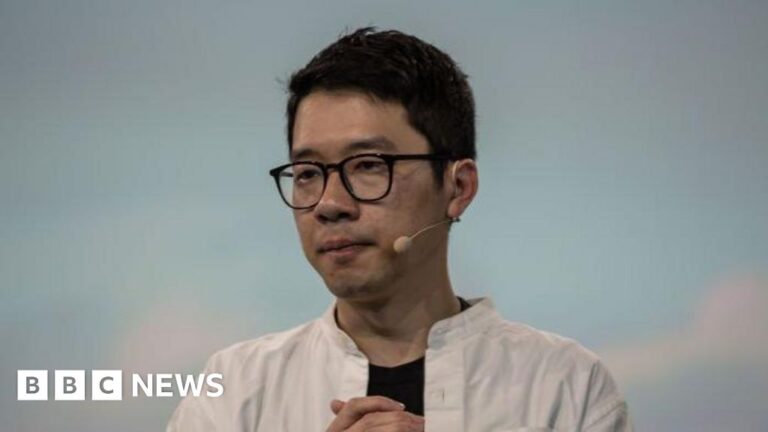
A pro-democracy campaigner who fled Hong Kong has been denied entry to Singapore despite being granted a visa, with the city-state saying his presence “would not be in its national interests”.
Nathan Law, who lives in exile in the UK, said he arrived in Singapore on Saturday to attend a “closed-door, invitation-only” conference but was detained at the border for hours before he was deported.
“I was not asked questions and they did not give reason for the denial,” he told the BBC.
Mr Law, who also previously served as a local legislator in Hong Kong, is one of eight exiled activists who is wanted by the city’s authorities, who have accused him of endangering national security.
Singapore has an extradition treaty with Hong Kong.
“Mr Law’s entry into and presence in the country would not be in Singapore’s national interests,” said the ministry’s spokesman in response to queries from the BBC.
“A visa holder is still subject to further checks at point of entry into the country. That is what happened with Nathan Law,” said the spokesman, adding that Mr Law was referred for “questioning, and immigration and security assessment” after he landed.
The government had previously said it “takes a clear and strong stand against the importation of politics of other countries into Singapore”.
In a statement, Mr Law said he believes the denial of entry was for “political” reasons. “I am unsure whether external forces, such as the PRC (People’s Republic of China), are involved, directly or indirectly,” he said.
Mr Law said he applied for a visa that would have allowed him a “one-time entry for a few days”, and that it was approved three weeks before his departure. He said he holds a UK Refugee Travel Document.
On Sunday, the activist was put on the earliest flight back to San Francisco, where he initially departed from.
The organisers of the event he was due to attend have declined to comment to the BBC.
The BBC has also reached out to the Hong Kong and British authorities for comment.
During its routine press briefing on Monday, a Chinese foreign ministry spokesperson said “each country has the right to manage entry and exit on its own.”
He also described Mr Law as “an anti-China, anti-Hong Kong troublemaker who has been lawfully placed on the wanted list by the Hong Kong police”.
Mr Law, a former Hong Kong legislator, is one of the most prominent figures in the city’s pro-democracy movement, fled the city in 2020 after China imposed a sweeping national security law which targets secession, subversion and terrorism with punishments of up to life in prison.
In 2021, he was granted asylum in the UK.
Hong Kong authorities have offered rewards of HK$1m ($128,000; £95,000) for information that can help them arrest Mr Law and other pro-democracy activists.
This is not the first incident Singapore authorities have taken action regarding Hong Kong pro-democracy activists.
In 2019, the city-state fined a Singaporean activist for holding an online forum several years prior that featured prominent activist Joshua Wong speaking in a teleconference call.