


Strix Group issues new shares following employee option exercise
Strix Group releases additional shares after employees exercise options
‘Gen Z’ protests prompt Madagascar’s president to dissolve government

Madagascar’s president has said he will dissolve his government, following days of youth-led protests over longstanding water and power cuts.
“We acknowledge and apologise if members of the government have not carried out the tasks assigned to them,” Andry Rajoelina said in a televised national address on Monday.
The so-called Gen-Z protests have seen thousands of predominantly young demonstrators take to the streets in cities across Madagascar since Thursday, under the rallying cry: “We want to live, not survive”.
The UN’s human rights chief condemned the “unnecessary force” used by security forces to quell the unrest, saying that at least 22 people have been killed and 100 others injured.
Madagascar’s foreign ministry has rejected the UN’s figures, alleging the data is “based on rumours or misinformation”.
Protests first started in the capital Antananarivo, but have since spread to eight cities across the country.
A dusk-to-dawn curfew was imposed in Antananarivo after reports of violence and looting, with police firing rubber bullets and tear gas to disperse the crowds.
UNCHR head Volker Türk said he was “shocked” by the security forces’ violent crackdown that he said also saw arrests, beatings and live bullets used against demonstrators.
“I urge the security forces to desist from the use of unnecessary and disproportionate force and to immediately release all arbitrarily detained protesters,” Türk said in a statement on Monday.
According to the UN, the dead “include protesters and bystanders killed by members of the security forces, but also others killed in subsequent widespread violence and looting by individuals and gangs not associated with the protesters”.
Last week, Madagascar’s president announced that he had sacked the energy minister for failing to do his job properly, but protesters demanded that the president and the rest of his government step down too.
Thousands took to the streets once again on Monday.
“I understand the anger, the sadness, and the difficulties caused by power cuts and water supply problems,” Rajoelina said during his address on state broadcaster Televiziona Malagasy.
He said he had “terminated the functions of the prime minister and the government” and applications for a new premier would be received over the next three days before a new government is formed.
However, those currently in office would act as interim ministers pending the formation of a new government, he noted.
Rajoelina added that he wanted to hold talks with young people.
A banner at one of last week’s demonstrations in Antananarivo read: “We don’t want trouble, we just want our rights”.
But some reports last week suggested protesters had damaged – possibly by setting fire to – the homes of at least two legislators. The “Gen Z” movement alleges, however, that paid goons had looted various buildings in order to undermine their cause.
Madagascar has been rocked by multiple uprisings since it gained independence in 1960, including mass protests in 2009 that forced former president Marc Ravalomanana to step down and saw Rajoelina come to power.
The protests mark the most significant challenge the president has faced since his third re-election in 2023.
Additional reporting by Danny Aeberhard
Mylie Bradley, Future ‘A’ Finalist, Chooses Nebraska for 2026
By Anya Pelshaw on SwimSwam

Fitter and Faster Swim Camps is the proud sponsor of SwimSwam’s College Recruiting Channel and all commitment news. For many, swimming in college is a lifelong dream that is pursued with dedication and determination. Fitter and Faster is proud to honor these athletes and those who supported them on their journey.
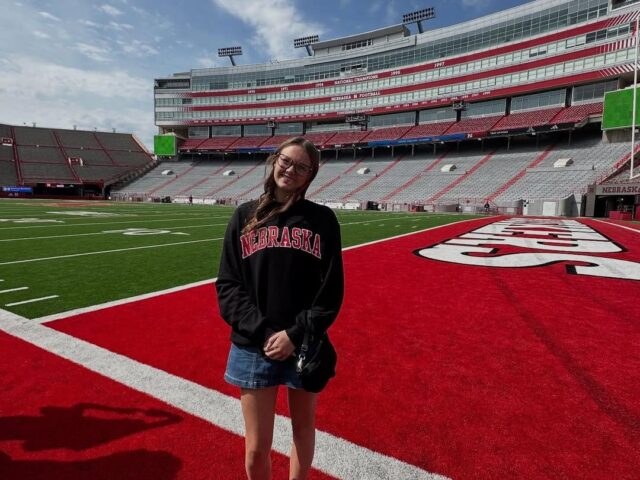
Mylie Bradley from Jenks, Oklahoma has announced her commitment to continue her academic and athletic careers at Nebraska beginning in fall 2026.
“I am so excited to announce my verbal commitment to the University of Nebraska! First of all, I want to thank Jesus Christ my Lord and Savior for giving me the gifts that has brought this blessing of swimming Division 1! Second, I want to thank my parents because swimming hasn’t always been easy but my parents have always supported me and done whatever it took for me to be at practice or anything else! And finally I want to thank all the coaches who have helped me through my journey and have supported me and been a Coach to me in one way or another and also Coach Pablo and Coach Pat for giving me this opportunity to be a Cornhusker!!! GO BIG RED!!!”
Bradley finaled in all of her events at Futures in Justin this summer. She was highlighted by a 5th place in the 200 IM as she posted a best time 2:24.48. She also swam a personal best in the 50 breast swimming a 34.83 for 7th.
She entered her senior year this fall as Jenks High School. In February, she swam to numerous Oklahoma 6A State titles, helping Jenks to relay wins in the 400 free and 200 medley relays. She also finished 2nd in the 100 breast in a 1:05.32 and 3rd in the 200 IM in a 2:06.88.
Bradley’s Best SCY Times Are:
- 100 back: 55.04
- 200 IM: 2:03.84
- 100 free: 51.58
- 100 breast: 1:04.37
- 200 breast: 2:18.93
The Nebraska women finished 10th out of 14 teams at the 2025 Big Ten Championships. The team went on to finish 34th at NCAAs, highlighted by a 6th place finish by Gena Jorgenson in the 1650 free as she swam to a 15:49.99. Jorgenson went on to represent the US this summer at the World University Games in Berlin and began her senior season this fall.
It took a 53.97 in the 100 back, a 1:59.66 in the 200 IM, and a 49.60 in the 100 free to earn a second swim at the Big Ten level this past season. Nebraska had no finalists in the 100 back or 200 IM this past season and only one ‘C’ finalist in the 100 free. Bradley brings relay potential as her 100 back would have been #2 this past season only behind Virginia Consiglio who led with a 54.09.
Bradley will arrive next fall as a member of the class of 2030 along with Jana Hartel, Georgia Holgate, Dominika Borkowska, and Meredith Peyton.
If you have a commitment to report, please send an email with a photo (landscape, or horizontal, looks best) and a quote to Recruits@swimswam.com.
About the Fitter and Faster Swim Tour
Fitter & Faster Swim Camps feature the most innovative teaching platforms for competitive swimmers of all levels. Camps are produced year-round throughout the USA and Canada. All camps are led by elite swimmers and coaches. Visit fitterandfaster.com to find or request a swim camp near you.

FFT SOCIAL
Instagram – @fitterandfasterswimtour
Facebook – @fitterandfastertour
Twitter – @fitterandfaster
FFT is a SwimSwam partner.
Read the full story on SwimSwam: Futures ‘A’ Finalist Mylie Bradley Commits To Nebraska For 2026
Scientists Suggest Using Monetary System to Quantify Pain
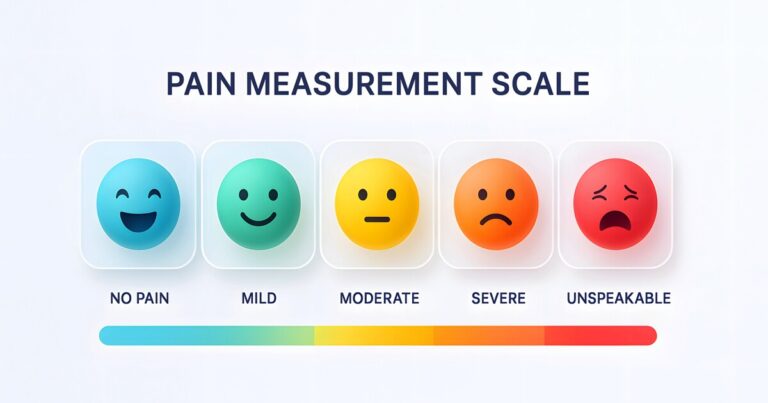
Pain is hard to measure. One person’s “ouch” is another’s agony. Now, scientists say they’ve found a better way of assessing pain: putting a price on it. By translating pain into dollars, they’ve created a more accurate, comparable way to measure suffering.
If you’ve been an inpatient in a hospital with a painful condition or following surgery, you have very probably been asked, “How would you rate your pain on a scale from zero to 10?” While it’s widely used, the limitations of this approach are well-known and boil down to this: one person’s “10” is another person’s “4”.
In a study led by the UK’s Lancaster University, researchers investigated a novel way of accurately – and more objectively – assessing people’s pain, and it came down to translating pain into something that’s familiar to everyone: money.
“We’ve all been asked to rate our pain from one to 10 – but one person’s three might be another’s five, and those numbers can shift with experience,” said Carlos Alós-Ferrer, Chair Professor of Economics at Lancaster University Management School and the study’s corresponding author. “Our research proposes a better way: turning pain into money – not to commodify suffering, but to create a scale we can all share.”
Inaccurate pain measurements can lead to inadequate pain management. For people with chronic conditions, this can mean a reduction in quality of life. In addition, the global cost of treating pain is enormous (and complex). In the US alone, the estimated cost was between US$560 billion and $635 billion per year. That figure, which is now 15 years old, comprises direct healthcare costs, days off work, hours off work, and lower wages. It’s understandable, then, that the researchers would want to investigate a better system of pain measurement.
They ran three randomized experiments with 330 healthy adults aged between 18 and 60. In one, participants were exposed to mild electrical pain; in another, it was heat pain; in the third, participants received the same heat stimulus but were given either a placebo or a topical anesthetic. In each experiment, participants completed three standard pain scales for comparison: the numerical (0-10) rating scale; the visual analog scale, and the general labeled magnitude scale (gLMS). The gLMS is a tool where pain intensity is rated along a line with verbal anchors such as “no sensation” to “strongest imaginable sensation”.
Alongside these pain assessments using traditional methods, the researchers tested their “monetary equivalence” (ME) method. Participants were repeatedly asked whether they would accept a certain amount of money to experience the same painful stimulus again, or choose a smaller amount to avoid it. Example: “Would you rather get 15 Swiss francs and feel the pain again, or 10 Swiss francs and no pain?” The point where a participant switched from “no pain” to “pain” revealed how much the pain was “worth” to them in monetary terms. Two versions of the ME method were tested: ME1, where questions were listed in increasing order of money (enforcing consistency); and ME2, where the same questions were asked randomly (allowing for some inconsistency).
Across all three experiments, the monetary methods (ME1 and ME2) outperformed the traditional scales at distinguishing between high- and low-pain conditions. Effect sizes – that is, how strongly the measure distinguished between groups – were dramatically larger for ME1 and ME2 (“very large”) compared to standard pain scales (“small to medium”). Even in the analgesic study, where traditional scales often failed or even showed misleading results (for example, participants reporting more pain after receiving an analgesic), the monetary measures correctly and significantly detected differences. This likely happened because participants expected the anesthetic to eliminate the pain completely, and when it didn’t, they rated their pain higher. It’s a psychological effect the monetary method avoids.

Statistical analyses showed “decisive evidence” that the monetary methods predicted pain levels much better than standard ones. Further testing confirmed that ME1 was the most accurate predictor of whether someone had been in the high-pain group, even when controlling for factors like income or gender. Moreover, the ME approach worked for both electrical and heat pain, suggesting it’s not limited to a specific kind of stimulus. It remained reliable even when participants didn’t know whether they’d received a placebo or analgesic, showing the method is resistant to psychological “expectation effects.”
“Different people still will put a different price on the same pain, but there is no problem interpreting the question,” Alós-Ferrer said about the new method. “As a result, measurements are more precise and the shift from low to high levels of pain is clearly reflected in the monetary scale. This makes it useful for clinical trials to study the effectiveness of painkillers and treatments, because the participants are randomly assigned to different groups.”
As with most studies, this one had limitations. Participants were mostly Swiss uni students, so results may not generalize to older, more diverse, or clinical populations. Because money means different things to people with different incomes, richer individuals might report higher “pain prices.” Random group assignment controls for this in experiments, but real-world use would require adjustments. The study used short, controlled pain stimuli. Chronic pain is a different beast; more complex, it involves emotional and functional dimensions not captured in the present study. The researchers note that more diverse trials, including chronic pain patients, are needed before the method can be used clinically.
Despite its limitations, the study points to several promising uses for a monetary pain scale. In clinical trials, it could dramatically improve the sensitivity of pain measurements when testing new painkillers or other treatments. In the research setting, it provides a more objective way of comparing pain experiences across participants, making results more reliable and reproducible. And in the clinical setting, a monetary pain scale could be used to help tailor pain management plans by quantifying the “cost” of pain in ways that standard scales can’t.
The study was published in the journal Social Science & Medicine.
Source: Lancaster University
Some leaders are stepping in to teach Gen Z basic life skills, as Suzy Welch expresses concerns about their employability

Suzy Welch’s bold claim that Generation Z is “unemployable” has sparked lively debate in corporate America, prompting a wave of interventions by both companies and colleges to equip young adults with basic life and professional skills. The critique, rooted in research and observations about generational values and preparedness, is now colliding with practical workplace realities, as managers and educators scramble to bridge gaps between Gen Z expectations and employer demands.
Welch, an NYU professor and business journalist, published a widely discussed op-ed in The Wall Street Journal asserting that the major values prized by hiring managers—achievement, learning, and a strong desire to work—are priorities for only about 2% of Gen Z students surveyed. Instead, most young adults place greater emphasis on self-care, authenticity, and helping others. This mismatch, Welch and supporters argue, leaves many Gen Zers perceived as ill-prepared or unwilling to adapt to conventional professional expectations, a sentiment backed by business leaders surveyed in 2024: one in six expressed reluctance to hire recent graduates, with three-quarters labeling hires as “unsatisfactory.” It’s tough criticism coming from Welch, who created New York University’s most popular business school course ever, meeting the values-obsessed Gen Z where they are with a class dedicated on “purpose.”
Fortune has been covering the plight of Gen Z from various angles throughout 2025, a year gripped by anxiety over artificial intelligence, early indications of a shrinking entry-level job market and a labor market marked by, in the words of Jerome Powell, a “low-hire, low-fire” mentality. Multiple leaders have told Fortune that with rote tasks exposed to automation by AI, “human skills” matter more than ever, and yet Gen Z workers appear to have a deficit of exactly those. The “Gen Z stare” phenomenon went viral as older generations vented their frustration at awkward interactions in service or professional contexts, even as evidence emerged that young workers are not poorer or unemployed in greater numbers, but they’re gripped by an unusual, emerging quarterlife crisis and a rising sense of “despair.”
Some leaders are taking action to arrest what they see as a failure to communicate. One is Rebecca Adams, the chief people officer of Cohesity, a $1.5 billion AI startup. The mother of two Gen Zers herself, Adams decided to send all of the managers at her 6,000-plus-employee company to specific training on how to interact successfully with Gen Z. Another is Liz Feld, CEO of Radical Hope, a nonprofit dedicated to equipping young adults on college campuses with better communication, interpersonal and emotional intelligence skills. Noting “elevated anxiety, stress and depression over the last few years,” Radical Hope began as a pilot at NYU in 2020 and has grown to 75 college campuses.
In an interview with Fortune, Adams described learning things from her children that gave her empathy for entry-level workers at her company, while opening her eyes to the need for additional training on how to behave at work. Feld described something similar from the opposite angle: “Their parents have been making so many decisions for them that when they arrive on college campus, they are completely unprepared to just do the simplest things for themselves.”
A gap in the market: workplace etiquette
Adams described situations where interns and new hires struggled with seemingly simple professional decorum: missing meetings for personal commitments or failing to grasp basic calendar tools. Such experiences have pushed Cohesity to provide explicit instructions on seemingly elementary things from managing calendars to the etiquette of meetings. Adams views these interventions not as hand-holding, but as essential adaptations to a new workplace culture, where transparency, constant feedback, and a search for meaning are fundamental.
“They want to know why, how, they want constant feedback,” Adams said of her Gen Z employees. At the same time, she said, “it also is mindboggling” to see how differently young people approach work.
Adams said Cohesity has had to teach the managers how to lead this generation of workers, while also teaching some seemingly “basic things” to younger workers, like “how do I manage my calendar? You actually have to accept the meeting request. You can’t just walk out of the meeting that you’re in because you have another one while it’s still going on.”
She relayed an anecdote about a manager/intern lunch program where a senior leader treats an intern to lunch. In this instance, she said, a manager was waiting for an intern who was so successful they were due to convert to a full-time job, but this intern didn’t get the memo that a work meeting was more important than this lunch. “Sorry, I’m late, I just had to walk, I was just in a meeting,” the intern explained. When the manager offered to reschedule, the intern said they had “a lot going on” anyway, so they figured it was fine to leave the meeting early to take lunch.
Or consider Adams’ 20-year-old son and the subject of which internship he would choose to take. His attitude was something like “I really need to love the job and I need to love the company.” Adams told Fortune she was baffled by this: “What do you mean? I was a waitress for many years.”
Adams also highlighted transparency going hand in hand with what could seem to be standoffishness. “I do think some of them are picky. There was one guy, amazing, did such a great job in his internship … he went above and beyond. And when we went to offer him the job, he said, ‘You know what? I think I just want to take a year off and travel because I’m graduating.’ And I was like, whoa.” Adams said if she was that intern’s mother, she would have said “You take that job. You can travel later.” But this generation is wired differently, and both sides need some new training to work together effectively.
Deep-seated fear of failure
Feld’s program, developed through discussions with thousands of students, focuses on skills that “we all got growing up at the kitchen table”—empathy, communication, setting priorities, and basic conflict resolution. Rather than group therapy, her program is pitched as a peer-led, activity-driven “experience.” Sessions may involve role-playing, stress management, time management, even sharing playlists for emotional support. Above all, there’s fundamental guidance for communicating face-to-face, as Feld says many Gen Zers are “afraid” of making small talk. “They’re threatened by it, and they will tell us that they see a rejection in a conversation as personal failure.”
Feld said the thousands of students that she’s interacted with have problems with the simplest things. “They won’t ask someone, ‘Do you want to go to the dining hall and grab dinner, you want to go grab a beer, you want to go for a walk, you want to get a coffee?’” If someone says no, she adds, “they internalize the whole thing. The face-to-face rejection is what they’re afraid of.” She said they simply never learned how, and technology enabled them to sidestep many seemingly basic steps in their development.
As she continued describing what she’s seen in her work, Feld’s fury and puzzlement grew in equal proportion. When asked about the reporting of some Gen Z job candidates bringing their parents to job interviews, Feld confirmed it’s very real. “We talk about it, and this goes back to the parents who actually think it’s appropriate to go to Bank of America for an interview with their child, who’s at Dartmouth, by the way … there are so many weird components to this that don’t add up.”
Feld said sometimes she hears that parents tell their young adult children, “I’m coming with you, you can’t do this on your own, which is … why would you ever say that to a 22-year-old?” She said the pressure is immense. “These young people feel like they have to perform for their own parents all the time.”
Adams separately described the huge pressures she sees young people putting on themselves, calling it “scary and fascinating. ” She said she sees Gen Z interns and colleagues being intensely focused on the future, recalling Jonathan Haidt’s thesis on Gen Z as the “anxious generation” raised on smartphones. Adams described a performance anxiety similar to what Feld identified, an attitude of: “I want to have everything locked in so that I can then decide if I want to get married, if I want to have kids, so I want to career-climb as much as possible before that, but I also want to travel and have lots of work-life balance.”
“When I’ve been meeting with them,” Adams said, “the pressure they put on themselves scares me.” She said there’s so much thought to picking the right major, optimizing the best career, performing at the top level at every moment, it was totally different for her. “My major didn’t equate to work for me. It was something I was interested in and it was the experience of going to college” that was more important.
Neither Adams nor Feld were aware of many of the viral catchphrases attributed to Gen Z. Adams used the phrase “locked in” to describe the attitude of her Gen Z colleagues, but clarified that she does not watch TikTok and never heard of “the great lock-in,” so her use of the phrase was coincidental. Feld, herself, had never heard of the “Gen Z stare” but she recognized the description of it.
“I see it when young adults mobile order,” Feld said, “And they go into Starbucks, or Dunkin’ Donuts, or Chipotle, and they won’t even say thank you, or they won’t even look at the person who’s giving them the bag. They’re on their phone, or pretending they’re on the phone, so they don’t have to even have an interaction.” She said she talked to a parent who had sent their son to a therapeutic boarding school, and this young adult was so afraid of interaction that she was actually, actively learning how to do this. “One of the exercises she had to practice at school was to go into a Dunkin’ Donuts or a McDonald’s and practice giving someone money [and getting change], like, as a 20-something-year-old.”
Feld said the most heartening thing is that these young adults “want to have in-person communication, they just don’t know how. A big eye-opener was that it’s actually a skill that they just didn’t learn, that they want to learn.”
Donald Trump’s Lawsuit Against YouTube Settled for $24.5 Million

Video platform settles lawsuit filed in response to Trump’s suspension over the January 6, 2021, riot at the US Capitol.
YouTube has agreed to pay $24.5m to settle a lawsuit brought by United States President Donald Trump after the platform suspended his account in response to the January 6, 2021, riot at the US Capitol.
Under the settlement, YouTube, which is owned by Google parent company Alphabet, will contribute $22m on Trump’s behalf to the Trust for the National Mall, a nonprofit that is overseeing a $200m project to construct a ballroom at the White House, a court filing showed on Monday.
Recommended Stories
list of 4 itemsend of list
The remaining $2.5m will go to other plaintiffs in the case, including the American Conservative Union and American author Naomi Wolf, according to the filing at the US District Court for the Northern District of California.
The settlement does not include any admission of wrongdoing by YouTube, and was reached for the “sole purpose of compromising disputed claims and avoiding the expenses and risks of further litigation”, according to the filing.
The payout is a relatively small sum for YouTube, whose advertising revenues came to nearly $9.8bn in the second quarter of 2025 alone.
The settlement comes after Meta Platforms and X earlier this year agreed to multimillion-dollar payouts to resolve Trump’s claims that he was unduly censored following the January 6 attack, which was carried out by Trump supporters motivated by his false claim that the 2020 election had been “stolen”.
John P Coale, a Trump ally and lawyer who brought the three cases, said he was pleased with the outcome.
“Very much so,” Coale told Al Jazeera. “As is the president and the other plaintiffs.”
Coale said the three cases had netted $60m in total.
“We believe we changed the behaviour,” he said.
After de-platforming Trump over fears his false claims about the 2020 presidential election were driving violence, Big Tech has moved to curry favour with his administration since his return to the White House.
Earlier this month, tech CEOs, including Google’s Sundar Pichai, Meta’s Mark Zuckerberg and Apple’s Tim Cook, lavished praise on Trump at a White House dinner event and expressed support for his administration’s initiatives on artificial intelligence.
Media companies have also paid out large sums to resolve Trump’s legal claims.
Paramount Global said in July that it had agreed to pay $16m to resolve Trump’s claims that CBS News’s 60 Minutes programme had deceptively edited an interview with Vice President Kamala Harris.
In December, ABC News agreed to contribute $15m to Trump’s library to settle claims that he had been defamed by its anchor, George Stephanopoulos.
Timothy Koskie, a postdoctoral researcher at the School of Media and Communications at the University of Sydney, said that YouTube’s settlement dealt a blow to hopes for a consistent approach to content moderation by social media platforms.
“Unfortunately, with the erosion of a rules-based order, we simply can’t expect to get consistent treatment from anyone who seeks to benefit from this administration,” Koskie told Al Jazeera.
“That is going to include an incredibly large swath of companies that we engage with in our daily lives, particularly, but very much not exclusively, the platforms. Rather than removing censorship, this vigorously empowers it in an especially selective vein.”
“Further, the US historically set precedents for many governments around the world,” he added.
Richard James Burgess steps down after 10 years as Ian Harrison is appointed CEO of A2IM
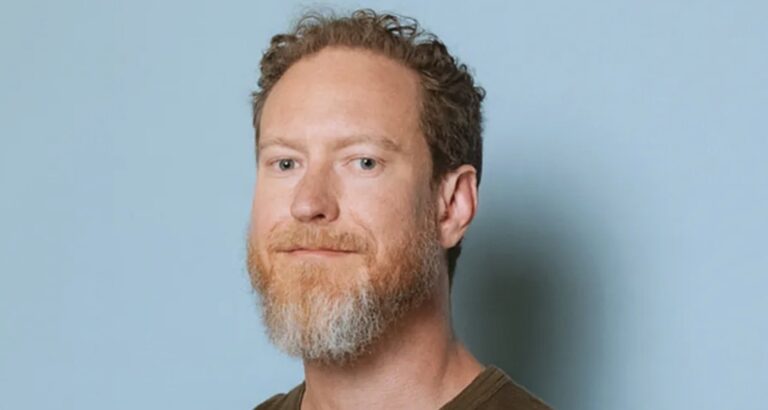
A2IM (The American Association of Independent Music), has appointed Ian Harrison as its new Chief Executive Officer.
Harrison succeeds Dr. Richard James Burgess, who, as announced last summer, will step down at the end of this year after a decade.
Harrison assumes the role of CEO starting this Wednesday (October 1) and will work closely with Burgess and the Board through the remainder of the year “to ensure a seamless transition”.
The org noted on Monday (September 29) that under Burgess, A2IM “sustained a period of both tremendous growth and change”.
A2IM added: “As the head of the world’s largest independent music coalition of over 700 independently owned American music labels, Burgess built Indie Week and the Libera Awards into the world’s largest independent conference and award show, respectively. He has been a powerful voice lobbying for the rights of independent artists and labels in Washington, D.C., and globally.”
A2IM’s new CEO, Ian Harrison, brings more than 20 years of leadership in the independent music sector, most recently as Executive Vice President of Hopeless Records.
According to A2IM, over two decades, he “helped transform the label from a small independent into a globally recognized powerhouse, building teams and guiding campaigns for more than 300 releases, selling over 15 million copies and earning over 20 gold and platinum certifications, and securing No.1 records in both the US and the UK.
His work with the Hopeless Foundation (Sub City), meanwhile, has raised over $3.5 million for various music and mental health charities.
In addition to his leadership at the label level, Harrison has been a longstanding contributor to A2IM and the broader independent music community.
He has been actively involved with A2IM since 2012, serving as an Indie Week committee member, a five-time speaker, and a mentor.
He also serves on the Worldwide Independent Network’s board and has previously held a board seat with the Music Business Association. A2IM noted that “his advocacy and vision have earned him recognition on Billboard’s Indie Power Players list in 2024 and 2025, as well as the 30 Under 30 list earlier in his career”.
“The independent community is stronger and more dynamic than ever, yet also facing accelerating challenges that will test our resilience and adaptability. A2IM exists to ensure our members can grow independently in the face of these changes and thrive on their own terms,” said Ian Harrison, A2IM’s new CEO.
“Independent music has been my life’s work, and I am excited to serve in this new capacity. I look forward to working closely with our members, the global trade organization community, commercial partners, and policymakers to ensure independent voices remain at the center of the music industry’s future.”
Ian Harrison
Added Harrison: “I am grateful to the A2IM Board for their trust as I step into the CEO role at such a pivotal moment. I take on this responsibility with a deep commitment to serving our community. I am especially grateful to Dr. Richard James Burgess for a decade of exceptional leadership that established A2IM as a vital voice in our industry, and to Lisa Hresko and the entire A2IM team whose dedication makes our work so impactful.
“This includes remembering our colleague Alex Machurov, whose contributions and spirit will remain part of A2IM’s legacy. I also want to thank Louis Posen and my colleagues at Hopeless Records, where I spent the past two decades, for shaping me as a leader and deepening my commitment to this community.
“Independent music has been my life’s work, and I am excited to serve in this new capacity. I look forward to working closely with our members, the global trade organization community, commercial partners, and policymakers to ensure independent voices remain at the center of the music industry’s future.”
“Ian’s deep experience, and lifelong commitment to independent music position him perfectly to guide A2IM into its next chapter.”
Dr. Richard James Burgess MBE
Dr. Richard James Burgess MBE, President and CEO, A2IM, said: “I am honored to have served this extraordinary community for the past decade, and I could not be more pleased to welcome Ian Harrison as A2IM’s next CEO. Ian’s deep experience, and lifelong commitment to independent music position him perfectly to guide A2IM into its next chapter.
“I look forward to supporting a seamless transition and to watching him take the organization, and the indie community it represents, to new heights.”
“I’m thrilled to welcome Ian Harrison as our new CEO. Ian has spent his entire career championing independent music, and now he’ll bring that same passion and energy to serving the entire community of independent labels.”
Nabil Ayers (Beggars Group), A2IM
Nabil Ayers (Beggars Group), A2IM Executive Committee,Chair, said: “I’m thrilled to welcome Ian Harrison as our new CEO. Ian has spent his entire career championing independent music, and now he’ll bring that same passion and energy to serving the entire community of independent labels.
“I’m confident he will build on the incredible foundation Richard James Burgess established over the past decade and skillfully lead A2IM into its next chapter of growth and advocacy.”
Music Business Worldwide
Trump threatens to impose 100% tariffs on foreign-made movies

Donald Trump has repeated his threat to impose a 100% tariff on all films not made in the US, claiming the American industry had been “stolen” by other countries.
He said on Monday that California had been heavily affected and the levy would “solve this long time, never ending problem”.
In May, the US president said he would talk to Hollywood executives about his plan and to begin the process of imposing the levy because America’s film industry was dying “a very fast death”.
Trump’s remarks come as he announced a new wave of tariffs last week, including a 100% levy on branded or patented drug imports as well as 50% levies on kitchen and bathroom cabinets.
Trump said on his Truth Social platform: “Our movie making business has been stolen from the United States of America, by other countries, just like stealing ‘candy from a baby.’
“California, with its weak and incompetent Governor, has been particularly hard hit!”
He said the 100% tariff would be imposed “on any and all movies that are made outside of the United States”.
Trump did not say when the tariff will come into force. The White House has been approached for a comment.
It was also unclear if the tariffs would apply to films on streaming services, such as Netflix, as well as those shown at cinemas, or how they would be calculated.
The Canadian Chamber of Commerce said it was “deeply concerned” by the levy because American production houses relied on Canadian facilities, crews and talent to deliver Hollywood movies.
Catherine Fortin-LeFaivre, senior vice president of international policy and global partnerships for the Canadian Chamber of Commerce, said: “These tariffs risk punishing US studios for filming in Canada by driving up costs, stifling investment, and undermining the competitive advantage our countries have built together.”
She said the tariff would “weaken both economies” and jeopardise “thousands of middle-class jobs”.
Dan Coatsworth, investment analyst at AJ Bell, questioned how such a tax would work given tariffs are typically imposed on goods and said many filmmakers were choosing to shoot films in other countries because of better incentives.
“The threat of 100% tariffs on movies made outside of the US raises more questions than it does answers,” he said.
“Filmmakers have been progressively lured by tax incentives that come from shooting movies in other parts of the world, and the Los Angeles film industry has lost its glitz and glamour.”
Mr Coatsworth said it would be difficult to define an American-made movie if a film were to be shot in the US but have foreign actors, directors, or funding.
“So it’s hard to understand just how Trump intends to impose the levy,” he said.
“Theoretically, being forced to produce movies in the US could push up their costs.
“Content makers would pass on this cost to the customer and that could hurt demand for streaming companies and cinema operators.”
He said investors did not “appear to see this as a serious threat” at present. Stocks for companies such as Netflix and Disney dipped briefly, then bounced back.
Several recent major films produced by US studios were shot outside of America, including Deadpool & Wolverine, Wicked and Gladiator II.
The US remains a major film production hub globally despite challenges, according to movie industry research firm ProdPro.
Its annual report showed the country saw $14.54bn (£10.94bn) of production spending last year. But that was down by 26% since 2022.
Countries that have attracted an increase in spending since 2022 include Australia, New Zealand, Canada and the UK.
The BBC understands the UK government is waiting for the details of the US tariff and how it will impact the British film industry.
A spokesperson for the Department for Business & Trade said the UK film industry employs millions of people and “generates billions for our economy”.
Separately on Monday, the president announced 10% tariffs on imports of softwood timber and lumber, as well as 25% levies on kitchen cabinets, vanities and upholstered wooden furniture.
Trump had hinted at the proposal earlier in the day in a Truth Social post, saying “substantial Tariffs on any Country that does not make its furniture in the United States”. “Details to follow!!!” he added.
The tariffs will apply from 14 October, with some of the levies set to increase sharply next year for countries that fail to reach an agreement with the US, according to a proclamation signed by the president.
Challenging Client

A required part of this site couldn’t load. This may be due to a browser
extension, network issues, or browser settings. Please check your
connection, disable any ad blockers, or try using a different browser.
Massive Wildfire Scorches Nearly 2 Million Acres in Etosha National Park

new video loaded: Wildfire Burns Over 1.9 Million Acres in Etosha National Park

Hundreds of Namibian soldiers have been deployed to one of Africa’s largest national parks to combat a wildfire that has burned over one-third of the popular tourist destination and threatened the area’s biodiversity.
By Meg Felling
September 29, 2025