4.8 C
New York
Friday, February 27, 2026
Home Blog Page 351

Qatari Prime Minister Expresses Hope for Progress in Ending Israel’s Gaza Conflict as Hamas Considers Options

0

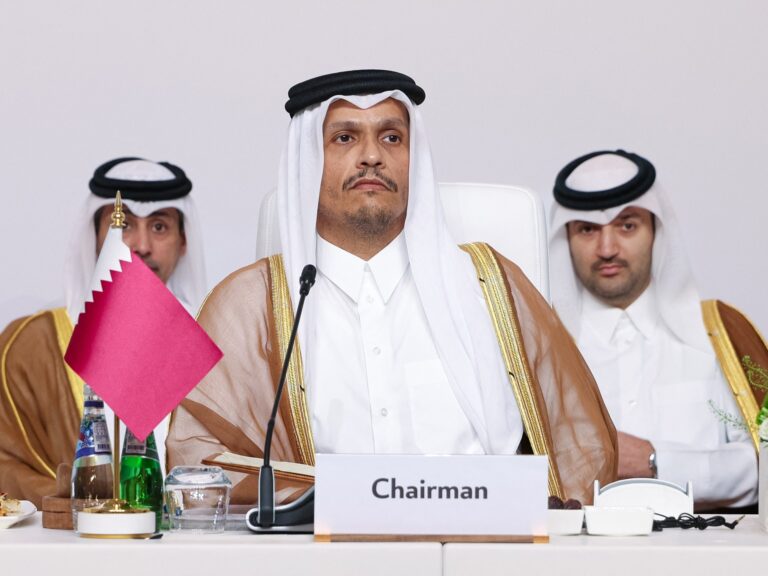
Qatar’s Prime Minister Sheikh Mohammed bin Abdulrahman bin Jassim Al Thani says the Gaza ceasefire plan unveiled by United States President Donald Trump meets the key goals set by mediators – stopping the killing and displacement of Palestinians – and urged all sides to seize the “momentum” to bring Israel’s war to an end.

In an interview with Al Jazeera aired on Wednesday, Sheikh Mohammed said Doha had passed the plan, already backed by Israeli Prime Minister Benjamin Netanyahu, to Hamas’s negotiating team and discussed its broad terms.

Recommended Stories

list of 3 itemsend of list

He acknowledged the plan has “practical and implementation challenges,” but said it tackles the most urgent priority: ending the bloodshed in the Gaza Strip while also opening the door to “opportunities”.

“Everyone agreed on stopping the war, preventing displacement and the full withdrawal of the Israeli army. These are the three main, pivotal matters,” he said. “And the direct responsible party for managing Gaza are the Palestinian people themselves.”

“The main focus is how to protect the people in Gaza,” stressed Sheikh Mohammed.

On Monday, Netanyahu apologised to Qatar for the killing of a Qatari citizen during an unprecedented Israeli attack on Hamas leaders in Doha last month, which drew global condemnation.

Sheikh Mohammed received the apology on Monday in a joint call from Trump and Netanyahu during their meeting at the White House.

‘There are challenges’

The 20-point plan has drawn support from a wide range of Arab and Muslim countries, including Saudi Arabia, the United Arab Emirates, Qatar, Egypt, Turkiye and Indonesia. It stipulates that once agreed, the attacks in Gaza will end immediately and “full aid” will be allowed into the Strip.

Representatives from Turkiye are joining a meeting of the Gaza mediation team in Doha amid the diplomatic movement. “Turkiye now stands as part of the US initiative” and is collaborating closely on it, Qatari Foreign Ministry spokesperson Majed al-Ansari told a news conference on Tuesday.

The plan states that all Israeli captives would be freed within 72 hours of its acceptance, followed by Israel’s release of nearly 2,000 Palestinian prisoners. Hamas, for its part, would step down from power and demilitarise, with its members granted amnesty.

An international force would be deployed to temporarily oversee security and train local Palestinian police forces, while a technocratic committee of Palestinians would assume interim responsibility for governance.

Sheikh Mohammed said the details on some of the points, specifically the process of Israel’s withdrawal and makeup of a future Palestinian administration, will need to be clarified and negotiated.

The plan sets no schedule or clear standards for Israel’s withdrawal, and vaguely gives Israel the right to hold onto a “security perimeter” until the territory “is properly secured”.

Sheikh Mohammed said fleshing out these matters “is primarily the work of the Palestinian side with the Israeli side, but also as a broader supporting international community, there must be a clear and legal framework for this matter, which of course will be at the UN Security Council.”

Hamas, which Doha says has promised to “responsibly examine” the proposal, has yet to give an official reply. Trump on Tuesday said the group had three to four days to answer, and warned that if it didn’t sign on, they would “pay in hell”.

“This plan is not an offer, as Trump made quite clear. It’s an ultimatum,” said Al Jazeera’s Mike Hanna from Washington, DC.

‘No guarantees’

Some analysts raised concerns that the plan does not provide Palestinians with sufficient security guarantees or a path to autonomous governance.

“If you read the agreement itself, there are no guarantees provided to the Palestinians, not a single guarantee,” said Palestinian lawyer and analyst Diana Buttu. “All guarantees are provided to the Israelis.”

“There is every indication that if, at any point, Israel decides that it wants to go back to the war, it will do so,” said Phyllis Bennis, a programme director at the Institute for Policy Studies in Washington, DC.

The renewed ceasefire push comes as Israel presses a devastating offensive into what it claims is one of Hamas’s last strongholds in Gaza City, nearly two years into the war.

Since October 7, 2023, Israel’s attacks in the enclave have killed 66,097 Palestinians and injured 168,536, while its aid restrictions have contributed to widespread malnutrition, causing 453 hunger-related deaths, according to Gaza’s Health Ministry.

Artificial Neuron Replicates Size and Function of Real Cells

0

Scientists have built an artificial neuron that’s so realistic it fires, learns, and responds to chemical signals just like the real thing – a breakthrough that could transform computing, medicine, and the way that tech merges with biology.

Neurons are incredible pieces of biological hardware that enable complex processes like thought, emotion, and movement via specialized communication across vast networks using electrical and chemical signals. It’s little wonder that science is keen to emulate these highly efficient and extremely effective cells.

Now, a team of engineers at the University of Massachusetts (UMass) Amherst has created an artificial neuron that doesn’t just mimic how real neurons behave, but also matches them in size, energy use, signal strength, timing, and responsiveness to chemical signals.

“Our brain processes an enormous amount of data,” said Shuai Fu, the study’s lead author and a UMass Amherst graduate student in electrical and computer engineering. “But its power usage is very, very low, especially compared to the amount of electricity it takes to run a Large Language Model, like ChatGPT.”

The researchers built their artificial neuron around a type of memristor, a memory resistor, made using protein nanowires from a microbe, Geobacter sulfurreducens. This bacterium produces conductive nanowires that, when integrated into the memristor, drastically reduce the voltage required for switching. Consequently, the memristor can operate at very low voltages (about 60 mV) and tiny currents (around 1.7 nA), numbers comparable to biological neurons.

“Previous versions of artificial neurons used 10 times more voltage – and 100 times more power – than the one we have created,” said Jun Yao, PhD, associate professor of electrical and computer engineering at UMass Amherst and the study’s corresponding author. “Ours registers only 0.1 volts, which [is] about the same as the neurons in our bodies.”

The researchers integrated the memristor into a simple resistor-capacitor (RC) circuit to replicate the different phases of a neuron’s electrical activity. That way, it could move through charge integration, the slow buildup before a neuron fires, rapid depolarization, the sudden spike when a neuron fires, and repolarization, a return to resting state and preparation for the next spike. This design also allowed the system to include a refractory period, a brief pause after firing, just like a real neuron.

Diagrams showing connecting the artificial neuron to a heart muscle cell, the sensing signals it recorded, and the neuron firing in response

The researchers then added chemical sensors that could detect ions, such as sodium, and neurotransmitters like dopamine. These sensors changed the circuit’s electrical properties in response, mimicking how real neurons adjust their behavior based on chemical signals in their environment; a process known as neuromodulation.

Finally, they connected the artificial neuron to real, beating human heart cells (cardiomyocytes). The team also demonstrated the artificial neuron’s real-time interpretation of biological signals, such as detecting changes in cardiomyocyte activity in response to exposure to the drug norepinephrine, a critical step toward integrating these neurons directly with living tissue.

“We currently have all kinds of wearable electronic sensing systems, but they are comparatively clunky and inefficient,” Yao said. “Every time they sense a signal from out body, they have to electrically amplify it so that a computer can analyze it. That intermediate step of amplification increases both power consumption and the circuit’s complexity, but sensors built with our low-voltage neurons could do [it] without any amplification at all.”

This is, of course, an early-stage prototype and experiments were conducted in controlled lab environments. The system is not yet ready for use inside a living organism. However, the discovery represents a major leap forward in bioelectronics that could form the foundation for future technologies that merge electronics and biology far more naturally than ever before.

These neurons could one day help repair or replace damaged brain circuits, improve brain-machine interfaces (BMIs), or serve as sensors that monitor cell health and drug responses in real time. Because they consume very little energy and operate at biological signal levels, such artificial neurons could lead to much more efficient brain-inspired computing hardware.

Only time will tell.

The study was published in the journal Nature Communications.

Source: UMass Amherst

Denmark sees a 20.5% increase in Tesla registrations in September

0

Tesla registrations in Denmark rise 20.5% in September

Italian Prime Minister warns Gaza aid flotilla against continuing mission, cites potential hindrance to peace efforts

0

Reuters Giorgia Meloni, wearing a beige suit and gold, floral earrings, leans her head toward the camera. Reuters

Italian leader Giorgia Meloni says a new US proposal has sparked “hope” of ending the Israel-Hamas war

Italian Prime Minister Giorgia Meloni has told a flotilla sailing towards Gaza to stop, saying the latest attempt by activists to deliver aid risks derailing a US plan to end the war.

More than 40 boats sailing in the Global Sumud Flotilla (GSF) have been accompanied by an Italian naval frigate, which Italian officials said would stop once the flotilla was 150 nautical miles (278km) from Gaza’s shoreline.

Shortly after reaching that point on Wednesday, GSF said it was on “high alert” and that drone activity was “increasing” above the flotilla.

Meloni said the US proposal had sparked “hope” of ending the Israel-Hamas war, adding it was “a fragile balance, which many would be happy to destroy”.

“I fear that the flotilla’s attempt to break the Israeli naval blockade could serve as a pretext to do so,” Meloni said.

Israel has told the flotilla to deliver the humanitarian aid to an Israeli port instead, according to the AFP news agency.

The flotilla consists of more than 500 people, including Italian politicians and Swedish climate activist Greta Thunberg.

In a series of posts on Telegram early on Wednesday morning, GSF said that it has now entered the area “where previous flotillas have been attacked and/or intercepted”.

It added that they had prepared for a possible interception after several unidentified vessels, some without lights, approached the flotilla. The unidentified vessels have since departed.

Italian officials have urged the flotilla to accept a compromise and drop the aid in Cyprus to avoid a confrontation with Israel.

“Any other choice risks becoming a pretext for preventing peace, fuelling conflict and therefore affecting above all the people of Gaza,” Meloni said.

But in a statement, the Global Sumud Flotilla said it would continue to sail.

“The Italian navy will not derail this mission. The humanitarian demand to break the blockade cannot be walked back to port,” it said.

Watch: Greta Thunberg on whether Gaza flotilla is a ‘publicity stunt’

Last week, Italian Defence Minister Guido Crosetto condemned what he said was an overnight drone attack by unidentified perpetrators on the flotilla.

Italy and Spain deployed naval ships to the flotilla, then off the coast of Crete, after it reported explosions, drones overhead and communications jamming – accusing Israel of a “dangerous escalation”.

Israel did not comment on the incident – but has repeatedly said the flotilla is a Hamas operation, without citing evidence.

Pope Leo XIV also expressed concern for the safety of the flotilla. “From all sides, people are saying, ‘let’s hope that there will not be violence, that people are respected’. That’s very important,” he said.

In an interview with the BBC on Sunday, Greta Thunberg pushed back against criticism that the flotilla was a publicity stunt.

“I don’t think anyone would risk their life for a publicity stunt,” she said.

The US peace plan for Gaza proposes an immediate end to fighting, the release within 72 hours of 20 living Israeli hostages held by Hamas as well as the remains of the more than two dozen hostages who are believed to be dead – in exchange for hundreds of detained Gazans.

Single mother wins lawsuit against Kentucky after being removed from food stamp program for purchasing groceries at her workplace.

0

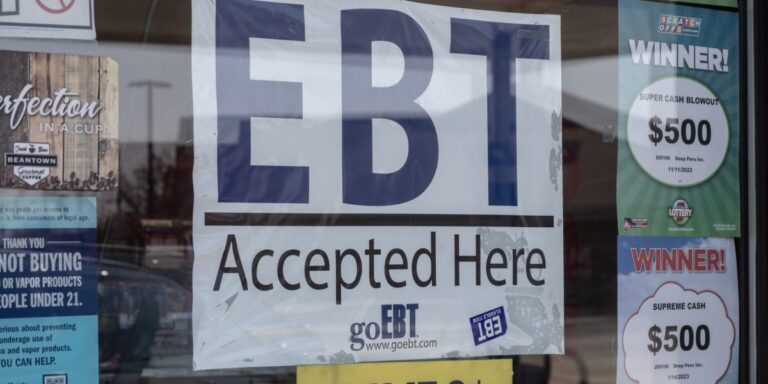
A single mother who relied on federal food assistance lost her benefits in 2020 after Kentucky investigators concluded she’d committed fraud.

The state alleged she had made multiple same-day purchases, tried to overdraw her account a few times, entered a few invalid PINs and sometimes made “whole-dollar” purchases that are unlikely during typical grocery runs.

The woman from Salyersville in Appalachian Kentucky had an explanation: She worked at the store. She would sometimes buy lunch there and then get groceries after work. Her child would also occasionally use her card.

An administrative hearing officer kicked her off the Supplemental Nutrition Assistance Program (SNAP) regardless, based solely on the allegedly suspicious shopping pattern. She sued — and won.

“It is draconian to take away SNAP benefits from a single mother without clear and convincing evidence that intentional trafficking was occurring during a time when food scarcity is so prevalent,” Franklin County Judge Thomas Wingate said in his 2023 decision.

A surge of disqualifications

Over the last five years, the Kentucky Cabinet for Health and Family Services has brought hundreds of fraud cases that are heavily reliant on transactional data with the goal of revoking people’s food benefits.

Judges, lawyers and legal experts said in interviews and in court documents that such evidence proves little. Kentucky Public Radio reviewed dozens of administrative hearing decisions and court documents from the last five years in which the cabinet relied on shopping patterns to prove a person had “trafficked,” or sold, their benefits.

Kentucky is so aggressive in disqualifying people from SNAP benefits that the state is second in the nation for per-capita administrative disqualifications, behind Florida, according to the most recent federal data from 2023.

In the last decade, disqualifications in Kentucky rose from fewer than 100 in 2015 to over 1,800 in 2023. And more than 300 others have been accused of selling or misusing their benefits since January 2024, according to records obtained by Kentucky Public Radio.

Another Franklin County judge in 2023 ordered the cabinet to stop disqualifying individuals based solely on transactional data, but since the decision, at least three lawsuits allege the health agency continues to bring such cases.

Transactional data alone cannot prove intent to commit fraud nor show the actual result of any individual transaction, University of Kentucky law professor Cory Dodds said, adding, “I’m not saying that folks didn’t do it, didn’t commit the fraud, but I don’t think the cabinet in a lot of these cases has met their burden of proof, either.”

Facing punishment, recipients are pressured to waive their hearings

Kentuckians receive notice of their alleged suspicious activity through mailed letters, in which they’re asked to voluntarily waive their right to a hearing and automatically accept the punishment. On first offense, that’s generally a one-year SNAP ban. They’re also required to repay the full amount the state says they misused.

Often, these cases involve a relatively small amount of money. Records show that more than 900 people have been kicked off for “trafficking” or misuse for less than $1,000 since 2022. The lowest amount alleged was 14 cents.

The state has leaned heavily on administrative hearing waivers since 2015, and by 2023, almost a quarter of all disqualifications were via waiver. Some lawsuits allege individuals did not fully understand the consequences of the waivers and were encouraged to sign by officials.

Kentucky Public Radio reviewed more than two dozen cases since 2020 in which the cabinet accused an individual of trafficking using only spending patterns, despite the participants’ denial or lack of response — and with no other evidence or interviews presented, according to administrative hearing decisions.

Kendra Steele, a spokesperson for the Cabinet for Health and Family Services, declined to schedule an interview with cabinet officials after multiple requests. Steele said in an email that “we have never” brought trafficking cases based solely on transactional data and acknowledged it would not be sufficient to prove intent.

In response to a different question, Steele wrote the investigation into fraud allegations consists of looking into income, living situations “and patterns of spending that are indicative of trafficking.” She did not indicate how any of those factors could be used to prove intentional misuse or selling of SNAP benefits, or how it differs from relying on transactional data — which is inherently a pattern of spending. Steele said in another email that they also interview vendors and SNAP recipients.

‘It’s our fellow Kentuckians who are going hungry’

Roughly 4 in 25 Kentuckians suffer from food insecurity, similar to the national rate of about 14%, according to an Associated Press analysis of U.S. Census Bureau and Feeding America data.

The USDA will stop collecting and releasing statistics on food insecurity after October, saying Sept. 20 that the numbers had become “overly politicized.” The decision comes in the wake of federal funding cuts for food and nutrition safety net programs nationwide.

In the last fiscal year, 1 in 8 Kentuckians benefitted from SNAP, formerly called food stamps. Food insecurity in Kentucky’s rural areas is even more stark, and legal representation harder to come by.

“The people who benefit from these programs are some of the folks that we need to be helping the most in this country,” Dodds said. “It’s our fellow Kentuckians who are going hungry as a result of baseless allegations of waste, fraud and abuse.”

The cabinet denied KPR’s request for case notes on individual fraud accusations starting in early 2024 that would include the evidence used in the accusations. But administrative hearing decisions reviewed by KPR from 2020 through 2023 included evidence the cabinet relied on; hearing officers would frequently say a person had trafficked their benefits based on shopping patterns the state deemed suspicious.

Expert say officials overrely on purchase data

National legal experts who specialize in SNAP access say an overreliance on transactional data isn’t unique to Kentucky. Transactional data was initially meant as a tool to identify potential fraud cases — not as a means to prove it, Georgetown law professor David Super said.

He’s studied SNAP disqualifications for decades, and has seen many cases where he believes transactional data is misconstrued as direct evidence of wrongdoing, instead of requiring a state to build cases with witnesses, affidavits, video evidence and plea deals.

In one redacted 2023 state administrative hearing decision, a hearing officer decided a woman in the eastern Kentucky city of McKee had trafficked her benefits because she had made eight back-to-back transactions in a year. The decision also said she’d checked her balance several times, made a few insufficient fund attempts and had incorrectly entered her PIN number a few times.

She lost her SNAP benefits for a year. In an appeal, the woman told the state she has two kids and had recently discovered she was pregnant.

“Everyone forgets to get something and has to go back in the store and get it,” she wrote, defending her back-to-back purchases.

She received another hearing, but the outcome didn’t change.

Cabinet officials acknowledged in cross examinations during a 2023 case that back-to-back transactions and whole-dollar purchases aren’t forbidden under SNAP rules, nor are recipients told that the cabinet considers them suspicious.

But all of these things are used as evidence — sometimes the sole evidence — that a person misused their benefits.

Kristie Goff, an AppalRed legal aid lawyer in Prestonsburg in southeast Kentucky, used to see many of these cases, though they’ve declined in the last year.

“There have been very few instances in cases I have handled, where a client was not able to give me a perfectly reasonable explanation for those transactions, and none of it was trafficking,” Goff said. “There are no receipts, there’s no video footage to show that someone’s doing anything wrong. It’s just a number written on a paper.”

While saying purchasing history is insufficient to prove trafficking, Kentucky judges have stopped short of demanding that the state change how it trains employees or conducts its SNAP investigations.

State training materials focus almost entirely on purchase patterns

In response to an open records request, the cabinet provided KPR with documents used to train investigators on intentional program violations. They appear to almost exclusively discuss transactional data, including investigating back-to-back payments, large transactions and whole-dollar purchases.

In 2020, Michigan appellate judges decided transactional data alone is never sufficient to prove that a business — or person — fraudulently used SNAP benefits.

Dodds believes that should be the standard for all states, including Kentucky.

He is in the early stages of systematically reviewing thousands of SNAP benefit trafficking hearing decisions between 2020 and 2023. Data from about 700 decisions in 2020 alone already shows that many Kentuckians have been denied benefits before the state presents what he considers real evidence of guilt.

“There are maybe a handful of cases that I would say there was real evidence that they had done something wrong,” Dodds said. “There was one where a woman was on the phone with the hearing officer while she was actively trying to sell her benefits. … But cases with non-transactional data are exceedingly rare.”

___

Associated Press data journalist Kasturi Pananjady contributed to this report.

___

This reporting is part of a series called Sowing Resilience, a collaboration between the Institute for Nonprofit News’ Rural News Network and The Associated Press focused on how rural communities across the U.S. are navigating food insecurity issues. Nine nonprofit newsrooms were involved in the series: The BeaconCapital BEnlace Latino NCInvestigate MidwestThe Jefferson County BeaconKOSULouisville Public MediaThe Maine Monitor and MinnPost. The Rural News Network is funded by Google News Initiative and Knight Foundation, among others.

The Associated Press Health and Science Department receives support from the Howard Hughes Medical Institute’s Department of Science Education and the Robert Wood Johnson Foundation. The AP is solely responsible for all content.


OpenAI prepares AI-generated content exclusive TikTok-style app, report reveals

0

ChatGPT maker OpenAI is preparing to roll out a standalone application for Sora 2, its next-generation video creation model, according to documents reviewed by WIRED.

The app features a vertical feed interface with swipe navigation that mirrors TikTok’s design. However, the difference is that every piece of content is AI-generated, the newswire reported on Monday (September 29).

The application, which launched internally last week, has been used by OpenAI employees, according to WIRED. Some managers have expressed concern about the tool becoming a distraction, the report said.

Sora 2 will reportedly allow users to create clips of up to 10 seconds. Unlike traditional social video platforms, the app doesn’t permit uploads from camera rolls or other applications. Instead, it relies entirely on text prompts to generate content through OpenAI’s video model.

The app includes a recommendation algorithm that shows content through a TikTok-style “For You” feed. Users can interact with videos through likes, comments and a remix function that allows them to edit existing clips.

One feature of the app is an identity verification system that lets users confirm their likeness for use in generated videos. Once verified, the system can create videos featuring that person’s appearance. Other users can tag verified individuals and use their likenesses into clips. Users will be able to receive alerts whenever their likeness appears in content, even if the video remains unpublished in draft form.

However, content moderation presents challenges for the new app, according to WIRED. The system frequently blocks video generation requests due to copyright safeguards and other filters, sources told the news outlet. OpenAI, led by CEO Sam Altman, already faces multiple copyright infringement lawsuits, including cases filed by The New York Times, comedian-writer Sarah SilvermanGame of Thrones author George R.R. Martin, and German music licensing organization GEMA.

The timing of OpenAI’s move into social video coincides with talks about TikTok’s future in the US. US President Donald Trump recently signed an executive order providing the legal framework for a “qualified divestiture” that would transfer majority control of TikTok’s US operations to American investors.

The executive order, titled “Saving TikTok While Protecting National Security,” sets the structure for a deal that would allow TikTok’s 170 million users in the US to continue using the app.

The launch of OpenAI’s new app also comes amid increasing competition with tech giants Meta and Google. Last week, Meta introduced Vibes, a feed within its Meta AI application that is dedicated to AI-generated short videos. Meanwhile, Google announced earlier this month that it would integrate Veo 3, its latest video generation model, into YouTube.

OpenAI’s fully-AI approach contradicts that of TikTok, which recently updated its policies to prohibit AI-generated videos on “matters of public importance or harmful to individuals.”

In July, OpenAI declared that it will sign on to the European Union’s voluntary AI Code of Practice, which includes restrictions on how AI companies can collect copyrighted content.

Music Business Worldwide

Can China’s K visa system rival the H-1B visa program in the business and economy sector?

0

China is rolling out a new visa aimed at attracting foreign talent in the fields of science and technology.

The K visa comes into effect from Wednesday, following a proclamation last month by the State Council, China’s cabinet.

Recommended Stories

list of 4 itemsend of list

The visa has attracted particular attention in light of United States President Donald Trump’s tightening of the eligibility rules for the H-1B, which Silicon Valley heavily relies on to recruit skilled labour from overseas.

What is the goal of the K visa, and how does it work?

The Chinese government has cast the visa as part of its efforts to attract foreign talent to boost the country’s competitiveness in science and technology.

Ministry of Foreign Affairs spokesman Guo Jiakun on Tuesday said the visa’s purpose was to “promote exchanges and cooperation” between science, technology, engineering and mathematics (STEM) talent from China and other countries.

The visa is the latest in a series of recent reforms intended to make China more attractive to foreigners, including streamlined visa processing and the introduction of a redesigned permanent residency card.

“From the 1980s to the 2010s, China used to lose talent to developed countries such as the United States,” Zhigang Tao, a professor of strategy and economics at Cheung Kong Graduate School of Business in Beijing, told Al Jazeera.

“Now the task is to keep local talent and also attract some global talent.”

Chinese officials have said the K visa, which will be open to graduates of recognised universities and young professionals engaged in STEM-related fields, will offer more flexible conditions than existing options.

The main advantage of the visa is that, unlike previous skilled migrant programmes, it does not require sponsorship by an employer.

However, many key details of the visa remain unclear, including duration of stay and unspecified requirements related to age, educational background and work experience.

Is the K visa likely to attract foreign talent?

Edward Hu, immigration director at consultancy Newland Chase in Shanghai, said there has been strong interest in the visa, with inquiries up more than 30 percent since August.

Hu said there has been particularly strong interest from prospective applicants in India, Southeast Asia, Europe, and the US.

“The K visa fills a gap in China’s talent system by lowering entry barriers for younger STEM talents – complementing the existing R visa, which targets top-tier experts,” Hu told Al Jazeera, referring to the visa as a “strategic move” to position China as a top destination for early-career STEM talent.

The R visa, introduced in 2013, is aimed at “high-level and professional” foreigners who are “urgently needed” by the state, and requires sponsorship by an “inviting organisation”.

Still, China’s drive to expand its talent pool with the K visa faces challenges.

While China has made moves to open to foreigners, the country is still far less internationalised than the US.

Unlike the US, China rarely grants citizenship to foreigners.

While Chinese permanent residency is more feasible to obtain, it is still only granted to a tiny fraction compared with the roughly one million non-US citizens who receive green cards each year.

Chinese work environments also present a language barrier for English-speaking applicants when compared with their Silicon Valley counterparts.

Michael Feller, chief strategist at Sydney-based business consultancy Geopolitical Strategy, said Chinese companies would need to offer English-language roles and “international-style” work schedules to compete with US firms.

“I can’t imagine many foreign graduates interested in the ‘9-9-6’ work-life balance that many Chinese firms are known for,” Feller told Al Jazeera, referring to the 72-hour workweek famously endorsed by Alibaba founder Jack Ma.

A US flag and a H-1B visa application form are displayed together on September 22, 2025 [Dado Ruvic/Reuters]

What does the K visa have to do with the H-1B?

While China’s drive to recruit talent has cast Trump’s crackdown on immigration in sharp relief, there is no direct link between the introduction of the K visa and his moves to rein in access to the H-1B.

Beijing officially unveiled its visa on August 7, weeks before Trump announced the introduction of a $100,000 fee on H-1B applications, sending shockwaves through the tech sector, especially in India, the source of about 70 percent of visa recipients.

However, many observers have suggested that the US’s inward turn could be to the benefit of other countries seeking to attract talent, including China.

“The K visa is incredible timing from China’s perspective,” Feller said.

“It’s unlikely that Beijing knew that Washington was about to hike the fees for its own H-1B visa category, but it certainly gives the K visa added impetus in the global war for talent.”

Hu of Newland Chase said he expected the shift in policy around the H-1B to “significantly boost” the appeal of the K visa, “positioning it as a timely alternative for affected talent”.

“The K visa offers a low-cost, sponsor-free pathway – aligning with the global surge in STEM talent demand and making China a more accessible option,” he said.

Challenging Client

0


Client Challenge


JavaScript is disabled in your browser.

Please enable JavaScript to proceed.

A required part of this site couldn’t load. This may be due to a browser
extension, network issues, or browser settings. Please check your
connection, disable any ad blockers, or try using a different browser.

The Unfolding of Trump and Hegseth’s Meeting with Top US Generals

0

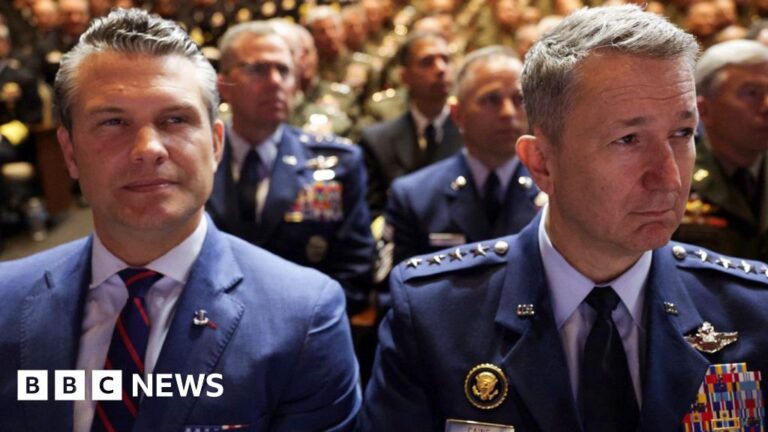
Hundreds of US generals and admirals gathered at the Marine Corps Museum in Quantico, Virginia on Tuesday after being summoned from their posts all around the world.

Defence Secretary Pete Hegseth informed military leaders of the 10 new directives the department would be implementing. The directives include new standards around physical fitness, grooming, and the return to “the highest male standard” for combat positions. US President Donald Trump also addressed the generals.

The BBC’s Bernd Debusmann, who was at the military gathering, describes how the unusual meeting unfolded.