
A required part of this site couldn’t load. This may be due to a browser
extension, network issues, or browser settings. Please check your
connection, disable any ad blockers, or try using a different browser.

A required part of this site couldn’t load. This may be due to a browser
extension, network issues, or browser settings. Please check your
connection, disable any ad blockers, or try using a different browser.

Two Kenyan human rights activists have gone missing in Uganda after reportedly being abducted by armed men while attending opposition leader Bobi Wine’s campaign event.
Bobi Wine strongly condemned the “abduction” of Bob Njagi and Nicholas Oyoo, saying the pair had been “picked up mafia-style” at a petrol station and driven off to an unknown destination.
Kenyan police spokesman Michael Muchiri told the BBC he was not aware of the matter. The Ugandan police has been approached for comment.
Bobi Wine, a pop star whose real name is Robert Kyagulanyi, is running for the presidency in next year’s elections, challenging President Yoweri Museveni, 80, who has held power since 1986.
Bobi Wine said the two Kenyans were being targeted by the Ugandan government for associating with him.
“We condemn the continuing lawlessness by the rogue regime and demand that these brothers are released unconditionally! The criminal regime apparently abducted them simply for associating with me and expressing solidarity with our cause!” he posted on X.
Kenyan rights group Vocal Africa has also condemned the reported abductions and demanded their unconditional release.
A fellow activist who witnessed what happened on Wednesday afternoon said that four armed men forced the pair into a vehicle and sped off.
“There were four of them. There was also a lady who was seated in front; they took Bob and Oyoo Ochieng, who is the secretary general of the Free Kenya Movement,” the witness, who wanted to remain anonymous for security reasons, told Kenya’s Citizen TV.
He said both were unreachable on phone and their whereabouts were unknown.
Videos shared online show Njagi actively participating in Bobi Wine’s campaign, and appears on stage beside the opposition leader.
The activists had reportedly travelled to Uganda on Monday with some Ugandans before linking up with the campaign.
Njagi was also picked up in Kenya last year by masked men during a wave of abductions believed to have been targeting government critics in the country.
He remained missing for over a month before resurfacing, after a court ordered police to produce him. He later recounted the harrowing conditions in captivity – isolated and denied food for most of the days.
Their latest disappearances mirror past incidents involving politicians and activists across the East African region.
Earlier this year, Kenyan activist Boniface Mwangi and his Ugandan counterpart Agather Atuhaire were detained in Tanzania and held incommunicado for days before being abandoned at their respective national borders.
They later recounted being brutally mistreated, including sexual torture at the hands of the Tanzanian authorities – allegations which police dismissed as “hearsay”.
Last year, another Uganda opposition figure, Kizza Besigye, mysteriously disappeared in Nairobi only to surface four days later in a military court in Uganda, where he faces treason charges.
The cases have since sparked widespread condemnation and concerns that East African governments could be collaborating to contain dissent.

Barclays initiates Essential Utilities stock with Overweight rating
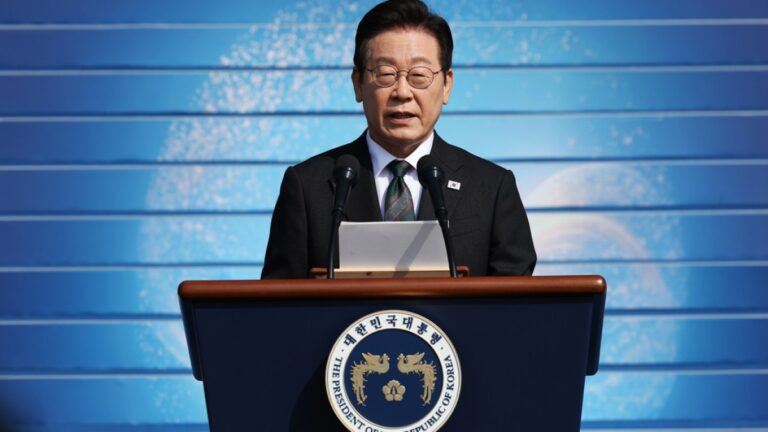
Programme, which started after Korean War as a way of removing mixed-race children from society, violated human rights.
Published On 2 Oct 2025
South Korea’s president has apologised for a notorious foreign adoption scheme set up after the 1950-53 Korean War that caused “anxiety, pain, and confusion” to more than 14,000 children sent abroad.
President Lee Jae-myung said in a Facebook post on Thursday that he was offering “heartfelt apology and words of comfort” to South Koreans adopted abroad and their adoptive and birth families, seven months after a Truth and Reconciliation Commission said the programme violated the human rights of adoptees.
list of 3 itemsend of list
The commission, which investigated complaints from 367 adoptees in Europe, the United States and Australia, held the government accountable for facilitating adoptions through fraudulent practices, including falsifying records to portray children as abandoned orphans and switching identities.
Lee said he felt “heavy-hearted” when he thought about the “anxiety, pain and confusion” that South Korean adoptees would have suffered when they were sent abroad as children, and asked officials to formulate systems to safeguard the human rights of adoptees and support their efforts to find their birth parents.
Mass international adoptions began after the Korean War as a way to remove mixed-race children born to local mothers and American GI fathers from a society that emphasised ethnic homogeneity, with more than 140,000 children sent overseas between 1955 and 1999.
Foreign adoptions have continued in more recent times, with more than 100 children on average, often babies born to unmarried women who face ostracism in a conservative society, still being sent abroad for adoption each year in the 2020s.
After years of delay, South Korea in July ratified The Hague Adoption Convention, an international treaty meant to safeguard international adoptions. The treaty took effect in South Korea on Wednesday.
Former president Kim Dae-jung apologised during a meeting with overseas adoptees in 1998, saying: “From the bottom of my heart, I am truly sorry. I deeply feel that we have committed a grave wrong against you.”
But he stopped short of acknowledging the state’s responsibility for the decades of malpractice.

Yesterday, Spotify founder and CEO Daniel Ek announced that he’ll be stepping down in the new year. Two of his top executives, Gustav Söderström, chief product and technology officer, and Alex Norström, chief business officer, will take over as co-CEOs in his place.
With that news, the music streamer became the third company to choose the co-CEO route within the space of just over a week. A few days earlier, on Sept. 29, Comcast said that its sitting CEO Brian Roberts will be joined by Michael Cavanagh, former president, in January. (The arrangement is being read as part of a succession plan.) And at Oracle a week before, ex-CEO Safra Catz moved into the vice-chair role, and was replaced by Clay Magouyrk, former head of Oracle Cloud Infrastructure, and Mike Sicilia, who previously ran Oracle Industries.
The trio of announcements was remarkable, and points to a micro trend: leaders sharing the corner office, a practice previously more common for private equity firms and various outliers, like Netflix. It’s also notable that all the members of the new gang of co-CEOs are men.
This isn’t a big surprise: Men dominate C-suites and the CEO job in corporate America. And the men who won new roles this month may be the best or most obvious candidates within their peer groups. Still, when companies choose to double the number of people holding the top title, one might assume it would improve the odds that a woman would be tapped for the job. At one time, before DEI became a fraught topic, companies proudly touted their commitments to gender diversity in leadership.
But Fortune has found that mixed-gender co-CEO pairs are exceedingly rare, recently and historically. Although women co-CEOs are not unusual among women-founded startups, female co-CEOs at large firms are even rarer than women running companies solo.
Here’s what the data show: Among Fortune 500 companies, just 11% of organizations are led by women—though one in 10 is a high point after years of slow progress. Our Fortune 500 Europe and Fortune Global 500 lists also show women lagging far behind men in CEO jobs, with women running only 6% of companies on both rankings.
And when we looked back at Fortune 500 data on co-CEO setups stretching back to 1998, we found only three examples of paired chief executives that included women. We could not find any examples of two women sharing the CEO job at a Fortune 500 firm.
For decades, Herbert and Marion Sandler, a couple, ran Golden West Financial before it was purchased by Wachovia in 2006. At Intel, two interim co-CEOs were in charge this year during the three-month gap between one CEO’s departure last December and a new leader’s appointment in March. And at Oracle, Safra Catz and the late Mark Hurd shared the co-CEO job for five years, from 2014 until 2019, when Hurd died from an undisclosed illness. (One caveat: This is based on data from Fortune’s yearly Fortune 500 rankings, which offer snapshots of corporate leadership at the time of publication. If other women were appointed to short-lived co-CEO roles between our publishing dates, we may have missed them.)
Around the world, there are other examples: The U.K.-based department store Marks & Spencer appointed a mixed-gender duo in 2022, and the pair shared the job for two years, while German software leader SAP appointed mixed-gender CEOs in 2019, who worked together for one year before reported issues with disorganization led to a split-up. In both cases, the women co-CEOs departed, and the men stayed on as sole CEOs.
Our findings reflect a leadership pipeline problem that has been well-covered by Fortune over the years: Women are still not sitting in the most powerful roles within the C-suite, namely the CFO and COO jobs, which are more likely to produce future CEOs. Boards and executive leaders are not doing enough to put women on the path to the top job. The few women who do crack the C-suite tend to hold roles like CHRO, CMO, or general counsel.
At Free Float Analytics, an independent research firm that studies boards and executive leaders, analysts Matt Moscardi and Damion Rallis have also analyzed women in the C-suite and on the boards of the many companies going public this year. As Fortune first reported, they found what they called a “Bro IPO” trend this summer with women representing only 11% of 205 executives in leadership roles listed in IPO filings in the first half of August. Stepping back, they saw the same trend when they looked at IPOs for the first seven months of 2025.
According to their analysis of securities filings, 86% of the executives at companies that filed to go public in that time period were men, a significant hike compared with 2024, during which men made up 63% of executives at companies making their trading debut. (They found one co-CEO pairing in the IPO data. The co-CEOs were both men.)
Rallis points out that in many cases, the co-CEOs are essentially competing for the favor of a still-powerful founder or former chief executive. At Spotify, Ek is moving into an executive chair position, meaning he will have ultimate control over major decisions. And Larry Ellison, Oracle’s cofounder and one of the richest people in the world, remains chairman of Oracle and its chief technology officer. They “don’t actually cede control, they stick around to maintain order and dominance,” Rallis says, likening all-male co-CEO appointments to “a CEO Hunger Games to amuse the king.”
“I see it as male dictators with so much power and ego that they let their male prodigies fight it out to see who will become top dog,” Rallis says.
Coco Brown, CEO of Athena Alliance, a membership organization for senior executive women, says that she sees the bro IPOs and recent data showing women’s power slipping as part of a recent shift toward embracing “masculinity” in the corporate setting, as Meta CEO Mark Zuckerberg put it during his appearance on The Joe Rogan Experience podcast in January.
“In some part of the zeitgeist,” Brown says, “there’s this backlash to the sense of femininity being brought into the workforce.” There’s a feeling, she added, “that we’ve softened the workforce and it needs to get some grit back and some guts back.”
But she also suspects this batch of appointments may be part of a more familiar story— when a man in power says, “I get to choose my buddies. I get to choose what’s comfortable.”
Maia DaviesBBC News and
Harry SekulichBBC News
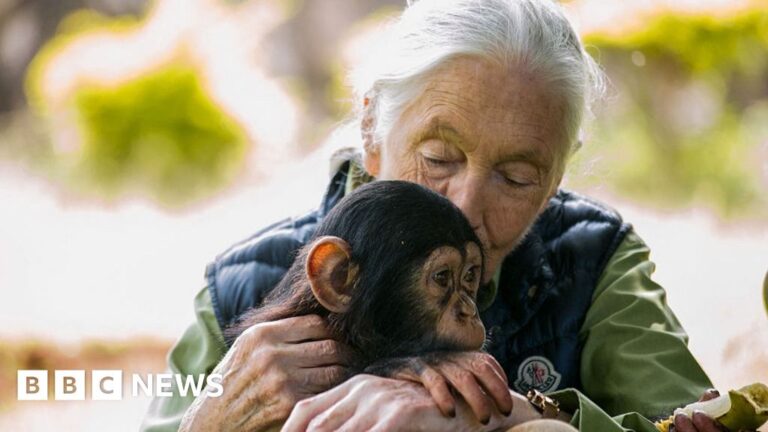
Conservationist Dame Jane Goodall, a world-leading expert on chimpanzees, has died aged 91.
Former US president Barack Obama was among those who paid tribute to Dr Goodall, who he said, “opened doors for generations of women in science”.
Actor and environmental campaigner Leonardo DiCaprio said that she “inspired millions to care, to act, and to hope”, and called her a “a true hero for the planet”.
Dr Goodall died of natural causes while in California on a speaking tour of the US, according to a statement from the Jane Goodall Institute.
It said her discoveries “revolutionised science” and that she was “a tireless advocate for the protection and restoration of our natural world”.
The United Nations said it mourned the loss of Dr Goodall, saying that she “worked tirelessly for our planet and all its inhabitants, leaving an extraordinary legacy for humanity and nature”.
Greenpeace said it was “heartbroken” by her death, calling her “one of the true conservation giants of our time”.
Its co-executive director in the UK, Will McCallum, said: “Dr Goodall’s legacy is not only in science but in the global movement she helped spark to protect nature and give hope for a better world.”
Naturalist Chris Packham told the BBC that he counted her among his heroes, calling her “revolutionary” and “remarkable”.
“To have lost a hero at a time when we need all of them on the frontline fighting for life on earth is a tragedy.”
 Getty Images
Born in 1934 and raised in London, Dr Goodall said she became fascinated by animals after reading books like The Story of Dr Doolittle and Tarzan.
She met leading primatologist Prof Louis Leakey while staying on a friend’s farm in Kenya in her mid-twenties. Although she had no qualifications, Mr Leakey saw her potential and helped arrange her first research trip to the jungles of Tanzania in 1960.
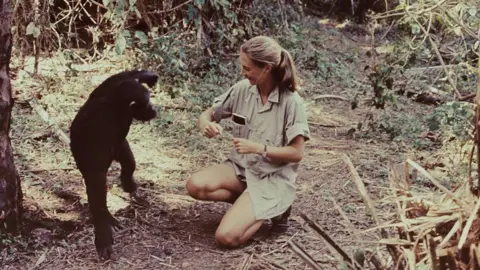
That year, she became the first person to record witnessing an animal using a tool – a large male chimpanzee, who she had named David Greybeard, digging termites out of a mound with a stick.
Until then, it was thought only humans were intelligent enough to do so. Her observations challenged years of conventional scientific thinking and shaped the future of evolutionary science.
Her work was published in leading journals, and in 1965 she made the front cover of National Geographic, introducing the world to the emotional and social lives of the primates.
 Getty Images
She revealed that the animals form strong family bonds and even engage in warfare over territory. She featured in a television documentary narrated by Orson Welles, which saw her playing and wrestling with baby chimps.
Her approach – associating so closely with the animals she studied, naming them and even referring to them as “my friends” – was scoffed at by some, mostly male, scientists at the time. She undertook a PhD based on her findings, despite not having an undergraduate degree or any prior scientific training.
After her experiences in the field she became an activist, working to free chimpanzees kept in zoos or in captivity for medical research, and later urged action on climate change in the face of widespread habitat devastation.
She told the BBC in 2024: “We’re in the midst of the sixth great extinction… the more we can do to restore nature and protect existing forests, the better.”
Asked what kept her motivated late in life, she said: “Surely people want a future for their children.”
 Getty Images
Her Jane Goodall Institute, founded in 1977, works to protect chimpanzees and supports projects aimed at benefiting animals and the environment.
Dr Goodall was appointed a Dame in 2003 and received the US Presidential Medal of Freedom in 2025.
She was known for travelling constantly for her work, telling the Times newspaper in 2022 that she had not slept in the same bed for more than three weeks since 1986.
Dr Goodall worked right up until her death, being interviewed on stage in New York a week ago. She was due to speak again at a sold-out event on 3 October in California.
 PA Media
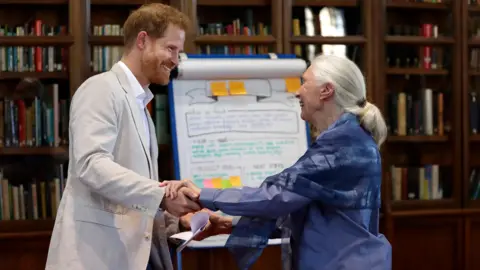
The Duke and Duchess of Sussex joined the many honouring the legacy of Dr Goodall, describing her as a “tireless advocate” for the protection of nature.
“Dr Jane Goodall DBE was a visionary humanitarian, scientist, friend to the planet, and friend to us,” Prince Harry and Meghan said in a statement.
Former Canadian prime minister, Justin Trudeau, said “her compassion will live on” in future conservation work.
Secretary General of the United Nations António Guterres hailed her work as a Messenger of Peace, a UN title she has held since 2002 for bringing “global attention to the urgency of protecting our environment”.
Environmental organisations, including Greenpeace and People for the Ethical Treatment of Animals (Peta), have also commemorated Dr Goodall’s legacy.
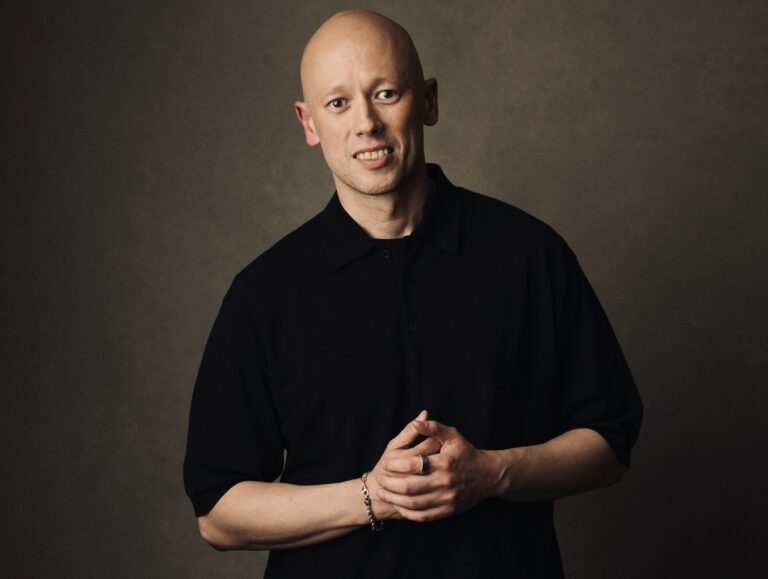
Alex Norström doesn’t want you to think of Spotify as a tech giant. He wants you to think of it as “a big, big startup that’s growing.”
This mindset from Spotify’s incoming co-CEO might seem incongruous for a company whose 276 million paying customers account for 3% of the world’s population, and which in 2024 achieved its first full year of profitability.
But it speaks to the ambition (and opportunity) that Norström sees ahead as he prepares to take the helm alongside Gustav Söderström on January 1, 2026.
The leadership transition, announced on Tuesday (September 30), will see founder Daniel Ek step back from day-to-day operations after nearly two decades as CEO, assuming the role of Executive Chairman. He explained the strategy behind the move on a call with analysts yesterday, which you can read about here.
For Norström, who’s spent 15 years at Spotify and currently serves as co-President and Chief Business Officer, it represents both continuity and change.
“The change you’re seeing is gradual,” Norström tells MBW in an exclusive interview the morning after the announcement.
He and Söderström have already been running much of Spotify’s day-to-day operations for nearly three years, with Ek increasingly taking on what Norström calls “a coaching role.”
The timing of the transition coincides with what Norström describes as Spotify hitting “every mark” – citing user growth, subscriber adoption, and increased payouts to “artists, podcasters, [and] authors.”
Spotify’s Premium Subscriber base (of 276m) at the close of Q2 was up by +8 million net subs on the 268 million that the firm counted at the end of the prior quarter (Q1 2025). Spotify’s total Monthly Active Users, which combine paying users and ad-supported users, grew 11% year over year to 696 million. Spotify paid out $10 billion to the music industry in 2024 – a full $1bn more than in 2023.
The company is also “shipping” products at a pace that pleases the executive, pointing to recent launches including lossless audio (arriving as a Premium feature rather than part of a super-premium tier), direct messaging capabilities within the app, and playlist mixing tools.
But perhaps most striking is Norström’s vision for where Spotify goes next.
While acknowledging that reaching 99% of the world’s population paying for its services might be “crazy,” he doesn’t think 10-15% is unimaginable.
That would translate to around a billion subscribers, a number he explicitly references as a longer-term goal.
The growth, he believes, will come from markets like India, Bangladesh, Pakistan, and countries within Africa, regions where streaming adoption is still nascent but accelerating rapidly. He compares the current opportunity to “the beginning of LATAM,” when Spotify began its explosive growth across Latin America.
“I want people to feel a sense of wonder when they come to Spotify.”
Alex Norström
“Music is something wonderful. Almost everyone in the world has a relationship to it, sometimes even before they get exposed to language,” Norström says. “Call me crazy, but I believe this is the biggest opportunity there is in consumer products.”
As he and Söderström prepare to officially take the reins, he outlines his long-term vision for Spotify: “I want people to feel a sense of wonder when they come to Spotify, which they’re doing now already, but even more,” he tells us. “I want us to address that massive opportunity in front of us: getting closer to a billion subscribers”.
Here, Norström discusses his and Söderström’s objectives as Spotify’s incoming co-CEOs, covering topics such as subscriber adoption, pricing strategy, geographic growth, Spotify’s relationship with the music industry, and more.
What is at the top of your to-do list on day one as co-CEOs?
First of all, I would say everything is going really well for us right now. We’re hitting every mark on user growth and subscriber [acquisition]. And what’s more is that we have, over the past five years, consistently increased engagement, which is a great proxy for people continuing to love Spotify.
We are taking market share. We’re not losing a lot of users when we raise prices. We are increasing the payouts to the music industry, to artists, to podcasters, to authors, and so on. So we’re really in a really good position.
And then if you think about, what our focus is going forward, you can think about it in two ways. One is, we will relentlessly keep adding value back to subscribers and users. We will push the boundaries when it comes to innovation, and we will continue to work really hard, keep our bar really high, and try to deliver.
“Do I think we’re going to get to 99% of the world’s population? Maybe not. That’s crazy. But it’s not so unimaginable to get to 10% or 15%.”
We have been shipping more than we’ve shipped in a long, long while. We just improved our free tier. We just launched messages inside Spotify. We introduced the playlist mixing tools, lossless, interactive DJ, and other new AI features. Video has been scaling. We’ve launched audiobooks in more markets. The list just goes on and on. So I’m super pleased about the pace of shipping [products], because it’s about the same thing: it’s adding value back. That’s important to me.
And then there’s a further, longer outlook. I look at the growth opportunity of Spotify. There’s still so much left. Think about the subscriber count we have today – we touch roughly 3% of the world’s population.
Do I think we’re going to get to 99% of the world’s population? Maybe not. That’s crazy. But it’s not so unimaginable to get to 10% or 15%. So we think there’s still lots and lots of growth to be had, and we’re lucky to have music as our core business because it really has a very large TAM [total addressable market].
Could you explain to our readers how you and Gustav Söderström [pictured inset] will split decision-making going forward as Co-CEOs…
Of course. First of all, both of us have been at Spotify for a decade and a half. We both worked really closely with Daniel for a long, long time. We have spent a lot of time talking to each other every day for 15 years, and have been pushed to gradually take on more responsibility and be more accountable for Spotify. And so the change you’re seeing is gradual.
And more recently – we’re talking two and a half, almost three years ago now – Daniel gave us even more responsibility to take on more of the day-to-day and overseeing strategy and operations of Spotify.
“We do have our different domains and specialties, but what’s important is that we address everything together.”
And in that moment, we decided to work together, almost joined at the hip, to address Spotify’s opportunities and problems. We have assembled an integrated team to develop new tools that will lead the company, and the results have been substantial. The impact has been massive over the last two to three years.
And to return to your question, the split there on the surface is obvious: Gustav’s domain expertise lies within product and technology. Mine is within subscribers on the consumer end, of course, including advertising and content. I oversee our renewals, interface with the music industry and artists, and manage the other verticals as well. Also, the marketing and markets.
We do have our different domains and specialties, but what’s important is that we address everything together, and we also know each other’s areas. There is a lot of respect for each other’s domain expertise. Gustav is deeply interested in business. I like to think of myself as a product guy as well. So, we gain more brain capacity by combining our individual capacities, integrating each other into a single role and responsibility set.
The announcement mentioned that Daniel Ek will still determine capital allocation in his new role as Executive Chairman. Does that mean that major M&A decisions would still sit with him, or would that be a joint decision-making process between you and Gustav in collaboration with Daniel? How would that work?
Daniel has been talking a lot about him taking on the coaching role and being more of a coach than a player. And to be honest with you, he’s been doing that role really, really well.
And as he transitions into Executive Chairman, he will focus on the long arc of the company.
And again, that is something that we enjoy dealing with together. And as far as the role of coach here, obviously we take that very seriously. And we think that is largely how we have operated in the past few years already. So there should be no big surprises.
You highlighted a statistic about 3% of the world’s population paying for Spotify, and you said reaching 10-15% of the world’s population as paying subscribers is “not unimaginable” – what needs to happen to get there?
The most important thing here is that music is something wonderful. Almost everyone in the world has a relationship to it – sometimes even before they get exposed to language. And so it’s our job to figure out how to bring artists’ work to users anywhere in the world.
So call me crazy, but I believe this is the biggest opportunity there is in consumer products, and you can see that in how much people engage with art and music.
So I just think the opportunity is very large. And for us, we are in a good place. We’re going to continue to add value and make sure we solve problems for users and subscribers.
On yesterday’s call with analysts, You compared current growth opportunities to “the beginning of LATAM” – what specifically reminds you of that period?
That’s a good question. It’s obvious that the US and Western Europe are further along in their development of adopting streaming services and subscriptions. But there’s a lot of growth still to be had in these regions.
Now LATAM, which you’re asking about, is not as far along. So we’re seeing lots of growth there in and around Mexico and Brazil [for example].
“It’s fascinating to see the significant growth emerging from those regions, and I think it’ll follow in the footsteps of Latin America, eventually also reaching Western Europe and the US.”
I also mentioned yesterday that we’re seeing a lot of growth coming out of India. India is a fantastic country that’s growing its GDP by 8% year over year, and it’s going to continue to do that for the foreseeable future.
It’s a very populous nation of 1.4 billion people. In fact, I think it’s larger now than China. Additionally, you have Bangladesh and Pakistan, as well as Southeast Asia, which continues to grow. A lot of these markets are very bottom-heavy in their population pyramid, which means that they have a lot of young users, and they’re just about taking up streaming products like ours.
It’s fascinating to see the significant growth emerging from those regions, and I think it’ll follow in the footsteps of Latin America, eventually also reaching [the adoption levels of] Western Europe and the US.
You specifically mentioned India, Bangladesh, Pakistan and markets within Africa as growth opportunities. But these are also some of the lowest ARPU markets. How do you balance volume growth in these regions with maintaining and driving that global profitability Daniel Ek talked about achieving for the first time last year?
We consider every market specifically and how to address the opportunities there.
And it’s obvious that our ARPU is different around the world, but we look at each market differently, not just when it comes to how to package and price a product, but obviously also when it comes to content and how to do marketing, and so on.
And we’re equally happy when there’s growth in India as well as LATAM, or any market in Europe or the US.
It’s a good question that’s been asked many times. We have a very high bar at Spotify when it comes to shipping products, and we’re working really hard to achieve that when it comes to add-ons and different types of additional products to our current portfolio set.
And the way to think about it is if you take a peek at what’s going on in audiobooks for Spotify. Three months ago we launched an add-on for audiobooks [Audiobooks +].
“We have a very high bar at Spotify when it comes to shipping products, and we’re working really hard to achieve that when it comes to add-ons and different types of additional products to our current portfolio set.”
You can imagine the same recipe for music, or similar recipe, where you basically have your free product, you have a Premium product, and you have add-ons on top of that.
Right now, it’s one in audiobooks. Maybe there will be more. And right now, we’re seeing a very good natural segmentation and self-selection into these different products within that vertical. And it’s working.
And for music, there are a lot of different segments of people and audiences. Looking long into the future, it’s almost like a layer of mosaic on top of this base layer that we’ve had for so many years.
We’ll keep investing in more value there. But on top of this, we will look at all the different segments and try to build products and add-ons.
We obviously can’t speak to the competition, but Gustav and I both still view Spotify as a startup – a big, big startup that’s growing. And our focus is, again, relentlessly to keep adding value and solving problems for subscribers and users. That’s how we will win. That’s how we will continue to grow and achieve a good position in the industry.
“Obviously, we keep an eye on competition and what’s going on in the market – but we definitely focus more on ourselves and how we differentiate, and how we keep solving problems for users.”
Obviously, we keep an eye on competition and what’s going on in the market – but we definitely focus more on ourselves and how we differentiate, and how we keep solving problems for users.
I mean, it’s pretty insane. We’ve talked about the 3% of the world’s population subscribing to Spotify, but there’s also a number that we haven’t shared that much, and that’s that 90% of users say that Spotify is essential to their daily life. That’s insane to think about.
At every paradigm shift, the door opens up for massive growth and a lot of new opportunities. Gustav and I have both lived through a couple of these, starting with the dot-com boom of the late 1990s and early 2000s, and continuing through to Web 2.0, which shaped the industry over the last 10 years. And then the smartphone came along as a big shift, [followed by] social media, and the globalization of all these services as well.
“Both of us are very clear-eyed on the fact that AI is the biggest shift that we have ever seen.”
And now we’re entering the age of AI. Both of us are very clear-eyed on the fact that this is the biggest shift that we have ever seen.
And being the consumer business we are today, with the footprint we have today, the potential is just immense for us. So we’re both very, very excited about what’s coming, both on the technology side, but as well as, obviously, the opportunity for doing more business and solving more problems for users, and also supporting the growth of the music industry.
Like you said, we’ve just completed renewals with UMG, Sony, Warner, Merlin, and the list goes on. You’ve written about it.
And the underlying philosophy we have in those renewals is very basic: we view the music industry’s problems as our own today. Because in the end, we’re tied to each other. Like I’ve said many times before, the current relationships are just better than they’ve ever been.
One of the things that Daniel has pushed us to learn and get more exposure to in the past three years is to be able to handle multiple stakeholders, and we have.
We have really engaged beyond the stakeholders that we’ve been addressing before. So we have been part of analyst calls. I have personally spent a lot of time in the music industry the past three years, leading our renewal efforts.
Gustav has spent time on the technology side; I spend time on the business side. The training wheels have been on, but they’re coming off now, and we believe we are very well-positioned to continue doing more of what we have done.
Music Business Worldwide

By Anya Pelshaw on SwimSwam

Fitter and Faster Swim Camps is the proud sponsor of SwimSwam’s College Recruiting Channel and all commitment news. For many, swimming in college is a lifelong dream that is pursued with dedication and determination. Fitter and Faster is proud to honor these athletes and those who supported them on their journey.
Billie Blu Mondonedo, a member of the Philippine National Junior Team, has flipped her commitment to Arizona after previously being committed to Indiana. She arrived this fall.
“I am incredibly blessed to announce my verbal commitment to the University of Arizona! I’d like to thank my friends and teammates from all over the world who are the reason I love this sport and continue to do it. Thank you to my family for having my back and to every single one of my coaches, from Sandpipers to the Philippines, for shaping me into the athlete I am today. And forever grateful to Coach Ben & Coach Pete for this opportunity. God’s plan is far better than ours, so let go & let God. WILDCAT”
Mondonedo trains with the Sandpipers of Nevada and will stay a lot closer to home as Tucson is about a six and a half hour drive to Tucson. Last winter, she swam to numerous lifetime bests at the CA/NV Winter Sectionals. Her best times including a 1:47.93 for 3rd, a 50.44 in the 100 free for 7th, a 4:55.34 in the 500 free for 10th, a 23.81 in the 50 free for 15th, and a 57.75 in the 100 fly for 30th.
She most recently competed at the 55th Singapore National Age Group Championships. She most notably finished 6th in the 100 free in a 58.06. She also was 8th in the 200 free in a 2:09.13.
The Arizona women finished 2nd at the 2025 Big 12 Championships with 1240 points, 455 points behind conference champions Arizona State. Kayman Neal was the highest individual scorer at Big 12s with 78 points. The Arizona women went on to finish 29th at 2025 NCAAs with 20 total points. That was a huge improvement from 2024 when they scored 0 points at 2024 NCAAs. The team just finished its first season under head coach Ben Loorz.
Based on her best times, Mondonedo would already make the Big 12 ‘A’ final of the 200 free while her best times in the 100 free and 500 free would make the conference ‘C’ final. Neal led the team this past season in the 200 free as she was 2nd at Big 12s in a 1:45.85. She was joined by Malia Rusch in the ‘A’ final as Rusch swam a 1:47.07 for 7th.
Mondonedo brings relay potential as her best time in the 200 free would have been 3rd on the team this past season only behind Neal and Rusch. The team’s 800 free relay was 2nd at Big 12s, finishing only behind ASU.
If you have a commitment to report, please send an email with a photo (landscape, or horizontal, looks best) and a quote to Recruits@swimswam.com.
About the Fitter and Faster Swim Tour
Fitter & Faster Swim Camps feature the most innovative teaching platforms for competitive swimmers of all levels. Camps are produced year-round throughout the USA and Canada. All camps are led by elite swimmers and coaches. Visit fitterandfaster.com to find or request a swim camp near you.

FFT SOCIAL
Instagram – @fitterandfasterswimtour
Facebook – @fitterandfastertour
Twitter – @fitterandfaster
FFT is a SwimSwam partner.
Read the full story on SwimSwam: Philippine National Jr Teamer Billie Blu Mondonedo Flips Commitment From Indiana To Arizona

Israel has intercepted the Global Sumud Flotilla, which had been attempting to break Israel’s blockade of Gaza, and had garnered global attention as one of the biggest naval aid missions to the Palestinian enclave.
The Global Sumud Flotilla – carrying more than 40 civilian boats and about 500 activists – was boarded by Israeli forces late on Wednesday, with activists on board detained and taken to Israel.
list of 3 itemsend of list
Israel had previously said that it would do whatever it takes to stop the Gaza-bound flotilla, claiming the volunteers were trying to “breach a lawful naval blockade” – a claim that goes against international law.
Israel has blockaded Gaza to varying degrees since Hamas took control of the Strip in 2007. Gaza’s residents have largely been trapped in the territory since then, with the entry of food, goods and aid strictly controlled by Israel.
Here is what to know.
Israel intercepted boats from the flotilla carrying humanitarian aid, according to statements by the flotilla organisers.
Organisers reported that naval forces boarded vessels about 70 nautical miles (130km) offshore Gaza, cutting communications and jamming signals as the flotilla approached the blockaded enclave.
SHIPS INTERCEPTED AND CAPTURED:
ALMA, ADARA, SIRIUS.
THE REST ARE STILL SAILING. 40 NAUTICAL MILES OFF THE GAZA COAST.
— Global Sumud Flotilla ✨ (@GSMFlotilla) October 1, 2025
Earlier in the day, activists described shadowy encounters with unlit boats and drones tailing the convoy, heightening tensions on board.
“On Wednesday … at around 8:30 pm (17:30 GMT), multiple vessels of Global Sumud Flotilla – notably Alma, Surius, Adara – were illegally intercepted and boarded by Israeli Occupation Forces in international waters,” a flotilla statement said.
“Prior to illegally boarding the ships, it appears as though the Israeli naval vessels intentionally damaged ship communications, in an attempt to block distress signals and stop the livestream of their illegal boat boarding.”
Despite carrying only a symbolic amount of humanitarian aid, the flotilla had pressed forward with its mission to establish a maritime corridor into Gaza, where nearly two years of Israel’s war have left the population facing an acute humanitarian crisis.
Israel’s Ministry of Foreign Affairs released a video showing a woman in military uniform speaking by phone, introducing herself as a representative of the Israeli navy.
In the call, she warns the flotilla that it is nearing a restricted, blockaded area and explains that any aid for Gaza must be sent “through the established channels”.
Israel’s ambassador to the United Nations, Danny Danon, also said that activists on board the Gaza aid flotilla will be deported once the Jewish holiday of Yom Kippur concludes on Thursday.
“According to Israeli media, six boats have been intercepted so far, among them the vessel Alma. Reports suggest more interceptions are expected,” Al Jazeera’s Nida Ibrahim, reporting from Doha, said.
“Israeli soldiers have boarded the ships and detained many of the activists on board. Those detained would normally go through a legal process, but Israel is currently under near-total shutdown because of the Yom Kippur holiday,” she added.
“That means courts and prisons are not functioning, creating a limbo for the activists if they are detained.”
We will not allow any PR stunt approaching an active war zone to violate our sovereignty. Those who tried to enter Israeli territory illegally will be deported immediately after Yom Kippur in Israel. Israel has repeatedly offered ways to peacefully deliver aid to Gaza, but this… pic.twitter.com/JVZldN0kYb
— Danny Danon 🇮🇱 דני דנון (@dannydanon) October 1, 2025
Since 2009, Israel has formally enforced a naval blockade it says is necessary to prevent weapons from being smuggled in. Authorities have also alleged that some flotilla organisers are connected to Hamas, a claim the activists strongly reject as unfounded.
Vessels and convoys have attempted to break the blockade of Gaza since 2010.
A few key examples include:
2010 – The Mavi Marmara incident: The most infamous case, when Israeli commandos boarded the Turkish ship Mavi Marmara, part of the Gaza Freedom Flotilla. Clashes broke out, and 10 activists were killed as a result, drawing global condemnation and straining Israel–Turkiye relations.
Israel apologised for “operational mistakes” in the raid in 2013. A compensation deal is still being negotiated between the two countries. Israeli soldiers and officials who took part in the attack are being tried in absentia in Turkiye for war crimes.
2011–2018 – Smaller flotillas stopped: Several subsequent flotillas, including vessels in 2011, 2015, and 2018. Israel typically diverted the ships to Ashdod port, detained activists, and confiscated cargo. In 2018, activists were arrested, and some reported they were tasered and beaten.
2024 – Flotilla attempts: Activist groups continued organising flotillas, but Israel either prevented them from leaving ports abroad or intercepted them before they could approach Gaza.
2025 – Several flotilla missions set sail to challenge Israel’s naval blockade.
One such mission in June involved the ship Madleen, which departed from Catania, Sicily, with food, medical supplies, baby formula, and other essential goods. It also carried activists, including Greta Thunberg.
In the early hours of June 9, Israeli naval forces intercepted and boarded the Madleen in international waters, using a chemical irritant spray, and then seized the vessel, detaining the 12 people on board. The activists were deported after being processed in Israel.
The Global Sumud Flotilla set sail in late August 2025, departing from ports in Spain and Italy before stopping in Greece and Tunisia as it made its way across the Mediterranean.
The mission began with more than 50 vessels representing at least 44 countries, carrying hundreds of international volunteers, activists, and lawmakers. Among them are 24 Americans, including several military veterans, according to the organisers.
On board were symbolic yet significant amounts of humanitarian cargo, including food, medical supplies, and other essentials for Gaza’s population.
Activists reported several hostile encounters at sea, including suspected drone attacks near Malta and Crete, which left some vessels damaged and forced to withdraw. By the time the flotilla neared the eastern Mediterranean, 44 ships remained in the convoy.
International attention grew as the flotilla pressed on. Spain and Italy both deployed naval vessels to monitor its progress and offer assistance if required, while governments across Europe and beyond urged restraint from all parties.

Convolutional neural networks, or CNNs, are the workhorses behind many of AI’s greatest hits, like spotting faces in photos, reading handwriting, or translating languages. They’re masters at pattern recognition, scanning raw data with tiny filters (called kernels) to pick out meaningful features, kind of like a digital magnifying glass that highlights what matters.
But this clever filtering comes at a steep cost. Most of the energy CNNs use goes into these complex operations, which are like running a marathon through every pixel of an image. It’s powerful, but not exactly efficient.
As AI systems grow bigger and hungrier, this brute-force method is starting to strain the system. Data centers are feeling the heat, literally, with rising power demands sparking concerns about an “AI recession,” where the cost of keeping up could slow innovation.
To tackle the growing energy demands of AI, researchers at the University of Florida have built something dazzling. Their new chip, called a photonic joint transform correlator (pJTC), swaps electricity for light to handle one of AI’s most power-hungry jobs.
What makes it special is how it rewrites the rules of speed and efficiency. Instead of crawling along with traditional tech like liquid crystals or micromirrors, the pJTC programs data and filters at blistering GHz speeds. The chip cleverly repurposes trusted photonic components from optical transceivers, adding a fresh twist: additions of on-chip silicon photonics-based FT Fresnel lenses that perform complex light-based math right on the chip.
And then there’s the laser magic. With chip-integrated lasers, the pJTC can juggle multiple computations at once using different colors of light, a technique called spectral multiplexing. Thanks to photonic wire bonding, it’s also compact and sleek.
In tests, the prototype chip correctly identified handwritten digits with 98% accuracy, rivaling traditional electronic processors.
Instead of crunching numbers the usual way, the chip transforms machine learning data into laser light. This light then travels through tiny Fresnel lenses etched into the chip, which bend and shape it to perform complex math, like a light-powered calculator. Once the math is done, the light is turned back into a digital signal, and voilà, the AI task is complete.
Hangbo Yang, a research associate professor in Sorger’s group at the University of Florida and co-author of the study, emphasized the breakthrough by noting that, “This is the first time anyone has put this type of optical computation on a chip and applied it to an AI neural network. We can have multiple wavelengths, or colors, of light passing through the lens at the same time. That’s a key advantage of photonics.”
The research, published in Advanced Photonics, was conducted in collaboration with the Florida Semiconductor Institute, UCLA, and George Washington University. Study leader Volker J. Sorger, from the University of Florida, noted that chip manufacturers such as NVIDIA already use optical elements in some parts of their AI systems, which could make it easier to integrate this new technology.
“In the near future, chip-based optics will become a key part of every AI chip we use daily,” Sorger suggested. “And optical AI computing is next.”
By using multiple wavelengths of light at once, this photonic architecture can crunch data with incredible efficiency, hitting performance levels that leave traditional chips in the dust: up to 305 trillion operations per second per watt, and 40.2 trillion per square millimeter.
What does that mean in the real world?
It means this tiny, energy-smart chip could supercharge AI across the board, from nimble edge devices and high-performance computing rigs to sprawling cloud services. Its ability to perform convolutions with far less computational drag opens the door to faster, smarter AI in everything from self-driving cars to medical scans.
The research was published in the journal Advanced Photonics.

Welcome to World Breaking News, your trusted source for fast, accurate, and impactful news coverage from around the globe. We are a dedicated team of journalists, editors, and news enthusiasts committed to delivering breaking stories, in-depth analysis, and real-time updates on politics, business, technology, sports, entertainment, and more.
© Copyright -World Breaking News -2025





 (@billie.mondo)