
0.3 C
New York
Friday, February 27, 2026
Home Blog Page 343

Splice Launches Virtual Instrument Platform for Music Producers Following Acquisition of Spitfire Audio for $50 Million

0

Splice has entered the virtual instruments market with a new platform that offers access to over 1,200 playable presets at launch.

The platform features recordings including Philip Glass‘ baby grand piano recorded in his Manhattan home, drums by Abe Laboriel Jr. captured at Henson Studios in Los Angeles, and strings, woodwinds, and drums from the BBC Symphony Orchestra recorded at Maida Vale Studios in London.

The launch of Spice INSTRUMENT builds on the company’s acquisition of UK-based “high-end” virtual instrument library Spitfire Audio in April. Financial terms of the deal weren’t disclosed by the company at the time, although the Financial Times reported, citing a person familiar with the matter, that the transaction was worth about USD $50 million.

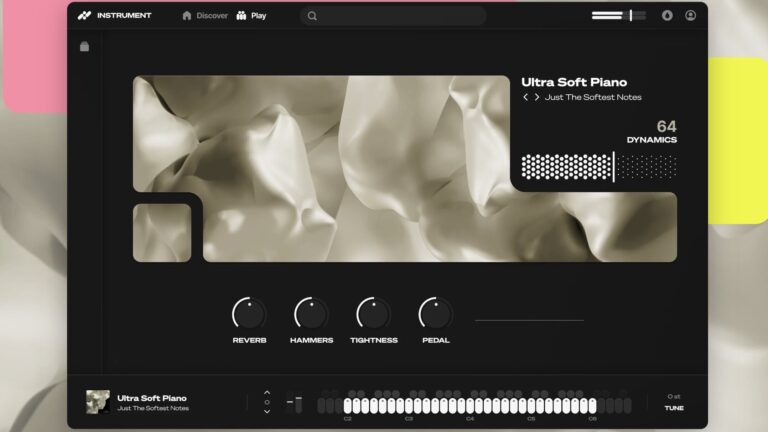
Splice INSTRUMENT combines multi-sampled presets with full MIDI playability. Splice says the new platform also offers professional quality recordings and an accessible interface.

Kakul Srivastava, CEO of Splice, describes the launch of Splice INSTRUMENT as “a major milestone for Splice.”

“For the first time, we’re moving beyond samples into full virtual instruments, bringing creative control and world-class recordings to musicians and producers everywhere in an accessible, playable form.”

Kakul Srivastava, Splice

Added Srivastava: “For the first time, we’re moving beyond samples into full virtual instruments, bringing creative control and world-class recordings to musicians and producers everywhere in an accessible, playable form. This is just the beginning of what’s possible when we combine Spitfire Audio’s artistry with Splice’s innovation.”

The virtual instrument platform is available in different tiers: a Free plan that gives all Splice users access to hundreds of sampled presets spanning pianos, orchestral instruments, choirs, synths, and experimental textures, and an INSTRUMENT plan priced at $12.99 per month that unlocks the full catalog of 1,200+ presets at launch.

The INSTRUMENT and Creator plans provides access to presets like Ultra Soft Piano, orchestral sessions performed by the BBC Symphony Orchestra, synths designed with Nathan Fake, and global genre packs like Amapiano.


Paul Thomson, Co-Founder of Spitfire Audio, said: “With Splice INSTRUMENT, we’re building on the foundation of LABS: affordable access to inspiring, expressive sounds with intuitive creative control.”

“Sounds from this collection have already appeared on GRAMMY-nominated albums and in blockbuster films.”

Paul Thomson, Spitfire Audio

“Sounds from this collection have already appeared on GRAMMY-nominated albums and in blockbuster films. Whether composing for screen or producing the next big hit, this library captures the beauty of real instruments and the character of the rooms they were recorded in.”

Spice INSTRUMENT marks the company’s latest offering after integrating its sample library with Avid’s Pro Tools digital audio workstation in June. The integration made millions of loops, sound effects and one-shots available to the artists and producers who use the popular music-making tool.

Earlier this year, Splice introduced  Splice Mic on its mobile app, allowing users to record vocals over instrumentals made in the app.

Splice was valued at a reported $500 million in 2021, following a $55 million investment round led by Goldman Sachs.

Music Business Worldwide

Trump urges Israel to halt bombing in Gaza following Hamas ceasefire response | Updates on Israel-Palestine conflict

0

Challenging Client

0


Client Challenge


JavaScript is disabled in your browser.

Please enable JavaScript to proceed.

A required part of this site couldn’t load. This may be due to a browser
extension, network issues, or browser settings. Please check your
connection, disable any ad blockers, or try using a different browser.

NCAA Approves Changes to 2026 Division I Championships Just Weeks Into Season

0

By Madeline Folsom on SwimSwam

Terin Frodyma contributed to this report.

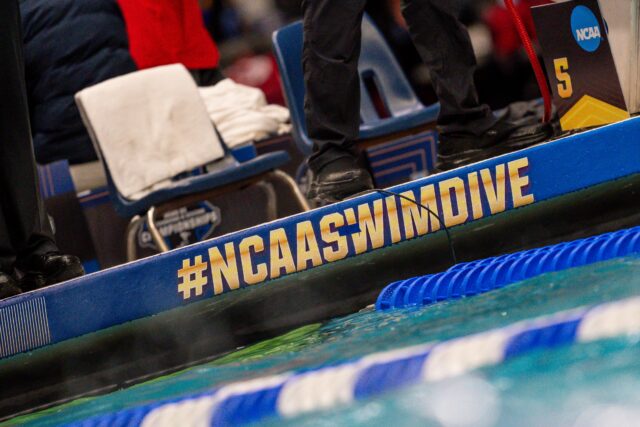
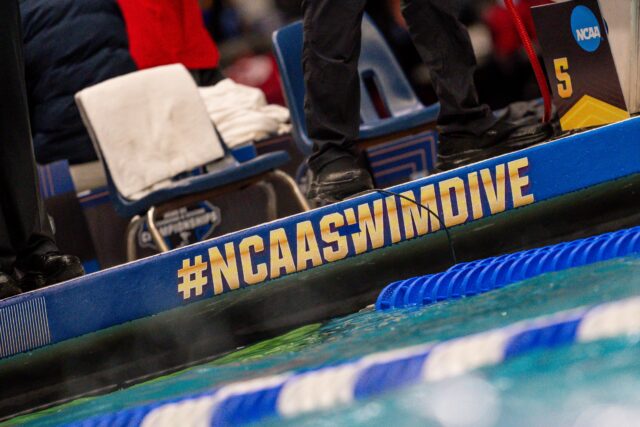
The NCAA swimming and diving season started weeks ago with many teams already swimming their first meets, and the NCAA announced today that they approved proposed changes to the Division I NCAA Championship format for the upcoming 2026 Championships.

In July, the College Swimming and Diving Coaches Association of America (CSCAA) submitted a two-part proposal to the NCAA Sport Oversight Commission that consisted of numerous changes to the current NCAA Championship model. These changes included removing ‘B’ finals, rescheduling the competition to optimize broadcasting, shuffling the order of events, and introducing a new qualification model.

The proposal was originally tabled in August due to organizational changes in the NCAA, and the 2025-26 season started a few weeks ago.

Though the CSCAA told SwimSwam in August that there were no anticipated changes for the 2026 Championships, the newly formed NCAA Swimming and Diving Oversight Committee approved the proposal today to take effect for this season.

The approved changes are intended to modernize and expand the college swimming and diving landscape, and they are exactly as we reported back in July.

One of the changes we will see is an updated order of events intended to optimize viewing and put “high-profile” events on the last several days. At this time, no events are being added to the meet. The ‘B’ option for the standard order of events was the officially approved order, with potential for slight changes in the coming days.

Order of Events (Finals)

Day Of Competition Old Format New Format
Day 1 200 Medley Relay
1,650 Freestyle — Top 8 seeds
800 Freestyle Relay
200 Medley Relay
800 Freestyle Relay
Day 2 500 Freestyle 100 Butterfly
200 Individual Medley
400 Individual Medley
50 Freestyle
One-Meter Diving (rds 1-3)
One-Meter Diving 200 Freestyle
200 Freestyle Relay 100 Backstroke
One-Meter Diving (rds 4-6)
200 Freestyle Relay
Day 3 100 Butterfly 500 Freestyle
400 Individual Medley 50 Freestyle
200 Freestyle
Three-Meter Diving (rds 1-3)
100 Breaststroke 200 Backstroke
100 Backstroke
200 Breaststroke
Three-Meter Diving
Three-Meter Diving (rds 4-6)
400 Medley Relay
400 Medley Relay
Day 4 1650 Freestyle
200 Individual Medley
200 Backstroke 100 Freestyle
100 Freestyle
Platform Diving (rds 1-3)
200 Breaststroke 200 Butterfly
200 Butterfly
100 Breaststroke
Platform Diving
Platform Diving (rds 4-6)
400 Freestyle Relay
400 Freestyle Relay

Final Scoring for 9th–16th Places to Come from Prelims

One of the most immediate and noticeable changes comes in the way consolation places are scored. In the morning prelims, swimmers and divers in 9th–16th positions will no longer compete in a nighttime B-final for consolation placement; their finishes will instead be determined by morning preliminary times alone.

Relays will compete as a Timed Finals event with the top eight seeds swimming in the finals session and all other teams competing in the morning.

The move aims to give more importance to the morning swims and provide the primetime broadcast a focus on championship races for national titles. The top 8 from prelims will still advance to finals.

Broadcast-Driven Rescheduling: Diving Split, Awards Moved, Events re-ordered

Diving finals will be split into two segments—three rounds early in the session, and three more later—offering shorter, more digestible coverage windows and giving swimmers rest between events. Award ceremonies will also be moved out of the session flow to help broadcasts run cleaner and with fewer interruptions.

The meet program has also been modified, with more high-profile events scheduled for the last several days. According to the report, the changes “are strategically designed to elevate the championship’s linear broadcast potential without negatively impacting student-athletes” and that “marquee events will now anchor the final days of competition.”

While ESPN does not share audience numbers for its streaming events, in-person attendance at the meet historically has grown throughout the meet, peaking on Friday and Saturday evenings.

New Qualification Model: Win-and-In With a Standard

The new format transforms the qualification procedure, instituting a single NCAA Championship standard. Under the new rules, any swimmer who wins their conference title and achieves a national qualifying time in the event will automatically qualify for the NCAA Championships. The descending order list procedure will continue to be used for all other entries, though the idea of an “A” and a “B” standard has been eliminated.

With the goal to preserve meet size and expand institutional access, the qualifying times were determined by averaging the 72nd-best time over the previous three years unless the current standard is faster than the three-year average. You can see all of the standards here.

Diving qualification remains unchanged and continues to rely on Zone meets for qualification standards.

Read the full story on SwimSwam: NCAA Approves Changes to 2026 Division I Championships Weeks After Season Starts

Transform Vintage Speakers into Bluetooth Devices with SoundUp

0

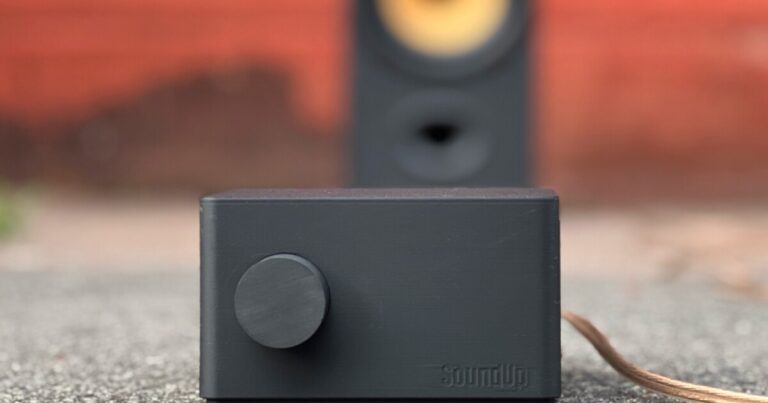
As is the case with things like road bikes and movie cameras, there are now tons of old high-end speakers that are still in great condition, but that go unused simply because they aren’t modern. The SoundUp device addresses that problem, by converting vintage speakers to Bluetooth.

Currently the subject of a Kickstarter campaign, SoundUp is made by Danish company LastObject. The idea is that the gadget will allow buyers to utilize premium-quality classic wooden-bodied passive speakers – which can be picked up for just a few bucks second-hand – as opposed to cheaply made plastic modern speakers that come with built-in Bluetooth.

Contained within the device’s cuboid body is a Class-5 100W amplifier, a 108-Wh lithium battery, and a Bluetooth 5.1 module that wirelessly communicates with the user’s smartphone music library.

The gizmo itself physically connects to a third-party classic speaker via an included speaker cable that clips into two spring terminals on the back of the SoundUp, and on the back of the speaker. That cable provides both the audio signal and the electricity, so no wall outlet is required.

The back of the device, which includes a battery charge display

LastObject

SoundUp technically delivers up to 100 watts of peak power, although LastObject states that it’s likely closer to 50 to 90 watts under real-world usage. It should be safe for most 3- to 8-ohm vintage hi-fi or bookshelf passive speakers. One charge of the battery ought to be good for 40 hours of runtime at mid-volume, or seven hours at full volume.

If a single SoundUp is plugged into one speaker, it will play back in mono. If two of the devices are plugged into two separate speakers, however, they will automatically pair with one another and play back through both speakers in stereo.

Assuming everything goes according to plan, a pledge of €135 (about US$158) will get you one SoundUp, while €229 ($269) will get you two. Those figures are 21% and 33% off the planned retail prices, respectively.

SoundUp – Revives old speakers

Source: Kickstarter

Note: New Atlas may earn commission from purchases made via links.

Latest US strike near Venezuela results in deaths of four on alleged drug vessel

0

US forces have killed four people in an attack on a boat off the coast of Venezuela that was allegedly trafficking drugs, Defence Secretary Pete Hegseth says.

“The strike was conducted in international waters just off the coast of Venezuela while the vessel was transporting substantial amounts of narcotics – headed to America to poison our people,” Hegseth wrote in a post on X.

It is the latest in a number of recent deadly strikes that the US has carried out on boats in international waters it says are involved in “narco-trafficking”.

The strikes have attracted condemnation in countries including Venezuela and Colombia, with some international lawyers describing the strikes as a breach of international law.

Hegseth said the attack took place in the US Southern Command’s area of responsibility, which covers most of South America and the Caribbean.

“Our intelligence, without a doubt, confirmed that this vessel was trafficking narcotics, the people onboard were narco-terrorists, and they were operating on a known narco-trafficking transit route,” Hegseth said about Friday’s attack.

“These strikes will continue until the attacks on the American people are over!!!!”

US President Trump also confirmed the strike on his Truth Social platform, saying that the boat was carrying enough drugs “to kill 25 to 50 thousand people”.

However, the US has not provided evidence for its claims or any information about the identities of those on board.

There was no immediate response from Venezuela but its president, Nicolás Maduro, has previously condemned the strikes and said his country will defend itself against US “aggression”.

Friday’s fatal attack is the fourth by the US in a month.

Trump said 11 people had been killed in a strike against a drug-carrying vessel in the southern Caribbean at the start of September.

Later in the month, two separate strikes days apart killed a total of six people.

This Thursday, a leaked memo sent to Congress – reported by US media – said the US government had now decided it was in a “non-international armed conflict” with drug cartels.

This is significant because the administration is required by law to report to Congress if it will use the armed forces, which suggests it plans to use further military action.

The US positioned its strikes on alleged drug boats as self-defence, despite many lawyers questioning their legality.

Framing this as an active armed conflict is likely a way for Trump to justify using more extreme wartime powers – for example killing “enemy fighters” even if they have not posed a violent threat, or detaining people indefinitely. These are similar powers to those applied to al-Qaeda after 9/11.

Trump has not provided the reasoning for why he appears to be categorising drug trafficking and associated crimes as an “armed attack”, or named which cartels he believes are attacking the US.

He has already designed many cartels, including in Mexico, Ecuador and Venezuela, as terrorist organisations – granting US authorities more powers in their response to them.

Cerebras Systems, a leading AI chip company, withdraws its highly anticipated US listing application

0

AI chip firm Cerebras Systems files to withdraw its highly anticipated US listing

Manchester Community in Shock After Synagogue Attack

0

new video loaded: Manchester Community Reels From Synagogue Attack

transcript

transcript

Manchester Community Reels From Synagogue Attack

Residents were left in shock after a driver rammed a vehicle into people and stabbed others Thursday at a synagogue in Manchester. Three people died, including the attacker. The police on Friday said one victim died from police gunfire.

I would say it’s felt a very safe area. Everybody just lives and gets on with it and just — everybody’s friendly. Everybody says, “Hello, how are you?” “Nice to see you,” sort of thing. So to hear something like this has happened, it’s just dreadful. It’s a very sad day. I lived here for like seven years. I’ve seen nothing but kindness and love from the Jewish community here. Very, very good people. This is a very united community. We have Muslims, Jewish, Christians.

Residents were left in shock after a driver rammed a vehicle into people and stabbed others Thursday at a synagogue in Manchester. Three people died, including the attacker. The police on Friday said one victim died from police gunfire.

By Monika Cvorak

October 3, 2025

Lawsuit alleges Tesla design caused college student to be trapped in car during fiery incident

0

The parents of a college student killed in a Tesla crash say she was trapped in the car as it burst into flames because of a design flaw that made it nearly impossible for her to open the door, according to a lawsuit filed Thursday.

The parents of Krysta Tsukahara allege that the company that helped Elon Musk become the world’s richest man knew about the flaw for years and could have moved fast to fix the problem but did not, leaving the 19-year-old arts student trapped amid flames and smoke that eventually killed her.

Tesla did not immediately reply to a request for comment.

The new legal threat to Tesla filed in Alameda County Superior Court comes just weeks after federal regulators opened an investigation into complaints by Tesla drivers of stuck-door problems. The probe and suit come at a delicate time for the company as it seeks to convince Americans that its cars will soon be safe enough to ride in without anyone in the driver’s seat.

Tsukahara was in the back of a Cybertruck when the driver who was drunk and had taken drugs smashed into a tree in a suburb of San Francisco, according to the suit. Three of the four people in the car, including the driver, died. A fourth was pulled from the car after a rescuer smashed a window and reached in.

The lawsuit was first reported by The New York Times.

Tesla doors have been at the center of several crash cases because the battery powering the unlocking mechanism can be destroyed in a fire and the manual releases that override that system are difficult to find.

The lawsuit follows several others that have claimed various safety problems with Tesla cars. In August, a Florida jury decided that the family of another dead college student, this one killed by a runaway Tesla years ago, should be awarded more than $240 million in damages.

The National Highway Traffic Safety Administration, which opened its stuck-door investigation last month, is looking into complaints by drivers that after exiting their cars, they couldn’t open back doors to get their children out and, in some cases, had to break the window to reach them.

Fortune Global Forum returns Oct. 26–27, 2025 in Riyadh. CEOs and global leaders will gather for a dynamic, invitation-only event shaping the future of business. Apply for an invitation.

Ben Gvir from Israel caught on camera mocking detained flotilla activists in Israel-Palestine conflict

0

NewsFeed

Israel’s National Security Minister Itamar Ben Gvir filmed himself taunting activists from the intercepted Gaza flotilla, baselessly accusing them of being ‘terrorists’. The far-right minister has previously called for the activists to be jailed in a high-security prison rather than deported.