

2.4 C
New York
Friday, February 27, 2026
Home Blog Page 340

Reportedly, four schools in opposition to the new NCAA Championship format

0

By Madeline Folsom on SwimSwam

Yesterday, the NCAA announced a controversial new format for the Division I Championship meet at the end of the season, and, along with much of the swimming community, the Power Four conferences are reportedly opposed to the changes.

Among the changes made to the NCAA Championships was the elimination of ‘A’ and ‘B’ standards and the addition of a “Win-and-You’re-In” system for conference champions. This new policy will give athletes who win their conference championship with a time that is under the NCAA standard an automatic berth to the NCAA Championships.

This new format benefits the mid-major conferences significantly. In July, we analyzed what this would have looked like for last season’s conference meet. On the men’s side 34 new swimmers from 18 schools and 11 new mid-major conferences would have qualified. On the women’s side, the numbers are greater with 45 new swimmers from 18 schools and 11 new conferences.

Our estimated qualifying standards were slightly slower than the official times released yesterday, but the actual numbers are likely similar.

The changes to the format do not include an increased number of spots for the championships, meaning all the additional swimmers who qualify via conference title swims will replace others, likely from Power Four schools, who qualified with faster times.

One Power Four coach reached out to SwimSwam today, saying that all four conferences unanimously opposed the system as did many of the coaches from teams within those conferences. Some of these coaches reportedly feel that “self-interest” was a big motivator in moving the proposal through.

This report is corroborated by a distribution obtained by SwimSwam that details the opinions on Big Ten conference coaches. The conference polled the coaches on their thoughts about the proposal and every coach responded with their opinions. Of those coaches, only 4% supported the whole proposal while 68% were in favor of only the changes to the Championship format (event order and ‘B’ finals changes). There was also a contingent, 21%, that was against the whole proposal.

Most coaches opposed the proposed qualification changes, and those that did support only did so with significant modifications. Many of the coaches were concerned that the changes to qualification procedures disproportionately benefited mid-major programs to the detriment of the Power Four programs.

On the other hand, a mid-major head coach has said that, since the qualifying time has to be swum en route to the conference title, it will give mid-major conferences the chance to create a “moment” at the meet where qualifications can be celebrated in real time.

This real-time celebration mirrors that which we see in other sports, like basketball, where mid-major teams receive an automatic bid to the March Madness tournament via conference title and are able to celebrate that moment on the court.

Read the full story on SwimSwam: Power Four Schools Reportedly Opposed to New NCAA Championship Format


Radiation therapy is as effective as surgery in lung cancer treatment

0

Precision-targeted radiation is proving a match for surgery in early-stage lung cancer, offering patients similar long-term survival with less invasiveness, and potentially transforming how this common cancer is treated.

Non-small cell lung cancer (NSCLC) is the most common form of lung cancer, accounting for about 87% of all lung cancers. It is typically slow-growing and spreads more slowly than small-cell lung cancer. If caught early, it’s often successfully treated with surgery. However, many patients, especially older adults or those with other health issues, may not be good candidates for surgery.

A recent report from a clinical trial led by researchers from the University of Texas MD Anderson Cancer Center investigated whether a far less invasive radiotherapeutic approach could be as good as surgery in treating patients with early-stage NSCLC.

“Our study confirms, based on a decade of data, that stereotactic radiotherapy is a strong alternative to surgery for most patients with operable stage I NSCLC,” said the study’s corresponding author, Joe Y Chang, MD, PhD, a professor of thoracic radiation oncology and director of stereotactic ablative radiotherapy at the Anderson Cancer Center. “This highly targeted, non-invasive treatment achieved the same long-term overall survival as lobectomy, while offering many patients an easier recovery and potentially better quality of life.”

Stereotactic ablative radiotherapy (SABR), which is also known as stereotactic body radiation therapy (SBRT), involves delivering high doses of radiation with pinpoint accuracy over typically five or fewer treatment sessions. It’s the standard of care for patients with early-stage NSCLC who can’t undergo surgery.

This was a phase II non-inferiority trial, a type of study designed to test whether a new treatment (SABR) is not worse than the standard (surgery) by a significant margin. Enrolled in the trial were 160 people with early-stage NSCLC (tumors of 3 cm (1.2 in) or less, no lymph node spread or metastasis). Eighty patients received SABR; 80 matched patients underwent video-assisted thoracoscopic surgery (VATS) to remove the tumor and lymph nodes. The patients were carefully matched for age, gender, tumor type and size, and general health to ensure a fair comparison. Median follow-up was 8.3 years, with outcomes tracked for up to 10 years. Participants were also surveyed on long-term quality of life and the financial impact of their treatment.

In terms of overall survival, the SABR group did just as well as the surgery group. To put it another way, non-inferiority was met, meaning SABR was no worse than surgery when examined within the pre-set statistical margin. Median survival was 11.4 years after surgery, and hadn’t been reached yet for SABR, meaning that many patients were still alive. This indicates potentially better long-term outcomes for SABR, though the difference was not statistically significant. The seven-year overall survival was 81% for SABR vs 70% for surgery; at 10 years, it was 69% vs 66%, respectively. There were no significant differences in lung cancer-specific survival or recurrence-free survival between the two groups.

Stereotactic ablative radiotherapy (SABR) delivers high doses of radiation with pinpoint accuracy

Some factors may have contributed to these numbers. All SABR patients had more thorough staging scans (100% vs 25% in the surgery group), which may have helped ensure they were correctly diagnosed as early-stage. Further, 11% of surgery patients had hidden lymph node cancer, and 14% needed additional treatment. Regarding patients’ quality of life and the financial impact of treatment, only 28% of SABR patients responded to the survey. Of those who responded, over half (53%) reported no financial burden from radiation treatment, but the strength of the conclusion is limited due to the reduced percentage of survey respondents.

“Surgery historically was the only standard option for early-stage NSCLC, but upwards of 50% of patients experience moderate or severe side effects afterward,” Chang said. “And as patients age, many cannot tolerate surgery, so there’s a growing demand for non-invasive options that provide durable local control.

“This study offers the clearest picture yet that radiation can also be an appealing option for suitable surgical candidates. It included a larger patient population than previously published randomized studies, and we’ve followed these patients for much longer.”

Radiotherapy may not be suitable for all patients, however, cautions Chang. For those with larger or more complex tumors or lymph node involvement, surgical removal likely remains the better option, he said. He also stressed that a radiotherapeutic approach requires collaboration between thoracic surgeons and radiation oncologists and the need to closely monitor SABR patients over time for recurrence of the cancer.

The researchers will continue to explore ways of further lowering recurrence rates, including the addition of immunotherapies and using AI to predict lymph node involvement.

“Our goal is to find new ways to push survival even higher,” said Chang.

The study’s abstract, which was presented at the American Society for Radiation Oncology (ASTRO) 2025 Annual Meeting, is available on the society’s website.

Source: University of Texas MD Anderson Cancer Center via Newswise

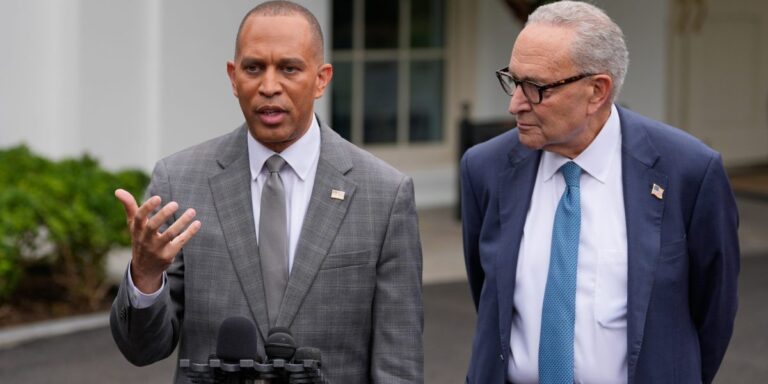
Hakeem Jeffries questions JD Vance about ‘Trump 2028’ hat during White House meeting

0

“Trump 2028,” they said, situated across from the seated lawmakers, Vice President JD Vance and several untouched Diet Cokes.

House Democratic leader Hakeem Jeffries leaned over to Vance, himself a potential 2028 contender, and quipped, “Hey, bro, you got a problem with this?”

The room chuckled in response.

“It was the randomest thing in the world, because we’re sitting there, we’re having a serious conversation, and all of a sudden these two red hats appear,” Jeffries recalled later at the Capitol.

“It was all so unserious,” Jeffries said, describing a roving cameraman capturing the moment. “We were there for serious reasons that it wasn’t really a big part of, you know, the discussion. It was theatrics.”

The moment was vintage Trump –- grabbing the attention and seeking to throw negotiators off their game — but it also underscored the president’s regard for Congress, a coequal branch of the government, and in particular his opponents across the political aisle.

From historic first meeting to viral trolling

What was once was considered a historic occasion –- the president of the United States convening his first “big four” meeting of congressional leaders from the House and Senate –- was reduced to another viral souvenir of Trump trolling his opponent.

And after the more than hourlong session, Trump failed to strike a deal with the leaders to prevent a federal government closure.

“We don’t want it to shut down,” Trump said at the White House the next day, hours before the midnight deadline.

This wasn’t just a routine meeting of the president and congressional leadership. It was the first time Trump had gathered the leaders of Congress, more than eight months into his presidency — and the first time he and Jeffries had officially met.

But more surprising was how little came from it.

Health care funds up for debate as president listens

During the White House meeting, Jeffries and Senate Democratic leader Chuck Schumer laid out their arguments for saving health care funding as part of the shutdown talks.

Trump said very little, doing more listening than talking, the leaders said.

“He didn’t seem to know about the health care premiums going up so much,” Schumer said.

With the Republican leadership, House Speaker Mike Johnsonand Senate Majority Leader John Thune, the conversation ranged across their views of the health care situation.

“Lively,” as Thune said later.

The discussion included the Democrats’ demands to ensure subsidies to help people buy private insurance on the exchanges run by the Affordable Care Act are made permanent. The subsidies were put in place during the COVID-19 pandemic and are set to expire at year’s end, spiking premiums as much as double, in some estimates.

The conversation also touched on the new rural hospital fund that is important to Republicans, set up under Trump’s big bill as a way to compensate for its cuts to Medicaid health care providers.

Johnson said Trump showed “strong, solid leadership. He listened to the arguments.”

Trying to catch the president’s attention

This is the best the Democrats could have hoped for — to have an airing before the president that began to turn the dial toward their demands. And it is what the GOP leaders had tried to avoid as each party tries to blame the shutdown on the other.

Johnson had suggested Trump back out of an initial meetingwith the Democrats — after the president had agreed to one — arguing it would be a “waste of time.”

But Trump relented, and granted them Monday’s closed-door Oval Office session.

The Democrats have been here before. During Trump’s first term, the president repeatedly negotiated deals with the Democrats — “Chuck and Nancy,” as he called Schumer and Speaker Emerita Nancy Pelosi — to fund the government, raise the debt limit and achieve other goals.

Those bargains by Trump frustrated his own Republican Party.

Republicans, aware of that history, are trying to steer the conversation in a different direction, leaving the door open to discuss the health care issue with Democrats later — once the government has reopened. They also took issue with the characterization of Trump as unaware of the depth or magnitude of the health care situation.

“I’m highly skeptical the president was hearing about it for the first time,” Vance said afterward.

One Republican unauthorized to publicly discuss the private meeting and granted anonymity to do so said Schumer’s suggestion that Trump didn’t know about the subsidy problem was overblown.

So far in his second term, the president has been able to accomplish his priorities either on his own, with executive actions and the Elon Musk-led cuts that tore through federal offices, or with a compliant Congress passing his signature tax breaks and spending cuts bill, commonly called the One Big Beautiful Bill Act, that is also fueling his mass deportation agenda.

But Washington doesn’t run on the White House alone, and Congress is not a majority-takes-all institution. Turning most bills into laws requires the give-and-take of bipartisan compromise, particularly in the Senate, and particularly when it comes to the annual appropriations needed to keep government running.

Then came the sombrero taunts

Hours after the lawmakers left the meeting, Trump’s team posted a fake video that showed Jeffries adorned in a sombrero with a faux mustache standing beside Schumer outside the White House. It was widely seen as racist.

“When I was practicing law, there was a Latin phrase that was always one of my favorites,” Jeffries said back at his office at the Capitol. “Res ipsa loquitur. It means: The thing speaks for itself.”

“We had a full airing of our positions on Monday, which should have set the baseline for a follow-up conversation from the administration to try to reignite a meaningful bipartisan path toward funding the government,” he said.

“Unfortunately, the president’s behavior subsequent to the White House meeting deteriorated into unhinged and unserious action.”

Increase in HIV cases in Fiji linked to bluetoothing, chemsex, and needle-sharing

0

Getty Images Three syringes, seemingly used, lying on a tattered orange blanketGetty Images

Intravenous drug use is fuelling Fiji’s HIV epidemic

Ten: that’s the age of the youngest person with HIV that Sesenieli Naitala has ever met.

When she first started Fiji’s Survivor Advocacy Network in 2013, that young boy was yet to be born. Now he is one of thousands of Fijians to have contracted the bloodborne virus in recent years – many of them aged 19 or younger, and many of them through intravenous drug use.

“More young people are using drugs,” Ms Naitala, whose organisation provides support to sex workers and drug users in the Fijian capital Suva, tells the BBC. “He (the boy) was one of those young people that were sharing needles on the street during Covid.”

Over the past five years, Fiji – a tiny South Pacific nation with a population of less than a million – has become the locus of one of the world’s fastest growing HIV epidemics.

In 2014, the country had fewer than 500 people living with HIV. By 2024 that number had soared to approximately 5,900 – an elevenfold leap.

That same year, Fiji recorded 1,583 new cases – a thirteenfold increase on its usual five-year average. Of those, 41 were aged 15 or younger, compared to just 11 in 2023.

Getty Images A view of the Suva waterfront, with a dock in the foreground and multi-storey buildings in the backgroundGetty Images

Fiji’s assistant health minister has called the HIV epidemic a “national crisis”

Such figures prompted the country’s minister for health and medical services to declare an HIV outbreak in January. Last week, assistant health minister Penioni Ravunawa warned Fiji may record more than 3,000 new HIV cases by the end of 2025.

“This is a national crisis,” he said. “And it is not slowing down.”

The BBC spoke to multiple experts, advocates and frontline workers about the reasons for such a meteoric rise in case numbers. Several pointed out that, as awareness around HIV spreads and stigma diminishes, more people have been coming forward and getting tested.

At the same time though, they also noted that countless more remain invisible to the official figures – and that the true scale of the issue is likely much bigger than even the record-breaking numbers suggest.

‘Sharing the blood’

Underpinning Fiji’s HIV epidemic is a spiralling trend of drug use, unsafe sex, needle sharing and “bluetoothing”.

Otherwise known as “hotspotting”, this latter term refers to a practice where an intravenous drug user withdraws their blood after a hit and injects it into a second person – who may then do the same for a third, and so on.

Kalesi Volatabu, executive director for the NGO Drug Free Fiji, has seen it happen firsthand. Last May, she was on one of her regular early morning walks through the Fijian capital of Suva, offering support and education to drug users on the streets, when she turned a corner and saw a group of seven or eight people huddling together.

“I saw the needle with the blood – it was right there in front of me,” she recalls. “This young woman, she’d already had the shot and she’s taking out the blood – and then you’ve got other girls, other adults, already lining up to be hit with this thing.

“It’s not just needles they’re sharing – they’re sharing the blood.”

Bluetoothing has also been reported in South Africa and Lesotho, two countries with some of the world’s highest rates of HIV. In Fiji, the practice became popular within the past few years, according to both Ms Volatabu and Ms Naitala.

Supplied: Kalesi Volatabu A woman in a black and turquoise dress, wearing glasses and speaking into a microphone in front of several onlookers. Behind her is a wall with several pieces of paper attached to itSupplied: Kalesi Volatabu

Kalesi Volatabu has spent more than a decade working at the frontline of drug awareness and advocacy in Fiji

One reason for its appeal, they explain, is a cheaper high: multiple people can chip in for a single hit and share it among themselves. Another is the convenience of only needing one syringe.

These can be difficult to come by in Fiji, where pharmacies, under police pressure, often demand prescriptions for syringes, and there is a lack of needle-syringe programmes.

Although there is growing acceptance and approval for the rollout of such programmes – which provide clean injecting equipment to drug users in an attempt to reduce the transmission of blood-borne infections like HIV – implementation in the highly religious and conservative country has proven challenging.

Ms Volatabu says there is a “drastic shortage” of needle-syringe sites, which is fuelling dangerous practices like needle-sharing and bluetoothing and putting the onus on NGOs to distribute syringes as well as condoms.

In August 2024, Fiji’s Ministry of Health and Medical Services (MOH) recognised bluetoothing as one of the drivers for the country’s rise in HIV cases. Another was chemsex, where people use drugs – often methamphetamine – before and during sexual encounters.

In Fiji, unlike most other countries around the world, crystal meth is predominantly consumed via intravenous injection.

MOH also found that of the 1,093 new cases recorded in the first nine months of 2024, 223 – about 20% – were from intravenous drug use.

Kids on meth

Fiji has become a major Pacific trafficking hub for crystal meth over the past 15 years. A large part of this is due to the country’s geographic location between East Asia and the Americas – some of the world’s biggest manufacturers of the drug – and Australia and New Zealand – the world’s highest-paying markets.

During that same period, meth has spilled into and spread throughout local communities, developing into a crisis that, like HIV, was recently declared a “national emergency”.

And according to those on the frontlines, the age of users is trending downwards.

“We see more and more of these young people,” says Ms Volatabu. “They are getting younger and younger.”

Fiji’s most recent national HIV statistics cite injectable drug use as the most common known mode of transmission, accounting for 48% of cases. Sexual transmission accounted for 47% of cases, while mother-to-child transmission during pregnancy and childbirth was cited as the cause of most paediatric cases.

Everyone the BBC spoke to agreed that lack of education is a central factor in the epidemic. Ms Volatabu and Ms Naitala are both working to change that – and Ms Naitala says that as a greater awareness around the dangers of HIV spreads throughout the community, “bluetoothing” has, in her experience, fallen out of favour.

More people are getting tested and seeking treatment for HIV, leading to more robust data around the scale of the crisis.

But there is still a worry that the official case numbers are merely the tip of the iceberg – and a fear of what may lie beneath the surface.

The avalanche

José Sousa-Santos, head of the Pacific Regional Security Hub at New Zealand’s University of Canterbury, says “a perfect storm is brewing”.

“The concern is across all levels of society and government in regards to Fiji’s HIV crisis – not just what’s happening at the moment, but where it’s going to be in three years’ time and the lack of Fiji’s resources,” he tells the BBC. “The support systems – the nursing, the ability to distribute or to access the drugs for treatment of HIV – just aren’t there.

“That’s what terrifies us, the people that work in the region: there is no way that Fiji can deal with this.”

Supplied: José Sousa-Santos A man with a goatee wearing a blue suit and blue shirtSupplied: José Sousa-Santos

José Sousa-Santos has been ringing the alarm bell on Fiji’s HIV epidemic for years

Following its declaration of an outbreak in January, the Fijian government has sought to improve its HIV surveillance and enhance its ability to address the likely underreporting of cases.

The Global Alert and Response Network, which was called upon to provide that support, stated in a recent report that “addressing these pressing issues through a well-coordinated national response is crucial in reversing the trajectory of the HIV epidemic in Fiji”.

That report also noted that staffing shortages, communication issues, challenges with lab equipment and stockouts of HIV rapid tests and medicines were impacting screening, diagnosis and treatment.

Data collection is slow, difficult and error-prone, it added – hampering efforts to understand the extent of Fiji’s HIV epidemic and the efficacy of the outbreak response.

That leaves many experts, authorities and everyday Fijians in the dark. And Mr Sousa-Santos is predicting an “avalanche” of cases still to come.

“What we’re seeing at the moment is the beginning of the avalanche, but you can’t stop it, because the infections are already happening now, or they’ve already happened – we’re just not going to be able to see them and people aren’t going to look to get tested for another two to three years,” he says.

“There’s nothing that we can do at the moment to stop the number of infections that have already happened over the past year, and that are happening now. That’s what’s really terrifying.”

Challenging the Client

0


Client Challenge


JavaScript is disabled in your browser.

Please enable JavaScript to proceed.

A required part of this site couldn’t load. This may be due to a browser
extension, network issues, or browser settings. Please check your
connection, disable any ad blockers, or try using a different browser.

Hamas reluctantly agrees to some aspects of Trump’s peace proposal

0

new video loaded: Hamas Partially Accepts Trump’s Peace Plan

Hamas said it would release all Israeli hostages but wants to negotiate elements of President Trump’s peace plan for Gaza. Adam Rasgon, a reporter for The New York Times in Jerusalem, explains where negotiations stand.

By Adam Rasgon, Christina Shaman, Jon Hazell, Melanie Bencosme and June Kim

October 4, 2025

Protesters in Chicago confront Border Patrol agents, leading to shooting of woman

0

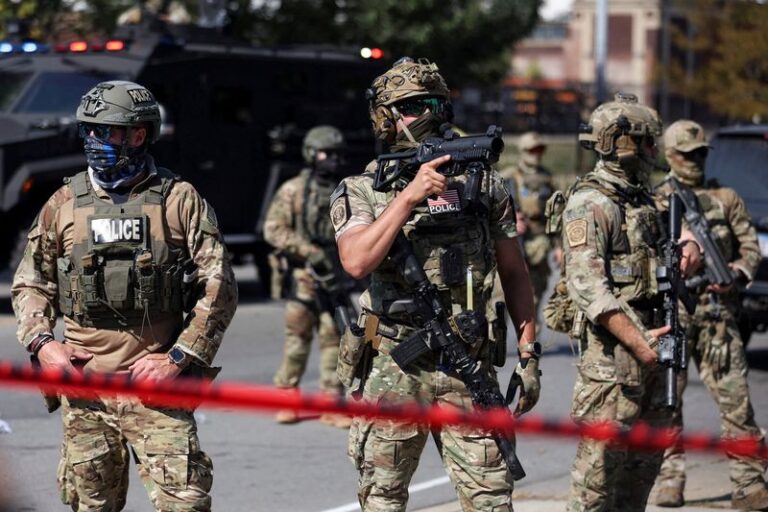
Border Patrol agents shoot woman in Chicago as protesters confront immigration personnel

Activists claim Greta Thunberg mistreated by Israeli forces while in detention | Israel-Palestine conflict News

0

Several international activists deported from Israel after joining a Gaza aid flotilla have accused Israeli forces of mistreating climate campaigner Greta Thunberg.

The 137 deportees landed in Istanbul on Saturday, including 36 Turkish nationals alongside activists from the United States, Italy, Malaysia, Kuwait, Switzerland, Tunisia, Libya, Jordan and other countries, Turkish officials confirmed.

Recommended Stories

list of 3 itemsend of list

Turkish journalist and Gaza Sumud Flotilla participant Ersin Celik told local media outlets he witnessed Israeli forces “torture Greta Thunberg,” describing how she was “dragged on the ground” and “forced to kiss the Israeli flag.”

Malaysian activist Hazwani Helmi and American participant Windfield Beaver gave similar accounts at Istanbul Airport, alleging Thunberg was shoved and paraded with an Israeli flag.

“It was a disaster. They treated us like animals,” Helmi said, adding that detainees were denied food, clean water, and medication.

Beaver said Thunberg was “treated terribly” and “used as propaganda,” recalling how she was shoved into a room as far-right National Security Minister Itamar Ben-Gvir entered.

Italian journalist Lorenzo Agostino, who had been on the flotilla, also cited the treatment of Thunberg.

“Greta Thunberg, a brave woman, is only 22 years old. She was humiliated and wrapped in an Israeli flag and exhibited like a trophy,” he told Anadolu.

Others described severe mistreatment. Turkish TV presenter Ikbal Gurpinar said, “They treated us like dogs. They left us hungry for three days. They didn’t give us water; we had to drink from the toilet … It was a terribly hot day, and we were all roasting.” She said the ordeal gave her “a better understanding of Gaza”.

Turkish activist Aycin Kantoglu recounted bloodstained prison walls and messages scrawled by previous detainees. “We saw mothers writing their children’s names on the walls. We actually experienced a little bit of what Palestinians go through,” she said.

Italy’s Foreign Minister Antonio Tajani said 26 Italians had been deported, while 15 remained in Israeli custody awaiting expulsion.

Italian MP Arturo Scotto, who was on the flotilla, told reporters, “Those who were acting legally were the people aboard those boats; those who acted illegally were those who prevented them from reaching Gaza.”

Adalah, an Israeli rights group providing legal aid, said that detainees reported being forced to kneel with zip-tied hands for hours, denied medication, and blocked from speaking with lawyers. Israel’s foreign ministry dismissed the claims as “complete lies,” insisting all detainees were treated according to law.

“All of Adalah’s claims are complete lies. Of course, all detainees … were given access to water, food, and restrooms; they were not denied access to legal counsel, and all their legal rights were fully upheld,” a Ministry of Foreign Affairs spokesperson told the news agency Reuters.

Israel has faced mounting condemnation for the raid on the flotilla, which saw its navy intercept approximately 40 boats carrying aid to Gaza and detain more than 450 people on board.

Critics say the assault underscores the illegality of Israel’s blockade, which has cut off the enclave’s 2.3 million residents during Israel’s ongoing war on Gaza.

The flotilla, launched in late August, was the latest international effort to break Israel’s siege and deliver aid to Palestinians.

Trump mulls $14 billion bailout as farm bankruptcies rise due to low crop prices

0

The number of farm operations filing for bankruptcy remains at historically low levels but has jumped sharply this year as a crisis in the agricultural economy drags on.

In the second quarter, there were 93 filings, according to the Federal Reserve Bank of Minneapolis, up from 88 in the first quarter and nearly double the 47 at the end of 2024.

That’s still well below the recent high of 169 in early 2020, and filings nosedived in the two years that followed. But since 2022, farm bankruptcies have been trending higher.

That coincides with higher production costs and plunging crop prices. For instance, corn prices have crashed about 50% since 2022, while soybean prices are down about 40%.

More recently, President Donald Trump’s trade war this year has kept China, traditionally a top buyer of U.S. soybeans, from placing any orders with American farmers, who are facing an uncertain harvest season.

Federal Reserve Bank of Minneapolis

But crop prices have been weak for most of the past decade except for brief a spike during the pandemic, according to the Minneapolis Fed.

And while the Agriculture Department has forecast that farm incomes will increase this year, about three-quarters of that growth will come from an expected boost in government payments, it added.

The Federal Reserve’s recent survey of farm financial conditions found that weaker income has reduced liquidity for farmers, boosting demand for financing.

At the same time, credit conditions deteriorated with roughly 30% of respondents in the Chicago Fed and Kansas City Fed districts reporting lower repayment rates versus a year ago, while the Minneapolis Fed region’s share was around 40% and the St. Louis Fed’s was 50%.

To be sure, the recent spike in bankruptcies doesn’t mean farmers are going out of business, the Minneapolis Fed pointed out. A Chapter 12 filing can help them avoid total liquidation and allow them to continue operating, perhaps on a smaller scale after some restructuring.

Still, agriculture trade groups have been calling on the Trump administration for help in boosting demand for U.S. crops as they sound the alarm on a crisis in the farm economy.

That includes reaching a trade deal with China to start buying U.S. soybeans again and requiring fuel with higher blends of ethanol, which can be made from corn.

“Soybean farmers are under extreme financial stress,” the American Soybean Association said in a letter to Trump in August. “Prices continue to drop and at the same time our farmers are paying significantly more for inputs and equipment. U.S. soybean farmers cannot survive a prolonged trade dispute with our largest customer.”

The One Big Beautiful Bill Act that was signed in July included about $66 billion in agriculture-focused spending. The vast majority, about $59 billion, is earmarked for farm safety-net enhancements.

But Trump has also suggested tariff revenue could be used to help farmers, and sources told the Wall Street Journal on Thursday that the administration is considering a bailout of $10 billion-$14 billion with distributions potentially starting in the coming months. During Trump’s first term, farmers got $23 billion amid an earlier trade war with China.

But American Soybean Association CEO Stephen Censky told Farm Journal’s AgWeb last month that government assistance gets “capitalized” over the longer term, meaning payments offer limited overall relief for farmers who subsequently see rents and other costs go up too.

“It’s tough, and I can hear it in the stress in our members’ voices. Our members and our board of directors are really concerned right now,” Censky, who served as deputy agriculture secretary in Trump’s first term, said. “Some say if things don’t turn around, if we don’t get markets back or if we get economic assistance — which is not our first choice — this could be their last year in farming. That’s pretty scary.”

Fortune Global Forum returns Oct. 26–27, 2025 in Riyadh. CEOs and global leaders will gather for a dynamic, invitation-only event shaping the future of business. Apply for an invitation.

Protesters make an attempt to breach presidential palace in defiance of government

0

Anti-government protesters in Georgia have attempted to storm the presidential palace in the capital, Tbilisi.

Police used tear gas and water cannon to disperse them.

Protests began after some government opposition figures called for a “peaceful revolution” against the government led by the Georgian Dream party who are accused of being pro-Russian and authoritarian.

The country’s pro-Western opposition has been staging protests since last year, when Georgian Dream won an election that its critics say was fraudulent.

Georgian Dream then froze Georgia’s European Union accession talks, abruptly halting a long-standing national goal.