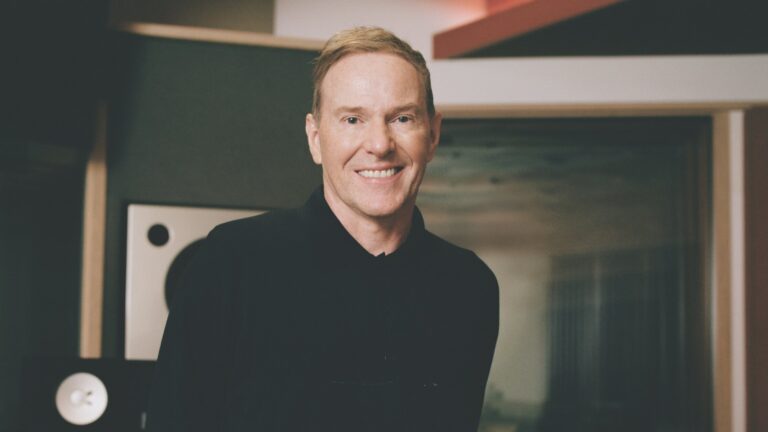
It’s an honor that, appropriately, celebrates executives who combine commercial success with unwavering support for artistic vision.
2025 has been a year that perfectly encapsulates Edge’s approach. Sleep Token, the mysterious British metal outsiders, mesmerized audiences like never before, with stunning results – including their latest album topping the Billboard 200 in May.
Elsewhere, Tate McRae’s pop evolution reached new heights; her latest album, So Close to What, also became a Billboard 200 No.1 in February.
Meanwhile, Tyler Childers continued his genre-defying artistry, LISA’s solo venture stretched K-Pop convention, Doja Cat roared back with the ’80s-inspired Vie, and the likes of Myles Smith and Wolf Alice demonstrated a slick collaboration between Edge’s US-based label and Sony Music’s UK operation.
Then, of course, there’s SZA. The past 12 months have seen a triumphant LANA deluxe re-issue for 2022’s huge SOS album, while she also found time to top the Billboard Hot 100 with Kendrick Lamar on Luther.
At the same time, SOS has continued to cement its place as a global modern staple; according to Sony Corp data, it was Sony’s biggest global record for the firm’s past two fiscal years.
“I’ve always been attracted to things that seem unlikely,” Edge explains from RCA’s offices, reflecting on the label’s eclectic roster. “Music is changing, and I think this current generation is much more open to combinations [of genre] that you would have thought wouldn’t work.”
RCA’s ‘slow road to greatness’ philosophy was naturally tested during the pandemic years, when the industry pivoted toward viral content and instant gratification.
The label maintained its long-term vision, focused on building lasting careers rather than chasing fleeting moments. That strategy continues to pay dividends: the label now boasts some of the most culturally significant artists of the streaming age, each defying easy categorization.
“We’re not in the business of making widgets,” Edge notes, referencing a commodified A&R approach he’s spent his career rejecting. “We’re in the business of working with people who change the way other people feel.”
Tellingly, as AI encroaches into the music business more and more, Edge remains confident in art with a soul. He notes: “Perhaps the thing that is going to be most valuable in music is the human part – the part that isn’t copyable… the part that isn’t based on some kind of predisposed formula.”
Below, MBW speaks with Edge about building careers in an age of shortened attention spans, why “premium” artists are winning in a crowded marketplace, and how RCA became the anti-algorithm major label…
WHEN MBW LAST INTERVIEWED YOU IN 2019, YOU LIKENED YOUR APPROACH TO HBO: “PREMIUM CONTENT FOR A SUBSCRIPTION AUDIENCE.” HOW HAS THAT PHILOSOPHY EVOLVED IN THE STREAMING AGE?
Creatively, RCA has the same mindset as a large independent.
Artists’ constant ability to play with genre and reinvent themselves really excites us; we’re not interested in telling them to compromise, and we don’t believe ‘it’s all been done before’.
“Creatively, RCA has the same mindset as a large independent.”
Even if something strongly takes a cue from another era, you can marry it with a contemporary point of view.
We combine that artistic appreciation with an understanding and expertise around data and reaching global audiences.
ON THE DATA AND MARKETING SIDE, WHAT’S CHANGED FROM A FEW YEARS AGO?
Things are way more complex than they ever used to be.
It’s a very subtle process to influence what people are open to connecting to. There’s no ‘one thing’ you can do to open that door.
We focus on audience perceptions and influences, putting things in the space around people and allowing them to gestate to become meaningful cultural moments.
Look at what the RCA team put together with Sleep Token – this incredible long-lead campaign ran for six months, bringing the fan into a world completely created for this album.
It’s mysterious, intriguing, and compelling. It meant you were glued to what’s going on.
It shows what you can do with long-term planning and trying out things that are not necessarily the tried-and-tested “this is how you release a record”.
SLEEP TOKEN IS PERHAPS YOUR MOST POINTED EXAMPLE OF GENRE FLUIDITY FROM THE PAST YEAR. HOW DID THAT SIGNING COME ABOUT?
We’d been observing them building an incredible fanbase from the records they’d released previously. Kudos to Dan Chertoff and Daniel Schulz on our A&R team for realizing and spotting what was going on with them very early.
It was a curious one, as started listening to their music deeper I kept hearing real references from other genres, in particular R&B. I realized this artist was drawing from references that are hardly ever drawn on in music broadly defined in that way [as hard rock/metal].
It speaks to what I was saying earlier: this current generation is much more open to hearing combinations of things that you might have previously thought wouldn’t work or would be unlikely.
I’ve always been attracted to that idea. The idea that something so different and eclectic could work on RCA, to me, was never in question.
Photo Credit: Sam Waxman
TYLER CHILDERS ALSO FITS INTO THIS CONVERSATION: HE’S A COUNTRY ARTIST, BUT ALSO FAR FROM ‘JUST’ A COUNTRY ARTIST.
Tyler [pictured inset] is completely his own thing. He’s become this generation’s North Star for artistry in so many ways.
He’s a remarkable guy because his views about life, his interests, and influences, are completely unpredictable.
NOW I THINK ABOUT IT… SZA IS R&B, BUT SHE’S ALSO NOT R&B. THIS IS BECOMING A THEME.
SZA is… as SZA does! She’s whatever she feels and wants to do, and there’s no box you can put her in. She’s very sure about that.
Credit to our partners at TDE, Top and Punch, for seeing that years ago and just believing in her artistry.
Her music is raw and emotional yet beautifully melodic, like some of the great artists of the past decades.
SZA is just so real. If I wasn’t working with her, she’d still be one of my favorite artists.
SZA pictured with Edge and RCA execs, plus the Top Dawg Entertainment team and Sony Music Group boss Rob Stringer
I NOTICE YOU KEEP TALKING ABOUT THE ARTISTS… I’M GOING TO HAVE TO TRICK YOU INTO TALKING ABOUT YOURSELF AT SOME POINT.
The artists are why we’re here. I’ve never wanted to be known for anything other than supporting artists, partnering with artists, and helping them achieve their goals.
It’s hard for them to be out front, to put themselves out there and take the risk that people may or may not appreciate what they’re trying to do.
Playing a supporting role to them is a great privilege.
DURING THE PANDEMIC, THE INDUSTRY PIVOTED TOWARD VIRAL HITS AND INSTANT GRATIFICATION. HOW DID RCA MAINTAIN ITS LONG-TERM PHILOSOPHY DURING THAT PERIOD?
In 2020, amongst everything else going on – socially, politically, this extraordinarily strange time that nobody could ever imagine – it all felt a bit like, ‘What is this music about?’
Most of the time [listening to new popular music at the time], it didn’t feel like people were going to look back on that period and go, ‘Oh my, these songs are forever songs.’ To use the current parlance, they were ‘moments’.
We actually benefited from some of that: Doja Cat had some huge ‘moments’ in 2020 and 2021, but we knew she was never just a ‘moment’ – we’ve worked with her for a long time. She’s an artist who’s entirely unpredictable and fascinating, and has a long career ahead of her, as you’re seeing now as she enters her ‘Vie’ era.
THAT RAISES THE BROADER QUESTION ABOUT ARTIST DEVELOPMENT. THERE’S A NARRATIVE THAT MAJORS JUST DON’T DO IT ANYMORE.
I would argue that RCA kind of disproves that. Tate McRae is a great example.
We signed her when she was 15 or 16, building from the platforms she’d created on YouTube as a dancer and songwriter.
Edge with Tate McRae
We’ve built her career together from a very small beginning into somebody who’s become one of the breakout artists of this year. Her album and everything associated with it are remarkable.
WHAT DO YOU LOOK FOR WHEN SIGNING ARTISTS?
What is unique about this artist? What do they do that nobody else is quite doing the way they do it? What are they about that’s not duplicated elsewhere?
I think of Steve Lacy. This is a guy who defined his own destiny – whether making amazing songs in his bedroom at 16 or 17 or now, forging something so specific.
People like that are very exciting to me because their vision and their ability to make something really singular and unique, creatively their own thing, is remarkable.
IT’S INTERESTING THAT YOU FOCUS A LOT ON THE PEOPLE YOU’RE SIGNING, THEIR CHARACTER, NOT JUST THEIR MUSIC. IT LEADS TO A PHILOSOPHICAL CONVERSATION ABOUT HUMAN AUTHENTICITY VERSUS ARTIFICIAL INTELLIGENCE.
With everything going on with AI and the ability to release music, perhaps the thing that’s going to be most valuable is the human part – the part that isn’t copyable… the part that isn’t based on some kind of predisposed formula.
How heartfelt, how authentic, how unusual is this piece of expression? That’s always been one of the most interesting things about music.
I was speaking to a young DJ recently and he said his peers have a very sharp eye for authenticity: “That person is not being real, that’s a commercial ploy, this content is not actually authentic.”
“It’s fun to work with people who get to grow their audience in that way without compromising what they want to say.”
The antennae for what’s real amongst Gen Z has been tested over and over by the digital age, and maybe they’ve had enough. That could have a big impact on artistry.
Throughout my career, what’s frustrated me has been seeing the “we make them like this” approach – changing [an artist’s sound] so they fit a preconceived notion of what audiences will like.
Artists are not widgets. I love it when great artists in the ‘margins’ of [culture] get popular. It’s fun to work with people who get to grow their audience in that way without compromising what they want to say.
IT USED TO BE THE CASE THAT THE INDUSTRY HAD ‘MAJORS’ AND ‘INDIES’, WITH A STRICT DIVIDING LINE. THAT’S CHANGED A LOT, ESPECIALLY THANKS TO THE DEALS THAT GET DONE, WITH MORE ARTISTS OWNING RIGHTS AND LICENSING TO THE MAJORS. BUT CULTURALLY, TOO, THERE’S NO GREAT ISSUE WITH ‘SIGNING TO A MAJOR’ FROM THE INDIE ECOSYSTEM. I’VE JUST SEEN YOU’VE SIGNED TWO ARTISTS FROM THE ‘INDIE’ WORLD – ALEX G AND BLOOD ORANGE.
Artists can come here and our philosophy is like, “No, we don’t want to alter your vision – we want to make your vision bigger.”
I love that. It’s the antithesis of “we make them like this” thing.
I suppose Blood Orange and Alex G are both prominent artists in what we might have once called ‘alternative’ or ‘indie’ music. But everything’s broken down now; those labels are disappearing.
YOU’VE BEEN AT SONY/RCA FOR OVER TWO DECADES, FOLLOWING YOUR SUCCESSES AT J RECORDS WORKING WITH CLIVE DAVIS. WHY DOES SONY’S STRUCTURE SUPPORT YOUR ARTISTIC VISION?
To develop artists and see them through, you have to stay in one place for a long period of time. That comes with the territory.
I’ve been fortunate that [Sony Music Group Chairman] Rob Stringer shares that vision of artist development – he’s been involved with many artists’ careers over a long period of time.
Rob’s also a music guy. Not only does he believe in artist development, but he’s also a big fan of music.
And then I look to the people around me. To name just one, John Fleckenstein is such a major part of RCA – he’s in the center of everything. He’s creative, but he’s also extremely solution-oriented and practical. He has a really good way of translating philosophical thoughts into practical application. That’s invaluable.
OVER THE PAST FEW YEARS, THE INDUSTRY HAS SEEN THE RISE OF CATALOG MUSIC DOMINATING STREAMING. HOW DO YOU VIEW THAT CHALLENGE?
From a business perspective, obviously frontline labels face challenges when everyone listens to music from other decades. But on a creative level, it’s actually a really good thing.
I love the idea of a ‘collapsed timeline’. I grew up through the ’90s listening to music from all over, which is a very British thing to do. There was a whole culture of absorbing music from different times and places.
Now [because of streaming], younger artists are influenced by a much broader range of music.
Even 10 years ago, you’d find certain artists who referenced music in that way, but there were a lot of others who just focused on the mainstream sound of the time.
“From a business perspective, obviously frontline labels face challenges when everyone listens to music from other decades. But on a creative level, it’s actually a really good thing.”
I think about some new projects we have at RCA that are imminent. Look at The Red Clay Strays, who just go from strength to strength in terms of being a band that blends country, Americana, and rock. They’re a very unique prospect, playing larger and larger venues, with a new album on the way next year. Their time is coming.
Tems has been such an important voice coming out of the new Afrobeat scene in Nigeria, but frankly she’s gone beyond any genre and any borders. She has that very special and unique voice and writing skill. I’m very excited to see her fulfill all of her potential.
Other artists we’re excited about include Victoria Monét who won Best New Artist at the Grammys last year [2024] – there’s lots of anticipation around her next record. And I’ve just been listening to kwn from the UK, who’s creating a whole new take on what ‘R&B’ could be, from a different viewpoint we’ve seen before.
DO YOU EVER WORRY THAT THE TRANSITORY NATURE OF MEDIA CONSUMPTION AMONGST YOUNG AUDIENCES – AND ALL THAT CHOICE WITH CATALOG MUSIC – IS GOING TO KILL FANDOM OF NEW ARTISTS?
No. The thing that’s so potent with younger artists is that they’re here now, playing live to crowds of people directly like them.
With all the [screen time] we have, headphones in, people are really craving experiences in real life. And for us as a label, the live arena is really great as an artist development tool – it tells you much more than listening to a recording or even an in-person meeting can.Music Business Worldwide
new video loaded: Gisèle Pelicot Returns to French Court for Defendant’s Appeal
Gisèle Pelicot appeared in court to face the appeal of one of the men convicted of raping her while she was in a drugged state — encounters that her husband set up and recorded.
A required part of this site couldn’t load. This may be due to a browser
extension, network issues, or browser settings. Please check your
connection, disable any ad blockers, or try using a different browser.
Former girlfriend of convicted sex abuser Jeffrey Epstein is serving a 20-year prison sentence for sex trafficking.
Published On 6 Oct 20256 Oct 2025
Share
The United States Supreme Court has rejected an appeal from Ghislaine Maxwell, the imprisoned former girlfriend of Jeffrey Epstein, to have her sex trafficking conviction overturned.
The top court turned down Maxwell’s bid on Monday, keeping in place a decision by a lower court to allow her conviction to stand. The decision appears to leave a pardon or clemency from US President Donald Trump as the former socialite’s only potential avenue for release.
Recommended Stories
list of 3 itemsend of list
The 63-year-old Maxwell is currently serving a 20-year prison sentence for recruiting teenage girls to be sexually abused by Epstein. Her lawyers have argued that Maxwell is covered by a 2007 plea deal Epstein made with federal prosecutors and that her conviction should therefore be nullified.
“We’re, of course, deeply disappointed that the Supreme Court declined to hear Ghislaine Maxwell’s case,” David Oscar Markus, a lawyer for Maxwell, said.
“But this fight isn’t over. Serious legal and factual issues remain, and we will continue to pursue every avenue available to ensure that justice is done.”
As is customary, the Supreme Court declined to explain its decision to reject the appeal.
Speculation and conspiracy theories have long swirled around Epstein and Maxwell and the elite circles they operated in. But renewed interest has largely focused on Trump’s past friendship with Epstein, who died by suicide in a New York City jail cell in 2019.
Calls for more transparency have come both from Trump’s base and from Democrats, who have increasingly seized on the issue as a political cudgel.
In July, Deputy US Attorney General Todd Blanche, a former personal lawyer to Trump, met with Maxwell as Trump sought to quell that criticism.
During the meeting, Maxwell told Blanche that she was not aware of any so-called “client list”, referring to a long-sought list of individuals who may have engaged in sexual abuses alongside Epstein, according to a transcript. She added she had never seen Trump behave inappropriately.
A week after the interview, Maxwell was moved from a low-security prison facility in Florida to a less-restrictive prison camp in Texas.
Prior to the interview, the Justice Department said in July that after reviewing more than 300 gigabytes of data that there was “no incriminating client list” nor was there any evidence that Epstein may have blackmailed prominent people.
The US Supreme Court has rejected an appeal by Ghislaine Maxwell against her sex-trafficking conviction.
Without providing an explanation, the court declined to hear the former British socialite’s appeal, which means her 20-year sentence will remain in place barring a presidential pardon.
Her lawyer, David Oscar Markus, told the BBC her team was “deeply disappointed”, but would continue exploring legal avenues “to ensure that justice is done”.
Maxwell was convicted for her role in luring underage girls for her former boyfriend Jeffrey Epstein to exploit. Epstein died in prison in 2019.
Family members of Epstein victim Virginia Roberts Giuffre told the BBC they were grateful for the court’s denial and committed to ensuring she served her full sentence.
The justice department did not immediately comment.
She was recently interviewed by federal agents in the US about what she knew as part of an inquiry into the sex-trafficking scheme and whether others could have been involved.
She was found guilty in 2021 of facilitating Epstein’s abuse. Prosecutors said she recruited and groomed the girls, some as young as 14, between 1994 and 2004, before they were abused by Epstein, a New York financier.
Maxwell’s lawyers appealed against the verdict, arguing she should never have been tried or convicted for her role in the scheme.
Speculation has been rife that Trump could pardon Maxwell, but the White House has previously said “no leniency is being given or discussed”.
The files surrounding Epstein’s case, including grand jury testimony, have become a political flashpoint amid demands they be released.
Maxwell was moved to a minimum-security prison facility in Texas after her interview with justice department officials in July. In those interviews, she denied seeing any inappropriate conduct by Trump during his interactions with Epstein.
The facility, FPC Bryant, is located about 100 miles (160km) from the Texas capital of Austin.
The family members of Giuffre, Sky and Amanda Roberts and Danny and Lanette Wilson, said in a written statement that they “remain hopeful that the DOJ will realize that she belongs in a maximum security prison, not the country club one she is currently in”.
Today on the SwimSwam Podcast we’re joined by Lucas Sallas-Cunha, head coach of Quicksilver Swimming in Santa Cruz.
Lucas has spent his career building champions in the pool, but his latest chapter is about something bigger: access to competitive swimming and growing the sport. He recently expanded his program into Watsonville, California, a largely Hispanic/Latino community where swimming participation and water safety skills have historically been limited. To truly understand the cultural and structural barriers, Lucas earned his Doctorate in Education and centered his dissertation on the topic:
“Understanding Water: Values, Viewpoints, and Behaviors That Influence Swimming Participation in Watsonville, CA.”
Lucas’ career reflects both breadth and depth. He’s been recognized throughout the sport, nominated for Pacific Swimming Coach of the Year in 2016 and 2017, ASCA Coach of the Year in 2017 and 2018, and most recently the ASCA Impact Coach of the Year in 2022. Over the years he has guided athletes at every stage, from first-timers just to Olympic Trials qualifiers, and he’s helped produce champions at the Junior Olympics, Far Westerns, Sectionals, and Futures meets. Coaching runs in his blood; he comes from a family that has played a role in guiding two Olympic gold medalists.
In the SwimSwam Podcast dive deeper into the sport you love with insider conversations about swimming. Hosted by Coleman Hodges and Gold Medal Mel Stewart, SwimSwam welcomes both the biggest names in swimming that you already know, and rising stars that you need to get to know, as we break down the past, present, and future of aquatic sports.
Opinions, beliefs and viewpoints of the interviewed guests do not necessarily reflect the opinions, beliefs, and viewpoints of the hosts, SwimSwam Partners, LLC and/or SwimSwam advertising partners.
When Mia Jones goes out to eat with her friends, she wants something that’s just right: not overly popular, but also has a cool aesthetic.
“If the restaurant is too viral, I don’t want to go, but if there’s no buzz around it I won’t go,” Jones, a 26-year-old growth strategist with brand consultancy Redscout, told Fortune. “I lean into reviews and need other foodies to sign off on a place before I’ll spend my dollars.”
Jones is like many younger-generation diners who want a better bang for their buck when they go out to eat. More than 77% of Gen Zers find restaurants through social media and 72% trust reviews on those platforms, according to a survey by Eater and Vox Media released in late March.
“I won’t eat at a restaurant if it’s not on TikTok because I don’t trust a boomer’s taste buds,” Jones said. “I know that my fellow Gen Zers have their FBI hat on when reviewing a restaurant.”
Relying on social media to find new restaurants isn’t the only trend driving Gen Z dining. Many customers opt to share plates or order appetizers and kids’ meals to offset the cost of dining out during a period of inflation and tariffs.
“We will split appetizers and entrees so everyone can try something,” Jones said. “It’s an occasion, so we want to try everything.”
As of late 2024, Americans spent $166 per month on dining out on average, according to the Auguste Escoffier School of Culinary Arts. Meanwhile, 16 popular chain restaurants increased their prices by an average of 42% between 2020 and 2025, according to a Finance Buzz study.
But for restaurants, that’s meant smaller tickets from younger diners.
“It’s a trend the industry is watching closely,” Barry McGowan, CEO of Brazilian steakhouse chain Fogo de Chão, told Fortune. Gen Zers are more “considerate when it comes to value. Alcohol consumption is also evolving. This generation is more likely to opt for zero-proof cocktails or low-ABV beverages.” Fogo de Chão has more than 70 locations globally and was acquired by Bain Capital Private Equity in August 2023 for $1.1 billion.
More Gen Zers are also choosing to go sober—not only as a way to save money, but to prevent falling into alcoholism and live a healthier lifestyle.
“Gen Z is socializing less in person, and social norms may be changing,” Brooke Arterberry, a researcher at the University of Michigan’s Institute for Social Research who has studied young peoples’ relationships to alcohol, previously told Fortune’s Alicia Adamczyk. “Parenting changes might also be a factor, as is the increased pressure young people feel to succeed, the amount of accessible information on the dangers of drinking, and even economic instability.”
A 2024 National Restaurant Association report also showed more than 75% of customers want smaller portions for less money. But some fast-casual and fast-food chains have stepped up to the challenge, like Subwayintroducing a snack-focused menu and Panera Bread leaning into its popular “You Pick Two” deal for a cup of soup and half a sandwich or salad, which typically costs less than $10.
Gen Zers opt for smaller portion sizes.
Getty Images—ATHVisions
“Several chains have noticed that with younger diners cutting back on alcohol, average ticket sizes have dipped slightly,” Joe Hannon, general manager of inventory and sales at restaurant management software company Restaurant365, told Fortune. “Some restaurants are also embracing the trend of adults ordering from kid’s menus as a cost-effective, portion-controlled option, which helps them attract and retain younger customers.”
One social-media influencer, Ashley Garrett, has even made it her mission to review kids’ meals at as many restaurants as she can to help other adults find tasty—and price-conscious—meals. The 33-year-old says she eats kids’ meals five times a week and thinks restaurant portions are too big and expensive.
“Give me chicken tenders or a basic pasta dish, and I’m happy,” Garrett toldThe Wall Street Journal.
How other generations dine out
It’s not totally a generational trend to care about menu prices during this inflationary period where consumer confidence is plummeting.
Indeed, 86% of consumers said they’ve changed their dining behaviors in some way to navigate inflation, with about one-third choosing less expensive menu items and 29% planning their dining around budget constraints, according to the Eater/Vox Media survey. More than 60% of baby boomers said finding a fair or reasonable price was one of their top factors in selecting a new restaurant to try. A McKinsey & Co. report published in February also shows fewer consumers plan to splurge on restaurants and groceries.
Still, Hannon said he’s actually noticed an increase in spending in one category for baby boomers.
“Baby boomers, interestingly, have actually increased their alcohol spending, often treating dining out as more of an indulgent experience,” he said.
While Gen Zers typically find new restaurants through social media, millennials still rely on Google and Yelp for reviews.
“Millennials rely heavily on online platforms, but they usually look at reviews and ratings rather than just aesthetics,” Hannon added.
A version of this story originally published on Fortune.com on April 19, 2025.
Fortune Global Forum returns Oct. 26–27, 2025 in Riyadh. CEOs and global leaders will gather for a dynamic, invitation-only event shaping the future of business. Apply for an invitation.
It has been a long road for Buell, having first teased its Super Cruiser in February 2023. Rumors have been rife for quite some time now, but finally, the company has confirmed that production has started for its muscle cruiser.
I haven’t seen many vehicles that have created the sort of buzz Buell saw for its very first production cruiser motorcycle before the launch. But there’s good reason, and it all starts with the name.
It isn’t called ‘Super’ for nothing… A 1,190cc ET-V2 liquid-cooled 72-degree V2 engine powers the beast, which produces 175 horsepower at 7,750 rpm and 94 lb.ft (127.4 Nm) of maximum torque at 8,500 rpm. It’s the same mill found on the Hammerhead 1190 superbike and 1190SX upright sportbike.
Buell Super Cruiser: The Wait is Over
Power is transmitted via a six-speed gearbox and a chain drive. The cruiser also gets a hydraulically operated, vacuum-assisted anti-hopping clutch that is responsible for controlled downshifting.
The chassis underwent modifications from the pre-production model: dual 320-mm Brembo brake discs with 4-piston monoblock calipers are now utilized at the front, replacing the well-known Buell perimeter brake. The front suspension is a 43-mm Fox upside-down fork, while the rear is a Fox monoshock without linkage. A steering damper comes as standard.
The Super Cruiser sports an elevated handlebar, a padded Saddlemen seat with prominent back support, and a café-style quarter fairing by Memphis Shades. It rides on Dunlop SportMax Q5A tires, which are mounted on the 17-inch aluminum wheels.
Buell has confirmed that production has started for its Super Cruiser
Buell
Elsewhere, you get a 4-gallon (15.1-liter) fuel tank, a ground clearance of 4.75 in (121 mm), and a seat height of 32 in (813 mm). The wheelbase measures 61.8 in (1,570 mm). Dry weight stands at 485 lb (220 kg), which isn’t too bad for a bike this size. For reference, my 2019 Royal Enfield Himalayan 411 weighs close to 441 lb (200 kg).
The Super Cruiser is almost all hand-built with the intention of being as precise and exquisite as possible. Approximately 85% of the components are American-made: the engine housings are shipped straight from Michigan, the frames are made in Pennsylvania, and the Dunlop tires are shipped from Buffalo.
Buell’s Grand Rapids, Michigan, plant is where production is underway. The first few bikes have already rolled off the production line, with the very first model with chassis number 0001 being put on permanent display at the Barber Motorsports Museum this past week.
Price has been out for a while, with the Super Cruiser listed at US$25,900. A $1,000 deposit is required to place an order.
Price has been out for a while, with the Super Cruiser listed at US$25,900. A $1,000 deposit is required to place an order. Once you do so, Buell will contact you directly to go about customizing your motorcycle thereafter.
In order to meet the needs of each individual customer and prevent overtaxing the nascent production system, the company is adopting a policy of incremental output increases. Once the necessary regulatory clearances have been secured, the first customer deliveries should take place within the following two to four months.
The Super Cruiser is almost all hand-built and it is at Buell’s Grand Rapids, Michigan, where production is underway
Buell
Now that this thing is a proper production motorcycle, it could well go on to make a dent in Harley-Davidson and Indian sales. Would you have one?
new video loaded: French Prime Minister Resigns After Less Than a Month in Office
Sébastien Lecornu resigned as France’s prime minister after serving for less than a month, the shortest tenure in the country’s history. The resignation also came amid growing concern that he would not be able to get a budget passed.