


0.6 C
New York
Thursday, February 26, 2026
Home Blog Page 330

The Ethical Void in American Commentary on Gaza: A Critique of Van Jones and Media Perspectives

0

Last Friday, during an appearance on Real Time with Bill Maher on HBO, CNN commentator and former Obama adviser Van Jones claimed that Iran and Qatar are running a disinformation campaign to manipulate young Americans into caring about Gaza. To make his point, he crudely imitated what he said appears on their social media feeds: “Dead Gaza baby, dead Gaza baby, dead Gaza baby, Diddy, dead Gaza baby, dead Gaza baby.” The audience laughed.

The remark, a crass attempt at humour that juxtaposed mass death with celebrity scandal, laid bare the moral drift that has infected American commentary on Palestine. What should have prompted grief instead provoked laughter. A reality steeped in blood became a punchline. It was not merely a gaffe but a revelation of how far the conversation has strayed from moral awareness.

Jones’s apology came swiftly. He admitted the remark was “insensitive and hurtful”, insisting that his intent had been to highlight how foreign adversaries manipulate social media. Yet intent does not erase consequence. To repeat “dead Gaza baby” for rhetorical effect and to attribute the flood of such images to foreign manipulation campaigns is to trivialise authentic suffering. It transforms the murdered children of Gaza into props in a morality play about disinformation.

A true apology would have confronted the deeper problem: the instinct, common in US media, to distrust evidence of Palestinian pain unless it is filtered through Western validation. It is an impulse rooted in hierarchy, the same hierarchy that divides the grievable from the disposable, the innocent from the suspect.

The issue was not merely one of tone but of substance. Jones’s remarks, met with neither objection nor discomfort from his fellow panellists — Thomas Friedman of The New York Times and host Maher — stand as a textbook illustration of how Western commentators, when confronted with the documented suffering of Palestinians, reach for the well-worn inversion that recasts truth as propaganda. It is an instinct that trivialises atrocity and, in this instance, by turning the deaths of Palestinian children into a punchline, completes their dehumanisation.

Jones’s claim is absurd on its face. The world’s horror at Gaza’s devastation is not the product of Qatari or Iranian disinformation; it is the natural response of any conscience not yet cauterised. To those possessed of moral fortitude, the images need no narration; they speak a universal language of grief. Tens of thousands of children have been killed in verified strikes, their names catalogued by humanitarian organisations, their bodies pulled from the ruins by foreign doctors and reporters who bear witness with weary precision. To suggest that these images are fabrications of manipulation rather than evidence of atrocity is not analysis but moral cowardice. It is to participate in the very propaganda one claims to expose.

Jones’s remark reflects a deeper pathology. For decades, much of the US media establishment has treated Palestinian death as a matter of optics rather than ethics. It prefers to interrogate imagery rather than investigate accountability. When confronted with the question of whether Israel’s actions meet the legal threshold for genocide — a conclusion reached by leading human rights organisations, including Human Rights Watch, Amnesty International, B’Tselem, and Al-Haq, as well as by the United Nations Human Rights Council, its Independent Commission of Inquiry, and the UN special rapporteur on the situation of human rights in the Palestinian territory — it looks away. Instead of examining evidence, it frets about “misinformation” and “narrative control”. The effect is to replace moral analysis with moral evasion. The question of genocide becomes not a crime to expose and punish but a branding problem to manage.

The obsession with disinformation also betrays a certain arrogance. It assumes that young people who recoil at the carnage must have been duped by malignant foreign actors. They could not possibly have arrived at outrage through independent moral reasoning. Their compassion must be manufactured, their empathy the product of an algorithm. Such condescension mirrors the colonial logic that denies agency to the colonised and authenticity to those who stand with them.

To be fair, disinformation is real. Every conflict spawns its share of fabrications. But recognising that fact does not license scepticism towards verified atrocity. When the evidence of suffering is so overwhelming, the burden shifts: those who doubt it must prove their case. The reflex to reach for Iran and Qatar as explanatory villains is not analysis; it is evasion. It comforts the conscience by projecting moral disorder elsewhere.

There was a time when Jones embodied a different spirit, one animated by moral urgency. His work on criminal justice reform and racial equity once lent him the credibility of a voice of conscience. That credibility was not lost through mere carelessness, but through the craven instinct to conform and a readiness to be co-opted by the rhetoric of empire. Yet the failure is not his alone. It reflects the ecosystem that produced him: a media culture that rewards deference to power, values fluency in the slogans of empire over fidelity to truth, and exalts the cadence of talking points above the substance of justice.

The laughter in Maher’s studio was telling. It revealed a desensitised audience that could chuckle at the invocation of dead children because those children belonged to the wrong geography. Substitute “Ukrainian baby” or “Israeli baby”, and the same crass joke would have drawn gasps, not laughter. The double standard is the moral disease of our age: empathy rationed by passport.

In the end, this controversy is not about speech but about sight. The task is not to police what people say about Gaza but to compel them to see Gaza: to see the mass graves, the skeletal survivors, the bombed schools, the hospitals reduced to ash. To see is to know, and to know is to judge. The effort to obscure that reality behind the fog of “disinformation” is nothing less than a refusal to see.

Jones’s apology does not close the wound it exposed. Until the US media can name and confront suffering without qualification, its moral authority will remain threadbare. The children of Gaza are not dying from disinformation; they are dying from Israeli bombs, and from the US’s wilful blindness.

The views expressed in this article are the author’s own and do not necessarily reflect Al Jazeera’s editorial stance.
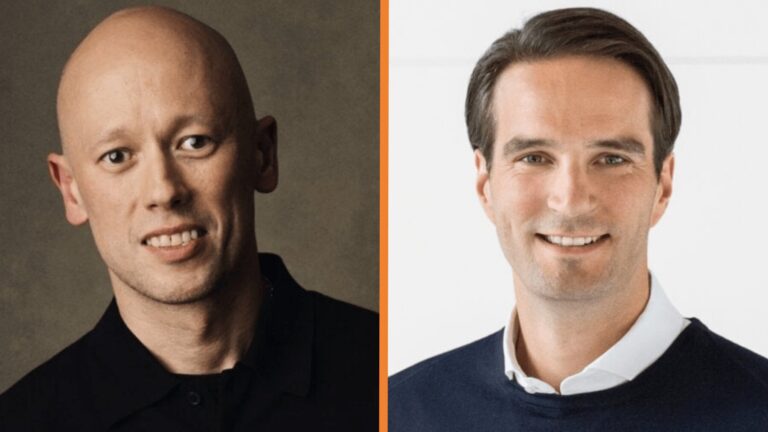

BMG and Spotify sign new direct licensing agreement in the US

0

Spotify and BMG have entered into a direct, multiyear US publishing licensing deal.

The companies said on Wednesday (October 8) that the deal is “designed to deliver greater value to songwriters and their teams”.

The agreement marks Spotify’s latest direct deal with a prominent music publisher operating in the US, and moves its agreement with BMG beyond the traditional CRB model in the market.

Spotify also signed a direct licensing deal with Kobalt covering the US last month and has inked direct publishing agreements with all three majors, including Sony Music, also last month.

Universal Music Publishing Group and Warner Chappell Music signed direct licensing deals with Spotify in January and February, respectively.

Like the other deals with UMG, Warner, Sony, and Kobalt, this new direct deal with BMG in the US moves beyond the traditional CRB model in the market.

What that means in terms of how payouts will change, Spotify said, is that remuneration resulting from the direct licensing deal, combined with the MLC payouts that publishers continue to receive from the blanket mechanical license, will result in higher royalties for songwriters than standalone payouts from MLC under the audiobook bundle treatment.

That audiobook bundling‘ payment structure, which started in March last year, saw Spotify dramatically cut the rate of mechanical royalties paid to publishers and songwriters in the US.

In the press release issued on Wednesday, BMG and Spotify said that this agreement reflects the companies, “shared interest in building a direct relationship that ensures songwriters share more directly in the value created by their work”.

They added: “It’s a practical step toward a more flexible licensing model that better serves both publishers and their artists, ensuring BMG songwriters benefit more directly in the growth of streaming.”

“Our partnership with BMG advances that vision with renewed support for songwriters through a licensing model that will enhance how music is enjoyed on our platform.”

Alex Norström, Spotify

“At Spotify, we believe the future of music depends on stronger collaboration across the industry,” said Alex Norström, Co-President & Chief Business Officer, Spotify.

“Our partnership with BMG advances that vision with renewed support for songwriters through a licensing model that will enhance how music is enjoyed on our platform.”

“Working directly with Spotify helps us reinforce our mission to ensure songwriters are fairly represented and rewarded for their work.”

Thomas Coesfeld, BMG

Thomas Coesfeld, CEO of BMG said: “Working directly with Spotify helps us reinforce our mission to ensure songwriters are fairly represented and rewarded for their work.

“We’re pleased to agree on a progressive licensing model that reflects the real-world use of music across digital platforms and are excited to take our partnership to the next level as we continue to redefine what a modern music company can be.

“We applaud Spotify’s momentum and support their position on developing new AI protections. While we support the use of AI to enhance human creativity, these policies align with BMG’s philosophy and will help ensure that fair remuneration and protection of artists’ works remain non-negotiable.”

BMG also noted on Wednesday that its new deal with Spotify “serves as the latest step following BMG’s announcement in late-2023 that it was taking direct control of its digital business, enabling the company to manage its own relationships with streaming platforms to leverage data, improve artist services, and streamline operations for its substantial music catalog”.

The move saw BMG take its digital/streaming distribution business in-house, just two months after Thomas Coesfeld took charge of BMG as CEO.


Elsewhere at BMG, Monti Olson recently rejoined the company to lead Music Publishing operations in North America with plans to “drive new signings and catalog acquisitions”.

Speaking with MBW last month after the company published its H1 2025 results, Coesfeld explained that “music publishing will likely remain the primary income driver for our business, and we plan to allocate additional resources to our successful and diversified publishing operations”.

He added: “Signings, administration and buyouts remain strong engines of growth, especially as streaming expands globally. Our strength lies in our focused model — publishing and recordings — which gives us resilience and flexibility as the market evolves.”

Music Business Worldwide

Transforming Strength into Speed with The Dryland Combo

0

By Olivier Poirier-Leroy on SwimSwam

Feeling stuck with your dryland? Here’s how combining resisted swimming with dryland can boost performance in the pool.

Dryland is one of the more confounding parts of our sport.

On the one hand, getting stronger and fitter on land should *obviously* make us faster.

On the other, dryland can backfire, creating competing adaptations that crater swim performance or worse, lead to injury.

A five-year analysis of NCAA swimmers found that nearly 40% of all injuries occurred during dryland training. (Not ideal.)

So what separates the kind of dryland that helps swimmers go boom-boom in the pool from the kind that just leaves us sore and sluggish in the water?

It comes down to this: A winning dryland program doesn’t just create strength in the gym, it creates strength in the context of your swimming.

Let’s dive into that.

The Winning Dryland Combo

A meta-analysis by Wang et al. (2025) examined the effectiveness of different dryland modalities on swimming performance. Researchers analyzed 36 randomized trials involving a total of 844 competitive swimmers.

The big winner?

👉 Combining resisted swimming and resistance training on land.

This combination of resisted swimming (i.e. drag chute, resistance tubing) and resistance training on land (i.e. squats, bench press) crushed it:

  • 50 and 100m performance improved the most of all training types
  • Swim velocity increased significantly
  • And stroke rate jumped, too

Swimmers got stronger in the gym, applied that strength in the specific context of resisted swimming, and swim performance followed.

Why this Combo Works

One of the benefits of dryland training is that we can overload muscles with weights, medicine balls, and gravity far beyond what we can generate in the pool. Under the barbell, we can better build heaps of raw strength and power—more than we could ever hope to do when swimming.

In the water, we apply that strength under the same patterns, drag forces, and joint angles we experience when racing.

  • Build strength in the gym -> Apply strength to resisted swimming -> Convert into real swim speed

This 1-2-3 punch improves our ability to coordinate that newly made strength and power in the exact environment where it matters most…

In the pool and on the clock.

The Problem with “Swim Specific” Dryland

One of the biggest myths of dryland is that it needs to be “swim specific” to be effective.

And so swimmers/coaches will load movements that approximate full-stroke swimming on the pool deck or in the gym (i.e. doing freestyle arm strokes with dumbbells). It may look specific, but it doesn’t build the kind of raw strength you get from compound lifts.

Dryland isn’t about copying the movement of your swim stroke. It’s about building large deposits of strength, power and coordination, and then learning to apply those qualities in the water.

You build the foundation by loading large muscle groups through full ranges of motion with squats, pulls, presses, and jumps.

Once that base is built, you connect it to the pool through resisted swimming (parachutes, chutes, cords, or power towers), teaching your body how to turn that new strength into swimming awesomeness.

How to Make This Combo Work

Here are some tips for implementing this dryland + swim training model like a pro:

  • Hit the big lifts in the gym. Focus on compound movements that recruit major muscle groups. Squats, bench press, pull-ups. Aim for near-max (80-90% of 1RM) loads to build real strength.
  • Add resisted swim training. Go short and go intense. 15-25m sprints with full rest. The goal is power, not slow, sluggish swimming. There are a lot of benefits of resisted swimming, but it works best when it’s short and powerful.
  • Don’t overdo it. Swimmers are natural workhorses, which means that if we find something that works, we tend to promptly go overboard. Studies with swimmers (i.e. Girold et al., 2006) found that just 2-3x combined sessions of this type of per week were enough to see major gains. Rest is essential to make this work.

The Bottom Line

At the end of the day, dryland training isn’t about mimicking swimming, but creating the stability, strength and power that amplifies what you are doing in the water.

By combining well-structured dryland workouts with resisted swimming, you get the best of both worlds.

So hit the gym. Get those gains.

But pair it with targeted resisted swimming in the pool.

And get those swim gains, too.


ABOUT OLIVIER POIRIER-LEROY

Olivier Poirier-Leroy is a former national level swimmer, 2x Olympic Trials qualifier, and author of several books for swimmers, including YourSwimBook, Conquer the Pool, The Dolphin Kick Manual, and most recently, The 50 Freestyle Blueprint.

The book is a beastly 220+ pages of evidence-based insights and practical tips for improving freestyle sprint speed.

It details everything from how to master stroke rate, the specifics of sprint technique, how to build a thundering freestyle kick, improve your start and underwaters, and much more.

The 50 Freestyle Blueprint also includes 20 sprint sets to get you started and a bonus guide on how to master the 100 freestyle to complete your sprint preparation toolkit.

👉 Learn more about The 50 Freestyle Guide today.


Read the full story on SwimSwam: The Dryland Combo That Turns Strength into Speed

Army paraglider bombs Buddhist festival, resulting in at least 24 deaths

0

At least 24 people were killed and 47 wounded while protesting against Myanmar’s military government after an army motorised paraglider dropped two bombs on the crowd, a spokesperson for the government-in-exile told BBC Burmese.

The military attacked on Monday evening as around 100 people gathered in Chaung U township in central Myanmar for a national holiday.

Thousands have died and millions have been displaced since a military coup in 2021, which triggered a civil war with armed resistance groups and ethnic militias.

After losing control of more than half the country, the army is making significant gains again, through an especially bloody campaign of airstrikes and heavy bombardment.

Monday’s attack is just one of hundreds of similar air strikes that have been carried out this year by Myanmar’s armed forces.

The military government has in recent months augmented its air force with new drones acquired from China – which is now fully supporting the junta – as well as technical assistance from Russia.

That, coupled with the fact that Beijing has been putting pressure on rebels along its border with Myanmar to stop supplying weapons to opposition groups, means the military tables have turned and insurgents are having to give up many of the territorial gains they made over the past two years.

The attack on Monday targeted a township in the Sagaing region, where people had gathered on Thadingyut, a full moon festival, to hold a candlelight vigil.

It had been organised as a peaceful protest against the junta’s military conscription and an upcoming national election. It also called for the release of political prisoners including Aung San Suu Kyi, the democratically-elected leader who was deposed in the coup and jailed.

The Sagaing region has been a key battleground in the war, with large parts of it under the control of volunteer militias.

These groups, known as the People’s Defence Force (PDF), also run the local administration. An official in the local PDF told BBC Burmese that they had received information about a potential airborne attack during Monday’s gathering.

They tried to end the protest quickly, but the paramotors – as paragliders are known locally – reached the scene earlier than expected, he said.

It all happened in seven minutes, he said. He says the explosion injured his leg, but some people near him were killed.

Locals said it was hard to identify the bodies in the aftermath.

“Children were completely torn apart,” another woman who had helped to organise the event told AFP news agency. She was not at the scene but attended funerals on Tuesday, and added that they were still “collecting body parts”.

In a statement on Tuesday, Amnesty International said that the junta’s use of motorised paragliders to attack communities was part of a “disturbing trend”.

BBC Burmese recently reported that the junta were increasingly opting for paramotors amid a lack of aircraft and helicopters, as well as jet fuel.

International sanctions over the past few years have made it harder for Myanmar’s rulers to procure military equipment – though the recent influx of technology from countries like China and Russia seems to have helped turned the tide.

Joe Freeman, Amnesty International’s Myanmar researcher, said the attack “should serve as a gruesome wake-up call that civilians in Myanmar need urgent protection”.

He also called on Asean, the South East Asian regional bloc due to convene later this month, to “increase pressure on the junta and revise an approach that has failed the Myanmar people for almost five years”.

Myanmar is scheduled to hold general elections in December, the first vote since the 2021 coup. Critics, however, say the vote will not be free and fair and is aimed at trying to legitimise military rule. Many opposition parties have been banned, and voting is likely to take place in only about half the country, in the areas the military controls.

Faster hair growth achieved through enhanced minoxidil absorption by natural sweetener

0

While the topical application of minoxidil is one of the most effective and popular ways to combat male pattern baldness, it is poorly absorbed by the skin. Looking to improve its efficacy, researchers have turned to an unlikely but very sweet ally.

Male pattern baldness (MPB), also known as androgenetic alopecia (AGA), is an inherited condition in which men gradually lose their hair according to a specific pattern that ultimately leaves them with only a little bit of hair on the sides and back of their heads. It is responsible for more than 95% of hair loss in men. Since 1988, minoxidil – a drug originally developed to fight high blood pressure – has been used by men to combat the condition to one degree or another. However, minoxidil is applied directly to the scalp and, paradoxically, is poorly absorbed by the skin.

Now researchers from Australia and China believe they have come up with a way to boost the drug’s absorption and therefore its potency.

They developed a patch containing minoxidil and a set of microneedles made from stevioside, a natural sweetener derived from the Stevia plant. After tuning the concentrations of the sweetener contained in the needles, the patches were applied to mice that had been genetically altered to exhibit MPB. The researchers found that the mice given the Stevia patch had 18 times better absorption of minoxidil than a control group. The treated mice also had hair coverage of 67.5% in previously bald areas after just 35 days. That’s significantly better than the current efficacy of the drug, which typically takes three to six months to produce new hair growth in humans.

Unlike other microneedle patches that had been tried in the past, the Stevia-based needles dissolved after application and were minimally metabolized, meaning that most of the sweetener was excreted. Their dissolvability led them to be less irritating than patches that had been previously tested using metal-based needles.

“The microneedle patch simplifies the treatment regimen by providing a more convenient, long-acting option that ensures controlled and prolonged drug release directly to the targeted area,” write the researchers in their study, which has been published in the journal Advanced Healthcare Materials.

“This method not only enhances drug penetration into skin but also eliminates other issues associated with traditional topical formulations, such as slow onset of action and/or inaccurate dosing. By combining the advantages of microneedling with the therapeutic benefits of minoxidil, and utilizing Stevia’s unique properties, this approach holds significant potential for improving clinical outcomes in the treatment of AGA.”

Source: Wiley via EurekAlert

Challenge from Client

0


Client Challenge


JavaScript is disabled in your browser.

Please enable JavaScript to proceed.

A required part of this site couldn’t load. This may be due to a browser
extension, network issues, or browser settings. Please check your
connection, disable any ad blockers, or try using a different browser.

Pakistan Taliban News: Dozens killed in clash between Pakistani army and fighters near Afghan border

0

Pakistan Taliban claims responsibility for attack on military convoy, leading to a deadly gunfight.

Eleven military personnel have been killed in a gunfight with armed fighters in the country’s northwest, according to the Pakistani army.

The gun battle erupted early on Wednesday during an intelligence operation in the Orakzai district near the Afghan border, the army said in a news release.

Recommended Stories

list of 3 itemsend of list

During the intelligence raid, the military said, an “intense” exchange of fire broke out with “Khawarij”, a term it uses for banned groups such as the Pakistan Taliban, which claimed responsibility for the attack.

Among the dead were Lieutenant Colonel Junaid Arif and his deputy, Major Tayyab Rahat, along with nine other soldiers. The army said 19 fighters were also killed.

The Reuters news agency, citing Pakistani security officials, reported that the fighters ambushed a military convoy with a roadside bomb before opening fire.

In a statement, Prime Minister Shehbaz Sharif lauded security forces for their service and paid tribute to the troops who lost their lives.

In recent months, the Pakistan Taliban, which wants to overthrow the government and replace it with their hardline brand of Islamic governance, has stepped up attacks on Pakistani security forces.

Islamabad says the group uses neighbouring Afghanistan to train and plan attacks against Pakistan, while archrival India funds and backs them, charges denied by both countries.

Aryzta’s Stock Drops 5% After CEO Resignation and Lowered FY25 Outlook

0


Aryzta shares fall 5% on CEO departure and FY25 guidance cut

Dolly Parton’s Sister Requests Prayers from Fans

0

Dolly Parton’s sister has asked fans to pray for the American country singer, who last week postponed a forthcoming Las Vegas residency due to unspecified health issues.

The 79-year-old country music legend has delayed the December concerts, telling fans she needs “a few procedures” to deal with ongoing “health challenges”.

“Last night, I was up all night praying for my sister, Dolly,” Freida Parton wrote on Facebook. “Many of you know she hasn’t been feeling her best lately.

“I truly believe in the power of prayer, and I have been lead to ask all of the world that loves her to be prayer warriors and pray with me.”

Freida ended her message on an upbeat note.

“She’s strong, she’s loved, and with all the prayers being lifted for her, I know in my heart she’s going to be just fine,” she wrote.

“Godspeed, my sissy Dolly. We all love you!”

A spokesperson for the singer told CBS News, the BBC’s US partner, that she will be posting a social media message on Wednesday that “will address everyone’s concerns”.

Parton had been scheduled to perform six shows at The Colosseum at Caesars Palace in December.

But she postponed the gigs until September next year, explaining she wouldn’t have enough time to rehearse for them.

Parton did not disclose the nature of her health issues, but she was recently forced to pull out of a Dollywood event after being diagnosed with a kidney stone that she said was causing “a lot of problems”.

Earlier this year, she lost her beloved husband Carl Dean after nearly 60 years of marriage.

She later dedicated a new song, If You Hadn’t Been There, to his memory.

The musician is best known for a string of country crossover hits including Coat of Many Colors, I Will Always Love You, 9 To 5 and Jolene.

Her Las Vegas stint would have been her first visit to the Strip since the 1990s, when she performed alongside her Islands In The Stream duet partner, Kenny Rogers.

Deloitte Caught Using AI in $290,000 Report to Aid Australian Government in Welfare Crackdown Following Researcher’s Concerns about Hallucinations

0

Deloitte’s member firm in Australia will pay the government a partial refund for a $290,000 report that contained alleged AI-generated errors, including references to non-existent academic research papers and a fabricated quote from a federal court judgment. 

The report was originally published on the Australian government’s Department of Employment and Workplace Relations website in July. A revised version was quietly published on Friday after Sydney University researcher of health and welfare law Chris Rudge said he alerted media outlets that the report was “full of fabricated references.”

Deloitte reviewed the 237-page report and “confirmed some footnotes and references were incorrect,” the department said in a statement Tuesday.

Deloitte did not immediately respond to Fortune’s request for comment.

The revised version of the report includes a disclosure that a generative AI language system, Azure OpenAI, was used in its creation. It also removes the fabricated quotes attributed to a federal court judge and references to nonexistent reports attributed to law and software engineering experts. Deloitte noted in a “Report Update” section that the updated version, dated September 26, replaced the report published in July. 

“The updates made in no way impact or affect the substantive content, findings and recommendations in the report,” Deloitte wrote.

In late August the Australian Financial Review first reported that the document contained multiple errors, citing Rudge as the researcher who identified the apparent AI-generated inaccuracies. 

Rudge discovered the report’s mistakes when he read a portion incorrectly stating Lisa Burton Crawford, a Sydney University professor of public and constitutional law, had authored a non-existent book with a title outside her field of expertise.

“I instantaneously knew it was either hallucinated by AI or the world’s best kept secret because I’d never heard of the book and it sounded preposterous,” Rudge told The Associated Press on Tuesday. 

The Big Four consulting firms and global management firms such as McKinsey have invested hundreds of millions of dollars into AI initiatives to develop proprietary models and increase efficiency. In September, Deloitte said it would invest $3 billion in generative AI development through fiscal year 2030. 

Anthropic also announced a Deloitte partnership on Monday that includes making Claude available to more than 470,000 Deloitte professionals.

In June, the UK Financial Reporting Council, an accountancy regulator, warned that the Big Four firms were failing to monitor how AI and automated technologies affected the quality of their audits. 

Though the firm will refund its last payment installment to the Australian government, Senator Barbara Pocock, the Australian Greens party’s spokesperson on the public sector, said Deloitte should refund the entire $290,000.

Deloitte “misused AI and used it very inappropriately: misquoted a judge, used references that are non-existent,” Pocock told Australian Broadcasting Corp. “I mean, the kinds of things that a first-year university student would be in deep trouble for.”“The matter has been resolved directly with the client,” a spokesperson from Deloitte Australia told TheAssociated Press.

Fortune Global Forum returns Oct. 26–27, 2025 in Riyadh. CEOs and global leaders will gather for a dynamic, invitation-only event shaping the future of business. Apply for an invitation.