
3.7 C
New York
Thursday, February 26, 2026
Home Blog Page 328

Why Afghanistan’s Neighbors Reject Trump’s Bagram Plan: Taliban News

0

Islamabad, Pakistan – Seated next to British Prime Minister Keir Starmer during a visit to the United Kingdom in September, United States President Donald Trump made clear he was eyeing a plot of land his country’s military once controlled nearly 8,000km (4,970 miles) away: Bagram airbase in Afghanistan.

“We gave it to [the Taliban] for nothing. We want that base back,” he said. Two days later, this time opting to express his views on social media, Trump wrote: “If Afghanistan doesn’t give Bagram air base back to those that built it, the United States of America, bad things are going to happen!”

Recommended Stories

list of 4 itemsend of list

The Taliban, predictably, bristled at the demand and stressed that under “no circumstances” will Afghans hand over the base to any third country.

On Tuesday, the Taliban, who have ruled Afghanistan since their takeover of Kabul in August 2021, won a remarkable show of support for their opposition to any US military return to the country, from a broad swath of neighbours who otherwise rarely see eye-to-eye geopolitically.

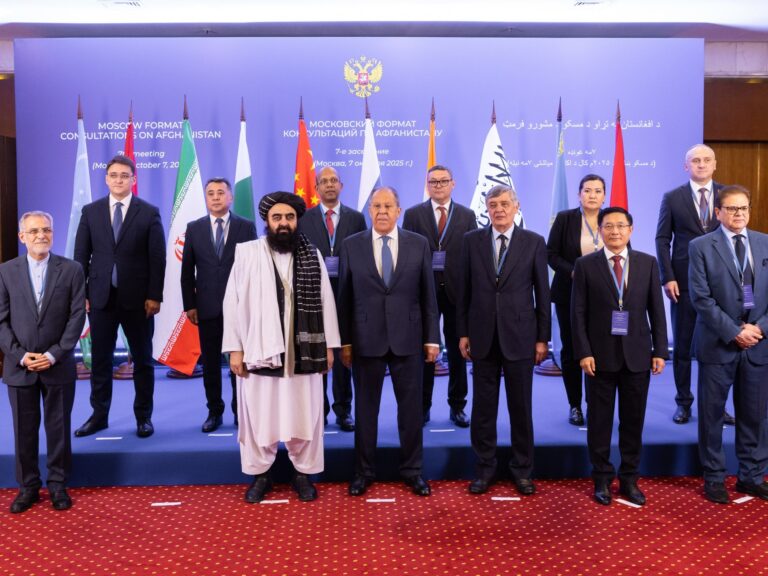
At a meeting in Moscow, officials from Russia, India, Pakistan, China, Iran, Kazakhstan, Tajikistan, Uzbekistan and Kyrgyzstan joined their Taliban counterparts in coming down hard on any attempt to set up foreign military bases in Afghanistan. They did not name the US, but the target was clear, say experts.

“They called unacceptable the attempts by countries to deploy their military infrastructure in Afghanistan and neighbouring states, since this does not serve the interests of regional peace and stability,” said the joint statement (PDF) published by the Russian Ministry of Foreign Affairs on October 7 at the conclusion of the seventh edition of what are known as the Moscow Format Consultations between Afghanistan’s neighbours.

Pakistan, China, Russia and Iran had opposed “the reestablishment of military bases” in a similar declaration last month on the sidelines of the United Nations General Assembly. But the Moscow communique brought together a much wider range of nations – some with competing interests – on a single page.

India and Pakistan have long vied for influence over Afghanistan. India also worries about China’s growing investments in that country. Iran has often viewed any Pakistani presence in Afghanistan with suspicion. Kazakhstan, Kyrgyzstan, Tajikistan and Uzbekistan have long feared violence in Afghanistan spilling over into their territory. And in recent years, Pakistan has had tense relations with the Taliban – a group that it supported and sheltered for decades previously.

The confluence of these countries, despite these differences, into a unanimous position to keep the US out of the region reflects a shared regional view that Afghan affairs are a “regional responsibility”, not a matter to be externally managed, said Taimur Khan, a researcher at the Institute of Strategic Studies Islamabad (ISSI).

“Despite their differences, regional countries share a common position that Afghanistan should not once again host a foreign military presence,” Khan told Al Jazeera.

That shared position, articulated in Moscow, also strengthens the Taliban’s hands as it seeks to push back against pressure from Trump over Bagram, while giving Afghanistan’s rulers regional legitimacy. Most of their neighbours are deepening engagements with them, even though Russia is the only country that has formally recognised them diplomatically as the Afghan government.

A symbolic, strategic prize

The groundwork for the Afghan Taliban’s return to power was laid in Doha in January 2020, under Trump’s first administration; they ultimately took over the country in August 2021, during the tenure of the administration of former President Joe Biden.

Yet in February this year, a month after taking the oath for his second term, Trump insisted: “We were going to keep Bagram. We were going to keep a small force on Bagram.”

Bagram, 44km (27 miles) north of Kabul, was originally built by the Soviet Union in the 1950s. The base has two concrete runways – one 3.6km long (2.2 miles), the other 3km (1.9 miles) – and is one of the few places in Afghanistan suitable for landing large military planes and weapons carriers.

It became a strategic base for the many powers that have occupied, controlled and fought over Afghanistan over the past half-century. Taken over by US-led NATO forces after the invasion of Afghanistan following the September 11 attacks, Bagram was a central facility in Washington’s so-called “war on terror”.

Afghanistan’s rugged, mountainous terrain means there are limited sites capable of serving as large military logistics hubs. That scarcity is why Bagram retains its strategic significance, four years after the US withdrew from the country.

Kamran Bokhari, senior director at the Washington, DC-based New Lines Institute for Strategy and Policy, said he was sceptical about the US seriously planning any redeployment of forces to Afghanistan, despite Trump’s comments.

“The new US geostrategy is about military retrenchment. There is no appetite in Washington for any such military commitment, which would be a major logistical undertaking,” Bokhari told Al Jazeera. “Even if the Taliban were to agree to allow the Americans to regain Bagram, the cost of maintaining such a facility far outstrips its utility.”

At the same time, Bokhari said that the Moscow meet worked as an opportunity for Russia to show that it retains influence in Central Asia, a region in which its footprint has been eroded by the war in Ukraine and by China’s rising geoeconomic presence.

But the concerns about any renewed US footprint in Afghanistan aren’t limited to Russia, or even China, America’s biggest long-term rival. Amid heightened tensions with the US and Israel, Iran will not want an American military presence in Afghanistan.

Other regional nations – India and Pakistan among them – are also eager to show that the neighbourhood can manage the vacuum created in Afghanistan by the withdrawal of US security forces, Bokhari said. Though a close partner of the US, India’s ties with Washington have frayed during Trump’s second term, with the American president imposing 50 percent tariffs on imports from India, in part because of New Delhi’s continued purchase of oil from Russia.

And then there are the Central Asian countries that share long, porous borders with Afghanistan – and fear their soil might be used by violent groups energised by any return of the US, militarily, to Bagram.

Blast walls and a few buildings can be seen at the Bagram airbase after the US military left the base, in Parwan province, north of Kabul, Afghanistan, in 2021 [File: Rahmat Gul/AP Photo]

Central Asia’s security calculus

The four Central Asian countries that were part of the Moscow Format – Kazakhstan, Kyrgyzstan, Tajikistan and Uzbekistan – together with Turkmenistan and Afghanistan, form a bloc of six landlocked nations whose geography gives them a unique vantage point in regional politics, while also compelling them to seek access to warmer waters for trade.

Analysts argue an American presence in the region would be “undesirable” for many of these nations.

“This is not knee-jerk anti-Americanism,” Kuat Akizhanov, a Kazakh analyst and deputy director of the Central Asia Regional Economic Cooperation Institute (CAREC) said.

“A US base would put host states on the front line of US-Russia-China rivalry. Moscow and Beijing have both signalled opposition to any renewed US presence, and aligning with that consensus reduces coercive pressure and economic or security retaliation on our much smaller economies,” Akizhanov told Al Jazeera.

He added that regional actors now prefer regional groupings such as the Moscow Format, or even the Shanghai Cooperation Organisation (SCO) led by Moscow and Beijing, for cooperation on security and the neighbourhood’s stability, to any US presence.

What do the Taliban and Afghanistan’s other neighbours fear?

Many of Afghanistan’s bigger neighbours have their own concerns.

“They fear that a revived US military presence could potentially reintroduce intelligence operations, fuel instability, and once again turn Afghanistan into a proxy battleground,” Khan from the Islamabad-based ISSI said.

“This is the lens from which regional countries now view Afghanistan: a space that must be stabilised through regional cooperation and economic integration, and not through renewed Western intervention or strategic containment efforts,” he added.

For the Taliban, meanwhile, Trump’s Bagram demands pose a dilemma, say experts.

Ibraheem Bahiss, a Kabul-based senior analyst for Crisis Group, said he believed that Trump’s Bagram demand was primarily driven by the US president’s “personal inclination” rather than any consensus within the US strategic establishment. “There might be a sense that Afghanistan remains an unfinished business for him,” the analyst told Al Jazeera.

For the Taliban, surrendering Bagram is unthinkable. “Kabul cannot offer Bagram as it would antagonise their own support base and might lead to resistance against their own government if [the] US comes here,” Bahiss said.

At the same time, Bokhari, of the New Lines Institute, said that the Taliban know international sanctions are a major obstacle to governance and economic recovery, and for that, they will need to engage the West, and especially the US.

“The Taliban are asking for sanctions relief, but the question is, what do they offer? Washington is more interested in Central Asia, to which it does not have easy access to. The region is otherwise blocked by Russia, China and Iran,” he said.

Trump has cited Bagram’s proximity to China and its missile factories as a reason for wanting to take back control of the base. Bagram is about 800km (about 500 miles) from the Chinese border, and about 2,400km (about 1,500 miles) from a missile facility in Xinjiang.

“It is not in the US interest in allowing China to monopolise the region,” Bokhari said.

Against that backdrop, the Bagram demand might be a signal from the US that it is eager to explore new ways to do business with the Taliban, Bokhari and Bahiss agreed.

Washington isn’t the only one reaching out to the group, which until a few years ago was largely a global pariah. In fact, the US is late – the Taliban have already been making major headways, diplomatically, in its neighbourhood.

Engagement, not recognition

Since taking control of a country of more than 40 million people in August 2021, the Taliban have faced international scepticism over their style of governance.

Afghanistan’s rulers have imposed a hardline interpretation of Islam and have placed several restrictions on women, including limits on working and education.

International sanctions have further weakened an already fragile economy, while the presence of multiple armed groups – including Tehreek-e-Taliban Pakistan (TTP), the Balochistan Liberation Army (BLA) and Islamic State Khorasan Province (ISKP) – continues to alarm neighbouring states. The Taliban insist that they do not support the use of Afghan soil to attack neighbours.

Pakistan, once seen as the primary benefactor of the Taliban, says it has grown increasingly frustrated over the past four years at what it sees as the Afghan government’s inability to clamp down on militants.

The year 2024 was one of the deadliest for Pakistan in nearly a decade, with more than 2,500 casualties from violence, many of which Islamabad attributes to groups that it says operate from Afghan soil, allegations rejected by Kabul.

On Wednesday, several soldiers were killed in an ambush by the TTP near the Afghan border in the Khyber Pakhtunkhwa province.

Still, Pakistan upgraded diplomatic ties with the Taliban in May. That month, Afghanistan’s acting Foreign Minister Amir Khan Muttaqi hosted his counterpart from Pakistan, spoke on the phone with India’s foreign minister, and flew to Iran and China for summits.

Muttaqi was in Moscow for the recent regional consultations that produced the criticism of Trump’s Bagram plans, and on Thursday is due to arrive in New Delhi for a historic, weeklong visit to India, a country that viewed the Taliban as a Pakistan proxy – and an enemy – until a few years ago.

Bahiss said the compulsion for regional nations to deal with the Taliban is driven by shared, pragmatic goals, which include keeping borders calm, guaranteeing counterterrorism assurances, and securing trade routes.

Akizhanov, the CAREC analyst, meanwhile, said that the wider regional interaction with Afghan officials “normalise working channels [with the Taliban] and reinforces their narrative that regional futures will be decided locally, not by outside militaries”.

However, “legitimacy remains conditional in capitals of each country, hinging on counterterrorism guarantees, cross-border security, economic connectivity, and basic rights, especially for women and girls,” said the analyst, who is based in Urumqi, China.

ISSI’s Khan agreed.

“What we are witnessing is not formal recognition, but a functional understanding that Afghanistan’s isolation serves no one’s interests,” he said.


The Week in NCAA 2025-26 Digest: NCAA’s 2026 DI Championships Take Center Stage

0

By Sophie Kaufman on SwimSwam

In our first edition of this season’s college swimming digest, we joked about how the season was well underway without the NCAA releasing the time standards for the 2026 NCAA DI Swimming and Diving Championships.

Well, folks, those time standards finally dropped this week. But that was far from the only thing the NCAA did. Some weeks, it feels impossible to fit everything that’s happened in the NCAA into an appropriate length digest. That’s typically because a lot of swimmers popped off—a testament to how fast the league has been the past several seasons and how the traditional arc of the college swimming season has been upended. There was a lot of fast swimming this week, which we will certainly get to, but much of this week’s discourse has been dominated by the NCAA’s big announcements.

NCAA Approves Changes to 2026 DI Championships

This week, the NCAA approved the proposed changes to the 2026 NCAA Division I Championships. This comes after the College Swimming and Diving Coaches Association of America (CSCAA) submitted a proposal to the NCAA Sport Oversight Commission in July with numerous changes to the current format. That proposal was originally tabled in August, but has now been pushed through weeks after the season got underway with immediate implications.

Headline Changes:

  • No ‘B’ finals—9th through 16th place are now scored directly out of prelims
  • New event lineup
  • A new qualification model that will give event winners at conference championships automatic qualification to the NCAA Championships as long as they are under the ‘A’ time standard
  • Diving finals split into three segments, award ceremonies moved out of the session

These changes are the NCAA’s attempt to modernize the NCAA swimming and diving scene as well as create a more easily digestible primetime broadcast. According to the report, the changes “are strategically designed to elevate the championship’s linear broadcast potential without negatively impacting student-athletes” and that “marquee events will now anchor the final days of competition.” Central to the changes is the idea that every time athletes dive in, there should be a national title on the line.

Related:

As if that wasn’t enough change for the week, on Wednesday the NCAA Division I Administrative Committee has also officially adopted a proposal that would allow student athletes and athletic department staff to bet on professional sports.

More Details About CSCAA Dual Meet Challenge Revealed, Kyle Sockwell To Commentate

Let’s just keep the administrative news rolling. Last spring, the CSCAA Dual Meet Challenge was announced. It features a bracket-style format based on the November CSCAA Top 25 Dual Meet Poll, and was one of a few of these bracket-style meets—one of the latest efforts to reimagine the NCAA format—announced around that time.

This week, the CSCAA announced that Kyle Sockwell will be the in-house commentator for the competition, which runs November 21-23 at the University of Tennessee. Sockwell has been one of the biggest names leading the charge to make college dual meets more exciting and accessible.

The meet will feature the hosting Volunteers as well as the Arizona State Sun Devils, Michigan Wolverines, and Virginia Cavaliers, meaning each power conference will have one representative. The #1 seed and the #4 seed will compete and the #2 and #3 seeds will race on the first day of competition. From there, the two winners will square off to kick off Day 2, and the two teams that lost will also go to battle. Then the loser of the winner-only meet will face the winner of the loser-only meet, and then on Day 3, there will be a championship dual meet along with a 3rd-place meet. Read more about the format, scoring, and event schedule here.

Photo: CSCAA

In Other News, Swimmers Went Fast This Week

Ok, let’s get back to the pool

First off, the Kennedi Dobson train is rolling for Georgia. At the Dawgs dual meet against the South Carolina Gamecocks, the freshman Dobson dropped a lifetime best 1:43.40 in the 200 freestyle. It’s her first time cracking the 1:44 barrier as she improved on the 1:44.07 she swam at the 2024 U.S. Open. Dobson also swam lifetime bests in the 500 (4:36.22) and 1000 freestyle (9:29.94).

Despite Dobson’s three wins, it was the Gamecock women who came out on top, 157 to 141, beating the Dawgs for the first time since 1985. South Carolina’s divers were key to the victory as they swept the podium on 3-meter and went 1-2-4 on the 1-meter board. South Carolina also won all three 200s of stroke with NCAA finalist Amy Riordan winning the 200 backstroke (1:53.95), Jordan Agliano winning the 200 fly (1:56.68), and Delaney Franklin taking the 200 breaststroke (2:10.81). The Georgia men were without Luca Urlando but still took the win.

We mentioned both swimmers last week, but Ilya Kharun and Bryn Greenwaldt continue to impress early this season. Kharun shined bright at the Sun Devils home meet against UNLV in front of a record-breaking crowd at the Mona Plummer Aquatic Center. Earlier this season he showcased his early-season sprint butterfly speed. He kept that up with a pool-record 43.91 100 butterfly at the meet and an 18.91 50 butterfly split that clocks in as 5th fastest in history. At this meet, he also flexed his 200 butterfly skills, ripping a 1:37.94 200 butterfly, which is the 8th fastest 200-yard butterfly swim in event history.

Kharun now holds the 7th and 8th fastest times on the top 10 list, as the effort was just a hundredth off the lifetime best 1:37.93 he posted at a 2024 dual meet.

Transfer Adam Chaney also put together a top 10 swim as he opened the Sun Devils’ 200 medley relay with a 20.20 50 backstroke. This ties Ryan Murphy for the 5th fastest 50 backstroke lead-off all-time and is .01 seconds off his lifetime best, a 20.19 from the 2022 NCAA Championships. That meet rewrote the 50 backstroke top 10 as Bjorn Seeliger (20.08), Kacper Stokowski (20.16), and Chaney (20.19) all put together historic swims. In 2024, Aiden Hayes took over the top mark with a 20.07. Chaney is the only one of those four still swimming in the NCAA—is this the year we finally see someone crack the elusive 20-second barrier?

Meanwhile, Greenwaldt keeps posting fast 50-yard freestyle splits in her first season in Charlottesville. She split 21.32 at UVA’s intrasquad meet, which also saw Thomas Heilman break three meet records in a schedule that mostly featured off-distance races. This was Virgina’s second meet that mostly had off-distance events, but the Cavaliers will dive into the traditional dual meet format this weekend against Florida. Virginia will be Florida’s second top-10 opponent of the season as they previously took on the Indiana Hoosiers.

Omaha’s freshman diver Nathan Frette has also made a big impression early in his collegiate career. Frette took over the school’s one-meter diving record during Omaha’s season opener against South Dakota State. He surpassed his mark at the team’s next meet against Rockhurst with a 356.90, then broke the school’s three-meter record with a 357.35. Both scores are NCAA Zone Qualifying scores, as was fellow freshman Owen Kipp’s 339.95 effort on the three-meter board.

Read the full story on SwimSwam: 2025-26 NCAA Digest: NCAA’s Changes To 2026 DI Championships Dominate The Week

Obesity: Green Tea Enhances Muscle Metabolism and Insulin Sensitivity

0

Compounds in green tea can reprogram muscle metabolism to boost insulin sensitivity and glucose tolerance, according to new findings that further our understanding of why this ancient drink has long been linked to protection against obesity.

Green tea has long been linked with improved blood sugar control and reduced risk of metabolic diseases, but much of that evidence stems from animal studies undertaken in cool laboratory environments. Those conditions can artificially trigger calorie burn and mask the true physiological effects being tested. Researchers from Cruzeiro do Sul University wanted to remove that bias to see if green tea still delivered metabolic benefits in obesity models.

In this study, supported by Brazilian science institution Fundação de Amparo à Pesquisa do Estado de São Paulo (FAPESP), scientists fed mice a high-fat “cafeteria diet,” designed to mimic a high-fat Western diet, for four weeks, before supplementing the eating plan with green tea extract. The high-fat diet (HFD) had a caloric density of 531 kcal/100 g, almost double that of a standard diet of 288 kcal/100 g. The obese mice were kept in temperatures of around 28 °C (82.4 °F) for the duration of the study.

“We give them chocolate, filled cookies, dulce de leche, condensed milk,” said lead researcher Rosemari Otton from Cruzeiro do Sul University, who has been studying green tea for 15 years. “In other words, the same type of food that many people consume on a daily basis.”

The mice were split into three groups: Control (standard chow and water), HFD plus water and HFD plus green tea extract (500 mg/kg/day, Monday-Friday). All mice were on these diets for 16 weeks, however, the HFD and green tea group began daily supplementation after four weeks.

What they found was that the mice receiving green tea had significantly improved glycemic control compared to the mice on just the HFD, with better glucose tolerance and insulin sensitivity, and lower fasting glucose. This suggests that green tea still boosted metabolic function even though temperature ruled out additional calorie burn.

In addition to this, these animals’ skeletal muscle had structural and molecular shifts consistent with better glucose handling. Green tea increased muscle fiber cross-sectional area without affecting intramuscular triglyceride or cholesterol. At the signaling level, green tea increased the expression of Insr, Irs1, Glut4, Hk1, and Pi3k – genes that are important for glucose uptake and use in muscles. Lactate dehydrogenase (LDH) – an enzyme that helps recycle energy during muscle exertion and essential for glucose metabolism – was restored to pre-HFD levels.

“One way to assess muscle function is to look at fiber diameter,” Otton explained. “If it increases, we have more active muscle components. Green tea managed to maintain this diameter, showing that it protects muscle against the harmful effects of obesity.”

While body weight wasn’t the focus of the study, the researchers demonstrated just how green tea is able to improve insulin sensitivity while boosting energy processing in skeletal muscle – functions that drop off through obesity.

“This study suggested that green tea treatment attenuates the negative effects of HFD by improving muscle fiber cross-sectional area in the gastrocnemius muscle and increasing the expression of genes involved in lipid metabolism,” the researchers noted. “Although no effect was observed on fatty acid oxidation, green tea improved insulin and glucose sensitivity, as evidenced by glucose and insulin tolerance tests. It also increased the expression of genes associated with glucose uptake and lactate dehydrogenase activity in skeletal muscle.”

The researchers also found that the benefits depended on the protein hormone adiponectin, which is secreted by fat cells and regulates glucose and fat (lipid) metabolism. In mice with adiponectin production muted, green tea failed to deliver the benefits, indicating that the hormone may play a key role in how the extract impacted metabolic function.

“We conducted a study with adiponectin-knockout mice, meaning they don’t produce it,” Otton said. “And in these animals, green tea had no effect. This suggests that adiponectin is a key player in the mechanism of action of the tea.”

What’s more, the researchers couldn’t point to any particular compound in the green tea that was responsible for its benefits – instead, they believe, it’s the sum of its parts that appear to be key.

“Green tea is a complex matrix with dozens of bioactive compounds,” said Otton. “We’ve tried to separate these compounds and study their effects individually, but the whole extract is always more effective. There’s a synergy between the compounds that we can’t reproduce when they’re isolated.”

While the mice dose of green tea equated to around three cups a day, the scientists warn that there’s more nuance involved. Not all commercial green tea products meet the same quality standards that were used in the laboratory-grade extract, and dosage, bioavailability and polyphenol content can vary widely between preparations.

“The ideal is chronic consumption, as we see in Asian countries,” Otton said. “In Japan, for example, people consume green tea every day, throughout their lives, and obesity rates are low. But this is different from drinking tea for five months and expecting a miraculous weight loss effect.

“What we see in animals doesn’t always reproduce in humans,” she added. “But if we want to make this translation to real life, we need to think about all the details, such as ambient temperature. It’s these precautions that increase the validity of our data. We’re far from having all the answers, but we’re getting closer and closer.”

The study was published in the journal Cell Biochemistry & Function.

Source: Fundação de Amparo à Pesquisa do Estado de São Paulo

Live Nation plans to raise $1.3bn through convertible bonds for debt refinancing.

0

Live entertainment giant Live Nation has announced it’s planning to issue $1.3 billion in convertible bonds to refinance debt and fund general corporate purposes.

In a statement issued on Wednesday (October 8), the $35 billion-valued Live Nation said the new convertible bonds – which will be issued “subject to market and other conditions” – will mature on October 15, 2031, with interest paid semi-annually.

The company said it may also grant initial buyers the right to purchase an additional $100 million in convertible notes. The bonds will be issued under Rule 144A of the US’s Securities Act, limiting the bond sale to “qualified institutional buyers.”

The new capital will be used to fully redeem Live Nation’s 5.625% senior notes due in 2026, repay some debt from its existing credit facilities, and for general purposes “which may include funding future venues or the repayment or repurchase of certain… outstanding indebtedness,” Live Nation said.

Following the bond issuance, the company also plans to amend or refinance its existing senior secured credit facility in order to obtain $3.7 billion in a variety of new credit facilities, including a $400 million revolving credit facility for venue expansion.

Per InvestingPro, Live Nation has a “moderate” debt level. The company is carrying $8.42 billion in debt on around $2 billion in EBITDA.

The company’s shares were trading down 3.8% on the NYSE as of mid-day Wednesday following the announcement, at around $149.40 per share.

Live Nation reported revenue of $7.0 billion for the second quarter of 2025, up 16% year-over-year at constant currency. That includes a 20% YoY spike in concerts revenue to a record high $5.95 billion, and a 2% YoY increase in ticketing revenues to $742.7 million.

That was a marked turnaround from Q1, when the company reported an 8% YoY revenue decline, to $3.38 billion, with concerts down 11% YoY at constant currency and ticketing down 1% YoY.

The company continues to invest aggressively in new and renovated venues.

It announced in June that it plans to spend $1 billion on 18 new and/or renovated venues in the US over the next 18 months, and noted it had spent “$14 billion on artists” (i.e., the amount it spent putting on artists’ shows) in 2024.

Even as it expands internationally and at home in the US, the company is facing a number of legal hurdles, including an antitrust lawsuit by the US Department of Justice which is seeking to break off its ticketing division, Ticketmaster, from the rest of the company.

Most recently, Live Nation and Ticketmaster were sued by the US Federal Trade Commission (FTC) over what the FTC called “illegal ticket resale practices.” The FTC’s complaint says Live Nation profits from ticket resellers who use bots to buy large quantities of tickets during concert on-sales.Music Business Worldwide

Trump announces that Israel and Hamas have both agreed to the first phase of the Gaza peace plan

0

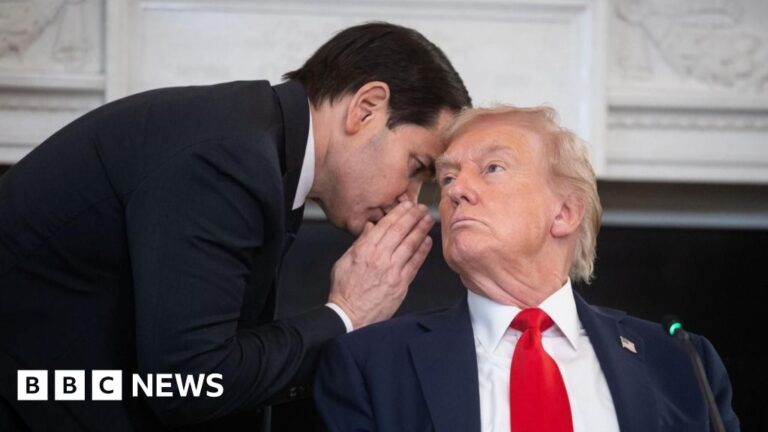
Watch: Trump says Middle East deal ‘very close’ after being passed note by Marco Rubio

US President Donald Trump has announced that Israel and Hamas have “both signed off” on the first phase of a peace plan for Gaza.

“This means that ALL of the Hostages will be released very soon, and Israel will withdraw their Troops to an agreed upon line as the first steps toward a Strong, Durable, and Everlasting Peace,” Trump wrote on Truth Social.

The announcement comes after three days of indirect talks in Egypt – mediated by officials from Egypt, Qatar, Turkey and the US – aimed at bringing an end to the two-year conflict.

Both Israel and Hamas also confirmed an agreement had been reached.

However, Trump’s post did not provide clarity on other known sticking points in negotiations – notably the disarmament of Hamas and the future governance of Gaza.

But the deal still appeared to be the closest the two sides have come to ending the war which has killed tens of thousands, and drawn in countries including Iran, Lebanon and Yemen.

Reuters Einav Zangauker, the mother of hostage Matan Zangauker, reacts after Trump's announcementReuters

Einav Zangauker, the mother of hostage Matan Zangauker, reacts after hearing Trump’s announcement.

In a post on X, Israeli Prime Minister Benjamin Netanyahu called it a “great day”, adding that he would “convene the government tomorrow to ratify the agreement and bring all of our precious hostages home”.

Netanyahu and Trump held a “moving” call, during which they congratulated each other on the “historic achievement” of the agreement, according to the Israeli Prime Minister’s Office.

Israeli President Isaac Herzog said: “At this moment the heart of Israel beats as one with the hostages and their families.”

Israel says there are currently 48 hostages in captivity, up to 20 of whom are still alive and 28 are dead.

Hamas confirmed that the agreement included an Israeli withdrawal from Gaza, a hostage-prisoner exchange and the entry of aid, adding that they “value the efforts of US President Donald Trump, who seeks to bring about a definitive end to the war”.

Hamas also called on Trump, the guarantor countries and other Arab states to compel Israel “to fully implement the agreement’s requirements and not allow it to evade or delay the implementation of what has been agreed upon”.

A senior White House official told CBS, the BBC’s US news partner, that “our assessment is that hostages will begin getting released on Monday”, a timeline later corroborated by Trump.

A senior Palestinian official told the BBC that the ceasefire will go into effect immediately after approval by the Israeli government at around 14:00 Jerusalem time (11:00 GMT).

Israel will allow 400 aid trucks to enter Gaza daily during the first five days, with the number to increase gradually in later stages, the official said.

The official said the “yellow line” on the Trump plan map issued by the White House had been adjusted to reflect Israel’s security requirements and Hamas’s need to secure the release of Israeli hostages.

The initial “yellow line” shown on the White House map would have left Gaza about 55% occupied by Israeli forces.

Hamas officials told the BBC that the list of prisoners it had submitted to mediators in Egypt included high-profile figures such as Marwan Barghouti, seen by many Palestinians as a future president. It is unclear whether Israel has agreed to his release.

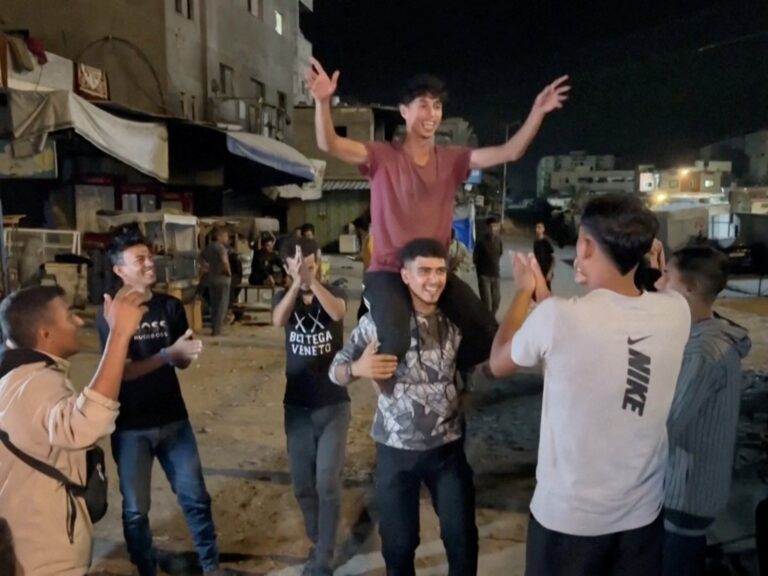
Reuters Palestinians celebrate in the streets of Khan YounisReuters

Palestinians celebrate in the streets of Khan Younis

In a post on X, UN Secretary General António Guterres said the UN supported the “full implementation of the agreement & will scale up the delivery of sustained & principled humanitarian relief”.

He urged all sides “to abide fully by the terms of the agreement” and “seize this momentous opportunity”, adding that “the suffering must end”.

Later, Trump told Fox News that the agreement would usher in a “different world”, saying this is more than Gaza, this is “peace in the Middle East”.

“Gaza, we believe is going to be a much safer place… and other countries in the area will help it reconstruct because they have tremendous amounts of wealth,” Trump said.

Earlier on Wednesday, expectations that a deal could be imminent were heightened after US Secretary of State Marco Rubio entered an event with Trump and handed him a note.

The message appeared to ask that Trump approve a Truth Social post about Gaza so that “you can announce first”.

Trump said that note informed him that “we are very close to a deal”. He exited the room shortly thereafter, saying he had to focus on the Middle East.

Israel launched a military campaign in Gaza in response to the 7 October 2023 attack, in which Hamas-led gunmen killed about 1,200 people and took 251 others as hostages.

At least 67,183 have been killed by Israeli military operations in Gaza since then, including 20,179 children, according to the territory’s health ministry. Its figures are seen as reliable by the UN and other international bodies, although Israel disputes them.

The ministry has said another 460 people have died from the effects of malnutrition since the start of the war, including 182 since a famine was confirmed in Gaza City in August by the UN-backed Integrated Food Security Phase Classification (IPC).

Netanyahu has repeatedly denied starvation is taking place in Gaza and said Israel was facilitating deliveries of food and other aid.

Challenge from Client

0


Client Challenge


JavaScript is disabled in your browser.

Please enable JavaScript to proceed.

A required part of this site couldn’t load. This may be due to a browser
extension, network issues, or browser settings. Please check your
connection, disable any ad blockers, or try using a different browser.

Trump announces agreement on initial phase of Gaza ceasefire between Israel and Hamas | Latest updates on Israel-Palestine conflict

0

Bitcoin Depot CEO, Mintz, sells $6.4 million worth of shares

0


Bitcoin Depot CEO Mintz sells shares worth $6.4 million

Gaza peace talks making strides as Trump declares deal ‘very close’

0

Rushdi AbualoufGaza correspondent, Istanbul and

David Gritten

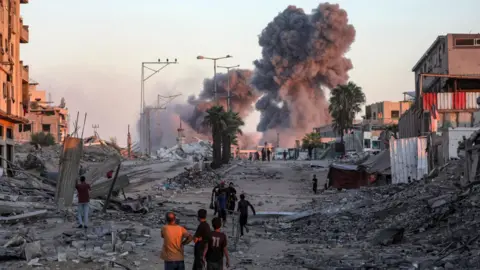
EPA Smoke rises following Israeli air strikes near the Islamic University in Gaza City, northern Gaza (7 October 2025)EPA

The talks seek to end the devastating war in Gaza which has killed tens of thousands of Palestinians

US President Donald Trump has said he has been informed “we are very close to a deal” to end the war in Gaza, after officials reported progress after a third day of indirect talks between Israel and Hamas in Egypt.

A Palestinian official told the BBC that Egyptian, Qatari and Turkish mediators finished seven hours of talks with the Hamas delegation, which included members of other Palestinian groups.

Mediators are meeting Israel’s delegation to seek final answers on remaining issues.

Wednesday’s talks focused on the first phase of a US peace plan that includes a ceasefire, the release of all hostages in Gaza in exchange for Palestinian prisoners, and Israel’s withdrawal from parts of Gaza.

At an unrelated event at the White House on Wednesday, Secretary of State Marco Rubio entered and passed Trump a note, which appeared to ask that Trump approve a Truth Social post about Gaza so that “you can announce first”.

Trump said that note informed him that “we are very close to a deal”.

He exited the room shortly thereafter, saying he had to focus on the Middle East.

White House Press Secretary Karoline Leavitt said Trump is considering going to the region on Friday.

According to the Palestinian official, there has been good progress on the prisoner-exchange lists and on guarantees to prevent a return to fighting.

Hamas agreed to release all Israeli hostages, while delaying the handover of bodies until field conditions allow.

The Sharm el-Sheikh talks on a 20-point peace plan proposed by Trump are being described as the most significant since the war began.

Watch: Trump says Middle East deal ‘very close’ after being passed note by Marco Rubio

Trump’s envoy Steve Witkoff and his son-in-law, Jared Kushner, arrived to the talks in Egypt on Wednesday along with Qatar’s prime minister and Turkey’s intelligence chief, seeking to bridge the gaps that could derail a breakthrough.

A senior Hamas official told the BBC on Wednesday morning that it had shown “the necessary positivity” in the negotiations and submitted a list of the prisoners it wants Israel to release in exchange for the 48 hostages still held in Gaza, up to 20 of whom are still alive.

Israeli media cited officials as expressing optimism for a deal.

Israel’s Strategic Affairs Minister Ron Dermer, a close confidant of Prime Minister Benjamin Netanyahu, reportedly arrived in the afternoon to lead the Israeli delegation.

Trump previously said the US would do “everything possible to make sure everyone adheres to the deal” if Hamas and Israel could agree one.

It is hoped the presence of heavyweight negotiators will add to the momentum for a deal.

Egypt’s President Abdul Fattah al-Sisi called the arrival of Witkoff and Kushner “very encouraging”, saying they came “with a strong will, a strong message, and a strong mandate from President Trump to end the war in this round of negotiations”.

Kushner previously served as Trump’s Middle East adviser during his first term.

Representatives from two other Palestinian armed groups, Islamic Jihad and the Popular Front for the Liberation of Palestine (PFLP), were also present at talks.

Their involvement appeared to be an attempt by Hamas to keep them in line and secure the release of the hostages they are believed to be holding.

The list of prisoners Hamas wants released by Israel includes several of the most prominent Palestinians in Israeli jails, including Marwan Barghouti and Ahmad Saadat.

Barghouti, who is seen as a potential successor to Palestinian Authority President Mahmoud Abbas, is serving five life sentences plus 40 years after being convicted in 2004 of planning attacks that led to five civilians being killed.

Saadat, the leader of the PLFP, was sentenced to 30 years after being convicted in 2008 of heading an “illegal terrorist organisation” and involvement in attacks, including the assassination of an Israeli minister in 2001.

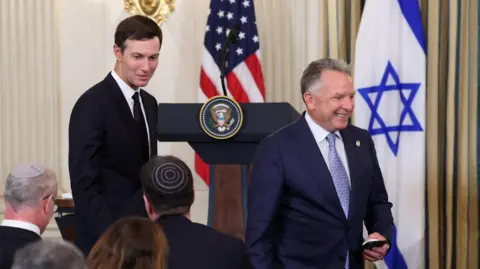
Reuters Jared Kushner, wearing a dark suit and tie, and Steve Witkoff, wearing a navy blue suit and light blue tie, walk through a press conference. A US and Israeli flag are in the background.Reuters

Jared Kushner, a former Middle East mediator, joined Trump’s current envoy Steve Witkoff in the effort to end the Gaza war

The Hamas official who spoke to the BBC said the group had “shown the necessary positivity and responsibility to achieve the required progress and complete the agreement”, but acknowledged that differences remained between the two sides.

“Mediators are making major efforts to remove any obstacles to implementing a ceasefire,” he added, noting that “a spirit of optimism is spreading among all participants.”

However, a Palestinian official familiar with talks told the BBC that there were “deep gaps” over how Hamas and Israel interpreted Trump’s 20-point peace plan.

The official said disagreements had emerged over nearly all the key issues, including the map showing the three phases of Israeli troop withdrawals from Gaza, and the timetable for the hostage-prisoner exchange.

On Wednesday afternoon, mediators presented a withdrawal map described as a compromise between Hamas’s demand for troops to pull back to positions they held in March and Israel’s demand to stick to the map distributed by the White House last week, which left about 55% of Gaza under Israeli control during the first phase.

A Palestinian source said the mediators were “trying to craft a formula for a gradual and monitored withdrawal”, and that their proposed map would leave about 40% of Gaza under Israeli control.

Reuters Israelis hold up posters calling for the release of hostages still held in Gaza, at a mass rally marking the second anniversary of the Hamas-led attack on Israel, in Tel Aviv, Israel (7 October 2025)Reuters

On Tuesday night, a mass rally in Tel Aviv demanded an end to two years of suffering for Israeli hostages and their families

Israel’s Haaretz newspaper cited several Israeli security sources as saying on Wednesday afternoon that there was “a high likelihood for progress, with the possibility of closing the deal in the coming days”.

The sources added that Trump was himself “intensely involved” in the negotiations.

Earlier, Yedioth Ahronoth reported that Israeli officials were “cautiously optimistic”.

BBC Verify examines what we know about the hostages remaining in Gaza

On Wednesday, Turkish President Recep Tayyip Erdogan said Trump had asked him during a recent phone call to “persuade” Hamas to accept his plan.

But he told lawmakers from his AK party that it was also important to put pressure on Israel, saying its attacks on Gaza were “the greatest obstacle before the path leading to peace”.

The Israeli military appears to have scaled back its ground offensive on Gaza City in recent days following a request from Trump on Friday to “stop the bombing”.

Gaza’s Hamas-run health ministry said on Wednesday that Israeli fire had killed at least eight people over the previous 24 hours – the lowest death toll it has reported in the past week.

Hospitals said two people had been killed on Wednesday while trying to collect food from aid distribution centres in central and southern Gaza.

The Israeli military meanwhile said its troops had killed “several terrorists” who attempted to attack their position in Gaza City.

Israel launched a military campaign in Gaza in response to the 7 October 2023 attack, in which Hamas-led gunmen killed about 1,200 people and took 251 others as hostages.

At least 67,183 have been killed by Israeli military operations in Gaza since then, including 20,179 children, according to the territory’s health ministry. Its figures are seen as reliable by the UN and other international bodies, although Israel disputes them.

The ministry has said another 460 people have died from the effects of malnutrition since the start of the war, including 182 since a famine was confirmed in Gaza City in August by the UN-backed Integrated Food Security Phase Classification (IPC).

Israel’s Prime Minister Benjamin Netanyahu has repeatedly denied starvation is taking place in Gaza and said Israel is facilitating deliveries of food and other aid.

Additional reporting by Helen Sullivan

A thin, grey banner promoting the US Politics Unspun newsletter. On the right, there is an image of North America correspondent Anthony Zurcher, wearing a blue suit and shirt and grey tie. Behind him is a visualisation of the Capitol Building on vertical red, grey and blue stripes. The banner reads: "The newsletter that cuts through the noise.”

Follow the twists and turns of Trump’s second term with North America correspondent Anthony Zurcher’s weekly US Politics Unspun newsletter. Readers in the UK can sign up here. Those outside the UK can sign up here.

72% of S&P 500 companies identified AI as a significant risk in their 10-K filings

0

AI is everywhere these days—and that means so is AI risk.

Among S&P 500 companies, 72% mentioned AI as a material risk on their Form 10-Ks this year, the Conference Board found, up from 58% last year and 12% in 2023. The shift is reflective of how AI use within business has matured from the experimental to the widespread, the organization wrote in a report. (The Conference Board’s report defines “AI” broadly, including not only LLMs but also robotics, automation, machine learning, and other types of AI.)

The companies most likely to disclose AI risk were those in “frontline adopter” industries, such as the financehealthcare, industrial, IT, and consumer discretionary sectors.

S&P companies were most concerned about the reputational risks of AI, the Conference Board reported; 38% of them disclosed potential reputational threats from AI on their 10-Ks. Forty-five companies mentioned “implementation and adoption” risks, such as overpromising on AI projects or AI not meeting expectations, while 42 stated that consumer-facing AI was a risk. Other reputational risks companies mentioned included privacy and data risks, hallucinations, competitive threats, and issues with bias and fairness.

One in five S&P companies mentioned AI-related threats to cybersecurity as a risk on annual filings. While 40 companies simply stated that cybersecurity in general was a risk, 18 called out third party or vendor risks, and 17 said data breaches were a risk.

Companies also foresaw potential compliance risks from AI. Forty-one listed “evolving regulation and uncertainty” as a risk area, and some specifically referred to the EU AI Act, which has steep penalties for noncompliance.

This report was originally published by CFO Brew.

Fortune Global Forum returns Oct. 26–27, 2025 in Riyadh. CEOs and global leaders will gather for a dynamic, invitation-only event shaping the future of business. Apply for an invitation.