

0.2 C
New York
Thursday, February 26, 2026
Home Blog Page 324

How far would Trump go to help Venezuela’s opposition leader, the Nobel Prize winner?

0

This Nobel Prize win for Maria Corina Machado is being hugely welcomed by the opposition in Venezuela.

The hope is it will draw renewed international attention to their cause.

Responding to the prize, Machado directly called for help from the man who had hoped he would win it.

“Today more than ever we count on President Trump,” Machado said.

She hopes through the help of him, the US, other nations in Latin America and “democratic nations of the world”, Venezuela will “achieve freedom and democracy.”

The question is: how far will Donald Trump go?

There is a lot at stake in Venezuela right now.

Picture a country where millions of people live in poverty. Basic services, like electricity, are unreliable in many areas. The health system is in crisis, with acute medicine shortages. Millions of people citizens have fled in recent years, many to the US or neighbouring countries.

The last election was widely dismissed internationally as neither free nor fair. Security forces cracked down on protests after the vote, with many people detained. Human rights organisations believe there are still hundreds of political prisoners.

More recently, the US has started bombing boats off the country’s coast – in international waters – which it alleges carry drug traffickers. Lawyers say the strikes could breach international law.

This is just a snapshot of the situation in and around Venezuela right now. In any other world, it would be a huge story.

But the opposition, who the US among others say won the last election, has been left with few obvious paths forward to enact real change.

Machado, its de facto leader, is in hiding in Venezuela. The opposition candidate Edmundo González, who the US and others recognise as president-elect, lives in exile. Both face threats and have been accused of “treason” by the government.

Machado briefly appeared at a protest ahead of President Nicolás Maduro’s inauguration in January, but was arrested and then released.

The widespread protests that took place after the last election have subsided in frequency, due to fears of repercussions for demonstrators.

Calls from the opposition for the military and security forces to abandon President Maduro have so far not produced significant defections. They, and other key militia groups, remain loyal to the president.

There is, though, a question about how far the opposition’s allies – including the US – might be prepared to go to intervene.

In recent weeks, the US has bombed at least four boats in the Caribbean Sea off the coast of Venezuela in international waters, killing at least 21 people. The US claims they are drug-trafficking vessels but has not provided any details about those on board.

Some lawyers believe the strikes breach international law, but a recent leaked memo sent to Congress said the US is now defining itself as being in a “non-international armed conflict” – suggesting it intends to justify using wartime powers against alleged cartels.

While it is true that cartels, such as Tren de Aragua, do have a presence in the region some of these vessels are alleged to have come from in Venezuela – this is by no stretch the largest trafficking hotspot in Latin America.

That has led many in the region to suspect that Donald Trump’s real objective of these strikes, coupled with building up a US military presence in the region, is to exert military pressure on Maduro and remove him from power.

The Pentagon has now reportedly built up a force of thousands of troops in the region and has been planning potential military operations. Special operations forces have been sighted by neighbouring Caribbean islands, such as Trinidad and Tobago.

Grenada’s foreign ministry has said it is reviewing a US government request to temporarily install radar equipment and technical personnel at its airport.

Venezuela’s defence minister, Vladimir Padrino López, has warned about possible US attacks with drones or special forces carrying out “selective assassinations”. The president of neighbouring Colombia, Gustavo Petro, has claimed that a “new war scenario has opened up” in the Caribbean.

In Venezuela, civilian reserves have been preparing for a potential US attack.

US administration officials argue that Maduro sits on top of Venezuela’s cartel network, something that he denies, so it is believed the US would argue that removing him from power is ultimately a ‘counter-narcotics’ operation.

In August, the US doubled a reward for any information leading to his arrest to $50m and accused him of being “one of the largest narco-traffickers in the world” – something the government dismissed as “pathetic.”

Venezuela has co-operated with some repatriation flights of migrants from the US, but this has not tamed Trump’s wrath for Maduro.

On Friday, the New York Times reported that Venezuelan officials offered the Trump administration a dominant stake in Venezuela’s heavily-sanctioned oil, gold and minerals resources – but that the Trump administration refused the offer.

The Trump administration may have rebuffed the Nobel Peace Prize committee and accused it of being “political” for not awarding it to the US president. But, for now, he remains an ally of the Venezuelan opposition and a fierce opponent of Maduro.

It remains unclear whether the US will keep its operations to targeting these small vessels in the Caribbean Sea – or has wider plans to target more senior figures within the Maduro administration.

Venezuela may not have many allies on the world stage, but there are notable exceptions including China, Russia, Iran, and Cuba.

If the US decides to intervene on Venezuelan soil, the situation could escalate very fast.
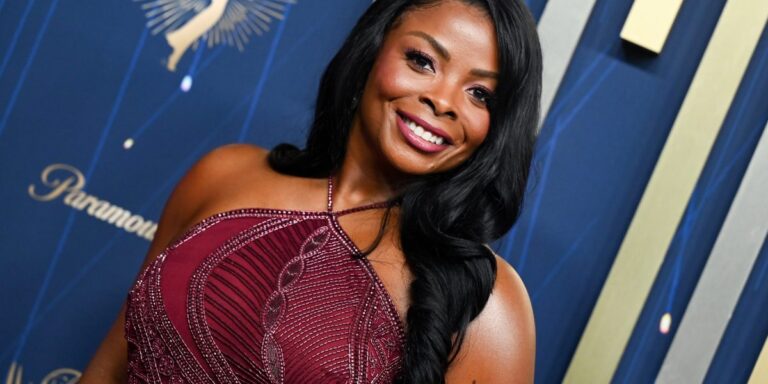
Janelle James’ Journey from Waitressing to Making Over $4 Million a Season on ‘Abbott Elementary’

0

Janelle James may now be pulling a $200,000-per-episode salary on Abbott Elementary, but before fame the four-time Emmy-nominated comedian and actress did “every hustle in the book” to stay afloat. 

From waitressing tables to giving sewing lessons, planning parties, working as a personal chef, and even distributing cigars at a strip club, James tried it all before scoring her breakout role as Ava Coleman.

At the time, she said on the Conan O’Brien podcast, she was constantly thinking: “What skills do I have that I can turn into money.” 

But even now that she’s making an estimated $4.4 million just on season four of Abbott Elementary, she added: “I’m always on the hustle.” 

Janelle James learned how to hustle from a young age—but she wasn’t prepared for how money changes relationships

Growing up in the Virgin Islands, James’ ambition was instilled at a young age, thanks in part to assisting with her father’s restaurant on the beach. Alongside her siblings, one of her first moments hustling was selling drinks to visitors who were on vacation. In previous interviews, she described how she was “broke as hell” growing up.

While hustling from a young age taught James the value of money, it didn’t quite prepare her for navigating wealth as an adult. 

In a previous interview with IndieWire, she admitted she wasn’t prepared for how making millions would impact her relationships—like suddenly being expected to get the check every time she goes out with people. 

“I am the first person in my family to have this level of income, and that is something to navigate around, not only in my family, but in my friend group,” James said.

Before becoming a hit TV star, she never considered performing 

Despite becoming such a success in the TV industry now, James didn’t spend her entire childhood yearning for the day she made it in Hollywood. In fact, she never considered it as a lucrative path to success in general. 

 “I never did stage plays, nothing performance-wise,” she continued on Conan O’Brien’s podcast. “Performing never crossed my mind.”

The idea came after moving to the Midwest from New York. While navigating motherhood, her ex-husband suggested it would be a talent worth exploring.  

“I’d be running my mouth as I do, and he would say you’re hilarious,” she said. “He’s the first person I remember being like, ‘oh you should do something with that’… It never crossed my mind”

From there, she began her career in 2009 at an open mic in Illinois, where her open-mic style was just basic smack talking. By 2016, James’ work was recognized by Just for Laughs, and Brooklyn Magazine.
In 2017, she toured with comedy legend Chris Rock’s 2017 Total Blackout tour. Following that, the actress had several TV writing and acting credits on Netflix before landing her breakout role on ABC’s Abbott Elementary—where she commands the attention of 3.3 million viewers a week.

Fortune Global Forum returns Oct. 26–27, 2025 in Riyadh. CEOs and global leaders will gather for a dynamic, invitation-only event shaping the future of business. Apply for an invitation.

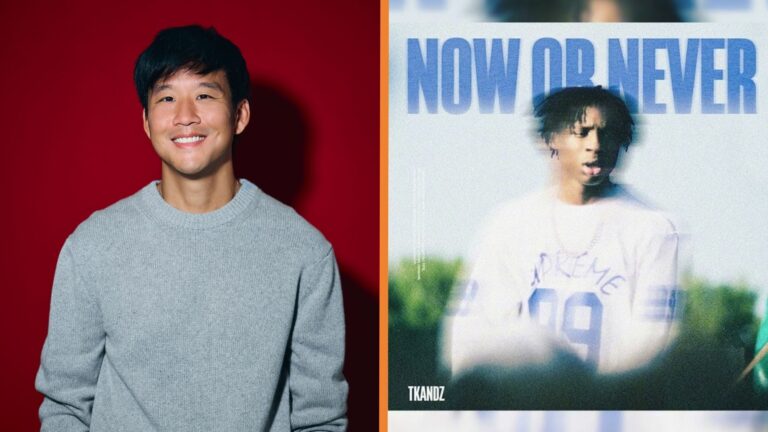
Tkandz’ Now Or Never becomes a global viral hit on Spotify, propelling BandLab to success

0

BandLab has heralded the ability for today’s artists to be “global from day one” – as a British rapper active on its platform enjoys worldwide viral streaming success.

Tkandz (Ayotomiwa Akande) is a 19-year-old self-taught artist from Essex, England, with over 63,000 followers on BandLab.

He’s been a frequent user of the free music-making app to experiment and share songs with his followers.

NOW OR NEVER is Tkandz’s breakout hit, debuting on top of both the Global and U.S Spotify Viral 50 earlier this week.


The rise of the track, which also features producer CXSPER, has resulted in a spike in popularity for Tkandz, who currently has approximately 4 million monthly listeners on Spotify.

The virality of NOW OR NEVER is also impacting on other key charts, with the track debuting at No.136 on Billboard‘s Global 200 Excl. US chart for the week of October 11.

Earlier this week, it also entered Spotify’s Top 50 daily charts in the UK, Poland, the Netherlands, and more.

Discussing the worldwide impact of the Tkandz track, BandLab CEO & Co-founder, Meng Ru Kuok, said: “Tkandz didn’t have to break out of the UK first, he was global from day one.

“Artists today aren’t starting in one territory; they have the possibility to reach anyone, anywhere if you empower their creativity.”

“Tkandz didn’t have to break out of the UK first, he was global from day one. Artists today aren’t starting in one territory; they have the possibility to reach anyone, anywhere if you empower their creativity.”

Meng Ru Kuok, BandLab

A self-taught producer who started making music at 15, Tkandz has now racked up over 40 million streams on Spotify.

In a recent interview on the Capital Xtra radio station with DJ Semtex, who introduced him as having “the biggest rap track in the world right now,” Tkandz said that recording NOW OR NEVER felt like “my moment to really shine for myself”.

In late September, the track was featured in a TikTok video posted by Barcelona soccer star Lamine Yamal.

BandLab, which counts over 100 million creators, recently expanded its music licensing service, introducing what it calls “a structure with clear guidelines” that allows artists, labels, and publishers to signal interest in licensing their music to train AI models.

Those using the platform can now indicate their interest in AI training licensing deals by marking songs as “Open to AI licensing.”

In April, BandLab announced a partnership with Sony Corporation to integrate the latter company’s 360 Reality Audio technology directly into BandLab‘s platform.

Starting this summer, BandLab users have been able to access spatial-enabled beats in BandLab’s Sounds marketplace.

Music Business Worldwide

The Significance of China’s Strengthened Export Controls on Rare-Earth Metals | Business and Economic Updates

0

China tightened export controls for critical rare-earth metals on Thursday.

The new restrictions were announced by the Chinese Ministry of Commerce, and come ahead of an expected meeting between Chinese President Xi Jinping and United States President Donald Trump’s later this month.

The world’s two largest economies have been locked in trade negotiations aimed at calming tensions, after they raised tit-for-tat tariffs against each other earlier this year, before then agreeing to pull back on some of those levies.

Rare-earth metals are one of China’s major levers of influence with the US.

What has China announced?

In “announcement number 61 of 2025”, China said it was increasing export controls for five rare-earth metals in addition to the seven it announced in April this year.

The five metals added to the list are holmium, erbium, thulium, europium and ytterbium.

The seven minerals China placed export restrictions on earlier this year are samarium, gadolinium, terbium, dysprosium, lutetium, scandium and yttrium.

There are 17 rare-earth metals in total – the 15 lanthanides (metallic elements) on the periodic table; scandium; and yttrium. China now has export restrictions on 12 of them.

In addition, on Thursday, China also placed restrictions on the export of specialist technological equipment used to refine rare-earth metals. Most of these restrictions will go into effect from December 1.

The announcement means that foreign companies will need to obtain special approvals from Beijing if they wish to export rare-earth magnets and certain semiconductor materials that have at least 0.1 percent heavy rare-earth metals from China.

To obtain the licence, foreign companies must explain the intended use of the product they wish to use Chinese rare-earth metals to make.

Why has China tightened control over rare earths?

China cited national security interests as the reason for these new restrictions.

“Rare-earth-related items have dual-use properties for both civilian and military applications. Implementing export controls on them is an international practice,” a Chinese Ministry of Commerce spokesperson told reporters on Thursday.

The spokesperson added that “certain” foreign organisations and individuals have been directly transferring – or processing and then transferring – controlled rare-earth materials originating from China to “relevant organisations and individuals directly or indirectly for military and other sensitive applications”.

“This has caused significant damage or posed potential threats to China’s national security and interests, adversely affected international peace and stability, and hindered global non-proliferation efforts.”

Rare-earth metals are essential for the production of technological equipment such as electric cars, lithium ion batteries, LED televisions and camera lenses.

The metals are crucial for the US defence industry. According to the Center for Strategic and International Studies (CSIS) think tank, rare earths are used to manufacture F-35 fighter jets, Virginia and Columbia-class submarines, Tomahawk missiles, radar systems, Predator unmanned aerial vehicles and the Joint Direct Attack Munition series of smart bombs.

Additionally, rare earths are used to create semiconductors, which are used in artificial intelligence (AI) technology.

Why does this matter now?

This is a strategic move on the part of China, analysts say.

China is the largest producer of these rare-earth metals. It mines at least 60 percent and processes about 90 percent of the world’s rare-earth metals, CSIS reported in 2024.

The new restrictions have been announced just three weeks before Trump’s visit to South Korea to attend the Asia-Pacific Economic Cooperation (APEC) summit in late October.

During his visit, Trump is expected to meet with Xi. The leaders last met in person in 2019.

Earlier this year, Trump imposed tariffs of 145 percent on Chinese imports to the US. China retaliated with 125 percent tariffs. After reducing their tariffs to 30 percent and 10 percent respectively in May, the two sides struck a truce in August – agreeing a 90-day pause to allow time for trade talks. That pause has since been renewed twice as talks continue – most recently between US and Chinese officials in Spain last month.

China’s new restrictions on rare-earth metals, which Trump is known to want badly, give it more leverage for these talks.

Gracelin Baskaran, director of the CSIS Critical Minerals Security Program, explained that Washington’s defence industry is facing significant challenges caused by its limited production ability to meet rising defence technology needs. By restricting exports, China may be able to accelerate the expansion of its military strength at a faster pace than the US.

“The new restrictions will only deepen these vulnerabilities, further widening the capability gap,” Baskaran said.

“The move both strengthens Beijing’s leverage in upcoming talks while also undercutting US efforts to bolster its industrial base at a time where Indo-Pacific tension is climbing,”  she said.

“Most [restrictions] don’t go into effect until December 1, 2025, leaving close to 2.5 months for these negotiations.”

The Chinese Ministry of Commerce spokesperson told reporters on Thursday: “China is willing to strengthen communication and cooperation through bilateral and multilateral export control dialogue mechanisms, promote compliant trade, and ensure the security and stability of global industrial and supply chains.”

Who will these new controls affect the most?

The US will be especially hit hard. In 2023, it was the largest importer of Chinese rare-earth minerals and products, importing $22.8m worth of rare earth products from China, according to the Observatory of Economic Complexity (OEC). In total, China exported $117m in rare-earth metals and products that year.

The US sourced 70 percent of its rare earth compounds and metals imports from China between 2020 and 2023, according to a US Geological Survey report.

Hong Kong ($12.1m), Russia ($12.2m) and Japan ($9.42m) also import significant amounts.

The US restricted China’s access to its semiconductors in 2022 under the administration of Democratic former President Joe Biden. Some US lawmakers have pushed for even greater restrictions, warning that China could reverse-engineer or independently develop advanced semiconductor technologies, overtaking the US in the industry and securing a military advantage.

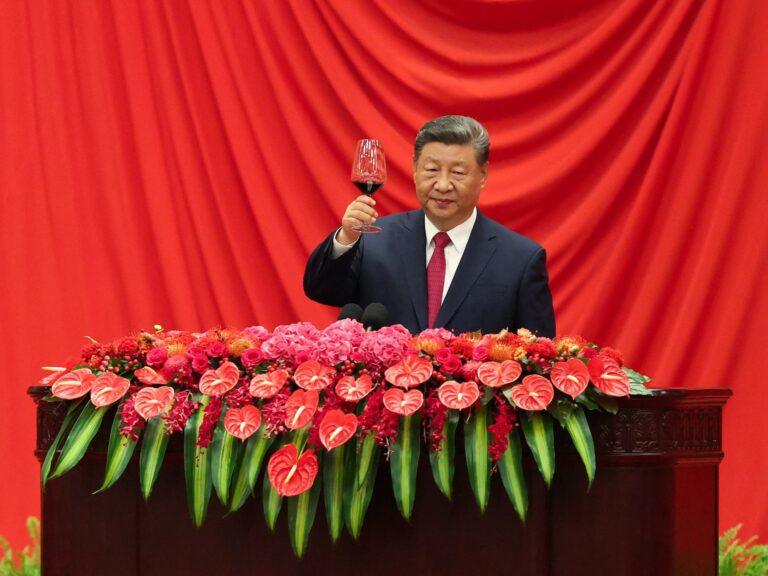
The last time they met: US President Donald Trump and China’s President Xi Jinping attend a bilateral meeting during the G20 leaders summit in Osaka, Japan, on June 29, 2019 [Kevin Lamarque/Reuters]

Will there be any exceptions to the restrictions?

Yes.

The Commerce Ministry spokesperson said that exports pertaining to emergency medical needs, in response to public health emergencies or for disaster relief, will be exempt from the restrictions.

Challenge from the Client

0


Client Challenge


JavaScript is disabled in your browser.

Please enable JavaScript to proceed.

A required part of this site couldn’t load. This may be due to a browser
extension, network issues, or browser settings. Please check your
connection, disable any ad blockers, or try using a different browser.

Attempted plot to attack Prime Minister Bart de Wever thwarted

0

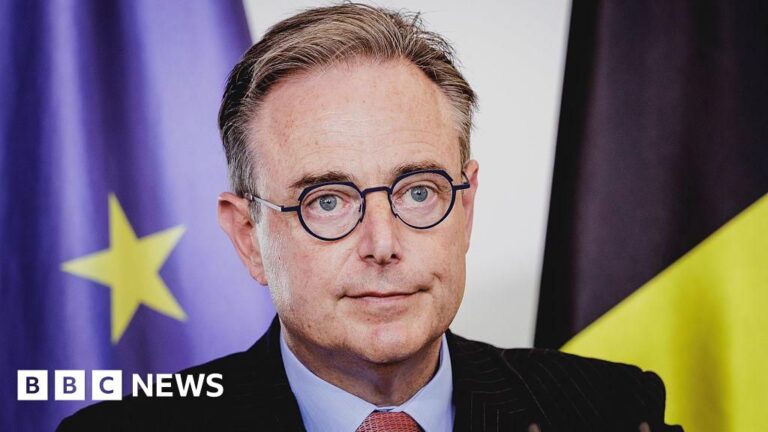
Police in Belgium have arrested three people suspected of plotting an attack on the country’s prime minister, Bart de Wever.

The alleged plot was described by prosecutors as a “jihadist-inspired terrorist attack” on the PM and other politicians.

Authorities found a suspected improvised explosive device and evidence the suspects were planning to use a drone during searches in Deurne, Antwerp, close to the prime minister’s private residence.

The intended targets of the attack were not named by the prosecutor’s office, but Deputy Prime Minister Maxime Prevot said that de Wever was among them.

“The news of a planned attack targeting Prime Minister Bart de Wever is extremely shocking,” Prevot wrote in a post on X on Thursday.

“It highlights that we are facing a very real terrorist threat and that we have to remain vigilant,” he added.

The three individuals who were arrested on suspicion of attempted terrorist murder and participation in the activities of a terrorist group all live in Antwerp, according to the prosecutor’s office. They were were born in 2001, 2002 and 2007.

As of Thursday evening, one of the individuals was released, with two others still being questioned and expected to appear in court on Friday.

Federal prosecutors said they were taken into custody after a judge ordered searches of their homes in the city by police officers backed by explosive sniffer dogs.

It was during these searches that they discovered a device which “bore strong resemblances to an improvised explosive device,” federal prosecutor Ann Fransen said at a press conference on Thursday.

Searches also uncovered a “bag of steel balls” and a 3D printer, with “indications that they intended to use a drone to attach a payload,” she added.

Fransen said that there had been 80 terrorism investigations opened in Belgium this year – more than the total number of cases in 2024.

In April, five people were convicted of a 2023 plot to attack de Wever while he was serving as Antwerp’s mayor.

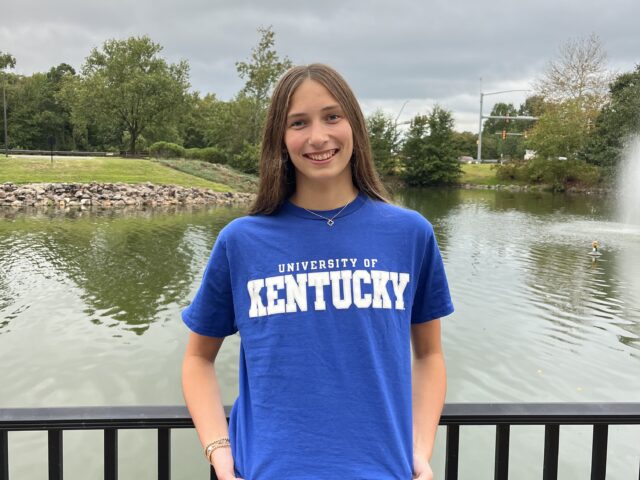
Mia Eubank, Summer Juniors Finalist, Commits to Kentucky for 2027 Season

0

By Anne Lepesant on SwimSwam

Fitter and Faster Swim Camps is the proud sponsor of SwimSwam’s College Recruiting Channel and all commitment news. For many, swimming in college is a lifelong dream that is pursued with dedication and determination. Fitter and Faster is proud to honor these athletes and those who supported them on their journey.

Richmond, Virginia’s Mia Eubank has announced her verbal commitment to the University of Kentucky’s class of 2031, writing on social media:

“I am super excited to announce my verbal commitment to continue my academic and athletic career at The University of Kentucky! Thank you to my family, coaches and teammates for helping me get where I am today. I would also like to thank the UK coaching staff for this incredible opportunity! GO WILDCATS!!💙😸

Eubank is a junior at Mills E. Godwin High School in Henrico. She swims year-round with NOVA of Virginia Aquatics and specializes mainly in free and IM. As a sophomore at the 2025 VHSL Class 5 Swimming and Diving State Championships, she won the 500 free (4:59.22) and anchored the 200 medley relay (23.77 freestyle split) and 400 free relay (52.65), both of which placed 2nd.

The same week, she earned 6 personal-best times at the Virginia Swimming LSC Senior Short Course Championships. She placed 4th in the 500 free (4:55.32), 4th in the 1000 free (10:06.18), 7th in the mile (17:11.25), 9th in the 200 back (2:02.81), 9th in the 400 IM (4:25.77), and 11th in the 200 free (1:50.77). Two weeks later, at the NCSA Spring Championships, she lowered her PBs in the 200 free and 200 back to 1:50.58 and 2:02.71, respectively.

Eubank had an even better long-course season, hitting Summer Juniors cuts in the 200/400/800 free, 200 back, and 400 IM along the way. This began with the NCAP Elite Qualifier in May, where she clocked a PB in every nearly event she swam, dropping 2.2 seconds in the 200 free (2:03.30), 2.9 seconds in the 400 free (4:23.32), 2.2 seconds in the 200 back (2:19.00), and 3.2 seconds in the 100 fly (1:04.93). She wrapped up the summer at NCSAs, further improving her 400 free (4:23.08) and 200 back (2:18.29) times and adding new PBs in the 800 free (9:01.32), 50 fly (30.09), and 400 IM (4:56.03).

Year-over-year, Eubank dropped 20.7 seconds in the 800 free and 9 seconds in the 400 IM. If she continues her momentum during the 2025-26 short-course season, she will have a big impact for the Wildcats beginning in her first season.

Best times (SCY / LCM)

  • 200 free – 1:50.58 / 2:03.30
  • 500/400 free – 4:55.32 / 4:23.08
  • 1000/800 free – 10:06.18 / 9:01.32
  • 200 back – 2:02.71 / 2:18.29
  • 400 IM – 4:25.77 / 4:56.03

If you have a commitment to report, please send an email with a photo (landscape, or horizontal, looks best) and a quote to Recruits@swimswam.com.

About the Fitter and Faster Swim Tour 

Fitter & Faster Swim Camps feature the most innovative teaching platforms for competitive swimmers of all levels. Camps are produced year-round throughout the USA and Canada. All camps are led by elite swimmers and coaches. Visit fitterandfaster.com to find or request a swim camp near you.

FFT SOCIAL

Instagram – @fitterandfasterswimtour
Facebook – @fitterandfastertour
Twitter – @fitterandfaster

FFT is a SwimSwam partner.

Read the full story on SwimSwam: Kentucky Gets 1st 2027 Verbal Commitment from Summer Juniors Finalist Mia Eubank

Fatty Acids in Olive Oil Enhance Immune Cells’ Ability to Combat Cancer

0

In a groundbreaking study, a healthy fatty acid in olive oil and nuts has been found to “supercharge” immune cells specialized to fight cancer. Meanwhile, another kind of natural fatty acid undermines these cells and may diminish the body’s ability to stave off tumor growth.

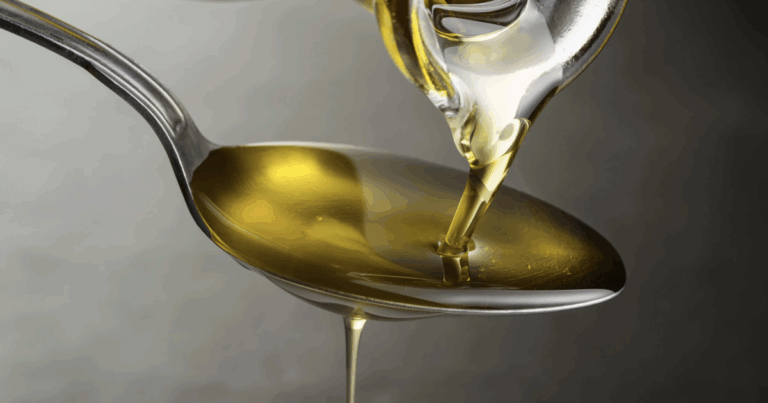
Medical researchers from the University of Hong Kong (HKUMed) have found that oleic acid (OA) – the kind found in olive oil – boosts γδ-T cells (or delta gamma T cells). The team made the discovery while investigating how different dietary fatty acids could influence this small subset of T cells that act as rapid-response soldiers against infection and tumor growth.

These immune cells are also known to become dysfunctional in people with obesity or those who have a diet high in saturated fats.

The researcher isolated human γδ-T cells and grew them in culture, then exposed a set of them to OA, and another to palmitic acid (PA), which is commonly found in palm oil, meat and dairy products. They then assessed cell survival, metabolic activity and tumor-killing ability. The OA-treated cells were not just viable but showed indications of their metabolism running at full strength, their mitochondria stayed stable, their signaling was balanced and their tumor-killing machinery was intact.

“Our research suggests that dietary fatty acid supplementation, particularly with foods rich in OA, such as olive oil and avocados, could enhance γδ-T cell immunosurveillance, leading to more effective cancer treatments,” said lead author Tu Wenwei, a professor in the Department of Paediatrics and Adolescent Medicine at HKUMed.

A research team, led by Professor Tu Wenwei (right), has discovered that certain dietary fatty acids can supercharge the human immune system’s ability to fight cancer

University of Hong Kong

However, cells exposed to PA suffered metabolic failure and inflammatory self-destruction. Essentially, their energy machinery broke down and they died in a way that made the surrounding immune system environment even more hostile. So if OA can bolster and strengthen T cell responses to tumors, PA essentially did the opposite.

“The results indicate that cancer patients should avoid PA and consider OA supplementation in their diets to improve clinical outcomes of γδ-T cell-based cancer therapies,” said Tu.

While these findings were demonstrated in mice models and cell cultures, it strengthens a growing argument in immunometabolism – how nutrients shape immune behavior – that certain natural fats have widespread benefits for cell health. And, conversely, some might do more harm than good. Saturated fatty acids – like PA – tend to promote inflammation and oxidative stress, while unsaturated fats like OA support cleaner energy production and longer cell survival.

“For cancer patients, this discovery suggests simple changes, like eating more foods rich in OA (such as olive oil, avocados and nuts) and cutting back on PA (found in processed foods, palm oil and fatty meats), could improve the effectiveness of cancer treatments,” said Tu. “The study also points to novel strategies, like combining dietary changes with specific drugs to further boost the immune system.”

However, the researchers caution that their findings shouldn’t be read as a green light to load up on olive oil or supplements, as the results are yet to be replicated in a human model. Despite this, the study does add to a growing body of evidence that supports personalized nutrition plans for bolstering cancer treatment, and paves the way for new drugs targeting the processes affected by these fatty acids to enhance γδ-T cell therapies.

The study was published in the journal Signal Transduction and Targeted Therapy.

Source: University of Hong Kong