0.2 C
New York
Thursday, February 26, 2026
Home Blog Page 322

Understanding the Global Impact of Gen Z Protests

0

new video loaded: What to Know About ‘Gen Z Protests’ Around the World

Gen Z protests are raging against political establishments across the world, from Madagascar to Nepal. Katrin Bennhold and Hannah Beech, reporters for The New York Times, discuss what is causing these protests and why an anime-inspired symbol keeps appearing at demonstrations.

By Hannah Beech, Katrin Bennhold, Christina Thornell, Nikolay Nikolov and Stephanie Swart

October 10, 2025

A California-based non-profit with three members accuses OpenAI of intimidation tactics in AI safety law work.

0

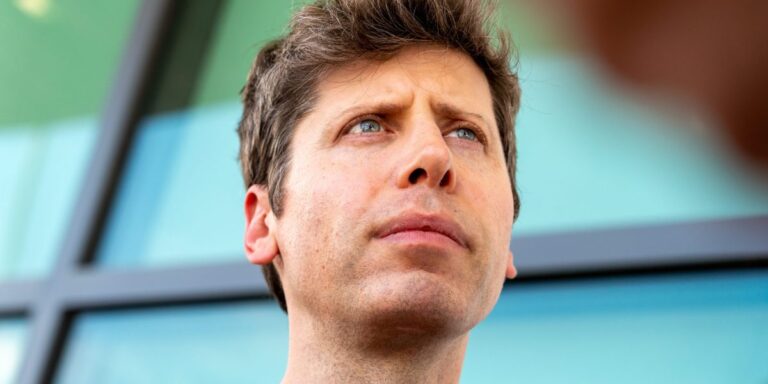
Nathan Calvin, the 29-year-old general counsel of Encode—a small AI policy nonprofit with just three full-time employees—published a viral thread on X Friday accusing OpenAI of using intimidation tactics to undermine California’s SB 53, the California Transparency in Frontier Artificial Intelligence Act, while it was still being debated. He also alleged that OpenAI used its ongoing legal battle with Elon Musk as a pretext to target and intimidate critics, including Encode, which it implied was secretly funded by Musk.

Calvin’s thread quickly drew widespread attention, including from inside OpenAI itself. Joshua Achiam, the company’s head of mission alignment, weighed in on X with his own thread, written in a personal capacity, starting by saying, “At what is possibly a risk to my whole career I will say: this doesn’t seem great.”

Former OpenAI employees and prominent AI safety researchers also joined the conversation, many expressing concern over the company’s alleged tactics. Helen Toner, the former OpenAI board member who resigned after a failed 2023 effort to oust CEO Sam Altman, wrote that some things the company does are great, but “the dishonesty & intimidation tactics in their policy work are really not.” 

And at least one other nonprofit founder also weighed in: Tyler Johnston, founder of AI watchdog group the Midas Project, responded to Calvin’s thread with his own, saying: “[I] got a knock at my door in Oklahoma with a demand for every text/email/document that, in the ‘broadest sense permitted,’ relates to OpenAI’s governance and investors.” As with Calvin, he added, he received the personal subpoena, and the Midas Project was also served.

“Had they just asked if I’m funded by Musk, I would have been happy to give them a simple ‘man I wish’ and call it a day,” he wrote. “Instead, they asked for what was, practically speaking, a list of every journalist, congressional office, partner organization, former employee, and member of the public we’d spoken to about their restructuring.”

OpenAI referred Fortune to a post by chief strategy officer Jason Kwon on Friday in which Kwon said Encode’s decision to support Musk in the lawsuit, and the organization’s not “fully disclosed” funding, “raises legitimate questions about what is going on.”

“We wanted to know, and still are curious to know, whether Encode is working in collaboration with third parties who have a commercial competitive interest adverse to OpenAI,” Kwon wrote, noting that subpoenas are a standard method of gathering information in any litigation. “The stated narrative makes it sound like something it wasn’t.” Kwon included an excerpt of the subpoena that he said showed all the requests for documents OpenAI made.

As reported by the San Francisco Standard in September, Calvin was served with a subpoena from OpenAI in August, delivered by a sheriff’s deputy as he and his wife were sitting down to dinner. Encode, the organization he works for, was also served. The article reported that OpenAI appeared concerned that some of its most vocal critics were being funded by Elon Musk and other billionaire competitors—and was targeting those nonprofit groups despite offering little evidence to support the claim.

Calvin wrote Friday that Encode—which he emphasized is not funded by Musk—had criticized OpenAI’s restructuring and worked on AI regulations, including SB 53. In the subpoena, OpenAI asked for all of Calvin’s private communications on SB 53.

“I believe OpenAI used the pretext of their lawsuit against Elon Musk to intimidate their critics and imply that Elon is behind all of them,” he said, referring to the ongoing legal battle between OpenAI and Musk over the company’s original nonprofit mission and governance. Encode had filed an amicus brief in the case supporting some of Musk’s arguments.

In a conversation with Fortune, Calvin emphasized that what has not been sufficiently covered is how inappropriate OpenAI’s actions were in connection with SB 53, which was signed into law by Gov. Gavin Newsom at the end of September. The law requires certain developers of “frontier” AI models to publish a public frontier AI framework and a transparency report when deploying or substantially modifying a model, report critical safety incidents to the state, and share assessments of catastrophic risks under the state’s oversight.

Calvin alleges that OpenAI sought to weaken those requirements. In a letter to Governor Newsom’s office while the bill was still under negotiation, which was shared on X in early September by a former AI policy researcher, the company urged California to treat companies as compliant with the state’s rules if they had already signed a safety agreement with a U.S. federal agency or joined international frameworks such as the EU’s AI Code of Practice. Calvin argues that such a provision could have significantly narrowed the law’s reach—potentially exempting OpenAI and other major AI developers from key safety and transparency requirements.

“I didn’t want to go into a ton of detail about it while SB 53 negotiations were still ongoing and we were trying to get it through,” he said. “I didn’t want it to become a story about Encode and OpenAI fighting, rather than about the merits of the bill, which I think are really important. So I wanted to wait until the bill was signed.”

He added that another reason he decided to speak out now was a recent LinkedIn post from Chris Lehane, OpenAI’s head of global affairs, describing the company as having “worked to improve” SB 53—a characterization Calvin said felt deeply at odds with his experience over the past few months. 

Encode was founded by Sneha Revanur, who launched the organization in 2020 when she was 15 years old. “She is not a full-time employee yet because she’s still in college,” said Sunny Gandhi, Encode’s vice president of political affairs. “It’s terrifying to have a half a trillion dollar company come after you,” Gandhi said.

Encode formally responded to OpenAI’s subpoena, Calvin said, stating that it would not be turning over any documents because the organization is not funded by Elon Musk. “They have not said anything since,” he added. 

Writing on X, OpenAI’s Achiam publicly urged his company to engage more constructively with its critics. “Elon is certainly out to get us, and the man has got an extensive reach,” he wrote. “But there is so much that is public that we can fight him on. And for something like SB 53, there are so many ways to engage productively.” He added, “We can’t be doing things that make us into a frightening power instead of a virtuous one. We have a duty and a mission to all of humanity, and the bar to pursue that duty is remarkably high.”

Calvin described the episode as the “most stressful period of my professional life.” He added that he uses and gets value from OpenAI products and that the company conducts and publishes AI safety research that is “worthy of genuine praise.” Many OpenAI employees, he said, care a lot about OpenAI being a force for good in the world. 

“I want to see that side of OAI, but instead I see them trying to intimidate critics into silence,” he wrote. “Does anyone believe these actions are consistent with OpenAI’s nonprofit mission to ensure that AGI benefits humanity?”


North Korea’s leader Kim Jong Un reveals country’s most powerful nuclear weapon at parade | Gallery News

0

North Korean leader Kim Jong Un has presided over a major military parade featuring the nation’s latest intercontinental ballistic missile as international dignitaries looked on, state media KCNA reported.

The Friday night parade commemorated the 80th anniversary of the Workers’ Party of Korea’s founding, following Thursday’s celebrations. Among the foreign guests in Pyongyang were Chinese Premier Li Qiang, former Russian President Dmitry Medvedev and Vietnam’s Communist Party leader To Lam.

During the parade, North Korea showcased its advanced Hwasong-20 intercontinental ballistic missile, which KCNA characterised as the nation’s “strongest nuclear strategic weapon system”.

While the Hwasong ICBM series provides North Korea with the theoretical capability to strike anywhere in the United States, experts remain uncertain about its guidance precision and whether its warhead could survive atmospheric re-entry.

“The Hwasong-20 represents, for the moment, the apotheosis of North Korea’s ambitions for long-range nuclear delivery capabilities. We should expect to see the system tested before the end of this year,” said Ankit Panda of the US-based Carnegie Endowment for International Peace.

“The system is likely designed for the delivery of multiple warheads … Multiple warheads will increase stresses on existing US missile defence systems and augment what Kim sees as necessary to achieve meaningful deterrence effects against Washington.”

In his address during the parade, Kim offered “warm encouragement” to North Korean troops serving abroad, notably in Russia’s Ukraine war, noting their heroism would extend beyond national defence to “outposts of socialist construction,” according to KCNA.

“Our army should continue to grow into an invincible entity that destroys all threats,” Kim declared.

Kim also met with Medvedev on Friday, who remarked that North Korean soldiers fighting for Russia in Ukraine demonstrated the trust between their nations. Kim expressed his desire to strengthen cooperation with Russia and engage in diverse exchanges to achieve mutual goals, KCNA reported.

Abbey Road appoints Kid Harpoon as its inaugural Producer in Residence

0

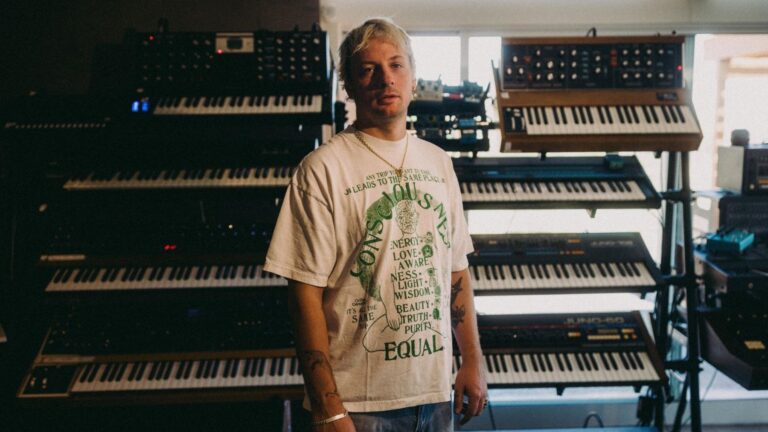
London’s legendary Abbey Road Studios has appointed Grammy and BRIT Award-winning producer, songwriter, and musician Thomas Hull, AKA Kid Harpoon, as its first-ever Producer in Residence.

The newly created position forms part of Abbey Road’s broader strategy to “build a true home for music creativity and innovation,” the studio said in a statement, extending a legacy that now spans 94 years.

The role follows the appointment of Jordan Rakei as the studios’ Artist in Residence over the past 18 months.

As Producer in Residence, Harpoon will have full access to Abbey Road’s recording spaces, instruments, and technology — including vintage gear, microphones, and the studio’s evolving suite of music tech tools such as Audiomovers. He will also advise Abbey Road on its ongoing innovation initiatives.

A key aspect of the role includes involvement in Abbey Road Amplify, the studio’s free education program for emerging artists and producers. This year, Amplify expands to Manchester for the first time, with sessions scheduled from November 19–21 at Aviva Studios and the new adidas/Abbey Road studio at Co-op Live, following London events from November 3–8.

Confirmed participants include Fraser T Smith, Everything Everything, Rosie Danvers, and Rich Turvey, with additional names to be announced.

“I’m beyond excited to become Producer in Residence at Abbey Road. In this position, I’m hoping to use my experience to help guide some of the incredible up-and-coming talent we have in the UK while they navigate their way through what can be a difficult industry. To be able to contribute to the Abbey Road legacy in any way is an honour, and I can’t wait to get stuck in.”

KID HARPON

Abbey Road Managing Director Sally Davies described the appointment as a natural fit:  “He brings a spirit of collaboration and innovation that perfectly aligns with our vision. With his creative lead, we’re excited to deepen our artistic community and continue placing creativity at the heart of our home.”

Abbey Road’s Director of Marketing & Creative Mark Robertson added that Hull has been part of the studio’s “modern history” since first working there in 2011 with Florence + The Machine, noting his “ability to craft melodies that intoxicate and move the world.”

He added: “It’s a real joy to be able to bring Tom into our home and family. He’s already part of our modern history, having first worked here in 2011 with Florence+ The Machine, and we have long admired his impact on the global stage – with highly creative production skills and an ability to craft melodies that intoxicate and move the world.”

“Tom’s experience, know-how and generosity are already fueling and informing our work as we enhance the gear and instruments in our smaller rooms. And we’ll combine forces to create new opportunities for the next generation of artists, producers and creatives, so I’m super excited by the possibilities with Tom as we write the next chapter in the Abbey Road story.”

Abbey Road’s Director of Marketing & Creative Mark Robertson

Born in Chatham, England, Harpoon has built a career as a producer and songwriter working with artists including Harry Styles, Miley Cyrus, Lizzo, Florence + The Machine, Inhaler, Kings of Leon, Jessie Ware, and David Byrne. 

He co-wrote and co-produced Harry Styles’ album Harry’s House, which won Album of the Year at both the Grammy and BRIT Awards. The album’s single As It Was spent 15 weeks at No.1 on the Billboard Hot 100 and was the UK’s best-selling single of 2022, according to the Official Charts Company.

Harpoon also co-produced Miley Cyrus’s Flowers, which broke Spotify’s single-week streaming record in 2023 and later won Record of the Year and Best Pop Solo Performance at the 2024 GRAMMY Awards. In 2025, he produced all 12 tracks on David Byrne’s Who Is The Sky?Music Business Worldwide

Atacama Desert in Chile Covered in Rare Wildflowers during Spectacular Bloom

0

The Atacama desert in Chile sits long and lean, sandwiched between the Andes Mountains and the Pacific Ocean.

The desert’s extreme aridity makes it one of the clearest places on Earth to view the night sky and is famous for being home to the largest radio telescope in the world.

But the usually barren landscape has been transformed by a carpet of colourful wildflowers, which have been brought to life by significant rainfall during the southern hemisphere’s winter months.

This is thought to be an event that only occurs every few years, when above average rainfall soaks the desert floor, causing dormant seeds to spring to life.

The Atacama desert typically receives less than 15mm of rain every year.

But the area had more than 12mm of rain during August alone – most of which fell on just one day.

The desert even saw a rare blanket of snow back in June.

This magnificent bloom is made up of more than 200 different species of wildflowers, some of which do not grow anywhere else in the world. It typically occurs between the end of August and November.

Although thought of as rare, this phenomenon also occurred in 2024, following heavy rainfall in the area.

This year’s display will be at its peak for another few weeks, according to CONAF, Chile’s National Forest Corporation.

Challenging the Client

0


Client Challenge


JavaScript is disabled in your browser.

Please enable JavaScript to proceed.

A required part of this site couldn’t load. This may be due to a browser
extension, network issues, or browser settings. Please check your
connection, disable any ad blockers, or try using a different browser.

Recap of Day 1 at the World Cup Carmel: Highlights of Swims You Shouldn’t Have Missed (Featuring Records, Near Records, and New Races)

0

By Braden Keith on SwimSwam

2025 SWIMMING WORLD CUP – CARMEL

Day 1 of the 2025 World Aquatics Swimming World Cup had plenty of headlines, with an American Record and five U.S. Open Records, among many other national records, falling in 12 events on the night.

But beyond the headlines, there were a number of swims down the ranks worth noticing. Here’s four big ones from Friday night in Carmel.

Rebecca Meder Just Misses South African Record in the 200 Breast

After going a 2:19.11 in prelims, South African Rebecca Meder finished 3rd in finals in 2:18.14. That just-missed the South African and African records of 2:18.02 swum by Olympic gold medalist Tatjana Schoenmaker in 2020.

A versatile 200 IM’er, Meder has not historically been very good in this 200 breaststroke. At the World Cup in 2022, for example, she swam 2:23.64 in the event. But in late 2024, she really started showing good results in this event, going 2:19.77 in SCM at the South African National Championships in September 2024.

It has been mostly short course meters, though she popped a 2:23.61 in long course in April 2025 at the South African National Championships.

She wound up racing the event at the World Championships, but was just 2:28.40 at that meet in long course.

South Africa has had a ton of success lately with turning out women’s breaststrokers, and it is the stroke that has produced most of the country’s global stars (including tFhe legendary Penny Heyns). At 23, this shift should benefit the breaststroke leg of her IM, which was previously a weakness of that event for her, but has become a strength.

At the 2023 World Championships, for example, she placed 10th in the 200 IM. Only 2 (legally finishing) swimmers in the semis split slower than her 38.18 on the breaststroke leg. In 2025, she finished 10th again, but this time split 37.56 on the breaststroke leg. That ranked 7th of the 16 semifinalists.

A New Belgian Record for Roos

20-year-old Roos Vanotterdijk from Belgium was one of the breakout swimmers of 2025, and she’s not slowing down into the short course season.

She finished 3rd in the 100 IM in 57.44 on Friday, which took almost half-a-second off her own Belgian Record of 57.92. That swim was done at a meet in Denmark in December 2024.

All of that came on the front half, where she was six-tenths faster on Friday than she was in December. Primarily a sprint freestyler and backstroker, her finding more front-end speed is scary for her future potential.

Japanese Teen Phenom Yumeki Kojima Swims a Best Time

In August, Japanese 16-year-old Yumeki Kojima dropped a 1:57.32 in the 200 IM, which is the fastest swim in history by a 16-year-old.

After scratching the 200 back at the World Junior Championships, he now seems to be leaning into the event, finishing 7th in 1:53.61 (behind 20-year-old teammate Tomoyuki Matsushita, who was also a best time of 1:53.29).

While that time would not have final’ed at the last World Short Course Championships, he is younger than any swimmer in that field, and this is not a primary event for him.

Charlotte Crush Drops Half a Second in the 50 Back – 26.60

Crush, a 17-year-old from Louisville and the #1 recruit in the high school class of 2026, swam a 26.60 in the 50 back final to finish 7th. That was .04 seconds faster than she swam in prelims.

Crush, a very good swimmer in short course yards, last swam this race at the 2022 World Cup in Indianapolis, where she finished 11th in 27.16. Crush is the defending World Junior Champion in the 100 back (in long course).

She now ranks as the 17th-fastest American woman in history in this event, just behind Alex Walsh.

Read the full story on SwimSwam: World Cup Carmel Day 1: Swims You Might Have Missed (Records, Near Records, and New Races)

Telescoping Magnetic Multi-Lamp Unfolds to Provide All the Lighting You Require

0

Three years ago, a Chinese startup called Outask had a vision for a more versatile lantern, one with an upper body shell that splits out into a tripod with magnetic mounting – pretty cool, but ultimately not cool enough for the folks who built it. It’s now back with a V2.0, and the light has advanced into something even more versatile that will see many different uses at home, on the road and in the field. Small enough to slide into a jacket pocket, the new TD2 triples light output inside a versatile multi-axis chassis that makes it a pocket flashlight, table lamp, magnetic work light, area light and more.

The original Outask expandable lantern – we’ll call it the “TD1” – is a linear lamp built to extend around a single central axis. The new design injects multiple axes into the equation, allowing the TD2 to flip, swivel and rotate around to shine light more precisely where you need it. In the process, it gains enough versatility to do the work of many different styles of light, from flashlight to overhead dining light.

While a couple ounces heavier than the TD1, the 1.8-lb (795-g) TD2 features a flatter package that promises to make it more pocket-friendly. You won’t want to carry it around in a front jeans pocket, but it should fit neatly in a large jacket pocket or a backpack compartment. And it won’t roll around if you store it in a vehicle glove box or console.

Stow the Outask TD2 in pack or jacket pocket and you have serious lighting performance when you need it

Outask

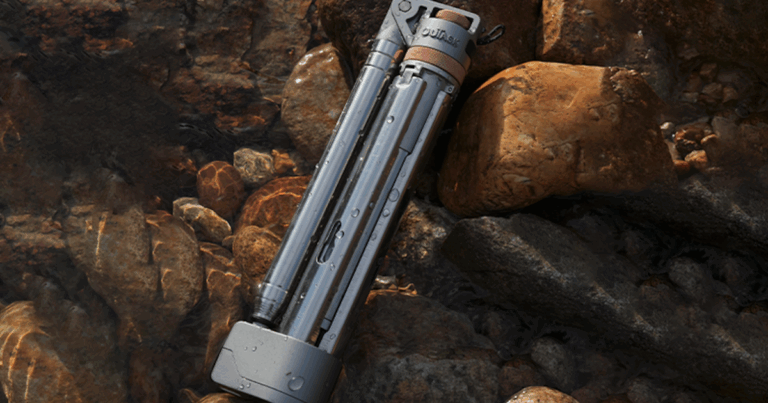
In place of the 2.4-in-thick (6-cm) cylindrical body of the TD1, the TD2 folds into a slimmer package measuring 1.7 in (4.2 cm) thick and 2.4 in (6 cm) wide. It’s also nearly an inch shorter at 9.4 in (24 cm), and while the TD1 looked the part of a flashlight or lantern, the TD2 looks nothing of the sort when all packed up. It does look like some kind of folding tool – a camera tripod or telescoping magnetic grabber, perhaps, but not a light.

The really big changes come inside that slightly slimmed chassis, where Outask trades out the single expandable cylinder for separate tripod and lamp cylinders. When fully folded, the TD2 works like a handheld flashlight. To open it up, flip the lamp on the end over to free the components.

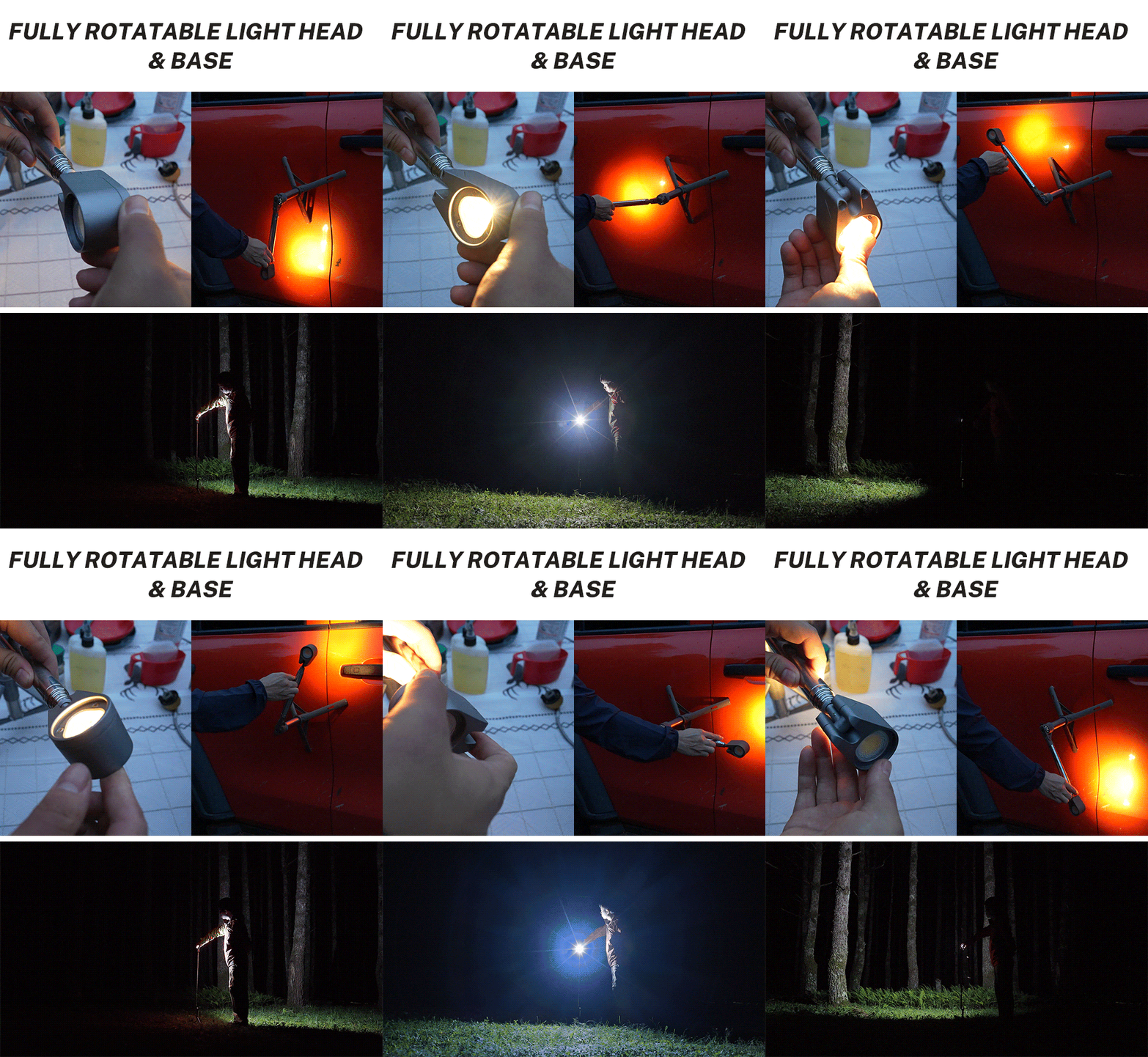
The telescopic lamp pole flips upward, and the three legs slide down around their own pole and click into open tripod position. Like that, you have yourself a tripod table lamp with two-sided swiveling head. And not only does the telescopic lamp arm fold up and down, it rotates 360 degrees via a swivel base. So you can pinpoint the light exactly where you need it.

A look at the versatile, fully rotating construction

Outask

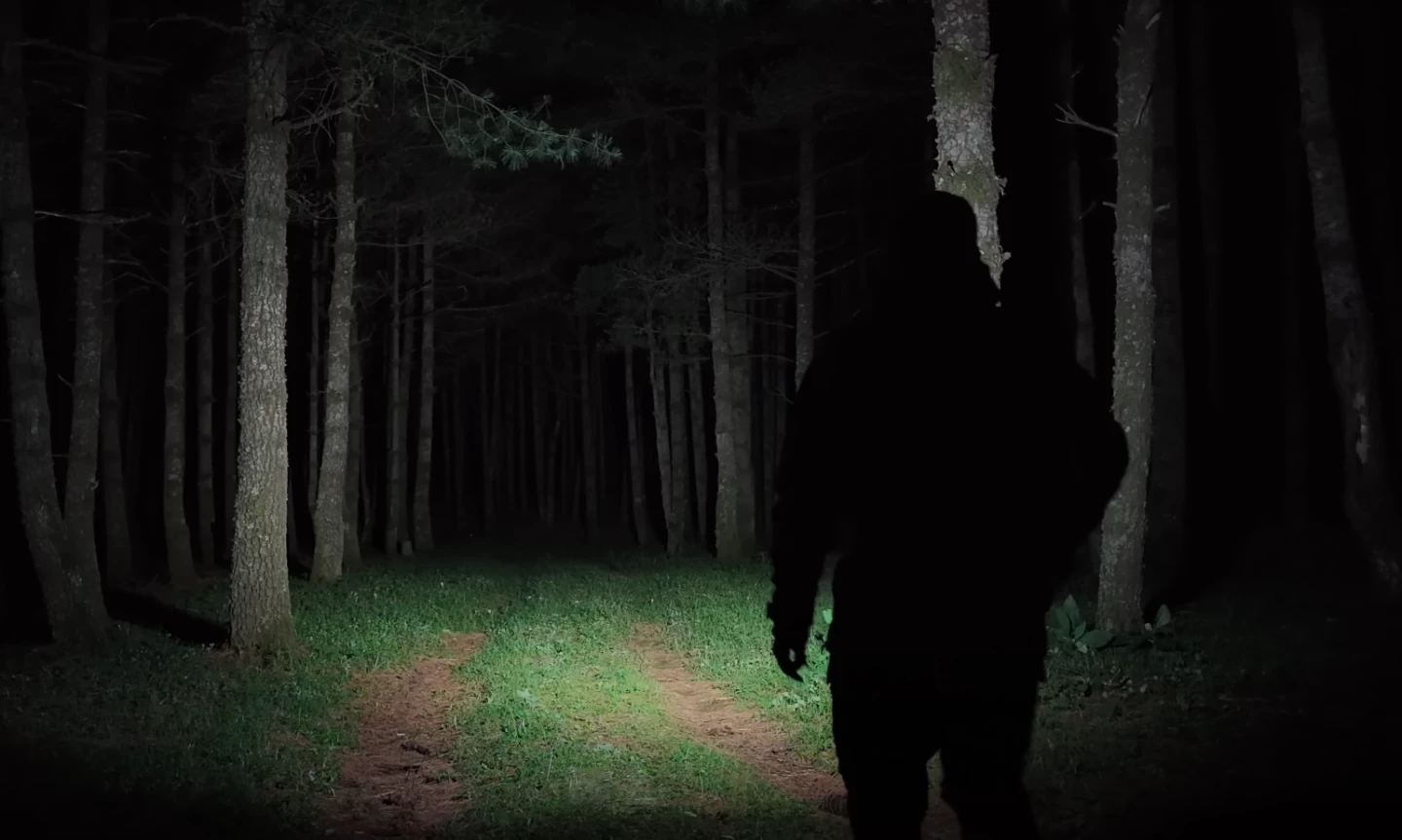
The TD2 moves beyond the table or desktop when its telescopic pole is extended up to its full 3-foot (93-cm) length. Now you have a tall campsite or deck area light you can stand up on the ground. Switch between spotlight and floodlight settings, depending on how wide of an area you need illuminated, and set lamp power and temperature just right with a knurled dial that delivers step-less dimming from 1,500 to 40 lumens and cool-to-warm beam tinting.

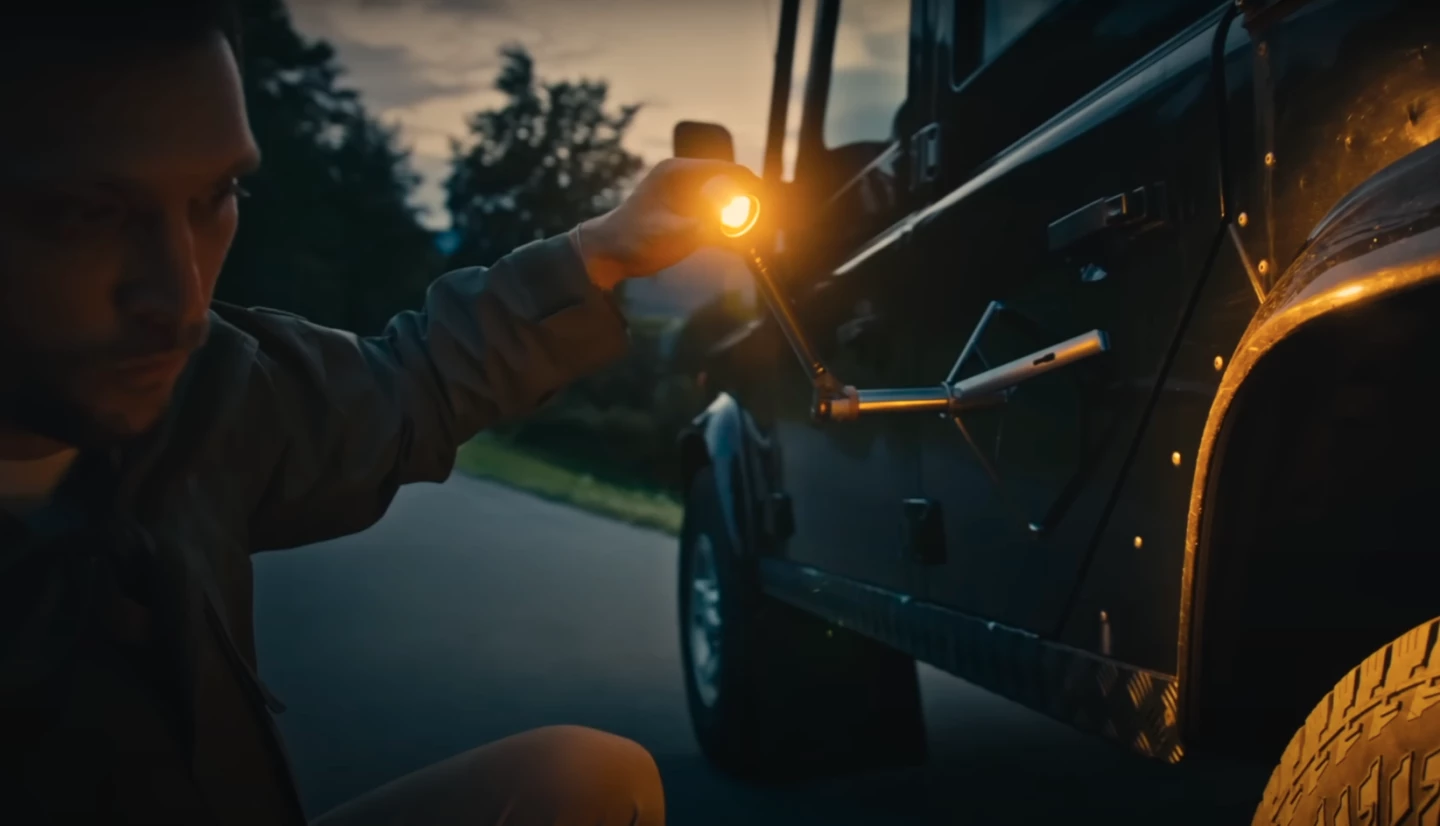
As with the original TD1, the feet of the TD2 include integrated magnets so that you can secure the lamp to magnetic surfaces. Attach it to the roof or side of the car, extend out the lamp, and you have an overhead light right in the middle of the great outdoors. Stick it under an SUV liftgate when unloading the trunk or cooking on a slide-out kitchen after dark. Attach it under the hood when working in the engine bay, or stick it to the side of the grill.

The TD2 also includes a dual-sided lamp, providing more options for illumination. For instance, Outask shows how you can use the main lamp to light your tire when fixing a flat at night, then turn the back lamp to emergency flashing mode to ensure you’re more visible to approaching drivers.

The fully swiveling arm and lamp ensure you can fire light precisely where you need it

Outask

With all its potential functions at camp, the TD2 is sure to see a lot of use. You’ll want to turn brightness down when you can because Outask estimates a runtime of just 2.5 hours on 1,100-lumen mode. Dialing that back to 300 lumens bumps runtime to 16 hours, much more in line with a camping trip on which you’re using it as a table or area light throughout the evenings. Maximum runtime is listed as 125 hours at 40 lumens.

When the battery does run out, users can recharge the pack in roughly four hours via USB-C, swap in a spare TD2 custom battery pack, or use two standard 21700 batteries. The light also offers USB-C output for charging a phone and other external gadgets from the TD2’s battery reserves.

Outask says the TD2 throws light up to 164 feet or so

Outask

Outask is introducing the TD2 by way of Kickstarter campaign, where supporters can pledge US$149 for one of the first early bird models. Outask is also advertising a package with a TD2, lantern-style lamp diffuser, wall mount and carry case at a $189 pledge level.

The campaign looks like it might be even more successful than Outask’s $873K TD1 Kickstarter, as the TD2 effort is very close to $800,000 with four weeks left to go. If everything else goes as successfully, Outask will begin deliveries this December.

Intro video below:

Introducing ouTask TD2 Telescopic Lantern: Illuminate Your Next Adventure

Source: Outask

Map: Strong 7.6-Magnitude Earthquake Hits the South Atlantic Ocean

0

Note: Map shows the area with a shake intensity of 4 or greater, which U.S.G.S. defines as “light,” though the earthquake may be felt outside the areas shown. Source: U.S.G.S. By William B. Davis and John Keefe

A major, 7.6-magnitude earthquake struck in the South Atlantic Ocean on Friday, according to the United States Geological Survey. The earthquake prompted alerts about potential tsunami along the coast of Chile on the western side of South America, but after a little over an hour, the authorities said dangerous waves were unlikely.

The U.S. National Tsunami Warning Centers in Alaska and Hawaii said there was no tsunami danger for Hawaii, or for the east and west coasts of Canada and the United States.

The temblor happened at 4:29 p.m. Eastern, data from the agency shows.

As seismologists review available data, they may revise the earthquake’s reported magnitude. Additional information collected about the earthquake may also prompt U.S.G.S. scientists to update the shake-severity map.

Aftershocks in the region

An aftershock is usually a smaller earthquake that follows a larger one in the same general area. Aftershocks are typically minor adjustments along the portion of a fault that slipped at the time of the initial earthquake.

Quakes and aftershocks within 100 miles

Aftershocks can occur days, weeks or even years after the first earthquake. These events can be of equal or larger magnitude to the initial earthquake, and they can continue to affect already damaged locations.

When quakes and aftershocks occurred

Source: United States Geological Survey | Notes: Shaking categories are based on the Modified Mercalli Intensity scale. When aftershock data is available, the corresponding maps and charts include earthquakes within 100 miles and seven days of the initial quake. All times above are Eastern. Shake data is as of Friday, Oct. 10 at 4:47 p.m. Eastern. Aftershocks data is as of Friday, Oct. 10 at 9:14 p.m. Eastern.

Maps: Daylight (urban areas); MapLibre (map rendering); Natural Earth (roads, labels, terrain); Protomaps (map tiles)

Doctor says Trump, 79, has a “cardiac age” equivalent to that of a 65-year-old

0

Trump, 79, has "cardiac age" of 65-year-old, doctor says