0.2 C
New York
Wednesday, February 25, 2026
Home Blog Page 316

Adam Peaty Embraces a Unique Approach to Sports: Putting Happiness First

0

By Coleman Hodges on SwimSwam

Adam Peaty

2025 SWIMMING WORLD CUP – CARMEL

3x Olympic champion Adam Peaty was back in the competition pool for the first time since the Paris Olympics, getting in race reps at the World Cup stop in Carmel. After missing the final of the 100 Breast, Peaty qualified for the final of the 50. The father told SwimSwam that he is approaching swimming a bit differently than he has before.

Peaty is putting a big emphasis on his happiness, striving to balance that with his training. This has taken the form of interacting with the community through his worldwide AP Racing events and prioritizing time with his family. Peaty recognizes that he’s not at his best in the pool at the moment, but also emphasizes that he has three years to ‘build this house’ before the LA2028 Olympics.

Read the full story on SwimSwam: Adam Peaty “Approaching the Sport a little bit differently… Happiness first”

The political decision behind the existence of hunger | Humanitarian Crises

0

Hunger is neither a natural condition of humankind nor an unavoidable tragedy: it is the result of choices made by governments and economic systems that have chosen to turn a blind eye to inequalities – or even of promoting them.

The same global order that denies 673 million people access to adequate food also enables a privileged group of just 3,000 billionaires to hold 14.6 percent of global gross domestic product (GDP).

In 2024, the wealthiest nations helped drive the largest surge in military spending since the end of the Cold War, reaching $2.7 trillion that year. Yet they failed to deliver on their own commitment: to invest 0.7 percent of their GDP in concrete actions to promote development in poorer countries.

Today, we see situations not unlike those that prevailed 80 years ago, when the Food and Agriculture Organization (FAO) of the United Nations was created. Unlike then, however, we are not only witnessing the tragedies of war and hunger feeding into each other, but also facing the urgent climate crisis. And the international order established to address the challenges of 1945 is no longer sufficient to address today’s problems.

Global governance mechanisms must be reformed. We need to strengthen multilateralism, create investment flows that promote sustainable development, and ensure that states have the capacity to implement consistent public policies to fight hunger and poverty.

It is essential to include the poor in public budgets and the wealthy in the tax base. This requires tax justice and taxing the superrich, an issue we managed to include for the first time in the final declaration of the G20 Summit, held in November 2024, under Brazil’s Presidency. A symbolic but historic change.

We advocate for this practice around the world — and we are implementing it in Brazil. Our Parliament is about to approve substantial tax reform: for the first time in the country, there will be a minimum tax on the income of the wealthiest individuals, exempting millions of lower-income earners from paying income tax.

During our G20 Presidency, Brazil also proposed the Global Alliance against Hunger and Poverty. Although recent, the initiative already has 200 members — 103 countries and 97 partner foundations and organisations. This initiative is not just about exchanging experiences, but about mobilising resources and securing commitments.

With this alliance, we want to enable countries to implement public policies that truly reduce inequality and ensure the right to adequate food. Policies that deliver rapid results, as seen in Brazil after we made the fight against hunger a government priority in 2023.

Official data released just a few days ago show that we have lifted 26.5 million Brazilians out of hunger since the beginning of 2023. In addition, Brazil has been removed, for the second time, from the FAO’s Hunger Map, as laid out in its global report on food insecurity. A map we would not have returned to if the policies launched during my first two terms (2003-10) and President Dilma Rousseff’s (2011-16) had not been abandoned.

Behind these achievements lie a set of coordinated actions on multiple fronts. We have strengthened and expanded our national income transfer programme, which now reaches 20 million households and supports 8.5 million children aged six and below.

We have increased funding for free meals in public schools, benefitting 40 million students. Through public food procurement, we have secured income for small-scale family farmers, while offering free, nutritious meals to those who truly need them. In addition, we have expanded the free supply of cooking gas and electricity to low-income households, freeing up room in family budgets to strengthen food security.

None of these policies, however, is sustainable without an economic environment that drives them. When there are jobs and income, hunger loses its grip. That is why we have adopted an economic policy that prioritises wage increases, leading to the lowest unemployment rate ever recorded in Brazil. And to the lowest level of per capita household income inequality.

Brazil still has a long way to go before achieving full food security for its entire population, but the results confirm that state action can indeed overcome the scourge of hunger. These initiatives, however, depend on concrete shifts in global priorities: investing in development rather than in wars; prioritising the fight against inequality instead of restrictive economic policies that for decades have caused massive concentration of wealth; and facing the challenge of climate change with people at its core.

By hosting COP30 in the Amazon next month, Brazil wants to show that the fight against climate change and the fight against hunger must go hand in hand. In Belem, we aim to adopt a Declaration on Hunger, Poverty, and Climate that acknowledges the profoundly unequal impacts of climate change and its role in worsening hunger in certain regions of the world.

I will also take these messages to the World Food Forum and to the meeting of the Council of Champions of the Global Alliance against Hunger and Poverty, events I will have the honour of attending today, the 13th, in Rome, Italy. These are messages that show that change is urgent and possible. For humanity, which created the poison of hunger against itself, is also capable of producing its antidote.

The views expressed in this article are the author’s own and do not necessarily reflect Al Jazeera’s editorial stance.


Unraveling Human Anti-Aging Potential through Naked Mole-Rat DNA Repair

0

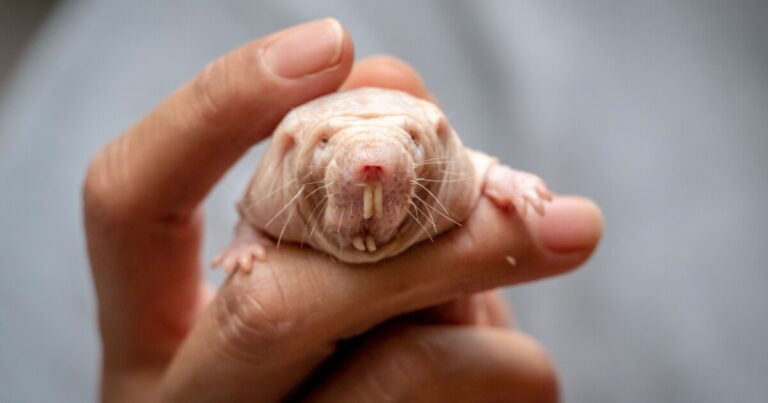
What naked mole-rats lack in the looks department they make up for it in longevity, living healthily for nearly four decades. Now scientists have uncovered just how they repair their DNA – and it has the potential to be harnessed for humans to do the same.

Reseacher’s from Shanghai’s Tongji University have furthered our understanding of why these curious little rodents (Heterocephalus glaber) have such incredible lifespans, discovering that changes to four amino acid residues equip naked mole-rats with a kind of genetic toolbox that allows them to carry out repair jobs across their organs and prevent cell death (senescence).

Previously, scientists had found that the DNA sensor cyclic guanosine monophosphate–adenosine monophosphate synthase (cGAS) was driving this system-wide repair, patching up DNA double-strand breaks to stabilize the genome, but how this came to be has remained a mystery until now.

Using comparative molecular biology with human cGAS – which actually inhibits DNA repair – the scientists found that the naked mole-rat’s enzyme has four key changes that facilitate the important work that extends their lifespan and keeps them healthy and disease-free for a remarkably long time. When the rodent cGAS enzyme was inserted into human and mouse cells in the laboratory, the researchers observed that it significantly enhanced the cells’ ability to repair DNA and in turn reduced the molecular signs of aging. When they engineered fruit flies to produce the naked mole-rat’s cGAS, the insects lived around 10 days longer than expected. While this may not sound like much, these flies only live for around 40 days, so it’s a meaningful extension to their lifespan.

And when live mice were also equipped with the naked mole-rat cGAS, aging rodents were less frail, had less gray hair and had healthier organs for longer than animals in a control group.

“This alteration confers naked mole-rat cGAS with a greater capacity to stabilize the genome, counteract cellular senescence and organ aging, and promote extended lifespan and health span,” noted the researchers.

The next question is: could it translate to extending our own longevity and health span? Given the biological similarities between humans and naked mole-rats, the scientists believe so, equipping us with the ability to protect our genome from damage, disabling our cGAS from inhibiting the repair process. However, it’s admittedly a long way off – and the findings treat DNA repair as an isolated sign of aging, not taking into account other factors such as inflammation that contributes to disease and other age-related health issues.

“DNA sensor cyclic guanosine monophosphate–adenosine monophosphate synthase (cGAS) participates in regulating DNA double-strand break repair by suppressing the homologous recombination (HR) pathway, thereby promoting genomic instability,” the researchers noted. “Our work reveals that the negative regulatory function of cGAS in HR repair is reversed in the longest-lived rodent, the naked mole-rat, by an alteration of four specific amino acid residues. This alteration confers naked mole-rat cGAS with a greater capacity to stabilize the genome, counteract cellular senescence and organ aging, and promote extended life span and health span.”

Scientists have long been fascinated with the age-defying abilities of the African rodent, which spends its life in large colonies underground. Previous work has hit on clues as to why the naked mole-rat is able to stay healthy for so long, most notably how they appear to be protected from the onset of senescence – and researchers continue to search for how we can steal their anti-aging superpowers.

The study was published in the journal Science.

Source: Tongji University via Nature

Uskmouth Battery Storage Project Approved by Newport Council

0


Newport council approves 250MW battery storage project at Uskmouth

China criticizes US for ‘hypocrisy’ in tariff threat

0

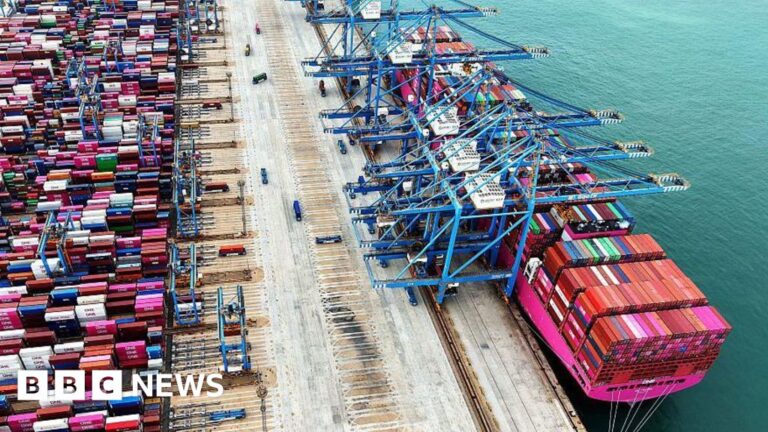
Donald Trump’s latest threat to impose an additional 100% tariff on Chinese goods is “a typical example of US double standards”, China’s government has said.

A commerce ministry spokesperson also said China could introduce its own unspecified “countermeasures” if the US president carries out his threat, adding it was “not afraid” of a possible trade war.

On Friday, Trump hit back at Beijing’s move to tighten its rules for rare earths exports, accusing it of “becoming very hostile” and trying to hold the world “captive”. He also threatened to pull out of a meeting with China’s President Xi Jinping later this month.

But on Sunday, Trump wrote: “Don’t worry about China, it will all be fine!”

“Highly respected President Xi just had a bad moment. He doesn’t want Depression for his country, and neither do I. The U.S.A. wants to help China, not hurt it!!!” Trump said in a post on social media, without elaborating further.

Trump’s comments on Friday rattled financial markets, with the S&P 500 share index closing down 2.7%, its steepest fall since April.

On Monday, the Shenzhen Component Index in mainland China was down by more than 2.5%, while Hong Kong’s Hang Seng was around 3.5% lower.

The president’s words renewed fears of a trade war between the US and China.

In May, the two sides had agreed to drop triple-digit tariffs on each others’ goods. which had raised the prospect of trade halting between the two countries.

This left US tariffs on Chinese goods facing an added 30% levy compared with the start of the year, while US goods entering China face a 10% tariff.

China’s response – released by the commerce ministry in the form of written responses to journalist’s questions – echoed language from the height of the recent trade conflict.

They criticised US export restrictions on chips and semi-conductors as well as defending China’s own export controls on rare earths as “normal actions” to safeguard national security and that of all nations.

The spokesperson said that for “a long time”, the US had “overstretched the concept of national security, abused export control measures” and “adopted discriminatory practices against China”.

“Resorting to tariff threats is not the right way to engage with China,” the spokesperson said.

“China’s position on a tariff war has always been consistent: we do not want one, but we are not afraid of one.”

Last week, China announced it was tightening export controls on rare earths and other materials critical for advanced tech manufacturing.

This was seen as key move, as the country processes about 90% of the world’s rare earths, which are used in goods such as solar panels and smartphones.

The recent comments from Washington and Beijing are being seen by some as a means of strengthening positions ahead of future trade talks.

It is unclear whether a meeting between Trump and Xi, expected at a summit in South Korea later this month, will still proceed.

Today’s Stock Market: Dow Futures Surge Almost 400 Points Following Trump’s Reassurance on China

0

Investors are eyeing a stock market rebound after Friday’s trade war flare-up sent the S&P 500 to its worst loss since April.

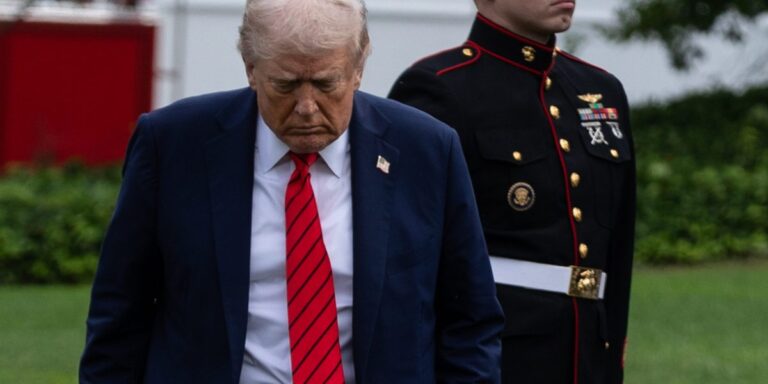
On Sunday, President Donald Trump sought to calm nerves in a post on Truth Social, following his announcement on Friday that he will impose an additional 100% tariff on China and limit U.S. exports of software. 

“Don’t worry about China, it will all be fine!” he wrote. “Highly respected President Xi just had a bad moment. He doesn’t want Depression for his country, and neither do I. The U.S.A. wants to help China, not hurt it!!!”

Meanwhile, Vice President JD Vance told Fox News’s Sunday Morning Futures that the U.S. is willing to be reasonable if China is too, though he insisted Trump has the upper hand with “far more cards” than Beijing holds.

The shift in tone contrasts with Trump’s fiery rhetoric on Friday as he lashed out at China for its new export controls on rare earths, which are critical inputs across a range of industries.

“Market participants appear to be leaning into the TACO trade once more, fueled not only by what we’ve seen in the recent past, but also by conciliatory remarks over the weekend from both President Trump and Vice President Vance, suggesting that Friday’s announcement of additional 100% tariffs on Chinese imports are likely to be little more than a negotiating tactic,” Michael Brown, senior research strategist at Pepperstone, said in a note on Sunday.

Futures tied to the Dow Jones Industrial Average surged 382 points, or 0.84%. S&P 500 futures were up 1.27%, and Nasdaq futures jumped 1.79%.

The yield on the 10-year Treasury tumbled 8.9 basis points to 4.059%. The U.S. dollar was up 0.04% against the euro and up 0.48% against the yen. Gold climbed 1.43% to a new high of $4,057.50 per ounce. U.S. oil futures rose 1.29% to $59.66 a barrel, and Brent crude gained 1.32% to $63.56.

Trump had previously imposed 145% tariffs on China, then put them on hold to allow negotiations to play out. A similar pattern played out with other trade partners like the European Union, causing Wall Street to dismiss maximalist threats with the TACO (Trump always chickens out) trade.

Brown said Trump’s new China tariff, which would go into effect Nov. 1 and bring the overall level to 130%, appears to be another example of his “escalate to de-escalate” strategy.

“Assuming that this is another ‘TACO’ situation, and some clarity on that front is obtained before too long, then this is likely to prove another dip in equities that should be viewed as a buying opportunity, with the path of least resistance continuing to lead higher, if in somewhat choppy fashion,” he added.

At the same time, the Federal Reserve’s shift back to rate cuts amid still-solid economic growth should continue to boost to the dollar, which will likely shrug off tariff threats, Brown predicted.

Similarly, market veteran Ed Yardeni, president of Yardeni Research, also sees the U.S. and China pulling back from the precipice.

“If neither side were to blink, the US and Chinese economies would lead the global economy into a deep recession, if not a depression,” he wrote in a note on Sunday. “But we expect that both sides will blink very soon given the extremely adverse consequences of a trade war between the world’s two biggest economies.”

For its part, Beijing remained defiant, with the commerce ministry saying Sunday that China doesn’t want a tariff war but is also not afraid of one. It also said the export controls are not a ban on rare earth shipments but are a sovereign right.

But China’s new rare earth export policy ups the ante well beyond another tit-for-tat exchange in the trade war against the U.S.

Dean Ball, who served as a senior advisor in the White House Office of Science and Technology Policy earlier this year, wrote on X on Saturday that the policy gives Beijing the power to “forbid any country on Earth from participating in the modern economy.”

Dali Yang, a political science professor at the University of Chicago, sounded a similar alarm in a post on Sunday, saying the move marks a decisive moment that reveals what a China-led order might look like.

Looking beyond rare earths, it’s one that leverages control over strategic materials and technologies to prop up global influence.

“China is effectively saying: ‘We control the arteries of high-tech civilization.’ The rest of the world now sees that message clearly—and is scrambling to build new circulatory systems,” Yang wrote.

Fortune Global Forum returns Oct. 26–27, 2025 in Riyadh. CEOs and global leaders will gather for a dynamic, invitation-only event shaping the future of business. Apply for an invitation.

Macron reveals new government in preparation for budget deadline | Political News

0

The new government, led by Prime Minister Sebastien Lecornu, must present a 2026 draft budget on Monday.

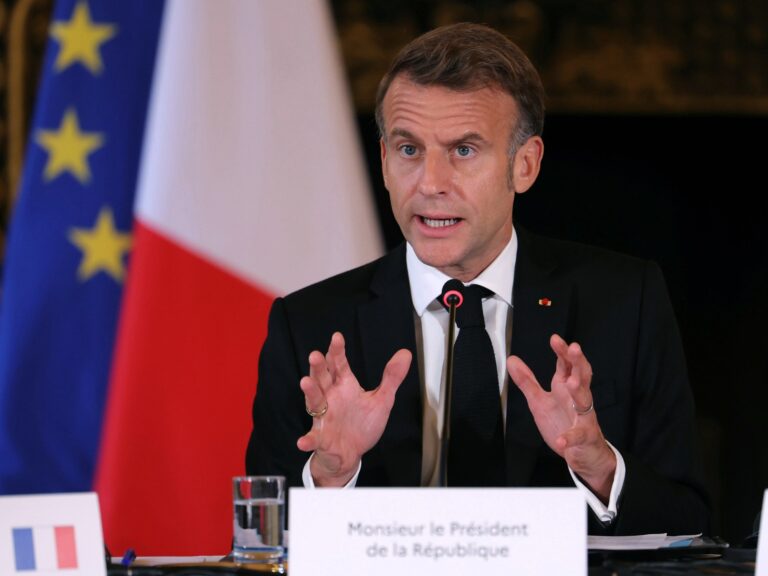
French President Emmanuel Macron has unveiled a new government after holding marathon talks with newly re-appointed Prime Minister Sebastien Lecornu ahead of a fast-approaching deadline to present next year’s budget to parliament.

In Lecornu’s new cabinet, Jean-Noel Barrot remains as foreign minister, while outgoing Labour Minister Catherine Vautrin takes on the defence portfolio, according to a lineup published by the president’s office on Sunday.

Recommended Stories

list of 3 itemsend of list

Roland Lescure, a Macron loyalist, will serve as economy minister.

There were also new faces.

Paris police chief Laurent Nunez will take over the interior ministry, replacing Bruno Retailleau of the right-wing Republicans (LR) party.

Monique Barbut, the former France director of the World Wide Fund for Nature (WWF), was to head the ministry of environmental transition.

Gerald Darmanin, however, stayed on as justice minister.

And Rachida Dati, the culture minister who is set to stand trial for alleged corruption next year, also retained her post.

In a post on X, Lecornu wrote: “A mission-based government has been appointed to draw up a budget for France before the end of the year.”

“I would like to thank the women and men who have freely committed themselves to this government, putting aside personal and partisan interests. Only one thing matters: the interests of the country.”

Macron reinstated Lecornu late on Friday, just four days after the premier had resigned and as his first government collapsed, leading to outrage and pledges from opponents to topple any new cabinet at the first chance.

The former defence minister was tasked with assembling a government to present a 2026 draft budget on Monday, giving parliament the constitutionally required 70 days to scrutinise the plan before the year’s end.

But the LR, a key political ally, complicated matters on Saturday by announcing that the party would not take part in the new government but only cooperate on a “bill-by-bill” basis.

Other allied and rival parties wrestled all weekend over whether to join Lecornu’s new government or vote to topple it.

The premier had pledged to work with all mainstream political movements and to select cabinet members who are “not imprisoned by parties”.

A Macron loyalist, Lecornu agreed after he had quit to stay on for two extra days to talk to all political parties.

He told the French weekly La Tribune that he had resigned “because the conditions were no longer met” and said that he would do so again if that remained the case this time around.

The French president, facing the worst domestic crisis since the 2017 start of his presidency, has yet to address the public since Lecornu’s first government fell.

On Monday, Macron is due to travel to Egypt to support a Gaza ceasefire deal brokered by the United States, a trip that could delay the presentation of the draft budget.

Lecornu’s reappointment comes as France faces political deadlock and a parliamentary impasse over an austerity budget against a backdrop of climbing public debt.

The country faces pressure from the European Union to rein in its deficit and debt, with the fight over cost-cutting measures toppling Lecornu’s two predecessors.

Lecornu has pledged to do “everything possible” to give France a budget by the end of the year, saying that restoring the public finances was “a priority” for the future.

But he is under pressure from parties across the political spectrum, including the Socialists, who have threatened to topple his government unless he backs away from the 2023 pension reform that pushed the retirement age from 62 to 64.

Lecornu said on Saturday that “all debates are possible” over the pension reforms, and that his “only ambition is to get out of this situation that is painful for everyone”.

If Lecornu fails to secure parliamentary support, France would need emergency stopgap legislation to authorise spending from January 1 until a full budget is adopted.

French politics has been deadlocked ever since Macron gambled last year on snap polls that he hoped would consolidate power, but that instead ended in a hung Parliament and more seats for the far right.

Challenging Client Situation

0


Client Challenge


JavaScript is disabled in your browser.

Please enable JavaScript to proceed.

A required part of this site couldn’t load. This may be due to a browser
extension, network issues, or browser settings. Please check your
connection, disable any ad blockers, or try using a different browser.

Trump declares end to conflict in Gaza as he heads to Israel to secure release of hostages

0

Alex Boyd and

Tom BatemanState department correspondent on Air Force One

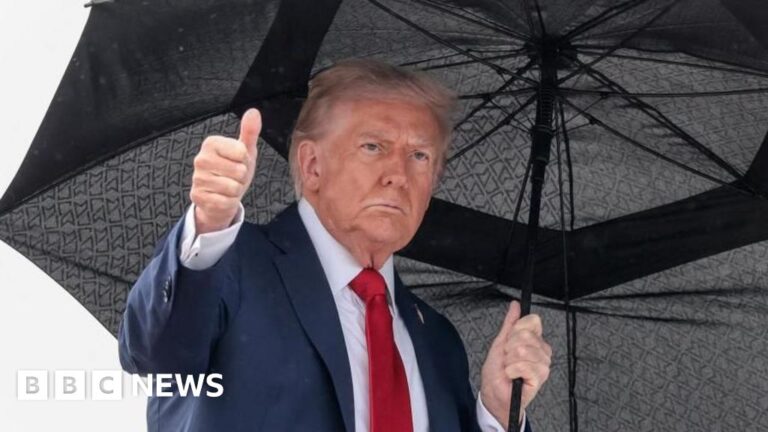
Reuters Donald Trump gives a thumbs up as he holds an umbrella before boarding Air Force OneReuters

US President Donald Trump has said “the war is over” as he travels to Israel for the release of hostages from Gaza under the ceasefire deal agreed between Israel and Hamas.

Speaking on board Air Force One, he said the ceasefire would hold and a “Board of Peace” would quickly be set up for Gaza, which he said looked like a “demolition site”.

He also praised the roles of Israeli Prime Minister Benjamin Netanyahu and Qatar, one of the mediators.

The deadline for Hamas to release all the hostages it is still holding in Gaza is midday local time (10:00 BST). Later on Monday, Trump will travel to Egypt for an international summit aiming to end the war.

The war was triggered by the Hamas-led attacks on southern Israel on 7 October 2023, in which about 1,200 people were killed and 251 taken hostage.

Since then, more than 67,000 Palestinians have been killed by Israel’s military response, including more than 18,000 children, the Hamas-run health ministry says.

The ceasefire in Gaza took effect on Friday morning after Israel and Hamas agreed to the first phase of the 20-point peace plan brokered by Trump, with the next phases still to be negotiated.

Twenty of the Israeli hostages are believed to be alive, and Hamas is also due to hand over the remains of up to 28 deceased hostages.

Israel should also release around 250 Palestinian prisoners and 1,700 detainees from Gaza, while increased amounts of aid should enter the Strip. An Israeli government spokesperson said they would be released once the living hostages reach Israeli territory.

When asked by the BBC whether he believed the ceasefire would hold, Trump said it would, adding “everybody is happy, and I think it’s going to stay that way”.

On his peace skills, he said: “I’m good at solving wars. I’m good at making peace.”

Asked if he would ever visit Gaza, Trump said he would. “I’d like to put my feet on it, at least.” Trump said he thought Gaza would be a “miracle” over the coming decades.

He added that the region would soon “normalise,” with a planned supervisory body – the Board of Peace – to be established “very quickly” to oversee Gaza.

On Saturday hundreds of thousands of Israelis attended a rally in Tel Aviv and chanted their gratitude to the US leader.

Many details for the later phases of the peace plan could be hard to reach agreement on – such as the governance of Gaza, the extent of Israeli troop withdrawal, and the disarming of Hamas.

Trump will land in Israel on Monday, where he will address the country’s parliament the Knesset.

He will then travel to lead a summit in Sharm El-Sheikh alongside Egypt’s President Abdel Fattah al-Sisi.

Egypt’s foreign ministry said a “document ending the war in the Gaza Strip” was expected to be signed.

Leaders from more than 20 countries are expected to attend, including UK Prime Minister Sir Keir Starmer and Palestinian President Mahmoud Abbas.

Iran’s Foreign Minister Abbas Araghchi said Egypt had invited Iran to the summit, but “neither President [Masoud] Pezeshkian nor I can engage with counterparts who have attacked the Iranian people and continue to threaten and sanction us”.

In a post on X he added: “Iran welcomes any initiative that ends Israel’s genocide in Gaza and ensures the expulsion of occupation forces.”

What do people in the West Bank think about the ceasefire deal?

Israeli Defence Minister Israel Katz said that once the hostages were returned, the military would destroy underground tunnels in Gaza built by Hamas.

Aid trucks began entering Gaza on Sunday and hundreds more were queuing at the border.

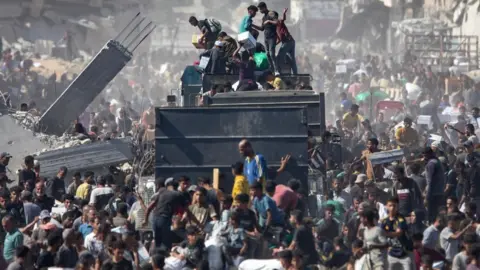
Palestinians crowded around the convoys arriving in Khan Younis, southern Gaza.

Speaking to the BBC earlier on Sunday, Unicef’s James Elder said dozens of trucks had entered the Strip but that this fell short of what was needed.

The UN estimates that at least 600 aid trucks are needed every day to start addressing Gaza’s humanitarian crisis.

In August, the Integrated Food Security Phase Classification (IPC) declared a famine in parts of the territory, including Gaza City.

Israel, however, rejects the IPC report, and its foreign ministry says the conclusions are “based on Hamas lies”. Israeli military aid body Cogat says the report ignores the “extensive humanitarian efforts undertaken in Gaza”.

EPA Palestinians take aid supplies from a truck that arrived in Khan Younis in the southern Gaza StripEPA

Palestinians take aid supplies from a truck that arrived in Khan Younis in the southern Gaza Strip

Palestinians returning to northern Gaza have described scenes of devastation, with many of them finding their homes reduced to rubble. Rescue workers have warned there could be unexploded ordnance and bombs in the area.

Amjad Al Shawa, who heads a Palestinian organisation coordinating with aid groups, estimated 300,000 tents were needed to temporarily house 1.5 million displaced Gazans.

Hamas has recalled about 7,000 members of its security forces to reassert control over areas of Gaza recently vacated by Israeli troops, according to local sources.

At least 27 people have been killed in fierce clashes between Hamas security forces and armed members of the Dughmush family in Gaza City, in one of the most violent internal confrontations since the end of major Israeli operations in the enclave.

Trump’s moderation on China tariffs leads to sharp rebound in oil prices

0


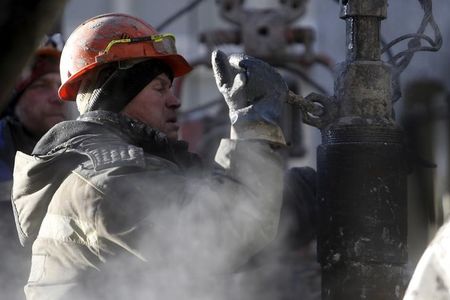
Oil prices rebound sharply after Trump tempers China tariff stance