For the first time, researchers have shown that tackling obstructive sleep apnea’s two root causes at once, using both oxygen and a jaw-forwarding device, can dramatically cut breathing interruptions during sleep.
Globally, obstructive sleep apnea (OSA) affects approximately one billion people. The condition is caused by two main problems: the throat muscles collapse too easily (“pharyngeal collapsibility”), and the brain’s control of breathing is unstable (“ventilatory control instability”).
While plenty of studies have investigated the effectiveness of treatments targeting one of these problems, few have examined how effective combining treatments to address both is. Now, a new study led by Monash and Harvard Universities has done just that.
“We did this because we know that OSA is due to a combination of anatomical and non-anatomical causes,” said lead author of the study, Associate Professor Brad Edwards, PhD, from the Monash University School of Psychological Sciences. “The MAD [mandibular advancement device] targets the anatomical cause while oxygen helps target a leading but underappreciated non-anatomical cause.”
Similar to a mouthguard, a MAD holds the lower jaw (mandible) and tongue forward, keeping the airway open. It’s often used as an alternative to continuous positive airway pressure (CPAP), which some people find hard to tolerate. The present study tested whether treating both aspects of OSA using supplemental oxygen to stabilize breathing control and a MAD to keep the airway open would work better than using either one alone.
Forty-one adults with moderate to severe OSA (an average of about 49 breathing interruptions per hour) were enrolled in the trial. It was a randomized crossover trial, meaning that each participant tried all four treatment options in random order, each on a different night. The four options were: sham (air only), the control condition; oxygen only (breathing 4 L/min of oxygen during sleep); MAD only; and a combination of oxygen and MAD.
“Mandibular advancement devices are commonly used to treat OSA, while supplemental oxygen is not commonly used; it is often used for other respiratory disorders such as COPD and emphysema,” Edwards said. “This is the first time this combination has been tried in patients with OSA.”
The researchers used overnight sleep studies (polysomnography) to record the following measures: apnea-hypopnea index (AHI), which is the number of breathing interruptions per hour; arousal index, how often sleep was disrupted; and subjective sleep quality, rated on a visual scale. They also analyzed physiological traits to see which types of patients benefited most; that is, those with more “collapsible” airways or unstable breathing control.
Compared to no treatment, oxygen alone reduced AHI by about 33%, MAD alone reduced AHI by about 54%, and combination therapy reduced AHI by about 68%, a statistically significant effect. Combination therapy improved both sleep quality and arousals compared to sham, but not enough to be clearly better than MAD alone. The biggest improvements were seen in people whose OSA was driven by both airway collapsibility and unstable ventilatory control.
From the study’s findings, it appears that this “two-pronged” approach to treatment could help patients who can’t tolerate CPAP and whose OSA has multiple underlying causes.
“Now we need larger trials targeted to selected patients, but this is the first convincing evidence that going after multiple causes of OSA at the same time could have real benefits for patients,” said the study’s senior author, Scott Sands, PhD, an Assistant Professor of Medicine at Brigham and Women’s Hospital and Harvard Medical School. “If widely adopted, it could be a bit like people with high blood pressure taking 2-3 medications to control it, with each targeting different biological pathways.”
A required part of this site couldn’t load. This may be due to a browser
extension, network issues, or browser settings. Please check your
connection, disable any ad blockers, or try using a different browser.
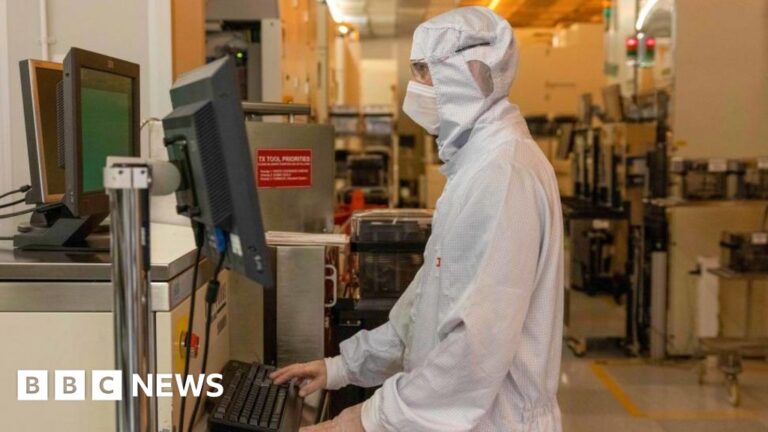
Nexperia is based in the Netherlands and operates factories worldwide, including in the UK
The Dutch government has taken control of Nexperia, a Chinese-owned chipmaker based in the Netherlands, in a bid to safeguard the European supply of semiconductors for cars and other electronic goods and protect Europe’s economic security.
The Hague said it took the decision due to “serious governance shortcomings” and to prevent the chips from becoming unavailable in an emergency.
Nexperia’s owner Wingtech said on Monday that it would take actions to protect its rights and would seek government support.
The development threatens to raise tensions between the European Union and China, which have increased in recent months over trade and Beijing’s relationship with Russia.
In December 2024, the US government placed Wingtech on its so-called “entity list”, identifying the company as a national security concern.
Under the regulations, US companies are barred from exporting American-made goods to businesses on the list unless they have special approval.
The Dutch Economic Ministry said it made the “highly exceptional” decision to invoke the Goods Availability Act over “acute signals of serious governance shortcomings” within Nexperia.
“These signals posed a threat to the continuity and safeguarding on Dutch and European soil of crucial technological knowledge and capabilities,” the ministry said in a statement.
“Losing these capabilities could pose a risk to Dutch and European economic security.”
The statement did not detail why it thought the firm’s operations were risky. A spokesperson for the minister of economic affairs told the BBC there was no further information to share.
The measures are aimed to keep European chip supplies flowing and protect Dutch intellectual property, said EU-China researcher Sacha Courtial.
In a crisis, a Chinese-owned company could come under pressure from Beijing to halt supplies or prioritise sales to China, crippling European industries like carmakers and electronics manufacturers, he said.
The Hague’s move puts economic security “over free-market investment principles”, in what could pave the way for other governments to follow, said Mr Courtial from the Jacques Delors Institute.
‘Mitigating risk’
The Goods Availability Act is designed to allow the Hague to intervene in companies under exceptional circumstances. These include threats to the country’s economic security and to ensure the supply of critical goods.
Under the order, the Dutch Minister of Economic Affairs, Vincent Karremans, could reverse or block Nexperia’s decisions if they were potentially harmful to the company’s interests, to its future as a business in the Netherlands or Europe, or to ensure supply remains available in an emergency.
The Dutch government added the company’s production can continue as normal.
“This measure is intended to mitigate that risk,” the ministry said.
Shanghai-listed shares in Nexperia’s parent company Wingtech fell by 10% on Monday morning.
A Nexperia spokesperson said the company “complies with all existing laws and regulations, export controls and sanctions regimes,” and had no further comment.
In a statement in Mandarin, Wingtech said its operations were continuing uninterrupted and it remained in close communication with its suppliers and customers.
Wingtechsaid in a stock filing that the company’s chairman, Zhang Xuezheng, was suspended from Nexperia’s boards by an Amsterdam court order earlier this month.
The company was also in talks with lawyers about potential legal remedies, it added.
The BBC has also contacted the Chinese embassies in the Netherlands and Brussels.
new video loaded: Friends and Family Celebrate Return of Israeli Hostage
transcript
transcript
Friends and Family Celebrate Return of Israeli Hostage
Alon Ohel was kidnapped by Hamas after fleeing the Nova music festival in October 2023. More than two years later, Hamas freed Mr. Ohel as part of a cease-fire deal with Israel.
There is no word to describe how we feel. The best day of my life, really. It was so exciting for us and for Alon. We jump on each other as we first saw each other, and from now we need to do everything to get our life back, and it will happen. He will play the piano that is in his room and for the music to heal him. I hope to know my new brother. This is my new brother, my old brother and my new brother I hope to, to meet him as he is today.
Alon Ohel was kidnapped by Hamas after fleeing the Nova music festival in October 2023. More than two years later, Hamas freed Mr. Ohel as part of a cease-fire deal with Israel.
In an ever-changing world of U.S. tariffs, shifting trade policies, and rising geopolitical tensions, businesses are forced to make decisions at an expedited pace. AI is here to help: streamlining some productivity and allowing businesses and their leaders to gather and summarize information at a faster clip.
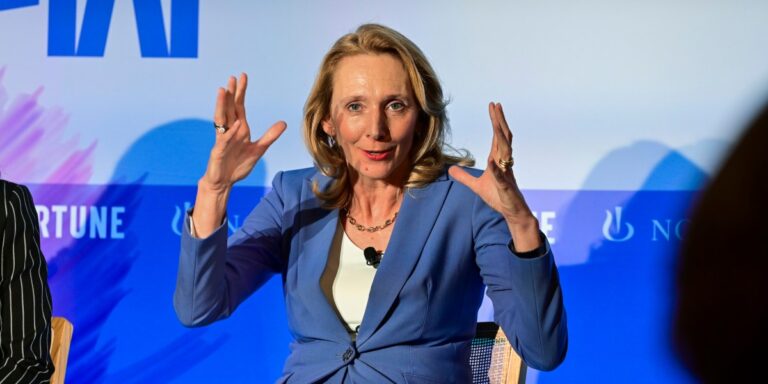
That’s why Hanneke Faber, the CEO of global tech manufacturing company Logitech, said she’d be open to the idea of having an AI-powered board member.
“We already use [AI agents] in almost every meeting,” Faber said at Fortune’s Most Powerful Women conference in Washington, D.C. on Monday.
While she said AI agents today (like Microsoft Copilot and internal bots) mostly take care of summarization and idea generation, that’s likely to change due to the pace at which the technology is developing.
“As they evolve, and some of the best agents or assistants that we’ve built actually do things themselves that comes with a whole bunch of governance things,” Faber said. “You have to keep in mind and make sure you really want that bot to take action. But if you don’t have an AI agent in every meeting, you’re missing out on some of the productivity.”
“That bot, in real time, has access to everything,” she continued.
Reshema Kemps-Polanco, executive vice president and chief commercial officer at global pharmaceutical company Novartis, also said she’s been training an AI bot to help run a “very rigorous commercial launch.” The bot is being trained to assess the team’s launch plan, and is getting “smarter and smarter” about asking strategic questions, she said.
“It’s trained to look for gaps in the plan,” said Kemps-Polanco during a session titled Dissecting the Global Economy, presented by Novartis. “In a couple of cases … it actually found two or three things that I may have missed—things that would still add value.”
The importance of data
Other panelists pointed out AI is only as good as the data it’s trained on.
“Garbage in, garbage out,” said Andrea Calise, president of U.S. strategy and communications at global consultancy Teneo. “We basically build synthetic stakeholders to understand stakeholders” by using AI to obtain and understand data.
Tracey Massey, chief operating officer of consumer intelligence company NIQ, said obtaining and using the wrong data can be very costly.
“It’s most important to have the really good data,” she said. “Then you build the analytics on top.”
That can be challenging, though, for smaller companies with fewer resources who still use legacy tech platforms to gather data. But Massey said even these companies still have time to “catch up” considering AI is still in its nascent phase.
Still, the “vast majority” of executive teams feel as if they’re behind in AI adoption, Teneo’s Calise said.
“Everyone feels like they’re one step behind,” Calise said. “Everyone feels like they’re chasing their peers, because it is moving so fast.”
But Calise reminded the audience AI development and adoption is very much still in the first inning, to use a baseball analogy.
“We’re not just in the first inning,” she said. “We’re in, like the first at-bat, in the first inning.”
Despite the carnage in Gaza, United States President Donald Trump has received a hero’s welcome across the Middle East as he visited Israel and Egypt to celebrate the ceasefire deal.
Trump spoke at the Israeli parliament, the Knesset, on Monday before heading to Sharm el-Sheikh in Egypt, where he participated in a signing ceremony for the ceasefire agreement along with regional and international leaders.
Recommended Stories
list of 3 itemsend of list
Throughout the trip, Trump expressed joy and took personal credit for ending the Israeli war on Gaza, which killed nearly 68,000 Palestinians in a campaign that leading rights advocates have described as a genocide.
The US president delivered several sets of remarks throughout the day, emphasising his support for Israel and asserting that the Gaza ceasefire marks the start of a peaceful era in the region.
Here are key takeaways from Trump’s remarks:
A new Middle East
It’s not uncommon for US presidents to envision and promote “a new Middle East” – one that is friendly to Washington and Israel, stable and ripe for trade and investments.
Trump on Monday became the latest US president to talk of a fundamental transformation in the region.
“This is the end of an age of terror and death and the beginning of the age of faith and hope and of God,” Trump said.
“It’s the start of a grand concord and lasting harmony for Israel and all the nations of what will soon be a truly magnificent region. I believe that so strongly. This is the historic dawn of a new Middle East.”
Throughout his remarks, Trump painted the agreement in Gaza as an all-encompassing solution to the issues in the region.
But Palestinian rights advocates have warned that there can be no lasting peace and stability if Israel continues its occupation and subjugation of Palestinians.
Israel has continued to launch attacks across Lebanon and Syria, while continuing to expand illegal settlements in the occupied West Bank.
While countries across the world have welcomed ending two years of horrific atrocities in Gaza, it remains to be seen how the deal will affect broader conflicts in the region.
Calling for Netanyahu pardon
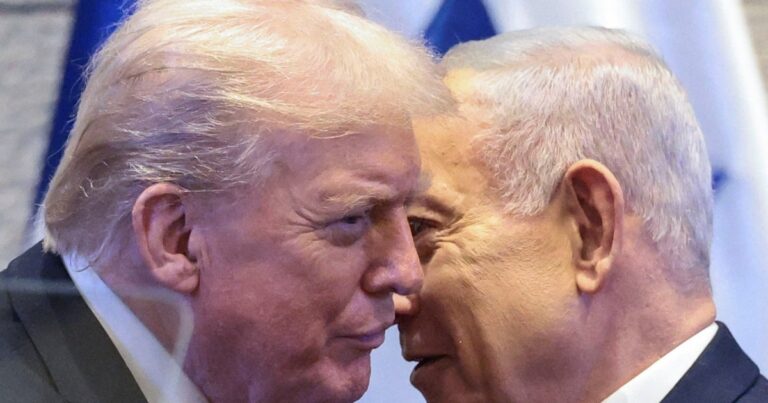
Trump sang the praises of Benjamin Netanyahu and tried to boost the Israeli prime minister, who is facing corruption charges domestically.
While Trump has previously called for dropping the legal cases against Netanyahu, on Monday, he called on Israeli President Isaac Herzog publicly to pardon the prime minister, downplaying the allegations against him, which include receiving lavish gifts as bribes.
“I have an idea: Mr president, why don’t you give him a pardon?” Trump said as the Israeli parliament erupted in cheers. “Cigars and champagne – who the hell cares about it?”
Trump called Netanyahu one of the greatest wartime leaders.
“He is not easy,” the US president said of the Israeli prime minister. “I want to tell you he’s not the easiest guy to deal with, but that’s what makes him great.”
Trump also recounted how Netanyahu would request specific weapons from him.
“We make the best weapons in the world, and we’ve got a lot of them, and we’ve given a lot to Israel, frankly,” the US president said.
“I mean, Bibi would call me so many times – ‘Can you get me this weapon, that weapon, that weapon?’ Some of them, I never heard of.”
Israel has used US weapons to turn most of Gaza into rubble and attack countries across the region. Washington has provided $21bn to its Middle East ally over the past two years.
Acknowledging international pressure
Despite lauding Netanyahu, Trump recognised that global opinion was turning against Israel due to the horrific atrocities in Gaza.
“The world is big and is strong, and ultimately the world wins,” Trump said.
Several of Israel’s Western allies recognised a Palestinian state in the past months, partly in response to the horrors Israel was unleashing on Gaza.
The US president said he congratulates Netanyahu for taking the “victory” instead of continuing the war indefinitely.
“If you would have gone on for three, four more years – keep fighting, fighting, fighting – it was getting bad. It was getting heated,” he said.
“The timing of this is brilliant. And I said, ‘Bibi, you’re going to be remembered for this far more than if you kept this thing going, going, going – kill, kill, kill.’”
Trump suggested that Israel’s issues are now over. “The world is loving Israel again,” he told the Knesset.
But rights advocates have vowed to continue to push for accountability for the genocide.
A passing message to Palestinians
In his comments throughout Monday, Trump took a proverbial victory lap. focusing on what he said would be a bright future for Israel and the broader region.
But he had a brief message to Palestinians in his Knesset speech.
The US president called on Palestinians in Gaza to focus on “stability, safety, dignity and economic development”.
There was no acknowledgement of Israeli atrocities or of the decades of displacement, dispossession and occupation that the International Court of Justice says amount to apartheid.
“The choice for Palestinians could not be more clear. This is their chance to turn forever from the path of terror and violence. It’s been extreme, to exile the wicked forces of hate that are in their midst,” Trump said.
He reasserted the claim that Palestinians’ grievances with Israel are driven by hate, rather than by the material conditions Israel has imposed on them.
“After tremendous pain and death and hardship, now is the time to concentrate on building their people up, instead of trying to tear Israel down,” Trump said of Palestinians.
At no point did he recognise Palestinians’ right to their own state.
Mixed signals to Iran
Trump once again reasserted that the US strikes on Iran’s nuclear facilities obliterated the country’s nuclear programme.
He also gave Israel a pat on the back for killing Iran’s top military leaders and many of the country’s nuclear scientists.
Trump also suggested that if Israel and the US had not attacked Iran, the Gaza deal would not have come together.
He said that taking out the Iranian nuclear programme paves the way for more Arab states to establish formal diplomatic ties with Israel.
“We don’t have a Gaza and we don’t have an Iran as an excuse. That was a good excuse, but we don’t have that anymore,” he said. “All the momentum now is toward a great, glorious and lasting peace.”
But despite painting Iran as defeated and weakened, Trump kept the door open for talks with Tehran.
“I think Iran will come along,” he said.
Israel attacked Iran in June, days before Iranian and US negotiators were set to meet for a round of talks in Oman.
“I’d love to take the sanctions off when they’re ready to talk,” Trump told reporters on Monday. “They can’t really survive with those sanctions; those sanctions are very tough.”
MBW Explains is a series of analytical features in which we explore the context behind major music industry talking points – and suggest what might happen next. Only MBW+ subscribers have unlimited access to these articles. MBW Explains is supported by Reservoir.
Every year, the Office of the US Trade Representative (USTR) releases a list of “notorious markets for counterfeiting and piracy,” in which it identifies the largest pipelines of piracy in the world today, from websites where users swap pirated movies and music to suburban flea markets rife with counterfeit goods.
And every year, the USTR takes submissions from businesses and organizations affected by piracy. Among them, not surprisingly, is the Recording Industry Association of America (RIAA).
This year’s submission from the RIAA singled out messaging apps Discord and Telegram as having become major hubs of music piracy.
By turning a blind eye to organized networks that sell pre-release recordings, the two platforms have become the “primary mechanisms through which pre-release music is distributed without authorization,” the RIAA said in its submission, which can be read in full here.
“While Telegram and Discord have been largely responsive to takedown notices sent about specific infringements, it is unclear what steps, if any, they take to limit or prevent the ongoing abuse of the platforms for illegal pre-release distribution.”
This year’s submission from the RIAA also adds another piracy threat to copyright and trademarks – and no, it’s not AI (although the RIAA has previously raised the alarm about AI’s potential to rip off artists). Instead, this year’s submission shines a spotlight on… bootleg vinyl.
Yes, with vinyl records experiencing a renaissance, it was only a matter of time before IP pirates decided to muscle in on the action.
Here are three other trends in music piracy (beyond Discord and Telegram) about which the RIAA is raising the alarm – including some sobering data about the impact of digital piracy on recorded music revenues.
Credit: Przemek Klos/Shutterstock
1. Bootleg vinyl and CDs
China and Russia have become major sources of bootleg CDs and vinyl, with pirate manufacturers using e-commerce platforms to sell to consumers all over the world.
“In some cases, Russian and Chinese sellers will sell directly on retail platforms, shipping the goods to consumers from Russia or China,” the RIAA wrote. “In other cases, the principals behind the Chinese and Russian counterfeits sell to third-party sellers on platforms that may or may not know they are buying and reselling counterfeits.”
Particularly worrying is that these bootlegs are often “high quality products made to closely resemble authentic ones,” and consumers may not be able to tell the difference, the RIAA noted.
At times, these CDs and vinyls are “best of” and “greatest hits” collections never released by labels, and at other times they may be vinyl or CD versions of albums that were never officially released in those formats, the RIAA said. Unauthorized copies of boxed set collections are becoming increasingly common as well.
This trade wouldn’t be possible for major decentralized online retail platforms such as Amazon, Marktplaats, and Leboncoin, all of which the RIAA report identifies by name and says they are conduits for “massive quantities” of counterfeit goods.
“Consumers are paying full price for counterfeit offerings appearing alongside legitimate offerings, resulting in one-for-one displacements of legitimate sales.”
RIAA submission to USTR
However, the RIAA singles out eBay and Vinted as the platforms with the greatest number of counterfeit and CD listings.
“Vinted has become a destination platform for illicit vinyl sellers,” the RIAA wrote. “Originally created as [a] clothing resale platform, the volume of infringing vinyl listings has reached epidemic proportions.”
Despite efforts to remove counterfeits from the platform, “sellers are allowed to continually relist counterfeit titles, and it appears the platform takes no meaningful action against repeat infringers,” the RIAA said.
“Consumers are paying full price for counterfeit offerings appearing alongside legitimate offerings, resulting in one-for-one displacements of legitimate sales.”
The RIAA would like to see Vinted and other platforms start to pre-screen their retailers “to ensure they have legitimate sources of supply.”
2. Stream-ripping and cyberlockers are still a problem
The rise of legal music streaming services like Spotify has taken a lot of the wind out of the sails of music piracy, but piracy still remains – and it’s evolving.
Music pirates have moved beyond basic illicit file-sharing programs (like what Napster used to be) and are finding all sorts of new ways to deliver unauthorized content.
One such method that the RIAA singled out in its new submission is cyberlockers, also sometimes known as file-hosting services. These are what they sound like: Simple websites where anyone can upload a file and share a link to it. The problem is, some of these cyberlockers have become infamous for turning a blind eye to pirated content hosted on their servers.
The RIAA identifies Krakenfiles, Rapidgator, Chomikuj, Pixeldrain, and Pillowcase as being among these notorious file-hosters, but there are many other such sites out there, making enforcement of copyright on these services a game of whack-a-mole.
Unlike legitimate cloud storage services, these cyberlockers “are all about maximizing and monetizing traffic to their service. Nothing draws traffic like popular copyrighted content that can be downloaded for free. Thus, their business model is, at its heart, the distribution of unlicensed content,” the RIAA wrote.
“To a limited extent, rights holders can attempt to tackle these infringements by sending takedown notices to the site operators. However, this often entails monitoring thousands of third-party link resources – e.g., blogs, forum sites, and search engines – to locate the information that is needed to notify the locker of infringements occurring on their own services.”
“Stream ripping continues to be the most prevalent form of online music piracy.”
RIAA submission to USTR
These services are in a “much better position” to identify infringing content themselves, the RIAA noted, “if they really had an interest in conducting their business legally.”
Stream-ripping is another tool that enables music piracy. This typically involves a website where a user can type in the URL of a streamed audio or video file (most commonly a YouTube file) and then download the audio or video to their device.
The music industry has an initiative in place to report stream-ripping sites to search engines, so they can be demoted in search results. “However, ripper site operators have responded to this effort by creating new domain names to operate through that allows them to reappear at the top of search results,” the RIAA said.
The submission identified some common “brands” of stream-ripping services, some of which rotate through different domain names, among them Y2mate, Savefrom, SSyoutube, Tubidy, Notube and Snaptube.
“Stream ripping continues to be the most prevalent form of online music piracy,” the RIAA noted.
Credit: S_Photo/Shutterstock
3. The recorded music business is still smaller than it was before digital piracy
As is often the case with its submissions to the USTR, the RIAA attempts to paint a picture of the damage being done to the music industry through piracy. This year’s report pulls out some alarming numbers.
“In inflation-adjusted dollars, the 2024 US sound recording revenues were still far below the peak US sound recording revenues that were reached in 1999,” the submission stated.
Adjusted to today’s dollars, US recorded music revenues were over $26 billion in 1999, compared to $17.7 billion in 2024.
“This period of time coincides with the rise of broadband and digital piracy generally, as well as the later rise of the sale and importation of foreign-made, counterfeit physical music products through e-commerce platforms and the rise of stream ripping,” the RIAA noted.
The submission also cited research from IFPI showing that 29% of the population uses some form of copyright infringement to listen to music, with that number rising to 43% among 16-24-year-olds.
All of which points to an inescapable conclusion: The age of Spotify and the other music streaming platforms hasn’t actually ended the age of music piracy, and the cost of that piracy continues to be counted in the billions.
Reservoir (Nasdaq: RSVR) is a publicly traded, global independent music company with operations across music publishing, recorded music, and artist management.Music Business Worldwide
Watch: Emotional reunions as freed hostages return to Israel
Matan Zangauker, 25, walks grinning into his mother’s arms.
“You’re my life,” she exclaims, hugging him tightly in footage filmed by the Israeli military. “My life. My hero. Come, come.”
Matan was one of 20 living hostages remaining in Gaza after being taken during the Hamas-led attacks of 7 October 2023, who were freed on Monday after two years in captivity.
His mother, Einav, has campaigned fiercely for Matan’s return. She became among the best-known faces of the movement, and demanded the Israeli government agree a hostage exchange with Hamas.
Last week, she and her daughter lit fireworks in Hostages Square in Tel Aviv to celebrate the ceasefire deal that had been agreed between Israel and Hamas as part of Donald Trump’s peace plan.
On Monday, crowds gathered and cheered in the same square as they watched footage on big screens of Matan and the other 19 freed hostages returning to Israel and reuniting with their families.
People waved the Israeli and US flags and held up photos of the hostages and signs saying “they’re coming home”.
Matan was taken with his partner Ilana Gritzewsky from Nir Oz, but Ilana was released during a ceasefire the following month.
In December 2024, Hamas released a video showing Matan in captivity in which he said he and his fellow hostages were suffering from skin ailments and shortages of food, water and medicine.
Israel Defense Forces
Released Israeli hostage, Matan Zanguaker, greets his mother in a video clip shared by the IDF
In a video call with Matan on Monday shortly after his release, Einav told him: “Thank God, the war is over. The war is over.”
In a later statement, the family said that “after two years of hell, today we begin a new chapter of our lives – one of healing and rehabilitation”.
That sentiment was shared by several of the families who were reunited with their loved ones.
The family of Eitan Horn, who was also taken from Nir Oz, and whose brother Yair was released during a ceasefire in February, said they would have “hugs and lots of love and we will accompany him through the entire recovery process”.
Reuters
Relatives of Israeli hostage Eitan Horn pictured as they awaited his release
Relatives of 24-year-old Evyatar David, who was taken from the Nova music festival and was seen emaciated in a tunnel in a video published by Hamas in August, said they always “knew he would return”.
“After two years of suffering, he is here. Now a new journey of healing will begin for Evyatar and us,” they said in a statement.
Reuters
Released hostage Evyatar David grins as he arrives at a medical centre in the outskirts of Tel Aviv
The living hostages were collected from meeting points in Gaza by the International Committee of the Red Cross (ICRC), which has acted as a neutral intermediary in the handovers.
They were then reunited with loved ones at reception points near the Gaza border, before being airlifted to hospitals to begin the process of physical and psychological treatment.
Reuters
Matan stands with his mother and waves as he arrives at a medical centre in Tel Aviv by helicopter
There were celebrations across Israel as the 20 hostages returned. People waved at the sky and cheered when they were flown overhead in military helicopters on their way to hospitals.
Inbar Goldstein, whose own relatives were released in the November 2023 ceasefire, told the BBC she was feeling “happy and thankful”.
“I know that sad days are still ahead but I want to separate between what I know and what I feel,” she said.
Elsewhere in the square, teenager Yarden told the BBC: “We’re here for the hostages, their release and to celebrate them. Today all Israelis are together – it’s not about left or right, it’s about all being together to celebrate the hostages.”
EPA
Israelis celebrated in Hostage Square in Tel Aviv
But while the living hostages have now been returned, many families of those killed in captivity are still waiting, with Hamas saying only four bodies out of 28 would be released on Monday. The Israeli military said it would carry out forensic tests before confirming their identities and informing their families.
A copy of the ceasefire agreement published by Israeli media had stated that the remains of all of the deceased hostages should be handed over by 12:00 local time (09:00 GMT) on Monday. However, it also appeared to acknowledge that Hamas and other Palestinian factions may not be able to locate all of them within that timeframe.
The deal also involved the release of about 250 Palestinian prisoners in Israeli jails who had been convicted of crimes including murder and deadly attacks against Israelis – and about 1,700 detainees from Gaza who had been held by Israel without charge.
In a statement, the Israel Defense Forces (IDF) urged Hamas to “uphold its end of the deal” by returning all of the bodies.
Matan’s family said there could be no closure until this happened.
“We will continue to stand beside the bereaved families and to fight until the last hostage is brought home,” they said.
A required part of this site couldn’t load. This may be due to a browser
extension, network issues, or browser settings. Please check your
connection, disable any ad blockers, or try using a different browser.