-0 C
New York
Wednesday, February 25, 2026
Home Blog Page 312

Six killed as US strikes another vessel near Venezuela coast

0

The US has struck another vessel off the coast of Venezuela, killing six people, President Donald Trump has said.

In a post on Truth Social, Trump said the vessel belonged to “narcoterrorists” and that it was “trafficking narcotics.”

This is the fifth strike of its kind by the Trump administration on a boat accused of trafficking drugs on international waters. In total, 27 people have been reported killed, but the US has not provided evidence or details about identities of the vessels.

Some lawyers have accused the US of breaching international law, and neighbouring nations like Colombia and Venezuela have condemned the strikes.

Challenge from the Client

0


Client Challenge


JavaScript is disabled in your browser.

Please enable JavaScript to proceed.

A required part of this site couldn’t load. This may be due to a browser
extension, network issues, or browser settings. Please check your
connection, disable any ad blockers, or try using a different browser.

Severe Flooding in Mexico Claims Lives and Leaves Many Missing

0

new video loaded: Devastating Rains in Mexico Leave Dozens Dead and Missing

Floods and landslides in Mexico killed several dozen people, destroying homes and isolating communities in the central and eastern parts of the country.

By Axel Boada

October 14, 2025

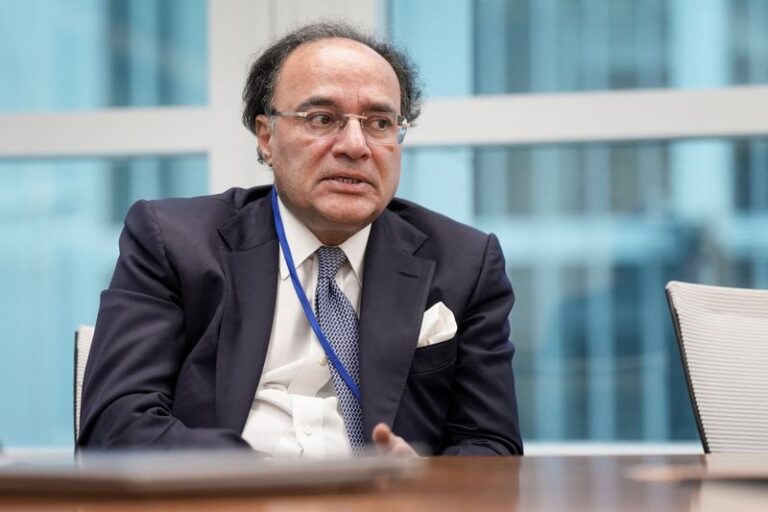
Finance Minister of Pakistan Expects Agreement with Staff on $1.2 Billion IMF Payout to be Reached This Week

0

Pakistan finance minister sees staff deal on $1.2 billion IMF payout this week

Tracking the increase of Israeli settler attacks in the occupied West Bank | Updates on the Israel-Palestine conflict

0

While much of the globe’s attention remains on the Gaza ceasefire deal, less than 33 kilometres (21 miles) away, Israeli settlers, often backed by soldiers, continue daily assaults and raids across the occupied West Bank.

On Monday night, Israeli settlers uprooted 150 olive trees in the village of Bardala, in the northern Jordan Valley, destroying the livelihood of several families.

Settlers regularly seize Bardala’s land, burn property and destroy crops in an effort to take over Palestinian land, expand illegal Israeli settlements, and intimidate local communities into leaving.

Earlier on Monday, settlers attacked Palestinian farmers in Beit Fajjar, south of Bethlehem, injuring several of them. Witnesses said the attackers hurled stones, sicced dogs on people, and set fire to vehicles.

Settler attacks on the rise

Since Israel’s war on Gaza began in October 2023, violence by Israeli settlers in the occupied West Bank has steadily risen.

According to data from the United Nations Office for the Coordination of Humanitarian Affairs (OCHA), settlers have attacked Palestinians nearly 3,000 times in the occupied West Bank over the past two years.

The number of settler attacks has risen sharply since 2016, with 852 recorded in 2022, 1,291 in 2023 and 1,449 in 2024.

With more than 1,000 attacks in the first eight months of 2025, this year is on track to become the most violent yet.

(Al Jazeera)

Settler attacks often escalate during the olive harvest season from September to November, a vital time of year that provides a key source of livelihood for many Palestinian families.

Who are the Israeli settlers attacking Palestinians?

Israeli settlements are Jewish-only communities built on Palestinian land that Israel occupied in 1967.

Today, between 600,000 and 750,000 settlers live in more than 250 settlements and outposts across the occupied West Bank and East Jerusalem. Many of these are near Palestinian towns and villages, often leading to heightened tensions and severe movement restrictions for Palestinians.

Settlers are often armed and frequently accompanied or protected by Israeli soldiers. In addition to destroying Palestinian property, they have carried out arson attacks and killed Palestinian residents.

INTERACTIVE - Israeli settlements continue to grow-1758014045

Where have settlers attacked in the occupied West Bank?

Every West Bank governorate has faced settler attacks over the past two years. Data from OCHA shows that between January 2024 and August 2025, the Ramallah and el-Bireh governorate recorded the highest number of settler attacks with 634 incidents, followed by Nablus with 501 and Hebron with 462.

Most of the settler attacks are in Area C, which makes up more than 60 percent of the occupied West Bank, and are concentrated near Israeli settlements and outposts.

INTERACTIVE - Settler attacks across theoccupied West Bank (2024-2025)-west bank - October 14, 2025-1760450290
(Al Jazeera)

Under the 1993 Oslo Accords, the occupied West Bank was divided into three zones: Area A, under full Palestinian Authority (PA) control; Area B, under PA administrative authority and Israeli security control; and Area C, controlled entirely by Israel.

More than 1,000 Palestinians killed in the West Bank

Since October 7, 2023, more than 1,000 Palestinians have been killed and nearly 10,000 injured across the occupied West Bank by Israeli forces and armed settlers, according to UN figures.

In 2025 alone, OCHA has documented at least 178 Palestinian deaths linked to settler and military violence. The victims include farmers, children and residents caught in near-daily raids and attacks on villages and refugee camps.

Settler violence has also driven widespread displacement. At least 3,434 Palestinians have been forced from their homes due to settler violence and access restrictions since the war in Gaza began.

Executives believe human intervention is insufficient to address AI fears—workers must focus on honing one key skill

0

As AI’s influence over the workplace broadens, debate continues to ripple across the business landscape—from the breakroom to the boardroom—about how to keep humans meaningfully involved. Many workers and executives alike have championed the idea of keeping a “human in the loop.”

But according to leaders across the C-suite, that safeguard alone won’t be enough. What will matter most in the coming years is judgment, speakers emphasized  at Fortune’s Most Powerful Women 2025 summit in Washington, D.C.

“I don’t think that we are thoughtfully enough educating people about how to be good at judgment,” Aashna Kircher, group general manager in the office of the CHRO at Workday, said.

“That’s a step that we will have to take as a civilization, honestly, in the next three to five years: how do we retain decision making and judgment in certain situations? Because you can hold somebody accountable, but if all they’re doing is pressing a button and saying yes, then they’re not actually applying judgment.”

It’s a sentiment echoed by other executives, including Katy George, corporate vice president for workplace transformation at Microsoft. As AI becomes more deeply embedded in day-to-day workflows, George said, the employees who will thrive—especially early in their careers—are those who can demonstrate sound judgment.

“We’re talking about raising the skill level much sooner for early career, whether it’s judgment, whether it’s being able to manage work, because you’re delegating to agents much earlier,” she said.

That also means developing complementary skills: the ability to delegate, maintain quality control, and approach problems with end-to-end, design-thinking mindsets.

Skills of the future

For Bijal Shah, CEO of Guild, the rise of AI is also reshaping what it means to be educated—and what skills will actually help workers adapt.

“I get asked all the time: should my child get a college degree, or just enter into the workforce?” she said. “Honestly, I don’t think it matters. What I think matters at the end of the day is that people have a really good foundation in math and a really good foundation in reading comprehension—and the best way to do that is to further your education.”

Photograph by Stuart Isett/Fortune

Shah added that while the debate over the value of higher education continues, the focus should be on depth, not just credentials. “I’m a little bit worried that [people]  are losing sight of the fact in this battle that to thrive in this next era, they actually need confidence in their ability to go deep on a subject,” she said. “It doesn’t really matter what subject it is.”

And for managers, the challenge—and opportunity—will look different. Every manager of the future, George said, will effectively need to become a chief experimentation officer.

“The technology is going to keep improving, and the way that it’s embedded into work processes will keep changing and improving,” George said. “And so every manager needs to be driving a continuous, system-wide change in the way that the team works in a way that really is inclusive and builds their team in but also continues to evolve and makes their team more productive [and] more effective.”

Fortune Global Forum returns Oct. 26–27, 2025 in Riyadh. CEOs and global leaders will gather for a dynamic, invitation-only event shaping the future of business. Apply for an invitation.

Belgium’s major unions launch national strike impacting public transport, airports, and ships

0

Bruno BoelpaepIn Brussels and

Paul KirbyEurope digital editor

Reuters Protesters hold a banner as they attend a demonstration during a nationwide strike against the Belgian government's reform plans, in Brussels, Belgium, October 14, 2025.Reuters

Demonstrators held a banner that read “social health: vital”

Tens of thousands of people have taken to the streets in Brussels as part of a national strike over government reforms and spending cuts that has brought flights to a halt and severely disrupted public transport.

Belgium’s three big unions are protesting over pensions and other measures by Prime Minister Bart de Wever’s centre-right government aimed at cutting the budget deficit.

There were no services at Belgium’s second biggest airport at Charleroi, and all departures and many of the arrivals were cancelled at Brussels Airport.

Although trains were running, most buses, trams and underground trains in the capital ground to a halt.

Shipping at Europe’s second biggest port Antwerp was suspended until Wednesday because of understaffing, and more than 100 ships waited in the North Sea for permission to dock at three ports, according to Belgium’s MDK maritime and coastal services.

Belgium has been hit by several strikes since Flemish nationalist Bart de Wever came to office last February.

By midday, police said 80,0000 protesters had joined the demonstration in the Belgian capital.

Bruno Boelpaep/BBC A large number of protesters with red flags fills the streetBruno Boelpaep/BBC

The unions were expecting more than 100,000 Belgians to join the Brussels protest

Public sector workers were protesting against austerity measures and a government increasingly perceived as leaning right.

They wound through the streets of central Brussels, many wearing the red or green colours of the main unions.

A key issue for the unions is the government’s plan to increase the number of days Belgians work per year before they can receive their pensions, as well as the end of special schemes for several sectors including military and railway workers.

De Wever’s government has also announced measures including a maximum two-year limit on claiming unemployment benefit. Further cuts are planned for next year’s budget, and some proposals such as reducing child benefit or raising VAT have already been floated.

“It’s about time we came together,” said Anaïs, 29. “It’s always the same part of the population that has to tighten their belts.”

Bruno Boelpaep/BBC A young woman and her friend pose for a picture with a sign showing the number 67 with a red bar through itBruno Boelpaep/BBC

Anaïs complained that the government’s pension reforms would not affect wealthier Belgians

Holding a placard showing the number 67 with a red line through it, she objected to the pension age going up: “65 is enough. 67 is too late. We are asked to work more, to work longer hours. It’s not fair.”

The rise in pension age was adopted 10 years ago, well before De Wever’s government came to office, but it remains deeply unpopular and the government is aiming to ringfence it and make it more expensive to retire earlier.

Thierry Bodson of the ABVV union told demonstrators that “the fight against the De Wever government is not just the fight of a day or a year – it’s for a whole generation”, Belga news agency reported.

“We need to fight for our rights,” said mother-of-two Vanessa, who had travelled from Charleroi.

“I’m worried about the measures that will be taken. What sort of future will my children have?” she told the BBC.

It is not just the federal government under pressure to cut spending. Belgium’s complex multi-level governance means regional authorities are also imposing austerity measures.

The ruling coalition in Belgium’s largely French-speaking Walloon region has announced that teachers in the higher tiers of secondary schools will have to work an extra two hours per week.

Many of them joined the protests today.

“Nothing is clear, and it’s really worrying, but if higher-level teachers have to work more, many jobs will be cut,” said Sandrine, 48, who works in education.

Although the protests were largely peaceful, there were several incidents of vandalism and arson early in the morning and some people in masks clashed with police later on.

Suno & Udio address stream-ripping accusations from labels, challenge ruling on YouTube downloading restrictions

0

The record labels suing AI music-making platforms Suno and Udio recently added allegations that the companies ‘stream-ripped’ copyrighted music to train their AI models.

As this claim works through the courts, Suno and Udio have filed an amicus brief in a separate case, arguing that a 2022 federal ruling wrongly declared stream-ripping illegal under the DMCA.

The AI companies warn that the ruling threatens fair use by misinterpreting the law’s distinction between ‘copy controls’ and ‘access controls’.

Stream-ripping is a type of online service where users can enter the URL of media on YouTube or another streaming service, and have that content downloaded to their device.

The issue has become relevant to Suno and Udio now that the major record companies suing them are working to beef up their cases by alleging the AI companies not only violated the copyright on the songs they used without permission to train AI, but also used illicit means to download those songs. They have petitioned the courts to add allegations of stream-ripping against the AI companies.

But the question of whether stream-ripping is illegal is currently before the courts, in a long-running case that has pitted a stream-ripping company, Yout LLC, against the Recording Industry Association of America (RIAA).

Notably, the record labels suing Suno and Udio – owned by Sony Music, Universal Music Group and Warner Music Group – are members of the RIAA, and the RIAA helped coordinate the legal actions against Suno and Udio.

In an amicus brief filed on Friday (October 10) with the US Second Circuit Court of Appeals, the two companies urged the appellate court to overturn a 2022 verdict which declared that stream-ripping violates the US’s Digital Millennium Copyright Act (DMCA).

That ruling “jeopardizes the fair use doctrine” by misconstruing the DMCA, and it “suggests that anyone who downloads a YouTube video – including not only AI startups, but also documentary filmmakers, teachers, and the like – is liable for statutory penalties under the DMCA, even if that person’s activities fall squarely within the contours of fair use,” lawyers for Suno and Udio wrote in the brief, which can be read in full here.

“That was an error with serious implications. It suggests that anyone who downloads a YouTube video—including not only AI startups, but also documentary filmmakers, teachers, and the like—is liable for statutory penalties under the DMCA…”

Suno and Udio, in an amicus brief

The legal battle between the RIAA and Yout LLC began in 2019, when the RIAA sent notices to Google asking the search engine to delist YouTube-DL, the stream-ripping service operated by Yout LLC.

The stream-ripper responded by suing the RIAA, arguing that its stream-ripping activities don’t violate the DMCA. But the judge in that case ruled in the RIAA’s favor, effectively declaring that the DMCA prohibits stream-ripping.

Yout LLC appealed that ruling, and a number of digital rights advocates, such as the Electronic Frontier Foundation, have also objected to it, arguing that the judge’s broad interpretation of the DMCA threatens to upend the “fair use” of copyrighted materials by giving rights holders the ability to stop fair uses of their content.

Groups representing rights holders, such as the Copyright Alliance, have stood behind the RIAA.

“Yout’s illegal, stream-ripping software is a significant threat to copyright holders and ultimately the public. If this court adopts the arguments of Yout and its amici, protection for numerous business models will be devastated, resulting in less, not more, public access to copyrighted works,” the Copyright Alliance wrote in a brief to the court in 2023.

Defenders of stream-ripping say the issue comes down to the difference between “access controls” and “copy controls.” Access controls are technologies designed to limit access to content to certain people, for instance paying subscribers. Copy controls are tech that prevent content from being copied directly.

The DMCA explicitly created a difference between the two and prohibited circumventing access controls but not copy controls, precisely in order to retain the ability of people to copy content within fair use limits, Suno and Udio argued in their amicus brief.

If circumventing YouTube’s copy controls to prevent downloading were declared illegal, it “would, in effect, give copyright owners the de facto right to prohibit fair uses,” the AI companies stated.

“While Congress enacted a prohibition on the provision of devices designed to circumvent copy controls, it declined to prohibit the act of circumventing those controls, so that it would not effectively impose liability on fair users.”

Suno and Udio are defending themselves against the labels’ copyright infringement claims by arguing that their use of copyrighted materials to train their AI counts as “fair use.” So far, US courts have been divided over this issue, with one federal court ruling that it does count as fair use, while another ruled that it doesn’t.


For Suno and Udio, having a court overturn the ruling declaring stream-ripping illegal helps the companies fend off at least one part of the potentially expensive copyright infringement cases they are facing. However, at this point it’s unclear whether the issue of stream-ripping (or more broadly, the issue of the illicit techniques the AI companies used to download content) will even be a part of those cases.

While the record majors have petitioned the courts to add allegations of illicit downloading to their complaints, it’s not certain the courts will allow it. A federal judge last week denied music publishers Universal Music Group, Concord and ABKCO the ability to add a complaint about illicit downloading in their case against AI company Anthropic.

The publishers had requested leave to amend their complaint against Anthropic with allegations the AI company used BitTorrent to pirate vast amounts of copyrighted works.

According to Bloomberg Law, that decision was based on a technicality: The music publishers didn’t seek discovery of Anthropic’s BitTorrent use, even though they had the ability to do so, the judge concluded.Music Business Worldwide


Carolin He Commits to Stanford for 2027-28 Season

0

By Anne Lepesant on SwimSwam

Fitter and Faster Swim Camps is the proud sponsor of SwimSwam’s College Recruiting Channel and all commitment news. For many, swimming in college is a lifelong dream that is pursued with dedication and determination. Fitter and Faster is proud to honor these athletes and those who supported them on their journey.

Carolin He from TAC Titans in Cary, North Carolina, has made a verbal pledge to Stanford University for the 2027-28 school year and beyond.

“I am beyond excited to announce my verbal commitment to continue my academic and athletic career at Stanford University!! A huge thank you to my family and teammates for always supporting me and believing in me. I am also incredibly grateful for Coach Bruce and Blake along with the rest of my coaches at TAC for helping me get to where I am today. Special shoutout to Coach Chris and Annie for making this a dream come true and giving me this incredible opportunity to be a Cardinal!! GO CARD!! 🌲❤🌲

A junior at Cary Academy, He is a terrifically versatile swimmer with Summer Juniors-or-better standards in the 200/500 free, 100/200 breast, and 200/400 IM  Way Too Early list of top girls’ swimmers in the high school class of 2027.

In high school season last year, He was runner-up in both the 200 IM (1:59.61) and 100 breast (1:02.39), clocking PBs in both events, at the NCISAA Division 1 State Championships. A month later, she competed at Cary Sectionals and had a banger of a meet. Not only did she improve those times (to 1:58.99 and 1:01.66, respectively), but she went lifetime bests in the 100 free (50.68), 200 free (1:47.77), 100 back (56.19), 200 breast (2:12.59), and 400 IM (4:15.51), as well.

She had a similar meet in May at the TAT Spring Fling Meet, where she notched lifetime bests in the LCM 200 free (2:05.85), 400 free (4:26.45), 100 breast (1:11.90), 200 breast (2:34.23), and 200 IM (2:19.15).

He has depth and breadth and projects to be an asset in both breaststroke and IM events. She has improved her freestyle times over the past year, too, which could be of great value to Stanford relays. Her best times would already score at ACC Championships in the ‘C’ finals of the 100/200 breast and 400 IM. It took 1:58.69 to get a second swim in the 200 IM.

He will join #14 Izzy Riva and “Best of the Rest” designee Bree Smith in the Cardinal class of 2031.

Best SCY times:

  • 200 IM – 1:58.99
  • 400 IM – 4:15.51
  • 200 free – 1:47.77
  • 200 breast – 2:12.59
  • 100 breast – 1:01.66
  • 500 free – 4:48.98
  • 100 free – 50.68
  • 50 free – 23.59
  • 100 fly – 55.85
  • 100 back – 56.19

If you have a commitment to report, please send an email with a photo (landscape, or horizontal, looks best) and a quote to Recruits@swimswam.com.

About the Fitter and Faster Swim Tour 

Fitter & Faster Swim Camps feature the most innovative teaching platforms for competitive swimmers of all levels. Camps are produced year-round throughout the USA and Canada. All camps are led by elite swimmers and coaches. Visit fitterandfaster.com to find or request a swim camp near you.

FFT SOCIAL

Instagram – @fitterandfasterswimtour
Facebook – @fitterandfastertour
Twitter – @fitterandfaster

FFT is a SwimSwam partner.

Read the full story on SwimSwam: #12 Carolin He Announces Verbal Commitment to Stanford for 2027-28

Your DNA could potentially determine your susceptibility to cannabis addiction.

0

It’s estimated that nearly 30% of people who try cannabis will go on to develop a substance use disorder associated with it. Strong predictors include how often a person uses it, and whether they have a family history of drug use.

Now, researchers have identified specific regions of the human genome connected to cannabis use, which means the propensity to get addicted to weed may be encoded in DNA.

That’s from a study conducted by scientists at the University of California San Diego (UCSD) School of Medicine working in the field of psychiatry, in partnership with genetic testing firm 23andMe. Nearly 132,000 participants from the latter’s platform opted into a survey about their cannabis use, along with volunteering their genetic data.

This type of study is known as a genome-wide association study (GWAS); it compares the DNA of thousands of people to find genetic variations that are more common in those with a particular trait or condition. It’s essentially a massive search across the entire human genome to spot which genetic differences might be linked to things like diseases, behaviors, or physical characteristics.

GWAS-based research has previously helped establish a causal link between gut bacteria and insomnia, find nearly 300 gene variants that contribute to developing major depressive disorder, and map the genetic blueprint that leads to age-related decline in resilience in people above age 65.

The paper, which appeared in the journal Molecular Psychiatry this week, points to two key genes that were linked to lifetime cannabis use, as well as a range of conditions. The first one, known as Cell Adhesion Molecule 2 (CADM2), has previously been linked to impulsive personality, obesity, and cancer metastasis.

The second gene, called Metabotropic Glutamate Receptor 3 (GRM3), has been linked to schizophrenia and bipolar disorder. Being linked to these conditions doesn’t mean that using cannabis will lead to these disorders, but simply that “some biological pathways may be in common” between them and cannabis use, noted study co-author Abraham A. Palmer.

Understanding the molecular systems that exist between our brains and our use of cannabis could help identify people who might be more susceptible to substance use disorder early

A secondary analysis of the data revealed 40 more genes associated with lifetime cannabis use, and four genes associated with frequency of cannabis use.

“We showed that the genetics of cannabis use – both trying it and using it more often – are tied to the genetics of other psychiatric traits, cognitive measures, and even physical health problems,” said Sandra Sanchez-Roige, senior author of the study, underscoring the significance of these findings. “Understanding the genetics of early-stage behaviors may help clarify who is at greater risk, opening the door to prevention and intervention strategies.”

That’s important when you consider just how widely marijuana has proliferated across the US: it’s presently legal in 24 states, and according to a 2024 report from the Substance Abuse and Mental Health Services Administration (PDF), 20.6 million people in the country had developed marijuana use disorder (in which problematic use of the substance can cause significant impairment or distress), a slight increase from previous years. At the same time, there aren’t any FDA-approved drug therapies to treat cannabis use disorder.

While the findings don’t mean that the presence of these genes will inevitably cause the condition, understanding the genetic association and molecular systems that exist between our brains and our use of the substance could help identify people who might be more susceptible, and make help available to them earlier. “By studying these intermediate traits, we can begin to map how genetic risk unfolds before cannabis use disorder develops,” First author Hayley Thorpe from Western University noted.

Source: University of California San Diego