-1.1 C
New York
Tuesday, February 24, 2026
Home Blog Page 294

Kate Douglass sets new 100 Free world record with determination

0

By Coleman Hodges on SwimSwam

2025 WORLD AQUATICS SWIMMING WORLD CUP – Westmont

***Sorry for the audio quality, we made a technical error when capturing some of them***

After not being very satisfied with her first two races of the World Cup stop in Westmont, Kate Douglass came into the final day of competition on a mission. After seeing her friends break world records left and right, Douglass wanted to put together a race she was proud of as well. The UVA grad did just that, swimming 50.19 to break the 7-year-old world record in the 100 free.

HOW TO WATCH THE WORLD AQUATICS WORLD CUP

A comprehensive look at television and streaming options for the meet can be found here.

U.S. viewers can watch both prelims and finals on the USA Swimming Network and Peacock, Canadians can stream every session on CBC, and the source for the majority of European nations will be the Eurovision Sport platform.

The competition will also be streamed live and on-demand with the World Aquatics Recast channel. A three-day pass requires 590 credits, which costs $8.26 USD.

Read the full story on SwimSwam: Kate Douglass on 100 Free WR: “I came in with a mission”

Top Airbnb Experiences in Paris

0

There’s a lot of walking tour companies in Paris. I’ve taken hundreds (I’ve reviewed my favorite tour companies in this post). Besides formal tours, there’s another thing I love to do in Paris: Airbnb Experiences.

Airbnb Experiences are like the holy grail of tours: they are unique, off-the-beaten path, and run by locals who just want to share something they love. They aren’t cookie cutter walking tours or activities lead by a guide holding an umbrella. I absolutely love Airbnb Experiences. They are one of my favorite things to do in any city and, frankly, I don’t think nearly enough travelers do them. Whenever I run polls about them, half usually say they have never heard of them!

Now, I am telling you about them and urging you to add them into your itinerary on your next visit to Paris. Paris has a huge amount of Airbnb experiences and I’ve probably done between 20-25 of them. Here is my list of the top Airbnb Experiences in Paris:

Rediscover Jacqueline Marval

Jacqueline Marval was an impressionist painter who hung around Matisse, influenced Picaso, and was then largely forgotten to history. This exclusive gallery tour hosted by Paris-born curator Camille showcases her family’s 40-year effort in collecting Marval’s art and showcasing her legacy to the world. She tours you through their gallery, telling you about Marval’s life story and the history behind each piece. I didn’t know anything about Marval before this and it was really interesting to learn about her story and see her beautiful paintings. She was super talented. The experience also culminates with champagne served on a secluded terrace. All in all, this is an amazing experience to learn about a forgotten artist in the beautiful setting. Plus, Camille is well integrated into the Parisian art scene and can give you suggestions on what galleries and temporary exhibits to visit.

Book here!

Savor French Wine and Cheese in a Hidden Shop

This was an amazing and intimate wine and cheese tasting hosted by certified expert, Erwan. In this cozy, no-classroom atmosphere, you’ll sample six unique French wines paired with six cheeses and fresh bread. Erwan shares the stories behind each bottle, making this experience both educational and delightful. I’ve taken a lot of wine and cheese classes in Paris and this was one of the best. The wines and cheeses are super unique and tasty and Erwan really gives you a detailed but easy to understand overview of wine and cheese in France. He’s super personable and funny and I think this is one of the best wine and cheese experience in Paris.

Book here!

A Frenchie Food & Wine Experience

If you want something more high end, check out this tasting experience at Altro Frenchie by Greg Marchand. He’s a famous chef from Chef’s Table. You start at Frenchie Caviste with a sparkling aperitivo on the terrace, before a head sommelier guides you through a tasting of three distinctive wines from the cellar. Then you’ll move next door for a chef-curated tasting lunch. I think gives you a lot of value for the price. You get four glasses of wine, cheese, and a flatbread to start followed by a huge tasting menu (six courses) with even more wine. It’s really, really good value if you’re looking for a high-end food experience.

Book here!

Secrets of the Tower with Eiffel’s Descendant

In this experience, you join Savin Yeatman-Eiffel, a filmmaker and direct descendant of Gustave Eiffel, at the base of the Eiffel Tower for a look at the building of the Eiffel tower through his family’s eyes. You’ll uncover the scandalous debates that surrounded its creation, view rarely seen family photos, sketches, and heirlooms from a private Eiffel archive. I think this a really interesting way to learn about the Effiel Tower. Not only do you get the historical information that every other tour is going to give you but you get added insider family perspective you are definitely not going to find anywhere else. (Note: You don’t go up the tower on this tour.)

Book here!

Black Presence in Paris: A Historical Tour

This is a wonderful tour that teaches you about the contributions of Black people in France, a subject not a lot of standard history walks touch upon. Beginning at the Panthéon, the host, Binkady, shares the lives of trailblazers like Josephine Baker, Félix and Eugénie Éboué, and a formerly enslaved man who triumphed over Napoleon. Along the way, you’ll uncover the influence of Black women writers at the Sorbonne, then finish outside the Luxembourg Palace, where you’ll hear about pioneering Black leaders such as Severiano de Heredia and Gaston Monnerville. I learned a lot on this tour and X is areally engageing and interesting tour leader. He used to work for the Opera so has a lot of insight into seeing shows throughout the city.

Book here!

Inside Paris’s First Microbrewery

I think this is an excellent Experience that ticks all the right boxes. It’s unique (first microbrewery in Paris), in an area of the city most tourists don’t visit, and led by a passionate local (the owner, Antoine). Antoine tells you about his story, the story of microbreweries in Paris, the brewing process, and what they sell and why. He was engaging, funny, and told good stories. We also got a good sampling of beer. This is a 5-star experience and the exact kind that exemplifies what makes Airbnb Experiences so special.

Book here!

***

While there’s tons of walking tour and experience options in Paris, I think you do yourself a disservice if you don’t take at least one Airbnb Experience while you visit. To me, these ones are the top of the top!


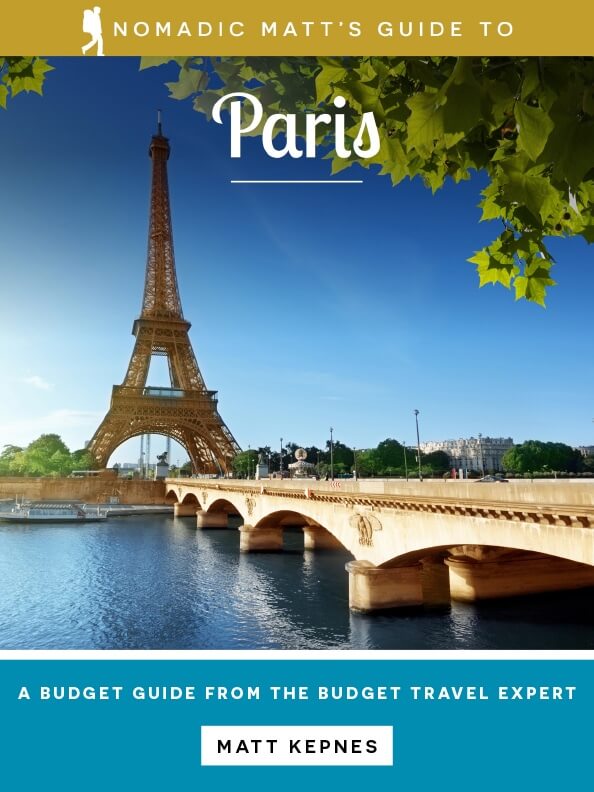
Get Your In-Depth Budget Guide to Paris!

Get Your In-Depth Budget Guide to Paris!Get Your In-Depth Budget Guide to Paris!

For more in-depth information, check out my guidebook to Paris written for budget travelers like you! It cuts out the fluff found in other guides and gets straight to the practical information you need to travel around Paris. You’ll find suggested itineraries, budgets, ways to save money, on- and off-the-beaten-path things to see and do, non-touristy restaurants, markets, bars, transportation and safety tips, and much more! Click here to learn more and get your copy today!


Plan your trip to Europe like a pro

Get all my best Europe travel tips as well as free planning guides sent straight to you and see more of the country for less!

GET YOUR GUIDES HEREGET YOUR GUIDES HERE

Book Your Trip to Paris: Logistical Tips and Tricks

Book Your Flight
Use Skyscanner. They are my favorite search engine because they search websites and airlines around the globe so you always know no stone is left unturned.

Book Your Accommodation
You can book your hostel with Hostelworld as they have the biggest inventory and best deals. If you want to stay somewhere other than a hostel, use Booking.com as they consistently return the cheapest rates for guesthouses and cheap hotels.

For suggested hostels, here is a list of my favorite hostels in Paris. If you prefer hotels, these are my favorite hotels.

And, if you’re wondering what part of town to stay in, here’s my neighborhood breakdown of Paris!

Don’t Forget Travel Insurance
Travel insurance will protect you against illness, injury, theft, and cancellations. It’s comprehensive protection in case anything goes wrong. I never go on a trip without it as I’ve had to use it many times in the past. My favorite companies that offer the best service and value are:

Looking for the Best Companies to Save Money With?
Check out my resource page for the best companies to use when you travel. I list all the ones I use to save money when I’m on the road. They will save you money when you travel too.

Want More Information on Paris?
Be sure to visit my robust destination guide to Paris for even more blogging tips!

Walnut Tree Leaves Found to Contain New Eco-Friendly Herbicide

0

Harsh, eco-unfriendly synthetic herbicides are definitely one of those things that you shouldn’t be using if you don’t have to. Japanese researchers are thus now developing a green alternative, derived from the leaves of a humble walnut tree.

For many years now, scientists have noticed that other large plants don’t grow near the Manchurian walnut tree (Juglans mandshurica). This phenomenon comes thanks to a li’l thing known as allelopathy, an offensive mechanism in which plants (or other organisms) release biochemicals that kill off other competing plants in the immediate vicinity.

Other types of walnut trees also practice allelopathy, and the “allelochemical” that they primarily utilize is called juglone. In the case of the Manchurian walnut tree, however – which is particularly good at allelopathy – its main allelochemical has remained unknown.

Scientists from Japan’s Kyushu University recently teamed up with colleagues in Juntendo University in Japan and Chulalongkorn University in Thailand, in order to find out.

In lab experiments simulating Manchurian walnut tree leaves falling on the ground and releasing their allelochemicals into the ground, the scientists isolated various chemicals from the leaves; added those chemicals to separate pieces of filter paper; added tobacco plant seeds to those papers; placed the papers on layers of wet soil; then observed the resulting tobacco seedlings as they grew under the influence of the different allelochemicals.

Asst. Prof. Poomraphie Nuntawong observes the effect of Manchurian walnut leaf extracts on seedling growth

Associate Professor Seiichi Sakamoto, Kyushu University

Interestingly, it was found that the most growth-stunting of the compounds – a chemical known as 2Z-decaprenol – actually contained no juglone. In fact, this was the first time that the substance had been shown to act as an allelochemical.

“To develop 2Z-decaprenol into a viable bioherbicide, we must conduct extensive safety and toxicity testing for humans and animals, further clarify its precise mechanism, and overcome challenges in producing the compound on a large scale,” says Kyushu University’s Assoc. Prof. Seiichi Sakamoto, senior author of the study.

“Our ultimate goal is to continue searching for potent, biodegradable compounds from nature that can contribute to a more sustainable future for agriculture.”

A paper on the research was recently published in the Journal of Agricultural and Food Chemistry.

Source: Kyushu University

US and Australia ink rare earth and mineral deal amid China’s supply restrictions | Global Trade Updates

0

US President Donald Trump said the deal had been negotiated over the last four to five months.

United States President Donald Trump and Australian Prime Minister Anthony Albanese have signed an agreement on rare earth and critical minerals as China tightens control over global supply.

The two leaders signed the deal on Monday at the White House.

Recommended Stories

list of 4 itemsend of list

Trump said the agreement had been negotiated over four or five months. The two leaders will also discuss trade, submarines and military equipment, Trump said.

Albanese described it as an $8.5bn pipeline “that we have ready to go”.

A copy of the agreement, provided by the prime minister’s office, said the two countries will each invest $1bn over the next six months into mining and processing projects. They also set a minimum price floor for critical minerals, a move that Western miners have long sought.

China has the world’s largest rare earths reserves, according to the US Geological Survey data, but Australia also has significant reserves.

The two leaders also planned to discuss the $239.4bn agreement, reached in 2023 under then-US President Joe Biden, in which Australia is to buy US nuclear-powered submarines in 2032 before building a new submarine class with Britain.

US Navy Secretary John Phelan told the meeting the US and Australia were working very closely to improve the original framework for all three parties “and clarify some of the ambiguity that was in the prior agreement”.

Trump said these were “just minor details”.

“There shouldn’t be any more clarifications, because we’re just, we’re just going now full steam ahead, building,” Trump said.

Australian officials have said they are confident it will proceed, with Defence Minister Richard Marles last week saying he knew when the review would conclude.

China’s rare earth export controls

Ahead of Monday’s meeting between the two leaders, Australian officials have emphasised Canberra is paying its way under AUKUS — a trilateral military partnership between the US, Australia and the United Kingdom, contributing $2bn this year to boost production rates at US submarine shipyards, and preparing to maintain US Virginia-class submarines at its Indian Ocean naval base from 2027.

The delay of 10 months in an official meeting since Trump took office has caused some anxiety in Australia as the Pentagon urged Canberra to lift defence spending. The two leaders met briefly on the sidelines of the United Nations General Assembly in New York last month.

Australia is willing to sell shares in its planned strategic reserve of critical minerals to allies including Britain, as Western governments scramble to end their reliance on China for rare earths and minor metals.

Top US officials last week condemned Beijing’s expansion of rare earth export controls as a threat to global supply chains. China is the world’s biggest producer of the materials, which are vital for products ranging from electric vehicles to aircraft engines and military radars.

Resource-rich Australia, wanting to extract and process rare earths, put preferential access to its strategic reserve on the table in US trade negotiations in April.

Challenge from the Client

0


Client Challenge


JavaScript is disabled in your browser.

Please enable JavaScript to proceed.

A required part of this site couldn’t load. This may be due to a browser
extension, network issues, or browser settings. Please check your
connection, disable any ad blockers, or try using a different browser.

Hamas claims body returned to Israel is that of a Gaza hostage

0

Hamas has handed over a body that it says is a hostage, the Israeli military has said.

The body was transported by the Red Cross to Israeli forces in Gaza, and will now be returned to Israel for formal identification.

Before Monday, Hamas had handed over all 20 living hostages and 12 out of 28 deceased hostages under the first phase of a US-brokered ceasefire deal that began on 10 October.

There has been anger in Israel that Hamas has not yet returned all the deceased hostages, with the Israeli military saying the Palestinian armed group “is required to uphold the agreement and take the necessary steps to return all the hostages”.

Hamas has said it faces difficulty finding bodies under rubble in Gaza.

Under the agreement, Israel has also freed 250 Palestinian prisoners and 1,718 detainees from Gaza, and returned 15 bodies of Palestinians in return for every Israeli hostage’s remains.

The first phase has also seen an increase of aid into the Gaza Strip, a partial withdrawal of Israeli forces, and a halt in fighting – though deadly violence flared up on Sunday as both sides accused one another of breaching the deal.

Israel said it struck dozens of Hamas targets across the Strip after accusing Hamas of an attack that killed two of its soldiers in Rafah. Hamas had said it was “unaware” of any clashes in the area, which is under Israeli control.

At least 45 Palestinians were killed in the strikes, local hospitals said.

On Sunday evening, Israel said it was resuming enforcement of the ceasefire, adding that it would “respond firmly to any violation of it”. Hamas had earlier said it remained committed to the agreement.

US President Donald Trump said the truce remained in place, as his envoy Steve Witkoff and son-in-law Jared Kushner travelled to Israel.

The Israel Defense Forces (IDF) currently holds about half of Gaza, demarcated by a so-called Yellow Line.

With Palestinians expressing confusion about the exact location of the line, the IDF has put out a video showing bulldozers towing yellow blocks into place to mark it out.

On Monday, Palestinian health officials said Israeli fire killed three people east of Gaza City. The IDF said its troops fired towards “several terrorists” who crossed the Yellow Line in the Shejaiya area.

The Israeli military launched a campaign in Gaza in response to the 7 October 2023 attack, in which Hamas-led gunmen killed about 1,200 people in southern Israel and took 251 others hostage.

At least 68,216 people have been killed by Israeli attacks in Gaza since then, according to the Hamas-run health ministry, whose figures are seen by the UN as reliable.

Canada reduces tariffs on steel and aluminum imports from the U.S. and China

0


Canada offers tariff relief on U.S. and Chinese steel, aluminum imports

The unfolding of the Louvre Jewelry Heist

0

In just under 10 minutes, thieves stole “priceless” jewelry from the Apollo Gallery after using a truck-mounted ladder to break into a second-floor window of the Louvre Museum.

Sources: Google Earth (basemap); Paris prosecutor

The New York Times

The Break-In

To get to the second floor, two robbers climbed up a monte-meubles, a truck-mounted electric ladder that is a common sight on the streets of Paris, where it is used to ferry bulky furniture through the windows of apartments.

Photo by Dimitar Dilkoff / AFP

They then used power tools to break the glass of the balcony window and enter the gallery, setting off a security alarm.

Photo by Kiran Ridley/Getty Images

Grabbing the Jewels

Once inside the gallery, the thieves smashed two display cases and snatched eight precious objects, setting off additional alarms. The items included a royal sapphire necklace, a royal emerald necklace and a diadem worn by Empress Eugénie, the wife of Napoleon III, France’s 19th-century ruler.

The Apollo Gallery in 2020.

Photo by Stephane De Sakutin / AFP

In their haste to leave, the robbers dropped a ninth item, which the authorities recovered later: Empress Eugénie’s crown, which features 1,354 diamonds, 1,136 rose-cut diamonds and 56 emeralds.

Five museum staff members were either in or near the gilded Apollo Gallery. Following the Louvre’s security protocol, they contacted the police, “prioritizing the protection of people,” according to a statement by the French ministry of culture.

Security guards evacuated the museum.

@gregraspoutine via Reuters

The Escape

The thieves left the museum by climbing back down the ladder, where they made their getaway with two other members of the team who were waiting on motor scooters.

Police were still searching for the thieves on Monday. Laure Beccuau, the Paris prosecutor, said that 60 investigators were questioning witnesses, combing through forensic evidence and reviewing footage from surveillance cameras in the museum and on the street.

Open AI co-founder predicts AI agents will not be ready for work for at least a decade due to lack of intelligence, easing workers’ fears of job cuts

0

For employees worried that AI agents could take their jobs, one of the field’s leading founders says the technology is still far from perfect. Andrej Karpathy, co-founder of OpenAI said it’s not the “year of agents”—and while he uses AI agent tools like Claude and Codex, they’re still way behind the work of humans.

“They’re cognitively lacking and it’s just not working. It will take about a decade to work through all of those issues,” Karpathy said, in an episode of the Dwarkesh Podcast.

 “They just don’t work. They don’t have enough intelligence, they’re not multimodal enough, they can’t do computer use and all this stuff,” he added. “They don’t have continual learning. You can’t just tell them something and they’ll remember it.”

There is no isolated definition for AI agents, but they’re typically used as virtual assistants who autonomously perform workplace tasks with reasoning. Today, agents are used for tasks like customer service and IT support requests. 

While many workers become increasingly anxious about the security of their jobs amid AI disruption, Karpathy says the tools have not been perfected just yet to perform without a person there guiding it. 

“You should think of it almost like an employee or an intern that you would hire to work with you,” he said. 

The tech guru further elaborated on his argument on X, saying workers should learn from AI, not be sidelined by it. 

“I want it to make fewer assumptions and ask/collaborate with me when not sure about something. I want to learn along the way and become better as a programmer, not just get served mountains of code that I’m told works.”

AI agents are still on the road to perfection, with administrative tasks at the forefront of the revolution  

Today, AI agents are being implemented for customer service, IT and administrative tasks, but many tech companies are actually scaling back their automation plans.

In fact, 50% of organizations who expected to significantly reduce their customer service workforce by 2027, are now abandoning these plans, according to Gartner, Inc. And 95% of firms who have implemented AI pilots have flopped.

Still, that hasn’t stopped AI companies from trying to work with these setbacks. For example, McKinsey built an AI agent using Microsoft’s Copilot Studio software that can monitor an email address for incoming project proposals from potential clients. While a human must check what the agent produces, it has cut the time required to review projects from 20 days to two. 

On the flip side, in India, a company called “LimeChat” is still insisting on cutting customer-service jobs, saying it will use generative AI agents to enable clients to slash by 80% the number of workers needed to handle 10,000 monthly queries. 

While the long-term impact of AI agents on the workforce is still unfolding, experts expect they could significantly disrupt administrative tasks.

Donald Trump’s efforts to eliminate aluminium from vaccines | Latest updates on President Trump

0

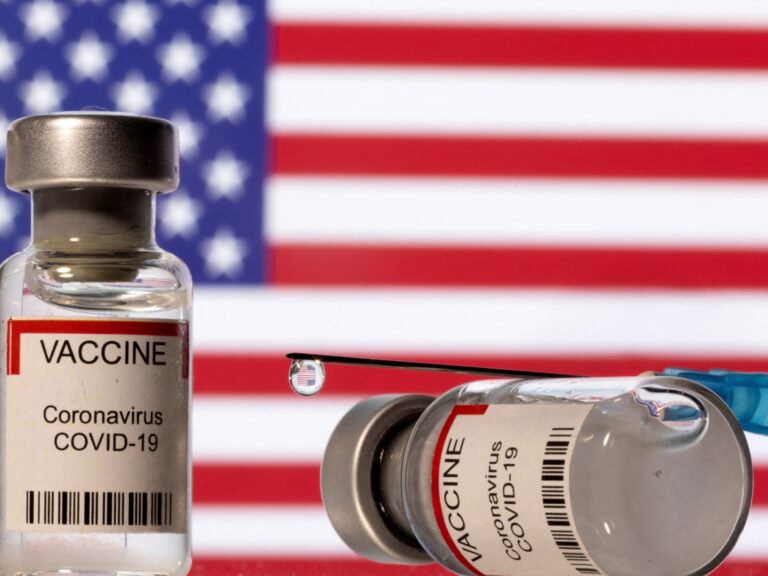
Health officials in the United States are reviewing whether to remove aluminium from some common vaccines, as part of the Trump administration’s escalating attacks on vaccines.

The Department of Health and Human Services has reduced some vaccine access. The agency scaled back COVID-19 vaccine recommendations, approved COVID-19 vaccines for fewer people and aimed to remove the preservative thimerosal from US vaccines. Experts told PolitiFact scientific research did not support its removal.

Recommended Stories

list of 3 itemsend of list

During a September 22 news conference, in which US President Donald Trump told people not to take Tylenol during pregnancy, he also mentioned another objective. “We want no aluminium in the vaccine,” he said. The administration was already in the process of removing aluminium from vaccines, he added.

About two weeks later, on October 8, the US Centers for Disease Control and Prevention’s (CDC) Advisory Committee on Immunization Practices, or ACIP, announced a new working group focused on the childhood vaccine schedule. Its discussion topics include vaccine ingredient safety and aluminium adjuvants.

Robert Malone, an ACIP member who has opposed COVID-19 vaccines, told Axios he expected the ACIP would determine there was “a lot of evidence” of “issues” with aluminium in vaccines. The committee would likely vote to re-categorise vaccines containing aluminium adjuvants so that people would have to discuss with their doctor before getting them, Malone told Axios.

That could have far-reaching ramifications. Here’s what to know about aluminium in vaccines.

A: Small amounts of aluminium are sometimes included in vaccines as adjuvants, or substances that boost the body’s immune response to the vaccine to ensure protection from infection.

That boost means people can get fewer vaccine doses in smaller quantities.

Q: When used, how much aluminium is in a vaccine?

A: Vaccines with aluminium adjuvants usually contain less than 1mg aluminium per dose, according to the Children’s Hospital of Philadelphia.

That is a pretty abstract number. To help make it more concrete: a milligram is one-thousandth (1/1,000th) of 1g. One gram is about the weight of a raisin or a stick of gum. Imagine cutting one of those items into 1,000 equal pieces. One of the pieces would be about 1mg.

Here is another way to think about it.

People come in contact with and consume aluminium all of the time. It is one of the most abundant metal elements in the Earth’s crust, according to the US Geological Survey. It is naturally occurring in soil, air and water. Food is the main way people are exposed to aluminium. The average adult eats 7mg to 9mg of aluminium per day, according to the CDC.

A baby in its first six months might receive a total of about 4.4mg of aluminium from recommended vaccines. In the same period of time, a breastfed infant would ingest about 7mg of aluminium from breastmilk, and a formula-fed baby would ingest about 38mg from formula.

Q: How long have vaccines contained aluminium?

A: Aluminium adjuvants have been used in vaccines for more than 70 years, the CDC said.

“Aluminium is one of our oldest adjuvants; it’s been used in vaccines since the 1920s,” said Dr Peter Hotez, a Baylor College of Medicine professor and codirector of Texas Children’s Hospital Center for Vaccine Development.

Q: How do we know it’s safe to include small amounts of aluminium in vaccines?

A: Every vaccine’s safety and efficacy are tested in animal studies and human clinical trials before the US Food and Drug Administration (FDA) licenses it for public use. Every vaccine containing adjuvants has been tested, and health agencies continuously monitor their safety, the CDC said.

Over several decades of use, vaccines with aluminium adjuvants have been proven safe, the FDA said.

Vaccines containing aluminium have been “given to billions of people worldwide now”, said Dr Kawsar Talaat, a professor at Johns Hopkins Bloomberg School of Public Health.

A growing body of research has also found that aluminium adjuvants do not cause aluminium toxicity or other adverse outcomes.

Q: Do aluminium adjuvants have any risks?

A: Rarely, some people have allergic reactions to aluminium in the same way they might have allergic reactions to other substances, Talaat said.

In 2022, researchers published a retrospective, observational study on more than 325,000 children that found an association between vaccine-related aluminium exposure and persistent asthma. Association is not the same as causation, meaning the study did not prove a link between aluminium in vaccines and asthma.

Experts from the CDC and the American Academy of Pediatrics encouraged more research on the subject because the backwards-looking observational study did not prove causation and also had limitations, including that it excluded many children who developed asthma before they turned two years old.

A 2025 study found no increased risk of asthma associated with childhood exposure to aluminium-absorbed vaccines.

Q: Which vaccines contain aluminium adjuvants?

A: At least 25 vaccines approved for use in the US have aluminium adjuvants, the CDC says. That includes vaccines that protect against HPV, hepatitis A and B and diphtheria, tetanus, and acellular pertussis (whooping cough).

Q: Which vaccines do not contain aluminium adjuvants?

The CDC’s list of vaccines without adjuvants includes vaccines against COVID-19, Ebola, meningococcal, polio and rabies. Additionally, most seasonal flu shots and the vaccine against measles, mumps and rubella do not contain aluminium adjuvants.

Q: Can we remove aluminium from vaccines?

A: Not quickly. If it could be done at all, it would take years to develop, test and license new, aluminium-free vaccines. Many of the vaccines with aluminium adjuvants do not have aluminium-free formulas.

“A vaccine is licensed based on all of its ingredients and the exact manufacturing process,” Talaat said. “If you were to take an ingredient out of a vaccine, you would have to start all over with the clinical trials and the manufacturing, and it is highly possible that some of these vaccines wouldn’t work without the aluminium in there.”

Although other adjuvants exist, they are newer and often more scarce than aluminium, which is abundant.

An immediate ban on aluminium in vaccines would drastically reduce people’s ability to protect themselves and others against numerous diseases.

“I think we’d see outbreaks of vaccine-preventable diseases,” Talaat said.

Q: Why do people think aluminium in vaccines is causing autism?

A: A 2011 study said vaccines with aluminium adjuvants “may be a significant” contributing factor to the rising number of autism diagnoses in kids, Nature reported.

A year later, a World Health Organization vaccine safety committee called the 2011 study “seriously flawed”. The 2011 study and another by the same authors compared vaccines’ aluminium content and autism rates in several countries, the WHO group said, but that cannot be used to establish a causal relationship.

“We studied aluminium, and have no link between aluminium and autism,” Talaat said.