Former NBA player Damon Jones pleaded not guilty on Thursday to charges of gambling fraud and leaking private injury information about LeBron James and Anthony Davis.
Jones appeared in Brooklyn federal court with his lawyer, Kenneth Montgomery, who entered the plea for him. The court allowed Jones to stay free on a $200,000 bond. His family used their Texas home as collateral. Montgomery said they might start plea talks soon.
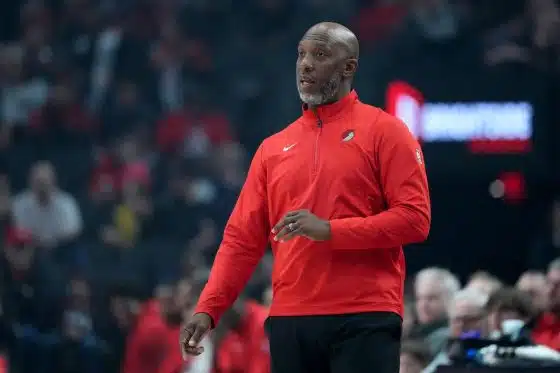
Apr 6, 2025; Portland, Oregon, USA; Portland Trail Blazers head coach Chauncey Billups watches from the sideline during the first half against the San Antonio Spurs at Moda Center. Mandatory Credit: Soobum Im-Imagn Images
Selling Secrets to Bettors
Prosecutors say Jones sold private information about player injuries to gamblers. In one message before a Lakers vs. Bucks game on February 9, 2023, he wrote: “Get a big bet on Milwaukee tonight before the information is out.”
At that time, LeBron James wasn’t listed as injured, but he later missed the game with a leg issue. The Lakers lost 115–106.
In another case, gambler Marves Fairley paid Jones $2,500 for a tip that Anthony Davis would play fewer minutes on January 15, 2024, against the Oklahoma City Thunder. Fairley bet $100,000 on the Thunder, but the tip was wrong. Davis played normally, scoring 27 points and grabbing 15 rebounds as the Lakers won 112–105.
Rigged Poker Games and Mob Links
Prosecutors also accuse Jones of joining fixed poker games that used hidden cameras, marked cards, and X-ray tables. He allegedly earned $2,500 for one game in the Hamptons.
Authorities say the poker games sent profits to New York crime families, including the Gambino, Genovese, and Bonanno groups. These families reportedly used violence and threats to collect debts.
Career and Background Jones, a Texas native, played 11 NBA seasons and earned more than $20 million. He was teammates with LeBron James in Cleveland and later worked as an assistant coach when the Cavaliers won the 2016 NBA title.
United States lawmakers have written to Andrew, Britain’s disgraced former prince, requesting that he sit for a formal interview about his friendship with convicted sex offender Jeffrey Epstein, a day after King Charles III formally stripped his younger brother of his royal titles.
Separately, a secluded desert ranch where Epstein once entertained guests is coming under renewed scrutiny in the US state of New Mexico, with two state legislators proposing a “truth commission” to uncover the full extent of the financier’s crimes there.
Recommended Stories
list of 3 itemsend of list
On Thursday, 16 Democratic Party members of Congress signed a letter addressed to “Mr Mountbatten Windsor”, as Andrew is now publicly known, to participate in a “transcribed interview” with the US House of Representatives oversight committee’s investigation into Epstein.
“The committee is seeking to uncover the identities of Mr Epstein’s co-conspirators and enablers and to understand the full extent of his criminal operations,” the letter read.
“Well-documented allegations against you, along with your longstanding friendship with Mr Epstein, indicate that you may possess knowledge of his activities relevant to our investigation,” it added.
The letter asked Andrew to respond by November 20.
The US Congress has no power to compel testimony from foreigners, making it unlikely Andrew will give evidence.
The letter will be another unwelcome development for the disgraced former prince after a turbulent few weeks.
On October 30, Buckingham Palace said King Charles had “initiated a formal process” to revoke Andrew’s royal status after weeks of pressure to act over his relationship with Epstein – who took his own life in prison in 2019 while facing sex trafficking charges.
The rare move to strip a British prince or princess of their title – last taken in 1919 after Prince Ernest Augustus sided with Germany during World War I – also meant that Andrew was evicted from his lavish Royal Lodge mansion in Windsor and moved into “private accommodation”.
King Charles formally made the changes with an announcement published on Wednesday in The Gazette – the United Kingdom’s official public record – saying Andrew “shall no longer be entitled to hold and enjoy the style, title or attribute of ‘Royal Highness’ and the titular dignity of ‘Prince’”.
Andrew surrendered his use of the title Duke of York earlier in October following new abuse allegations from his accuser, Virginia Roberts Giuffre, in her posthumous memoir, which hit shelves last month.
The Democrat lawmakers referenced Giuffre’s memoir in their letter, specifically claims that she feared “retaliation if she made allegations against” Andrew, and that he had asked his personal protection officer to “dig up dirt” on his accuser for a smear campaign in 2011.
“This fear of retaliation has been a persistent obstacle to many of those who were victimised in their fight for justice,” the letter said. “In addition to Mr. Epstein’s crimes, we are investigating any such efforts to silence, intimidate, or threaten victims.”
Giuffre, who alleges that Epstein trafficked her to have sex with Andrew on three occasions, twice when she was just 17, took her own life in Australia in April.
In 2022, Andrew paid Giuffre a multimillion-pound settlement to resolve a civil lawsuit she had levelled against him. Andrew denied the allegations, and he has not been charged with any crime.
Jeffrey Epstein’s Zorro Ranch as seen on July 8, 2019 [KRQE via AP Photo]
On Thursday, Democratic lawmakers also turned the spotlight on Zorro Ranch, proposing to the House of Representatives’ Courts, Corrections and Justice Interim Committee that a commission be created to investigate alleged crimes against young girls at the New Mexico property, which Epstein purchased in 1993.
State Representative Andrea Romero said several survivors of Epstein’s abuse have signalled that sex trafficking activity extended to the secluded desert ranch with a hilltop mansion and private runway in Stanley, about 56 kilometres (35 miles) south of the state capital, Santa Fe.
“This commission will specifically seek the truth about what officials knew, how crimes were unreported or reported, and how the state can ensure that this essentially never happens again,” Romero told a panel of legislators.
“There’s no complete record of what occurred,” she said.
Representative Marianna Anaya, presenting to the committee alongside Romero, said state authorities missed several opportunities over decades to stop Epstein.
“Even after all these years, you know, there are still questions of New Mexico’s role as a state, our roles in terms of oversight and accountability for the survivors who are harmed,” she said.
New Mexico laws allowed Epstein to avoid registering locally as a sex offender long after he was required to register in Florida, where he was convicted of soliciting a minor for prostitution in 2008.
Republican Representative Andrea Reeb said she believed New Mexicans “have a right to know what happened at this ranch” and she didn’t feel the commission was going to be a “big political thing”.
To move forward, approval will be needed from the state House when the legislature convenes in January.
General Atomics has rolled out the latest iteration of its modular Gambit series of Collaborative Combat Aircraft (CCA), adapting the common-core airframe for air-to-ground missions while retaining its autonomous core capabilities.
The Loyal Wingman concept of an autonomous drone was pretty simple in the beginning. It was an inexpensive drone that combined AI with the performance capabilities that would allow it to work alongside a conventional piloted fighter plane. Of course, like many simple concepts, the engineering behind it is pretty complex and advanced, but the idea remained simple.
However, these drones turned out to have much more potential than as a simple force multiplier. As the technology becomes more sophisticated, the classes of CCAs are getting more diverse, taking on a new array of mission profiles.
General Atomics’ Gambit family started out in 2022 with the Gambit 1, which was designed as a long-endurance Intelligence, Surveillance, and Reconnaissance (ISR) platform. This was followed by the Gambit 2 with air-to-air weapons and the Gambit 3 made for advanced combat training. Then came the Gambit 4 reconnaissance variant with a new tailless, swept-wing design and Gambit 5 made for carrier-based missions.
Gambit 6 pushes these capabilities by adding the ability to carry out air-to-ground operations, meaning it can support ground troops, take out enemy air defenses, and handle electronic warfare duties, as well as working alongside 5th- and 6th-generation fighters like the F-35 Lightning II and the Next-Generation Air Dominance (NGAD) systems.
Like the other Gambits, the Gambit 6 uses a modular architecture and an internal weapons bay to enhance the airframe’s stealth properties. It can also integrate advanced autonomy systems and sensors.
According to the company, the Gambits will be commercially available in 2027, with special European versions going online in 2029. General Atomics is also looking at manufacturing the aircraft in Europe to support domestic defense production.
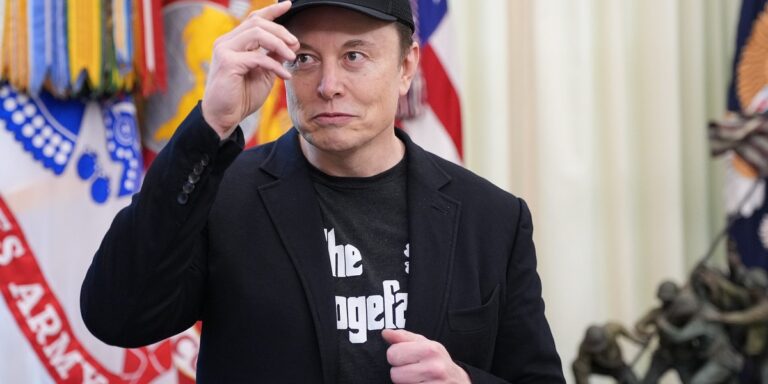
It’s official: Elon Musk is on track to become the world’s first trillionaire.
Tesla shareholders approved a new executive pay package Thursday afternoon that would give Musk nearly $1 trillion in stock over the next decade, a record-shattering deal for the world’s richest man.
The total award depends on whether Musk can meet ambitious performance targets for the struggling electric-vehicle company, including growing Tesla’s market cap to $8.5 trillion—a more than 500% increase from today’s valuation. The goals also include delivery of 20 million Tesla vehicles and 1 million bots in addition to 1 million robotaxis in commercial operation.
“While we believe Elon is the only person capable of leading Tesla at this critical inflection point, changing the world is neither an overnight process nor the work of a single person,” Tesla’s Board wrote in a letter to shareholders in August. “So, we also want your help in securing the team and strategy needed to achieve goals that others will perceive as impossible but that we know are possible for Tesla.”
Musk’s net worth is estimated at about $473 billion.
Reining Musk back in
If all goes to plan, Musk’s stake in Tesla will rise from about 13% to nearly 29%—a level of control he’s long sought.
Having voting control in the “mid-20s” percent range would help secure a “strong influence,” but gives shareholders enough control to fire him if he goes “insane,” Musk said during Tesla’s earnings call last month.
“It’s called compensation, but it’s not like I’m going to go spend the money,” Musk added. “It’s just, if we build this robot army, do I have at least a strong influence over that robot army, not current control, but a strong influence? That’s what it comes down to in a nutshell. I don’t feel comfortable wielding that robot army if I don’t have at least a strong influence.”
Tesla’s stock fell as much as 43% between January and March as Musk devoted much of his time to leading the Department of Government Efficiency (DOGE). Since stepping back, shares have recovered to being up 16% year-to-date.
Many shareholders hope the new incentives will keep Musk focused on Tesla.
Ron Baron, the founder and CEO of Baron Capital, which holds a 0.39% stake in Tesla, said in a post on X that he supported the plan because without Musk, Tesla wouldn’t exist.
“Elon is the ultimate ‘key man’ of key man risk,” Baron wrote. “Without his relentless drive and uncompromising standards, there would be no Tesla.”
From Pope Leo to Norway’s sovereign wealth fund, Musk’s pay package had its haters
Not every Tesla investor was on board with the extravagant deal.
Glass Lewis and ISS, two proxy advisory services, urged Tesla shareholders to vote against the proposal, with the latter group citing “unmitigated concerns” with its magnitude and design. Musk then fired back during Tesla’s October earnings call, calling them “corporate terrorists.”
Meanwhile, Norges Bank Investment Management, the group behind Norway’s $2 trillion sovereign wealth fund which holds a 1.14% stake in Tesla, said it voted against the pay package.
“While we appreciate the significant value created under Mr. Musk’s visionary role, we are concerned about the total size of the award, dilution, and lack of mitigation of key person risk — consistent with our views on executive compensation,” the group said in a statement this week.
Pope Leo XIV, though not a Tesla investor, also recently expressed his concern for the message sent by Musk becoming a trillionaire—and the growing divide between the rich and the poor.
“CEOs that 60 years ago might have been making four to six times more than what the workers are receiving, the last figure I saw, it’s 600 times more than what average workers are receiving,” the pontiff told Catholic news site Crux in an interview released in September.
“Yesterday, the news that Elon Musk is going to be the first trillionaire in the world: What does that mean and what’s that about? If that is the only thing that has value anymore, then we’re in big trouble.”
A recent report from Oxfam found that the 10 richest Americans—which include Musk as well as Oracle cofounder Larry Ellison, Amazon cofounder Jeff Bezos, and Meta CEO Mark Zuckerberg—gained $69.8 billion over the past year. That’s 833,631 times more than what the typical American household takes home.
While Musk still trails John D. Rockefeller’s $630 billion inflation-adjusted fortune, hitting his new performance targets could make him the richest person in modern history.
Trees came down in high winds near Quy Nhon beach in Gia Lai, central Vietnam, as Kalmaegi approached on Thursday
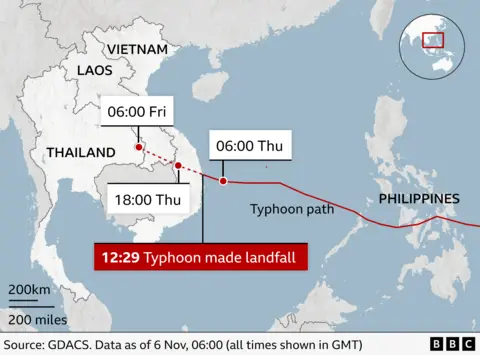
Typhoon Kalmaegi, one of the year’s deadliest storms, has headed west to Cambodia and Laos after barreling through central Vietnam on Thursday with winds of up to 92mph (149km/h).
Earlier this week, the typhoon flooded entire towns in the Philippines, killing at least 114 people and leaving more than 120 missing.
In Vietnam, at least one person died after a house collapsed in Dak Lak province, while another two died in Gia Lai province, local media said. The government’s disaster management site has not yet released any death tolls or estimated damages.
This typhoon came even as central Vietnam struggled with the aftermath of record rainfall last week that killed nearly 50 people.
Ahead of the typhoon, Vietnam’s military deployed more than 260,000 soldiers and personnel for relief efforts, along with more than 6,700 vehicles and six aircraft.
Some airports and expressways in the country were closed and hundreds of thousands were evacuated.
Shortly after the typhoon made landfall in Vietnam at 19:29 local time (12:29 GMT), hundreds of residents in Dak Lak province called for help, local media reported.
Dak Lak province is approximately 350km (215 miles) north-east of Ho Chi Minh City.
Many people said their homes had collapsed or been flooded, while strong winds and heavy rain continued to batter the area.
The Vietnamese national weather forecaster warned of flooding and landslides in hundreds of localities in seven cities and provinces.
There were reports of damage from several provinces, including roofs torn off homes, shattered glass panels at hotels, and trees uprooted or snapped along city streets and rural roads by powerful gusts.
On Wednesday morning, a reporter from AFP news agency saw officials knocking on the doors of homes in coastal communities and warning people to evacuate.
According to local media reports, Prime Minister of Vietnam Pham Minh Chinh held an online meeting to direct the emergency response.
“We must reach isolated areas and ensure people have food, drinking water, and essential supplies,” he was quoted as saying.
“No one should be left hungry or cold.”
AFP via Getty Images
The clean up began on Thursday at a hotel near Quy Nhon beach after it took heavy damage
Before making landfall in Vietnam, the typhoon, known locally as Tino, left a trail of devastation in the Philippines.
At least 114 people were killed and tens of thousands were evacuated, particularly from central areas including the populous island and tourist hotspot of Cebu, where cars were swept through the streets.
Kalmaegi dumped the equivalent of a month of rain on the island in just 24 hours, sending torrents of mud and debris down mountainsides and into urban areas.
Stunned survivors who had made it to higher ground watched as buses and shipping containers were tossed about in the raging floodwaters.
The storm has wiped out entire neighbourhoods in poorer districts, where building materials are flimsier.
In Talisay City, which suffered some of the worst destruction, Mely Saberon looked on in despair at the pile of debris that had once been her home.
“We don’t have any home anymore,” she told the BBC. “We weren’t able to salvage anything from our house.
“We didn’t expect the surge of rain and wind. We’ve experienced many typhoons before, but this one was different.”
Residents have now started the backbreaking task of cleaning away the thick layer of mud, and picking through the wreckage for anything that can be used.
Early on Thursday, Philippines President Ferdinand Marcos Jr declared a state of emergency, the threshold of which involves mass casualty, major damage to property, and disruption to means of livelihoods and the normal way of life for people in the affected areas.
EPA
People took shelter in evacuation centres on Thursday after flooding destroyed homes in Cebu, Philippines the day before
Vietnam has already been battling with floods and record rains for the past week.
Burst riverbanks have flooded some of the country’s most popular tourist spots, including the Unesco-listed city of Hue and historic hotspot Hoi An, where residents have been pictured navigating the city in wooden boats after the Hoai river overflowed.
Thailand is also bracing for the storm’s impact. Local officials have warned of flash floods, landslides and river overflows.
EPA
Waves crashed on the beach in Cua Dai, Da Nang, central Vietnam, on Thursday
Abe Batshon has been buying beats online since the mid-’90s.
Back then, he recalls, the process was fundamentally broken. You’d send payment to a producer and then wait days, sometimes weeks, for a CD containing studio files to arrive in the mail.
“Creativity doesn’t work on that kind of timeline,” Batshon tells us. “Inspiration strikes instantly, and the system wasn’t built for that.”
Fast forward to today, and Batshon’s BeatStars platform, used by 10 million creators, has played a big role in transforming how beats are bought, sold, and licensed globally.
The company has paid out over $400 million to creators worldwide to date, with 1.5 million tracks downloaded monthly from its marketplace of 11 million-plus beats.
Meanwhile, BeatStars music has become what Batshon calls “the soundtrack of this era,” powering viral hits that spread globally through short-form video platforms overnight. Batshon tells us that 82 tracks featuring production by Beatstars Publishing members have reached the Billboard Hot 100.
Among them are producer Ian James, who made the beat for Doechii’s Denial Is A River, BigXThaPlug’s The Largest, co-produced by Beatstars Publishing member Tony Coles, and Lucas Scharff, the producer behind the beat for Lil Tecca’s Dark Thoughts.
The platform is also well known for being the source of the beat for Lil Nas X’s 2019 global megahit Old Town Road.
But BeatStars isn’t just a beats marketplace anymore. Under Batshon’s leadership, it has evolved into what he describes as “a complete ecosystem: a studio in the cloud, a business hub, a publishing partner, a rights agency, and a community where creators can build sustainable careers.”
The company has also positioned itself at the forefront of the music industry’s AI shakeup, taking what Batshon calls a “dual approach” – embracing innovation through partnerships with AI music creation platform Lemonaide, while simultaneously protecting creators’ rights through a deal with Sureel to prevent unauthorized AI training on BeatStars’ catalog.
“We believe you don’t have to choose between innovation and protection – you can do both,” Batshon tells us.
And his ultimate goal? To help one million creators earn a living through the platform. “That’s the north star,” he says. “Every product we build, every partnership we make, is about making that possible.”
Here, Batshon discusses BeatStars’ evolution, the changing dynamics between labels and independent creators, AI’s dual role as both tool and threat, and his vision for the future of music entrepreneurship.
“I want BeatStars to be known as the global hub for music entrepreneurship,” he tells us.
“Not just a marketplace for beats, but the place where a creator can build an entire career from the ground up — creating, protecting, distributing, and monetizing their art.”
Over to Abe…
What inspired you to start BeatStars, and how did you identify the gap in the music production marketplace?
I’ve been buying beats online since the mid-90s — probably one of the first to do it. Back then, the process was broken. You’d make a payment and wait days, sometimes weeks, for a CD with studio files to arrive. Creativity doesn’t work on that kind of timeline. Inspiration strikes instantly, and the system wasn’t built for that.
“BeatStars was born out of a vision to fix both of those problems: to build a faster, fairer way for artists to access beats and for producers to actually own their work.”
At the same time, I saw producers — even some of the most respected ones — locked into deals that stripped away their rights, credits, and publishing. That wasn’t success, it was exploitation.
BeatStars was born out of a vision to fix both of those problems: to build a faster, fairer way for artists to access beats and for producers to actually own their work.
What were the biggest challenges you faced in the early days of building the platform?
The first challenge was cultural. In those days, beats were guarded like gold. They lived inside studio sessions, not on the internet. Convincing established producers to take the leap and upload them publicly was tough.
Luckily, visionaries like Domingo Padilla, Shaun Bless, Focus…, and Havoc of Mobb Deep believed in the mission early and helped prove it could work.
Team BeatStars
The second challenge was education. Artists had to learn what non-exclusive licensing really meant — that they could release music commercially, keep 100% of their master royalties, and still share publishing on their songs. For producers, it meant monetizing one beat multiple times instead of once. It took time, but once the community understood the power of that model, it unlocked an entirely new economy for music.
How has your vision for BeatStars evolved since you first launched the company?
The mission has stayed the same: empower creators to become successful entrepreneurs. But the vision has expanded.
At first, BeatStars was a fair marketplace for buying and selling beats. Today, it’s a complete ecosystem: a studio in the cloud, a business hub, a publishing partner, a rights agency, and a community where creators can build sustainable careers. Whether you’re uploading your first beat or generating millions in sales, BeatStars is built to support that journey.
How has the music production landscape changed since BeatStars launched, and where do you see it heading?
When we started, the industry was still closed. Producers had to be in certain rooms, with certain budgets, to be heard. Today, production is global and decentralized. A kid in Lagos can collaborate with an artist in Atlanta in minutes.
Technology has made music creation borderless. What hasn’t changed is the human element: the taste, the ear, the emotion that makes music connect. No tool — not even AI — replaces that. The future belongs to creators who know how to harness both technology and humanity to make timeless music.
What role do you think platforms like BeatStars play in democratizing music creation?
BeatStars helped create this new independent music economy. Before us, there was no scalable way for producers to license beats directly to artists, get paid instantly, and manage collaboration royalties transparently. We pioneered those systems, and they’ve become the backbone of today’s creator-driven industry.
That democratization means independence. It means a young producer uploading their first beat and a superstar licensing that beat are playing on the same field. It’s not just access — it’s self-determination. And that’s what changes lives.
How do you view the relationship between traditional record labels and independent producers/artists today?
The dynamic has shifted from dependence to partnership. Labels now know the next big record can start on BeatStars — many of them scout directly from our charts. At the same time, independent producers and artists have proven they can build thriving careers without a label’s stamp of approval.
That gives creators leverage. Today, independence isn’t the backup plan. In many cases, it’s the smarter, more profitable first choice. Labels still matter, but they’re no longer the gatekeepers — they’re collaborators in a creator-led ecosystem.
What impact has AI-generated music had on your platform and the broader production community?
AI has been both a spark and a scare. On one hand, it’s unlocking new creative tools, breaking beat blocks, and making it easier for producers without traditional training to experiment. Our partnership with Lemonaide alone has helped hundreds of thousands of creators generate new ideas faster.
But it also raises serious questions about ownership, ethics, and exploitation. For us, the guiding principle is simple: AI should serve creators, not replace them and that’s why at BeatStars we focus on giving them tools that inspire while protecting their rights.
BeatStars has been very active in the AI space, especially via your partnership with Lemonaide. You also partnered with Sureel to protect creators from unauthorized AI training. How do you navigate this dual approach of embracing AI innovation while protecting creators’ intellectual property rights?
We believe you don’t have to choose between innovation and protection — you can do both.
With Lemonaide, we’re showing what ethical AI looks like: models trained only on music from producers who opt in and get compensated. It’s a tool for inspiration, not exploitation.
With Sureel, we’re safeguarding our catalog from being scraped without consent. That sends a clear message: technology innovation is welcome at BeatStars, but only if it respects the people who power it.
Looking ahead, how do you envision AI tools evolving on BeatStars and in the industry generally?
AI is becoming not only a “generative” tool but also a powerful “assistive” mechanism to scale productivity. Instead of replacing creators, it will become their co-pilot — helping with arrangement, sound design, mixing, mastering and discovery.
On BeatStars, we see AI as a way to remove friction from the creative process and make the hardest parts of a creator’s journey easier. But the heartbeat of music — the taste, the storytelling, the emotion — will always come from humans.
Can you explain BeatStars’ revenue model and how you’ve balanced creator earnings with platform sustainability?
Our business is built to align directly with creator success. Most of our revenue comes from subscriptions, where creators pay for advanced tools to run their businesses.
We also take only a small fee on sales, so the majority of revenue stays with the producer or artist. In addition, we generate revenue from our Promote service, which helps creators market their work, and from music publishing administration.
“That alignment is by design. If our creators don’t thrive, neither do we. Sustainability for us means building a model where growth and fairness always go hand in hand.”
That alignment is by design. If our creators don’t thrive, neither do we. Sustainability for us means building a model where growth and fairness always go hand in hand.
Could you please share an update on what BeatStars has paid out to creators to date?
We’ve now paid out over $400 million to creators worldwide. But it’s more than a number — it represents rent paid, student loans cleared, day jobs quit, and entire families supported through music.
That’s the real milestone: proving that independence can pay the bills and fuel dreams at the same time.
What trends are you seeing in the market that we should know about?
The biggest trend is the rise of the creator-entrepreneur. Artists and producers today don’t just want to make music — they want to own their business. That means diversifying income streams through licensing, merch, memberships, services, and syncs.
Another huge shift is cultural: music is being discovered in short-form video at an unprecedented scale. BeatStars music has become the soundtrack of this era — powering hits that spread globally overnight.
And finally, there’s the darker trend: piracy and unauthorized AI scraping. That’s why protecting creator rights is just as important as helping them monetize. Both sides of the equation matter if this ecosystem is going to last.
What advice do you give to producers about building sustainable careers in music production?
Treat your art like a business. Making great beats is the starting point, not the finish line. The producers who thrive are consistent, they build a recognizable brand, they engage their fans, and they understand marketing, publishing, and rights.
My advice: be as entrepreneurial as you are creative. If you can combine those two skill sets, you can build a sustainable career on your own terms.
What’s the most important lesson you’ve learned as a CEO?
That your community is your greatest teacher. Every breakthrough we’ve had has come from listening to our creators — their needs, their struggles, their dreams.
The resilience and creativity of this community constantly remind me that if you build with them, not just for them, you’ll never lose your way.
If there was one thing you could change about the music business, what would it be and why?
I’d eliminate the confusion and delays around payments. Too many creators still don’t know when or how they’ll get paid, and too much of their money gets trapped in outdated systems.
My dream is instant, transparent payment for every creator, no matter where they live or how big they are. That’s the kind of fairness we’re building toward at BeatStars.
new video loaded: Paramilitary Group in Sudan Agrees to Cease-Fire Proposal
transcript
transcript
Paramilitary Group in Sudan Agrees to Cease-Fire Proposal
The paramilitary group Rapid Support Forces agreed to a cease-fire proposal after growing condemnation of atrocities in Darfur. Sudan’s military reiterated its commitment to defeat the R.S.F. through force, showing no sign of agreeing to the proposal.
“Since the R.S.F. made a major incursion into the city on the 23rd of October, we have received horrendous amounts of summary executions, mass killings, rapes, attacks against returning workers, looting, abductions and forced displacement.”
The paramilitary group Rapid Support Forces agreed to a cease-fire proposal after growing condemnation of atrocities in Darfur. Sudan’s military reiterated its commitment to defeat the R.S.F. through force, showing no sign of agreeing to the proposal.
A required part of this site couldn’t load. This may be due to a browser
extension, network issues, or browser settings. Please check your
connection, disable any ad blockers, or try using a different browser.
The truce talks are aimed at finalising a ceasefire reached in Qatar last month following deadly clashes.
Published On 6 Nov 20256 Nov 2025
Share
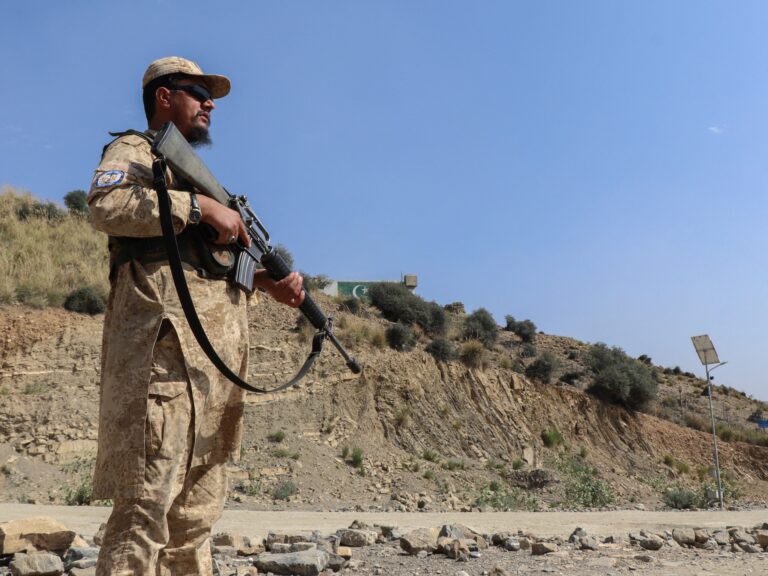
Pakistan and Afghanistan have traded blame for brief cross-border fighting, as delegations from both countries met in Turkiye for talks aimed at securing a ceasefire following deadly clashes last month.
Thursday’s talks in Istanbul are intended to finalise a truce approved on October 19 in Qatar that ended a week of deadly clashes between the South Asian neighbours, which killed dozens of people, including soldiers and civilians, and wounded hundreds of others.
Recommended Stories
list of 4 itemsend of list
Security issues are at the heart of their dispute, with Islamabad accusing Kabul of harbouring groups such as the Pakistan Taliban (TTP), which is accused of launching attacks in Pakistan. The Taliban government in Afghanistan denies these allegations.
“While the third round of negotiations with the Pakistani side has begun in Istanbul, unfortunately, this afternoon Pakistani forces once again opened fire on Spin Boldak, causing concern among the local population,” Afghan government spokesman Zabihullah Mujahid said on Thursday.
The city of Spin Boldak is located in the southern Afghan province of Kandahar.
“The Islamic Emirate’s forces, out of respect for the negotiation team and to prevent civilian casualties, have so far shown no reaction,” Mujahid said on X.
Pakistan denied the accusation, pinning the blame on Afghanistan.
“We strongly reject claims circulated by the Afghan side regarding today’s incident at the Pak-Afghan border at Chaman,” Pakistan’s Ministry of Information & Broadcasting posted on X. “Firing was initiated from the Afghan side, to which our security forces responded immediately in a measured and responsible manner.”
Hamdullah Fitrat, deputy spokesman for the Taliban authorities, told the AFP news agency that “we don’t know the reason” for the Pakistani fire.
Ali Mohammed Haqmal, head of Kandahar’s information department, said the firing was brief. Residents told AFP it lasted 10-15 minutes.
Pakistan confirmed that calm had been restored.
Negotiations in Istanbul reached an impasse last week when it came to finalising ceasefire details, with each side accusing the other of not being willing to cooperate.
Both sides also warned of a resumption of hostilities in case of failure.
Despite the ceasefire, all important border crossings between Pakistan and Afghanistan remain closed to trade and civilian movement. The crossings were shut on October 12, though Pakistan has partially reopened two of those to allow Afghan refugees to return home.
Host Turkiye said at the conclusion of last week’s talks that the parties had agreed to establish a monitoring and verification mechanism to maintain peace and penalise violators.
Fifty civilians were killed and 447 others wounded on the Afghan side of the border during clashes that began on October 9, according to the United Nations. At least five people died in explosions in Kabul that the Taliban government blamed on Pakistan.
The Pakistani army reported 23 of its soldiers were killed and 29 others wounded, without mentioning civilian casualties.






 AFP via Getty Images
 AFP via Getty Images
 EPA
EPA EPA
EPA