3.6 C
New York
Thursday, February 19, 2026
Home Blog Page 229

Sam Gilley vows to give it his all against Ishmael Davis at Tottenham, ready to go all out

0

As a die-hard Tottenham Hotspur fan, and someone who has long dreamt of winning the British title, few moments are likely to hold more meaning for Sam Gilley than this Saturday’s clash with Ishmael Davis.

The 31-year-old recently revealed in an interview with Boxing News that he had started seeing a therapist not long before his eight-round draw with Gideon Onyenani in June.

That fight came at a time when everything seemed to be falling apart. Not only was he coming to terms with several events in his personal life, but Gilley also had his scheduled British title fight with Louis Greene ripped away.

Now, though, it is as if Lady Luck has suddenly directed her attention solely on ‘The Magic Man’, helping him to finally live up to his moniker.

Speaking with Boxing News ahead of his appearance on the undercard of Chris Eubank Jr vs Conor Benn 2, it is clear that Gilley’s life has taken a drastic turn.

“If you’d have said to me a couple of years ago, ‘You’ve got to have a rough couple of years, but you’re going to fight for the British title at Spurs,’ I’d have bitten your hand off.”

“It’s the dream, isn’t it? I could retire the next day. You look at [Tony] Bellew when he did it at Goodison Park, and then Ricky Hatton when he did it at Man City [stadium].”

While eager to stroll out onto the pitch at Tottenham Hotspur Stadium, a place he knows all too well, Gilley equally knows that his opponent, Ishmael Davis, is no scrub.

Ahead of their showdown for the vacant British super-welterweight title, Gilley has been mixing it in the gym with fighters that campaign at a much higher weight.

James Osborne, who won GBM Sports’ super-middleweight last Saturday, is one of them, while light-heavyweight operator Dan Azeez, too, has offered the Londoner plenty of valuable rounds.

“The main thing was finding someone short, strong, and a southpaw. Sparring down the Peacock Gym is great, because you never know who’s going to be there, so, when James [Osborne] walked in, I was like ‘You’re going to be perfect.’

“Then you’ve got Dan [Azeez], who’s obviously a wrecking machine, so we’ve ended up getting two perfect sparring partners.”

After losing to Serhii Bohachuk and Josh Kelly, both on short notice, Davis suffered a fiercely-contested split decision defeat to Caoimhin Agyarko last September.

In each of those fights, the 30-year-old proved to be a tremendously strong customer, his plucky performances always keeping him within touching distance of another meaningful opportunity.

And yet, for Gilley, it seems that a battle of wills is exactly what he is hoping for.

“I’ve been preparing for a good, hard war – that’s what I want.

“I don’t want no cuddling contest, like I had last time. I want to go in there and just go hell for leather.”

Connection Between Child’s Brain and PFAS Established

0

New research has made a striking link between a mother’s exposure to “forever chemicals” during pregnancy and the shape of her child’s brain at age five. The findings offer no conclusion as to whether these brain changes are positive or negative, but simply suggest the chemical exposure is likely making some kind of impact on neural development.

“I think our results are interesting because of the clear associations between these chemicals during pregnancy and brain structural development in children,” said the study co-author Aaron Barron, in an email to New Atlas. “It seems that even at low levels, chronic exposure to these chemicals might influence the brain.”

Perfluoroalkyl and polyfluoroalkyl substances (PFAS) are persistent chemical pollutants with extremely long half-lives in humans. PFAS have widespread use and are present everywhere, from firefighting foams and cosmetics to kitchenware. This means most human beings living in the Western world are likely to have been chronically exposed to these chemicals over several years.

While forever chemicals are linked to various health issues, it is unclear whether they impact perinatal or childhood brain development. To understand the connection between maternal PFAS and brain structure, Barron and his colleagues measured PFAS compounds in blood samples taken from more than 50 pregnant mothers around week 24 of pregnancy. Five years later, when their children returned for a follow-up, the team used advanced MRI techniques and captured detailed views of brain structure, white matter pathways, and connectivity of different brain regions.

The team found that various PFAS compounds each had their own unique effect on the brain, with no differences between boys and girls.

“Different PFAS seem to be associated with different parts of the brain, and in a few cases, different PFAS even had opposite associations with the same brain region,” Barron told New Atlas.

A mother’s PFAS were associated with many aspects of their children’s brain structure, but three main areas particularly stood out. These were: the corpus callosum, the brain’s largest white matter tract that connects the two hemispheres of the brain; the occipital cortex, responsible for vision and visual processing; and the hypothalamus, which regulates hormone levels and metabolism.

Importantly, the study was a population-based cohort, so it did not include individuals with extremely high exposure, such as PFAS factory workers or firefighters. Although most of the mothers in the study had measurable PFAS in their blood, the levels were not especially high.

“But even at these low levels, PFAS were strongly and linearly associated with brain structure – which means that the potential effects of PFAS on brain development are not only relevant for the minority of the population with very high PFAS exposure, but for everyone,” Barron explained.

Barron says that, unlike something like exercise, smoking, or alcohol consumption, there is no immediate lifestyle change that can rapidly reduce the concentration of these chemicals in your blood during pregnancy. In the short term we do know it is possible to reduce PFAS exposure by checking PFAS levels in your local water supply, generally limiting seafood consumption, or avoiding high-PFAS clothing and cosmetic products.

“At the moment, it is unclear whether PFAS are directly affecting brain development, although it’s known that they pass the placenta and the blood-brain barrier to accumulate in the brain, and can disturb developing brain cells,” said Hasse Karlsson. another co-author on the new study. “It’s also unclear whether these associations are harmful, beneficial, or neutral, and future studies will be needed to determine the functional implications of our findings.”

Barron also emphasized his team’s findings are not cause for immediate concern.

“I would hesitate to jump to any conclusions, and I don’t think any expecting mother should worry right now,” he told New Atlas. “These chemicals are present in every mother’s blood. Unless you may be near a site of extremely high PFAS exposure, worrying about chemical exposure can cause a lot of stress, which can itself be quite detrimental for the developing baby.”

The study has been published in The Lancet Planetary Health.

Source: University of Turku

Could China emerge victorious in the AI race?

0

Hello and welcome to Eye on AI…In this edition: Is China about to win the AI race?…AI reasoning risks...Anthropic is on track to turn a profit years ahead of OpenAI…and OpenAI’s flip-flop on a government “backstop.”

Hello, Beatrice Nolan here, filling in for Jeremy Kahn. The AI industry has been mulling a key question recently: Is China pulling ahead in the AI race?

It’s a debate sparked by Nvidia CEO Jensen Huang, who made headlines last week after stating that “China is going to win the AI race.” Huang cited Western cynicism, export restrictions, and China’s advantageous energy situation, noting that companies find it far easier to secure energy supplies there. Huang later walked back the comments in a statement shared to Nvidia’s X account, clarifying that China was, in fact, “nanoseconds behind America in the AI race.”

Huang, of course, may have his own vested interest in saying all this, but he isn’t the only one to claim China may be catching up with the U.S.’s AI efforts. In fact, there are a few reasons to believe Huang’s original claim may be a valid one.

The energy issue

For one, if the AI race fundamentally comes down to an infrastructure competition, one driven by the ability of nations to construct and power massive, energy-intensive data centers rather than by who can achieve incremental algorithmic improvements, China currently holds a significant advantage.

The country has demonstrated a capacity to execute large-scale projects with speed and coordination, thanks in part to the government’s very active role in the economy. And, as Huang highlighted in his comments last week, subsidized electricity and streamlined regulatory processes make it substantially easier for companies to operate power-hungry AI facilities in China. By contrast, U.S. firms face a fragmented regulatory landscape and comparatively higher energy costs, which could hinder the rapid scaling of AI infrastructure.

Experts have long warned that electricity supply is likely to be the next critical bottleneck for the AI industry, and that Beijing appears to be ahead in addressing a few of these critical energy challenges. In contrast, power grids in many U.S. cities are so strained that some companies are choosing to build their own power plants instead of depending on the existing electrical infrastructure.

U.S. tech firms are still exploring alternative power solutions, but these projects may take years to come to fruition, if they ever do. Energy constraints are even hitting some of tech’s biggest players; for example, Microsoft recently disclosed that it has GPUs “sitting in inventory” because it can’t find enough power to use them.

The open-source lead

There’s also the open-source issue. According to a recent report from a16z, China has also now officially overtaken the U.S. when it comes to open-source AI downloads. A16z called the shift a “skull graph moment,” which is the point at which a challenger not only closes what once seemed like an unbeatable gap with an incumbent but also starts to pull ahead.

Anjney Midha, general partner at a16z, also recently issued a warning around China’s dominance in open-source models, particularly with startups like DeepSeek and its R1 model; he encouraged U.S. companies to invest in frontier teams and work to close the open-source gap.

China-based companies like DeepSeek have also shown they are masters at optimizing processes. For example, with DeepSeek’s R1, the company proved that while it may not invent the first version of something, it is capable of producing it faster and cheaper, without sacrificing performance.

Recent research from both Tencent and DeepSeek has also demonstrated how China is increasingly emerging as a source of AI innovation. For example, Tencent’s CALM model showed that replacing token-by-token generation with continuous vector prediction dramatically improved efficiency, while DeepSeek’s new open-source model compresses text into visual representations, allowing AI systems to process far more information at lower cost. There is some argument that these methods may have already been quietly used by Western labs like OpenAI or Anthropic, but have just not been publicized in the same way.

Does China already have the AI race in the bag? Probably not just yet. But its AI companies are certainly well placed to make a strong play.

With that, here’s more AI news.

Beatrice Nolan
bea.nolan@fortune.com

FORTUNE ON AI

Data-center operator CoreWeave is a stock-market darling. Bears see its finances as emblematic of an AI infrastructure bubbleJeremy Kahn and Leo Schwartz

AI reasoning models that can ‘think’ are more vulnerable to jailbreak attacks, new research suggestsBeatrice Nolan

DBS rolls out Gen AI chatbot, as Southeast Asia’s largest bank incorporates AI in its workflow Angelica Ang

EU considers weakening landmark AI Act amid pressure from Trump and U.S. tech giants, news report saysBeatrice Nolan

AI won’t become a bubble as long as everyone stays ‘thoughtful and disciplined,’ Microsoft’s Brad Smith saysJim Edwards

EYE ON AI NEWS

Anthropic is on track to turn a profit years ahead of OpenAI. According to the Wall Street Journal, Anthropic is on track to break even by 2028, while OpenAI expects to post losses until 2030 due to heavy spending on computing and infrastructure. OpenAI also expects to burn through 14 times more cash than Anthropic before reaching profitability. OpenAI has signed a string of high-profile deals to fuel its growth, including $38 billion with AWS, chip deals with NVIDIA and AMD, and an expanded pact with CoreWeave now totaling $22.4 billion. Anthropic has taken a different approach, choosing to focus on enterprise clients and managing costs in line with revenue growth. Read more from the Journal here.

Meta’s Yann LeCun reportedly plans to exit and launch an AI startup. Meta’s chief AI scientist, Yann LeCun, is preparing to leave the company to launch his own startup, according to a report from the Financial Times. The move would be a major shift for one of the field’s most influential figures, who has worked at the Big Tech company for 11 years. LeCun’s move comes months after Meta restructured its AI efforts under a new “Superintelligence Labs” division led by former Scale AI CEO Alexandr Wang. LeCun, who helped pioneer deep learning and has long advocated for open-source AI, is reportedly in early talks to raise funding for his new venture. Read more from the FT here.

China’s DeepSeek calls for AI ‘whistle-blowers’ on job losses. Chinese AI startup DeepSeek made a rare public appearance at the World Internet Conference, where one senior researcher warned of the societal risks of advanced AI, according to South China Morning Post. Representing founder Liang Wenfeng, Chen Deli called for companies to act as “whistle-blowers” by alerting the public to jobs likely to be automated first. While the company was optimistic about AI’s long-term potential, DeepSeek acknowledged its technology could also pose some risks. Read more from the South China Morning Post here.

OpenAI gets hit with seven new lawsuits. OpenAI is facing several more lawsuits in California claiming that ChatGPT drove users—including teenagers and adults with no prior mental health issues—to suicide or delusions. The cases allege wrongful death, assisted suicide, involuntary manslaughter, and negligence. Attorneys argue that “OpenAI designed GPT-4o to emotionally entangle users” and “released it without the safeguards needed to protect them.” OpenAI called the reports “incredibly heartbreaking” and said it is reviewing the filings. Read more about the cases here.

EYE ON AI RESEARCH

Advanced AI reasoning models are more vulnerable to jailbreak attacks. That could be a problem for AI companies. New research from Anthropic, Oxford, and Stanford suggests that AI models with advanced reasoning capabilities, including OpenAI’s GPT, Anthropic’s Claude, Google’s Gemini, and xAI’s Grok, may be more susceptible to hacks than previously thought. Using a new approach called “Chain-of-Thought Hijacking,” researchers found that attackers were able to hide harmful commands within long reasoning steps, bypassing built-in safety measures, with success rates exceeding 80% in some tests. The study found that the more a model reasons, the more susceptible it becomes to the attack. The research undermines the assumption that the more advanced a model becomes at reasoning, the stronger its ability to refuse harmful commands. Researchers propose “reasoning-aware defenses” that monitor safety checks during each reasoning step, restoring safeguards while letting AI models tackle complex problems effectively.

AI CALENDAR

Nov. 26-27: World AI Congress, London.

Dec. 2-7: NeurIPS, San Diego.

Dec. 8-9: Fortune Brainstorm AI San Francisco. Apply to attend here.

BRAIN FOOD

To backstop, or not to backstop? OpenAI had to walk back a few comments last week after the company’s CFO, Sarah Friar, suggested that the federal government could “backstop”—with financial support or guarantees to cover potential losses—the debt that AI companies take on when purchasing AI chips. This would mean that OpenAI could also benefit from lower interest rates and get some of its promised data centers built faster. The remarks sparked a firestorm and the ire of AI czar David Sacks. But not everyone thought it was such a shocking suggestion. Some even mused that the idea might have some merit if the U.S. really is in a high-stakes race with China, which is already subsidizing the energy needed for its own AI development. Either way, Friar later retreated on the comment via a LinkedIn post. CEO Sam Altman chimed in a separate post reassuring critics: “We do not have or want government guarantees for OpenAI datacenters.”


Fortune Brainstorm AI returns to San Francisco Dec. 8–9 to convene the smartest people we know—technologists, entrepreneurs, Fortune Global 500 executives, investors, policymakers, and the brilliant minds in between—to explore and interrogate the most pressing questions about AI at another pivotal moment. Register here.

Venezuela readies ‘massive deployment’ of troops in event of potential US offensive | Latest updates from Nicolas Maduro

0

Arrival of US aircraft carrier off Latin America fuels speculation that US could try to overthrow Venezuelan government.

The Venezuelan government has said it is preparing its armed forces in the event of an invasion or military attack by the United States.

A statement shared by Minister of People’s Power for Defence Vladimir Padrino on Tuesday said that the preparations include the “massive deployment of ground, aerial, naval, riverine and missile forces”, as well as the participation of police, militias and citizens’ units.

Recommended Stories

list of 3 itemsend of list

The announcement comes as the arrival of a US aircraft carrier in the region fuels speculation of possible military action aimed at collapsing the government of Venezuelan President Nicolas Maduro, a longtime US rival.

Tensions between the two countries have escalated since the return of US President Donald Trump for a second term in January.

On Tuesday, the Pentagon confirmed that the Gerald R Ford Carrier Strike Group — which includes the world’s largest aircraft carrier — had arrived in the Caribbean Sea, bearing at least 4,000 sailors as well as “tactical aircraft”.

In recent weeks, the US government has also surged troops to areas near the Caribbean, including Puerto Rico, El Salvador, Panama and Trinidad and Tobago, for training exercises and other operations.

The Trump administration has framed such deployments as necessary “to disrupt illicit drug trafficking and protect the homeland”. Trump officials have also accused Maduro of masterminding the activities of Tren de Aragua, a Venezuelan gang with a relatively modest presence in the US.

But Maduro and his allies have accused the US of “imperialistic” aims.


Questions remain, however, about whether Venezuela is equipped to fend off any US military advances.

Experts say the Maduro government has sought to project an image of military preparedness in the face of a large buildup of US forces in the Caribbean, but it could face difficulties from a lack of personnel and up-to-date equipment.

While the government has used possible US intervention to rally support, Maduro is also struggling with widespread discontent at home and growing diplomatic isolation following a contested election in 2024, marred by allegations of widespread fraud and a crackdown on protesters.

The military buildup in the Caribbean region began after the start of a series of US military strikes on September 2.

The US has carried out at least 19 air strikes against alleged drug-trafficking vessels in the Caribbean and eastern Pacific Ocean, killing approximately 75 people.

Trump has suggested that land strikes “are going to be next”. But when asked in late October whether he was considering attacks within Venezuela, Trump replied, “No”.

Legal experts say that a military attack on Venezuela would likely violate international law, and recent polling from the research firm YouGov suggests that about 47 percent of people in the US would oppose land attacks on Venezuelan territory. About 19 percent, meanwhile, say they would support such attacks.

While Venezuela’s armed forces have expressed support for Maduro and said they would resist a US attack, the Reuters news agency has reported that the government has struggled to provide members of the armed forces with adequate food and supplies.

The use of additional paramilitary and police forces could represent an effort to plug the holes in Venezuela’s lacklustre military capacity. Reuters reported that a government memo includes plans for small units at about 280 locations, where they could use sabotage and guerrilla tactics for “prolonged resistance” against any potential US incursion.

Bigfoot Music Management and clients added to Milk & Honey’s global expansion efforts in the UK

0

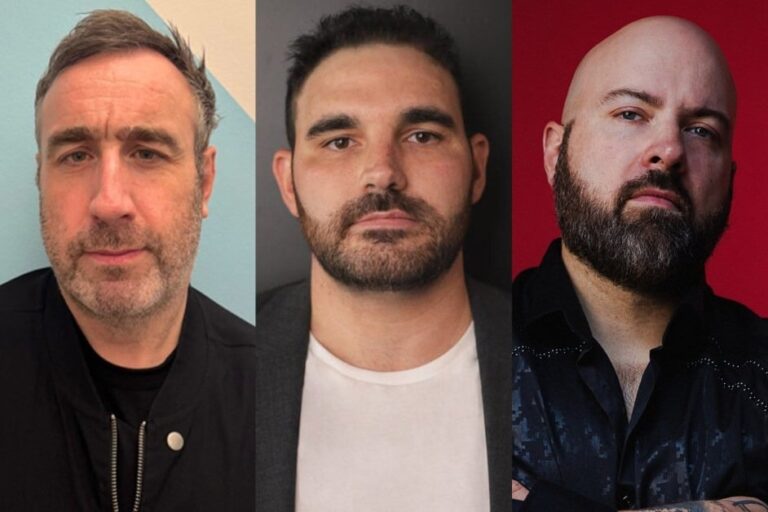
UK-based talent management company Bigfoot Music Management is becoming part of Lucas Keller‘s Milk & Honey.

Bigfoot and its clients, including Adam Beyer and Joris Voorn, are joining Milk & Honey, as the latter company reiterates its “deep belief in the future growth of techno and underground electronic music”.

Bigfoot’s roster also includes Juliet Fox, Sarah Story, Sam Wolfe, and Will Atkinson.

As a result of the pact, Jeremy Ford, Adam Beyer’s longtime manager, becomes Senior Vice President of Electronic for Milk & Honey globally.

He will be based in Milk & Honey’s London offices.

Said Lucas Keller: “As diverse as the Milk & Honey brand is in mainstream music genres, we are equally invested in underground music.

“We look after unique talent across all facets of the music business, and this deal with Bigfoot to join Milk & Honey represents a further investment into techno and electronic music which is a top priority for [our] company. We are very excited to have Jeremy and his team in our UK office and joining the global M&H outfit.”

Dave Frank, Head of Artist Management & Sports at Milk & Honey, added: “Over the past three decades, Jeremy Ford and Bigfoot Management have built one of the most respected operations in electronic music. From Adam Beyer and Joris Voorn to the iconic Drumcode brand that encompasses record label, events, fashion and globally syndicated radio, their team has played a big role in shaping modern techno and house.

“We’re thrilled to welcome the Bigfoot team into the Milk & Honey family as we combine our networks, relationships and resources in representing and growing world-class talent who are and will be the global stars that drive our scene into the future.”

Ford and his team have played a pivotal role in building established dance/electronic platforms such as Drumcode – Beyer’s own label – and Spectrum.

Jeremy Ford, SVP of Electronic, Milk & Honey: “Since its inception Bigfoot has always championed talented artists who possess authenticity and ambition as well as brands, labels and events that also share a purposeful, global vision.

“We’ve always strived to embrace, nurture and develop visionary leaders within the scene. Joining Milk & Honey represents an incredible opportunity for us to expand our reach and strengthen our ability to serve artists in a wider capacity.

“We share the same values, drive, work ethic and belief in building long-term careers so with this partnership and the fusion of two such talented teams we look forward to an exciting future that will no doubt shine a brighter spotlight on those we represent.”

Ant Hippsley, Head of Milk & Honey Music’s UK office, said: “This move reinforces our ambition to build the premier artist management company in the UK. Jeremy and the Bigfoot team have been a standard of excellence in the electronic scene and we’re proud to welcome them into the Milk & Honey family.

“Their roster and expertise perfectly complement what Dave and the team have built globally as we continue to expand our reach and impact for artists.”

Outside of its Los Angeles headquarters, Milk & Honey operates offices in Nashville, New York, Dallas, and London.

With the addition of Jeremy Ford, Milk & Honey’s London office will now house 12 executives across writer, producer, and artist management.

The company’s London HQ is currently moving from Shoreditch back to King’s Cross.

Earlier this year, Milk & Honey appointed East Coast executive Andrew Goldstone as head of Electronic.

Outside of music talent management, Milk & Honey runs ventures including a sports talent representation business, plus a music catalog acquisition brokerage that has completed over $300 million in M&A deals.Music Business Worldwide

US aircraft carrier group approaches Latin America

0

A US naval strike force centred around the world’s largest warship, the USS Gerald R Ford, has arrived in the Caribbean, the US Navy has confirmed.

The arrival of the strike group, which was ordered to the region by President Donald Trump last month, comes amid ongoing strikes against alleged drug boats and tensions with Venezuela.

The US has so far carried out at least 19 strikes against boats in the Caribbean and the eastern Pacific, killing at least 76 people.

Venezuelan President Nicolas Maduro and other Venezuelan officials have accused the US of “fabricating” a crisis and seeking to topple the country’s left-wing socialist government.

In a statement, the US Navy said that the strike group entered the area of responsibility of US Southern Command – which oversees Latin America and the Caribbean – on November 11.

The force includes the USS Gerald R Ford aircraft carrier, which itself includes more than 4,000 sailors and dozens of aicraft. The strike force also includes guided-missile destroyers and various other vessels.

Pentagon spokesman Sean Parnell said that the force will “bolster US capacity to detect, monitor and disrupt illicit actors and activities that disrupt the safety and prosperity” of the US and will help “disrupt narcotics trafficking” and criminal groups in the region.

The carrier group is joining substantial military forces already deployed in the region, including thousands of troops, a nuclear-powered submarine and military aircraft based in Puerto Rico.

Collectively, they form the largest US presence arrayed in and around Latin America in decades.

The US has continued to launch strikes on alleged drug boats in the region. The Trump administration says the attacks are necessary to stem the flow of drugs into the US.

Earlier this week, the US announced it had conducted two additional strikes in the Pacific, killing six people.

The boat strikes have caused tensions to rise with the governments of Colombia and Venezuela, and led to concerns from some observers about violations of human rights and due process.

Earlier in November, Trump downplayed suggestions he was planning to topple the Venezuelan government or start a war.

In an interview with CBS – the BBC’s US news partner – Trump said that “every single boat that you see that’s shot down kills 25,000 on drugs and destroys families all over our country.”

Pushed on whether the US was planning any strikes on land, Trump refused to rule it out, saying: “I wouldn’t be inclined to say that I would do that… I’m not gonna tell you what I’m gonna do with Venezuela, if I was gonna do it or if I wasn’t going to do it.”

Terrorism Suspected in Car Blast Investigation in New Delhi, India

0

new video loaded: India Investigates Car Blast in New Delhi as Terrorism

The National Investigation Agency, India’s lead agency for investigating terrorist attacks, has taken charge in the probe of a car explosion that killed at least eight people in a historic part of New Delhi.

November 11, 2025

Amgen’s stock reaches a 52-week peak of 335.95 USD

0


Amgen stock hits 52-week high at 335.95 USD

Russia will retaliate to nuclear tests by any country, Lavrov warns

0

Moscow suggests that it will carry out its own nuclear tests if the US resumes testing under Donald Trump’s orders.

Russian Foreign Minister Sergey Lavrov has suggested that if the United States tests nuclear weapons, “Russia will respond in kind.”

Lavrov cited on Tuesday previous statements by Russian President Vladimir Putin laying out Moscow’s policy.

Recommended Stories

list of 3 itemsend of list

His comments came less than two weeks after US President Donald Trump said he directed his administration to “immediately” resume nuclear testing.

“Putin outlined our position back in 2023, when he was asked about this issue during one of his speeches,” Lavrov told reporters, according to Russia’s state-owned news agency TASS.

“He stated that if any of the nuclear powers conducts a nuclear weapons test – not a carrier test or a subcritical experiment, but an actual nuclear weapons test – then Russia will respond in kind.”

Late in October, Trump claimed that other countries have testing programmes, saying that he instructed the Pentagon to start testing nuclear weapons “on an equal basis”.

But Russia’s last known nuclear test was in 1990; China’s was in 1996. The US has not tested a nuclear bomb since 1992.

Since the Comprehensive Nuclear-Test-Ban Treaty (CTBT) was signed in 1996, only India, Pakistan and North Korea have carried out known nuclear tests.

Russia tested a missile powered by nuclear energy in October, but not an actual nuclear bomb.

Earlier this month, US Energy Secretary Chris Wright – whose agency is responsible for the country’s nuclear programme – said the US will not carry out a nuclear explosion.

Rather, Wright told Fox News, the US will test components of nuclear weapons to simulate how they would work and ensure that the systems are operational.

“I think the tests we’re talking about right now are system tests. These are not nuclear explosions. These are what we call noncritical explosions,” he said.

But on Tuesday, Kremlin spokesperson Dmitry Peskov said Russia had not received direct information from the US regarding the testing issue.

“So far, there have been no explanations from our US colleagues on this topic,” he was quoted as saying by TASS.

Peskov said last week that Putin instructed the Russian military to “study the advisability of beginning preparations” for nuclear testing.

For its part, China denied that Beijing is conducting nuclear testing and said it hoped that Washington would abide by the nuclear moratorium put in place by the CTBT.

“As a permanent member of the UN Security Council and a responsible nuclear-weapon state, China is committed to peaceful development, follows a policy of ‘no first use’ of nuclear weapons and a nuclear strategy that focuses on self-defence, and adheres to its nuclear testing moratorium,” Chinese Foreign Ministry spokesperson Mao Ning said on November 3.

On Tuesday, Lavrov hit out at Pentagon nominee Robert Kadlec, who told US lawmakers last week that Washington “needs to have credible nuclear response options for a theatre conflict below the strategic-level”.

“Mr Kadlec, who is seeking the post of assistant to the secretary of war, stated that nuclear options should be developed to address certain potential regional conflicts,” Lavrov said.

“This is quite a remarkable statement. In other words, it directly indicates that this individual, as assistant to the secretary of war, intends to view the use of nuclear weapons as a tool for achieving the objectives the United States deems necessary in specific regions.”

Russia itself was accused of nuclear sabre-rattling in the early stages of its invasion of Ukraine in 2022 when Putin put Moscow’s nuclear deterrence force on high alert.