
3.6 C
New York
Thursday, February 19, 2026
Home Blog Page 225

The Unfolding of the India Attack: From Kashmir Poster to Delhi Car Blast | Crime

0

Twenty-six days before a huge blast ripped through a crowded thoroughfare in Delhi, killing 13 people, a pamphlet with a green letterhead had appeared in Nowgam, a staid neighbourhood of cinder-block homes and rutted streets on the outskirts of Srinagar, Indian-administered Kashmir’s main city.

Drafted in broken Urdu, the letter proclaimed affiliation with Jaish-e-Muhammad, a proscribed armed group based in Pakistan.

The text was loaded with warnings directed at Indian government forces stationed in the region, and at those in the local population seen as having betrayed Kashmir’s separatist movement.

“We warn the local people of strict action who do not adhere to this warning,” the poster read, cautioning shopkeepers on the highway between Srinagar and Jammu, another key city, against sheltering government forces.

Such missives were once common from local and Pakistan-backed armed groups at the height of the region’s movement to break from Indian control in the 1990s and the early 2000s.

But after the Indian government revoked Kashmir’s special status, scrapped its statehood, and split the area into two federally ruled territories in August 2019, such posters have been less common – and armed violence has fallen, too. Armed attacks came down from 597 in 2018 to 145 in 2025, according to the South Asia Terrorism Portal (SATP), a platform that tracks and analyses attacks in South Asia.

The emergence of the pamphlet set off a three-week manhunt spanning Kashmir and multiple Indian regions. It was this investigation, say officials, that connected the threads between multiple individuals plotting an attack – including a doctor believed to have been driving the car that exploded on a packed street junction in New Delhi on Monday, barely metres (a few feet) from the ramparts of the Red Fort, a famous Mughal-era monument.

The case and its coverage in large parts of the Indian media have also prompted a wave of Islamophobia and anti-Kashmiri sentiment.

The scholar and the doctors

As security officials looked to track the source of the pamphlet in Nowgam, they zeroed in on clips from CCTVs. Based on what they saw, they “picked up a couple of suspects, among whom was a Muslim scholar from the Shopian district of South Kashmir”, a police official based in Kashmir told Al Jazeera on condition of anonymity as he wasn’t authorised to talk to the media.

The 24-year-old scholar, Irfan Ahmad, preached at a local mosque in Srinagar where the posters had appeared.

His interrogation led police to another name: Adeel Rather, a doctor living in Wanpora village, Kulgam, 20km (12 miles) away.

But when police reached Rather’s house, he wasn’t there. They eventually traced and arrested him some 500km (300 miles) away in the dusty town of Saharanpur in the state of Uttar Pradesh, where Rather was working at a private hospital.  The police claim they also found an assault rifle in his locker in Government Medical College Anantnag, in Kashmir, where he worked until October 2024.

When Rather was questioned, he named another associate: Muzammil Shakeel Ganai, yet another Kashmiri doctor working in Al-Falah University in Faridabad, one of the key satellite cities around New Delhi.

Indian police claim that when they raided two homes rented in Ganai’s name in Faridabad, they recovered incendiary chemicals and weaponry weighing 2,900kg (6,400lb).

Investigators examine the site of Monday’s car explosion near the historic Red Fort, in New Delhi, India, Tuesday, November 11, 2025 (AP Photo)

‘Transactional terror module busted’

These arrests, Indian police in Kashmir claim, have helped them unearth what they describe as a “transnational terror module” linked to Jaish-e-Muhammad and Ansar Ghazwat-ul-Hind (AGuH), another proscribed fighter outfit linked to al-Qaeda.

AGuH was founded in Kashmir by Zakir Rashid, a local fighter commander who was shot by government forces in May 2019. Although its activities have since quietened, Indian police claim that the group has been revived by new leaders from neighbouring Pakistan.

“In a major counterterrorism success, Jammu and Kashmir police have busted an inter-state and transactional terror module,” police said in a statement.

“During the ongoing investigation, searches were conducted at multiple locations by Jammu and Kashmir police,” the statement read. It also said that seven accused were arrested from different locations, including Ganai and Rather, the doctors; Ahmed, the scholar; and four other people.

Those others include a woman from Lucknow in Uttar Pradesh state.

But officials say their investigations also led them to another Kashmiri doctor, Umar Nabi.

Before they could arrest Nabi, though, the Indian capital was rocked by Monday’s explosion. Driving the white sports car laden with explosives, say investigators, was 29-year-old Nabi.

Family members of a car explosion victim grieve as they arrive at a hospital mortuary to collect the body in New Delhi, India, Tuesday, Nov. 11, 2025. (AP Photo)
Family members of a car explosion victim grieve as they arrive at a hospital mortuary to collect the body in New Delhi, India, Tuesday, November 11, 2025 [AP Photo]

‘Crackdown across Kashmir’

CCTV recordings from New Delhi released by police show a young man in a black mask driving the Hyundai hatchback passing through a toll booth in Delhi. Another clip reveals the same vehicle moving slowly through the traffic-clogged junction before a yellow flash of light appears on the screen.

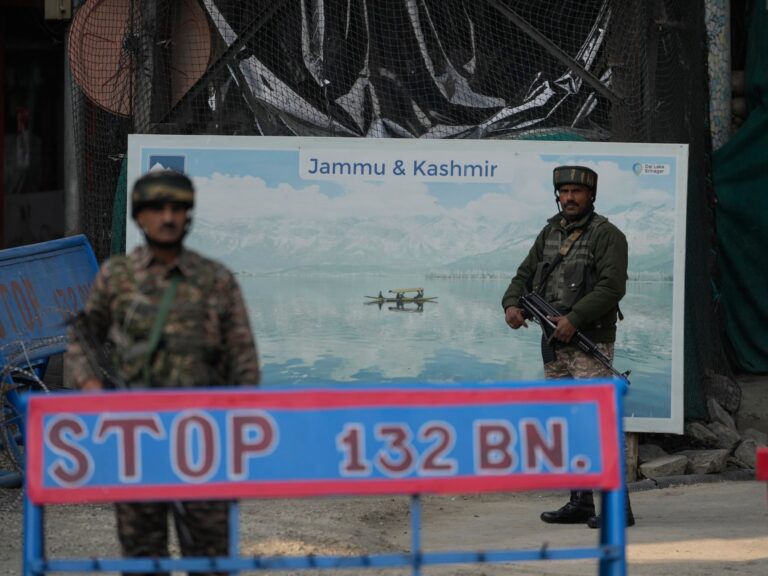
Amid a nationwide security alert following the explosion, police have launched a crackdown across parts of Kashmir. On November 12, heavily armoured police and members of the paramilitary roamed the streets in Srinagar, pushing their way into homes for searches.

In the Kulgam district of South Kashmir alone, security forces conducted 400 search operations, rounding up about 500 people for questioning. Similar raids were reported from the districts of  Baramulla, Handwara, Sopore, Kulgam, Pulwama and Awantipora.

In Koil village of south Kashmir’s Pulwama district, the family of Nabi – the alleged driver of the car that exploded – is in shock.

“On Monday evening, police took away my brother-in-law and then my husband,” said Nabi’s sister-in-law, Muzamil Akhtar. “We were taken aback when we saw the media and police here; we did not know anything.”

She said police had also taken away Nabi’s mother for DNA sampling.

“Our whole house was thoroughly searched. I spoke to Umar last week on Friday. He was normal and told me he would be coming home after three days. We were all excited about his visit. We did not expect any of this,” she said.

Relatives described Nabi as an exceptional student in his school and medical college in Srinagar. One relative said the family used to look upon Umar with pride for his achievements.

“He was always carrying a book in his hand. He was always reading and engrossed in books. He was our hope,” the relative said through the blur of tears, requesting anonymity. “He was a calm person.”

Less than a kilometre (half a mile) from Nabi’s home, there is an eerie silence at the home of Ganai, the doctor arrested in Faridabad.

His father, Shakeel Ganai, told Al Jazeera they were informed by the police on Tuesday that their son had been brought to Kashmir from Faridabad for questioning.

“We did not know what was happening; we had no idea about any of this,” Shakeel said.

Ganai studied at a local school in Koil village and later cleared the competitive exam for a degree in medicine from Jammu. He also pursued a master’s course in medicine from Sher-e-Kashmir Institute of Medical Sciences (SKIMS) in Srinagar and later joined Al-Falah University in Faridabad, where he had been working for two years.

“He visited home in July when I went through a kidney surgery. We would talk to him almost every day,” Shakeel, the father, said, adding that police searched their house and detained his other son as well.

Ganai’s sister, who is also studying medicine and was scheduled to be married in November, said the case should be properly probed.

“My brother worked hard his whole life. He was very ambitious. We cannot believe he is involved in this,” she said.

An Indian soldier stands guard in Srinagar, Indian controlled Kashmir, Wednesday, Nov. 12, 2025. (AP Photo/Mukhtar Khan)
An Indian soldier stands guard in Srinagar, Indian controlled Kashmir, Wednesday, November 12, 2025 [Mukhtar Khan/AP Photo]

‘Lists of Kashmiri residents’

But even as investigations continue, Islamophobia and anti-Kashmiri sentiments have swept several urban communities around India.

On November 12, police in the Indian city of Gurgaon called up housing societies to compile a list of the Kashmiri residents living among them, causing a sense of panic.

Social media sites in India have in recent days been inundated with calls for violence against Kashmiris, with some users also pledging to evict Kashmiri tenants living in cities like Delhi and Noida.

Nasir Khuehami, a student activist from Kashmir, said about 150,000 Kashmiri students are studying in different parts of India. “They are currently plagued by the thoughts of safety and security,” Khuehami said.

The explosion and investigations into it have also raised new questions about India’s approach to Kashmir and fighting armed groups, say experts.

Earlier this year, Amit Shah, India’s home minister, had boasted about how there was now “zero recruitment” into the ranks of armed rebels in Indian-administered Kashmir. In a speech in Parliament, he said all fighters killed by government forces in Kashmir in the first half of 2025 were foreigners.

But experts now believe such statements were misleading.

“There will never be an absolute certainty that the recruitment has come to an end,” said Ajai Sahni, executive director of the Institute for Conflict Management in New Delhi. “These doctors were colleagues who appeared to have been bound by common beliefs or by personal friendships. I would not call it recruitment but mobilisation.”

EU launches antitrust investigation into Google’s spam policy

0

Google hit with EU antitrust investigation into its spam policy

South Sudan President Salva Kiir fires Vice-President Bol Mel

0

Nichola Mandil,Juba and

Basillioh Rukanga

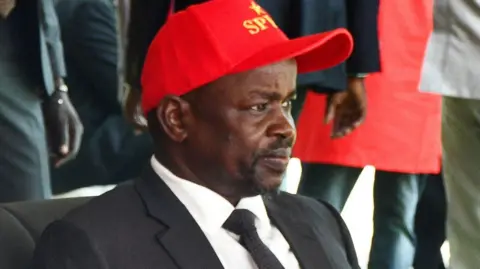
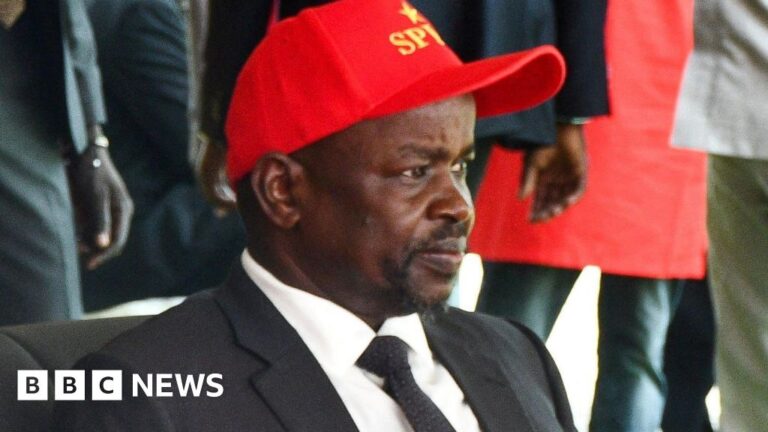
Reuters Benjamin Bol Mel, in black suit and tie, white shirt and red cap written SPLM, attends an SPLM event in Juba, South SudanReuters

Benjamin Bol Mel has been under US sanctions

South Sudan’s leader Salva Kiir has dismissed one of his vice-presidents, Benjamin Bol Mel, who had been tipped as his possible successor.

Kiir stripped Bol Mel of his military rank of general and dismissed him from the national security service. He also sacked the central bank governor and the head of the revenue authority, both considered close allies of Bol Mel.

No explanation was given for the dismissals, which were announced in a decree broadcast on state television.

It comes when there are growing fears of political instability and a possible return to civil war, after the recent collapse of a fragile power-sharing agreement between Kiir and opposition leader Riek Machar.

Bol Mel, 47, was appointed vice-president in February, replacing James Wani Igga, a veteran politician and general.

He was also elevated to become the first deputy chairman of the ruling SPLM party, which analysts believe gave him more powers and positioned him as a potential successor to the 74-year-old Kiir. The president later promoted him to the full rank of a general in the National Security Service (NSS).

Bol Mel’s appointment came despite the US placing sanctions against him for alleged corruption in 2017, which were renewed earlier this year. The US Treasury described Bol Mel as Kiir’s “principal financial advisor”. Kiir’s office denied the description.

He has never directly responded to the corruption accusations against him and has not commented on his sacking.

The president has not announced replacements in any of the positions he held.

His dismissal follows speculation on social media about an internal power struggle in the SPLM.

A senior government official, who preferred to remain anonymous for safety reasons, told the BBC that Bol Mel had been a “divisive figure” in government.

“It’s good that he has gone,” he said.

South Sudan is an oil-rich nation that became the world’s newest country in 2011 after seceding from Sudan. It was engulfed by civil war two years later, after Kiir and Machar fell out.

The 2018 power-sharing agreement that ended the war has been fraught with challenges, as tensions persist and sporadic violence continues to erupt.

Planned elections have been postponed twice in the past three years and fighting between forces loyal to the president and armed groups has recently escalated.

Machar was sacked as vice-president and arrested earlier this year and in September charged with murder, treason and crimes against humanity in a move seen as aggravating tensions and sparking fears of renewed civil unrest. The case is ongoing.

His spokesperson described the charges against him as a “political witch-hunt”.

The charges followed an attack by a militia allegedly linked to Machar, which the government said had killed 250 soldiers and a general.

More about South Sudan from the BBC:

Getty Images/BBC A woman looking at her mobile phone and the graphic BBC News AfricaGetty Images/BBC

AP-NORC poll reveals that only one-third of U.S. adults approve of Trump’s government management

0

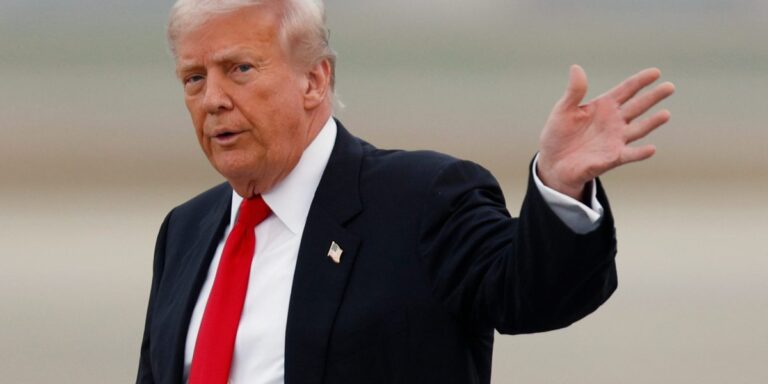
Approval of the way President Donald Trump is managing the government has dropped sharply since early in his second term, according to a new AP-NORC poll, with much of the rising discontent coming from fellow Republicans.

The survey from The Associated Press-NORC Center for Public Affairs Research was conducted after Democrats’ recent victories in off-year elections but before Congress took major steps to try to end the longest shutdown in U.S. history. It shows that only 33% of U.S. adults approve of the way the Republican president is managing the government, down from 43% in an AP-NORC poll from March.

That was driven in large part by a decline in approval among Republicans and independents. According to the survey, only about two-thirds of Republicans, 68%, said they approve of Trump’s government management, down from 81% in March. Independents’ approval dropped from 38% to 25%.

The results highlight the risks posed by the shutdown, which Trump and his administration have tried to pin squarely on Democrats, even as U.S. adults have cast blame on both parties as the funding lapse has snarled air traffic, left hundreds of thousands of federal workers without paychecks and compromised food aid for some of the most vulnerable Americans. But it could also indicate broader discontent with Trump’s other dramatic — and polarizing — changes to the federal government in recent months, including gutting agencies and directing waves of mass layoffs.

Trump’s approval on government management erodes among Republicans

Republicans have generally been steadfast in their support for the president, making their growing displeasure particularly notable.

“I’m thoroughly disturbed by the government shutdown for 40-something days,” said Beverly Lucas, 78, a Republican and retired educator who lives in Ormond Beach, Florida, and compared Trump’s second term to “having a petulant child in the White House, with unmitigated power.”

“When people are hungry, he had a party,” she said, referring to a Great Gatsby-themed Halloween party held at Trump’s Mar-a-Lago club in Florida. “I thought he seems callous.”

The survey found an overwhelming majority of Democrats, 95%, continue to disapprove of Trump’s management of the federal government, compared with 89% in March.

Trump’s overall approval holds steady

Even with the decline in support for his management of the government, Trump’s overall approval rating has remained steady in the new poll. About one-third of U.S. adults, 36%, approve of his overall handling of the presidency, roughly in line with 37% in an October AP-NORC poll. Approval of his handling of key issues like immigration and the economy have also barely changed since last month.

Health care emerged as a key issue in the shutdown debate as Democrats demanded that Republicans negotiate with them to extend tax credits that expire Jan. 1. But Trump’s approval on the issue, which was already fairly low, has barely changed.

About one-third, 34%, of Americans said they approved of Trump’s handling of health care in the November poll, compared with 31% in October.

And many of his supporters are still behind him. Susan McDuffie, 74, a Republican who lives in Carson City, Nevada, and retired several years ago, said she has “great confidence in Trump” and thinks the country is on the right track. She blames Democrats for the shutdown and the suffering it’s caused.

“I just don’t understand how the Democrats can care so little about the people,” she said, scoffing at the idea that Democrats were trying to use the shutdown to force Republicans to address soon-to-skyrocket health care costs.

“I don’t have any patience for the Democrats and their lame excuses,” she said, arguing that people who are scared about SNAP benefits expiring and struggling to put food on the table are a more pressing issue.

Plenty of blame to go around

When it comes to the shutdown, there is still plenty of blame to go around. Recent polls have indicated that while Republicans may be taking slightly more heat, many think Democrats are at fault, too.

“I truly do believe it’s everybody. Everybody is being stubborn,” said Nora Bailey, 33, a moderate who lives in the Batesville area in Arkansas and does not align with either party.

After recently giving birth, she said, she faced delays in getting a breast pump through a government program that helps new mothers while her son was in intensive care. And she is worried about her disabled parents, who rely on SNAP food stamp benefits.

Overall, she said she is mixed on Trump’s handling of the job and disapproves of his management of the federal government because she believes he has not gone far enough to tackle waste.

“I don’t see enough being done yet to tell me we have downsized the federal government instead of having all these excess people,” she said.

It’s possible that Trump’s approval on handling the federal government will rebound if the government reopens. But the showdown could have a more lasting impact on perceptions of the president, whose approval on the economy and immigration has eroded slightly since the spring.

Lucas, the Florida Republican, said shutdowns in which civilians aren’t paid are the wrong way to address ideological disagreement.

“Air traffic controllers? Really? You want to not pay the people in whose hands your lives are every day?” she said. “We need to be addressing these conflicts like intelligent people and not thugs and bullies on the playground.”

___

Colvin reported from New York.

___

The AP-NORC poll of 1,143 adults was conducted Nov. 6-10 using a sample drawn from NORC’s probability-based AmeriSpeak Panel, which is designed to be representative of the U.S. population. The margin of sampling error for adults overall is plus or minus 3.8 percentage points.

Russian A.I. Humanoid Robot Reveal Goes Terribly Wrong

0

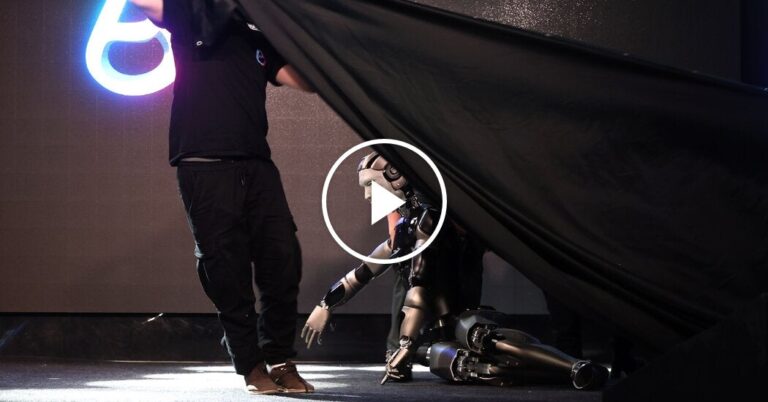
new video loaded: Reveal of Russian A.I. Humanoid Robot Goes Awry

AIDOL, Russia’s first artificial intelligence-powered humanoid robot, collapsed onstage moments after it was revealed at a technology event in Moscow on Tuesday.

By Meg Felling

November 12, 2025

Tencent Music’s Super-VIP Program Boosts Q3 Music Subscription Revenue by 17.2%

0

Tencent Music Entertainment (TME), China’s largest operator of music streaming services, has recorded a double-digit jump in revenue driven by rapid growth in its music services division.

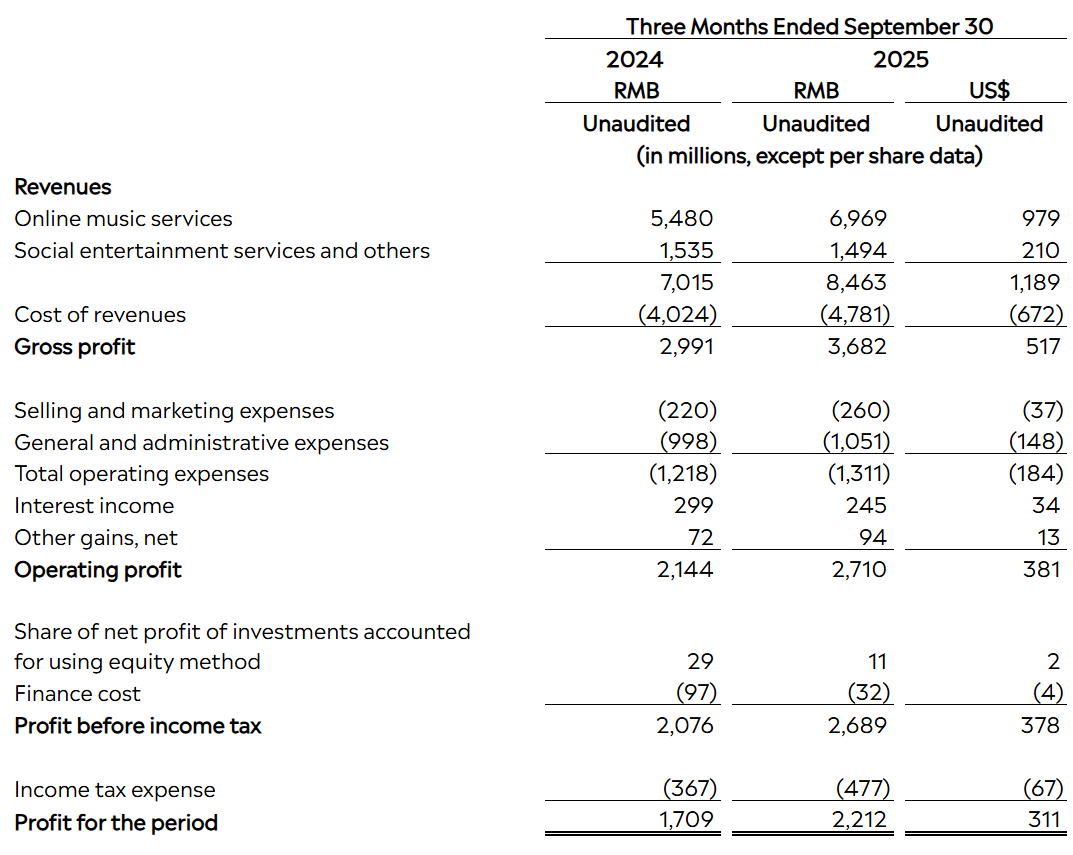
TME’s revenue from online music services grew 27.2% YoY to RMB 6.97 billion (USD $979 million) in the third quarter, the company reported on Wednesday (November 12).

Of that, RMB 4.50 billion ($632 million) came from music subscriptions, up 17.2% YoY.

TME attributed the growth in music revenues to improved average revenue per paying user (ARPPU) – which grew 10.2% YoY to RMB 11.9 – and to continued expansion of its Super-VIP (SVIP) tier, a “super-premium” subscription tier that costs five times as much as a premium subscription.

According to TME, this monthly ARPPU growth was primarily due to the expansion of its SVIP membership program, as it “continued to expand SVIP membership privileges for [TME] users”.

TME didn’t update subscriber numbers for its Super-VIP tier from the 15 million it reported at the end of Q2, but said SVIP numbers “further improved thanks to superior streaming experiences and enriching artist-related benefits.”

The number of paying music users grew 5.6% YoY to 125.7 million, while monthly active users (MAUs) fell 4.3% YoY to 551 million.

The company stressed that it continues to diversify its music subscription tiers, via the introduction of its paid, ad-supported tier between its freemium and premium tiers.

That, along with “innovative ad formats,” propelled year-on-year growth in ad revenue, TME said, though the company didn’t break out ad revenues in the earnings statement.

Tencent noted that its paying ratio – the number of paying subscribers as a percentage of MAUs – has grown along with overall user growth, and has now reached 22.5%.

That leaves TME well behind Spotify, which had a paying ratio of 39.4% in Q3, with 281 million paying users and 713 million MAUs.


TME attributed some of the growth in music services users to its integration of fan platform bubble, a product of DearU, a fan platform operator whose key investor is South Korean K-pop company SM Entertainment. TME said it had onboarded 15 new artists to bubble during the quarter.

“A creative approach to personalized offerings and experiences, supported by deepening user insights, continued to strengthen user loyalty, leading to further increases in both SVIP penetration and ARPPU,” TME CEO Ross Liang said.

“Moving forward, we will further sharpen our core strengths, enhance platform efficiency, and capture emerging opportunities as we continue to drive music creation and consumption.”

The strength in TME’s music services drove overall revenue up 20.6% YoY to RMB 8.46 billion ($1.19 billion).

The numbers were slightly dragged down by a 2.7% YoY decline in TME’s “social entertainment services and other” category, to RMB 1.49 billion ($210 million).

“A creative approach to personalized offerings and experiences, supported by deepening user insights, continued to strengthen user loyalty.”

Ross Liang, Tencent Music Entertainment

As with its rival Netease, TME has seen years of decline in social entertainment revenues due to the Chinese government’s crackdown on online gambling. TME has indicated previously it is pivoting to music services to offset the decline.

The company reported a 30.6% YoY jump in net profit to RMB 2.15 billion ($302 million). Earnings per American Depositary Share amounted to RMB 1.38 ($0.19), up from RMB 1.01 in the same quarter of 2024.


Source: TME

“Our ongoing innovations in content enrichment, services expansion to include more live experiences, continued to fuel consistent subscription revenue growth while boosting momentum in non-subscription services, especially in concerts and artist merchandise,” TME Executive Chairman Cussion Pang said.

“Backed by our strong financial position and operational excellence, we are poised to further broaden our music services and create greater value for the entire music industry.”

“Backed by our strong financial position and operational excellence, we are poised to further broaden our music services and create greater value for the entire music industry.”

Cussion Pang, Tencent Music Entertainment

TME operates music streaming platforms QQ Music, Kugou Music and Kuwo Music, and karaoke platform WeSing, as well as a number of other businesses including long-form audio streaming platform Lazy Audio and live events producer TME Live.

RMB to USD currency conversions were provided by TME, based on the exchange rate as of September 30, 2025, per Federal Reserve data.Music Business Worldwide

Johnson says US House will vote on full release of Epstein files next week, according to Donald Trump News

0

The United States House of Representatives will hold a vote to force the full disclosure of files related to the late sex offender Jeffrey Epstein, Speaker Mike Johnson has said.

Johnson told reporters on Wednesday that the House would hold a vote next week to require the Department of Justice to release all documents related to the disgraced financier.

Recommended Stories

list of 2 itemsend of list

Johnson added that he wanted to “remind everybody” that the GOP-led Oversight Committee had been “working around the clock” on its own investigation into the case.

Johnson made the comments after Democratic lawmaker Adelita Grijalva, who was sworn in as the newest member of Congress on Wednesday, signed a petition to compel a House vote on the issue.

The bipartisan discharge petition – a mechanism allowing a majority of lawmakers to bypass the House leadership – was put forward by Kentucky Republican Thomas Massie and California Democrat Ro Khanna.

Grijalva won a special election to fill the Arizona seat held by her late father, Raul Grijalva, in September.

Johnson had refused to swear in the lawmaker as the chamber has been out of session since September 19, prompting a lawsuit by Arizona’s attorney general.

Grijalva and other Democrats said the delay was intended to prevent her from adding her signature to the Epstein petition.

Immediately after being sworn in, Grijalva signed the petition, giving it the required 218 signatures to progress.

Her co-signatories included all 214 House Democrats and four House Republicans – Massie, Marjorie Taylor Greene, Lauren Boebert and Nancy Mace.

Republicans have a narrow majority in the House, with 219 members.

In a speech on the House floor after taking her seat, Grijalva promised to continue her father’s legacy of advocating for progressive policies and ensure Congress provided a “full and check and balance” to President Donald Trump’s administration.

“We can and must do better. What is most concerning is not what this administration has done, but what the majority of this body has failed to do,” she said.

Grijalva’s second act in a busy first day on Capitol Hill was to vote with the majority of her Democratic colleagues to reject the Senate-passed legislation to reopen the government.

Lawmakers voted 222 to 209 in favour of moving the funding package to Trump’s desk for his signature, ending the longest federal government shutdown in history.

Jim McGovern, the top Democrat on the House Rules Committee, had previously said he expected voting on the Epstein bill to take place in early December.

Johnson’s announcement of an earlier-than-expected vote hinted at growing frustration among Republican lawmakers, many of whom are facing growing scrutiny from within their own party, Democratic lawmakers and the American public over accusations they are protecting child abusers.

Tennessee Republican Tim Burchett told reporters on Wednesday that he was “tired of messing around” with the issue.

“The Democrats have had the Epstein files for four years, and now we’ve got it for nine months, and it’s going to be dragged into a bunch of nonsense. Let’s just take it to the floor. Let’s vote on it. Let’s get on with it,” he said.

A push on Wednesday by Burchett to force an expedited vote to release the files was blocked for not following proper legislative procedure.

In a video on X, Burchett blamed Democrats for blocking his efforts and accused them of “gamesmanship” over Epstein.

The vote also comes amid renewed scrutiny of Trump’s relationship with Epstein, after Democrats on the House Oversight Committee released new emails appearing to further link the pair on Wednesday.

In one such communication, Epstein told his former girlfriend, Ghislaine Maxwell, who is currently serving a 20-year jail sentence for sex trafficking, that Trump had “spent hours” at his house with one victim.

The email, reportedly sent to Maxwell two years after Epstein had spent 13 months in prison for his sex crimes, also said, “I want you to realize that that dog that hasn’t barked is trump.”

It was unclear what Epstein was referring to with his comments.

Epstein said Trump “knew about the girls” in another email sent in 2019.

Writing on his Truth Social platform, Trump dismissed the emails as a “hoax”, accusing Democrats of being willing to “do anything at all to deflect on how badly they’ve done on the Shutdown”.

White House Press Secretary Karoline Leavitt also dismissed the emails, saying they “prove absolutely nothing other than the fact that President Trump did nothing wrong”.

“This administration has done more with respect to transparency when it comes to Jeffrey Epstein than any administration ever,” she said.

Challenging Client

0


Client Challenge


JavaScript is disabled in your browser.

Please enable JavaScript to proceed.

A required part of this site couldn’t load. This may be due to a browser
extension, network issues, or browser settings. Please check your
connection, disable any ad blockers, or try using a different browser.

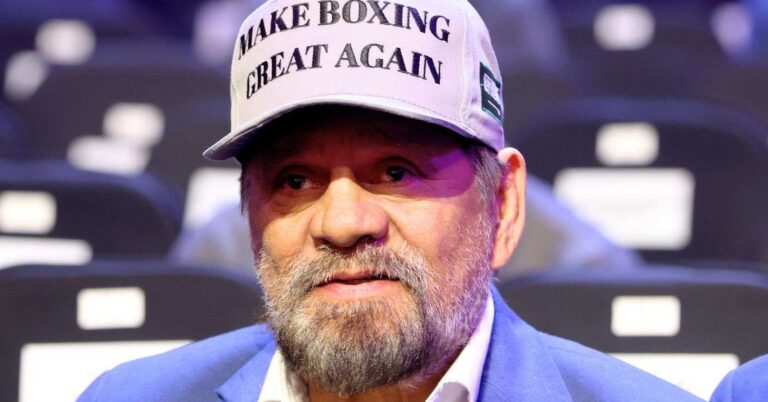
Roberto Duran names his toughest opponent after fights with Leonard, Hagler, and Hearns

0

With 119 professional fights to his name, Roberto Duran had plenty of options when asked to choose the best opponent he ever faced.

Across a 33-year career that began in 1968, Duran amassed 106 wins and world titles in four weight classes. “Manos de Piedra” shared the ring with some of the sport’s greatest names, including Ken Buchanan, Esteban De Jesús, Sugar Ray Leonard, Wilfred Benítez, Marvin Hagler, Thomas Hearns, Iran Barkley, Vinny Pazienza and Héctor Camacho.

Feared for his ferocity and ruthless artistry, the Panamanian became part of the famed “Fabulous Four” or “Four Kings”, alongside Leonard, Hagler and Hearns. And from that Hall of Fame group came the opponent Duran still regards as the best of them all when he spoke to The Ring.

“I have to say Sugar Ray Leonard because look at what he did in his career after he lost to me. It takes a lot to come back from defeat and Leonard did it.”

That’s high praise from a man who once had little time for Leonard during their heated rivalry in 1980. In “The Brawl in Montreal,” Duran dethroned the American star to win the WBC welterweight title.

But in the New Orleans rematch, “The Super Fight”, Leonard gained revenge. After taunting Duran, particularly in round seven, Leonard’s showboating finally broke the champion’s composure. At 2:44 of round eight, the Panamanian turned away, quit and was believed to have uttered the words “No Mas” that would forever be associated with the fight. Duran, however, denied ever saying that.

The First Robot that Moves Like TARS from Interstellar, Walking and Rolling

0

If you want to build an actual HAL 9000, all you need is an LED, some carpentry skills, and any laptop accessing a talking AI. If you want to build your own R2D2, you’ll have a tougher job assembling a range of materials, motors, and electronics. But what if you wanted to make your own working version of TARS, that bizarre, blocky robot from Christopher Nolan’s Interstellar that looks like a stainless steel ATM with metal posts for legs sprouting from its shoulders?

Well, to do all that, you might need to hold a master’s degree from Carnegie Mellon University’s Robotics Institute and be a senior robotics engineer at Nimble.ai. Fortunately for Aditya Sripada, he just happens to be one, which is how he and his longtime collaborator Abhishek Warrier built TARS3D.

They also wrote “Walking, Rolling, and Beyond: First-Principles and RL Locomotion on a TARS-Inspired Robot,” which was a Mike Stilman Award Finalist for outstanding papers at the 24th IEEE RAS Humanoids Conference in Seoul, the Olympics for humanoid robotics research.

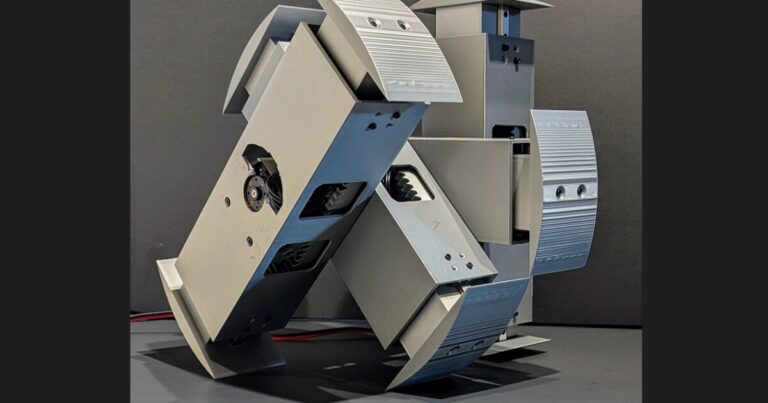
As the following demonstration video shows, TARS3D is exciting, with four independently articulated, telescopic “pillars” that immediately and quickly transform (from a side-view) into an X-shape as pillars 1 and 3 rotate forward and pillars 2 and 4 rotate back. TARS3D also extends its curved pads on the tops and bottoms of each pillar as “feet,” all the better for rolling as an eight-spoke double rimless wheel. Sripada and Warrier claim it’s the first TARS-emulating robot that can both walk and roll.

TARS3D robot

Of course, Nolan’s TARS had things easier: while not being a computer-generated image, it was a human-sized puppet whose operators were digitally deleted from the screen, and in wheel-form, was attached to a motorized, amphibious dolly.

While the roboticists note in their paper that much of robotic locomotion research is biomimicry-focused, robots moving through “many human-engineered settings can benefit from nonanthropomorphic forms.” Just like the movie bot, TARS3D can also walk (if a bit tippily), but rolling is definitely its strength. That’s thanks to the robot’s seven independent movements (three rotary and four prismatic) which “use machine learning and optimization to identify gaits not tractable through analytic methods.”

In their paper, the authors describe how they “used deep reinforcement learning (DRL) in simulation” and “observed that the learned policy can recover the analytic gaits under the right priors and discover novel behaviors as well.” They learned that TARS3D’s “biotranscending morphology” led to “multiple previously unexplored locomotion modes,” and that further exploration will open a promising pathway for multimodal robotics.

Although the current version of TARS3D is cable-connected, such may not be the case with future incarnations

Aditya Sripada

Although TARS3D isn’t ready for interstellar missions just yet – it’s still cable-connected, and at 25 cm (9.8 in) and 990 g (2.2 lb) of 3D-printed components, it’s small and light enough to stand on a table – eventually, Sripada and Warrier will test how well TARS3D moves across a range of terrains.

Sripada said that building TARS3D – which he began back in November 2022 without a laboratory, funding, or affiliation, “just late nights and weekends and a desire to reconnect with the simple joy of building robots,” – reminded him of why he “fell in love with robotics in the first place … the wonder, the patience, the heartbreak when things fail, the quiet euphoria when they finally work, and the feeling that somewhere in the process, you discover a small new truth about motion, persistence, and yourself.”

New Atlas asked Sripada to discuss his motives for creating TARS3D and how the prototype might lead to further solutions and opportunities. His emailed responses are below.

NEW ATLAS: What aspects of TARS were such an inspiration for you to create TARS3D?

ADITYA SRIPADA: Before the answers, a small context point. TARS3D is primarily about locomotion as a mobility primitive, built to evaluate the practical feasibility of gaits shown in the movie. So, I will center on how it fits within decades of legged research and where that leads.

TARS is a simple rectangular body that appears to do a lot, which led me to a clear question: can a low-complexity robot both roll for transit and step across discrete footholds? Rolling looked cinematic at first, but with small changes to the contact arc and a brief telescopic push it works in practice, and the math matches classical rimless wheel results while the same body walks with stable foot placement. The structure also offers redundancy because many contact edges can carry load, and we also see diverse gaits through deep reinforcement learning.

 NEW ATLAS: What are the practical applications of TARS3D for helping human beings at home, in workplaces, at leisure and entertainment, or during emergencies?

SRIPADA: [While this question doesn’t] have direct or immediate answers, I’ve included brief reflections that might help illustrate what directions could be possible.

TARS3D is a mobility module that rolls for transit and steps when the path breaks into sparse footholds. In warehouses, plants, and infrastructure sites, it moves quickly in corridors, then steps over pallet gaps, cable trays, grates, stair edges, and cable trenches to reach sensors, verify inventory, or perform inspection, with mission fixtures and contact tuning added as needed.

NEW ATLAS: Are there ways that TARS could be useful for helping animals including pets, or helping ranchers with their livestock?

SRIPADA: This is secondary to the locomotion result, but the same quiet and low profile motion could support routine checks at gates and water points and short remote observation in clinics or shelters. Any near-term use would layer sensing and handling policy on top of the mobility.

 NEW ATLAS: Are there any applications of TARS3D technology for exoskeletons, EVA repairs of vehicles and stations, or extraterrestrial exploration?

SRIPADA: The focus on stable transitions, few joints, and energy-aware motion can guide lighter assistance devices. For work outside a vehicle, a compact module could ride rails in roll mode, then step and brace to hold a sensor or a tool during inspection. These directions follow naturally from the validated locomotion.