Good morning. Just three years ago, most companies treated generative AI like an uncertain curiosity. Today, it’s hard to find a Fortune 500 company that isn’t rethinking core processes to leverage it—momentum that’s only accelerating as 2026 approaches.
Leaders are no longer debating whether generative AI will matter; they are racing to determine how to operationalize it. That shift was the topic of my conversation with Wharton marketing professor Stefano Puntoni, co-director of the Wharton Human-AI Research (WHAIR) initiative. Puntoni noted that generative AI adoption is progressing at an eye-opening pace. “I don’t think there’s any company that now says, ‘Generative AI isn’t for us,’” he said.
The third annual WHAIR study, conducted with GBK Collective, underscores this acceleration, Puntoni told me. A survey of 800 senior leaders in finance, IT, HR, and other functions at U.S. companies with more than $50 million in annual revenue found that 88% expect to increase generative AI investment in the next year, and 62% expect budgets to rise by more than 10% within two to five years.
This marks a sharp reversal from 2023, when concerns around data leakage, regulatory liability, and consumer protection—especially in heavily regulated industries—led many companies to ban generative AI outright, Puntoni explained. Today, most enterprises are moving ahead and figuring out optimal implementation with guardrails, he said. “I think it’s going to take a decade to really find out how to use this technology, but it’s improving so rapidly,” he added.
Usage patterns show the shift. In 2023, only 37% of senior leaders used generative AI weekly. Now, 82% do, and 46% report daily use, according to the report. Because generative AI is a general-purpose technology, Puntoni and his colleagues expect usage to reach near-universal levels. “Half of senior leaders in a large sample of corporate America are saying that they’re using a tool every day; that is really quite incredible,” he said.
Measuring progress
Leaders appear optimistic about returns. Nearly three-quarters of respondents said their companies track ROI through metrics such as profitability, productivity, and throughput, according to the report. Four out of five expect positive returns within two to three years, with top executives more optimistic than mid-level managers.
Still, progress varies by company size. Larger enterprises are seeing slower results as they manage complex integrations, while midsized and smaller firms report quicker progress. Tech, banking, and professional services firms are among the sectors making strides.
The ROI reports rely on self-assessments rather than hard evidence, Puntoni said. Many organizations are still refining how they measure success, often focusing on intermediate metrics. “We should look at this data as more like a vibe of how they feel about it than hard evidence for what’s happening inside these companies,” he added.
MIT’s August report found that, based on its dataset, most firms struggle to generate immediate ROI from generative AI—from a profitability perspective—with back-office automation delivering the biggest impact. However, both the MIT and WHAIR reports highlight a persistent barrier: workforce skill gaps.
Wharton’s survey shows that 43% of leaders warn of “skill atrophy,” underscoring the need for better AI training programs. As generative AI matures in the enterprise, organizational readiness is paramount—leadership alignment, workforce skills, governance, and change management, not just technical capacity, according to the report.
Enterprise AI is already a major focus on Wall Street, and investors are watching closely as big tech companies and their customers scale adoption. As we head into 2026, a clearer question is emerging: not whether generative AI will create value, but how companies can build the skills, systems, and governance to capture it.
Jeremy Evans was promoted to executive vice president and CFO of Helios Technologies, Inc. (NYSE: HLIO), a provider of motion and electronic controls technology. Evans succeeds Michael Connaway, who has left the company after joining Helios on Oct. 13, 2025. The company stated Connaway’s departure is not related to any disagreement. Evans joined Helios on Jan. 24, 2024, and was promoted to chief accounting officer on Sept. 1, 2025. Before joining Helios, he accumulated 25 years of leadership experience with Tech Data, now TD SYNNEX Corporation, most recently serving as VP of accounting transformation.
Bryan Kyle was appointed CFO of Conga, a revenue lifecycle management platform provider. Kyle brings over 25 years of financial leadership experience across both private and publicly traded technology companies. Along with executing corporate finance strategies at Conga, he will oversee the financial integration of the planned PROS B2B acquisition.
Big Deal
The 2025 Bank of America Business Owner Report was released this morning in partnership with the Bank of America Institute. Small and mid-sized business owners are cautiously optimistic about the coming year, with 74% expecting revenue increases and nearly 60% planning to expand their businesses.
The research found that about half of business owners believe the local (53%), national (48%), and global (45%) economies will improve over the next year. Many respondents said their confidence would increase with stabilization of tariff policy, cooling inflation, lower interest rates, and stronger supply chains.
Other key findings include that roughly three in five business owners are currently impacted by labor shortages. Of those affected, 50% are personally working more hours to cover staff shortages, and 40% are raising wages to attract more competitive talent. With the tight labor market, only 1% of business owners plan to lay off employees in the next 12 months, and 43% plan to hire more.
AI has become essential for business owners, with 77% having integrated it into their operations over the past five years. Among these, AI is used most for marketing, followed by content production, customer service, and inventory management. According to the Bank of America Institute, small business payments to tech services—including AI—were up nearly 7% year-over-year in September.
“Business owners are approaching the coming year with confidence and a clear focus on growth,” said Sharon Miller, president of Business Banking at Bank of America, in a statement.
Going deeper
“America’s path out of $38 trillion national debt crisis likely involves pushing up inflation and ‘eroding Fed independence,’ says JPMorgan Private Bank” is a Fortune report by Eleanor Pringle.
Pringle writes: “Business leaders, policymakers, and investors are growing increasingly concerned by the United States’s borrowing burden, currently sitting at $38.15 trillion. The worry isn’t necessarily the size of this debt, but rather America’s debt-to-GDP ratio—and hence, its ability to convince investors that it can reliably pay back that debt. It currently stands at about 120%.” You can read the complete report here.
Overheard
“Jeff Bezos, the founder of Amazon and one of the world’s wealthiest people, is throwing his money and time into an artificial intelligence start-up that he will help manage as its co-chief executive.”
—Bezos has helped fund a new AI startup called Project Prometheus, with $6.2 billion in backing, the New York Times’ Cade Metz reported.
COP30 host Brazil has created 10 new Indigenous territories, with the climate summit hit by protests in recent days.
The designation means the areas, including one in part of the Amazon, will have their culture and environment protected under Brazilian law – though this is not always enforced.
The move follows similar actions from President Luiz Inácio Lula da Silva, whose government recognised Indigenous possession of 11 territories last year. The latest measure will be formalised through a presidential decree.
It comes as thousands have protested at the UN’s annual climate conference, with some carrying signs reading “demarcation now”.
Earlier last week, demonstrators – some of whom were from Indigenous groups – carrying signs that read “our forests are not for sale” broke into the summit and tussled with security.
Security around the conference has since increased noticeably, with more armed soldiers and police at the entrance. Lots of Indigenous groups do not have accreditation to go inside.
More than 200 human rights groups wrote to UN officials on Monday criticising the enhanced security, saying it “contributes to an increasing global trend towards the silencing of dissent, militarised response to protest, and marginalisation of those defending land and the environment”.
Expanding the total area considered Indigenous territory could prevent up to 20% of additional deforestation and reduce carbon emissions by 26% by 2030, according to a study by the Articulation of Indigenous Peoples of Brazil, the Amazon Environmental Research Institute and the Indigenous Climate Change Committee.
The new protected areas span hundreds of thousands of hectares and are inhabited by thousands of people from the Mura, Tupinambá de Olivença, Pataxó, Guarani-Kaiowá, Munduruku, Pankará, and Guarani-Mbya indigenous peoples.
One area overlaps more than 78% with the Amazon National Park, part of the bio-diverse rainforest which plays a crucial role in regulating the global climate and storing carbon.
The Brazilian government’s announcement came on Indigenous Peoples’ Day at COP30 on Monday.
Until the left-wing Lula re-entered office, no new Indigenous lands had been declared since 2018, it said.
Under his far-right predecessor, Jair Bolsonaro, who promoted mining on Indigenous lands, the protections afforded to them were frequently not enforced.
Currently, Indigenous lands encompass 117.4 million hectares – roughly equivalent to the size of Colombia, or around 13.8% of Brazil’s territory.
Hundreds of Indigenous groups live in Brazil, according to the country’s census.
The Amazon rainforest is already at risk of a renewed surge in deforestation as efforts grow to overturn a key ban to protect it. Thick and healthy forestry helps pull carbon out of the atmosphere.
Carbon released through the burning of fossil fuels has contributed to climate change.
Countries are gathering at COP30 in an effort to reach agreements on how to try to limit global average temperature rises to 1.5C above pre-industrial levels and keep them “well below” 2C.
The UN’s Intergovernmental Panel on Climate Change says a large body of scientific evidence shows that warming of 2C or more would bring serious consequences, including extreme heat, higher sea levels and threats to food security.
A required part of this site couldn’t load. This may be due to a browser
extension, network issues, or browser settings. Please check your
connection, disable any ad blockers, or try using a different browser.
Stonehill College has announced the addition of a men’s swimming and diving program for the 2026-2027 academic year. Matt Distler, current head coach of the women’s swimming and diving program, will be the first head coach for the men’s program as well.
“I am extremely excited to build a new men’s program and to add diving to our now combined programs,” Distler said. “This is also a great opportunity to add another men’s program to our sport. I’m grateful to Stonehill, especially to Dean O’Keefe and Tim Williamson for trusting me with this responsibility and for believing in swimming and diving. I look forward to being able to positively impact more student athletes here on the Hill.”
Stonehill began its transition to Division I in summer 2022 and finished reclassification to full Division I status this past July. The women’s program added diving to its swimming team this academic year and the addition of men’s swimming and diving will bring Stonehill to a total of 24 sports sponsored.
The men’s swimming and diving program will join the women in the Northeast Athletic Conference (NEC), bringing the total to five NEC men’s programs. The Howard men captured the 2025 NEC crown with 883 points. The NEC began sponsoring men’s swimming and diving in the 2020-2021 season.
Also notably making the transition to Division I in the NEC is Le Moyne, who finished 4th out of the four men’s teams in the NEC this past season. Stonehill and Le Moyne finished 6th and 7th respectively out of seven teams this past season on the women’s side.
The addition of men’s swimming and diving for Stonehill comes at a time in which numerous swimming and diving programs have been cut, including programs like Cal Poly. On the other hand, St. Mary’s College in California has added men’s and women’s swimming and water polo for 2026-2027 while Marquette in Wisconsin adds women’s swimming as well.
Stonehill is located in Easton, Massachusetts, about 22 miles south of Boston. The school is home to approximately 2,500 full-time undergraduate students with 56% female and 44% male.
In the most comprehensive investigation of the ketogenic diet’s mental health effects yet, researchers pooled 50 studies spanning six decades to see what we actually know about its influence on mood. The results are a mix of promising and “too early to say.”
Researchers from St Michael’s Hospital in Toronto were particularly interested in finding consistent evidence on whether eating keto could relieve symptoms of depression and anxiety. Overall, 50 studies made the cut, featuring 41,718 participants aged 18-70 years from 15 countries. Nearly half (23) of the studies had been conducted by US scientists, and most had been done in the last decade.
To break it down further, this systematic review and meta-analysis looked at 14 randomized controlled trials (RCTs), 17 quasi-experimental studies, five cross-sectional analyses, six clinical series – a group of case reports involving patients given similar treatment – and eight case reports. All studies were published between 1965 and 2025, with 41 focused on depression and 29 on anxiety, with some crossover. In 22 studies, participants had a clinical psychiatric diagnosis, while in others the mental health outcomes were secondary endpoints.
“Ketogenic diets (KDs) have been hypothesized to influence mental health through pathways involving mitochondrial function, inflammation, and neurotransmitters, but their therapeutic value in psychiatric populations remains uncertain,” the researchers noted.
The studies covered a wide range of groups: people with major depressive disorder, (MDD) bipolar disorder, schizophrenia, PTSD and generalized anxiety disorder (GAD), as well as non-psychiatric groups where mental health was measured alongside obesity or metabolism. Importantly, all studies made use of validated mental health scales such as the Patient Health Questionnaire-9 (PHQ-9) for depression and the Generalized Anxiety Disorder (GAD-7) scale.
The issue with many such large-scale studies is that due to the nature of individual research projects, a review can be like comparing apples and oranges. In an effort to represent the huge amount of data involved – gathered from different kinds of studies, with varying methods, populations and avenues of investigation – the researchers slotted them into subgroups to see if any patterns emerged.
Across 10 RCTs, participants on keto diets experienced greater improvements in depression scores than those in comparison groups (high-carbohydrate, for example). Statistically, this was described as having a “small-to-medium effect,” which essentially means most people in the trials didn’t experience dramatic changes, but the improvement was consistently greater than chance.
In studies that monitored participants’ ketone levels, to confirm metabolic ketosis, the improvement in depressive symptoms appeared more substantial. In studies that didn’t, the benefit compared with control groups was small and even disappeared in some. This suggests that the keto diet may only have a real influence in relieving depression when ketosis is reached – where the body switches to burning fat due to the absence of carbohydrates for fuel. Diets that allowed very few carbohydrates (around 10% of daily energy) were linked to greater mood improvements than more moderate low-carb diets (11%-20%).
The researchers also found that body size appeared to play a role in how effective keto was on depression. There were no meaningful mental health benefits found when participants were clinically obese, but the modest improvements were statistically significant in non-obese cohorts.
In the quasi-experimental studies – where everyone was on a keto diet, and there was no control group – the researchers found a moderate, but not dramatic, overall improvement in depressive symptoms overall. While there was a small difference in the results from the ketone-monitored studies and those that didn’t measure, it wasn’t a statistically significant one. In other words, the researchers found no robust evidence that ketone monitoring changed the outcome when it came to quasi-experimental study design.
What’s more, because participants in these studies aren’t randomly assigned or compared to a control group, the results can’t actually prove the diet caused any reported mental health improvements.
When it came to anxiety, the data was even less convincing. In nine RCTs that measured anxiety almost no difference between keto and other diets was found. However, less rigorous studies – where participants weren’t randomized – often showed improvement over time. The researchers, however, caution that this may be due to a number of variables –including the placebo effect, lifestyle changes or adherence – and not actually true diet-driven relief.
In six quasi-experimental studies that investigated anxiety, the statistics suggested a medium level of anxiety relief over time during the keto trial, but when these groups were split further into those that measured ketone levels versus those that didn’t, or those involving people with neurological disorders versus those without, there were no meaningful differences. Essentially, any change in anxiety symptoms were the same across all groups, so no specific factor could be credited with being beneficial.
“In this systematic review and meta-analysis of 50 studies, [keto diets] were associated with small to moderate improvements in depressive symptoms in randomized clinical trials and with larger improvements in quasi-experimental studies,” the researchers noted. “No significant associations were found for anxiety in randomized clinical trials.”
Meanwhile, the researchers found that in the clinical series and case reports, a decrease in psychotic symptoms and better mood regulation was observed in patients with schizophrenia and bipolar spectrum disorder. An additional PTSD study also found the diet was linked to positive outcomes, but more work is needed.
Overall, the team found that keto diets (KDs) may help reduce depressive symptoms, especially under well-supported, ketone-monitored conditions – but there’s not enough evidence to make clinical recommendations. And study into anxiety relief is still preliminary.
“In this systematic review and meta-analysis, KDs were associated with modest improvements in depressive symptoms, particularly with biochemical ketosis verification, while anxiety evidence was inconclusive,” they wrote. “Given heterogeneity, comparators, and short follow-up, well-powered trials with standardized, verified protocols, structured support, and pre-specified outcomes are needed to confirm efficacy and durability.”
Much like mental health treatment, there’s unlikely to be a one-size-fits-all fix found in diet. However, there’s a growing body of work investigating metabolic psychiatry. In previous studies, there have been interesting results when it comes to keto diets and bipolar disorder, cognitive functioning and epilepsy. The diet – which is categorized by its high-fat and low-carbohydrate content – was originally used to treat pediatric epilepsy, more than a century ago, in 1921. Now, it’s most often associated with type 2 diabetes and obesity management.
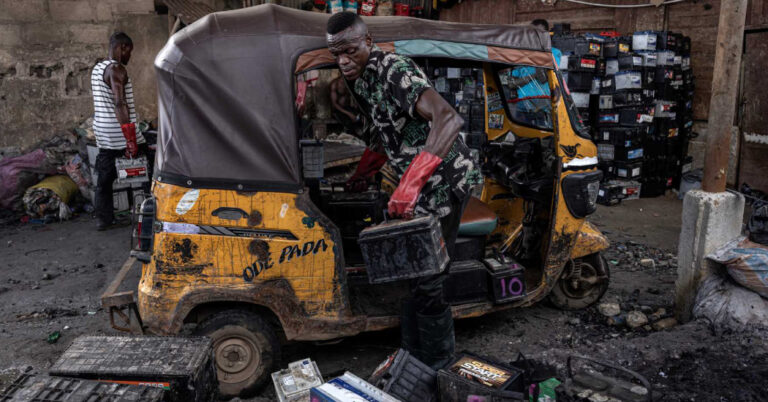
POISONOUS DUST falls from the sky over the town of Ogijo, near Lagos, Nigeria. It coats kitchen floors, vegetable gardens, churchyards and schoolyards.
The toxic soot billows from crude factories that recycle lead for American companies.
With every breath, people inhale invisible lead particles and absorb them into their bloodstream. The metal seeps into their brains, wreaking havoc on their nervous systems. It damages livers and kidneys. Toddlers ingest the dust by crawling across floors, playgrounds and backyards, then putting their hands in their mouths.
Lead is an essential element in car batteries. But mining and processing it is expensive. So companies have turned to recycling as a cheaper, seemingly sustainable source of this hazardous metal.
As the United States tightened regulations on lead processing to protect Americans over the past three decades, finding domestic lead became a challenge. So the auto industry looked overseas to supplement its supply. In doing so, car and battery manufacturers pushed the health consequences of lead recycling onto countries where enforcement is lax, testing is rare and workers are desperate for jobs.
Seventy people living near and working in factories around Ogijo volunteered to have their blood tested by The New York Times and The Examination, a nonprofit newsroom that investigates global health. Seven out of 10 had harmful levels of lead. Every worker had been poisoned.
More than half the children tested in Ogijo had levels that could cause lifelong brain damage.
Source: Sustainable Research and Action for Environmental Development (SRADev Nigeria)
Dust and soil samples showed lead levels up to 186 times as high as what is generally recognized as hazardous. More than 20,000 people live within a mile of Ogijo’s factories. Experts say the test results indicate that many of them are probably being poisoned.
Lead poisoning worldwide is estimated to cause far more deaths each year than malaria and H.I.V./AIDS combined. It causes seizures, strokes, blindness and lifelong intellectual disabilities. The World Health Organization makes clear that no level of lead in the body is safe.
The poisoning of Ogijo is representative of a preventable public health disaster unfolding in communities across Africa. One factory’s lead soot falls onto tomato and pineapple farms near a village in Togo. Another factory has contaminated a soccer field in Dar es Salaam, Tanzania’s largest city. In Ghana, a recycler melts lead next door to a family’s chicken coop.
Factories in and around Ogijo recycle more lead than anywhere else in Africa. The United States imported enough lead from Nigeria alone last year to make millions of batteries. Manufacturers that use Nigerian lead make batteries for major carmakers and retailers such as Amazon, Lowe’s and Walmart.
Ogijo, Nigeria is Africa’s lead recycling heartland.
Finbarr O’Reilly for The New York Times
A Sunday Bible session next to a lead smelting plant.
Finbarr O’Reilly for The New York Times
The auto industry touts battery recycling as an environmental success story. Lead from old batteries, when recycled cleanly and safely, can be melted down and reused again and again with minimal pollution.
But companies have rejected proposals to use only lead that is certified as safely produced. Automakers have excluded lead from their environmental policies.
Battery makers rely on the assurances of trading companies that lead is recycled cleanly. These intermediaries rely on perfunctory audits that make recommendations, not demands.
The industry, in effect, built a global supply system in which everyone involved can say someone else is responsible for oversight.
Nigeria, the economic engine of West Africa, is among the fastest-growing sources of recycled lead for American companies.
Source: U.S. Census Bureau
Ogijo and the communities nearby make up the heart of the industry, home to at least seven lead recyclers. Two factories are near boarding schools. Another faces a seminary. Others are surrounded by homes, hotels and restaurants.
Among thelargest and dirtiest lead recyclers in Ogijo is True Metals. It has supplied lead to factories that make batteries for Ford, General Motors, Tesla and other automakers, records show. True Metals did not respond to questions about its practices or the lead test results.
A school near the True Metals plant in Ogijo.
Finbarr O’Reilly for The New York Times
Deborah Olasupo, 16, at home. “When we mop,” her mother said, “our feet are black.”
Finbarr O’Reilly for The New York Times
Four years ago, Oluwabukola Bakare was pregnant with her fifth child when she moved into a home in Ogijo within sight of a battery recycling factory.
The smoke seeped through the windows at night, making her family cough and leaving a black powder on their floor and food.
“In the morning, when we looked outside, the ground seemed to be covered in charcoal,” Ms. Bakare said.
Testing revealed that her 5-year-old son, Samuel, had a blood-lead level of 15 micrograms per deciliter, three times the level at which the World Health Organization recommends action. His 8-year-old brother, Israel, tested even higher.
Ms. Bakare, 44, has worked inside battery recycling factories for years, cleaning toilets and sinks. Her test showed she had a lead level of 31.1 micrograms per deciliter, which is associated with complications including miscarriages and preterm birth.
Now she wonders whether the smoke contributed to her son’s premature birth at seven months.
To understand the extent of Ogijo’s contamination, consider what happened more than a decade ago in Vernon, Calif., the site of one of the worst cases of lead pollution in modern American history. Soil testing around a recycling plant revealed high lead levels, including at a nearby preschool. Officials called the area an environmental disaster. The factory closed. The cleanup continues today.
Soil at the California preschool contained lead at 95 parts per million.
In Ogijo, soil at one school had more than 1,900 parts per million.
Sources: Soil analysis by Sustainable Research and Action for Environmental Development (SRADev Nigeria); Satellite image by Planet Labs.
All this is avoidable. Lead batteries can indeed be recycled as cleanly as advertised. In Europe, experts say, some recycling factories are spotless. But that requires millions of dollars in technology.
Roger Miksad, the president of Battery Council International, an industry group, said that American manufacturers got 85 percent of their lead from recyclers in North America, where regulations are generally strict.
As for the growing amount from overseas, he said his group condemns unacceptable practices and advises lead recyclers on how to improve conditions.
“But at the end of the day,” Mr. Miksad said, “it’s up to regional and local governments and regulators to enforce the laws in their countries.”
Most major car companies did not address the Times and Examination findings about tainted lead from Nigeria. Volkswagen and BMW said they would look into it. Subaru said it did not use recycled lead from anywhere in Africa.
The test results, though, affirm years of research about the industry’s toll in Africa.
A 2010 study found widespread lead poisoning among workers at a recycler called Success Africa in Ghana. One employee’s lead level was so high that doctors were surprised he was alive. (Success Africa did not respond to requests for comment).
Yet the factory stayed open and in recent years has sold lead to a battery supplier for BMW, Volkswagen and Volvo. The Ghanaian Health Ministry recently found that 87 percent of children living near Success Africa had lead poisoning.
Nearly all of the lead recycled in Africa is used to make electrode plates for batteries. Because lead from various sources is combined during manufacturing, it is impossible for consumers to know the origin of the lead in their car batteries.
Nigerian officials are ill equipped to monitor any of this. The government is battling an armed insurgency and endemic corruption and struggles to provide basic health services, even for urgent concerns like malaria. Power is dispersed among federal, state and local authorities. Local monarchs hold largely ceremonial power.
In Ogijo, recycling is a dirty, dangerous process. It begins with a dead battery. There are plenty; the United States sends tens of thousands of secondhand cars to Nigeria each year.
At these factories, known as smelters, lead from the batteries is melted and purified inside a furnace and then shaped into bars. This is the source of the poisonous smoke that drifts over Ogijo.
Source: Video stills from inside True Metals.
About a half-hour away from True Metals, the king of Ogijo, Kazeem Kashimawo Olaonipekun Gbadamosi, sat atop a carved wooden throne and leaned back into red velvet cushions. “I just want to close them all down,” the king said.
His subjects have complained for years about the factories, which sit among other metals plants. In surveys commissioned by The Times and The Examination, people reported common symptoms of lead poisoning: headaches, stomachaches, seizures, learning delays and other neurological complaints.
Residents recounted efforts to pressure the factories to improve — visits made, complaints lodged. As far back as 2018, the local newspaper Business Day wrote about lead pollution in Ogijo. Factory managers often apologized and promised improvements, residents said. Sometimes, the companies would string up electrical lines and add streetlights to make amends. But the pollution continued.
Despite the king’s exasperation, the real power resides with leaders in the capital, Abuja. “The government always says, ‘No, no, no, just give them time. Let’s get them to change,’” the king said.
Besides, his subjects wanted the factories clean, not closed. Ogijo is full of people who spend their days coaxing sustenance from meager opportunities. Children gather shreds of plastic that their mothers wash and sell to recyclers. Men squat in the dirt, using rocks to split open old wiring to extract copper.
Across Africa, governments have had little awareness of the harms of battery recycling, instead focusing on jobs and foreign investment, said Andreas Manhart, a senior researcher at Oeko-Institut, a German environmental organization. He has visited at least 20 African factories.
“We see investors coming in, setting up new, substandard operations,” he said.“And every time, this leaves a highly polluted site.”
As environmental regulations in the United States and Canada have driven dirty smelters out of business, buyers have searched the world for new suppliers. In recent years, companies in the United States have imported recycled lead from at least eight countries in Africa.
Corporations rely on intermediaries that buy from dirty factories.
Because the supply chain is opaque and diffuse, car companies and battery makers are unlikely to know the precise origins of the lead they use. They rely on international trading companies to supply it.
One such company, Trafigura, has sent recycled lead to U.S. companies from True Metals and six other Nigerian smelters in the past four years, records show. Last year, Trafigura reported $243 billion in revenue by trading oil, gas and metals worldwide.
Until recently, Trafigura’s Nigerian suppliers included one factory, Green Recycling Industries, that tried to live up to its name.
International experts from nonprofit research groups and the metals industry visited Green Recycling last year as part of an effort to strengthen Nigeria’s weak inspection of battery recyclers. The country has laws to protect the environment but struggles to enforce them.
The experts marveled at Green Recycling’s antipollution technology and the machinery that safely broke apart batteries — the sort of equipment featured in promotional videos by American battery makers.
“The equipment and recycling processes are significantly different and of a remarkably higher standard than observed in any other plant in Nigeria,” the experts wrote.
But operating cleanly put Green Recycling at a disadvantage. It had to make up for its high machinery costs by offering less money for dead batteries. Outbid by competitors with crude operations, Green Recycling had nothing to recycle.
Ali Fawaz, the company’s general manager, said his competitors were essentially making money by harming locals. “If killing people is OK, why would I not kill more and more?” he said.
The company shut down this year.
“Healthwise, we made a correct decision, but businesswise, we made a very bad decision,” Mr. Fawaz said. “It’s a bad investment unless you’re dirty.”
Everest Metal Nigeria, in Ogijo.
Finbarr O’Reilly for The New York Times
Victoria Olasupo, center, selling scrap metal.
Finbarr O’Reilly for The New York Times
The same experts who praised the conditions at Green Recycling also visited its competitors. What they found most likely amounted to “severe human rights abuses,” they wrote. They concluded that seven plants in and around Ogijo were “in clear violation of international common practice.”
One factory was “shabby” and covered in lead dust. A few months later, records show, that plant shipped lead to the Port of Baltimore, the primary gateway for recycled lead from Africa to the United States.
At another factory, experts wrote that “lead emissions to the workplace and the nearby environment are considered as something normal.” One week later, that plant sent lead to Newark.
At a third factory, experts observed “thick smoke,” broken equipment and “woefully desolate” conditions. About a month later, that plant also shipped lead to the Port of Baltimore.
True Metals stood out as especially hazardous.
Workers there mishandled materials and unnecessarily subjected the surrounding area to toxic smoke, inspectors wrote. A thick layer of lead sludge and dust covered the floor. True Metals’ managers told inspectors that they conducted blood tests on their workers. Yet the company’s records showed only weight, pulse and blood pressure, according to the report.
Some of the hazards cited in the report would have been obvious to anyone inspecting the factories.
Trafigura hires contractors to audit suppliers to ensure they meet government and industry standards. But people involved in lead recycling said those audits had little effect.
One True Metals worker, who spoke on condition of anonymity to protect his job, said that visits were announced in advance and that most workers were sent home. Those remaining were given new overalls and goggles and coached on how to respond to questions, he said.
After such audits, consultants issue recommendations that include simple fixes, such as handing out safety gear, and expensive ones, like installing new equipment. The smelters typically do what’s affordable and skip the rest, according to interviews with a Lagos-based consultant who conducts audits, the owner of a Nigerian smelter and a former Trafigura trader who has visited plants throughout Africa. All spoke on condition of anonymity because they remain in the metals industry and feared reprisals.
Dimimu Olasupo, 6, and her sister Ifeoluwa, 11, walk to school.
Finbarr O’Reilly for The New York Times
The True Metals factory.
Finbarr O’Reilly for The New York Times
In a written statement, a Trafigura spokesman, Neil Hume, said that the company followed all regulations and worked with the Nigerian government and outside experts to assess its lead suppliers. It is standard practice to notify plants before visits, he said.
“Our approach to responsible sourcing seeks to improve standards by providing clear expectations, training and capacity-building matched with monitoring,” Mr. Hume wrote. He said that Trafigura dropped suppliers that “consistently” failed to improve.
The company declined to discuss what it knew about the conditions at suppliers such as True Metals.
Dirty lead ends up in American batteries.
Exactly who buys lead from Trafigura and other trading companies is not public.
“It’s just a much murkier and unknown industry,” said Samuel Basi, a former lead trader with Trafigura. “It essentially becomes confidential once it comes into the U.S.”
A handful of companies dominate auto battery manufacturing in the United States. The largest manufacturer, Clarios, says that it does not buy lead from West Africa. The second-largest, East Penn Manufacturing, has.
East Penn, a family-owned company, says its recycling roots go back 80 years. It operates the largest battery plant in the world, in tiny Lyon Station, Pa.
The company has called itself “the most progressive manufacturer in environmental protection in the entire industry.” On the company’s website, it says, “Green is good.”
In an interview, East Penn executives said that lead shortages forced it to rely on brokers. “Under 5 percent” came from Nigeria, said Chris Pruitt, East Penn’s executive chairman of the board.
Mr. Pruitt said that the company had paid little attention to the provenance of its lead until The Times and The Examination asked questions. East Penn relied on its brokers’ assurances that everything was fine.
“Could that be me being too trusting?” Mr. Pruitt said. “I’ll take that shot.”
East Penn stopped buying Nigerian lead and began tightening its supplier code of conduct after receiving the questions, Mr. Pruitt said. Lead purchases are now subjected to extra scrutiny and executives receive monthly reports about overseas purchases, he added.
Testing for lead poisoning in Ogijo in June.
Finbarr O’Reilly for The New York Times
Gathering soil samples near True Metals.
Finbarr O’Reilly for The New York Times
IN SEPTEMBER, researchers who conducted the blood and soil testing for The Times and The Examination concluded in a report that most people with high blood-lead levels had breathed in particles emitted by the factories. They wrote that the government needed to move quickly to address the poisoning and begin a comprehensive cleanup.
That month, Nigerian officials closed five smelters, including True Metals.
“Tests have revealed the presence of lead in residents, resulting in illnesses and deaths,” Innocent Barikor, director general of Nigeria’s environmental protection agency, said in a written statement.
The authorities said that those factories had broken the law by failing to operate required pollution control equipment, to conduct blood tests on staff and to prepare environmental impact assessments. The government also cited the factories for breaking batteries apart by hand rather than with machines.
But days later, the factories were running again.
Though Mr. Barikor had threatened to revoke the factories’ licenses, he didn’t. In an interview, he said that he had met with leaders of the factories. He said that they had agreed to properly dispose of waste, upgrade to cleaner technology and, within six months, install automated battery-breaking machines. “Our meeting was very, very fruitful,” he said.
The waste-disposal promise has already been delayed as state authorities look for a dump site. A copy of the agreement, signed by True Metals and reviewed by The Times and The Examination, says nothing about automated breaking systems. The company agreed to a timeline of two to three years to “transition to cleaner recycling technologies.”
The Times and The Examination sought comments from all the recyclers. Two responded. BPL Nigeria, said it was making health, safety and environmental improvements. “The evolution of industry practices requires time,” the company said in a statement.
Anand Singh, a manager at another factory, African Nonferrous Industries, denied breaking any laws but said that the company was making improvements nevertheless. “Compared to others in Nigeria, my company is the best,” he said.
In October, researchers gathered residents to disclose their test results. Anxious workers and parents lined up to speak to nurses and to collect multivitamins and calcium tablets, which can limit lead absorption.
But those treatments are just part of what experts recommend in lead poisoning cases. Generally speaking, the first thing doctors advise is to reduce exposure. Cover or seal chipped lead paint. Replace lead water pipes. Put clean topsoil over contaminated dirt.
There is no playbook for reducing exposure when people’s homes are being sprinkled with lead dust from the sky.
Thomas Ede said he didn’t have the money to move. “I don’t know the way out,” he said. “There’s nothing from the government. They’re saying, ‘Just go away.’”
The morning after he received the test results, Mr. Ede stepped outside the room that he shares with his three children, all of them sleeping together on a crumbling mattress.
He looked past his clothesline toward True Metals. At the front gates stood two shipping containers, ready for their loads.
This article was reported in collaboration with The Examination, a nonprofit newsroom that investigates global health. Fernanda Aguirre, Romina Colman and Mago Torres contributed research and data analysis. The videos of the lead recycling plants in Nigeria at the beginning of this article are by Finbarr O’Reilly, and the portraits are by Carmen Abd Ali.
The accusations from his estranged sister come as the Philippine president faces a corruption scandal over flood-control projects.
Philippine President Ferdinand Marcos Jr has rejected accusations by his estranged sister, Senator Imee Marcos, that he has been a long-term drug user, at a time when the country is witnessing mass protests against corruption.
On Monday, the senator alleged that her brother had developed a cocaine dependency that affected his governance, contributing to corruption and poor decision-making.
Recommended Stories
list of 4 itemsend of list
Communications Undersecretary Claire Castro, the president’s spokesperson, dismissed the claims as baseless, describing them as recycled accusations that have long been disproved.
Speaking to a large crowd at a Manila park rally organised by a religious group, Senator Imee said her brother’s drug use began during the presidency of their father, Ferdinand Marcos Sr — who ruled from 1965 to 1986 — and continues to this day.
Then-President Rodrigo Duterte (R) speaks with Ilocos Norte Governor Imee Marcos during a meeting on Cebu Island, Philippines, on August 21, 2018 [Jay Rommel Labra/EPA]
Without providing evidence, she claimed the president’s addiction became the cause of a “flood of corruption, the lack of direction and very wrong decisions, the absence of accountability and justice”. She also alleged that the president’s wife and children were involved in drug use.
Castro criticised the senator for not addressing former President Rodrigo Duterte, who has acknowledged past fentanyl use and, according to critics, may be linked to corruption along with his daughter, Vice President Sara Duterte. Both have denied wrongdoing.
When Marcos Jr was campaigning for the presidency in 2021, his spokesperson released reports from a private hospital and the national police laboratory showing he tested negative for cocaine and methamphetamine.
Allegations amid corruption scandal
Castro has labelled Imee’s statements as a distraction from ongoing investigations into a corruption scandal involving flood control projects that may implicate some of her Senate allies.
“Sen Imee, I hope you’ll be a patriot and help in the investigation that your own brother has been doing and condemn all the corrupt,” Castro said. “Don’t side with them, don’t hide them. Let President Marcos work to stop all the corruption.”
Marcos’s administration is investigating alleged corruption linked to ghost flood-control projects that cost taxpayers billions of pesos. Officials are accused of pocketing kickbacks from contracts to construct thousands of flood defences, many of which were either made with substandard materials or never built.
The Department of Finance estimates that the Philippine economy lost up to 118.5 billion pesos ($2bn) from 2023 to 2025 due to corruption in flood-control projects. The country’s economic planning minister has said up to 70 percent of public flood-control funds may have been lost since the scandal surfaced.
The crisis comes as the Philippines has faced more than 20 storms this year. Most recently, Typhoon Kalmaegi killed at least 269 in early November, followed days later by Typhoon Fung-wong, displacing 1.4 million people and killing 28.
Tens of thousands of protesters gathered in Manila on Sunday, demanding accountability from authorities, including allies of Marcos. The three-day rally organised by the Iglesia ni Cristo (INC), or Church of Christ – a powerful Philippine religious group – drew hundreds of thousands of participants and disrupted schools, roads, and offices.
Marcos has promised that officials involved in the scandal would face legal action by the end of the year. “They’ll be jailed – there’s no merry Christmas for them,” he said.
The INC had endorsed the candidacies of Marcos and Sara Duterte in 2022. However, after a falling-out between Marcos and Sara Duterte, the INC has shifted its support towards Duterte, the vice president.
Despite setting up a panel to investigate alleged corruption, no notable arrests have been made nearly 100 days into the inquiry. Marcos, whose father faced accusations of widespread corruption, framed the crackdown as part of a broader campaign for transparency and accountability.
A recent poll from the social research institute Social Weather Stations, however, indicated that more than 80 percent of Metro Manila residents believe corruption has worsened under Marcos’s administration.
While many geo-political watchers claim Donald Trump has weakened the United States domestically and on the world stage, some experts argue that both the President —and the U.S.— should not be underestimated.
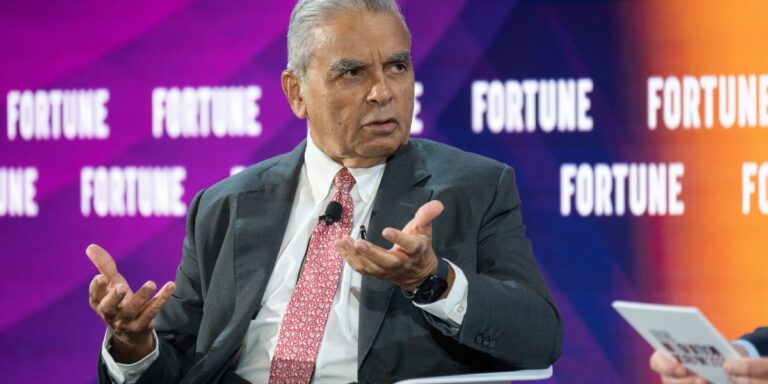
“(Trump) stands out as a far more consequential president than any of his predecessors,” said Kishore Mahbubani, a renowned Singaporean diplomat and author, who has served as President of the UN Security Council.
“He has moved the agenda very, very clearly, and dominates the political scene in a way that no other recent U.S. president has,” added Mahbubani, while addressing the Fortune Innovation Forum in Kuala Lumpur on Tuesday.
Mahbubani, whose widely-read books include Can Asians Think and Has China Won?, added that America’s economy is still 1.5 times larger than China’s, and that it has a powerful weapon: the U.S. dollar.
“In many ways, the Chinese still need to use the U.S. dollar—they can’t escape it. And when the U.S. introduces sanctions involving the USD, it can create significant discomfort for China,” the diplomat said.
But China’s meteoric rise has been undeniable, even to Americans, Mahbubani added. This was underscored in October when Trump referred to his meeting with Xi Jinping as a ‘G2’ one, offering a nod to their eastern counterpart’s ascending power.
“When the U.S. imposed tariffs on over 100 countries, only one country in the world could effectively retaliate against them, and that was China,” Mahbubani said, noting that the latter’s control over rare earths gives it a strategic counterweight to the power of the U.S. dollar.
Yet a key mistake that the Western mind still makes about China, he added, is that it sees the world in black and white terms, as a competition between the white democracies and black autocracy—but reality is never that simple.
“There’s no question that Western societies are on the right side of Western history in pushing for democracy and liberalization, but there’s also no question that China is on the right side of Chinese history,” Mahbubani said.
China, after all, is the world’s oldest continuous civilization, and for them, maintaining stability and harmony is much more important, he argued, adding that the West, however, has been slow to realize this, and has preferred to cling to a worldview where freedom fuels innovation and control kills it.
“This idea that the Chinese mind cannot be innovative is absolutely crazy, but it shows you that the Western mind has trapped itself in a bubble that doesn’t understand the rest of the world,” Mahbubani said.
As the world watches on, America’s thrust to stop China will continue for at least ten or twenty more years, Mahbubani predicts.
“The United States has been number one for 130 years, and no great power gives up its number one position (easily),” he said.
China, too, should stay on its toes, as “there’s something powerful and dynamic in the American economic and social system that explains its high performance”, the diplomat said.
“So whenever I meet my Chinese friends, I always tell them to never, never underestimate the United States of America.”
Former Harvard University President Larry Summers said he will step back from public commitments after his emails with disgraced financier Jeffrey Epstein were made public.
“I am deeply ashamed of my actions and recognize the pain they have caused. I take full responsibility for my misguided decision to continue communicating with Mr Epstein,” Summers said in a statement obtained by the BBC’s US partner, CBS News on Monday.
In emails released by Congress last week, Summers, a former US treasury secretary, communicated with Epstein until the day before Epstein’s 2019 arrest for sex trafficking minors.
On Tuesday, House members are expected to vote on releasing all files related to Epstein.
The move comes after the US Department of Justice announced that it would investigate Epstein’s “involvement and relationship” with former President Bill Clinton, who was also a friend of Epstein, and several other prominent Democrats.
The justice department’s decision comes after urging from Trump, who also asked for Summers, LinkedIn founder Reid Hoffman and banks JP Morgan and Chase, to be investigated.
“Epstein was a Democrat, and he is the Democrat’s problem, not the Republican’s problem!” he wrote on social media.
“They all know about him, don’t waste your time with Trump. I have a Country to run!”
Clinton has strongly denied he had any knowledge of Epstein’s crimes.
Summers served as treasury secretary under Clinton and director of the National Economic Council under former President Barack Obama. He was president of Harvard from 2001 to 2006 and is currently a professor there.
In Summers’ statement on Monday night, he said he wanted “to rebuild trust and repair relationships with the people closest to me”.
“While continuing to fulfil my teaching obligations, I will be stepping back from public commitments as one part of my broader effort,” he said.
The Center for American Progress, a liberal think tank in Washington where Summers was a senior fellow, announced on its website on Monday that he is no longer affiliated with the organisation.
Summers is still listed as a member of ChatGPT-maker OpenAI’s board, which he joined in 2023 following a failed attempt to oust its chief executive Sam Altman. The BBC has contacted OpenAI and a representative for Summers asking if he will remain a director at the company.
The emails released by the House Oversight Committee last week indicate that Summers and Epstein met for dinner frequently, with Epstein often trying to connect Summers to prominent global figures. At one point, in July 2018, Epstein proposed a meeting with the “president [sic] of united nations, interesting person for you”.
In a separate email just after US President Trump’s first election in 2016, Summers told Epstein to “spend zero effort on anything about me with Trump”.
Due to Trump’s “approach to conflict of interest”, Putin “proximity”, and “mindless response” to Cuban leader Fidel Castro’s death, Summers said he was “best off a million miles away”.
A representative for Summers previously told US media that he “deeply regrets being in contact with Epstein after his conviction” in 2008 for soliciting an underage prostitute.
The emails include many high-profile figures. A review by The Wall Street Journal found that Trump was mentioned in more than 1,600 of the 2,324 email threads.
Trump was a friend of Epstein’s for years, but the president has said they fell out in the early 2000s, two years before Epstein was first arrested. Trump has consistently denied any wrongdoing in relation to Epstein. While he was discussed in some messages released last week, he did not send or receive them.