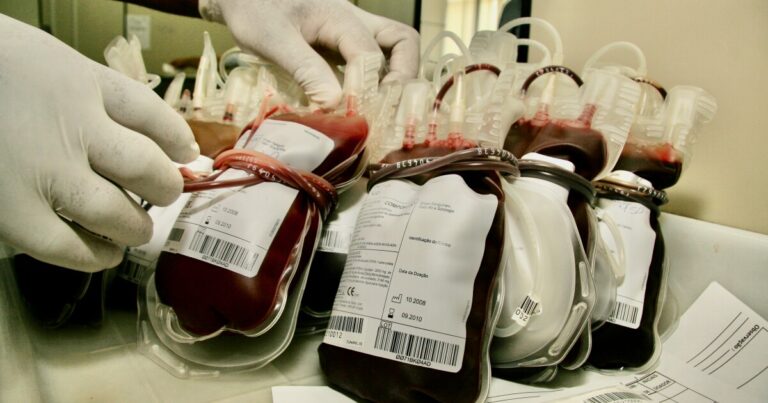
Millions of people donate blood each year, saving countless lives. After a donation, plasma and white blood cells are separated from red blood cells, which are the most commonly transfused blood product. In most countries, red blood cells can be stored under refrigeration – as a liquid solution – for up to 42 days.
Over time, red blood cells undergo structural changes: their membranes become weaker, and harmful metabolic by-products build up. Essentially, it means the red blood cell solution becomes less suitable for transfusion, which is why it can’t be used after six weeks.
Here’s the catch: even when stored under the same conditions for the same amount of time, not all donated blood ages at the same speed. The quality of red blood cells and how quickly they decline can vary a lot depending on donors’ metabolism, lifestyle, weight, sex, and age. And these variations often get overlooked in hospitals and blood centers. The main reason for that is a lack of fast and affordable methods for measuring the quality of stored blood right before transfusion.
Researchers at the University of Colorado Boulder and University of Colorado Anschutz have developed a compact, inexpensive, and easy-to-use device to solve this problem.
“Our vision is to have a chip the size of a dime that you can plug into your cell phone,” explained Xiaoyun Ding, associate professor in the Paul M. Rady Department of Mechanical Engineering at Boulder. “It could use your phone’s camera and an app to read out the results in just two minutes.”
So how does it work? The chip generates acoustic waves – similar to sound waves, but moving only the very top layer of the chip, which contains electrodes. A tiny drop of blood is placed on the surface, and when an electric current runs through the chip, the acoustic waves make the red blood cells vibrate and heat up until they break. It’s essentially a tiny stress test for blood cells: the faster they break, the less healthy the blood is.
The inner workings of the chip
Xiaoyun Ding
During the experiments, blood samples from multiple healthy donors were tested weekly during the 42-day period. The results showed that as blood aged, red blood cells from some donors broke at lower temperatures sooner than others, causing a significant decrease in quality even before its official expiration date.
Creating vibrations on a tiny chip is not simple, so the researchers checked if the heat alone could do the job. They carefully controlled the temperature during testing, so the results could be fairly compared between donors and over time. But that didn’t work. Without the acoustic vibrations, donor-specific differences in red blood cells were not possible to detect.
This technology shows that both storage time and biological differences between donors affect red blood cell quality. By identifying lower-quality blood samples, hospitals can prioritize using them sooner, ensuring better treatment for patients. The device also makes it possible to predict how well transfused blood will perform.
There is still a lot of work to be done before this method can be widely adopted in hospitals, but in the future, the researchers hope to apply the same approach for measuring different factors that affect blood cells or protein levels in blood.
A paper on the research was published in the latest issue of the journal Lab on a Chip.
A required part of this site couldn’t load. This may be due to a browser
extension, network issues, or browser settings. Please check your
connection, disable any ad blockers, or try using a different browser.
Palestinian journalist Bisan Owda, who’s known for sharing the realities of life in Gaza, says she’s regained access to her TikTok. On Wednesday, she shared a video explaining that her account had been deleted, days after the platform was acquired by new investors in the US.
Now a senior source has indicated to Israeli journalists, including those from Haaretz and the Times of Israel, that the total number given by the Hamas health ministry is largely accurate, even though they have not been able to break down how many were combatants and how many died as a direct result of the fighting.
MBW’s Key Songs In The Life Of… is a series in which we ask influential music industry figures about the tracks that have defined their life and career so far. This time out it’s Spotify‘s new(ish) Global Head of Music, Charlie Hellman. The Key Songs… series is supported by Sony Music Publishing.
Payment to artists and copyright-holders is, says Hellman, one of the two most important things Spotify does; the other is helping people discover new music and emerging artists.
And discovery is what he is here to discuss, but in this instance it’s his own discoveries, via eight Key Songs in his life and career so far. And so this journey does not involve algorithms or playlist curation (actually, one of them does, but we’re talking about personally burning a bespoke CD, not New Music Friday or Fresh Finds), but family, friends, high school, college, first jobs, live shows – and even a car crash.
Hellman, who became Head of Music late last year but has been at Spotify since 2011, describes the process of whittling down his vast and expanding musical universe to just eight tracks as “actually easier than I expected, because every key turning point has had a specific song or artist tied to it. If you’d asked me for my eight favorite songs, I’m not sure I could ever do that…”
1) Lyle Mays, Chorino (1988)
Music was my obsession from birth. I was the two-year-old begging my parents to get me any kind of music lessons.
By the age of three, I was learning the piano, and my teacher, a woman named Rowen Basilicato, was exactly the kind of teacher I needed.
She wasn’t rigid, insisting that I memorized these classical pieces that I wasn’t interested in. What I was interested in was blues, and pop, and all sorts of stuff that she encouraged me to dive into.
So I was always listening to all sorts of pianists, and then when I was maybe eight or nine, I was in my dad’s car on the way home from a piano lesson. We were listening to this Lyle Mays cassette, and this incredible song, Chorino, came on.
I vividly remember it, because I had this very distinct realization that I was never going to be this kind of virtuoso. I was blown away, it was incredible and I loved it, but also, deep down, it hit me: that’s never going to be me.
That was a pretty key moment for me, because after that I started getting very interested in ways that I could make my life about music without being a performer. I got curious about all the other careers you could have.
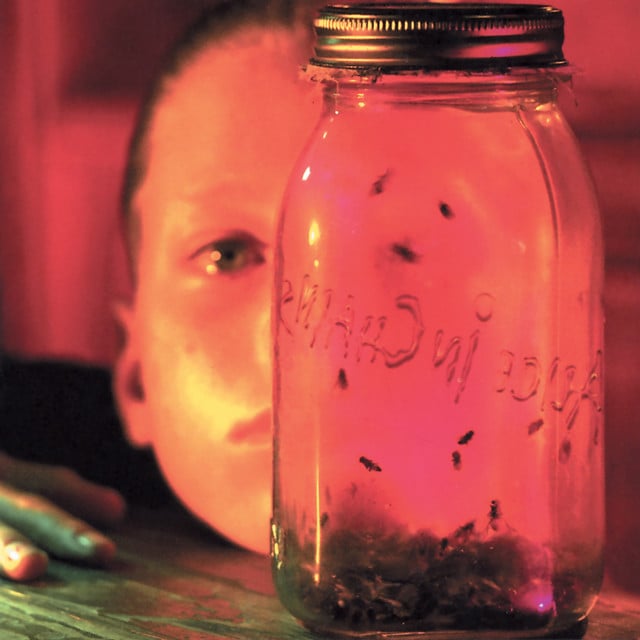
This is the first song off their Jar of Flies album, and I remember it very specifically because I totalled my Nissan Maxima while it was playing! So it’s a very vivid memory!
Everyone was OK, thankfully, but I was especially sad to say goodbye to the six-CD changer that I had in the trunk, because that was my coolest possession at the time.
Most of the time, four slots were taken up by the same four albums: Jar of Flies by Alice In Chains; Under the Table and Dreaming by Dave Matthews Band; Counting Crows,August and Everything After; and Parachutes by Coldplay.
Every one of those albums that I had in that CD changer, I can hear them now, and I know every syllable, every millisecond of all those songs.
It’s that thing where, when you’re a teenager, you don’t just love an album, you fuse with it. The intensity of discovery and how meaningful it can be to teenagers… I’m actually jealous of the way teenagers can emotionally connect with music, because it’s something that does fade a bit in later life.
And, because we work so much on discovery all the time, it sometimes feels like a big responsibility, because we’re serving up those big moments for each new generation; we can’t mess this up – this is important.
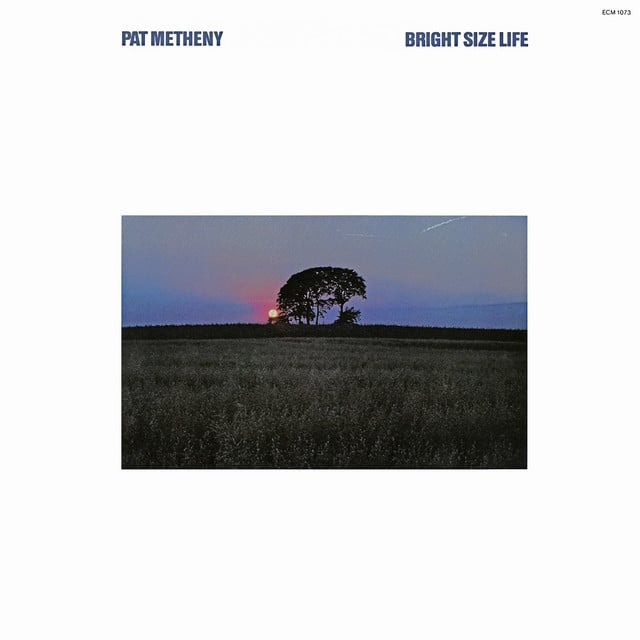
3) Pat Metheny, Unity Village (1976)
When I was growing up, my parents played all sorts of stuff in the house, which I think is the reason that I’m a total omnivore when it comes to genres.
So I would hear Bonnie Raitt, Minnie Riperton, Nat King Cole, all sorts of stuff. But if there was one artist who was played more than any other, it was Pat Metheny
He’s obviously an unreal guitar player, but what got me the most was that he’s an incredible songwriter. Even though there are no lyrics to his songs, these melodies would get stuck in my head as a kid, and he was a big inspiration for me getting into studying jazz guitar.
A little later, when I was applying to colleges, my guitar teacher, Tony Lombardozzi, and I recorded an audition tape of Unity Village to send as part of my application.
So my memory of this song also comes with a built-in feeling of ‘Man, I hope someone listens to this, and somehow this opens the door for me being able to keep going with this music’ – which thankfully it did!
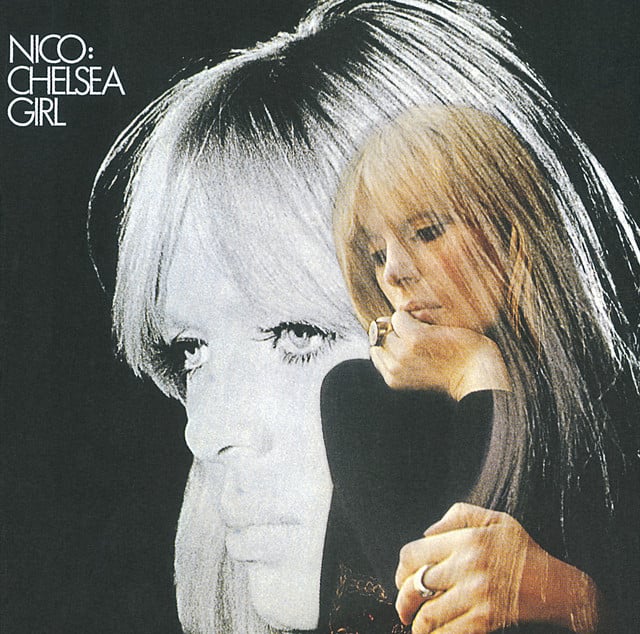
4) These Days, Nico (1967)
A high school science teacher of mine, Phil Stewart, was a very influential person for me. He shaped my love of music as well as science.
When I graduated, he gave me what is, still to this day, one of the most generous gifts I’ve ever received. He burned 10 CDs, 100 songs that he thought I needed to hear before going to college.
There are many, many lifelong favorite tracks on there, including These Days. It sent me down all sorts of rabbit holes towards rock, electronic and indie spaces that I didn’t know before.
He also wrote a bunch of notes about each one, and what was interesting was that context really changed the way that I listened to the tracks and how I thought about them.
I remain inspired to try to think about ways that we can deliver meaningful discovery at Spotify, how we can create that experience of opening up new avenues.
These Days stands out not only as a song I love, but also one that has all these different chapters to it, like it was written by Jackson Browne [aged 16!] and covered by various artists [from 10,000 Maniacs to Cher].
It’s so cool to explore that, and we’re trying to foster that kind of thing as we build out our SongDNA feature, showing people the journeys that songs go through and how they’re picked up by different creative people in different styles at different times.
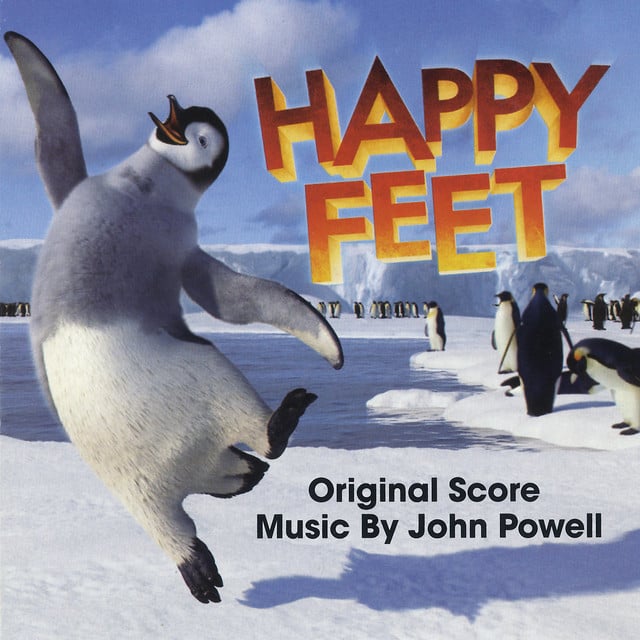
5) Happy Feet Original Score, John Powell (2006)
I’m pretty sure you’ll never have had this one before, and I doubt you’ll ever have it again.
As I said earlier, my whole life I wanted to work in music, and my first industry job was as a studio hand at Trackdown Scoring Stage. The year that I was there, John Powell, who’s a legendary film composer, and his team were recording the score to Happy Feet.
I was mainly rolling cable, moving folding chairs around and taking out the trash, but I was just so over the moon to be in the room where the music was getting made.
And actually, that job also really lifted the veil on how sessions run. How many people it takes, the craft that it takes, and how hard so many people work just to get a seven-second section of music perfect.
So, while I can’t say that I listen to this record very much, whenever I see that movie it reminds me of that first jumping off point in the industry, which was and is very meaningful for me.
6) Radiohead, Weird Fishes / Arpeggi (2007)
I ended up interning for Rachna Bhasin and Garrick Brown at EMI in the summer of 2007, when the music industry was at the height of a panic about its future.
The bottom was falling out, and there was no sign yet that streaming was going to be any sort of answer.
I got to meet all these companies that were pitching what the answer could be, just as I was preparing to write my college thesis on future business models for the music industry.
So, for me, it was an incredible moment: it was very scary, but also very exciting, because in the midst of the crisis there were also so many ideas and so much creativity.
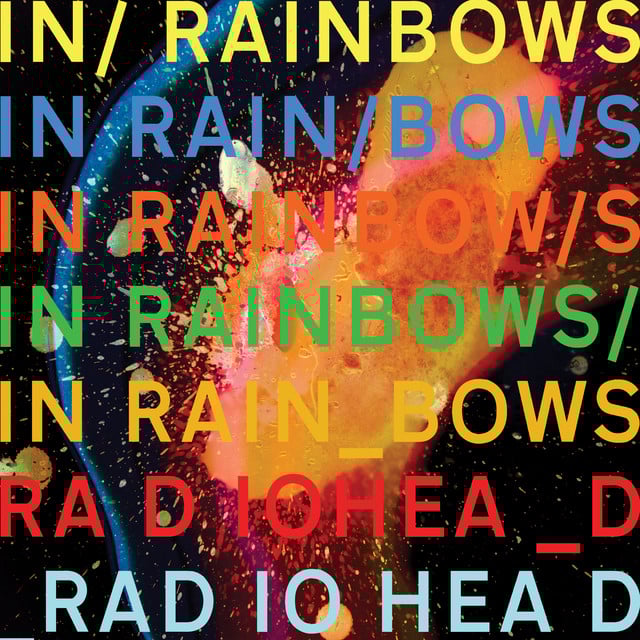
By this time, Radiohead had left EMI, and soon released their next album, In Rainbows, independently on a pay-what-you-want basis.
From that record, Weird Fishes / Arpeggi is still one of my favourite songs. But as well as being a great track, it also reminds me of that era: everyone throwing spaghetti at the wall, and everything being a question mark.
7) Phoenix, Rome (2009)
This springs more from a core memory on the live side. The record it’s on, Wolfgang Amadeus Phoenix, was a no-skips, love-at-first-listen album for me.
And then three weeks after it came out, we went to one of my favorite venues, Music Hall in Williamsburg, and they played pretty much every track from it, just at the peak of our excitement about this new music.
So every time I hear this album, especially the 90-second mark of this song, I remember how locked in the whole crowd was, and those kinds of electric experiences that we’re lucky enough to have with our friends sometimes.
Even though I’ve worked in streaming for so long (I was at Limewire by this time), moments like that are a reminder that live music is the heartbeat of all of this. And that being in a room together, feeling something at the same time, that’s what turns you into a real fan.
Something I care a lot about is making it easier for people to be aware of the shows they’d want to go to, and to have those kinds of experiences, because they can be some of the most exciting moments of your life.
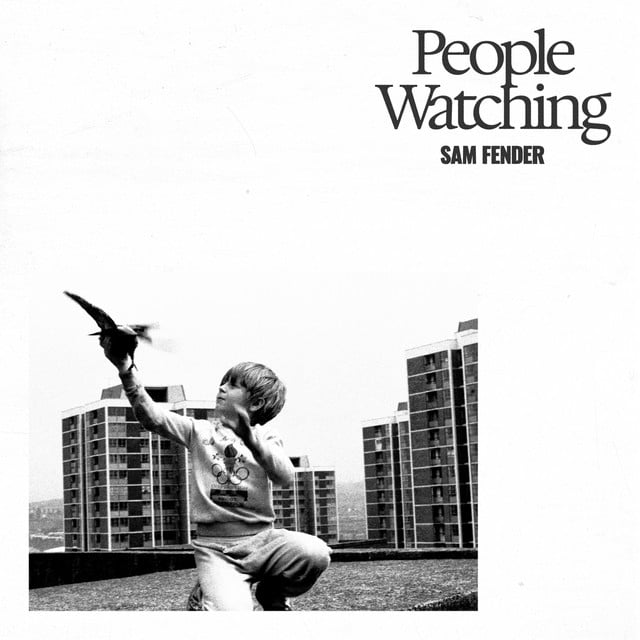
8) Sam Fender, People Watching (2024)
Discovering a new artist that’s just starting out has always been one of my favorite things, and these days, because I’m a dad now, the biggest thrill is when me and my kids discover something that we’re both really into, and we can enjoy it together. Sam Fender was one of those artists for us. We found it early and kept on coming back.
He actually showed up in our Spotify Fresh Finds before a lot of people were paying attention. Our editorial team is so on top of early movement in every genre.
Of course, since then it’s been amazing just to see how far he’s come in a relatively short space of time. He certainly had an incredible year last year, built on the album this comes from.
So, while we’ve been fans since the beginning, People Watching has now become one of the biggest songs that me and my two sons rock out to at home, and a track that’s defining the current era of my life.
Like pretty much everyone else, I’m excited to see where he goes next.
Partner message: At Sony Music Publishing (SMP), we believe every voice matters. We are the #1 global music publisher, advancing the artistry of the world’s greatest songwriters and composers for over 25 years. We keep songwriters at the forefront of everything we do, and design our suite of services to amplify opportunities, build connections, and defend their rights. Our roster benefits from an international team committed to providing support at every career stage. From classic catalogues to contemporary hitmakers, history is always being written. We are a part of the Sony family of global companies. Learn more about SMP here.Music Business Worldwide
A required part of this site couldn’t load. This may be due to a browser
extension, network issues, or browser settings. Please check your
connection, disable any ad blockers, or try using a different browser.
Stevenson is seen as the favourite heading into the bout, but Lopez will be looking to replicate the past performances he produced against the likes of Vasilly Lomachenko and Josh Taylor in order to retain his title.
Speaking to Matchroom Boxing, Benn discussed his recent back and forths with Stevenson, but revealed he thinks Lopez has what it takes to claim the victory.
“Shakur’s on smoke you know. He messages me saying ‘I’m going to put it on you and you’re going to get it next.’ He’s on smoke. I rate it for a little man, but I think Teo can cause an upset.”
Lopez has suffered just one defeat in the paid ranks against George Kambosos back in November 2021, while Stevenson is unbeaten, so if the defending champion was to earn the upset victory, he would not only retain his belt but also hand his rival the first loss of his professional career.